Your new post is loading...

|
Scooped by
Jean-Michel Ané
May 12, 2018 9:58 PM
|
Premise of the Study
Polyploidy or whole‐genome duplication (WGD) pervades the evolutionary history of angiosperms. Despite extensive progress in our understanding of WGD, the role of these events in promoting diversification is still not well understood. We seek to clarify the possible association between WGD and diversification rates in flowering plants.
Methods
Using a previously published phylogeny spanning all land plants (31,749 tips) and WGD events inferred from analyses of the 1000 Plants (1KP) transcriptome data, we analyzed the association of WGDs and diversification rates following numerous WGD events across the angiosperms. We used a stepwise AIC approach (MEDUSA), a Bayesian mixture model approach (BAMM), and state‐dependent diversification analyses (MuSSE) to investigate patterns of diversification. Sister‐clade comparisons were used to investigate species richness after WGDs.
Key Results
Based on the density of 1KP taxon sampling, 106 WGDs were unambiguously placed on the angiosperm phylogeny. We identified 334–530 shifts in diversification rates. We found that 61 WGD events were tightly linked to changes in diversification rates, and state‐dependent diversification analyses indicated higher speciation rates for subsequent rounds of WGD. Additionally, 70 of 99 WGD events showed an increase in species richness compared to the sister clade.
Conclusions
Forty‐six of the 106 WGDs analyzed appear to be closely associated with upshifts in the rate of diversification in angiosperms. Shifts in diversification do not appear more likely than random within a four‐node lag phase following a WGD; however, younger WGD events are more likely to be followed by an upshift in diversification than older WGD events.
|
|
Scooped by
Jean-Michel Ané
May 12, 2018 9:36 PM
|
Premise of the Study
We describe a highly efficient in vitro Lotus japonicus hairy root transformation system that is useful for the investigation of mycorrhizal symbiosis.
Methods and Results
The Agrobacterium rhizogenes–mediated transformation method was improved based on the binary plasmid (pCAMBIA1304) harboring green fluorescent protein and β‐glucuronidase genes for rapid detection. Transgenic hairy roots were grown within 13 days. These in vitro–cultured hairy roots can be inoculated with Rhizophagus irregularis, thus facilitating the investigation of the symbiosis between L. japonicus and arbuscular mycorrhizal fungi.
Conclusions
Compared with existing techniques, our protocol provides a simple and efficient A. rhizogenes–mediated transformation system for L. japonicus. The rapid induction of hairy roots can shorten the experimental time by at least one week.
|
|
Scooped by
Jean-Michel Ané
May 12, 2018 6:30 PM
|
Fine root (≤ 2 mm in diameter) biomass/necromass (B/N) ratio, representing many dynamic key root parameters, can serve as a powerful measure of root vitality. Based on a global synthesis of fine root biomass and necromass in forest ecosystems, we describe a framework for recognizing responses of B/N ratio to biotic (e.g. mycorrhizal type) and abiotic (e.g. latitudinal region) characteristics. Arbuscular mycorrhizas (AM) and ectomycorrhizas (ECM) forests had similar average B/N ratios (3.28 vs. 3.23). AM forest B/N ratio decreased with increasing altitude, stand density, tree age and soil carbon/nitrogen ratio (C/N), but increased with soil pH. In contrast, ECM forest B/N ratio increased with increasing mean annual precipitation (MAP), altitude, stand density, but decreased with tree age. The average B/N ratio was higher in temperate forests (4.39) than in tropical (2.97) and boreal forests (2.40). The B/N ratio was relatively stable in temperate forests irrespective of changes in biotic and abiotic factors. In tropical forest, the B/N ratio was sensitive to mean annual temperature, altitude, soil C/N ratio and pH, whereas in boreal forests it was more sensitive to MAP, stand density and tree age. The late‐successional forest B/N ratio was closely aligned with biotic and abiotic factors. Our analysis revealed that the relationships of B/N ratio with climate, topography, edaphic and stand characteristics were dependent on mycorrhizal types and latitudinal regions. These findings provide a basis for large‐scale prediction of fine root dynamics and for better understanding of belowground processes of global forest ecosystems in a changing world.
|
|
Scooped by
Jean-Michel Ané
May 12, 2018 6:20 PM
|
Transfer of nitrogen fixation ability to plants, especially crops, is a promising approach to mitigate dependence on chemical nitrogen fertilizer and alleviate environmental pollution caused by nitrogen fertilizer run-off. However, the need to transfer a large number of nitrogen fixation (nif) genes and the extreme vulnerability of nitrogenase to oxygen constitute major obstacles for transfer of nitrogen-fixing ability to plants. Here we demonstrate functional expression of a cyanobacterial nitrogenase in the non-diazotrophic cyanobacterium Synechocystis sp. PCC 6803 (Synechocystis 6803). A 20.8-kb chromosomal fragment containing 25 nif and nif-related genes of the diazotrophic cyanobacterium Leptolyngbya boryana was integrated into a neutral genome site of Synechocystis 6803 by five-step homologous recombination together with the cnfR gene encoding the transcriptional activator of the nif genes to isolate CN1. In addition, two other transformants CN2 and CN3 carrying additional one and four genes, respectively, were isolated from CN1. Low but significant nitrogenase activity was detected in all transformants. This is the first example of nitrogenase activity detected in non-diazotrophic photosynthetic organisms. These strains provide valuable platforms to investigate unknown factors that enable nitrogen-fixing growth of non-diazotrophic photosynthetic organisms, including plants.
|
|
Scooped by
Jean-Michel Ané
May 8, 2018 1:01 PM
|
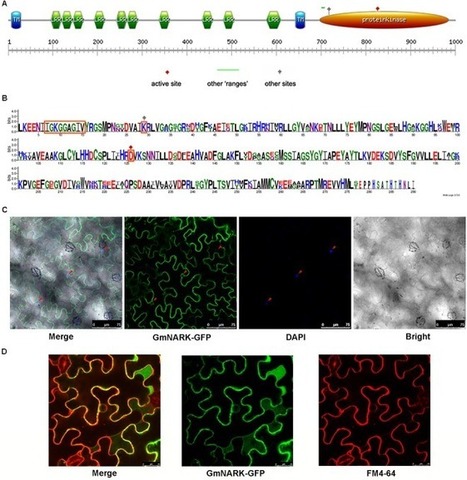
GmNARK (Glycine max nodule autoregulation receptor kinase) is the homolog of Arabidopsis thaliana CLAVATA1 (CLV1) and one of the most important regulators in the process of AON (Autoregulation of Nodulation), a process that restricts excessive nodule numbers in soybean. However, except for the function in AON, little is known about this gene. Here, we report that GmNARK plays important roles in process of plant response to abiotic stresses. Bioinformatic analysis and subcellular localization experiment results showed that GmNARK was a putative receptor like kinase and located at membrane. The promoter of GmNARK contains manifold cis regulatory elements that are responsive to hormone and stresses. Gene transcript expression pattern analysis in soybean revealed GmNARK was induced by ABA and NaCl treatment in both shoot and root. Overexpression of GmNARK in Arabidopsis resulted in higher sensitivity to ABA and salt treatment during seed germination and greening stages. We also checked the expression levels of some ABA response genes in the transgenic lines; the results showed that the transcript level of all the ABA response genes were much higher than that of wild type under ABA treatment. Our results revealed a novel role of GmNARK in response to abiotic stresses during plant growth and development.
|
|
Scooped by
Jean-Michel Ané
May 5, 2018 6:22 PM
|
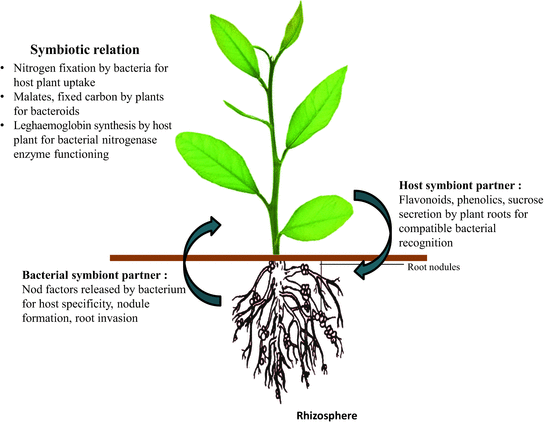
All living organisms seem to have a large number of interactions among themselves, but mutualism is of special interest ecologically and evolutionarily. Mutualism is a general term in which two organisms interact where either one (commensalism) or both are benefitted (symbiosis). Plants in nature always grow among soil microorganisms, and some of these become closely associated with plants to form mutualistic symbioses. Examples of such symbiotic microorganisms include N2-fixing prokaryotes (Rhizobium) and mycorrhizal fungi of various types. These associations affect fitness and survival of plants. It is particularly true for mycorrhiza which promotes better absorption of nutrients, while Rhizobium itself is involved in fulfilling nitrogen requirements of the plant. Such interactions involve a large number of cross talks by means of surface chemistry and release of chemicals. Host–symbiont specificity is the key feature in symbiotic interactions. Besides providing nutritional benefits to their hosts, mycorrhizal fungi also contribute toward ecological significance such as decreased susceptibility to biotic diseases; improved tolerance to abiotic stresses such as heavy metals, drought, and salinity; resistance to invasion by weeds; and synergistic interaction with other useful soil microbes. Interestingly Rhizobium is able to fix nitrogen for the host crop plants even in highly arid conditions and improve productivity in such unfavorable conditions. In view of their importance in plant growth and development, this chapter highlights the morphology, systematics, and ecological significance of the most important plant–microbe symbionts–Rhizobium, mycorrhizae, and a growth-promoting endophyte, Piriformospora indica.
|
|
Scooped by
Jean-Michel Ané
May 5, 2018 6:09 PM
|
Plants engage in multiple root symbioses that offer varying degrees of benefit. We asked how variation in partner quality persists using a resource‐ratio model of population growth. We considered the plant's ability to preferentially allocate carbon to mutualists and competition for plant carbon between mutualist and nonmutualist symbionts. We treated carbon as two nutritionally interchangeable, but temporally separated, resources—carbon allocated indiscriminately for the construction of the symbiosis, and carbon preferentially allocated to the mutualist after symbiosis establishment and assessment. This approach demonstrated that coexistence of mutualists and nonmutualists is possible when fidelity of the plant to the mutualist and the cost of mutualism mediate resource competition. Furthermore, it allowed us to trace symbiont population dynamics given varying degrees of carbon allocation. Specifically, coexistence occurs at intermediate levels of preferential allocation. Our findings are consistent with previous empirical studies as well the application of biological market theory to plantroot symbioses.
|
|
Scooped by
Jean-Michel Ané
May 3, 2018 10:52 PM
|
Diazotrophic Actinobacteria of the genus Frankia represent a challenge to classical bacterial taxonomy as they include many unculturable strains. As a consequence, we still have a poor understanding of their diversity, evolution and biogeography. In this study, a Multi-Locus Sequence Analysis (MLSA) using atpD, dnaA, ftsZ, pgk, and rpoB loci was done on a large set of cultured and uncultured strains, compared to 16S rRNA and correlated to Average Nucleotide Identity (ANI) from available Frankia genomes. MLSA provided a robust resolution of Frankia genus phylogeny and clarified the status of unresolved species and complex of species.
The robustness of single-gene topologies and their congruence with the MLSA tree were tested. Lateral Gene Transfers (LGT) were few and scattered, suggesting they had no impact on the concatenate topology. The pgk marker – providing the longest sequence, highest mean genetic divergence and least occurrence of LGT – was used to survey an unequalled number of Alnus-infective Frankia — mainly uncultured strains from a broad range of host-species and geographic origins. This marker allowed reliable Single-Locus Strain Typing (SLST) below the species level, revealed an undiscovered taxonomical diversity, and highlighted the effect of cultivation, sporulation phenotype and host plant species on symbiont richness, diversity and phylogeny.
|
|
Scooped by
Jean-Michel Ané
May 3, 2018 10:46 PM
|
Mycorrhizal symbiosis is an ancient and widespread mutualism between plants and fungi that facilitated plant terrestrialisation > 500 million years ago, with key roles in ecosystem functioning at multiple scales. Central to the symbiosis is the bidirectional exchange of plant‐fixed carbon for fungal‐acquired nutrients. Within this unifying role of mycorrhizas, considerable diversity in structure and function reflects the diversity of the partners involved. Early diverging plants form mutualisms not only with arbuscular mycorrhizal Glomeromycotina fungi, but also with poorly characterised Mucoromycotina, which may also colonise the roots of ‘higher’ plants as fine root endophytes. Functional diversity in these symbioses depends on both fungal and plant life histories and is influenced by the environment. Recent studies have highlighted the roles of lipids/fatty acids in plant‐to‐fungus carbon transport and potential contributions of Glomeromycotina fungi to plant nitrogen nutrition. Together with emerging appreciation of mycorrhizal networks as multi‐species resource‐sharing systems, these insights are broadening our views on mycorrhizas and their roles in nutrient cycling. It is crucial that the diverse array of biotic and abiotic factors that together shape the dynamics of carbon‐for‐nutrient exchange between plants and fungi are integrated, in addition to embracing the unfolding and potentially key role of Mucoromycotina fungi in these processes.
|
|
Scooped by
Jean-Michel Ané
May 3, 2018 10:13 PM
|
Massive intracellular populations of symbiotic bacteria, referred to as rhizobia, are housed in legume root nodules. Little is known about the mechanisms preventing the development of defense in these organs although genes such as symCRK and DNF2 of the model legume Medicago truncatula are required for this control after rhizobial internalization in host nodule cells. Here we investigated the molecular basis of the symbiotic control of immunity.
Proteomic analysis was performed to compare functional (wild‐type) and defending nodules (symCRK). Based on the results, the control of plant immunity during the functional step of the symbiosis was further investigated by biochemical and pharmacological approaches as well as by transcript and histology analysis.
Ethylene was identified as a potential signal inducing plant defenses in symCRK nodules. Involvement of this phytohormone in symCRK and dnf2‐developed defenses and in the death of intracellular rhizobia was confirmed. This negative effect of ethylene depended on the M. truncatula sickle gene and was also observed in the legume Lotus japonicus.
Together, these data indicate that prevention of ethylene‐triggered defenses is crucial for the persistence of endosymbiosis and that the DNF2 and symCRK genes are required for this process.
|
|
Scooped by
Jean-Michel Ané
May 3, 2018 10:06 PM
|
Arbuscular mycorrhiza (AM) is a widespread symbiosis between most land plants and fungi of the Glomeromycotina, which has existed for more than 400 million years. AM fungi (AMF) improve plant nutrition with mineral nutrients and conversely, their growth and development is fueled by organic carbon supplied from their host. Recent studies demonstrated independently and with different experimental approaches that lipids are transferred from plants to fungi in addition to sugars, and that AMF are dependent on this lipid supply because they lack genes encoding fatty acid synthase I subunits. Dependence on host lipids or lipid parasitism occur in a range of interorganismic associations with participants from almost all kingdoms. Thus, these phenomena seem rather common in mutualistic and parasitic interactions.
|
|
Scooped by
Jean-Michel Ané
May 3, 2018 10:00 PM
|
Plants use receptor-like kinases to monitor environmental changes and transduce signals into plant cells. The Medicago truncatula DOES NOT MAKE INFECTIONS 2 (DMI2) protein functions as a co-receptor of rhizobial signals to initiate nodule development and rhizobial infection during nitrogen-fixing symbiosis, but the mechanisms regulating DMI2 protein level and folding are still unknown. Here we report that DMI2 protein abundance changes during nitrogen-fixing symbiosis. DMI2 accumulates in the nodules and is induced by rhizobia treatment through a posttranscriptional process. However, DMI2 induction is independent of perception of Nod factor, a group of lipo-chitooligosaccharides secreted by rhizobia. The stability of the DMI2 protein is controlled by the proteasome pathway: in rhizobia-free environments, DMI2 is degraded by the proteasome, but during rhizobial infection, DMI2 is protected from the proteasome, resulting in protein accumulation. Furthermore, proteasome inhibitor-promoted accumulation of DMI2 protein in Medicago roots induces the expression of two early nodulation marker genes, supporting the hypothesis that DMI2 accumulation activates downstream symbiosis signaling. The extracellular region of DMI2 contains two Malectin-like domains (MLD) and a leucine-rich repeat. When conserved amino acids in the MLDs are mutated, DMI2 fails to restore nodule development in dmi2 mutants, and point-mutated MLD proteins are degraded constitutively, suggesting that the MLD may be vital for the accumulation of DMI2. Our findings suggest that legumes control nodule development through modulating the protein level of DMI2, revealing a layer of regulation in the interaction between plants and rhizobia in nitrogen-fixing symbiosis.
|
|
Scooped by
Jean-Michel Ané
April 26, 2018 9:56 AM
|
Aims
The propagation of pure cultures of arbuscular mycorrhizal fungal (AMF) is an essential requirement for their large‐scale agricultural application and commercialization as biofertilizers. The present study aimed to propagate AMF using the single‐spore inoculation technique and compare their propagation ability with the known reference spores.
Methods and Results
Arbuscular mycorrhizal fungal spores were collected from salt‐affected Saemangeum reclaimed soil in South Korea. The technique involved inoculation of sorghum‐sudangrass (Sorghum bicolor L.) seedlings with single, healthy spores on filter paper followed by the transfer of successfully colonized seedlings to 1‐kg capacity pots containing sterilized soil. After the first plant cycle, the contents were transferred to 2·5‐kg capacity pots containing sterilized soil. Among the 150 inoculated seedlings, only 27 seedlings were colonized by AMF spores. After 240 days, among the 27 seedlings, five inoculants resulted in the production of over 500 spores. The 18S rDNA sequencing of spores revealed that the spores produced through single‐spore inoculation method belonged to Gigaspora margarita, Claroideoglomus lamellosum and Funneliformis mosseae. Furthermore, indigenous spore F. mosseae M–1 reported a higher spore count than the reference spores.
Conclusions
The AMF spores produced using the single‐spore inoculation technique may serve as potential bio‐inoculants with an advantage of being more readily adopted by farmers due to the lack of requirement of a skilled technique in spore propagation.
Significance and Impact of the Study
The results of the current study describe the feasible and cost‐effective method to mass produce AMF spores for large‐scale application. The AMF spores obtained from this method can effectively colonize plant roots and may be easily introduced to the new environment.
|
|
|
Scooped by
Jean-Michel Ané
May 12, 2018 9:57 PM
|
Legumes form root nodules to house beneficial nitrogen‐fixing rhizobia bacteria. However, nodulation is resource demanding; hence, legumes evolved a systemic signalling mechanism, called Autoregulation of Nodulation (AON), to control nodule numbers. AON begins with the production of CLE peptides in the root, which are predicted to be glycosylated, transported to the shoot, and perceived. We synthesised variants of nodulation‐suppressing CLE peptides to test their activity using petiole feeding to introduce CLE peptides into the shoot. Hydroxylated, monoarabinosylated and triarabinosylated variants of soybean GmRIC1a and GmRIC2a were chemically synthesised and fed into recipient Pisum sativum (pea) plants, which were used due to the availability of key AON pathway mutants unavailable in soybean. Triarabinosylated GmRIC1a and GmRIC2a suppressed nodulation of wild‐type pea, whereas no other peptide variant tested had this ability. Suppression also occurred in the supernodulating hydroxyproline O‐arabinosyltransferase mutant, Psnod3, but not in the supernodulating receptor mutants, Pssym29, and to some extent, Pssym28. During our study, bioinformatic resources for pea became available and our analyses identified 40 CLE peptide‐encoding genes, including orthologues of nodulation‐suppressive CLE peptides. Collectively, we demonstrated that soybean nodulation‐suppressive CLE peptides can function interspecifically in the AON pathway of pea and require arabinosylation for their activity.
|
|
Scooped by
Jean-Michel Ané
May 12, 2018 6:34 PM
|
Modern breeding programs might have caused a reduction in plant responsiveness to arbuscular mycorrhizal fungi (AMF). Flavonoids and polyamines (PAs) are hypothesized to play a role in this symbiosis. We tested the effects of them in AMF roots of improved (I-1) and unimproved (UI-4) soybean genotypes, under the hypothesis that domestication decreased their concentration in roots, affecting AMF colonization, particularly arbuscule formation. After 20 days of treatment, AMF roots of UI-4 genotype had greater amount of total flavonoids/phenols and PAs while in I-1 genotype no differences were observed between roots of mycorrhizal (M) and non mycorrhizal (NM) plants. Exogenous application of flavonoids led to an increase in arbuscules in both genotypes. Improved-1 genotype needed higher levels of flavonoids to reach the percentage of mycorrhization achieved by UI-4 control. In regard to PAs, mycorrhizal plants of both genotypes had higher endogenous concentration than NM plants, however, the highest concentration, especially of putrescine (put) was in UI-4 M genotype. To check the participation of put in symbiosis we used RNAi silencing methodology. Down regulation of the GmADC transcript, involved in put formation, had a profound negative effect on mycorrhizal colonization and also affected the normal development of the plant. By contrast, down regulation of GmDAO, in which ADC transcript was expressed, arbuscule formation was similar to control plant. Our results suggest that mycorrhizal colonization is affected by soybean domestication particularly arbuscule formation and this effect seems to be mediated by the endogenous roots levels of flavonoids and PAs, especially put.
|
|
Scooped by
Jean-Michel Ané
May 12, 2018 6:23 PM
|
Background
Solanum lycopersicum, an economically important crop grown worldwide, has been used as a model for the study of arbuscular mycorrhizal (AM) symbiosis in non-legume plants for several years and several cDNA array hybridization studies have revealed specific transcriptomic profiles of mycorrhizal tomato roots. However, a method to easily screen candidate genes which could play an important role during tomato mycorrhization is required.
Results
We have developed an optimized procedure for composite tomato plant obtaining achieved through Agrobacterium rhizogenes-mediated transformation. This protocol involves the unusual in vitro culture of composite plants between two filter papers placed on the culture media. In addition, we show that DsRed is an appropriate molecular marker for the precise selection of cotransformed tomato hairy roots. S. lycopersicum composite plant hairy roots appear to be colonized by the AM fungus Rhizophagus irregularis in a manner similar to that of normal roots, and a modified construct useful for localizing the expression of promoters putatively associated with mycorrhization was developed and tested.
Conclusions
In this study, we present an easy, fast and low-cost procedure to study AM symbiosis in tomato roots.
|
|
Scooped by
Jean-Michel Ané
May 12, 2018 9:48 AM
|
The interaction between arbuscular mycorrhizal (AM) fungi and plant roots is one of the most widespread symbioses on Earth.
Approximately 29% of all vascular plant species, including the plant model Arabidopsis thaliana and major crops such as sugar beet and rapeseed, are considered to be non-hosts. However, under certain conditions some non-host species do develop rudimentary AM (RAM) phenotypes.
The Brassicaceae family harbors non-host, AM, and RAM species. With the increasing genomic information on the presence or absence of symbiotic toolkit genes, this plant family has an important potential to shed new light on the genetic constraints that drive the evolution of symbiotic incompatibility.
The widespread symbiotic interaction between plants and arbuscular mycorrhizal (AM) fungi relies on a complex molecular dialog with reciprocal benefits in terms of nutrition, growth, and protection. Approximately 29% of all vascular plant species do not host AM symbiosis, including major crops. Under certain conditions, however, presumed non-host plants can become colonized by AM fungi and develop rudimentary AM (RAM) phenotypes. Here we zoom in on the mustard family (Brassicaceae), which harbors AM hosts, non-hosts, and presumed non-host species such as Arabidopsis thaliana, for which conditional RAM colonization has been described. We advocate that RAM phenotypes and redundant genomic elements of the symbiotic ‘toolkit’ are missing links that can help to unravel genetic constraints that drive the evolution of symbiotic incompatibility.
|
|
Scooped by
Jean-Michel Ané
May 8, 2018 12:56 PM
|
Intrinsic promiscuity in cowpea and bean enables plants to nodulate with native rhizobia, though sometimes ineffective rhizobia may occupy nodules, resulting in poor response to inoculation. Field trials were conducted from 2014 to 2017 in Marondera, Natural Region II, Zimbabwe, to determine the effect of increasing inoculation rates on legume growth parameters, nitrogen uptake and grain productivity. Treatments included an un-inoculated control and inoculant rates of ×1 (standard), ×2, ×3, ×4, ×5, ×7 and ×10 for both cowpea (rhizobia - inoculant-strain-MAR 1510) and bean (rhizobia-inoculant-strain-CIAT 899). Biomass productivity ranged from 2.05 (×2) - 2.94 t ha−1 (×4) and 1.10 (×10) – 1.95 t ha−1 (×4) for cowpea and bean, respectively. Nitrogen uptake increased with increasing inoculation rates reaching up to 57.56 kg N ha−1 for bean (×4) and 100.20 kg N ha−1 for cowpea (×3). The uninoculated control was not significantly different from the standard, {(×1); 1 g inoculant 500 g seed−1} treatment, for cowpea nodule weight and grain productivity. The highest cowpea and bean nodule weights were recorded from the ×3 and ×4 treatments, respectively, in the first season. Cowpea grain yield significantly varied across treatments, ranging between 0.63 and 1.55 t ha−1 with the ×3 recording the highest yield. The “×4” treatment recorded the highest bean grain productivity reaching up to 0.88 t ha−1. It can be concluded that, increasing rhizobia cells concentration per unit seed up to ×3 (cowpea) and ×4 (bean) improves response to inoculation and grain productivity suggesting a need to change product formulation or increase inoculation rate.
|
|
Scooped by
Jean-Michel Ané
May 5, 2018 6:09 PM
|
The universality of calcium as an intracellular messenger depends on the dynamics of its spatial and temporal release from calcium stores. Accumulating evidence over the past two decades supports an essential role for nuclear calcium signalling in the transduction of specific stimuli into cellular responses. This review focusses on mechanisms underpinning changes in nuclear calcium concentrations and discusses what is known so far, about the origin of the nuclear calcium signals identified, primarily in the context of microbial symbioses and abiotic stresses.
|
|
Scooped by
Jean-Michel Ané
May 4, 2018 1:31 PM
|
Plant cells are surrounded by cell walls protecting them from a myriad of environmental challenges. For successful habitat adaptation, extracellular cues are perceived at the cell wall and relayed to downstream signaling constituents to mediate dynamic cell wall remodeling and adapted intracellular responses. Plant malectin-like receptor kinases, also known as Catharanthus roseus receptor-like kinase 1-like proteins (CrRLK1Ls), take part in these perception and relay processes. CrRLK1Ls are involved in many different plant functions. Their ligands, interactors, and downstream signaling partners are being unraveled, and studies about CrRLK1Ls’ roles in plant species other than the plant model Arabidopsis thaliana are beginning to flourish. This review focuses on recent CrRLK1L-related advances in cell growth, reproduction, hormone signaling, abiotic stress responses, and, particularly, immunity. We also give an overview of the comparative genomics and evolution of CrRLK1Ls, and present a brief outlook for future research.
|
|
Scooped by
Jean-Michel Ané
May 3, 2018 10:48 PM
|
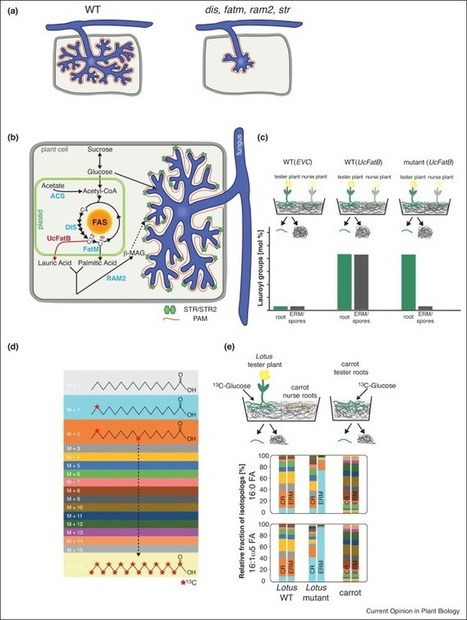
Arbuscular mycorrhiza (AM) fungi establish symbiotic interactions with plants, providing the host plant with minerals, i.e. phosphate, in exchange with organic carbon. AM fungi of the Glominea produce vesicles, which store lipids as energy and carbon source. Acyl‐acyl carrier protein (ACP) thioesterases (Fat) are essential components of the plant plastid‐localized fatty acid synthase and determine the chain length of de novo synthesized fatty acids. In addition to the ubiquitous FatA and FatB thioesterases, AM‐competent plants contain an additional, AM‐specific FatM gene. Here, we characterize FatM from Lotus japonicus by phenotypically analyzing fatm mutant lines and by studying the biochemical function of the recombinant FatM protein. Reduced shoot phosphate content in fatm indicates compromised symbiotic phosphate uptake due to reduced arbuscule branching, and the fungus shows reduced lipid accumulation accompanied with the occurrence of smaller and less frequent vesicles. Lipid profiling reveals a decrease in mycorrhiza‐specific phospholipid forms, AM fungal signature fatty acids (e.g. 16:1ω5, 18:1ω7 and 20:3) and storage lipids. Recombinant FatM shows preference for palmitoyl (16:0)‐ACP, indicating that large amounts of 16:0 fatty acid are exported from the plastids of arbuscule containing cells. Stable isotope labeling with [13C2]acetate showed reduced incorporation into mycorrhiza‐specific fatty acids in the fatm mutant. Therefore, colonized cells reprogram plastidial fatty acid de novo synthesis towards the production of extra amounts of 16:0, which is in agreement with previous results that fatty acid‐containing lipids are transported from the plant to the fungus.
|
|
Scooped by
Jean-Michel Ané
May 3, 2018 10:14 PM
|
Spatial differences in environmental selective pressures interact with the genomes of organisms, ultimately leading to local adaptation. Landscape genomics is an emergent research area that uncovers genome–environment associations, thus allowing researchers to identify candidate loci for adaptation to specific environmental variables.
In the present study, we used latent factor mixed models (LFMMs) and Moran spectral outlier detection/randomization (MSOD‐MSR) to identify candidate loci for adaptation to 10 environmental variables (climatic, soil and atmospheric) among 43 515 single nucleotide polymorphisms (SNPs) from 202 accessions of the model legume Medicago truncatula.
Soil variables were associated with a large number of candidate loci identified through both LFMMs and MSOD‐MSR. Genes tagged by candidate loci associated with drought and salinity are involved in the response to biotic and abiotic stresses, while those tagged by candidates associated with soil nitrogen and atmospheric nitrogen, participate in the legume‐rhizobia symbiosis. Candidate SNPs identified through both LFMMs and MSOD‐MSR explained up to 56% of variance in flowering traits.
Our findings highlight the importance of soil in driving adaptation in the system and elucidate the basis of evolutionary potential of M. truncatula to respond to global climate change and anthropogenic disruption of the nitrogen cycle.
|
|
Scooped by
Jean-Michel Ané
May 3, 2018 10:09 PM
|
Nodules harboring nitrogen-fixing rhizobia are a well-known trait of legumes, but nodules also occur in other plant lineages, with rhizobia or the actinomycete Frankia as microsymbiont. It is generally assumed that nodulation evolved independently multiple times. However, molecular-genetic support for this hypothesis is lacking, as the genetic changes underlying nodule evolution remain elusive. We conducted genetic and comparative genomics studies by using Parasponia species (Cannabaceae), the only nonlegumes that can establish nitrogen-fixing nodules with rhizobium. Intergeneric crosses between Parasponia andersonii and its nonnodulating relative Trema tomentosa demonstrated that nodule organogenesis, but not intracellular infection, is a dominant genetic trait. Comparative transcriptomics of P. andersonii and the legume Medicago truncatula revealed utilization of at least 290 orthologous symbiosis genes in nodules. Among these are key genes that, in legumes, are essential for nodulation, including NODULE INCEPTION (NIN) and RHIZOBIUM-DIRECTED POLAR GROWTH (RPG). Comparative analysis of genomes from three Parasponia species and related nonnodulating plant species show evidence of parallel loss in nonnodulating species of putative orthologs of NIN, RPG, and NOD FACTOR PERCEPTION. Parallel loss of these symbiosis genes indicates that these nonnodulating lineages lost the potential to nodulate. Taken together, our results challenge the view that nodulation evolved in parallel and raises the possibility that nodulation originated ∼100 Mya in a common ancestor of all nodulating plant species, but was subsequently lost in many descendant lineages. This will have profound implications for translational approaches aimed at engineering nitrogen-fixing nodules in crop plants.
|
|
Scooped by
Jean-Michel Ané
May 3, 2018 10:01 PM
|
Plant cell infection is tightly controlled by cell surface receptor-like kinases (RLKs). Like other RLKs, the Medicago truncatula entry receptor LYK3 laterally segregates into membrane nanodomains in a stimulus-dependent manner. Although nanodomain localization arises as a generic feature of plant membrane proteins, the molecular mechanisms underlying such dynamic transitions and their functional relevance have remained poorly understood. Here we demonstrate that actin and the flotillin protein FLOT4 form the primary and indispensable core of a specific nanodomain. Infection-dependent induction of the remorin protein and secondary molecular scaffold SYMREM1 results in subsequent recruitment of ligand-activated LYK3 and its stabilization within these membrane subcompartments. Reciprocally, the majority of this LYK3 receptor pool is destabilized at the plasma membrane and undergoes rapid endocytosis in symrem1 mutants on rhizobial inoculation, resulting in premature abortion of host cell infections. These data reveal that receptor recruitment into nanodomains is indispensable for their function during host cell infection.
|
|
Scooped by
Jean-Michel Ané
April 30, 2018 9:50 AM
|
Arbuscular mycorrhizal fungi form symbiotic associations with most land plants and deliver mineral nutrients, in particular phosphate, to the host. Therefore, understanding the mechanisms of phosphate acquisition and delivery in the fungi is critical for full appreciation of the mutualism in this association. Here, we provide updates on physical, chemical, and biological strategies of the fungi for phosphate acquisition, including interactions with phosphate‐solubilizing bacteria, and those on the regulatory mechanisms of phosphate homeostasis based on resurveys of published genome sequences and a transcriptome with reference to the latest findings in a model fungus. For the mechanisms underlying phosphate translocation and export to the host, which are major research frontiers in this field, not only recent advances but also testable hypotheses are proposed. Lastly, we briefly discuss applicability of the latest tools to gene silencing in the fungi, which will be breakthrough techniques for comprehensive understanding of the molecular basis of fungal phosphate metabolism.
|


 Scoop.it!