Your new post is loading...

|
Scooped by
Jean-Michel Ané
March 31, 2019 11:20 PM
|
Plants have evolved with a plethora of microorganisms having important roles for plant growth and health. A considerable amount of information is now available on the structure and dynamics of plant microbiota as well as on the functional capacities of isolated community members. Due to the interesting functional potential of plant microbiota as well as due to current challenges in crop production there is an urgent need to bring microbial innovations into practice. Different approaches for microbiome improvement exist. On the one hand microbial strains or strain combinations can be applied, however, field success is often variable and improvement is urgently required. Smart, knowledge-driven selection of microorganisms is needed as well as the use of suitable delivery approaches and formulations. On the other hand, farming practices or the plant genotype can influence plant microbiota and thus functioning. Therefore, selection of appropriate farming practices and plant breeding leading to improved plant-microbiome interactions are avenues to increase the benefit of plant microbiota. In conclusion, different avenues making use of a new generation of inoculants as well as the application of microbiome-based agro-management practices and improved plant lines could lead to a better use of the plant microbiome. This paper reviews the importance and functionalities of the bacterial plant microbiome and discusses challenges and concepts in regard to the application of plant-associated bacteria.
|
|
Scooped by
Jean-Michel Ané
March 31, 2019 11:13 PM
|
The amino acid/auxin permease (AAAP) gene family plays an important role in the long-distance amino acid transport pathway and takes part in various stages of plant growth and development. However, little is known about the AAAP gene family in Medicago truncatula. Here, we identified 86 putative MtAAAP family members using genome sequence information. Based on phylogenetic analysis, these MtAAAP genes were categorized into eight distinct subfamilies. The MtAAAP genes were mapped on 8 chromosomes and duplication events appeared widely, with 19 and 21 pairs of MtAAAP genes showing segment and tandem duplication events, respectively. Ratio of Ka/Ks indicated that duplicated genes underwent purifying selection. Analysis of RNA-seq data showed that MtAAAP genes exhibited specific expression patterns among different tissues and abiotic stress, indicating that MtAAAP members were involved in plant developmental regulation and stress responses. Expression patterns of 16 MtAAAP genes under abiotic stress were verified by qRT-PCR. The present study provides a foundation for the functional analysis of MtAAAPs in developmental regulation and stress responses.
|
|
Scooped by
Jean-Michel Ané
March 31, 2019 4:11 PM
|
Phosphorous is important for life but often limiting for plants. The symbiotic pathway of phosphate uptake via arbuscular mycorrhizal fungi (AMF) is evolutionarily ancient and today occurs in natural and agricultural ecosystems alike. Plants capable of this symbiosis can obtain up to all of the phosphate from symbiotic fungi, and this offers potential means to develop crops less dependent on unsustainable P fertilizers. Here, we review the mechanisms and insights gleaned from the fine-tuned signal exchanges that orchestrate the intimate mutualistic symbiosis between plants and AMF. As the currency of trade, nutrients have signaling functions beyond being the nutritional goal of mutualism. We propose that such signaling roles and metabolic reprogramming may represent commitments for a mutualistic symbiosis that act across the stages of symbiosis development.
|
|
Scooped by
Jean-Michel Ané
March 21, 2019 11:15 PM
|
Tree species that form symbioses with nitrogen-fixing bacteria can naturally fertilize forests by converting atmospheric nitrogen gas into plant-available forms. However, other mineral nutrients that plants require for growth are largely locked in bedrock, and are released only slowly into soil. We used strontium isotopes to trace nutrient sources for six common tree species in a temperate rainforest, including one species from a globally widespread genus known for high rates of biological nitrogen fixation. We found that trees capable of fixing atmospheric nitrogen gas were also best able to directly access mineral nutrients from bedrock. This gives nitrogen-fixing trees the unique ability to provide the full suite of essential nutrients required to fuel growth and carbon uptake in forest ecosystems.
|
|
Scooped by
Jean-Michel Ané
March 17, 2019 8:44 AM
|
To improve access to limiting nutrients, the vast majority of land plants forms arbuscular mycorrhizal (AM) symbioses with Glomeromycota fungi. We show here that AM-related GRAS transcription factors from different subgroups are upregulated during a time course of mycorrhization. Based on expression studies in mutants defective in arbuscule branching (ram1-1, with a deleted MtRam1 GRAS transcription factor gene) or in the formation of functional arbuscules (pt4-2, mutated in the phosphate transporter gene MtPt4), we demonstrate that the five AM-related GRAS transcription factor genes MtGras1, MtGras4, MtGras6, MtGras7, and MtRad1 can be differentiated by their dependency on MtRAM1 and MtPT4, indicating that the network of AM-related GRAS transcription factors consists of at least two regulatory modules. One module involves the MtRAM1- and MtPT4-independent transcription factor MtGRAS4 that activates MtGras7. Another module is controlled by the MtRAM1- and MtPT4-dependent transcription factor MtGRAS1. Genome-wide expression profiles of mycorrhized MtGras1 knockdown and ram1-1 roots differ substantially, indicating different targets. Although an MtGras1 knockdown reduces transcription of AM-related GRAS transcription factor genes including MtRam1 and MtGras7, MtGras1 overexpression alone is not sufficient to activate MtGras genes. MtGras1 knockdown roots display normal fungal colonization, with a trend towards the formation of smaller arbuscules.
|
|
Scooped by
Jean-Michel Ané
March 16, 2019 4:37 PM
|
Nutrient supply in phosphorus (P)-limited ecosystems, with most P being associated with secondary minerals, has to rely on efficient nutrient allocation strategies, such as those involving mycorrhizal symbioses. Yet, little is known about the extent of photo-assimilate transfer to the fungal partner, who in turn mobilizes mineral-bound P sources required by the plant. This study aims to explore the carbon (C)–P trade between an arbuscular mycorrhizal (AM) plant and its ability to incorporate P from differently accessible P sources. We compared P uptake rates of AM plants for orthophosphate (OP) and phytic acid (PA), applied to mesocosms in either dissolved form or bound to goethite (α-FeOOH). The design of the mesocosms allowed the plant to only access the P in the fungal compartment via the AM hyphae. We hypothesized the AM plant to invest more C into the symbiosis, if P is present in the less accessible form. To estimate the C budget of the symbiosis, we determined total organic carbon (OC), 16:1ω5c phospholipid fatty acid (PLFA; AM fungi extraradical mycelium), 16:1ω5c neutral lipid fatty acid (NLFA; AM fungi energy storage), and CO2 cumulative respiration in the fungal compartment. A ratio to the total C translocated into the fungal compartment (OC+CO2-C cumulative respiration) and the P incorporated into the AM plant (Total C/P) was calculated to estimate the C investment made by the AM plant into its symbiotic partner. AM plants incorporated P derived from all four P sources exclusively via the mycorrhizal pathway in different amounts and kinetics. The Total C/P ratio was significantly larger for those AM plants accessing the goethite-bound P compounds. They also transferred significantly larger amounts of PLFA and NLFA to their fungal partner, both indicating a larger plant C investment per P taken up. Our data provide first evidence about the ability of an AM plant to incorporate P from an organic source bound to a secondary mineral. The different C investments of AM plants into P allocation from variably available sources suggests a broad nexus between P mining strategies, resource partitioning in soil, and the amounts of C accumulated in terrestrial soils.
|
|
Scooped by
Jean-Michel Ané
March 16, 2019 4:29 PM
|
Among the ecological services provided by arbuscular mycorrhizal fungi (AMF), the process of soil aggregation is hypothesized to be partially mediated by glomalin, an alkaline-soluble glycoprotein released by AM fungi into soil during hyphal turnover and after the death of the fungus in the soil. The protein is characterized by abundant production and hydrophobic properties. Although glomalin has been identified in Rhizophagus irregularis DAOM 197198 as a putative homolog of heat shock protein 60, the use of expressed fungal genes encoding glomalin as a marker for functional AMF diversity was never exploited. The present work describes the first attempt to identify the glomalin gene in several AMF species, verify its reliability as gene marker for the identification and discrimination of AMF, and test the possibility to detect its expression in soil. We designed a specific PCR primers set able to amplify many known lineages of AMF glomalin gene. We demonstrated its applicability to create a new reference glomalin sequence dataset for comparative sequence analysis. The designed primer set was successfully used to amplify glomalin transcript from soil cDNA template.
|
|
Scooped by
Jean-Michel Ané
March 16, 2019 4:24 PM
|
Nodulin proteins are expressed in legume root cells after infection with rhizobia. Nodulins have been classified as early and late, reflecting the developmental time points of their expression. Leghemoglobin (LegH), which is a classical example of a late nodulin, sequesters oxygen inside the nodule to protect the nitrogenase from oxygen toxicity to sustain symbiotic nitrogen fixation (SNF). Post-translational modification and/or protein–protein interaction are known to regulate activity of proteins. To elucidate the role of post-translational modification of LegH on its oxygen sequestration activity, earlier we have shown that phosphorylation at its S45 imparts most structural disruption of the porphyrin binding pocket responsible for its oxygen binding. In the present report, in an attempt to characterize the protein(s) that may interact with LegH to regulate its activity, it is demonstrated that LegH interact in vitro with Nodulin 16 of Lotus japonicus (Nlj16), another late nodulin. These two interacting proteins resulted in a bigger sized particle which shows higher diffusion coefficient as measured by dynamic light scattering. Interestingly, it was also shown that in vitro oxygen sequestration by LegH is stimulated by this interaction. Furthermore, this interaction is validated by the fact that LegH and Nlj16 could be co-immunoprecipitated from the nodule lysate. Most importantly, fluorescent immunohistochemistry of post-infected nodule sections show perceivable co-localization of these two proteins in the nodule symbiosomes. Thus, this work is a foundation for further investigation on these two interacting late nodulins as one of the plausible regulations for the oxygen sequestration by LegH during SNF.
|
|
Scooped by
Jean-Michel Ané
March 14, 2019 11:31 AM
|
In this study, we demonstrated the successful transformation of two pea (Pisum sativum L.) cultivars using Agrobacterium rhizogenes, whereby transgenic roots in the resulting composite plants showed expression of the gene encoding the green fluorescent protein. Subsequent to infection with A. rhizogenes, approximately 70%–80% of pea seedlings developed transgenic hairy roots. We found out that the transgenic roots can be efficiently nodulated by Rhizobium leguminosarum bv. viciae and infected by the arbuscular mycorrhizal (AM) fungus Rhizophagus irregularis. The morphology of nodules in the transgenic roots was found to be identical to that of nodules observed in wild-type roots, and we also observed the effective induction of markers typical of the symbiotic association with AM fungi. The convenient protocol for highly efficient A. rhizogenes-mediated transformation developed in this study would be a rapid and effective tool for investigating those genes involved in the development of the two types of symbioses found in pea plants.
|
|
Scooped by
Jean-Michel Ané
March 14, 2019 11:03 AM
|
The vast majority of terrestrial plants form root symbioses with arbuscular mycorrhizal (AM) fungi to enhance nutrient (particularly phosphorus, P) acquisition. However, some plant species also form dual symbioses involving ectomycorrhizal (ECM) fungi, with a subset of those also forming triple symbioses also involving dinitrogen (N2)‐fixing bacteria. It has been suggested that these plants show plasticity in root symbioses to optimise nutrient acquisition depending on the type and strength of soil nutrient limitation (e.g., N vs. P), yet empirical evidence remains limited. Alternatively, the degree of investment or “preference” in particular root symbioses might simply reflect differences in inoculum potential among soils of contrasting nutrient availability, reflecting adaptations of root symbionts to different edaphic conditions.
Here, we grew two co‐occurring plant species forming triple (AM/ECM/N2‐fixing; Acacia rostellifera) or dual (AM/ECM; Melaleuca systena) symbioses in soils of increasing age and contrasting nutrient availability from an Australian long‐term soil chronosequence to disentangle the relative importance of abiotic factors (e.g., soil nutrient availability and stoichiometry) and biotic factors (e.g., soil inoculum potential) in determining root colonisation patterns and functional outcomes of these multiple root symbioses.
For both plant species, we found clear hump‐shaped plant growth patterns along the pedogenesis‐driven gradient in soil nutrient availability, with peak growth in intermediate‐aged soils, while high levels of mycorrhizal colonisation by the “preferred” root symbionts were maintained across all soils. We found large increases (540%) in foliar manganese concentrations with increasing soil age and declining P availability, suggesting that plants may be relying on the release of carboxylates to help acquire P in the most P‐impoverished soils. Finally, we found that soil abiotic properties, such as strong differences in soil nutrient availability, are generally more important than soil inoculum potential in explaining these shifts in our plant and root responses.
Synthesis. Our study suggests that plants capable of forming multiple root symbioses show plasticity in their nutrient‐acquisition strategies following shifts in soil nutrients during long‐term ecosystem development, yet maintain a preference for certain root symbionts despite changes in soil microbial inoculum.
|
|
Scooped by
Jean-Michel Ané
March 14, 2019 10:53 AM
|
Soil is living medium and it acts as a precarious reserve in agriculture and food production. To enhance crop yields for ever-increasing human population, chemical fertilizers are being applied in the soil. But, the haphazard usage of fertilizers, predominantly nitrogenous and phosphorus, headed to considerable contamination of soil, air and water. Moreover, unwarranted consumption of these agrochemicals also cause lethal effects on soil microorganisms and disturbs the soil fertility. Due to current public apprehensions about the side effects of these agrochemicals, understanding plant and rhizospheric microbial interactions is gaining momentum. It is considered to be important to effectively manage level of nitrogen in soil through biological nitrogen fixation (BNF) to maintain agricultural sustainability. The fixed N is directly taken up in the plants and is less vulnerable to volatilization, denitrification and leaching. Thus, mutualistic symbiosis amongst legume plant and nodulating rhizobia plays a key role in ecological environments. Legume-rhizobia symbioses provide approximately 45% of N used in agriculture and contributions of BNF from the symbiotic association accounts for at least 70 million metric tons per year into terrestrial ecosystems. In agricultural systems, about 80% of BNF contributed by symbiotic association made between leguminous plants and species of Rhizobium, Bradyrhizobium, Sinorhizobium, Azorhizobium, Mesorhizobium and Allorhizobium. The populations of these root-nodule forming bacteria can be changed ecologically, agronomically, edaphically and genetically to increase legume production and soil productivity. Moreover, legume-rhizobia symbioses also provide non-polluting and economical ways to augment N2-fixing potential under stress conditions. Scientists have identified numerous symbiotic systems tolerant in harsh situations of salinity, alkalinity, acidity, drought, toxic metals have been recognized and alteration in rhizobial population under stressed environments can be an indicator of soil fertility. Moreover, interactions among rhizobia, plant growth-promoting rhizobacteria (PGPR) and mycorrhiza as well show significant part in increasing soil fertility and crop yields. In this chapter, significance of biological nitrogen fixation in persistent food supply, influence of extreme environments on legume-rhizobia symbiosis as well as interaction of rhizobia with belowground microbial species are discussed. The eco-friendly approach to increase crop production and soil health by inoculation of symbiotic bacteria as biofertilizers is described for sustainable agriculture.
|
|
Scooped by
Jean-Michel Ané
March 14, 2019 9:57 AM
|
Frankia spp. are widespread nitrogen-fixing soil bacteria, which often live in symbiosis with a broad range of hosts. Metal homeostasis plays a crucial role in the success of the symbiosis regarding the acquisition of essential trace metals and detoxification of potentially toxic elements. We have hypothesised that Frankia releases many organic ligands with a broad spectrum of affinity for essential and toxic metals. We coined the term ‘ligandosphere’ to describe the entirety of excreted metal complexing agents and ligands derived from the dissolved organic matter. Using metal isotope-coded profiling (MICP); metallophores of physiological important and toxic trace metals were identified by the addition of stable metal isotope pairs such as 54Fe/58Fe, 63Cu/65Cu, 66Zn/68Zn or 95Mo/98Mo. Liquid chromatography coupled to a mass spectrometer revealed strong variations of the metallophore profile in between the 14 test-strains. In total, about 83 organic ligands were identified as binding to one of the tested metals. The predicted sum formula of the major Fe binding ligands and MS/MS experiments suggested that several metallophore candidates have a similar molecular backbone. Growth experiments with a hyper-producer of metallophores revealed a positive relationship between metallophore production and the concentration of Cu in the growth medium. The present study provides the first comprehensive overview of the complexity of Frankia's ligandosphere. It opens a path to a deeper understanding of mechanisms that regulate metal homeostasis in frankiae. Deciphering these mechanisms is important since the fitness of actinorhizal plants and their potential in ecological restoration relies heavily on their symbiosis with frankiae.
|
|
Scooped by
Jean-Michel Ané
March 14, 2019 9:55 AM
|
Mycorrhizae (“fungus roots”) are mutualistic symbiotic associations between fungi and plants. Mycorrhizal association was found to be established between Ordovician and Devonian period. Mycorrhizal association is present in almost all ecosystems with a high degree of host specificity. About 40,000–50,000 fungal species form mycorrhizal association with nearly about 250,000 plant species. There are different types of mycorrhizal associations, namely, arbuscular mycorrhiza (71%), ectomycorrhiza (2%), orchid mycorrhiza (10%), ericoid mycorrhiza (1.4%), non-mycorrhizal association (7%), and habitat- and nutritional-dependent association (8%). These symbiotic associations play a key role in evolution of land plants in reducing and harsh environment at that time. These symbiotic associations provide up to 80% of N and P and also help in plant growth and fitness. There are a number of scientific evidences which have suggested that mycorrhizal fungi not only improve crop yield but also increase antioxidants, vitamins, and essential trace elements in plants. Additionally, various researchers around the globe have investigated the effect of mycorrhizal fungi on production of secondary metabolites. Furthermore, application of mycorrhizal fungi is presently reaching to an industrial stage supported by widespread applied researches and marketable applications emphasizing an eco-friendly and sustainable aspects.
|
|
|
Scooped by
Jean-Michel Ané
March 31, 2019 11:16 PM
|
Approximately 29% of all vascular plant species are unable to establish an arbuscular mycorrhizal (AM) symbiosis. Despite this, AM fungi (Rhizophagus spp.) are enriched in the root microbiome of the non‐host Arabidopsis thaliana and Arabidopsis roots become colonized when AM networks nurtured by host plants are available.
Here, we investigated the non‐host‐AM fungus interaction by analyzing transcriptional changes in Rhizophagus, Arabidopsis, and the host plant Medicago truncatula while growing in the same mycorrhizal network.
In early interaction stages, Rhizophagus activated the Arabidopsis strigolactone biosynthesis genes CCD7 and CCD8, suggesting that detection of AM fungi is not completely impaired. However, in colonized Arabidopsis roots, fungal nutrient transporter genes GintPT, GintAMT2, GintMST2 and GintMST4, essential for AM symbiosis, were not activated. RNA‐seq transcriptome analysis pointed to activation of costly defenses in colonized Arabidopsis roots. Moreover, Rhizophagus colonization caused a 50% reduction in shoot biomass, but also led to enhanced systemic immunity against Botrytis cinerea.
This suggests that early signaling between AM fungi and Arabidopsis is not completely impaired and that incompatibility appears at later interaction stages. Moreover, Rhizophagus‐mediated defenses coincide with reduced Arabidopsis growth, but also with systemic disease resistance, highlighting the multifunctional role of AM fungi in host and non‐host interactions.
|
|
Scooped by
Jean-Michel Ané
March 31, 2019 11:13 PM
|
Plant-soil feedback (PSF) describes the process whereby plant species modify the soil environment, which subsequently impacts the growth of the same or another plant species. Our aim was to explore PSF by two maize varieties (a landrace and a hybrid variety) and three arbuscular mycorrhizal fungi (AMF) species (Funneliformis mosseae, Claroideoglomus etunicatum, Gigaspora margarita, and the mixture). We carried out a pot experiment with a conditioning and a feedback phase to determine PSF with different species of AMF and with a non-mycorrhizal control. Sterilized soil was conditioned separately by each variety, with or without AMF; in the feedback phase, each soil community was used to grow each in its “home” soil and in the “away” soil. Plant performance was assessed as shoot biomass, phosphorus (P) concentration and P content, and fungal performance was assessed as mycorrhizal colonization and hyphal length density. Both maize varieties were differentially influenced by AMF in the conditioning phase. In the feedback phase, PSF was generally negative for non-mycorrhizal plants or when plants were colonized by G. margarita, whereas PSF was positive in the other three AMF treatments. When plants were grown on home soil, hyphal length density was larger than on away soil. We conclude that different maize varieties can strengthen positive plant-soil feedback for themselves through beneficial mutualists for themselves, but not across the maize varieties.
|
|
Scooped by
Jean-Michel Ané
March 31, 2019 4:09 PM
|
Sorghum (Sorghum bicolor) is cultivated worldwide for food, bioethanol, and fodder production. Although nitrogen fixation in sorghum has been studied since the 1970s, N2-fixing bacteria have not been widely examined in field-grown sorghum plants because the identification of functional diazotrophs depends on the culture method used. The aim of this study was to identify functional N2-fixing bacteria associated with field-grown sorghum by using “omics” approaches. Four lines of sorghum (KM1, KM2, KM4, and KM5) were grown in a field in Fukushima, Japan. The nitrogen-fixing activities of the roots, leaves, and stems were evaluated by acetylene reduction and 15N2-feeding assays. The highest nitrogen-fixing activities were detected in the roots of lines KM1 and KM2 at the late growth stage. Bacterial cells extracted from KM1 and KM2 roots were analyzed by metagenome, proteome, and isolation approaches and their DNA was isolated and sequenced. Nitrogenase structural gene sequences in the metagenome sequences were retrieved using two nitrogenase databases. Most sequences were assigned to nifHDK of Bradyrhizobium species, including non-nodulating Bradyrhizobium sp. S23321 and photosynthetic B. oligotrophicum S58T. Amplicon sequence and metagenome analysis revealed a relatively higher abundance (2.9–3.6%) of Bradyrhizobium in the roots. Proteome analysis indicated that three NifHDK proteins of Bradyrhizobium species were consistently detected across sample replicates. By using oligotrophic media, we purified eight bradyrhizobial isolates. Among them, two bradyrhizobial isolates possessed 16S rRNA and nif genes similar to those in S23321 and S58T which were predicted as functional diazotrophs by omics approaches. Both free-living cells of the isolates expressed N2-fixing activity in a semi-solid medium according to an acetylene reduction assay. These results suggest that major functional N2-fixing bacteria in sorghum roots are unique bradyrhizobia that resemble photosynthetic B. oligotrophicum S58T and non-nodulating Bradyrhizobium sp. S23321. Based on our findings, we discuss the N2-fixing activity level of sorghum plants, phylogenetic and genomic comparison with diazotrophic bacteria in other crops, and Bradyrhizobium diversity in N2 fixation and nodulation.
|
|
Rescooped by
Jean-Michel Ané
from Plant roots and rhizosphere
March 19, 2019 8:49 AM
|
Fungi and plants interact in multiple ways, many of which are important for the functioning of today’s ecosystems. A systematic study of the phylogenies and diversification rates of both kingdoms suggests that these interactions are rooted in a shared history going back more than a billion years and enabling the success of land plants.
Via Christophe Jacquet
|
|
Scooped by
Jean-Michel Ané
March 16, 2019 4:43 PM
|
Bradyrhizobium is one of the most cosmopolitan and diverse bacterial group nodulating a variety of host legumes in Africa, however, the diversity and distribution of bradyrhizobial symbionts nodulating indigenous African legumes are not well understood, though needed for increased food legume production. In this review, we have shown that many African food legumes are nodulated by bradyrhizobia, with greater diversity in Southern Africa compared to other parts of Africa. From a few studies done in Africa, the known bradyrhizobia (i.e., Bradyrhizobium elkanii, B. yuanmingense) along with many novel Bradyrhizobium species are the most dominant in African soils. This could be attributed to the unique edapho-climatic conditions of the contrasting environments in the continent. More studies are needed to identify the many novel bradyrhizobia resident in African soils in order to better understand the biogeography of bradyrhizobia and their potential for inoculant production.
|
|
Scooped by
Jean-Michel Ané
March 16, 2019 4:33 PM
|
Ectomycorrhizal symbioses involve roots of trees and soilborne fungi, which interact to create mutualistic interactions beneficial for both partners. This chapter gives an overview of the signalling pathways, molecules and secreted proteins required for the ontogenesis of such a remarkable symbiosis. Moreover, it explains how rising of next-generation sequencing technology was used as an onset for functional studies. Notably, discovery of mycorrhiza-induced small secreted proteins, key players for symbiosis development, sheds light on a sophisticated molecular dialogue used by ectomycorrhizal fungi to control its plant host and set up this belowground symbiosis.
|
|
Scooped by
Jean-Michel Ané
March 16, 2019 4:26 PM
|
Bradyrhizobium diazoefficiens CPAC 7 and Bradyrhizobium japonicum CPAC 15 are broadly used in commercial inoculants in Brazil, contributing to most of the nitrogen required by the soybean crop. These strains differ in their symbiotic properties: CPAC 7 is more efficient in fixing nitrogen, whereas CPAC 15 is more competitive. Comparative genomics revealed many transposases close to genes associated with symbiosis in the symbiotic island of these strains. Given the importance that Insertion Sequences (ISs) elements have to bacterial genomes, we focused on identifying the local impact of these elements in the genomes of these and other related Bradyrhizobium strains to further understand their phenotypic differences. Analyses were performed using bioinformatics approaches. We found IS elements disrupting and inserted at regulatory regions of genes involved in symbiosis. Further comparative analyses with 21 Bradyrhizobium genomes revealed insertional polymorphism with distinguishing patterns between B. diazoefficiens and B. japonicum lineages. Finally, 13 of these potentially impacted genes are differentially expressed under symbiotic conditions in B. diazoefficiens USDA 110. Thus, IS elements are associated with the diversity of Bradyrhizobium, possibly by providing mechanisms for natural variation of symbiotic effectiveness.
|
|
Scooped by
Jean-Michel Ané
March 16, 2019 4:19 PM
|
Arbuscular mycorrhizal (AM) fungi are considered to be a key group of soil organisms for assessments of soil biological properties and developing relationships among crop production management practices, soil properties, crop performance, and ecosystem services. In a field study of cover crop treatments established during the transition from small grains to corn (Zea mays L), we assessed multiple measures of AM fungal responses to the management treatments: soil propagule numbers, biomass via lipid biomarkers, and root colonization extent. Our objectives were to determine response variables that reliably distinguished cover crop treatments and formed consistent relationships with grain yield, plant biomass, and mineral nutrient concentrations of the following corn crop. The number of soil AM fungal propagules and amount of the NLFA biomarker C16:1cis11 measured on fall-collected soils most consistently and significantly responded to fall cover crop treatments. Neither of these measures of soil inoculum potential was strongly related to measures of crop performance. The PLFA biomarker C16:1cis11 was marginally responsive to cover crop but did not strongly relate to crop performance parameters. Corn root colonization by AM fungi was not significantly affected by cover crop treatment, but significant negative relationships were found between root colonization and grain N concentration and plant biomass at maturity. In contrast, a significant positive relationship between root colonization and plant N concentration at the 6-leaf stage was found. Understanding the relative effectiveness and limitations of AM fungal response variables will inform their application in field studies of agricultural management practices.
|
|
Scooped by
Jean-Michel Ané
March 14, 2019 11:26 AM
|
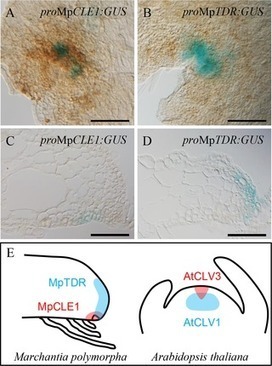
The homeostasis of meristems in flowering plants is maintained by cell-to-cell communication via CLE (CLAVATA3/EMBRYO SURROUNDING REGION-related) peptide hormones. In contrast, cell signals that regulate meristem activity remains elusive in bryophytes that maintain apical meristems in the gametophyte (haploid) body and undergo a gametophyte-dominant life cycle. We here show that MpCLE1 confines the proliferative activity of gametophytic meristem and affects the overall size of gametangiophores (reproductive organs) in Marchantia polymorpha, which is in sharp contrast with the meristem-promoting function of its ortholog TDIF/CLE41/CLE44 in Arabidopsis vascular meristems. Expression analysis suggests that MpCLE1 and its receptor gene MpTDR are expressed in distinct patterns across the apical meristem. These data suggest that local CLE peptide signaling may have had a role in regulating cell proliferation in the shoot meristem in the ancestral land plant and acts in both sporophytic and gametophytic meristems of extant plants.
|
|
Scooped by
Jean-Michel Ané
March 14, 2019 10:54 AM
|
Lysin-Motif Receptor-Like Kinase (LysM-RLK) family proteins have critical function in plant-microbe interaction. During infection, common peptide domain of these proteins, namely LysM, interacts with bacterial gylcans or fungal chitins which triggers; (1) plant immune responses, (2) plant defense responses, or (3) plant-microorganism symbiotic interactions. Since pathogenic diseases cause severe annual loss in cereals, a better understanding of the molecular basis of host-pathogen interactions is required to facilitate the development of new resistance strategies. Hence, this study focuses on LysM-RLK gene family in Brachypodium, a model plant to study cereal-pathogen interactions. Potential roles of the identified proteins during pathogen infection was assessed by digital gene expression analyses and protein modelling. We found that Brachypodium genome comprises of 11 LysM-RLK genes, which were further divided into four major groups, namely LYK (4), LysMe (2), LysMn (1), and LYP (4). They were mostly localized in plasma membrane and outer membrane (extracellular). BdLysMe genes were found to be tandem duplicated. Expression analyses showed that BdLYK2, BdLYK3, and BdLYK4 were up-regulated after Fusarium graminearum (Fg) infection. Modelling and docking analyses of BdLYK proteins with fungal chitin revealed two the most susceptible LYKs (BdLYK3 and BdLYK4) possibly having role in chitin recognition and induction of plant immune/defense responses. Results of this study can contribute to the understanding of plant-microbe interactions by assessing the structure and putative function of LysM-RLK proteins in Brachypodium, a model plant to study cereal-pathogen interactions.
|
|
Scooped by
Jean-Michel Ané
March 14, 2019 10:51 AM
|
Immune perception in flowering plants is mediated by a repertoire of cytoplasmic and cell‐surface receptors that detect invading microbes and their effects on cells. Here, we show that several large families of immune receptors exhibit size variations related to a plant's competence to host symbiotic root fungi (mycorrhiza). Plants that do not participate in mycorrhizal associations have significantly smaller immune repertoires, while the most promiscuous symbiotic hosts (ectomycorrhizal plant species) have significantly larger immune repertoires. By contrast, we find no significant increase in immune repertoire size among legumes competent to form a symbiosis with nitrogen‐fixing bacteria (rhizobia). To explain these observations, we hypothesize that plant immune repertoire size expands with symbiote species diversity.
|
|
Scooped by
Jean-Michel Ané
March 14, 2019 9:56 AM
|
Aiming to describe coastal Atlantic Rain Forest (ARF) regeneration dynamics, we evaluated attributes linked to soil biota and mycorrhizal symbiosis in two coastal ARF sites in Florianópolis, Southern Brazil. In each site, we selected forest transects in early regeneration (ER) and advanced regeneration (AR) stages, i.e., about 20 and 50 years without agricultural use, respectively. Soil total organic carbon (TOC) was higher in AR than in ER stage. Soil microbial biomass carbon (MBC) varied between sites and was higher in the AR than in the ER stage. Basal respiration and qCO2 rates differed between sites and were, respectively, higher and lower in advanced regeneration stage areas. Arbuscular mycorrhizal (AM) root colonization and AM fungal spore density were higher in the ER stage, with no difference between sites. Principal Component Analysis (PCA) for correlation between soil microbiological and chemical attributes showed that the variables with the most influence on sample separation for the first component were total spore number, soil MBC, root mycorrhizal colonization, and soil TOC. Soil pH, available P, and qCO2 had the highest influence on the second component. This analysis separated samples by regeneration stage, and sites differed only in AR stage. PCR-DGGE analysis on DNA extracted from soil samples showed that AMF community structure differed more between sites than between regeneration stages.
|