Your new post is loading...

|
Scooped by
Jean-Michel Ané
May 9, 2019 9:57 PM
|
Symbiosis, mainly due to the advances in -omics technology and to the microbiome revolution, is being increasingly acknowledged as fundamental to explain any aspect of life existence. Previously considered an exception, a peculiar characteristic of few systems like lichens, corals and mycorrhizas, symbiosis is nowadays recognized as the rule, with the microbiome being part of all living entities and systems. However, our knowledge of the ecological meaning and functioning of many symbiotic systems is still limited. Here, we discuss a new, integrative approach based on current findings that looks at commonalities among symbiotic systems to produce theoretical models and conceptual knowledge that would allow a more efficient exploitation of symbiosis-based biotechnologies. The microbiome recruitment and assemblage processes are indicated as one of the potential targets where a holistic approach could bring advantages. Finally, we reflect on the potential socio-economic and environmental consequences of a symbiotic view of the world, where co-dependence is the matrix of life.
|
|
Scooped by
Jean-Michel Ané
May 9, 2019 9:47 PM
|
INTRODUCTION
Specialized metabolism is a feature of plant evolution and adaption. Plant-specialized metabolites have ecological functions, mediating interactions between plants and their environments. Although microbes can have diverse effects on plant growth and fitness, how plants assemble and modulate their microbiota remains unclear. Understanding the factors and mechanisms underlying this process will open up avenues for engineering plant microbiota for sustainable agriculture. Plants are estimated to use ~20% of their photosynthesized carbon to make root-derived organic molecules. However, whether (and if so, which) specialized metabolites can direct the assembly of specific root microbiota is not known.
RATIONALE
Triterpenes are plant-specialized metabolites that have functions in plant defense and signaling and also have antimicrobial activities. They are one of the largest and most structurally diverse families of plant natural products. The genome of the small mustard plant Arabidopsis thaliana harbors four root-expressed triterpene biosynthetic gene clusters that encode unknown triterpene biosynthetic pathways. Plant biosynthetic gene clustering is likely to be a result of strong selection pressure during evolution with associated production of small molecules of biological and ecological importance. Several of these clustered Arabidopsis genes have been implicated in defense against root pathogens, further suggesting that metabolites derived from these triterpene biosynthetic gene clusters may modulate the Arabidopsis root microbiota.
RESULTS
We have elucidated a specialized metabolic network expressed in the roots of A. thaliana that consists of functionally divergent triterpene biosynthetic gene clusters connected by scattered genes outside the clusters that encode promiscuous acyltransferases and alcohol dehydrogenases. This metabolic network has a latent capacity for synthesizing more than 50 previously unknown root metabolites. This is a relatively large number considering the total number of nonvolatile root metabolites that we detected (approximately 300). We characterized three divergent pathways for the biosynthesis of root triterpene metabolites: thalianin, thalianyl fatty acid esters, and arabidin. Analysis of the root microbiota of A. thaliana mutants disrupted in the biosynthesis of these compounds revealed shifts in the composition and diversity of their root microbiota compared with those of the wild type. Comparison with the root bacterial profiles of the taxonomically remote species rice and wheat supports a role for this specialized triterpene biosynthetic network in mediating the establishment of an Arabidopsis-specific microbiota. We next tested the activity of purified or synthesized Arabidopsis root triterpenes and representative triterpene cocktails in vitro toward 19 taxonomically diverse bacterial strains isolated from the A. thaliana root microbiota. We found that these compounds could indeed selectively modulate the growth of these bacteria, examples of both positive and negative modulation being evident. The modulation effects of the various triterpenes on the growth of different bacterial strains correlated with the relative differential abundance of the differential bacterial genera in the roots of A. thaliana Col-0 and triterpene mutant lines. Moreover, some root bacteria were found to be able to selectively metabolize certain triterpenes (such as thalianyl fatty acid esters) and use the breakdown products such as palmitic acid as carbon sources for proliferation.
CONCLUSION
We demonstrate that A. thaliana produces a range of specialized triterpenes that direct the assembly and maintenance of an A. thaliana–specific microbiota, enabling it to shape and tailor the microbial community within and around its roots to its own purposes. We speculate that metabolic diversification within the plant kingdom may provide a basis for communication and recognition that enables the sculpting of microbiota tailored to the needs of the host and that this may in part explain the existence of plant-specialized metabolism. Our study opens up opportunities for engineering root microbiota and further paves the way for investigating the functions of root microbiota in plant growth and health.
|
|
Scooped by
Jean-Michel Ané
April 28, 2019 10:48 PM
|
Arbuscular mycorrhizal fungi (AMF) are ubiquitous soil microorganisms establishing mutualistic relationships with plants. AMF inoculation is used to increase plant productivity, including in horticulture, and AMF are introduced into commercial peat-based substrates. Little is known, however, about long-term persistence of AMF in these substrates, especially if presuming adverse storage conditions. The study tested long-term infectivity of AMF introduced to a peat-based substrate stored in five different temperature regimes (constant temperatures of −20, 5 or 20 °C) and two outdoor regimes simulating actual practice (shade and direct sunlight). Eight AMF inocula were tested, including monocultures of Claroideoglomus claroideum, Funneliformis caledonium, and F. mosseae plus two isolates of Rhizophagus irregularis, all applied as 4% (v) of the substrate, or their mixture in 1%, 4% and 8% (v) doses. Their infectivity was monitored for 56 weeks at 8-week intervals as measured by mycorrhizal root colonization of bioassay plants. In general, infectivity significantly decreased with time, but in three regimes including periods of cold (5 °C, shade and sunlight), cold stratification probably broke spore dormancy and led to temporal stimulation of AMF infectivity. Except for storage at 5 °C, where a wider AMF spectrum maintained sufficient long-term viability, infectivity became very low after 1 year. Temperature fluctuations in direct sunlight were less negative than expected, whereas infectivity decline was surprisingly strong also in mild storage conditions (20 °C). Higher inoculum dose lengthened AMF infectivity. R. irregularis isolates were found most resistant among the tested AMF. We ascribe the general decline of infectivity to unfavorable properties inherent to peat.
|
|
Scooped by
Jean-Michel Ané
April 23, 2019 10:49 PM
|
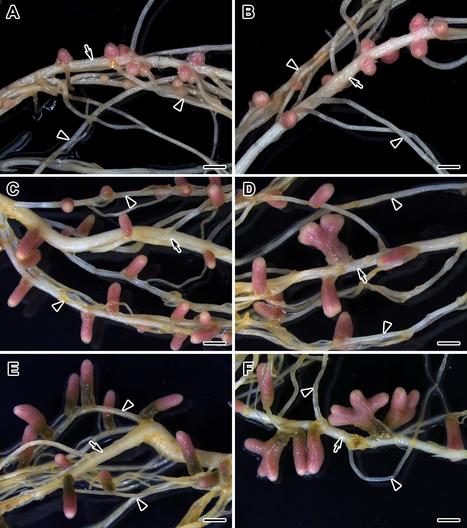
The legume-rhizobium symbiosis is a major supplier of fixed nitrogen in the biosphere and constitutes a key step of the nitrogen biogeochemical cycle. In some legume species belonging to the Inverted Repeat Lacking Clade (IRLC) and the Dalbergioids, the differentiation of rhizobia into intracellular nitrogen-fixing bacteroids is terminal and involves pronounced cell enlargement and genome endoreduplication, in addition to a strong loss of viability. In the Medicago truncatula-Sinorhizobium spp. system, the extent of bacteroid differentiation correlates with the level of symbiotic efficiency. Here, we used different physiological measurements to compare the symbiotic efficiency of photosynthetic bradyrhizobia in different Aeschynomene spp. (Dalbergioids) hosts inducing different bacteroid morphotypes associated with increasing ploidy levels. The strongly differentiated spherical bacteroids were more efficient than the less strongly differentiated elongated ones, providing a higher mass gain to their hosts. However, symbiotic efficiency is not solely correlated with the extent of bacteroid differentiation especially in spherical bacteroid-inducing plants, suggesting the existence of other factors controlling symbiotic efficiency.
|
|
Rescooped by
Jean-Michel Ané
from Plant roots and rhizosphere
April 18, 2019 2:41 PM
|
Arbuscular mycorrhizal fungi (AMF) impact plant growth and are a major driver of plant diversity and productivity. We quantified the contribution of intra-specific genetic variability in cassava (Manihot esculenta) and Rhizophagus irregularis to gene reprogramming in symbioses using dual RNA-sequencing. A large number of cassava genes exhibited altered transcriptional responses to the fungus but transcription of most of these plant genes (72%) responded in a different direction or magnitude depending on the plant genotype. Two AMF isolates displayed large differences in their transcription, but the direction and magnitude of the transcriptional responses for a large number of these genes was also strongly influenced by the genotype of the plant host. This indicates that unlike the highly conserved plant genes necessary for the symbiosis establishment, most of the plant and fungal gene transcriptional responses are not conserved and are greatly influenced by plant and fungal genetic differences, even at the within-species level. The transcriptional variability detected allowed us to identify an extensive gene network showing the interplay in plant–fungal reprogramming in the symbiosis. Key genes illustrated that the two organisms jointly program their cytoskeleton organization during growth of the fungus inside roots. Our study reveals that plant and fungal genetic variation has a strong role in shaping the genetic reprograming in response to symbiosis, indicating considerable genotype × genotype interactions in the mycorrhizal symbiosis. Such variation needs to be considered in order to understand the molecular mechanisms between AMF and their plant hosts in natural communities.
Via Christophe Jacquet
|
|
Scooped by
Jean-Michel Ané
April 16, 2019 11:04 PM
|
With a view to introducing white lupin (Lupinus albus L.) for cultivation in Tunisian calcareous soils, compatible indigenous rhizobia for nitrogen-fixing symbiosis were investigated and characterized. Two L. albus varieties, Mekna and Lumen, were used to trap rhizobia in soil samples collected from 56 sites with high lime contents (0-49%). Nodulation occurred in only 15 soils. The local variety, Mekna, developed significantly more root nodules and had a trapping capacity in more soils than the imported variety Lumen. A phylogenetic analysis based on the partial 16S–23S ribosomal RNA internal transcribed spacer region (ITS) and multi-locus sequence analysis (MLSA) of three chromosomal housekeeping genes, recA, atpD and dnaK, showed that strains were affiliated to Agrobacterium, Rhizobium, and Neorhizobium, with large internal diversity, including separate lineages. Infectivity tests highlighted some nodulation specificity at the plant variety level, since the strains originating from Mekna could only nodulate this variety, while strains trapped in Lumen could nodulate both varieties. When inoculated, almost all strains resulted in a significant increase in plant shoot dry weight on L. albus. Although Agrobacterium sp. strains isolated from L. albus could nodulate and had a plant growth promoting effect, no nodA and nodC genes could be amplified. This is discussed together with the absence of bradyrhizobia and the general infrequency of L. albus–nodulating rhizobia in Tunisian soils. The adapted and efficient rhizobial strains reported here were promising candidates for inoculant development and represent a contribution towards successful cultivation of L. albus in Tunisia, especially the most promising Mekna variety.
|
|
Scooped by
Jean-Michel Ané
April 16, 2019 10:57 PM
|
A coexpression network is a powerful tool for revealing genes’ relationship with many biological processes. Mass transcriptomic and genomic data from different plant species provide the foundation for understanding the evolution of nodulation across the Viridiplantae at a systematic level.
We used weighted coexpression network analysis (WGCNA) to mine a nodule‐related module (NRM) in Glycine max.
Comparative genomic analysis of 78 green plant species revealed that NRM genes are recruited from different evolutionary nodes along with gene duplication events. A set of core coexpressed genes within legumes that may play vital roles in regulating nodule environments essential for nitrogen fixation, including oxygen concentrations, sulfur transport, and iron homeostasis (such as GmCHY). The regulation of these genes occurred mainly at the transcription level, although some of them, such as sulfate transporters, may also undergo positive selection at protein level.
We revealed that ancient orthologs and duplication events prior to the origin of legumes were preadapted for symbiosis. Conserved coregulated genes found within legumes paved the way for nodule formation and nitrogen fixation. These findings provide significant insights into the evolution of nodulation and indicate promising candidates for identifying other key components of legume nodulation and nitrogen fixation.
|
|
Scooped by
Jean-Michel Ané
April 16, 2019 10:53 PM
|
The N2 fixing bacterium Azotobacter vinelandii carries a molybdenum storage protein, referred to as MoSto, able to bind 25-fold more Mo than needed for maximum activity of its Mo nitrogenase. Here we have investigated a plausible role of MoSto as obligate intermediate in the pathway that provides Mo for the biosynthesis of nitrogenase iron–molybdenum cofactor (FeMo-co). The in vitro FeMo-co synthesis and insertion assay demonstrated that purified MoSto functions as Mo donor and that direct interaction with FeMo-co biosynthetic proteins stimulated Mo donation. The phenotype of an A. vinelandii strain lacking the MoSto subunit genes (ΔmosAB) was analyzed. Consistent with its role as storage protein, the ΔmosAB strain showed severe impairment to accumulate intracellular Mo and lower resilience than wild type to Mo starvation as demonstrated by decreased in vivo nitrogenase activity and competitive growth index. In addition, it was more sensitive than the wild type to diazotrophic growth inhibition by W. The ΔmosAB strain was found to readily derepress vnfDGK upon Mo step down, in contrast to the wild type that derepressed Vnf proteins only after prolonged Mo starvation. The ΔmosAB mutation was then introduced in a strain lacking V and Fe-only nitrogenase structural genes (Δvnf Δanf) to investigate possible compensations from these alternative systems. When grown in Mo-depleted medium, the ΔmosAB and mosAB+ strains showed low but similar nitrogenase activities regardless of the presence of Vnf proteins. This study highlights the selective advantage that MoSto confers to A. vinelandii in situations of metal limitation as those found in many soil ecosystems. Such a favorable trait should be included in the gene complement of future nitrogen fixing plants.
|
|
Scooped by
Jean-Michel Ané
April 12, 2019 9:44 AM
|
Auxin plays central roles in rhizobial infection and nodule development in legumes. However, the sources of auxin during nodulation are unknown. In this study, we analyzed the YUCCA (YUC) gene family of soybean and identified GmYUC2a as an important regulator of auxin biosynthesis that modulates nodulation. Following rhizobial infection, GmYUC2a exhibited increased expression in various nodule tissues. Overexpression of GmYUC2a (35S::GmYUC2a) increased auxin production in soybean, resulting in severe growth defects in root hairs and root development. Upon rhizobial infection, 35S::GmYUC2a hairy roots displayed altered patterns of root hair deformation and nodule formation. Root hair deformation occurred mainly on primary roots, and nodules formed exclusively on primary roots of 35S::GmYUC2a plants. Moreover, transgenic 35S::GmYUC2a composite plants showed delayed nodule development and a reduced number of nodules. Our results suggest that GmYUC2a plays an important role in regulating both root growth and nodulation by modulating auxin balance in soybean.
|
|
Scooped by
Jean-Michel Ané
April 11, 2019 12:58 PM
|
Conventional farming is not sustainable in a context of climate change and of dramatic reductions in natural resource stocks worldwide. A change of paradigm towards more sustainable farming is necessary, based on the preservation and management of ecosystem services. The soil is a reservoir of organisms beneficial for plant production. Among these are arbuscular mycorrhizal fungi. Nevertheless, the response of plants – especially cereal landraces – to mycorrhization, and the effect of domestication on the response to mycorrhization are controversial. In the present paper we investigated the response of four wheat landraces with a low mycorrhizogenous ability to inoculation with the indigenous arbuscular mycorrhizal fungi community or an artificial community in greenhouse and field conditions. We showed that the community of arbuscular mycorrhizal fungi can have an effect on yield, even in wheat landraces with a low mycorrhizogenous ability. We also highlighted the importance to properly choose the criteria (phenotypic criteria as root and shoot biomasses versus quality criteria as grain quality) used to measure this possible gain.
|
|
Scooped by
Jean-Michel Ané
April 11, 2019 9:52 AM
|
Morphogenetic processes are the basis of new organ formation. Lateral roots (LRs) are the building blocks of the root system. After LR initiation and before LR emergence, a new lateral root primordium (LRP) forms. During this period, the organization and functionality of the prospective LR is defined. Thus, proper LRP morphogenesis is a decisive process during root system formation. Most current studies on LRP morphogenesis have been performed in the model species Arabidopsis thaliana; little is known about this process in other angiosperms. To understand LRP morphogenesis from a wider perspective, we review both contemporary and earlier studies. The latter are largely forgotten, and we attempted to integrate them into present-day research. In particular, we consider in detail the participation of parent root tissue in LRP formation, cell proliferation and timing during LRP morphogenesis, and the hormonal and genetic regulation of LRP morphogenesis. Cell type identity acquisition and new stem cell establishement during LRP morphogenesis are also considered. Within each of these facets, unanswered or poorly understood questions are identified to help define future research in the field. Finally, we discuss emerging research avenues and new technologies that could be used to answer the remaining questions in studies of LRP morphogenesis.
|
|
Scooped by
Jean-Michel Ané
April 11, 2019 9:44 AM
|
Plants associate with an infinite number of microorganisms that interact with their hosts in a mutualistic or parasitic manner. Evidence is accumulating that strigolactones (SLs) play a role in shaping these associations. The best described function of SLs in plant–microbe interactions is in the rhizosphere, where, after being exuded from the root, they activate hyphal branching and enhanced growth and energy metabolism of symbiotic arbuscular mycorrhiza fungi (AMF). Furthermore, an impact of SLs on the quantitative development of root nodule symbiosis with symbiotic nitrogen-fixing bacteria and on the success of fungal and bacterial leaf pathogens is beginning to be revealed. Thus far, the role of SLs has predominantly been studied in binary plant–microbe interactions. It can be predicted that their impact on the bacterial, fungal, and oomycetal communities (microbiomes), which thrive on roots, in the rhizosphere, and on aerial tissues, will be addressed in the near future.
|
|
Scooped by
Jean-Michel Ané
March 31, 2019 11:21 PM
|
The development of nitrogen-fixing nodules formed during Rhizobium–legume symbiosis is strongly controlled by phytohormones. In this study, we investigated the effect of gibberellins (GAs) on senescence of pea (Pisum sativum) symbiotic nodules. Pea wild-type line SGE, as well as corresponding mutant lines SGEFix--1 (sym40), SGEFix--2 (sym33), SGEFix--3 (sym26), and SGEFix--7 (sym27), blocked at different stages of nodule development, were used in the study. An increase in expression of the GA2ox1 gene, encoding an enzyme involved in GA deactivation (GA 2-oxidase), and a decrease in the transcript abundance of the GA20ox1 gene, encoding one of the enzymes involved in GA biosynthesis (GA 20-oxidase), were observed in analyzed genotypes during nodule aging. A reduction in the amount of bioactive GA3 was demonstrated by immunolocalization in the early senescent mutant and wild-type lines during aging of symbiotic nodules. Down-regulated expression of senescence-associated genes encoding cysteine proteases 1 and 15a, thiol protease, bZIP transcription factor, 1-aminocyclopropane-1-carboxylate (ACC) synthase, ACC oxidase, and aldehyde oxidase was observed in the nodules of wild-type plants treated with exogenous GA3 relative to the untreated plants. GA3-treated plants also showed increases in nodule size and the nitrogen fixation zone, and decreases in the number of nodules and the senescence zone. Immunogold localization revealed higher levels of GA3 in the peribacteroid spaces in symbiosomes than in the matrix of infection threads. Furthermore, a decrease in GA3 label in mature and senescent symbiosomes in comparison with juvenile symbiosomes was observed. These results suggest a negative effect of GAs on the senescence of the pea symbiotic nodule and possible involvement of GAs in functioning of the mature nodule. Simultaneously, GA3 treatment led to nodule meristem bifurcation, indicating a possible role of GAs in nodule meristem functioning.
|
|
|
Scooped by
Jean-Michel Ané
May 9, 2019 9:56 PM
|
Background
The intracellular accommodation of arbuscular mycorrhizal (AM) fungi involves a profound molecular reprogramming of the host cell architecture and metabolism, based on the activation of a symbiotic signaling pathway. In analogy with other plant biotrophs, AM fungi are reported to trigger cell cycle reactivation in their host tissues, possibly in support of the enhanced metabolic demand required for the symbiosis.
Results
We here compare the efficiency of three Fiji/ImageJ image analysis plugins in localizing and quantifying the increase in nuclear size - a hallmark of recursive events of endoreduplication - in M. truncatula roots colonized by the AM fungus Gigaspora margarita.
All three approaches proved to be versatile and upgradeable, allowing the investigation of nuclear changes in a complex tissue; 3D Object Counter provided more detailed information than both TrackMate and Round Surface Detector plugins.
On this base we challenged 3D Object Counter with two case studies: verifying the lack of endoreduplication-triggering responses in Medicago truncatula mutants with a known non-symbiotic phenotype; and analysing the correlation in space and time between the induction of cortical cell division and endoreduplication upon AM colonization.
Both case studies revealed important biological aspects. Mutant phenotype analyses have demonstrated that the knock-out mutation of different key genes in the symbiotic signaling pathway block AM-associated endoreduplication. Furthermore, our data show that cell divisions occur during initial stages of root colonization and are followed by recursive activation of the endocycle in preparation for arbuscule accommodation.
Conclusions
In conclusion, our results indicate 3D Object Counter as the best performing Fiji/ImageJ image analysis script in plant root thick sections and its application highlighted endoreduplication as a major feature of the AM pre-penetration response in root cortical cells.
|
|
Scooped by
Jean-Michel Ané
May 9, 2019 9:38 PM
|
During arbuscular mycorrhizal (AM) symbiosis, activation of a symbiosis signaling pathway induces gene expression necessary for accommodation of AM fungi. Here we focus on pathway components Medicago truncatula INTERACTING PROTEIN OF DOES NOT MAKE INFECTIONS 3 (IPD3) and IPD3 LIKE (IPD3L), which are potential orthologs of Lotus japonicus CYCLOPS, a transcriptional regulator essential for AM symbiosis. In ipd3 ipd3l, hyphal entry through the epidermis and overall colonization levels are reduced relative to wild type but fully developed arbuscules are present in the cortex. In comparison with wild type, colonization of ipd3 ipd3l is acutely sensitive to higher phosphate levels in the growth medium, with a disproportionate decrease in epidermal penetration, overall colonization, and symbiotic gene expression. When constitutively expressed in ipd3 ipd3l, an autoactive DOES NOT MAKE INFECTIONS 3 (DMI3) induces the expression of transcriptional regulators REDUCED ARBUSCULAR MYCORRHIZA 1 (RAM1) and REQUIRED for ARBUSCULE DEVELOPMENT 1 (RAD1), providing a possible avenue for arbuscule development even in the absence of IPD3 and IPD3L. An increased sensitivity of ipd3 ipd3l to GA3 suggests an involvement of DELLA. The data reveal partial redundancy in the symbiosis signaling pathway which may ensure robust signaling in low-P environments, while IPD3 and IPD3L maintain signaling in higher-P environments. The latter may buffer the pathway from short-term variation in P levels encountered by roots during growth in heterogeneous soil environments.
|
|
Scooped by
Jean-Michel Ané
April 28, 2019 10:45 PM
|
Historically, plant biology studies have lagged behind systems biology studies in animals and humans. However, there are signs of positive change as evidenced by the rise of big data in plant proteomics, and the availability of data science tools and next-generation sequencing technologies. Currently, the sequence information on nearly 300 plant species is available although they are curated to varying degrees of sophistication. This has led to significant enrichment of representations in the corresponding plant proteome databases. Analysis of the proteome component of an organism offers structural, functional, and network scale insights. Moreover, the development of high-throughput mass spectrometric techniques has augmented our understanding of proteins and their expression patterns under various conditions. Several thousand proteins can now be identified from a single mass spectrometric analysis. In this expert review, we provide an in-depth analysis on plant proteome databases, how to access them, and, importantly, the biological, research, and application contexts in which each database is significant, their comparative strengths, and limitations. We aimed in this analysis to reach out to young scholars embarking on plant biology and proteomic research as well as to those already established in the field so as to provide integrated critical analyses of plant proteome databases and bioinformatics tools in this nascent field of systems sciences. In conclusion, plant proteome research is an emerging and exciting frontier of integrative biology scholarship and innovation. Our future efforts must also be invested in integrating the available databases to allow for multiomics data analysis, research, and development.
|
|
Scooped by
Jean-Michel Ané
April 23, 2019 10:49 PM
|
Here, we present the draft genome sequence of strain UYCP14C, a rhizobium isolated from Calliandra parvifolia nodules. The assembled genome size was around 9.8 million bp, containing 9,031 predicted protein-coding sequences, including several symbiotic and nitrogen fixation genes. UYCP14C appears to be a novel species of the plant growth-promoting Paraburkholderia genus.
|
|
Scooped by
Jean-Michel Ané
April 18, 2019 9:54 AM
|
Dense rainforests, maple-blanketed mountains and sweeping coniferous forests demonstrate the growth and proliferation of trees adapted to specific conditions. The regional dominance of tree species we see on the surface, however, might actually have been determined underground long ago.
Princeton University researchers report that the organization of forests worldwide—such as conifers in northern boreal forests or the broad-leafed trees of the tropics—are based on the ancient relationships that plant species forged with soil-dwelling microbes such as fungi and bacteria. These tiny organisms, known as symbionts, enhance the roots' uptake of the crucial nutrients nitrogen and phosphorus.
|
|
Scooped by
Jean-Michel Ané
April 16, 2019 11:04 PM
|
The type six secretion systems (T6SSs) allow bacteria to translocate effector proteins to other bacteria or to eukaryotic cells. However, little is known about the role of T6SS in endosymbiotic bacteria. In this work we describe the T6SS of Rhizobium etli Mim1, a bacteria able to effectively nodulate common beans. Structural genes and those encoding possible effectors have been identified in a 28-gene DNA region of R. etli Mim1 pRetMIM1f plasmid. Immunodetection of Hcp protein, a conserved key structural component of T6SS systems, indicates that this secretion system is active at high cell densities, in the presence of root exudates, and in bean nodules. R. etli mutants affected in T6SS structural genes produced plants with lower dry weight and smaller nodules than the wild-type strain, indicating for the first time that the T6SS plays a positive role in Rhizobium-legume symbiosis.
|
|
Scooped by
Jean-Michel Ané
April 16, 2019 10:54 PM
|
Plant root-associated microbial symbionts comprise the plant rhizobiome. These microbes function in provisioning nutrients and water to their hosts, impacting plant health and disease. The plant microbiome is shaped by plant species, plant genotype, soil and environmental conditions, but the contributions of these variables are hard to disentangle from each other in natural systems. We used bioassay common garden experiments to decouple plant genotype and soil property impacts on fungal and bacterial community structure in the Populus rhizobiome. High throughput amplification and sequencing of 16S, ITS, 28S and 18S rDNA was accomplished through 454 pyrosequencing. Co-association patterns of fungal and bacterial taxa were assessed with 16S and ITS datasets. Community bipartite fungal-bacterial networks and PERMANOVA results attribute significant difference in fungal or bacterial communities to soil origin, soil chemical properties and plant genotype. Indicator species analysis identified a common set of root bacteria as well as endophytic and ectomycorrhizal fungi associated with Populus in different soils. However, no single taxon, or consortium of microbes, was indicative of a particular Populus genotype. Fungal-bacterial networks were over-represented in arbuscular mycorrhizal, endophytic, and ectomycorrhizal fungi, as well as bacteria belonging to the orders Rhizobiales, Chitinophagales, Cytophagales, and Burkholderiales. These results demonstrate the importance of soil and plant genotype on fungal-bacterial networks in the belowground plant microbiome.
|
|
Scooped by
Jean-Michel Ané
April 15, 2019 6:38 PM
|
The formation and functioning of arbuscular mycorrhizal (AM) symbiosis are complex and tightly regulated processes. Transcriptional regulation mechanisms have been reported to mediate gene expression changes closely associated with arbuscule formation, where nutrients move between the plant and fungus. Numerous genes encoding transcription factors (TFs), with those belonging to the GRAS family being of particular importance, are induced upon mycorrhization. In this study, a screening for candidate transcription factor genes differentially regulated in AM tomato roots showed that more than 30% of known GRAS tomato genes are upregulated upon mycorrhization. Some AM-upregulated GRAS genes were identified as encoding for transcription factors which are putative orthologs of previously identified regulators of mycorrhization in other plant species. The symbiotic role played by other newly identified AM-upregulated GRAS genes remains unknown. Preliminary results on the involvement of tomato SlGRAS18, SlGRAS38, and SlGRAS43 from the SCL3, SCL32, and SCR clades, respectively, in mycorrhization are presented. All three showed high transcript levels in the late stages of mycorrhization, and the analysis of promoter activity demonstrated that SlGRAS18 and SlGRAS43 are significantly induced in cells containing arbuscules. When SlGRAS18 and SlGRAS38 genes were silenced using RNA interference in hairy root composite tomato plants, a delay in mycorrhizal infection was observed, while an increase in mycorrhizal colonization was observed in SlGRAS43 RNAi roots. The possible mode of action of these TFs during mycorrhization is discussed, with a particular emphasis on the potential involvement of the SHR/SCR/SCL3 module of GRAS TFs in the regulation of gibberellin signaling during mycorrhization, which is analogous to other plant developmental processes.
|
|
Scooped by
Jean-Michel Ané
April 11, 2019 1:00 PM
|
Arbuscular mycorrhiza fungi’s (AMF) role in plant nutrition and stress management is well known, but very few researches and studies have been conducted so far on the fungal ability to reduce different nutrient losses (runoff, leaching and volatilization) from the soil system. This important ecosystem service of AMF had been neglected largely. From the recent findings, it has been confirmed that mycorrhizal symbiosis has potential to check the losses of applied nutrients. The role of soil biota in nutrient cycling is indispensable and determines the nutrient availability to plants. Among these biota, AMF’s association with plants is the most prevalent, but the exact mechanisms followed by AMF in nutrient cycling, transformation and reducing nutrient loss ability are still inconclusive. In this review, we will try to unlock this particular aspect of AMF which is important to achieve global food demand in a sustainable way.
|
|
Scooped by
Jean-Michel Ané
April 11, 2019 12:57 PM
|
Aims
Plant growth-promoting rhizobacteria (PGPR) substantially improve plant growth and health, but their effects on the succession of rhizosphere microbiota throughout the growth period triggered by pre-inoculation have not yet been considered.
Methods
Pepper seedlings cultured from a bio-nursery substrate containing Bacillus velezensis NJAU-Z9 and ordinary nursery substrate were used in this study to evaluate the effects of pre-colonization of a PGPR strain at the seedling stage on yield enhancement. To elucidate the underlying mechanisms involved in the rhizosphere microbiota succession during the whole growth period and their association with yield enhancement, high-throughput sequencing combined with qPCR was conducted.
Results
The results showed that, compared to the control without inoculation, pre-inoculation led to a steady yield enhancement in two-season field trials, as well as higher rhizosphere bacterial richness (Chao1) and diversity (Shannon-Wiener). The plant growth stage as the first driving factor, followed by pre-colonization drove the variations of the rhizosphere microbial community composition according to multivariate regression tree analysis and principal coordinate analysis. Variance partitioning analysis (VPA) and Mantel test results showed that the previous plant growth period induced variations in the fungal and bacterial communities at the next stage. Compared to the seedling and flowering stages, the mature-stage microbial community showed a higher degree of explanation of yield enhancement. Additionally, pre-inoculation led to distinctive rhizosphere microbiota succession compared to the control, due to alteration of the initial community. The heat map analysis showed that the rhizosphere microbiota was related to crop yield. In addition to Bacillus velezensis NJAU-Z9, which showed stable abundance in the pepper rhizosphere, stable higher relative abundance of the bacterial genera Sphingomonas, Sphingopyxis, Bradyrhizobium, Chitinophaga, Dyadobacter, Streptomyces, Lysobacter, Pseudomonas and Rhizomicrobium, and the fungal genera Cladorrhinum, Cladosporium and Aspergillus throughout the growth period induced by pre-colonization was associated with yield enhancement.
|
|
Scooped by
Jean-Michel Ané
April 11, 2019 9:47 AM
|
The symbiotic infection of root cells by nitrogen-fixing rhizobia during nodulation requires the transcription factor Nodule Inception (NIN). Our root hair transcriptomic study extends NIN’s regulon to include Rhizobium Polar Growth and genes involved in cell wall modification, gibberellin biosynthesis, and a comprehensive group of nutrient (N, P, and S) uptake and assimilation genes, suggesting that NIN’s recruitment to nodulation was based on its role as a growth module, a role shared with other NIN-Like Proteins. The expression of jasmonic acid genes in nin suggests the involvement of NIN in the resolution of growth versus defense outcomes. We find that the regulation of the growth module component Nodulation Pectate Lyase by NIN, and its function in rhizobial infection, are conserved in hologalegina legumes, highlighting its recruitment as a major event in the evolution of nodulation. We find that Nodulation Pectate Lyase is secreted to the infection chamber and the lumen of the infection thread. Gene network analysis using the transcription factor mutants for ERF Required for Nodulation1 and Nuclear Factor-Y Subunit A1 confirms hierarchical control of NIN over Nuclear Factor-Y Subunit A1 and shows that ERF Required for Nodulation1 acts independently to control infection. We conclude that while NIN shares functions with other NIN-Like Proteins, the conscription of key infection genes to NIN’s control has made it a central regulatory hub for rhizobial infection.
|
|
Scooped by
Jean-Michel Ané
April 2, 2019 10:32 AM
|
LONELY GUY (LOG) genes encode cytokinin riboside 5′‐monophosphate phosphoribohydrolases and are directly involved in the activation of cytokinins.
To assess whether LOG proteins affect the influence of cytokinin on nodulation, we studied two LOG genes of Medicago truncatula.
Expression analysis showed that MtLOG1 and MtLOG2 were upregulated during nodulation in a CRE1‐dependent manner. Expression was mainly localized in the dividing cells of the nodule primordium. In addition, RNA interference revealed that MtLOG1 is involved in nodule development and that the gene plays a negative role in lateral root development. Ectopic expression of MtLOG1 resulted in a change in cytokinin homeostasis, triggered cytokinin‐inducible genes and produced roots with enlarged vascular tissues and shortened primary roots. In addition, those 35S:LOG1 roots also displayed fewer nodules than the wild‐type. This inhibition in nodule formation was local, independent of the SUPER NUMERIC NODULES gene, but coincided with an upregulation of the MtCLE13 gene, encoding a CLAVATA3/EMBRYO SURROUNDING REGION peptide.
In conclusion, we demonstrate that in M. truncatula LOG proteins might be implicated in nodule primordium development and lateral root formation.
|