 Your new post is loading...

|
Scooped by
Jean-Michel Ané
July 3, 2019 9:39 AM
|
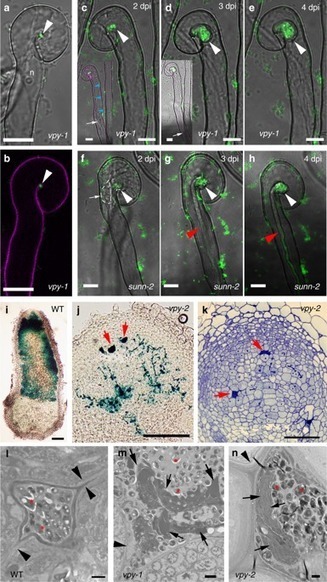
During root nodule symbiosis, intracellular accommodation of rhizobia by legumes is a prerequisite for nitrogen fixation. For many legumes, rhizobial colonization initiates in root hairs through transcellular infection threads. In Medicago truncatula, VAPYRIN (VPY) and a putative E3 ligase LUMPY INFECTIONS (LIN) are required for infection thread development but their cellular and molecular roles are obscure. Here we show that LIN and its homolog LIN-LIKE interact with VPY and VPY-LIKE in a subcellular complex localized to puncta both at the tip of the growing infection thread and at the nuclear periphery in root hairs and that the punctate accumulation of VPY is positively regulated by LIN. We also show that an otherwise nuclear and cytoplasmic exocyst subunit, EXO70H4, systematically co-localizes with VPY and LIN during rhizobial infection. Genetic analysis shows that defective rhizobial infection in exo70h4 is similar to that in vpy and lin. Our results indicate that VPY, LIN and EXO70H4 are part of the symbiosis-specific machinery required for polar growth of infection threads.
|
|
Scooped by
Jean-Michel Ané
June 27, 2019 10:32 AM
|
Long ago, during the European Renaissance, Leonardo da Vinci wrote that we humans “know more about the movement of celestial bodies than about the soil underfoot.” Five hundred years and innumerable technological and scientific advances later, his sentiment still holds true.
But that could soon change.
In a report published in Nature Communications, a team of scientists from the Department of Energy’s Lawrence Berkeley National Laboratory (Berkeley Lab) detailed the first-ever successful use of a technique called BONCAT to isolate active microbes present in a sample of soil – an achievement that could enable a tidal wave of new research.
“Soils are probably the most diverse microbial communities on the planet,” said Estelle Couradeau, first author of the study. “In every gram of soil, there are billions of cells from tens of thousands of species that, all together, perform important Earth nutrient cycles. They are the backbone of terrestrial ecosystems, and healthy soil microbiomes are key to sustainable agriculture. We now have the tools to see who these species are, but we don’t yet know how they do what they do. This proof-of-concept study shows that BONCAT is an effective tool that we could use to link active microbes to environmental processes.”
|
|
Scooped by
Jean-Michel Ané
June 25, 2019 9:57 AM
|
Nitrogen availability often restricts primary productivity in terrestrial ecosystems. Arbuscular mycorrhizal fungi are ubiquitous symbionts of terrestrial plants and can improve plant nitrogen acquisition, but have a limited ability to access organic nitrogen. Although other soil biota mineralize organic nitrogen into bioavailable forms, they may simultaneously compete for nitrogen, with unknown consequences for plant nutrition. Here, we show that synergies between the mycorrhizal fungus Rhizophagus irregularis and soil microbial communities have a highly non-additive effect on nitrogen acquisition by the model grass Brachypodium distachyon. These multipartite microbial synergies result in a doubling of the nitrogen that mycorrhizal plants acquire from organic matter and a tenfold increase in nitrogen acquisition compared to non-mycorrhizal plants grown in the absence of soil microbial communities. This previously unquantified multipartite relationship may contribute to more than 70 Tg of annually assimilated plant nitrogen, thereby playing a critical role in global nutrient cycling and ecosystem function.
|
|
Scooped by
Jean-Michel Ané
June 25, 2019 9:54 AM
|
Beneficial plant‐microbes can have a positive impact on the productivity and fitness of the host plant. A better understanding of the biological impacts and underlying mechanisms by which the host derives these benefits will help to address concerns around global food production and security. The recent development of omics‐based technologies has broadened our understanding of the molecular aspects of beneficial plant‐microbe symbiosis. Specifically, proteomics has led to the identification and characterization of several novel symbiosis‐specific and symbiosis‐related proteins and post‐translational modifications which play a critical role in mediating symbiotic plant‐microbe interactions and have help to assess the underlying molecular aspects of the symbiotic relationship, including the developmental stages of legume‐Rhizobium symbiosis and other non‐legume based relationships. Functional proteomics and the study of protein interactions will help provide a better understanding of the protein‐protein interaction networks associated with plant‐microbe symbiosis and the during the developmental stages of the symbiotic process. Integration of proteomic data with other “omics” data can provide valuable information to assess hypotheses regarding the underlying mechanism of symbiosis and help to define the factors affecting the outcome of symbiosis. In this review, we provide an update on the current and potential applications of symbiosis based “omic” approaches to dissect different aspects of symbiotic plant interactions. We also discuss the application of proteomics, metaproteomics and secretomics as enabling approaches for the functional analysis of plant‐associated microbial communities.
|
|
Scooped by
Jean-Michel Ané
June 25, 2019 9:48 AM
|
Arbuscular mycorrhizal (AM) fungi are obligate symbionts that depend on living host plants to complete their life cycle1,2. This feature, which leads to their unculturability in the absence of plants, strongly hinders basic research and agricultural application of AM fungi. However, at least one AM fungus can grow and develop fertile spores independently of a host plant in co-culture with the bacterium Paenibacillus validus3. The bacteria-derived substances are thought to act as stimulants or nutrients for fungal sporulation, but these molecules have not been identified. Here, we show that (S)-12-methyltetradecanoic acid4,5, a methyl branched-chain fatty acid isolated from bacterial cultures, stimulates the branching of hyphae germinated from mother spores and the formation of secondary spores in axenic culture of the AM fungus Rhizophagus irregularis. Extensive testing of fatty acids revealed that palmitoleic acid induces more secondary spores than the bacterial fatty acid in R. irregularis. These induced spores have the ability to infect host plant roots and to generate daughter spores. Our work shows that, in addition to a major source of organic carbon6,7,8,9, fatty acids act as stimulants to induce infection-competent secondary spores in the asymbiotic stage and could provide the key to developing the axenic production of AM inoculum.
|
|
Scooped by
Jean-Michel Ané
June 22, 2019 9:11 PM
|
Whole genome analysis of the Bradyrhizobium genus using average nucleotide identity (ANI) and phylogenomics showed the genus to be essentially monophyletic with seven robust groups within this taxon that includes nitrogen-fixing nodule forming bacteria as well as free living strains. Despite the wide genetic diversity of these bacteria no indication was found to suggest that the Bradyrhizobium genus have to split in different taxa. Bradyrhizobia have larger genomes than other genera of the Bradyrhizobiaceae family, probably reflecting their metabolic diversity and different lifestyles. Few plasmids in the sequenced strains were revealed from rep gene analysis and a relatively low proportion of the genome is devoted to mobile genetic elements. Sequence diversity of recA and glnII gene metadata was used to theoretically estimate the number of existing species and to predict how many would exist. There may be many more species than those presently described with predictions of around 800 species in nature. Different arguments are presented suggesting that nodulation might have arose in the ancestral genus Bradyrhizobium.
|
|
Scooped by
Jean-Michel Ané
June 22, 2019 9:08 PM
|
The nitrogen-fixing root nodule symbiosis is restricted to four plant orders: Fabales (legumes), Fagales, Cucurbitales and Rosales (Elaeagnaceae, Rhamnaceae, and Rosaceae). Interestingly all of the Rosaceae genera confirmed to contain nodulating species (i.e., Cercocarpus, Chamaebatia, Dryas, and Purshia) belong to a single subfamily, the Dryadoideae. The Dryas genus is particularly interesting from an evolutionary perspective because it contains closely related nodulating (Dryas drummondii) and non-nodulating species (Dryas octopetala). The close phylogenetic relationship between these two species makes Dryas an ideal model genus to study the genetic basis of nodulation by whole genome comparison and classical genetics. Therefore, we established methods for plant cultivation, transformation and DNA extraction for these species. We optimized seed surface sterilization and germination methods and tested growth protocols ranging from pots and Petri dishes to a hydroponic system. Transgenic hairy roots were obtained by adapting Agrobacterium rhizogenes-based transformation protocols for Dryas species. We compared several DNA extraction protocols for their suitability for subsequent molecular biological analysis. Using CTAB extraction, reproducible PCRs could be performed, but CsCl gradient purification was essential to obtain DNA in sufficient purity for high quality de novo genome sequencing of both Dryas species. Altogether, we established a basic toolkit for the culture, transient transformation and genetic analysis of Dryas sp.
|
|
Scooped by
Jean-Michel Ané
June 17, 2019 11:13 PM
|
Soil bacteria called rhizobia trigger the formation of root nodules on legume plants. The rhizobia infect these symbiotic organs and adopt an intracellular lifestyle within the nodule cells where they differentiate into nitrogen-fixing bacteroids. Several legume lineages enforce their symbionts into an extreme cellular differentiation, comprising cell enlargement and genome endoreduplication. The antimicrobial peptide transporter BclA is a major determinant of this process in Bradyrhizobium sp. ORS285, a symbiont of Aeschynomene spp.. In the absence of BclA, the bacteria proceed until the intracellular infection of nodule cells but they cannot differentiate into enlarged polyploid and functional bacteroids. The bclA nodule bacteria constitute thus an intermediate stage between the free-living soil bacteria and the nitrogen-fixing bacteroids. Metabolomics on whole nodules of Aeschynomene afraspera and Aeschynomene indica infected with the wild type or the bclA mutant revealed 47 metabolites that differentially accumulated concomitantly with bacteroid differentiation. Bacterial transcriptome analysis of these nodules demonstrated that the intracellular settling of the rhizobia in the symbiotic nodule cells is accompanied with a first transcriptome switch involving several hundreds of upregulated and downregulated genes and a second switch accompanying the bacteroid differentiation, involving less genes but ones that are expressed to extremely elevated levels. The transcriptomes further suggested a dynamic role for oxygen and redox regulation of gene expression during nodule formation and a non-symbiotic function of BclA. Together, our data uncover the metabolic and gene expression changes that accompany the transition from intracellular bacteria into differentiated nitrogen-fixing bacteroids.
|
|
Scooped by
Jean-Michel Ané
June 7, 2019 9:40 AM
|
The world’s ecosystems are characterized by an unequal distribution of resources [1]. Trade partnerships between organisms of different species—mutualisms—can help individuals cope with such resource inequality [2, 3, 4]. Trade allows individuals to exchange commodities they can provide at low cost for resources that are otherwise impossible or more difficult to access [5, 6]. However, as resources become increasingly patchy in time or space, it is unknown how organisms alter their trading strategies [7, 8]. Here, we show how a symbiotic fungus mediates trade with a host root in response to different levels of resource inequality across its network. We developed a quantum-dot-tracking technique to quantify phosphorus-trading strategies of arbuscular mycorrhizal fungi simultaneously exposed to rich and poor resource patches. By following fluorescent nanoparticles of different colors across fungal networks, we determined where phosphorus was hoarded, relocated, and transferred to plant hosts. We found that increasing exposure to inequality stimulated trade. Fungi responded to high resource variation by (1) increasing the total amount of phosphorus distributed to host roots, (2) decreasing allocation to storage, and (3) differentially moving resources within the network from rich to poor patches. Using single-particle tracking and high-resolution video, we show how dynamic resource movement may help the fungus capitalize on value differences across the trade network, physically moving resources to areas of high demand to gain better returns. Such translocation strategies can help symbiotic organisms cope with exposure to resource inequality.
|
|
Scooped by
Jean-Michel Ané
May 17, 2019 6:58 AM
|
The identity of the dominant root-associated microbial symbionts in a forest determines the ability of trees to access limiting nutrients from atmospheric or soil pools1,2, sequester carbon3,4 and withstand the effects of climate change5,6. Characterizing the global distribution of these symbioses and identifying the factors that control this distribution are thus integral to understanding the present and future functioning of forest ecosystems. Here we generate a spatially explicit global map of the symbiotic status of forests, using a database of over 1.1 million forest inventory plots that collectively contain over 28,000 tree species. Our analyses indicate that climate variables—in particular, climatically controlled variation in the rate of decomposition—are the primary drivers of the global distribution of major symbioses. We estimate that ectomycorrhizal trees, which represent only 2% of all plant species7, constitute approximately 60% of tree stems on Earth. Ectomycorrhizal symbiosis dominates forests in which seasonally cold and dry climates inhibit decomposition, and is the predominant form of symbiosis at high latitudes and elevation. By contrast, arbuscular mycorrhizal trees dominate in aseasonal, warm tropical forests, and occur with ectomycorrhizal trees in temperate biomes in which seasonally warm-and-wet climates enhance decomposition. Continental transitions between forests dominated by ectomycorrhizal or arbuscular mycorrhizal trees occur relatively abruptly along climate-driven decomposition gradients; these transitions are probably caused by positive feedback effects between plants and microorganisms. Symbiotic nitrogen fixers—which are insensitive to climatic controls on decomposition (compared with mycorrhizal fungi)—are most abundant in arid biomes with alkaline soils and high maximum temperatures. The climatically driven global symbiosis gradient that we document provides a spatially explicit quantitative understanding of microbial symbioses at the global scale, and demonstrates the critical role of microbial mutualisms in shaping the distribution of plant species.
|
|
Scooped by
Jean-Michel Ané
May 10, 2019 12:53 PM
|
Studying the organization of genes within genomes across broad evolutionary timescales can advance our understanding of the evolution of traits and clades. We have used a network approach to investigate genome dynamics of mammals and angiosperms. In general, genome organization and gene microcollinearity is much more conserved in mammals than in flowering plants. We then identified the genomic outliers or “rebel genes,” within each clade. Genes that have moved are unusual for mammals, whereas highly conserved single-copy genes are exceptional for plants. How conservation and changes in synteny or fundamental differences in genome organization have contributed to the evolution of lineages could be a new scientific frontier.
|
|
Scooped by
Jean-Michel Ané
May 9, 2019 10:21 PM
|
Plant systemic signaling pathways allow the integration and coordination of shoot and root organ metabolism and development at the whole-plant level depending on nutrient availability. In legumes, two systemic pathways have been reported in the Medicago truncatula model to regulate root nitrogen-fixing symbiotic nodulation. Both pathways involve leucine-rich repeat receptor-like kinases acting in shoots and proposed to perceive signaling peptides produced in roots depending on soil nutrient availability. In this study, we characterized in the M. truncatula Jemalong A17 genotype a mutant allelic series affecting the Compact Root Architecture2 (CRA2) receptor. These analyses revealed that this pathway acts systemically from shoots to positively regulate nodulation and is required for the activity of carboxyl-terminally encoded peptides (CEPs). In addition, we generated a double mutant to test genetic interactions of the CRA2 systemic pathway with the CLAVATA3/EMBRYO SURROUNDING REGION peptide (CLE)/Super Numeric Nodule (SUNN) receptor systemic pathway negatively regulating nodule number from shoots, which revealed an intermediate nodule number phenotype close to the wild type. Finally, we showed that the nitrate inhibition of nodule numbers was observed in cra2 mutants but not in sunn and cra2 sunn mutants. Overall, these results suggest that CEP/CRA2 and CLE/SUNN systemic pathways act independently from shoots to regulate nodule numbers.
|
|
Scooped by
Jean-Michel Ané
May 9, 2019 10:02 PM
|
Bradyrhizobium is thought to be the largest and most diverse rhizobial genus, but this is not reflected in the number of described species. Although it was one of the first rhizobial genera recognised, its taxonomy remains complex. Various contemporary studies are showing that genome sequence information may simplify taxonomic decisions. Therefore, the growing availability of genomes for Bradyrhizobium will likely aid in the delineation and characterization of new species. In this study, we addressed two aims: first, we reviewed the availability and quality of available genomic resources for Bradyrhizobium. This was achieved by comparing genome sequences in terms of sequencing technologies used and estimated level of completeness for inclusion in genome-based phylogenetic analyses. Secondly, we utilized these genomes to investigate the taxonomic standing of Bradyrhizobium in light of its diverse lifestyles. Although genome sequences differed in terms of their quality and completeness, our data indicate that the use of these genome sequences is adequate for taxonomic purposes. By using these resources, we inferred a fully resolved, well-supported phylogeny. It separated Bradyrhizobium into seven lineages, three of which corresponded to the so-called supergroups known for the genus. Wide distribution of key lifestyle traits such as nodulation, nitrogen fixation and photosynthesis revealed that these traits have complicated evolutionary histories. We present the first robust Bradyrhizobium species phylogeny based on genome sequence information for investigating the evolution of this important assemblage of bacteria. Furthermore, this study provides the basis for using genome sequence information as a resource to make important taxonomic decisions, particularly at the species and genus levels.
|
|
|
Scooped by
Jean-Michel Ané
July 2, 2019 12:42 PM
|
The establishment of symbiosis between legume and rhizobium results in the formation of nodule. Phytocyanins (PCs) are a class of plant-specific blue copper proteins, playing critical roles in plant development including nodule formation. Although a few PC genes have been isolated from nodules, their functions are still unclear. Here, we performed a genome-wide identification of PC family in seven sequenced legume species (Medicago truncatula, Glycine max, Cicer arietinum, Cajanus cajan, Lotus japonicus, Vigna angularis and Phaseolus vulgaris) and found PCs experienced a remarkable expansion in M. truncatula and G. max. Further, we conducted an in-depth analysis of PC family in the model legume M. truncatula. Briefly, 82 MtPCs were divided into four subfamilies and clustered into seven clades, with a large proportion of tandem duplications and various cross-tissues expression patterns. Importantly, some PCs, such as MtPLC1, MtENODL27 and MtENODL28 were preferentially expressed in nodules. Further, RNA interference (RNAi) experiment revealed the knockdown of MtENDOL27 and MtENDOL28 impaired rhizobia infection, nodule numbers and nitrogenase activity. Moreover, in the MtENODL27-RNAi nodules, the infected cells were reduced and the symbiosomes did not reach the elongated stage, indicating MtENDOL27 is required for rhizobia infection and nodule development. In addition, co-expression analysis showed MtPLC1, MtENODL27 and MtENODL28 were grouped into two different functional modules and co-expressed with the known symbiotic nitrogen fixation-related genes, suggesting that they might participate in nodulation via different ways. In summary, this study provides a useful resource for future researches on the structure and function of PCs in nodulation.
|
|
Scooped by
Jean-Michel Ané
June 25, 2019 10:32 PM
|
Reactive nitrogen oxides (NOy; NOy = NO + NO2 + HONO) decrease air quality and impact radiative forcing, yet the factors responsible for their emission from nonpoint sources (i.e., soils) remain poorly understood. We investigated the factors that control the production of aerobic NOy in forest soils using molecular techniques, process-based assays, and inhibitor experiments. We subsequently used these data to identify hotspots for gas emissions across forests of the eastern United States. Here, we show that nitrogen oxide soil emissions are mediated by microbial community structure (e.g., ammonium oxidizer abundances), soil chemical characteristics (pH and C:N), and nitrogen (N) transformation rates (net nitrification). We find that, while nitrification rates are controlled primarily by chemoautotrophic ammonia-oxidizing archaea (AOA), the production of NOy is mediated in large part by chemoautotrophic ammonia-oxidizing bacteria (AOB). Variation in nitrification rates and nitrogen oxide emissions tracked variation in forest communities, as stands dominated by arbuscular mycorrhizal (AM) trees had greater N transformation rates and NOy fluxes than stands dominated by ectomycorrhizal (ECM) trees. Given mapped distributions of AM and ECM trees from 78,000 forest inventory plots, we estimate that broadleaf forests of the Midwest and the eastern United States as well as the Mississippi River corridor may be considered hotspots of biogenic NOy emissions. Together, our results greatly improve our understanding of NOy fluxes from forests, which should lead to improved predictions about the atmospheric consequences of tree species shifts owing to land management and climate change.
|
|
Scooped by
Jean-Michel Ané
June 25, 2019 9:54 AM
|
Arbuscular mycorrhiza (AM) is a symbiosis between plants and AM fungi that requires the intracellular accommodation of the fungal partner in the host. For reciprocal nutrient exchange, AM fungi form intracellular arbuscules that are surrounded by the peri-arbuscular membrane. This membrane, together with the fungal plasma membrane, and the space in between, constitute the symbiotic interface, over which nutrients are exchanged. Intracellular establishment of AM fungi requires the VAPYRIN protein which is induced in colonized cells, and which localizes to numerous small mobile structures of unknown identity (Vapyrin-bodies). In order to characterize the identity and function of the Vapyrin-bodies we pursued a dual strategy. First, we co-expressed fluorescently tagged VAPYRIN with a range of subcellular marker proteins, and secondly, we employed biochemical tools to identify interacting partner proteins of VAPYRIN. As an important tool for the quantitative analysis of confocal microscopic data sets from co-expression of fluorescent proteins, we developed a semi-automated image analysis pipeline that allows for precise spatio-temporal quantification of protein co-localization and of the dynamics of organelle association from movies. Taken together, these experiments revealed that Vapyrin-bodies have an endosomal identity with trans-Golgi features, and that VAPYRIN interacts with a symbiotic R-SNARE of the VAMP721 family, that localizes to the same compartment.
|
|
Scooped by
Jean-Michel Ané
June 25, 2019 9:52 AM
|
Background
The Growth-regulating factor (GRF) family encodes plant-specific transcription factors which contain two conserved domains, QLQ and WRC. Members of this family play vital roles in plant development and stress response processes. Although GRFs have been identified in various plant species, we still know little about the GRF family in soybean (Glycine max).
Results
In the present study, 22 GmGRFs distributed on 14 chromosomes and one scaffold were identified by searching soybean genome database and were clustered into five subgroups according to their phylogenetic relationships. GmGRFs belonging to the same subgroup shared a similar motif composition and gene structure. Synteny analysis revealed that large-scale duplications played key roles in the expansion of the GmGRF family. Tissue-specific expression data showed that GmGRFs were strongly expressed in growing tissues, including the shoot apical meristems, developing seeds and flowers, indicating that GmGRFs play critical roles in plant growth and development. On the basis of expression analysis of GmGRFs under shade conditions, we found that all GmGRFs responded to shade stress. Most GmGRFs were down-regulated in soybean leaves after shade treatment.
Conclusions
Taken together, this research systematically analyzed the characterization of the GmGRF family and its primary roles in soybean development and shade stress response. Further studies of the function of the GmGRFs in the growth, development and stress tolerance of soybean, especially under shade stress, will be valuable.
|
|
Scooped by
Jean-Michel Ané
June 22, 2019 9:12 PM
|
Symbiotic fungi associated with plant roots can shuttle a key nutrient through their hyphal network in response to resource inequality. This need-based transport optimizes trade conditions for carbon with plants.
|
|
Scooped by
Jean-Michel Ané
June 22, 2019 9:10 PM
|
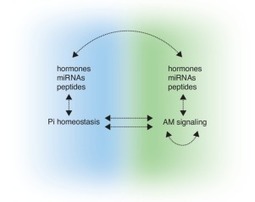
Most land plant species engage in a beneficial interaction with arbuscular mycorrhizal fungi in order to increase mineral nutrient acquisition, in particular the major macronutrient phosphorus (P). Initiation, development, and maintenance of the symbiosis are largely under the control of the host plant and strongly influenced by the plants’ P status. Recent advances reveal that phytohormones, microRNAs, and secreted peptides all regulate and integrate development of arbuscular mycorrhizal (AM) symbiosis with the P status of the plant. This occurs through a complex, multi-layered signaling network with crosstalk between phosphate (Pi) starvation signaling pathways and AM symbiosis signaling, and also via direct effects on the AM fungal symbiont. Multiple checkpoints allow the plant to fine-tune symbiosis based on its P status.
|
|
Scooped by
Jean-Michel Ané
June 17, 2019 11:17 PM
|
Rhizobium tropici strain CIAT 899 possesses outstanding agronomic properties as it displays tolerance to environmental stresses, a broad host range and high effectiveness in fixing nitrogen with the common bean (Phaseolus vulgaris L.); in addition, it carries intriguing features such as five copies of the regulatory nodD gene, and the capacity to synthesize a variety of nodulation factors (NFs), even in a flavonoid-independent manner, when submitted to abiotic stresses. However, the roles of several nod genes of the repertoire of CIAT 899 remain to be determined. In this study, we obtained mutants for the hsnT, nodF and nodE genes of CIAT 899 and investigated their expression, NF structures and symbiotic properties. Either in the presence of the flavonoid apigenin, or of salt the expression of hsnT, nodF and nodE in wild-type CIAT 899 was highly up-regulated in comparison to the mutants of all five copies of nodD, indicating the roles that regulatory nodD genes play in the activation of hsnT, nodF and nodE; however, NodD1 was recognized as the main inducer. In total, 29 different NF structures were synthesized by wild-type CIAT 899 induced by apigenin, and 36 when induced by salt, being drastically reduced by mutations in hsnT, nodF and nodE, especially under osmotic stress, with specific changes related to each gene, indicating that the three genes participate in the synthesis of NFs. Mutations in hsnT, nodF and nodE affected differently symbiotic performance (nodule number and shoot dry weight), according to the host plant. Our results indicate that the expression of hsnT, nodF and nodE genes of CIAT 899 is mediated by nodD genes, and although these three genes do not belong to the main set of genes controlling nodulation, they contribute to the synthesis of NFs that will impact symbiotic performance and host specificity.
|
|
Scooped by
Jean-Michel Ané
June 17, 2019 11:10 PM
|
Microfluidic systems are well-suited for studying mixed biological communities for improving industrial processes of fermentation, biofuel production, and pharmaceutical production. The results of which have the potential to resolve the underlying mechanisms of growth and transport in these complex branched living systems. Microfluidics provide controlled environments and improved optical access for real-time and high-resolution imaging studies that allow high-content and quantitative analyses. Studying growing branched structures and the dynamics of cellular interactions with both biotic and abiotic cues provides context for molecule production and genetic manipulations. To make progress in this arena, technical and logistical barriers must be overcome to more effectively deploy microfluidics in biological disciplines. A principle technical barrier is the process of assembling, sterilizing, and hydrating the microfluidic system; the lack of the necessary equipment for the preparatory process is a contributing factor to this barrier. To improve access to microfluidic systems, we present the development, characterization, and implementation of a microfluidics assembly and packaging process that builds on self-priming point-of-care principles to achieve “ready-to-use microfluidics.”
|
|
Scooped by
Jean-Michel Ané
May 31, 2019 11:43 PM
|
A stable and efficient plasmid transfer system was developed for the nitrogen-fixing symbiotic actinobacteria Frankia, a key first step in developing a genetic system. Four derivatives of the broad-host-range cloning vector pBBR1MCS were successfully introduced into different Frankia strains by a filter mating with Escherichia coli strain BW29427. Initially, the plasmid pHKT1 that expresses the green fluorescent protein (GFP) was introduced into Frankia casuarinae strain CcI3 at a frequency of 4.0 X 10⁻³ resulting in transformants that were tetracycline resistant and exhibited GFP fluorescence. The presence of the plasmid was confirmed by molecular approaches including visualization on agarose gel and PCR. Several other pBBR1MCS plasmids were also introduced into F. casuarinae strain CcI3 and other Frankia strains at frequencies ranging from 10-2 to 10-4, and the presence of the plasmids was confirmed by PCR. The plasmids were stably maintained for over 2 years and through the passage in a plant host. As a proof of concept, a salt-tolerance candidate gene from the high salt-tolerance Frankia sp. strain CcI6 was cloned into pBBR1MCS-3. The resulting construct was introduced into the salt-sensitive F. casuarinae strain CcI3. End-point RT PCR showed that the gene was expressed in F. casuarinae strain CcI3. The expression provided an increased level of salt tolerance for the transformant. These results represent stable plasmid transfer and exogenous gene expression in Frankia, overcoming a major hurdle in the field. This is a step in developing genetic tools in Frankia will open up new avenues for research for actinorhizal symbiosis.
|
|
Scooped by
Jean-Michel Ané
May 16, 2019 9:22 AM
|
Nitrogen is the major nutrient limiting plant growth in terrestrial ecosystems, and the transformation of inert nitrogen to forms that can be assimilated by plants is mediated by soil micro‐organisms.
The last decade has witnessed many significant advances in our understanding of plant–microbe interactions with evidence that plants have evolved multiple strategies to cope with nitrogen limitation by shaping and recruiting nitrogen‐cycling microbial communities. However, most studies have typically focused on the impact of plants on only one, or relatively few, processes within the nitrogen cycle.
This review synthesizes recent advances in our understanding of the various routes by which plants influence the availability of nitrogen via an array of interactions with different guilds of nitrogen‐cycling micro‐organisms. We also propose a plant trait‐based framework for linking plant nitrogen acquisition strategies to the activities of nitrogen‐cycling microbial guilds. In doing so, we provide a more comprehensive picture of the ecological relationships between plants and nitrogen‐cycling micro‐organisms in terrestrial ecosystems.
Finally, we identify previously overlooked processes within the nitrogen cycle that could be targeted in future research and be of interest for plant health or for improving plant nitrogen acquisition, while minimizing nitrogen inputs and losses in sustainable agricultural systems.
|
|
Scooped by
Jean-Michel Ané
May 9, 2019 10:21 PM
|
Plant nonspecific lipid transfer proteins (nsLTPs) are involved in a number of biological processes including root nodule symbiosis. However, the role of nsLTPs in legume-rhizobium symbiosis remains poorly understood, and no rhizobia proteins that interact with nsLTPs have been reported to date. In this study, we used a bacteria two-hybrid system and identified the high temperature protein G (HtpG) from Mesorhizobium huakuii that interacts with the nsLTP AsE246. The interaction between HtpG and AsE246 was confirmed by far-Western blotting and bimolecular fluorescence complementation. Our results indicated that the heat shock protein 90 (HSP90) domain of HtpG mediates the HtpG-AsE246 interaction. Immunofluorescence assay showed that HtpG was colocalized with AsE246 in infected nodule cells and symbiosome membranes. Expression of the htpG gene was relatively higher in young nodules and was highly expressed in the infection zones. Further investigation showed that htpG expression affects lipid abundance and profiles in root nodules and plays an essential role in nodule development and nitrogen fixation. Our findings provide further insights into the functional mechanisms behind the transport of symbiosome lipids via nsLTPs in root nodules.
|
|
Scooped by
Jean-Michel Ané
May 9, 2019 10:15 PM
|
Most terrestrial plants form a root symbiosis with arbuscular mycorrhizal (AM) fungi, which receive fixed carbon from the plant and enhance the plant’s uptake of mineral nutrients. AM symbiosis improves the phosphorous and nitrogen nutrition of host plants; however, little is known about the role of AM symbiosis in potassium (K+) nutrition. Here, we report that inoculation with the AM fungus Rhizophagus irregularis improved tomato (Solanum lycopersicum) plant growth and K+ acquisition and that K+ deficiency has a negative effect on root growth and AM colonization. Based on its homology to a Lotus japonicus AM-induced K+ transporter, we identified a mycorrhiza-specific tomato K+ transporter, SlHAK10 (Solanum lycopersicum High-affinity Potassium Transporter10), that was exclusively expressed in arbuscule-containing cells. SlHAK10 could restore a yeast K+ uptake-defective mutant in the low-affinity concentration range. Loss of function of SlHAK10 led to a significant decrease in mycorrhizal K+ uptake and AM colonization rate under low-K+ conditions but did not affect arbuscule development. Overexpressing SlHAK10 from the constitutive cauliflower mosaic virus 35S promoter or the AM-specific Solanum melongena Phosphate Transporter4 not only improved plant growth and K+ uptake but also increased AM colonization efficiency and soluble sugar content in roots supplied with low K+. Our results indicate that tomato plants have a SlHAK10-mediated mycorrhizal K+ uptake pathway and that improved plant K+ nutrition could increase carbohydrate accumulation in roots, which facilitates AM fungal colonization.
|










One more excellent paper from Jeremy Murray's lab and others!