Your new post is loading...

|
Scooped by
Jean-Michel Ané
March 5, 2020 12:27 PM
|
There is mounting evidence that species arrival order can affect microbiome composition, a phenomenon known as priority effects. However, it is less clear whether priority effects during microbiome assembly have consequences for the host, or whether intraspecific variation in host traits can alter the trajectory of microbiome assembly. In a greenhouse inoculation experiment, using the Populus trichocarpa foliar microbiome, we manipulated host genotype and the arrival order of a synthetic community of foliar fungi. We quantified microbiome assembly outcomes using marker-gene sequencing and tested host susceptibility to a foliar rust pathogen. We found that the effect of species arrival order on microbiome composition and function (i.e., disease modification) depended on host genotype. Additionally, we found that fungal species arrival order can affect host disease susceptibility independent from microbiome composition, suggesting that the interactive effects of species arrival order and host genotype can decouple composition and function in the plant microbiome.
|
|
Scooped by
Jean-Michel Ané
March 5, 2020 12:26 PM
|
Plant-associated microbial communities play a central role in the plant response to biotic and abiotic stimuli, improving plant fitness under challenging growing conditions. Many studies have focused on the characterization of changes in abundance and composition of root-associated microbial communities as a consequence of the plant response to abiotic factors such as altered soil nutrients and drought. However, changes in composition in response to abiotic factors are still poorly understood concerning the endophytic community associated to the phyllosphere, the above-ground plant tissues. In the present study, we applied high-throughput 16S rDNA gene sequencing of the phyllosphere endophytic bacterial communities colonizing wild Populus trichocarpa (black cottonwood) plants growing in native, nutrient-limited environments characterized by hot-dry (xeric) riparian zones (Yakima River, WA), riparian zones with mid hot-dry (Tieton and Teanaway Rivers, WA) and moist (mesic) climates (Snoqualmie, Skykomish and Skagit Rivers, WA). From sequencing data, 587 Amplicon Sequence Variants (ASV) were identified. Surprisingly, our data show that a core microbiome could be found in phyllosphere-associated endophytic communities in trees growing on opposite sides of the Cascades Mountain Range. Considering only taxa appearing in at least 90% of all samples within each climatic zone, the core microbiome was dominated only by two ASVs affiliated Pseudomonadaceae and two ASVs of the Enterobacteriaceae family. Alpha-diversity measures indicated that plants colonizing hot-dry environments showed a lower diversity than those from mid hot-dry and moist climates. Beta-diversity measures showed that bacterial composition was significantly different across sampling sites. Accordingly, we found that specific ASV affiliated to Pseudomonadaceae and Enterobacteriaceae were significantly more abundant in the phyllosphere endophytic community colonizing plants adapted to the xeric environment. In summary, this study highlights that sampling site is the major driver of variation and that only a few ASV showed a distribution that significantly correlated to climate variables.
|
|
Scooped by
Jean-Michel Ané
March 4, 2020 9:50 PM
|
Employing mycorrhiza-defective mutants and their progenitors does not require inoculation or elimination of the resident microbial community in the experimental study of mycorrhizal soil ecology. We aimed to examine the suitability of mycorrhiza-defective rice (non-mycorrhizal, Oryza sativa L., cv. Nipponbare) and its progenitor (mycorrhizal) to evaluate nitrogen (N) loss control from paddy fields via arbuscular mycorrhizal (AM) fungi. We grew the two rice lines in soils with the full community of AM fungi and investigated root AM colonization. In the absence of AM fungi, we estimated rice N content, soil N concentration and microbial community on the basis of phospholipid fatty acids; we also quantified N loss via NH3 volatilization, N2O emission, runoff and leaching. In the presence of AM fungi, we did not find any evidence of AM colonization for non-mycorrhizal rice while mycorrhizal rice was colonized and percentage of root colonization was 17–24%. In the absence of AM fungi, the two rice lines had similar N content, soil N concentration and microbial community. Importantly, there was no significant difference in N loss via all the four pathways between mycorrhizal and non-mycorrhizal systems. This mycorrhizal/non-mycorrhizal rice pair is suitable for further research on the role of AM fungi in the control of soil N loss in paddy fields.
|
|
Scooped by
Jean-Michel Ané
March 4, 2020 9:44 PM
|
Assessing the effects of transgenic crops on rhizobacterial communities has catalyzed numerous studies in the recent past decades. To address further to this concern, we designed research to examine the variations in the bacterial diversity profiles of transgenic insect-resistant maize line 2A-5 (2A5) carrying mcry1Ab and mcry2Ab genes and its control Zheng58 (Z58), at different developmental stages under natural field conditions. High-throughput sequencing of the 16S rDNA gene (V3–V4) hyper-variable region via Illumina MiSeq revealed no significant shifts in the overall α and β-diversity. However, some developmental stage-dependent discrepancies were observed in the relative abundances of microbial communities. At the jointing stage, members of the phylum Proteobacteria, and the genera Rahnella, Kaistobacter, Pseudomonas and Arthrobacter were greatly enriched in the rhizosphere soil of 2A5 and Z58 compared to bulk, and surrounding soil while de-riched with the microbes belonging to the genera Bacillus and Flavobacterium. In addition, the relative abundances of nitrogen fixing microbes i.e. Arthrobacter, Burkholderia and Pseudomonas in the rhizosphere samples of 2A5 showed exuberance compared to those of Z58 at the flowering and maturation stages, implying that genetic modification might play a role in the enrichment/derichment of some nitrogen fixing microbes. The results of our study indicate little to no impacts of transgenic maize carrying mcry1Ab and mcry2Ab genes and also, the changes in the rhizosphere bacterial communities are imposed by host plant during different developmental stages.
|
|
Scooped by
Jean-Michel Ané
March 4, 2020 9:33 PM
|
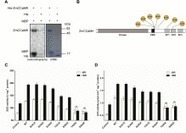
Calcium/calmodulin-dependent protein kinase (CCaMK) has been shown to play important roles in brassinosteroid (BR)-induced antioxidant defense and enhancing the tolerance of plants to drought stress. The autophosphorylation of CCaMK is a key step for the activation of CCaMK, thus promoting substrate phosphorylation. However, how CCaMK autophosphorylation function in BR-induced antioxidant defense is not known yet. Here, seven potential autophosphorylation sites of ZmCCaMK were identified using mass spectroscopy (liquid chromatography-tandem mass spectrometry [LC-MS/MS]) analysis. The transient gene expression analysis in maize protoplasts showed that Thr420 and Ser454 of ZmCCaMK were important for BR-induced antioxidant defense. Furthermore, Thr420 and Ser454 of ZmCCaMK were crucial for improving drought tolerance and alleviating drought induced oxidative damage of plants via overexpressing various mutant versions of ZmCCaMK in tobacco (Nicotiana tabacum). Mutations of Thr420 and Ser454 in ZmCCaMK substantially blocked the autophosphorylation and substrate phosphorylation of ZmCCaMK in vitro. Taken together, our results demonstrate that Thr420 and Ser454 of ZmCCaMK are crucial for BR-induced antioxidant defense and drought tolerance through modulating the autophosphorylation and substrate phosphorylation activities of ZmCCaMK.
|
|
Scooped by
Jean-Michel Ané
February 26, 2020 9:54 AM
|
Interactions with microbes in the soil are crucial to the health of plants. Some bacteria turn nitrogen from the air into ammonia, and thence into nitrates, thus “fixing” that element in a form which plants can absorb and turn into proteins. Others, by secreting antibiotics, protect plants from pathogens. Others still, through the formation of colonies called biofilms on the surfaces of soil particles, help trap water in the soil. And fungi, which consist of long networks of hyphae that often penetrate plant roots, facilitate the uptake by those roots of nutrients from the soil
|
|
Scooped by
Jean-Michel Ané
February 25, 2020 9:45 PM
|
Compared to free-living relatives, bacterial symbionts of plants exhibit higher rates of population diversification (microevolution), as well as of speciation and formation of super-species taxa (macroevolution). Analysis of rhizobia, the N2-fixing symbionts of leguminous plants, suggests that both evolutionary modes are determined by the hosts, which have mutagenic and recombinogenic effects on their microsymbionts, apart from activating the selective processes that determine the fate of newly emerged genotypes in their populations. Migration induced by leguminous plants plays a key role in the evolution of rhizobia, including: (1) joint movement of the symbionts and their hosts into new ecological zones and (2) local circulation of the symbionts in plant‒soil systems. In the first case, allopatric speciation occurs in rhizobia due to transfer of the symbiotically specialized (sym) genes from the introduced strains into local bacteria, which are transformed into novel symbionts. In the second case, a sympatric divergence of Rhizobium populations occurs, resulting in formation of intraspecies taxa (biovars and symbiovars) contrasting in their host ranges. In the evolutionarily advanced rhizobia, Rhizobium leguminosarum and Neorhizobium galegae interacting with galegoid legumes (tribes Fabeae, Galegae, and Trifolieae), these processes are associated with diversification of the sym genes representing the accessory genome parts due to the interaction between bacteria and the hosts differing in their symbiotic affinities. In parallel, formation of new cryptic (genomic) species was revealed in local rhizobia populations, which is associated with divergence of the core genome parts. It may be caused either by genetic drift or by selection for resistance against local edaphic stresses, which in combination with disruptive selection can sufficiently enhance the rhizobia diversity and change the structures of their pangenomes.
|
|
Scooped by
Jean-Michel Ané
February 25, 2020 9:42 PM
|
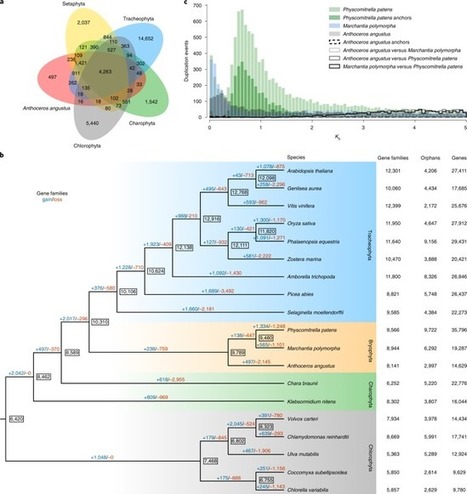
Hornworts, liverworts and mosses are three early diverging clades of land plants, and together comprise the bryophytes. Here, we report the draft genome sequence of the hornwort Anthoceros angustus. Phylogenomic inferences confirm the monophyly of bryophytes, with hornworts sister to liverworts and mosses. The simple morphology of hornworts correlates with low genetic redundancy in plant body plan, while the basic transcriptional regulation toolkit for plant development has already been established in this early land plant lineage. Although the Anthoceros genome is small and characterized by minimal redundancy, expansions are observed in gene families related to RNA editing, UV protection and desiccation tolerance. The genome of A. angustus bears the signatures of horizontally transferred genes from bacteria and fungi, in particular of genes operating in stress-response and metabolic pathways. Our study provides insight into the unique features of hornworts and their molecular adaptations to live on land.
|
|
Scooped by
Jean-Michel Ané
February 25, 2020 9:37 PM
|
Plant hormones can induce the formation of nodule-like structures (NLS) in plant roots even in the absence of bacteria. These structures can be induced in roots of both legumes and non-legumes. Moreover, nitrogen-fixing bacteria can recognize and colonize these root structures. Therefore, identifying the genetic switches controlling the NLS organogenesis program in crops, especially cereals, can have important agricultural implications. Our recent study evaluated the transcriptomic response occurring in rice roots during NLS formation, 7 days post-treatment (dpt) with auxin, 2,4-D. In this current study, we investigated the regulation of gene expression occurring in rice roots at different stages of NLS formation: early (1-dpt) and late (14-dpt). At 1-dpt and 14-dpt, we identified 1662 and 1986 differentially expressed genes (DEGs), respectively. Gene ontology enrichment analysis revealed that the dataset was enriched with genes involved in auxin response and signaling; and in anatomical structure development and morphogenesis. Next, we compared the gene expression profiles across the three time points (1-, 7-, and 14-dpt) and identified genes that were uniquely or commonly differentially expressed at all three time points. We compared our rice RNA-seq dataset with a nodule transcriptome dataset in Medicago truncatula. This analysis revealed there is some amount of overlap between the molecular mechanisms governing nodulation and NLS formation. We also identified that some key nodulation genes were not expressed in rice roots during NLS formation. We validated the expression pattern of several genes via reverse transcriptase polymerase chain reaction (RT-PCR). The DEGs identified in this dataset may serve as a useful resource for future studies to characterize the genetic pathways controlling NLS formation in cereals.
|
|
Scooped by
Jean-Michel Ané
February 25, 2020 9:30 PM
|
A growing number of small secreted peptides (SSPs) in plants are recognized as important regulatory molecules with roles in processes such as growth, development, reproduction, stress tolerance, and pathogen defense. Recent discoveries further implicate SSPs in regulating root nodule development, which are of particular significance for legumes. SSP-coding genes are frequently overlooked due to genome annotation pipelines generally ignoring small open reading frames (sORFs), which are those most likely to encode SSPs. Also, SSP-coding sORFs are often expressed at low levels or only under specific conditions, thus are under-represented in non-tissue-targeted or non-condition-optimized RNA-seq projects. We previously identified 4,439 SSP-encoding genes in the model legume Medicago truncatula. To support systematic characterization and annotation of these putative SSP-encoding genes, we developed the Medicago truncatula Small Secreted Peptide Database or MtSSPdb (https://mtsspdb.noble.org/). MtSSPdb currently hosts 1) a compendium of Medicago truncatula SSP candidates with putative function and family annotations; 2) a large-scale Medicago truncatula RNA-seq-based gene expression atlas integrated with various analytical tools, including differential expression, co-expression, and pathway enrichment analyses; 3) an online plant SSP prediction tool capable of analyzing protein sequences at the genome-scale using the same protocol for the identification of SSP genes; and 4) information about a library of synthetic peptides and root and nodule phenotyping data from synthetic peptide screens in planta. These datasets and analytical tools make MtSSPdb a unique and valuable resource for the plant research community. MtSSPdb also has the potential to become the most complete database of SSPs in plants.
|
|
Scooped by
Jean-Michel Ané
February 24, 2020 10:40 PM
|
Arbuscular mycorrhizal fungi (AMF) are a key group of beneficial obligate biotrophs, establishing a mutualistic symbiosis with the roots of most land plants. The molecular markers generally used for their characterization are mainly based on informative regions of nuclear rDNA (SSU-ITS-LSU), although protein-encoding genes have also been proposed. Within functional genes, those encoding for phosphate transporters (PT) are particularly important in AMF, given their primary ability to take up Pi from soil, and to differentially affect plant phosphate nutrition. In this work, we investigated the genetic diversity of PT1 gene sequences and sequences of the taxonomically relevant SSU-ITS-LSU region in two isolates of the species Funneliformis coronatus, three isolates of the species Funneliformis mosseae and two species of the genus Rhizoglomus, originated from geographically distant areas and cultured in vivo. Our results showed that partial PT1 sequences not only successfully differentiated AMF genera and species likewise ribosomal gene sequences, but they also highlighted intraspecific diversity among F. mosseae and F. coronatus isolates. The study of functional genes related to the uptake of key mineral nutrients for the assessment of AMF diversity represents a key step in the selection of efficient isolates to be used as inocula in sustainable agriculture.
|
|
Scooped by
Jean-Michel Ané
February 24, 2020 10:38 PM
|
The present PhD thesis is mainly focused on the identification of AM-regulated maize aquaporin isoforms key for drought tolerance, and the identification of their specific functions in planta. Moreover, it is a goal of this study to understand if these aquaporins have a key influence on root water transport capacity of the host plant and if they contribute to the higher flexibility of AM roots for switching between cell-to-cell and apoplastic water transport pathways. With this aim, the combination between Zea mays L. and Rhizophagus irregularis was used as a model in all the experiments carried out in this PhD thesis. In summary, the study conducted in this PhD Thesis increases the general knowledge about the plant drought tolerance induced by the AM symbiosis. It is evidenced that the AM symbiosis has a role in the modulation of cell water conductivity in roots, which is probably related to aquaporins activity. Moreover, the higher flexibility of AM roots to modulate water transport is confirmed in independent experiments, which is translated into the better performance of these plants under water scarcity.
|
|
Scooped by
Jean-Michel Ané
February 24, 2020 10:32 PM
|
Plant receptor-like kinases (RLKs) control the initiation, development and maintenance of symbioses with beneficial mycorrhizal fungi and nitrogen-fixing bacteria. Carbohydrate perception activates symbiosis signalling via Lysin-motif (LysM) RLKs and subsequently the common symbiosis signalling pathway. As the receptors activated are often also immune receptors in multiple species, exactly how carbohydrate identities avoid immune activation and drive symbiotic outcome is still not fully understood. This may involve the coincident detection of additional signalling molecules that provide specificity. Because of the metabolic costs of supporting symbionts, the level of symbiosis development is fine-tuned by a range of local and mobile signals that are activated by various RLKs. Beyond early, pre-contact symbiotic signalling, signal exchanges ensue throughout infection, nutrient exchange and turnover of symbiosis. Here, we review the latest understanding on plant symbiosis signalling from the perspective of RLK-mediated pathways.
|
|
|
Scooped by
Jean-Michel Ané
March 5, 2020 12:26 PM
|
Symbiotic nitrogen fixation carried out by the interaction between legumes and diazotrophic bacteria known as rhizobia requires relatively large levels of transition metals. These elements are cofactors of many key enzymes involved in this process. Metallic micronutrients are obtained from soil by the roots and directed to sink organs by the vasculature, in a process mediated by a number of metal transporters and small organic molecules that facilitate metal delivery in the plant fluids. Among the later, nicotianamine is one of the most important. Synthesized by nicotianamine synthases (NAS), this molecule forms metal complexes participating in intracellular metal homeostasis and long-distance metal trafficking. Here we characterized the NAS2 gene from model legume Medicago truncatula. MtNAS2 is located in the root vasculature and in all nodule tissues in the infection and fixation zones. Symbiotic nitrogen fixation requires of MtNAS2 function, as indicated by the loss of nitrogenase activity in the insertional mutant nas2-1, phenotype reverted by reintroduction of a wild-type copy of MtNAS2. This would result from the altered iron distribution in nas2-1 nodules shown with X-ray fluorescence. Moreover, iron speciation is also affected in these nodules. These data suggest a role of nicotianamine in iron delivery for symbiotic nitrogen fixation.
|
|
Scooped by
Jean-Michel Ané
March 4, 2020 9:50 PM
|
To establish and maintain a symbiotic relationship, the ectomycorrhizal fungus Laccaria bicolor releases mycorrhiza‐induced small secreted proteins (MiSSPs) into host roots. Here, we have functionally characterized the MYCORRHIZA‐iNDUCED SMALL SECRETED PROTEIN OF 7.6 kDa (MiSSP7.6) from L. bicolor by assessing its induced expression in ectomycorrhizae, silencing its expression by RNAi, and tracking in planta subcellular localization of its protein product. We also carried out yeast two‐hybrid assays and bimolecular fluorescence complementation analysis to identify possible protein targets of the MiSSP7.6 effector in Populus roots. We showed that MiSSP7.6 expression is upregulated in ectomycorrhizal rootlets and associated extramatrical mycelium during the late stage of symbiosis development. RNAi mutants with a decreased MiSSP7.6 expression have a lower mycorrhization rate, suggesting a key role in the establishment of the symbiosis with plants. MiSSP7.6 is secreted, and it localizes both to the nuclei and cytoplasm in plant cells. MiSSP7.6 protein was shown to interact with two Populus Trihelix transcription factors. Furthermore, when coexpressed with one of the Trihelix transcription factors, MiSSP7.6 is localized to plant nuclei only. Our data suggest that MiSSP7.6 is a novel secreted symbiotic effector and is a potential determinant for ectomycorrhiza formation.
|
|
Scooped by
Jean-Michel Ané
March 4, 2020 9:46 PM
|
Background
Phaseolus vulgaris (common bean) microsymbionts belonging to the bacterial genera Rhizobium, Bradyrhizobium, and Ensifer (Sinorhizobium) have been isolated across the globe. Individual symbiosis genes (e.g., nodC) of these rhizobia can be different within each genus and among distinct genera. Little information is available about the symbiotic structure of indigenous Rhizobium strains nodulating introduced bean plants or the emergence of a symbiotic ability to associate with bean plants in Bradyrhizobium and Ensifer strains. Here, we sequenced the genomes of 29 representative bean microsymbionts (21 Rhizobium, four Ensifer, and four Bradyrhizobium) and compared them with closely related reference strains to estimate the origins of symbiosis genes among these Chinese bean microsymbionts.
Results
Comparative genomics demonstrated horizontal gene transfer exclusively at the plasmid level, leading to expanded diversity of bean-nodulating Rhizobium strains. Analysis of vertically transferred genes uncovered 191 (out of the 2654) single-copy core genes with phylogenies strictly consistent with the taxonomic status of bacterial species, but none were found on symbiosis plasmids. A common symbiotic region was wholly conserved within the Rhizobium genus yet different from those of the other two genera. A single strain of Ensifer and two Bradyrhizobium strains shared similar gene content with soybean microsymbionts in both chromosomes and symbiotic regions.
Conclusions
The 19 native bean Rhizobium microsymbionts were assigned to four defined species and six putative novel species. The symbiosis genes of R. phaseoli, R. sophoriradicis, and R. esperanzae strains that originated from Mexican bean-nodulating strains were possibly introduced alongside bean seeds. R. anhuiense strains displayed distinct host ranges, indicating transition into bean microsymbionts. Among the six putative novel species exclusive to China, horizontal transfer of symbiosis genes suggested symbiosis with other indigenous legumes and loss of originally symbiotic regions or non-symbionts before the introduction of common bean into China. Genome data for Ensifer and Bradyrhizobium strains indicated symbiotic compatibility between microsymbionts of common bean and other hosts such as soybean.
|
|
Scooped by
Jean-Michel Ané
March 4, 2020 9:38 PM
|
Nitrogen-deprived legume plants form new root organs, the nodules, following a symbiosis with nitrogen-fixing rhizobial bacteria [1]. Because this interaction is beneficial for the plant but has a high energetic cost, nodulation is tightly controlled by host plants through systemic pathways (acting at long distance) to promote or limit rhizobial infections and nodulation depending on earlier infections and on nitrogen availability [2]. In the Medicago truncatula model legume, CLE12 (Clavata3/Embryo surrounding region 12) and CLE13 signaling peptides produced in nodulated roots act in shoots through the SUNN (Super Numeric Nodule) receptor to negatively regulate nodulation and therefore autoregulate nodule number [3, 4, 5]. Conversely, CEP (C-terminally Encoded Peptide) signaling peptides produced in nitrogen-starved roots act in shoots through the CRA2 (Compact Root Architecture 2) receptor to promote nodulation already in the absence of rhizobia [6, 7, 8, 9]. We show in this study that a downstream shoot-to-root signaling effector of these systemic pathways is the shoot-produced miR2111 microRNA [10] that negatively regulates TML1 (Too Much Love 1) and TML2 [11] transcripts accumulation in roots, ultimately promoting nodulation. Low nitrogen conditions and CEP1 signaling peptides induce in the absence of rhizobia the production of miR2111 depending on CRA2 activity in shoots, thus favoring root competence for nodulation. Together with the SUNN pathway negatively regulating the same miR2111 systemic effector when roots are nodulated, this allows a dynamic fine-tuning of the nodulation capacity of legume roots by nitrogen availability and rhizobial cues.
|
|
Scooped by
Jean-Michel Ané
March 4, 2020 9:31 PM
|
Plants are the foundation of terrestrial ecosystems, and their colonization of land was probably facilitated by mutualistic associations with arbuscular mycorrhizal fungi. Following this founding event, plant diversification has led to the emergence of a tremendous diversity of mutualistic symbioses with microorganisms, ranging from extracellular associations to the most intimate intracellular associations, where fungal or bacterial symbionts are hosted inside plant cells. Here, through analysis of 271 transcriptomes and 116 plant genomes spanning the entire land-plant diversity, we demonstrate that a common symbiosis signalling pathway co-evolved with intracellular endosymbioses, from the ancestral arbuscular mycorrhiza to the more recent ericoid and orchid mycorrhizae in angiosperms and ericoid-like associations of bryophytes. By contrast, species forming exclusively extracellular symbioses, such as ectomycorrhizae, and those forming associations with cyanobacteria, have lost this signalling pathway. This work unifies intracellular symbioses, revealing conservation in their evolution across 450 million yr of plant diversification.
|
|
Scooped by
Jean-Michel Ané
February 25, 2020 9:48 PM
|
While mutualistic interactions are widespread and essential in ecosystem functioning, the emergence of uncooperative cheaters threatens their stability, unless there are some physiological or ecological mechanisms limiting interactions with cheaters.
In this framework, we investigated the patterns of specialization and phylogenetic distribution of mycoheterotrophic cheaters versus non‐cheating autotrophic plants and their respective fungi in a global arbuscular mycorrhizal network with >25,000 interactions.
We show that mycoheterotrophy repeatedly evolved among vascular plants, suggesting low phylogenetic constraints for plants. However, mycoheterotrophic plants are significantly more specialized than autotrophic plants, and they tend to be associated with specialized and closely related fungi. These results raise new hypotheses about the mechanisms (e.g. sanctions, or habitat filtering) that actually limit the interaction of mycoheterotrophic plants and their associated fungi with the rest of the autotrophic plants.
Beyond mycorrhizal symbiosis, this unprecedented comparison of mycoheterotrophic versus autotrophic plants provides a network and phylogenetic framework to assess the presence of constraints upon cheating emergences in mutualisms.
|
|
Scooped by
Jean-Michel Ané
February 25, 2020 9:45 PM
|
In many legumes, the colonization of roots by rhizobia is via “root hair entry” and its molecular mechanisms have been extensively studied. However, the nodulation of peanuts (Arachis hypogaea L.) by Bradyrhizobium strains requires an intercellular colonization process called “crack entry,” which is understudied. To understand the intercellular crack entry process, it is critical to develop the tools and resources related to the rhizobium in addition to focus on investigating the mechanisms of the plant host. In this study, we isolated a Bradyrhizobium sp. strain, Lb8 from peanut root nodules and sequenced it using PacBio long reads. The complete genome sequence was a circular chromosome of 8,718,147 base-pair (bp) with an average GC content of 63.14%. No plasmid sequence was detected in the sequenced DNA sample. A total of 8,433 potential protein-encoding genes, one rRNA cluster, and 51 tRNA genes were annotated. Fifty-eight percent of the predicted genes showed similarity to genes of known functions and were classified into 27 subsystems representing various biological processes. The genome shared 92% of the gene families with B. diazoefficens USDA 110T. A presumptive symbiosis island of 778 Kb was detected, which included two clusters of nif and nod genes. A total of 711 putative protein-encoding genes were in this region, among which 455 genes have potential functions related to symbiotic nitrogen fixation and DNA transmission. Of 21 genes annotated as transposase, 16 were located in the symbiosis island. Lb8 possessed both Type III and Type IV protein secretion systems, and our work elucidated the association of flagellar Type III secretion systems in bradyrhizobia. These observations suggested that complex rearrangement, such as horizontal transfer and insertion of different DNA elements, might be responsible for the plasticity of the Bradyrhizobium genome.
|
|
Scooped by
Jean-Michel Ané
February 25, 2020 9:40 PM
|
Background
Herbaspirillum seropedicae is a diazotrophic bacterium from the β-proteobacteria class that colonizes endophytically important gramineous species, promotes their growth through phytohormone-dependent stimulation and can express nif genes and fix nitrogen inside plant tissues. Due to these properties this bacterium has great potential as a commercial inoculant for agriculture. The H. seropedicae SmR1 genome is completely sequenced and annotated but despite the availability of diverse structural and functional analysis of this genome, studies involving small non-coding RNAs (sRNAs) has not yet been done. We have conducted computational prediction and RNA-seq analysis to select and confirm the expression of sRNA genes in the H. seropedicae SmR1 genome, in the presence of two nitrogen independent sources and in presence of naringenin, a flavonoid secreted by some plants.
Results
This approach resulted in a set of 117 sRNAs distributed in riboswitch, cis-encoded and trans-encoded categories and among them 20 have Rfam homologs. The housekeeping sRNAs tmRNA, ssrS and 4.5S were found and we observed that a large number of sRNAs are more expressed in the nitrate condition rather than the control condition and in the presence of naringenin. Some sRNAs expression were confirmed in vitro and this work contributes to better understand the post transcriptional regulation in this bacterium.
Conclusions
H. seropedicae SmR1 express sRNAs in the presence of two nitrogen sources and/or in the presence of naringenin. The functions of most of these sRNAs remains unknown but their existence in this bacterium confirms the evidence that sRNAs are involved in many different cellular activities to adapt to nutritional and environmental changes.
|
|
Scooped by
Jean-Michel Ané
February 25, 2020 9:33 PM
|
BACKGROUND
All vascular plants associate with fungi and bacteria—the microbiome. Root associations with mycorrhizal fungi benefit most plants by enhancing their nutrient access and stress tolerance. Mycorrhizal fungi also mediate plant interactions with other soil microbes, including pathogens and mycorrhizosphere mutualists that produce vitamins and protect against antagonists. Through these functions, mycorrhizal root symbionts influence the belowground traits of plants, regulate plant-plant interactions, and alter ecosystem processes. Extensive mycorrhizal networks physically connect conspecific and heterospecific plant individuals belowground, mediating nutrient transfer and transmission of phytochemical signals. Arbuscular mycorrhiza (AM), ectomycorrhiza (EcM), ericoid mycorrhiza (ErM), and orchid mycorrhiza (OM) have a distinct evolutionary history, anatomy, and ecology, thereby differently affecting plant protection, nutrient acquisition, and belowground C and nutrient cycling.
ADVANCES
Mycorrhizal fungi are commonly the key determinants of plant population and community dynamics, with several principal differences among mycorrhizal types. We synthesize current knowledge about mycorrhizal effects on plant-plant interactions and ecological specialization. We conclude that mycorrhizal associations per se and fungal diversity and mycorrhizal types directly or indirectly affect plant dispersal and competition that shape plant populations and communities, and regulate plant coexistence and diversity at a local scale. Among AM plants, which represent nearly 80% of plant species globally, mycorrhizal associations and belowground hyphal networks tend to intensify intraspecific competition and alleviate interspecific competition by promoting the performance of inferior competitors. In AM systems, fungal diversity enhances plant diversity and vice versa, by providing species-specific benefits and suppressing superior competitors. Compared with other mycorrhizal types, EcM fungi provide substantial protection against soil-borne pathogens by ensheathing feeder roots and acidifying soil. Pathogen suppression leads to positive plant-soil feedback that promotes seedling establishment near adult trees, which can result in monodominant plant communities with a low diversity of various organism groups. Orchids produce millions of dust seeds with high dispersal potential to encounter compatible OM fungal partners, which nourish plants, at least in the seedling stage. Species of Ericaceae achieve competitive advantage and large population densities by shedding allelopathic litter and establishing ErM root symbiosis with selected groups of ubiquitous humus saprotrophs that have evolved efficient enzymes to access nutrients in recalcitrant organic compounds in strongly acidic environments.
OUTLOOK
Increasing evidence suggests that mycorrhizal fungi drive plant population biology and community ecology by affecting dispersal and establishment and regulating plant coexistence. Plant-fungal mycorrhizal associations per se and interlinking hyphal networks synergistically determine the functional traits and hence autecology of host plants, which is best reflected in the specialized nutrition and dispersal of orchids. Habitat patches dominated by either positive plant-soil feedback near EcM plants or negative conspecific feedback near AM plants may generate distinct regeneration patches for different plant species. Furthermore, niche differentiation both within and among mycorrhizal types enhances coexistence by leveraging interspecific competition through different rooting depths, foraging strategies, and soil nutrient partitioning. We still lack critical information about the mechanistic basis of several processes, such as interplant nutrient transfer through mycelial networks and the principles of carbon-to-nutrient exchange and trading in the mycorrhizal interface, as well as kin recognition and promotion. Understanding these processes will enable us to improve predictions about the impacts of global change and pollution on vegetation and soil processes and to elaborate technologies to improve yields in agriculture and forestry.
|
|
Scooped by
Jean-Michel Ané
February 24, 2020 10:44 PM
|
Strigolactones (SLs) are plant-derived signaling molecules that stimulate the hyphal branching of arbuscular mycorrhizal fungi (AMF), and consequently promote symbiotic interaction between the fungus and the plant. Currently, our knowledge on the molecular mechanism of SL transport is restricted to the Solanaceae family. In the Solanaceae family, SL translocation toward the rhizosphere occurs through the exodermis via hypodermal passage cells and involves a member of the G subfamily, of the ATP-binding cassette (ABC) membrane transporters. Most Fabaceae species, including those that are agriculturally important, have a different root anatomy compared to most angiosperm plants (i.e., lacking an exodermis). Thus, we have investigated how SL transport occurs in the model legume Medicago truncatula. Here, we show that overexpression of a SL transporter from petunia (PaPDR1) enhances AMF colonization rates in M. truncatula. This result demonstrates the importance of ABCG proteins for the translocation of orobanchol-type molecules to facilitate arbuscular mycorrhiza, regardless of root anatomy and phylogenetic relationships. Moreover, our research has led to the identification of Medicago ABCG59, a close homologue of Petunia PDR1, that exhibits root specific expression and is up-regulated by phosphate starvation as well as in the presence of rac-GR24, a synthetic SL. Its promoter is active in cortical cells, root tips, and the meristematic zone of nodules. The mtabcg59 loss-of-function mutant displayed a reduced level of mycorrhization compared to the WT plants but had no impact on the number of nodules after Sinorhizobium meliloti inoculation. The reduced mycorrhization indicates that less SLs are secreted by the mutant plants, which is in line with the observation that mtabcg59 exudates exhibit a reduced stimulatory effect on the germination of the parasitic plant Phelipanche ramosa compared to the corresponding wild type.
|
|
Scooped by
Jean-Michel Ané
February 24, 2020 10:40 PM
|
Plant interactions with single symbionts of nitrogen fixing bacteria or mycorrhizal fungi are well studied. However, less is known about how plants interact with multiple symbiont species. The aim of this study was to assess whether multiple symbionts had a synergistic effect on host plant performance compared with a single symbiont and whether increasing the number of non-specific fungal species would increase plant performance due to niche complementarity. Green alder (Alnus viridis ssp. crispa) were inoculated with non-specific ectomycorrhizal fungi (Lactarius torminosus, Lactarius theiogalus, Hebeloma crustuliniforme) alone or in combination, with and without Frankia, and grown in nutrient-poor soil. Frankia significantly increased plant growth by 48.5%, doubled the proportion of plants forming ectomycorrhizae, as well as increased root extracellular phosphatase activity by 8.8% compared to non-Frankia treatments. However, increasing number of fungal species decreased nodulated plant biomass. Plants that formed a Hartig net had reduced nodule number and nodule biomass allocation, as well as total nodule activity compared with plants with no Hartig net. Our results indicated that Frankia inoculation provided benefit for both host plants and ectomycorrhizal fungi in the nutrient-poor soil, while ectomycorrhizal fungi did not. These negative effects of mycorrhizal fungi are likely dependent on soil nutrient P availability.
|
|
Scooped by
Jean-Michel Ané
February 24, 2020 10:36 PM
|
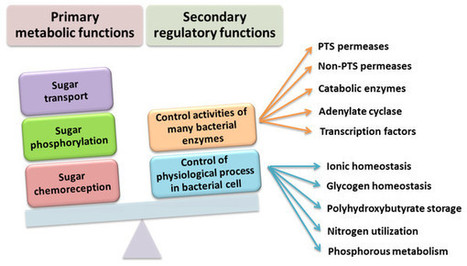
Symbiotic bacteria, commonly called rhizobia, lead a saprophytic lifestyle in the soil and form nitrogen-fixing nodules on legume roots. During their lifecycle, rhizobia have to adapt to different conditions prevailing in the soils and within host plants. To survive under these conditions, rhizobia fine-tune the regulatory machinery to respond rapidly and adequately to environmental changes. Symbiotic bacteria play an essential role in the soil environment from both ecological and economical point of view, since these bacteria provide Fabaceae plants (legumes) with large amounts of accessible nitrogen as a result of symbiotic interactions (i.e., rhizobia present within the nodule reduce atmospheric dinitrogen (N2) to ammonia, which can be utilized by plants). Because of its restricted availability in the soil, nitrogen is one of the most limiting factors for plant growth. In spite of its high content in the atmosphere, plants are not able to assimilate it directly in the N2 form. During symbiosis, rhizobia infect host root and trigger the development of specific plant organ, the nodule. The aim of root nodule formation is to ensure a microaerobic environment, which is essential for proper activity of nitrogenase, i.e., a key enzyme facilitating N2 fixation. To adapt to various lifestyles and environmental stresses, rhizobia have developed several regulatory mechanisms, e.g., reversible phosphorylation. This key mechanism regulates many processes in both prokaryotic and eukaryotic cells. In microorganisms, signal transduction includes two-component systems (TCSs), which involve membrane sensor histidine kinases (HKs) and cognate DNA-binding response regulators (RRs). Furthermore, regulatory mechanisms based on phosphoenolopyruvate-dependent phosphotranspherase systems (PTSs), as well as alternative regulatory pathways controlled by Hanks-type serine/threonine kinases (STKs) and serine/threonine phosphatases (STPs) play an important role in regulation of many cellular processes in both free-living bacteria and during symbiosis with the host plant (e.g., growth and cell division, envelope biogenesis, biofilm formation, response to stress conditions, and regulation of metabolism). In this review, we summarize the current knowledge of phosphorylation systems in symbiotic nitrogen-fixing bacteria, and their role in the physiology of rhizobial cells and adaptation to various environmental conditions.
|


 Scoop.it!