Your new post is loading...

|
Scooped by
Jean-Michel Ané
March 18, 2020 10:43 PM
|
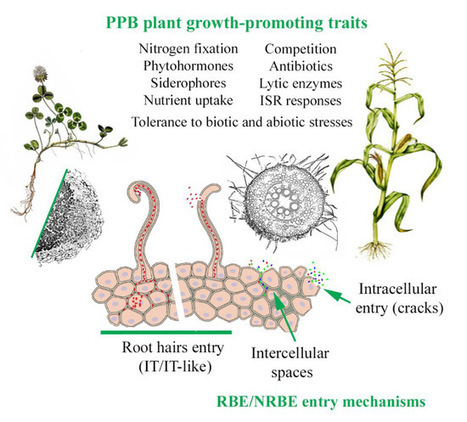
The overgrowth of human population and the demand for high-quality foods necessitate the search for sustainable alternatives to increase crop production. The use of biofertilizers, mostly based on plant probiotic bacteria (PPB), represents a reliable and eco-friendly solution. This heterogeneous group of bacteria possesses many features with positive effects on plants; however, how these bacteria with each other and with the environment when released into a field has still barely been studied. In this review, we focused on the diversity of root endophytic rhizobial and non-rhizobial bacteria existing within plant root tissues, and also on their potential applications as consortia exerting benefits for plants and the environment. We demonstrated the benefits of using bacterial inoculant consortia instead of single-strain inoculants. We then critically discussed several considerations that farmers, companies, governments, and the scientific community should take into account when a biofertilizer based on those PPBs is proposed, including (i) a proper taxonomic identification, (ii) the characterization of the beneficial features of PPB strains, and (iii) the ecological impacts on plants, environment, and plant/soil microbiomes. Overall, the success of a PPB consortium depends on many factors that must be considered and analyzed before its application as a biofertilizer in an agricultural system. View Full-Text
|
|
Scooped by
Jean-Michel Ané
March 18, 2020 10:41 PM
|
Members of the genus Frankia are gram-positive nitrogen-fixing actinobacteria that can live in a free-living form in the rhizosphere or in symbiotic association with non-leguminous actinorhizal plants belonging to 25 genera of angiosperms. Since the isolation of the first Frankia in 1978, several hundred isolates have been obtained worldwide from root nodules and soils and classified in four clusters. Although it is still difficult to study this valuable microorganism, the development of genomic and molecular tools both in Frankia and in model actinorhizal plants including Alnus glutinosa and Casuarina glauca, has advanced our understanding of this microorganism and its ability to develop a root endosymbiosis.
|
|
Scooped by
Jean-Michel Ané
March 18, 2020 10:39 PM
|
The quality of truffles is related to their maturation stage, and good maturation degree is important in order to have a truffle with valuable organoleptic properties. An innovative, rapid and reliable technique to determine the maturation degree of truffles and monitor their post-harvest ageing process is proposed. Near-infrared (NIR) spectroscopy was used for the first time to monitor the post-harvest ripening of white truffles of two different species (Tuber magnatum and T. borchii). Optical microscopy was flanked by NIR spectroscopy imaging to monitor fruiting bodies at different degrees of maturation. The NIR profile of truffles provided statistical differentiation between the biochemical composition of different tissues (vegetative hyphae and ascospores). The optical evaluation of the degree of maturation was correlated to spectral information in order to obtain a non-operator dependent, rapid, simple and cost-effective method to evaluate the degree of maturation of white truffles. Partial least square regression (PLS) was used for multivariate calibration of NIR spectra against maturation degree, and ripening curves were obtained (with correlation coefficients R2 = 0.95 for T. magnatum and R2 = 0.76 for T. borchii). Moreover, a classification method based on PLS discriminant analysis of truffle in three maturity stages was developed, achieving a total of correct classification rate of 83%.
|
|
Scooped by
Jean-Michel Ané
March 18, 2020 9:42 AM
|
Abstract: Small non-coding RNAs (sRNAs) are ubiquitous components of bacterial adaptive regulatory networks underlying stress responses and chronic intracellular infection of eukaryotic hosts. Thus, sRNA-mediated regulation of gene expression is expected to play a major role in the establishment of mutualistic root nodule endosymbiosis between nitrogen-fixing rhizobia and legume plants. However, knowledge about this level of genetic regulation in this group of plant-interacting bacteria is still rather scarce. Here, we review insights into the rhizobial non-coding transcriptome and sRNA-mediated post-transcriptional regulation of symbiotic relevant traits such as nutrient uptake, cell cycle, quorum sensing, or nodule development. We provide details about the transcriptional control and protein-assisted activity mechanisms of the functionally characterized sRNAs involved in these processes. Finally, we discuss the forthcoming research on riboregulation in legume symbionts.
|
|
Scooped by
Jean-Michel Ané
March 14, 2020 10:29 PM
|
Background
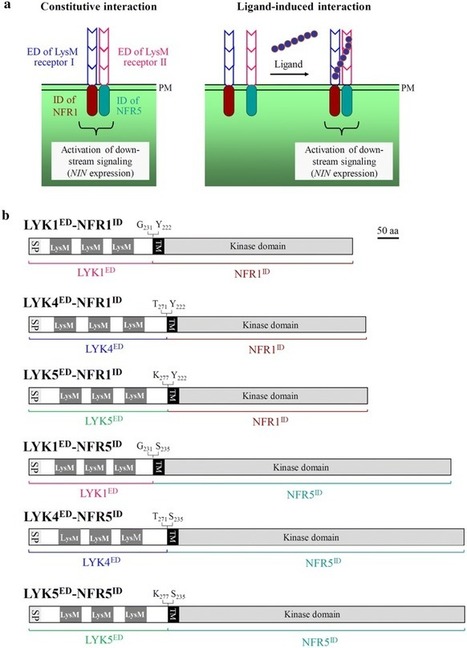
Plant receptors with lysin motifs (LsyM) recognize microbial signals such as fungal chitin and lipo-chitooligosaccharidic Nod factors of nitrogen-fixing rhizobia. It is generally assumed that ligand-induced dimerization of LysM receptors is an essential step in activation of intracellular kinase domains and downstream signaling. Consequently, genes required for plant defense and establishment of symbiosis are expressed. We recently found that three LysM receptor proteins (namely LYK1, LYK4 and LYK5) of Arabidopsis thaliana form a tripartite receptor complex to perceive chitin. However, constitutive and ligand-induced interactions of LysM receptors generally remain difficult to be characterized.
Results
Interactions between ectodomains of LYK1, LYK4 and LYK5 were investigated by a chimeric receptor approach using hairy roots of the legume Lotus japonicus. Synthetic receptor pairs consisting of a LYK ectodomain and the intracellular domain of a L. japonicus Nod factor receptor (NFR1 and NFR5, respectively) were tested for their capacity to activate expression of the symbiotic NIN (nodule inception) gene. The results indicated constitutive (LYK4ED–LYK4ED, LYK4ED–LYK5ED) and chitin-induced interactions (LYK1ED–LYK1ED, LYK1ED–LYK5ED) of the examined ectodomains.
Conclusion
We present a method to functionally analyze constitutive and ligand-induced interactions of LysM-type proteins.
|
|
Scooped by
Jean-Michel Ané
March 14, 2020 10:24 PM
|
Frankia sp. strain B2 was isolated from Casuarina cunninghamiana nodules. Here, we report the 5.3-Mbp draft genome sequence of Frankia sp. strain B2 with a G+C content of 70.1 % and 4,663 candidate protein-encoding genes. Analysis of the genome revealed the presence of high numbers of secondary metabolic biosynthetic gene clusters.
|
|
Scooped by
Jean-Michel Ané
March 14, 2020 10:19 PM
|
Plants are now recognized as metaorganisms which are composed of a host plant associated with a multitude of microbes that provide the host plant with a variety of essential functions to adapt to the local environment. Recent research showed the remarkable importance and range of microbial partners for enhancing the growth and health of plants. However, plant-microbe holobionts are influenced by many different factors, generating complex interactive systems. In this review, we summarize insights from this emerging field, highlighting the factors that contribute to the recruitment, selection, enrichment and dynamic interactions of plant-associated microbiota. We then propose a roadmap for synthetic community application with the aim to establish sustainable agricultural systems that use microbial communities to enhance the productivity and health of plants independently of chemical fertilizers and pesticides. Considering global warming and climate change, we also suggest that desert plants can serve as a suitable pool of potentially beneficial microbes to maintain plant growth under abiotic stress conditions. Finally, we propose a framework for advancing the field of microbial inoculant application.
|
|
Scooped by
Jean-Michel Ané
March 12, 2020 11:16 PM
|
Plant economics run on carbon and nutrients instead of money. Leaf strategies aboveground span an economic spectrum from ‘live fast and die young’ to ‘slow and steady’, but the economy defined by root strategies belowground remains unclear. Here we take a holistic view of the belowground economy, and show that root-mycorrhizal collaboration can short circuit a one-dimensional economic spectrum, providing an entire space of economic possibilities. Root trait data from 1,781 species across the globe confirm a classical fast-slow ‘conservation’ gradient but show that most variation is explained by an orthogonal ‘collaboration’ gradient, ranging from ‘do-it-yourself’ resource uptake to ‘outsourcing’ of resource uptake to mycorrhizal fungi. This broadened ‘root economics space’ provides a solid foundation for predictive understanding of belowground responses to changing environmental conditions.
|
|
Scooped by
Jean-Michel Ané
March 12, 2020 11:06 PM
|
Nitrogen (N) is an essential macronutrient for crops. Plants have developed several responses to N fluctuations, thus optimizing the root architecture in response to N availability. Nitrate and ammonium are the main inorganic N forms taken up by plants, and act as both nutrients and signals, affecting gene expression and plant development. In this study, RNA-sequencing was applied to gain comprehensive information on the pathways underlying the response of maize root, pre-treated in an N-deprived solution, to the provision of nitrate or ammonium. The analysis of the transcriptome shows that nitrate and ammonium regulate overlapping and distinct pathways, thus leading to different responses. Ammonium activates the response to stress, while nitrate acts as a negative regulator of transmembrane transport. Both the N-source repress genes related to the cytoskeleton and reactive oxygen species detoxification. Moreover, the presence of ammonium induces the accumulation of anthocyanins, while also reducing biomass and chlorophyll and flavonoids accumulation. Furthermore, the later physiological effects of these nutrients were evaluated through the assessment of shoot and root growth, leaf pigment content and the amino acid concentrations in root and shoot, confirming the existence of common and distinct features in response to the two nitrogen forms. View Full-Text
|
|
Scooped by
Jean-Michel Ané
March 12, 2020 10:59 PM
|
Mitochondria and chloroplasts emerged from primary endosymbiosis. Most endosymbiont proteins have subsequently been expressed in the nucleo-cytosol of the host and organelle-targeted via the acquisition of N-terminal presequences, whose evolutionary origin remains enigmatic. Using a quantitative assessment of their physico-chemical properties, we show that organelle targeting peptides, which are distinct from signaling peptides targeting other subcellular compartments, group with a subset of antimicrobial peptides. We demonstrate that extant antimicrobial peptides target a fluorescent reporter to either the mitochondria or the chloroplast in the green alga Chlamydomonas reinhardtii and, conversely, that extant targeting peptides display antimicrobial activity. Thus, we provide conclusive computational and functional evidence for an evolutionary link between organelle-targeting and antimicrobial peptides. Our results support the view that resistance of bacterial progenitors of organelles to the attack of host antimicrobial peptides, has been instrumental in eukaryogenesis and in the subsequent emergence of photosynthetic eukaryotes.
|
|
Scooped by
Jean-Michel Ané
March 11, 2020 10:30 AM
|
Legume cover crops can play a valuable role in maintaining and increasing soil quality and nitrogen availability, but are infrequently grown in the Upper Midwest due to short growing seasons with minimal management windows; cold, wet springs; and harsh winters. This study was performed to assess the viability of winter annual legume species in northern climates as a potential source of nitrogen (N) fertility to a 75-day sweet corn (Zea mays convar. saccharata var. rugosa) cash crop in Lamberton and Grand Rapids, MN in 2016 and 2017. Treatments included medium red clover (Trifolium pratense), two cold-hardy ecotypes of hairy vetch (Vicia villosa Roth), a cereal rye-hairy vetch biculture (Secale cereale L., Vicia villosa Roth), cereal rye as a non-legume control, and a fallow weed-free control. Legumes were split into rhizobia inoculated and non-inoculated treatments. Inoculation had no effect on nodulation, biomass production, or N fixation likely due to competition with endogenous rhizobia strains. The rye monoculture and biculture produced the most biomass at all site-years averaging 7.7 and 7.0 Mg ha−1 respectively while the two vetch ecotypes averaged 4.5 and 3.9 Mg ha−1. Both vetch ecotypes contributed among the most nitrogen in all site-years, contributing up to 211 kg N ha−1 from aboveground biomass. Data from natural abundance isotopic approaches indicate that 75% of vetch tissue N in Grand Rapids and 59% of vetch tissue N in Lamberton was derived from atmospheric N fixation, with equal or higher percent fixation of vetch in biculture at all site-years. More studies should be performed to better understand controls on N fixation of legume cover crops in cold climates.
|
|
Scooped by
Jean-Michel Ané
March 11, 2020 10:28 AM
|
In the past few years, many studies have reported that the transcription factor Nuclear Factor Y (NF‐Y) gene family plays important roles in embryonic development, photosynthesis, flowering time regulation and stress response, in various plants. Although the NF‐Y gene family has been systematically studied in many species, little is known about NF‐Y genes in Populus. In this study, the NF‐Y gene family in the Populus genome was identified and its structural characteristics were described. Fifty‐two NF‐Y genes were authenticated in the Populus trichocarpa genome and categorized into three subfamilies (NF‐YA/B/C) by phylogenetic analysis. Chromosomal localization of these genes revealed that they were distributed randomly across 17 of the 19 chromosomes. Segmental duplication played a vital role in the amplification of Populus NF‐Y gene family. Moreover, microsynteny analysis indicated that, among Populus trichocarpa, Arabidopsis thaliana, Vitis vinifera and Carica Papaya, NF‐Y duplicated regions were more conserved between Populus trichocarpa and Vitis vinifera. Redundant stress‐related cis‐elements were also found in the promoters of most 13 PtNF‐YA genes and their expression levels varied widely following drought, salt, ABA and cold treatments. Subcellular localization experiments in tobacco showed that PtNF‐YA3 was localized in nucleus and cytomembrane, while PtNF‐YA4 was only in the nucleus in tobacco. According to the transcriptional activity experiments, neither of them had transcriptional activity in yeast. In summary, a comprehensive analysis of the Populus NF‐Y gene family was performed to establish a theoretical basis for further functional studies on this family.
|
|
Scooped by
Jean-Michel Ané
March 11, 2020 10:26 AM
|
Arbuscular mycorrhizal fungi (AMF) promote crop growth and yield by increasing N and P uptake and disease resistance, but the role of field AMF inoculation on the uptake of micronutrients, such as Fe and Zn, and accumulation in plant edible portions is still not clarified. Therefore, we studied the effect of field inoculation with Rhizophagus irregularis in an organic system on 11 old genotypes and a modern variety of bread wheat. Inoculation increased root colonization, root biomass and shoot Zn concentration at early stage and grain Fe concentration at harvest, while it did not modify yield. Genotypes widely varied for shoot Zn concentration at early stage, and for plant height, grain yield, Zn and protein concentration at harvest. Inoculation differentially modified root AMF community of the genotypes Autonomia B, Frassineto and Bologna. A higher abundance of Rhizophagus sp., putatively corresponding to the inoculated isolate, was only proved in Frassineto. The increase of plant growth and grain Zn content in Frassineto is likely linked to the higher R. irregularis abundance. The AMF role in increasing micronutrient uptake in grain was proved. This supports the introduction of inoculation in cereal farming, if the variable response of wheat genotypes to inoculation is considered.
|
|
|
Scooped by
Jean-Michel Ané
March 18, 2020 10:43 PM
|
Plants are essential for life and are extremely diverse organisms with unique molecular capabilities1. Here we present a quantitative atlas of the transcriptomes, proteomes and phosphoproteomes of 30 tissues of the model plant Arabidopsis thaliana. Our analysis provides initial answers to how many genes exist as proteins (more than 18,000), where they are expressed, in which approximate quantities (a dynamic range of more than six orders of magnitude) and to what extent they are phosphorylated (over 43,000 sites). We present examples of how the data may be used, such as to discover proteins that are translated from short open-reading frames, to uncover sequence motifs that are involved in the regulation of protein production, and to identify tissue-specific protein complexes or phosphorylation-mediated signalling events. Interactive access to this resource for the plant community is provided by the ProteomicsDB and ATHENA databases, which include powerful bioinformatics tools to explore and characterize Arabidopsis proteins, their modifications and interactions.
|
|
Scooped by
Jean-Michel Ané
March 18, 2020 10:41 PM
|
Plant growth–promoting bacteria show great potential for use in agriculture although efficient application remains challenging to achieve. Cells often lose viability during inoculant production and application, jeopardizing the efficacy of the inoculant. Since desiccation has been documented to be the primary stress factor affecting the decrease in survival, obtaining xerotolerance in plant growth–promoting bacteria is appealing. The molecular damage that occurs by drying bacteria has been broadly investigated, although a complete view is still lacking due to the complex nature of the process. Mechanic, structural, and metabolic changes that occur as a result of water depletion may potentially afflict lethal damage to membranes, DNA, and proteins. Bacteria respond to these harsh conditions by increasing production of exopolysaccharides, changing composition of the membrane, improving the stability of proteins, reducing oxidative stress, and repairing DNA damage. This review provides insight into the complex nature of desiccation stress in bacteria in order to facilitate strategic choices to improve survival and shelf life of newly developed inoculants.
|
|
Scooped by
Jean-Michel Ané
March 18, 2020 10:38 PM
|
All orchids and pyroloids are mycoheterotrophic at least in the early stage. Many species are predisposed to mycoheterotrophic nutrition even in the adult stage, due to the initial mycoheterotrophy during germination. Although other green plants, such as gentian species, also produce numerous minute seeds, whose germination may depend on fungal associations to meet C demands, physiological evidence for partial mycoheterotrophy in the adult stage is lacking for most candidate taxa. Here, we compared the natural abundances of 13C and 15N isotopes in the AM-associated gentian species Pterygocalyx volubilis growing in high-light-intensity habitats with those of co-occurring autotrophic C3 and C4 plants and AM fungal spores. We found that P. volubilis was significantly enriched in 13C compared with the surrounding C3 plants, which suggests the transfer of some C from the surrounding autotrophic plants through shared AM networks. In addition, the intermediate δ15N values of P. volubilis, between those of autotrophic plants and AM fungal spores, provide further evidence for partial mycoheterotrophy in P. volubilis. Although it is often considered that light deficiency selects partial mycoheterotrophy, we show that partial mycoheterotrophy in AM-forming plants can evolve even under light-saturated conditions. The fact that there have been relatively few descriptions of partial mycoheterotrophy in AM plants may not necessarily reflect the rarity of such associations. In conclusion, partial mycoheterotrophy in AM plants may be more common than hitherto believed.
|
|
Scooped by
Jean-Michel Ané
March 18, 2020 9:38 AM
|
Arbuscular mycorrhiza (AM) is a widespread symbiosis between plant roots and fungi of the Glomeromycotina, which improves nutrient uptake by plants. The molecular mechanisms underlying development and function of the symbiosis are subject to increasing research activity. Since AM occurs in the soil, most studies targeting a molecular understanding of AM development and function, use solid substrates for co-cultivating plants and AM fungi. However, for some experiments very clean roots, highly controlled nutrient conditions or applications of defined concentrations of signaling molecules (such as hormones) or other small chemicals (such as synthetic inhibitors or signaling agonists) are needed. To this end, hydroponics has been widely used in research on mechanisms of plant nutrition and some hydroponic systems were developed for AM fungal spore amplification. Here, we present a hydroponics set-up, which can be successfully utilized for experimental root colonization assays. We established a “tip-wick” system based on pipette tips and rock wool wicks for co-cultivation of AM fungi with small model plants such as Lotus japonicus. A larger “Falcon-wick” system using Falcon tubes and rockwool wicks was developed for larger model plants such as rice. The hydroponic system can also be employed for growing L. japonicus hairy roots after transformation by Agrobacterium rhizogenes, thus circumventing the laborious cultivation on agar medium-containing Petri dishes during hairy root development. The tip-wick and Falcon-wick systems are easy to use and can be built with low cost, conventional and reusable lab plastic ware and a simple aquarium pump.
|
|
Scooped by
Jean-Michel Ané
March 14, 2020 10:24 PM
|
Over the last 470 Ma, plant evolution has seen major evolutionary transitions, such as the move from water to land and the origins of vascular tissues, seeds, and flowers [1]. These have resulted in the evolution of terrestrial flora that has shaped modern ecosystems and the diversification of the Plant Kingdom, Viridiplantae, into over 374,000 described species [2]. Each of these transitions was accompanied by the gain and loss of genes in plant genomes. For example, whole-genome duplications are known to be fundamental to the origins of both seed and flowering plants [3, 4]. With the ever-increasing quality and quantity of whole-genome data, evolutionary insight into origins of distinct plant groups using comparative genomic techniques is now feasible. Here, using an evolutionary genomics pipeline to compare 208 complete genomes, we analyze the gene content of the ancestral genomes of the last common ancestor of land plants and all other major groups of plant. This approach reveals an unprecedented level of fundamental genomic novelties in two nodes related to the origin of land plants: the first in the origin of streptophytes during the Ediacaran and another in the ancestor of land plants in the Ordovician. Our findings highlight the biological processes that evolved with the origin of land plants and emphasize the importance of conserved gene novelties in plant diversification. Comparisons to other eukaryotic studies suggest a separation of the genomic origins of multicellularity and terrestrialization in plants.
|
|
Scooped by
Jean-Michel Ané
March 14, 2020 10:19 PM
|
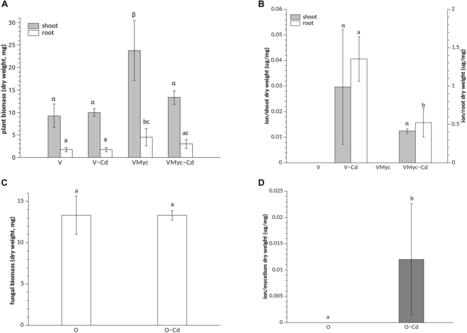
The success of Ericaceae in stressful habitats enriched in heavy metals has been ascribed to the distinctive abilities of their mycorrhizal fungal partners to withstand heavy metal stress and to enhance metal tolerance in the host plant. Whereas heavy metal tolerance has been extensively investigated in some ericoid mycorrhizal (ERM) fungi, the molecular and cellular mechanisms that extend tolerance to the host plant are currently unknown. Here, we show a reduced Cd content in Cd-exposed mycorrhizal roots of Vaccinium myrtillus colonized by a metal tolerant isolate of the fungus Oidiodendron maius as compared to non-mycorrhizal roots. To better understand this phenotype, we applied Next Generation Sequencing technologies to analyze gene expression in V. myrtillus and O. maius Zn grown under normal and Cd-stressed conditions, in the free living and in the mycorrhizal status. The results clearly showed that Cd had a stronger impact on plant gene expression than symbiosis, whereas fungal gene expression was mainly regulated by symbiosis. The higher abundance of transcripts coding for stress related proteins in non-mycorrhizal roots may be related to the higher Cd content. Regulated plant metal transporters have been identified that may play a role in reducing Cd content in mycorrhizal roots exposed to this metal.
|
|
Scooped by
Jean-Michel Ané
March 14, 2020 10:16 PM
|
Plants can establish symbiotic relationships with various microbial partners. When beneficial, these symbiotic relationships can provide nutrients such as nitrogen (N) to plants and protect them against various biotic and abiotic stresses. Because it is an essential element for plant productivity, N is abundantly applied to the soil in the form of organic or chemical fertilizers. Today, reducing the use of N fertilizers in agriculture has become a priority, particularly due to their negative impact on the environment. Exploiting the potential of beneficial microbes and identifying crop genotypes that can capitalize on symbiotic associations may be possible ways to significantly reduce the use of N fertilizers. The most well-known example of symbiotic association that can do away with the use of N fertilizers is that involving rhizobial species and legumes. During this symbiotic association, atmospheric dinitrogen (N2) is fixed by bacteria, converted into ammonium and then transferred to the host plant prior to its incorporation into organic molecules that ensure plant growth and development. Bacterial taxa other than rhizobial species can develop associative-symbiotic interactions with plants and also fix N. These include bacteria of the genus Azospirillum, Azotobacter and Bacillus, some of which are commercialized as bio-inoculants. Arbuscular mycorrhizal fungi are other microorganisms that can develop symbiotic associations with most terrestrial plants, favoring the access to nutrients in a larger soil volume through their extraradical mycelium. Using combinations of different beneficial microbial species is promising strategy to boost plant N acquisition and foster a synergistic beneficial effect between symbiotic microorganisms. Complex biological mechanisms including molecular, metabolic and physiological processes dictate the establishment and efficiency of such multipartite symbiotic associations. In this review, we present an overview of the current knowledge and future prospects regarding plant N nutrition improvement through the use of beneficial bacteria and fungi associated with plants, individually or in combination.
|
|
Scooped by
Jean-Michel Ané
March 12, 2020 11:15 PM
|
Nitrogen fixation takes place in root nodules which involves bacterial colonization, organogenesis and nitrogen fixation. Investigations related to global analysis of miRNAs mediated regulation of symbiosis in crop plants is limited. To gain a deeper insight into the miRNAs regulating gene cascade during chickpea nodulation an Illumina sequencing of miRNA library from roots subjected to infection with Mesorhizobium ciceri was sequenced. Using stringent criteria of miRNA annotation, a set of 91 miRNAs were identified that comprised of 84 conserved, 7 novel miRNAs with 9 pairs being polycistronic. Further, eighteen legume specific and 13 chickpea specific miRNAs were also obtained that may have specific roles in symbiosis. Interestingly, phylogenetic analysis of the precursor sequences revealed clustering of distinct miRNAs representing a close ancestry. In silico analysis also established 3 different mode of biogenesis of miRNAs. Mapping of miRNA reads to bacterial genomes helped to predict bacterial smallRNAs that may be putatively regulating host genes. Further for identification of in-vivo targets of miRNAs, 4 degradome libraries were sequenced. Analysis revealed 245 target transcripts that were specifically cleaved during nodule stages, with a significant number being transcription factors. qRT-PCR based expression profiling in different chickpea tissues was carried out to validate the antagonistic expression of the miRNA-target pairs. For functional characterization, 4 miRNAs, miR171f, miR172c, miR394 and miR1509, were ectopically expressed in chickpea roots by hairy root transformation that resulted in significant changes in nodule numbers. Results indicated the roles of miR171f, miR394 and miR1509 in regulating novel targets Nodulation receptor kinase, Histidine phosphotransferase and Adenylalte kinase respectively being reported for the first time that may be the key regulators of chickpea nodulation. This study not only provides an overview of the miRNAs and their targets involved in chickpea-rhizobia symbiosis but also provides several leads into novel and nodule specific miRNAs and their targets for further investigation.
|
|
Scooped by
Jean-Michel Ané
March 12, 2020 11:04 PM
|
Interactions with mycorrhizal fungi have been increasingly recognized as one of the most important ecological factors determining the distribution and local abundance of orchids. While some orchid species may interact with a variety of fungal associates, others are more specific in their choice of mycorrhizal partners. Moreover, orchids that co-occur at a given site, often associate with different partners, possibly to avoid competition and to allow stable coexistence. However, whether differences in mycorrhizal partners directly affect seed germination and subsequent protocorm formation remains largely unknown. In this research, we used in vitro germination experiments to investigate to what extent seed germination and protocorm formation of Gymnadenia conopsea was affected by the origin and identity of fungal associates. Fungi were isolated from G. conopsea and three other co-occurring orchid species (Dactylorhiza viridis (Coeloglossum viride), Herminium monorchis, and Platanthera chlorantha). In total, eight fungal associates, belonging to Tulasnellaceae, Ceratobasidiaceae, and Serendipitaceae, were successfully isolated and cultured. While all eight fungal strains were able to promote early germination of G. conopsea seeds, only fungal strain GS2, a member of the Ceratobasidiaceae isolated from G. conopsea itself, was able to promote protocorm formation and subsequent growth to a seedling. Two other fungal strains isolated from G. conopsea only supported seed germination until the protocorm formation stage. The other five fungal strains isolated from the co-occurring orchid species did not support seed germination beyond the protocorm stage. We conclude that, although G. conopsea is considered a mycorrhizal generalist that associates with a wide range of fungi during its adult life, it requires specific fungi to promote protocorm formation and growth to a seedling.
|
|
Scooped by
Jean-Michel Ané
March 12, 2020 10:59 PM
|
Under nitrogen-limiting conditions, legumes are able to interact symbiotically with bacteria of the Rhizobiaceae family. This interaction gives rise to a new organ, named a root nodule. Root nodules are characterized by an increased glutathione (GSH) and homoglutathione (hGSH) content compared to roots. These low molecular thiols are very important in the biological nitrogen fixation. In order to characterize the modification of nodule activity induced by the microsymbiont glutathione deficiency, physiological, biochemical, and gene expression modifications were analyzed in nodules after the inoculation of Medicago truncatula with the SmgshB mutant of Sinorhizobium meliloti which is deficient in GSH production. The decline in nitrogen fixation efficiency was correlated to the reduction in plant shoot biomass. Flow cytometry analysis showed that SmgshB bacteroids present a higher DNA content than free living bacteria. Live/dead microscopic analysis showed an early bacteroid degradation in SmgshB nodules compared to control nodules which is correlated to a lower bacteroid content at 20 dpi. Finally, the expression of two marker genes involved in nitrogen fixation metabolism, Leghemoglobin and Nodule Cysteine Rich Peptide 001, decreased significantly in mutant nodules at 20 dpi. In contrast, the expression of two marker genes involved in the nodule senescence, Cysteine Protease 6 and Purple Acid Protease, increased significantly in mutant nodules at 10 dpi strengthening the idea that an early senescence process occurs in SmgshB nodules. In conclusion, our results showed that bacterial GSH deficiency does not impair bacterial differentiation but induces an early nodule senescence.
|
|
Scooped by
Jean-Michel Ané
March 11, 2020 10:29 AM
|
There is increased interest by the agricultural industry in microbial amendments that leverage natural beneficial interactions between plants and soil microbes to improve crop production. However, translating fundamental knowledge from laboratory experiments into efficient field application often has mixed results, and there is less clarity about the interaction between added microbes and the native microbial community, where microorganisms belonging to the same phylogenic clades often reside. In this study, four commercially available microbial amendments were examined in two greenhouse experiments using field soil to assess their impact on tomato plant growth and the native soil microbial communities. The amendments contained different formulations of plant growth-promoting bacteria (Lactobacilli, Rhizobia, etc.), yeasts, and mycorrhizal fungi. The application of the tested amendments in greenhouse conditions resulted in no significant impact on plant growth. A deeper statistical analysis detected variations in the microbial communities that accounted only for 0.25% of the total species, particularly in native taxa not related to the inoculated species and represented less than 1% of the total variance. This suggests that under commercial field conditions, additional confounding variables may play a role in the efficacy of soil microbial amendments. This study confirms the necessity of more in-depth validation requirements for the formulations of soil microbial amendments before delivery to the agricultural market in order to leverage their benefits for the producers, the consumers, and the environment.
|
|
Scooped by
Jean-Michel Ané
March 11, 2020 10:27 AM
|
Plant growth promoting bacteria (PGPB) have been used to enhance crop productivity. The effect of native PGPB and arbuscular mycorrhizal (AM) fungi in combination on wheat yield, biofortification and soil enzymatic activity is a relatively unexplored area. Twenty seven bacterial isolates from three different soils were characterized for their plant growth promoting traits. A total of three native and five non-native bacteria were used with and without arbuscular mycorrhizal (AM) fungi in an open greenhouse pot experiment with two wheat varieties to evaluate their effect on wheat yield, nutrient uptake, and soil health parameters. Wheat plants subjected to native PGPB (CP4) (Bacillus subtilis) and AM fungi treatment gave the best results with reference to macronutrient (nitrogen and phosphorus), micronutrient (iron and zinc) content in wheat grains and yield-related parameters, including thousand grain weight, number of grains per spike and total tillers per plant in both wheat cultivars. Treatment with CP4 and CP4 plus AM fungi enhanced total chlorophyll in wheat leaves indicating higher photosynthetic activity. Significant improvement in soil health-related parameters, including soil organic matter and dehydrogenase activity, was observed. Significant correlation among grain yield-related parameters, nutrient enhancement, and soil health parameters was observed in PGPB and AM fungi treated plants, especially HD-3086. These results provide a roadmap for utilizing native PGPB and AM fungi for enhancing wheat production in Punjab state of India and exploring their utility in other parts of the country with different soil and environmental conditions.
|