Your new post is loading...

|
Scooped by
Jean-Michel Ané
December 9, 2020 4:45 PM
|
"Happy families are all alike; each unhappy family is unhappy in its own way." So goes the first line of Leo Tolstoy's "Anna Karenina." Little did the Russian novelist know his famous opening line would one day be used to describe microbial communities, their health and their relationships to their hosts.
|
|
Scooped by
Jean-Michel Ané
December 9, 2020 3:16 PM
|
Fungi have been around for 1 billion years and will not be making an exit anytime soon. They are in the air we breathe, the food we eat, the ground we stand on and are entangled within our bodies. Fungi are essential to life on earth (as we know it) but are also capable of annihilating it.
In 2019, researchers discovered multicellular microfossils that date back 1,010–890 million years ago (Loron et al., 2019), almost half a billion years earlier than previously established for fungal life on dry land, as well as being the earliest fossils found for any multicellular life on land. These eukaryotes were named by researchers as Ourasphaira giraldae and were present in the early Neoproterozoic Era, which was the last era in the Precambrian supereon. Skip 530 to 740 million years later, in the Middle Ordovician to late Devonian period, and Prototaxites grew to the size of two storey buildings, dwarfing all other land-life of the time. These fungi had a homogenous tissue built from 5 – 50 micrometre in diameter interwoven tubes (Boyce et al., 2007), unlike any other organism. Jump the clock to modern day and it is estimated that 2.2 – 3.8 million species of fungi exist with 97 – 92% being unidentified (Hawksworth and Lucking, 2017). Fungi are extremely versatile and can be used as a food source, in the preparation of food (such as fermentation processes); in pest control as natural pesticides, or to produce antibiotics; such as penicillin, or even genetically engineered to produce human hormones, such as insulin. Recently, psilocybin fungi have been found to potentially alleviate major depressive disorder, when used as an assist to therapy (Davis et al., 2020).
|
|
Scooped by
Jean-Michel Ané
December 9, 2020 3:12 PM
|
Nutrient enrichment can reduce ecosystem stability, typically measured as temporal stability of a single function, e.g. plant productivity. Moreover, nutrient enrichment can alter plant‐soil interactions (e.g. mycorrhizal symbiosis) that determine plant community composition and productivity. Thus, it is likely that nutrient enrichment and interactions between plants and their soil communities co‐determine the stability in plant community composition and productivity. Yet our understanding as to how nutrient enrichment affects multiple facets of ecosystem stability, such as functional and compositional stability, and the role of above‐belowground interactions are still lacking.
We tested how mycorrhizal suppression and phosphorus (P) addition influenced multiple facets of ecosystem stability in a three‐year field study in a temperate steppe. Here we focused on the functional and compositional stability of plant community; functional stability is the temporal community variance in primary productivity; compositional stability is represented by compositional resistance, turnover, species extinction and invasion. Community variance was partitioned into population variance defined as community productivity weighted average of the species temporal variance in performance, and species synchrony defined as the degree of temporal positive covariation among species.
Compared to treatments with mycorrhizal suppression, the intact AM fungal communities reduced community variance in primary productivity by reducing species synchrony at high levels of P addition. Species synchrony and population variance were linearly associated with community variance with the intact AM fungal communities, while these relationships were decoupled or weakened by mycorrhizal suppression. The intact AM fungal communities promoted the compositional resistance of plant communities by reducing compositional turnover, but this effect was suppressed by P addition. P addition increased the number of species extinctions and thus promoted compositional turnover.
Our study shows P addition and AM fungal communities can jointly and independently modify the various components of ecosystem stability in terms of plant community productivity and composition.
|
|
Scooped by
Jean-Michel Ané
December 9, 2020 3:03 PM
|
Reforestation with forest legumes associated with nitrogen-fixing bacteria and arbuscular mycorrhizal fungi has been shown to be a favorable technique for revegetating degraded soils. This study was conducted with soils under forest legume plantations, secondary forest and pasture. Soil protein related to glomalin (SPRG) production and the organic C and total N accumulation were quantified in whole soils and in aggregate-size fractions. Structural equation modeling was used to test relational models between SPRG, C and N levels in whole soil and aggregate-size fractions. A principal component analysis (PCA) was performed to assess the dissimilarity between vegetation covers. The present study sought to answer the following questions: Do legume plantations favor SPRG production and consequently C and N accumulation in the whole soil and in the aggregate-size fractions?; and 2) Are SPRG concentrations directly related to the C and N levels of soils and aggregate size-fractions? The structural model of the whole soil pointed out that the number of spores had a direct and weaker effect on glomalin, but a direct and relatively strong effect on OM accumulation. The models of fractions >2.00 mm and macroaggregates showed that glomalin had a direct and strong effect on OM accumulation in these fractions. However, the relationship in the fraction >2.00 mm was positive, and the OM accumulation in the macroaggregates was at the expense of glomalin. In turn, the PCA highlighted that all the analyzed SPRG did not explain much of the dissimilarities between the vegetation covers.
|
|
Scooped by
Jean-Michel Ané
December 9, 2020 2:55 PM
|
Alternative splicing (AS), a process that enables formation of different mRNA isoforms due to alternative ways of pre-mRNA processing, is one of the mechanisms for fine-tuning gene expression. Currently, the role of AS in symbioses formed by plants with soil microorganisms is not fully understood. In this work, a comprehensive analysis of the transcriptome of garden pea (Pisum sativum L.) roots in symbiosis with arbuscular mycorrhiza was performed using RNAseq and following bioinformatic analysis. AS profiles of mycorrhizal and control roots were highly similar, intron retention accounting for a large proportion of the observed AS types (67%). Using three different tools (SUPPA2, DRIMSeq and IsoformSwitchAnalyzeR), eight genes with AS events specific for mycorrhizal roots of pea were identified, among which four were annotated as encoding an apoptosis inhibitor protein, a serine/threonine-protein kinase, a dehydrodolichyl diphosphate synthase, and a pre-mRNA-splicing factor ATP-dependent RNA helicase DEAH1. In pea mycorrhizal roots, the isoforms of these four genes with preliminary stop codons leading to a truncated ORFs were up-regulated. Interestingly, two of these four genes demonstrating mycorrhiza-specific AS are related to the process of splicing, thus forming parts of the feedback loops involved in fine-tuning of gene expression during mycorrhization. View Full-Text
|
|
Scooped by
Jean-Michel Ané
December 9, 2020 1:52 PM
|
Recent studies suggest that the mycorrhizal type associated with tree species is an important trait influencing ecological processes such as response to environmental conditions and conspecific negative density dependence (CNDD). However, we lack a general understanding of how tree mycorrhizal type influences CNDD strength and the resulting patterns of species abundance and richness at larger spatial scales. We assessed 305 species across 15 large, stem‐mapped temperate forest dynamics plots in Northeastern China and North America to explore the relationships between tree mycorrhizal type and CNDD, species abundance, and species richness at a regional scale. Tree species associated with arbuscular mycorrhizal (AM) fungi showed a stronger CNDD and a more positive relationship with species abundance than did tree species associated with ectomycorrhizal (ECM) fungi. For each plot, both basal area and stem abundance of AM tree species was lower than that of ECM tree species, suggesting that AM tree species were rarer than ECM tree species. Finally, ECM tree dominance showed a negative effect on plant richness across plots. These results provide evidence that tree mycorrhizal type plays an important role in influencing CNDD and species richness, highlighting this trait as an important factor in structuring plant communities in temperate forests.
|
|
Scooped by
Jean-Michel Ané
December 9, 2020 12:47 PM
|
The Fourth National Climate Assessment report, released in 2018, uses the highest estimates of greenhouse gas emissions (called RCP 8.5) of the Intergovernmental Panel on Climate Change to forecast substantial economic losses in the U.S. The section on agriculture warns that food and forage production will decline, soil and water resources will degrade, and human and livestock health will be challenged. While the potential to adapt to climate change exists within many parts of the agriculture sector, the report predicts large economic burdens come along with these adaptations.
The section on Midwest U.S. agriculture states “increased rainfall from April to June has been the most impactful climate trend for agriculture.” The report warns the five-day maximum temperatures could move further above optimum conditions and closer to reproductive failure temperatures. Danger of reduced environmental quality from land use decisions increases if the climate change estimates they rely on materialize.
|
|
Scooped by
Jean-Michel Ané
December 9, 2020 12:09 PM
|
In a project funded by the Bill & Melinda Gates Foundation, the Wageningen team -as member of a larger international consortium- aims to identify the hormonal responses essential for a permissive symbiotic state to enable the formation of nitrogen-fixing root nodules. The consortium aims to transfer these responses to non-legume crops (e.g. barley, maize and cassava). Part of the Wageningen project is to validate the engineering effects on hormone balances. Your task, as a technical assistant, will primarily be to operate the Waters TQs UPLC, extract plant tissues, quantify plant hormones, and to guide students in these processes. You will have the opportunity to develop novel ideas and work on additional projects that align with this research theme.
|
|
Scooped by
Jean-Michel Ané
December 5, 2020 5:38 PM
|
To investigate the role of arbuscular and ectomycorrhizas for growth and nutrition, Douglas fir (Pseudotsuga menziesii), a species capable of establishing both types of symbioses, was used. Seedlings of two varieties of Douglas fir, var. menziesii (DFM) and var. glauca (DFG), differing in biomass production under non-mycorrhizal conditions, were planted in two soils of different nutrient status without preceding Douglas fir cultivation. After 2 years, the abundance of ectomycorrhizas was significantly higher on DFM than on DFG roots and higher in nutrient rich than in poor soil. Independent of the abundance of ectomycorrhiza colonization, roots of both Douglas fir varieties contained in most cases a minimum of six to nine different fungal species identified by ITS sequencing, which displayed both soil- and seed origin-specific patterns. Rhizopogon vinicolor was associated with DFM, whereas Cadophora finlandia, Sebacinaceous sp., Tricholoma sp. and a Tuber sp. were more frequently found on DFG roots. Ectendomycorrhizas were also identified and included under ectomycorrhiza for determination of nutrient relations. Net primary productivity and nitrogen-use efficiency were positively correlated with the degree of ectomycorrhiza colonization of Douglas fir seedlings suggesting that nitrogen accumulation did not keep pace with biomass production despite increased ectomycorrhizal colonization. Phosphorus-use efficiency was negatively correlated with the abundance of arbuscular mycorrhizas, suggesting higher efficiency of these fungi than of ectomycorrhizas for phosphorus supply to the host. DFM, which had higher inherited growth capacities than DFG, displayed higher ectomycorrhizal colonization than DFG. In our experimental design the physiology of the host tree and soil properties, but not the diversity of fungi present on roots, were decisive factors for formation and abundance of ectomycorrhiza.
|
|
Scooped by
Jean-Michel Ané
December 5, 2020 5:32 PM
|
Biological nitrogen fixation is essential to crop production, but it can be inhibited by high concentrations of reactive oxygen species (ROS) due to irreversible inactivation of the nitrogenase complex, thus posing a threat to food security and sustainable agricultural development. Here, we constructed an antioxidant cobalt ferrite (CoFe2O4) nanozyme as a bridge between nanotechnology and biological nitrogen fixation, which was shown to efficiently regulate the reactive oxygen metabolism and protect nitrogenase, thereby significantly enhancing the symbiotic nitrogen fixation efficiency by 260% in Glycine max (L.) Merr. (soybean). The CoFe2O4 nanozyme was also revealed to effectively reduce the concentration of ROS in the nodule by 56.6%, creating a superior environment for the proliferation of rhizobia and forming more effective nodules (larger nodules for an increase of 45.6% in the number of parasitic rhizobia). Furthermore, the CoFe2O4 nanozyme was shown to act as a synergist of leghemoglobin and increase its accumulation by 45.9%, where the high concentration of leghemoglobin in nodular cells can create a relatively hypoxic environment and protect nitrogenase, thus achieving a quantitative leap in nitrogen fixation capacity and simultaneously increasing the soybean photosynthesis by 67.2%. Our study has demonstrated that the CoFe2O4 nanozyme can effciently regulate the intracellular ROS metabolism and serve as a promising strategy for enhancing symbiotic nitrogen fixation.
|
|
Scooped by
Jean-Michel Ané
December 5, 2020 5:20 PM
|
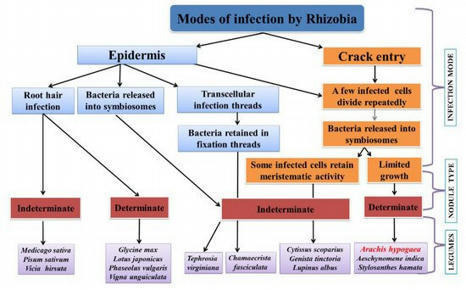
Nitrogen is one of the essential plant nutrients and a major factor limiting crop productivity. To meet the requirements of sustainable agriculture, there is a need to maximize biological nitrogen fixation in different crop species. Legumes are able to establish root nodule symbiosis (RNS) with nitrogen-fixing soil bacteria which are collectively called rhizobia. This mutualistic association is highly specific, and each rhizobia species/strain interacts with only a specific group of legumes, and vice versa. Nodulation involves multiple phases of interactions ranging from initial bacterial attachment and infection establishment to late nodule development, characterized by a complex molecular signalling between plants and rhizobia. Characteristically, legumes like groundnut display a bacterial invasion strategy popularly known as “crack-entry’’ mechanism, which is reported approximately in 25% of all legumes. This article accommodates critical discussions on the bacterial infection mode, dynamics of nodulation, components of symbiotic signalling pathway, and also the effects of abiotic stresses and phytohormone homeostasis related to the root nodule symbiosis of groundnut and Bradyrhizobium. These parameters can help to understand how groundnut RNS is programmed to recognize and establish symbiotic relationships with rhizobia, adjusting gene expression in response to various regulations. This review further attempts to emphasize the current understanding of advancements regarding RNS research in the groundnut and speculates on prospective improvement possibilities in addition to ways for expanding it to other crops towards achieving sustainable agriculture and overcoming environmental challenges. View Full-Text
|
|
Scooped by
Jean-Michel Ané
December 5, 2020 4:55 PM
|
• Legume crops contribute a great portion of clean nitrogen (N) to agro‐ecosystems through symbiotic N2 fixation in the nodule, however, the nodulation is always inhibited by high N availability which is known as the N inhibitory effect through largely unknown mechanisms.
• We functionally investigated miR169c‐GmNFYA‐C‐GmENOD40 under multiple N conditions in soybean, and elucidated their regulatory roles in soybean nodulation through analyzing expression pattern, miRNA‐mRNA interaction, phenotype of transgenic soybean plants and genetic interactions.
• We found that miR169c expression was induced by high N, while its target GmNFYA‐C was preferentially expressed in nodules and induced by rhizobium inoculation. Overexpression of miR169c inhibited nodulation through targeting 3’‐UTR of GmNFYA‐C, while knockout miR169c through CRISPR‐cas9 promoted nodulation. However, overexpression of GmNFYA‐C promoted soybean nodulation through facilitating rhizobium infection and increasing the expression of symbiotic signaling gene GmENOD40. Besides, GmNFYA‐C directly induced the expression of GmENOD40. In addition, overexpression of GmNFYA‐C without the target site of miR169c partially attenuated the inhibitory effect of high N on soybean nodulation.
• We discover a new regulatory pathway involving the miR169c‐NFYA‐C‐ENOD40 module that regulates soybean nodulation in response to N availability, which provides substantial new insights into the mechanisms underlying the N inhibitory effect on nodulation.
|
|
Scooped by
Jean-Michel Ané
December 5, 2020 4:48 PM
|
More than 80% of land plant species benefit from symbiotic partnerships with arbuscular mycorrhizal (AM) fungi that assist in nutrient acquisition and enhance the ability of host plants to adapt to environmental constraints. Host-generated plasma membrane-residing receptor-like kinases and the α/β-hydrolases, e.g. DWARF14-LIKE (D14L), a putative karrikin receptor, are used to detect the presence of AM fungi prior to physical contact between the host and fungus. Detection induces the activation of symbiosis-related transcriptional programming, enabling the successful establishment of AM symbiosis. In order to prevent hyper-colonization and to maintain a mutually beneficial association, the host plants precisely monitor and control AM symbiosis during the post-symbiotic stage via different molecular strategies. While previous studies have elucidated how host plant receptors and receptor-mediated signaling regulate AM symbiosis, the molecular details underlying these processes remain poorly understood. The recent identification of a rice (Oryza sativa) CHITIN-ELICITOR RECEPTOR-KINASE 1 (OsCERK1) interaction partner MYC FACTOR RECEPTOR 1 (OsMYR1), as well as new insights into D14L-receptor- and SUPER NUMERIC NODULES 1 (SUNN1) receptor-mediated signaling have improved our understanding of how host plant receptors and their corresponding signaling regulate AM symbiosis. The present review summarizes these and other current findings that have increased our limited understanding of receptor-mediated signaling mechanisms involved in the regulation of AM symbiosis. The identified receptors and/or their downstream signaling components could potentially be used to engineer economically-important crops with improved agronomic traits by conferring the ability to control the colonization of AM fungi in a precise manner.
|
|
|
Scooped by
Jean-Michel Ané
December 9, 2020 3:16 PM
|
Climate change affects the distribution of many species, including Burgundy and Périgord truffles in central and southern Europe, respectively. The cultivation potential of these high-prized cash crops under future warming, however, remains highly uncertain. Here we perform a literature review to define the ecological requirements for the growth of both truffle species. This information is used to develop niche models, and to estimate their cultivation potential in the Czech Republic under current (2020) and future (2050) climate conditions. The Burgundy truffle is already highly suitable for cultivation on ~ 14% of agricultural land in the Czech Republic (8486 km2), whereas only ~ 8% of the warmest part of southern Moravia are currently characterised by a low suitability for Périgord truffles (6418 km2). Though rising temperatures under RCP8.5 will reduce the highly suitable cultivation areas by 7%, the 250 km2 (3%) expansion under low-emission scenarios will stimulate Burgundy truffles to benefit from future warming. Doubling the moderate and expanding the highly suitable land by 352 km2 in 2050, the overall cultivation potential for Périgord truffles will rise substantially. Our findings suggest that Burgundy and Périgord truffles could become important high-value crops for many regions in central Europe with alkaline soils. Although associated with uncertainty, long-term investments in truffle cultivation could generate a wide range of ecological and economic benefits.
|
|
Scooped by
Jean-Michel Ané
December 9, 2020 3:15 PM
|
Aims
The aim of this study was to identify the best combination of plant growth promoting bacteria (PGPB) and arbuscular mycorrhizal fungi (AMF) for biofortification and enhancing yield in wheat as well as improve soil health under field conditions. Another aim was to get insights into metabolite dynamics in plants treated with PGPB and AMF.
Methods and Results
Different combinations of PGPB and AMF that gave good results in greenhouse study were used in a field study. The combined application of Bacillus subtilis CP4 (native PGPB) and AMF gave the best results with a significant increase in biomass, macronutrient and micronutrient content in wheat grains and improvement in yield‐related parameters relative to the untreated control. PGPB and AMF treatment increased antioxidant enzymes and compounds and decreased the level of an oxidation marker. Metabolite profiling performed using Gas Chromatography–Mass Spectrometry (GC‐MS) showed significant upregulation of specific organic acids, amino acids, sugars and sugar alcohols in plants treated with CP4 and AMF. The altered pathways due to CP4 and AMF inoculation mainly belong to carbohydrate and amino acid metabolism. A positive correlation was observed between some organic acids, sugars and amino acids with wheat growth and yield parameters. The activities of soil enzymes increased significantly with the best results shown by native PGPB and AMF combination.
Conclusions
A native bacterial isolate Bacillus subtilis CP4 in combination with AMF showed exceptional ability for biofortification and yield enhancement under field conditions. The upregulation of a number of metabolites showed correlation plant growth promotion and nutrients.
Significance and Impact of the Study
The combined application of native B. subtilis CP4 and AMF could offer a more sustainable approach for the development of a biofertilizer to enhance wheat nutrient content and production and soil health thereby advancing agriculture.
|
|
Scooped by
Jean-Michel Ané
December 9, 2020 3:05 PM
|
SoyBase, a USDA genetic and genomics database, holds professionally curated soybean genetic and genomic data, which is integrated and made accessible to researchers and breeders. The site holds several reference genome assemblies, as well as genetic maps, thousands of mapped traits, expression and epigenetic data, pedigree information, and extensive variant and genotyping data sets. SoyBase displays include genetic, genomic, and epigenetic maps of the soybean genome. Gene expression data is presented in the genome viewer as heat maps and pictorial and tabular displays in gene report pages. Millions of sequence variants have been added, representing variations across various collections of cultivars. This variant data is explorable using new interactive tools to visualize the distribution of those variants across the genome, between selected accessions. SoyBase holds several reference-quality soybean genome assemblies, accessible via various query tools and browsers, including a new visualization system for exploring the soybean pan-genome. SoyBase also serves as a nexus of announcements pertinent to the greater soybean research community. The database also includes a soybean-specific anatomic and biochemical trait ontology. The database can be accessed at https://soybase.org.
|
|
Scooped by
Jean-Michel Ané
December 9, 2020 2:57 PM
|
In legumes, rhizobia attach to root hair tips and secrete nodulation factor to activate rhizobial infection and nodule organogenesis. Endosymbiotic rhizobia enter nodule primordia via a specialized transcellular compartment known as the infection thread (IT). The IT elongates by polar tip growth, following the path of the migrating nucleus along and within the root hair cell. Rho-family ROP GTPases are known to regulate the polarized growth of cells, but their role in regulating polarized IT growth is poorly understood. Here, we show that LjSPK1, a DOCK family guanine nucleotide exchange factor (GEF), interacts with three type I ROP GTPases. Genetic analyses showed that these three ROP GTPases are involved in root hair development, but only LjROP6 is required for IT formation after rhizobia inoculation. Misdirected ITs formed in the root hairs of Ljspk1 and Ljrop6 mutants. We show that LjSPK1 functions as a GEF that activates LjROP6. LjROP6 enhanced the plasma membrane localization LjSPK1 in Nicotiana benthamiana leaf cells and Lotus japonicus root hairs, and LjSPK1 and LjROP6 interact at the plasma membrane. Taken together, these results shed light on how the LjROP6-LjSPK1 module mediates the polarized growth of ITs in L. japonicus.
|
|
Scooped by
Jean-Michel Ané
December 9, 2020 2:24 PM
|
Legumes, unlike other plants, have the ability to establish symbiosis with nitrogen-fixing rhizobia. It has been theorized that a unique property of legume root cortical cells enabled the initial establishment of rhizobial symbiosis1,2,3. Here we show that a SHORTROOT–SCARECROW (SHR–SCR) stem cell program in cortical cells of the legume Medicago truncatula specifies their distinct fate. Regulatory elements drive the cortical expression of SCR, and stele-expressed SHR protein accumulates in cortical cells of M. truncatula but not Arabidopsis thaliana. The cortical SHR–SCR network is conserved across legume species, responds to rhizobial signals, and initiates legume-specific cortical cell division for de novo nodule organogenesis and accommodation of rhizobia. Ectopic activation of SHR and SCR in legumes is sufficient to induce root cortical cell division. Our work suggests that acquisition of the cortical SHR–SCR module enabled cell division coupled to rhizobial infection in legumes. We propose that this event was central to the evolution of rhizobial endosymbiosis.
|
|
Scooped by
Jean-Michel Ané
December 9, 2020 12:57 PM
|
Various plant species establish intimate symbioses with bacteria within their aerial organs. The bacteria are contained within nodules or glands often present in distinctive patterns on the leaves in what is commonly referred to as leaf nodule symbiosis. We describe here a highly specific symbiosis between a wild yam species from Madagascar, Dioscorea sansibarensis and bacteria of the species Orrella dioscoreae. Using whole-genome sequencing of plastids and bacteria from wild-collected samples, we show phylogenetic patterns consistent with a dominant vertical mode of transmission of the symbionts. Unique so far among leaf nodule symbioses, the bacteria can be cultured and are amenable to comparative transcriptomics, revealing a potential role in complementing the host’s arsenal of secondary metabolites. We propose a recent establishment of a vertical mode of transmission in this symbiosis which, together with a large effective population size explains the cultivability and apparent lack of genome reductive evolution in O. dioscoreae. We leverage these unique features to reveal pathways and functions under positive selection in these specialized endophytes, highlighting the candidate mechanisms enabling a permanent association in the phyllosphere.
|
|
Scooped by
Jean-Michel Ané
December 9, 2020 12:39 PM
|
Rhizobial infection of legume roots during the development of nitrogen fixing root nodules can occur intracellularly, through plant-derived infection threads traversing cells, or intercellularly, via bacterial entry between epidermal plant cells. Although it is estimated that around 25% of all legume genera are intercellularly infected, the pathways and mechanisms supporting this process have remained virtually unexplored due to a lack of genetically amenable legumes that exhibit this form of infection. In this study, we report that the model legume Lotus japonicus is infected intercellularly by the IRBG74 strain, recently proposed to belong to the Agrobacterium clade of the Rhizobiaceae. We demonstrate that the resources available for L. japonicus enable insight into the genetic requirements and fine-tuning of the pathway governing intercellular infection in this species. Inoculation of L. japonicus mutants shows that Ethylene Responsive Factor Required for Nodulation 1 (Ern1) and Leu-rich Repeat Receptor-Like Kinase (RinRK1) are dispensable for intercellular infection in contrast to intracellular infection. Other symbiotic genes, including Nfr5, SymRK, CCaMK, Epr3, Cyclops, Nin, Nsp1, Nsp2, Cbs and Vpy1 are equally important for both entry modes. Comparative RNAseq analysis of roots inoculated with IRBG74 revealed a distinctive transcriptome response compared with intracellular colonization. In particular, several cytokinin-related genes were differentially regulated. Corroborating this observation, cyp735A and ipt4 cytokinin biosynthesis mutants were significantly affected in their nodulation with IRBG74, while lhk1 cytokinin receptor mutants formed no nodules. These results indicate a differential requirement for cytokinin signaling during intercellular rhizobial entry, and highlight distinct modalities of inter- and intracellular infection mechanisms in L. japonicus.
|
|
Scooped by
Jean-Michel Ané
December 8, 2020 4:00 PM
|
How do plant roots store carbon? Princeton researchers found that the energy a plant devotes to its roots depends on proximity to other plants: when close together, plants heavily invest in their root systems to compete for finite underground resources; if far apart, they invest less. As about a third of the world's vegetation biomass (and carbon) is belowground, this model provides a valuable tool to predict root proliferation in global earth-system models.
|
|
Scooped by
Jean-Michel Ané
December 5, 2020 5:33 PM
|
It begins with biological nitrogen fixation, which occurs when nitrogen-fixing bacteria that live in the root nodules of legumes convert organic matter into ammonium and then nitrate. Plants are able to absorb nitrate from the soil and break it down into the nitrogen they need, while denitrifying bacteria convert excess nitrate back into inorganic nitrogen which is released back into the atmosphere.
|
|
Scooped by
Jean-Michel Ané
December 5, 2020 5:20 PM
|
Glutaredoxins (Grx) are redoxin family proteins that reduce disulfides and mixed disulfides between glutathione and proteins. Rhizobium leguminosarum bv. Viciae 3841 contains three genes coding for glutaredoxins: RL4289 (grxA) codes for a dithiolic glutaredoxin, RL2615 (grxB) codes for a monothiol glutaredoxin, while RL4261 (grxC) codes for a glutaredoxin-like NrdH protein. We generated mutants interrupted in one, two, or three glutaredoxin genes. These mutants had no obvious differences in growth phenotypes from the wild type RL3841. However, while a mutant of grxC did not affect the antioxidant or symbiotic capacities of R. leguminosarum, grxA-derived or grxB mutants decreased antioxidant and nitrogen fixation capacities. Furthermore, grxA mutants were severely impaired in rhizosphere colonization, and formed smaller nodules with defects of bacteroid differentiation, whereas nodules induced by grxB mutants contained abnormally thick cortices and prematurely senescent bacteroids. The grx triple mutant had the greatest defect in antioxidant and symbiotic capacities of R. leguminosarum and quantitative proteomics revealed it had 56 up-regulated and 81 down-regulated proteins relative to wildtype. Of these proteins, twenty-eight are involved in transporter activity, twenty are related to stress response and virulence, and sixteen are involved in amino acid metabolism. Overall, R. leguminosarum glutaredoxins behave as antioxidant proteins mediating root nodule symbiosis.
|
|
Scooped by
Jean-Michel Ané
December 5, 2020 5:14 PM
|
Nitrogenase is the complex metalloenzyme responsible for the crucial process of biological nitrogen fixation, in which atmospheric dinitrogen (N2) is converted into bioavailable ammonia (NH3). This involves the breaking of the inert N≡N triple bond, a remarkable feat that is made possible by the unique metal clusters—the [Fe8S7] P-cluster and the [MoFe7S9C-R-homocitrate] M-cluster. Recent studies on molybdenum-dependent nitrogenase have greatly extended our understanding of how both of these fascinating metal clusters are assembled from common [Fe4S4] building blocks, as well as on the series of intriguing interplay between the proteins that are involved. In parallel, independent biochemical, spectroscopic, and structural investigations combine to provide unprecedented insights into the enigmatic mechanism of N2 reduction. In this chapter, evidence that led up to these findings will be outlined and discussed in their respective contexts, followed by a brief perspective on the outlook of the nitrogenase field.
|
|
Scooped by
Jean-Michel Ané
December 5, 2020 4:49 PM
|
This study is Shea Park restoration contribution. In this study, Shea butter was cultivated for 12 months on non-sterile culture substrate and then inoculated with arbuscular mycorrhizal fungi (AMF). The mycorrhizal parameters were evaluated at 12 months after sowing and the growth parameters of the plants at 4 and 12 months after sowing. The results showed mycorrhizal infection of all treatments and stimulation of Shea’s growth according to inocula. Yac 2 mix allowed a better improvement Shea growth. This inoculum improved Shea height growth by 10.34% at 4 months and 29.02% at 12 months after sowing compared to the treatment inoculated with Glomus aggregatum, by 46.02% at 4 months and 80.71% at 12 months after sowing compared to controls. Glomus aggregatum improved Shea height by 32.33% at 4 months and 40.06% at 12 months after sowing compared to controls. This inoculum also improved the Shea collar diameter by 12% at 4 months and 28.53% at 12 months after sowing compared to the treatment inoculated with Glomus aggregatum, by 53.86% at 4 months and 75.85% at 12 months after sowing compared to controls. Glomus aggregatum improves the Shea height by 37.38% at 4 months and 36.81% at 12 months after sowing compared to controls. Yac 2 mix also improves the height relative growth rate by 33.33% and the collar diameter relative growth rate by 54.54% compared to the controls. This study has shown promising results for the restoration of the Shea Park and deserves to be deepened by extending it to other mycorrhizal strains.
|