Your new post is loading...

|
Scooped by
Jean-Michel Ané
December 17, 2020 11:24 PM
|
Soil enhancements such as biochar (BC) are gaining attention as tools to mitigate climate change and also to promote crop growth. However, biochar use can disrupt soil ecosystems by changing the soil’s physical, chemical, and biological properties. The study aimed to determine how biochar influences soil physical changes such as specific surface area (SSA) and water vapor sorption, and how these conditions affect arbuscular mycorrhizal fungal (AMF) hyphae growth and glomalin production. The study analyzed these factors at different plant phenological phases (i.e., flowering, development of fruit, and ripening of fruit and seed) to better understand the changes within the system while varying biochar amounts. The study also investigated the effect of different soil physical and chemical parameters on mycorrhizal hyphae growth and glomalin production. Four treatments were investigated: 0, 0.5%, 2.5%, and 5.0% (w/w) biochar amended silt loam soil planted with pepper. Soil samples were taken at the beginning and weeks 6, 10, and 12 of the study. The amount of adsorbed water vapor increased with an increasing amount of biochar added to the soils. Compared to control, SSA was significantly higher in all biochar amended treatments based on adsorption data, and only in the highest biochar amended soils for the desorption data at the end of the experiment. The presence of AMF in the roots appeared at week 6 of the experiment and the intensity of AMF root colonization increased with the age of plants. The AMF colonization parameters were significantly lower in BC2.5 compared to all other biochar amended soils. The abundance of intraradical AMF structures was highly correlated with several physicochemical soil parameters, such as SSA, the geometric mean diameter of soil aggregate, soil aggregate sizes, or pH. Glomalin production was negatively correlated with SSA, water vapor adsorption, aggregate stability, aggregate size, total nitrogen, potassium, and organic carbon content of the soil, while positive correlation was observed with bulk density. Increased biochar amount resulted in a significant decrease in glomalin production, concurrent with the age of the plants. Our results highlight the great complexity of interactions between soil physicochemical and biological parameters, and the importance of the time of sampling when biochar is used in soil, as the effects of biochar additions on the plant, soil physical characteristics, and soil microsymbionts vary over time.
|
|
Scooped by
Jean-Michel Ané
December 17, 2020 11:20 PM
|
All plants in the ecosystem are found in close association with complex group of microbes both belowground and aboveground surfaces. Reports suggest that the association can be harmful, neutral, or beneficial to the plants depending upon the category of colonizing microbes. It is among them that certain microorganisms bring about modification in the plant metabolome, maneuvering to modifications in the biosynthetic pathway of plant metabolites of known and unknown origin. Plant secondary metabolites are exceptional group of chemicals released as an end product of biosynthetic pathways which have numerous secondary roles in survival and growth of the plants. Among the multifarious roles played by the metabolites, some of the important traits include repulsion of pathogens and attraction of beneficial group of microbes. The present chapter thus summarizes the till-date understanding of the role of root microbiome on the secondary metabolic status of plants, how the remodeling affects the health and defense status of the concerned plants, and finally the knowledge hiatus that needs to be fulfilled for harnessing the full potential of microbes.
|
|
Scooped by
Jean-Michel Ané
December 17, 2020 10:54 PM
|
Analyses of natural variation and the use of mutagenesis and molecular-biological approaches have revealed 50 symbiotic regulatory genes in pea (Pisum sativum L.). Studies of genomic synteny using model legumes, such as Medicago truncatula Gaertn. and Lotus japonicus (Regel) K. Larsen, have identified the sequences of 15 symbiotic regulatory genes in pea. These genes encode receptor kinases, an ion channel, a calcium/calmodulin-dependent protein kinase, transcription factors, a metal transporter, and an enzyme. This review summarizes and describes mutant alleles, their phenotypic manifestations, and the functions of all identified symbiotic regulatory genes in pea. Some examples of gene interactions are also given. In the review, all mutant alleles in genes with identified sequences are designated and still-unidentified symbiotic regulatory genes of great interest are considered. The identification of these genes will help elucidate additional components involved in infection thread growth, nodule primordium development, bacteroid differentiation and maintenance, and the autoregulation of nodulation. The significance of symbiotic mutants of pea as extremely fruitful genetic models for studying nodule development and for comparative cell biology studies of legume nodules is clearly demonstrated. Finally, it is noted that many more sequences of symbiotic regulatory genes remain to be identified. Transcriptomics approaches and genome-wide sequencing could help address this challenge.
|
|
Scooped by
Jean-Michel Ané
December 17, 2020 10:48 PM
|
Diazotrophs can produce bioavailable nitrogen from inert N2 gas by bioelectrochemical nitrogen fixation (e-BNF), which is emerging as an energy-saving and highly selective strategy for agriculture and industry. However, current e-BNF technology is impeded by requirements for NH4+-assimilation inhibitors to facilitate intracellular ammonia secretion and precious metal catalysts to generate H2 as the energy-carrying intermediate. Herein, we initially demonstrate inhibitor- and catalyst-less extracellular NH4+ production by the diazotroph Pseudomonas stutzeri A1501 using an electrode as the sole electron donor. Multiple lines of evidence revealed that P. stutzeri produced 2.32±0.25 mg/L of extracellular NH4+ at a poised potential of -0.3 V (vs. standard hydrogen electrode (SHE)) without the addition of inhibitors or expensive catalysts. The electron uptake mechanism was attributed to the endogenous electron shuttle phenazine-1-carboxylic acid, which was excreted by P. stutzeri and mediated electron transfer from electrodes into cells to directly drive N2 fixation. The faradaic efficiency was 20%±3% which was 2-4 times that of previous e-BNF using the H2-mediated pathway. This study reports a diazotroph capable of producing secretable NH4+ via extracellular electron uptake, which has important implications for optimizing the performance of e-BNF systems and exploring the novel nitrogen-fixing mode of syntrophic microbial communities in the natural environment.
|
|
Scooped by
Jean-Michel Ané
December 17, 2020 10:21 PM
|
Bacteria currently included in Rhizobium leguminosarum are too diverse to be considered a single species, so we can refer to this as a species complex (the Rlc). We have found 429 publicly available genome sequences that fall within the Rlc and these show that the Rlc is a distinct entity, well separated from other species in the genus. Its sister taxon is R. anhuiense. We constructed a phylogeny based on concatenated sequences of 120 universal (core) genes, and calculated pairwise average nucleotide identity (ANI) between all genomes. From these analyses, we concluded that the Rlc includes 18 distinct genospecies, plus 7 unique strains that are not placed in these genospecies. Each genospecies is separated by a distinct gap in ANI values, usually at around 96% ANI, implying that it is a 'natural' unit. Five of the genospecies include the type strains of named species: R. laguerreae, R. sophorae, R. ruizarguesonis, "R. indicum" and R. leguminosarum itself. The 16S ribosomal RNA sequence is remarkably diverse within the Rlc, but does not distinguish the genospecies. Partial sequences of housekeeping genes, which have frequently been used to characterise isolate collections, can mostly be assigned unambiguously to a genospecies, but alleles within a genospecies do not always form a clade, so single genes are not a reliable guide to the true phylogeny of the strains. We conclude that access to a large number of genome sequences is a powerful tool for characterising the diversity of bacteria, and that taxonomic conclusions should be based on all available genome sequences, not just those of type strains.
|
|
Scooped by
Jean-Michel Ané
December 16, 2020 10:11 AM
|
•Rotating crops is key to achieving high soybean and corn yield.
•Prophylactic foliar fungicides resulted in a small increase in soybean seed yield.
•Continuous corn and soybean have distinct bulk soil fungal communities.
•Foliar fungicide treatments did not have an impact on bulk soil fungal communities.
|
|
Scooped by
Jean-Michel Ané
December 12, 2020 10:50 PM
|
Coordination of phospholipid-based signaling and membrane trafficking connects perception of pathogens with the activation of efficient defense reactions in plant immunity.
Exploring the spatiotemporal organization of phospholipids and lipid–protein interactions provides crucial information for elucidating this coordination.
The functions of phospholipids and their derivatives include: acting as lipid landmarks of various membranes; promoting membrane deformation; regulating cytoskeletal dynamics; and recruiting trafficking regulators.
Phospholipid-derived molecules have crucial roles in regulating endocytosis, exocytosis, and the exo/endocytosis balance. During biotic stress, feedback between phospholipid-based signaling and membrane trafficking coordinates signal recognition and activation of immune responses.
|
|
Scooped by
Jean-Michel Ané
December 12, 2020 10:46 PM
|
Case study 4: nitrogen fixation in cereals
The large expansion of cereal production over the past century is partly attributable to the sharp expansion in the availability of, and reduction in the cost of, synthetic nitrogen fertiliser, enabled since the discovery of the Haber–Bosch process. Inefficient use of inorganic fertilisers has both economic and environmental (eg, water pollution) costs, and is not sustainable.59, 60, 61, 62 Substantial advances towards enabling nitrogen fixation by crops, in which nitrogen fixation does not naturally occur or occurs at low levels, have been made. There are several candidate mechanisms, including transferring the genes that control the development of root nodule symbiosis from legumes to cereals; creating nodule-independent nitrogen-fixing cereals with endophytes that fix nitrogen; gene editing of associative nitrogen-fixing bacteria; and directly introducing nitrogenase into the plant.63, 64, 65, 66, 67
If consumer, environmental, and regulatory concerns about particular methods of genetic engineering can be addressed, nitrogen-fixing crops could reduce the need for inorganic nitrogen fertilisers and their associated input costs, lower food and feed prices (SDG 2), and help to mitigate water pollution (SDGs 6, 14) and emissions from nitrous oxide, a potent greenhouse gas (SDG 13). To capture the benefit of less nitrogen loss from the use of inorganic fertiliser, the system needs to use any residual nitrogen in roots and residues remaining after harvest.68 Lower prices could, however, also increase the demand for both food and feed, leading to increased livestock production, reducing (potentially even entirely offsetting) the direct environmental savings (figure 1D).
The increased protein content of nitrogen-fixing cereals could offset some of the protein dilution that is expected to occur due to increased atmospheric carbon dioxide concentrations.69 The increased protein could also increase cereal use as a livestock feed. Lower prices for cereals and animal-source foods might increase their consumption and reduce dietary diversity and potentially result in more NCDs (SDG 3). By enabling substantial reductions in inorganic fertiliser use, nitrogen-fixing cereals in a well managed system would decrease the energy and pollution footprint of crop production and increase soil fertility, generating benefits for biodiversity (SDG 12, 14, 15).
|
|
Scooped by
Jean-Michel Ané
December 12, 2020 10:41 PM
|
Since many times the cultivation of medicinal and aromatic herbs has been a special place in Iran's agricultural systems. On the other hand, ecological farming and low input systems can promote sustainable agriculture and environmental health. The aim of this study was to evaluate performance of several species mycorrhizal fungi and Trichoderma in the rhizosphere on some of the crop characteristics of dill plant, in greenhouse conditions using. For this purpose, a factorial experiment was conducted in a randomized complete block design with three replications in the greenhouse of Horticulture Department, faculty of Agriculture, University of Tabriz. For instance the roots of two Anethum graveolens (Dill) species i.e. Tabriz local A. graveolens and Long Island of Mammoth, were treated with the inoculums provided of Trichoderma isolates (Trichoderma harzianum Na-1ac and T. longibrachiatum BZ4-4) and two species of Mycorrhiza fungus (Glomus intraradices and G. versiforme). The results of this study showed that the significant incrementing effect of fungi on shoot fresh weight, shoot dry weight, root fresh weight, root dry weight, chlorophyll index and colonization. Also, the effects of cultivars and fungi on traits such as plant height, number of umbelle in umbelete, grain yield in each plant and number of branches in each plant were significant. Interaction of cultivar and fungus were also significant on the number of branches in each plant and grain yield in each plant and increased them. Also, the results results indicated that the percentage of colonization in G.intraradices was significantly higher than in G. versiforme. The investigation of the endophytic state of Trichoderma and the progress of the fungus in various tissues of the plant were detected only in the plant root portion of the. Also the comparing result between two genera showed significant difference in most traits and Trichoderma was better than Glomus in most of the measured traits. Finally, our results indicated that the use of Trichoderma and mycorrhizal fungus in comparison with the control can be an effective tool for increasing of the growth characters and the use of Trichoderma more effectively presence a natural method to improve the growth of the plant.
|
|
Scooped by
Jean-Michel Ané
December 12, 2020 10:37 PM
|
A Sustainable Continuum for Plant and Soil Health
|
|
Scooped by
Jean-Michel Ané
December 12, 2020 10:37 PM
|
Intensive coffee production is accompanied by several environmental issues, including soil degradation, biodiversity loss, and pollution due to the wide use of agrochemical inputs and wastes generated by processing. In addition, climate change is expected to decrease the suitability of cultivated areas while potentially increasing the distribution and impact of pests and diseases. In this context, the coffee microbiota has been increasingly studied over the past decades in order to improve the sustainability of the coffee production. Therefore, coffee associated microorganisms have been isolated and characterized in order to highlight their useful characteristics and study their potential use as sustainable alternatives to agrochemical inputs. Indeed, several microorganisms (including bacteria and fungi) are able to display plant growth-promoting capacities and/or biocontrol abilities toward coffee pests and diseases. Despite that numerous studies emphasized the potential of coffee-associated microorganisms under controlled environments, the present review highlights the lack of confirmation of such beneficial effects under field conditions. Nowadays, next-generation sequencing technologies allow to study coffee associated microorganisms with a metabarcoding/metagenomic approach. This strategy, which does not require cultivating microorganisms, now provides a deeper insight in the coffee-associated microbial communities and their implication not only in the coffee plant fitness but also in the quality of the final product. The present review aims at (i) providing an extensive description of coffee microbiota diversity both at the farming and processing levels, (ii) identifying the “coffee core microbiota,” (iii) making an overview of microbiota ability to promote coffee plant growth and to control its pests and diseases, and (iv) highlighting the microbiota potential to improve coffee quality and waste management sustainability.
|
|
Scooped by
Jean-Michel Ané
December 12, 2020 10:33 PM
|
Water scarcity negatively impacts global crop yields and climate change is expected to greatly increase the severity of future droughts. The use of arbuscular mycorrhizal fungi (AMF) can potentially mitigate the effects of water stress in plants. Cassava is a crop that feeds approximately 800 million people daily. Genetically different isolates of the AMF R. irregularis as well as their clonal progeny have both been shown to greatly alter cassava growth in field conditions. Given that cassava experiences seasonal drought in many of the regions in which it is cultivated, we evaluated whether intraspecific variation in R. irregularis differentially alters physiological responses of cassava to water stress. In a first experiment, conducted in field conditions in Western Kenya, cassava was inoculated with two genetically different R. irregularis isolates and their clonal progeny. All cassava plants exhibited physiological signs of stress during the dry period, but the largest differences occurred among plants inoculated with clonal progeny of each of the two parental fungal isolates. Because drought had not been experimentally manipulated in the field, we conducted a second experiment in the greenhouse where cassava was inoculated with two genetically different R. irregularis isolates and subjected to drought, followed by re-watering, to allow recovery. Physiological stress responses of cassava to drought differed significantly between plants inoculated with the two different fungi. However, plants that experienced higher drought stress also recovered at a faster rate following re-watering. We conclude that intraspecific genetic variability in AMF significantly influences cassava physiological responses during water stress. This highlights the potential of using naturally existing variation in AMF to improve cassava tolerance undergoing water stress. However, the fact that clonal progeny of an AMF isolate can differentially affect how cassava copes with natural drought stress in field conditions, highlights the necessity to understand additional factors, beyond genetic variation, which can account for such large differences in cassava responses to drought.
|
|
Scooped by
Jean-Michel Ané
December 10, 2020 9:56 AM
|
CALL FOR PAPERS
We would love to hear from you – Submit your abstract by 12 March 2021
On the occasion of the 5th Biostimulants World Congress that will take place November 2021 in the USA, we are pleased to invite participants from public and private research and educational institutions, and from the governmental and commercial sector to send us their abstract for consideration as an oral or poster presentation.
|
|
|
Scooped by
Jean-Michel Ané
December 17, 2020 11:22 PM
|
The food production must grow 70% until 2050 to solve the world food demand which is growing fast, reaching the number of 7.7 bilious people in 2019 (FAO 2009). In order to fit this reality, the agricultural sector requires technological innovations to increase productivity, income distribution and to reduce the environmental impact of important monocultures, for instance, the crop coffee. In addition to increasing the production using social and environmental low-cost, is also important that production be cheap and healthy. In this context, one way of innovations in this sector is taking into account the biological component, since it is closely interrelated with physical and chemical components. These three components together will influence the productivity and sustainability of agricultural systems. The focus should not be only in increasing production and productivity, but recognize the role of technological activity aiming to produce better and favoring the quality the health, sovereignty and food security.
|
|
Scooped by
Jean-Michel Ané
December 17, 2020 10:55 PM
|
Rhizosphere bacteria, whether phytopathogenic or phytobeneficial, are thought to be perceived by the plant as a threat. Plant Growth-Promoting Rhizobacteria (PGPR), such as many strains of the Azospirillum genus known as the main phytostimulator of cereals, cooperate with host plants and favorably affect their growth and health. An earlier study of rice root transcriptome, undertaken with two rice cultivars and two Azospirillum strains, revealed a strain-dependent response during the rice-Azospirillum association and showed that only a few genes, including some implicated in plant defense, were commonly regulated in all tested conditions. Here, a set of genes was selected from previous studies and their expression was monitored by qRT-PCR in rice roots inoculated with ten PGPR strains isolated from various plants and belonging to various genera (Azospirillum, Herbaspirillum, Paraburkholderia). A common expression pattern was highlighted for four genes that are proposed to be markers of the rice-PGPR interaction: two genes involved in diterpenoid phytoalexin biosynthesis (OsDXS3 and OsDTC2) and one coding for an uncharacterized protein (Os02g0582900) were significantly induced by PGPR whereas one defense-related gene encoding a pathogenesis-related protein (PR1b, Os01g0382000) was significantly repressed. Interestingly, exposure to a rice bacterial pathogen also triggered the expression of OsDXS3 while the expression of Os02g0582900 and PR1b was down-regulated, suggesting that these genes might play a key role in rice-bacteria interactions. Integration of these results with previous data led us to propose that the jasmonic acid signaling pathway might be triggered in rice roots upon inoculation with PGPR.
|
|
Scooped by
Jean-Michel Ané
December 17, 2020 10:52 PM
|
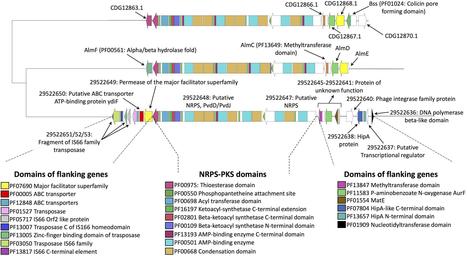
As obligate biotrophic symbionts, arbuscular mycorrhizal fungi (AMF) live in association with most land plants. Among them, Gigaspora margarita has been deeply investigated because of its peculiar features, i.e., the presence of an intracellular microbiota with endobacteria and viruses. The genome sequencing of this fungus revealed the presence of some hybrid non-ribosomal peptide synthases-polyketide synthases (NRPS-PKS) that have been rarely identified in AMF. The aim of this study is to describe the architecture of these NRPS-PKS sequences and to understand whether they are present in other fungal taxa related to G. margarita. A phylogenetic analysis shows that the ketoacyl synthase (KS) domain of one G. margarita NRPS-PKS clusters with prokaryotic sequences. Since horizontal gene transfer (HGT) has often been advocated as a relevant evolutionary mechanism for the spread of secondary metabolite genes, we hypothesized that a similar event could have interested the KS domain of the PKS module. The bacterial endosymbiont of G. margarita, Candidatus Glomeribacter gigasporarum (CaGg), was the first candidate as a donor, since it possesses a large biosynthetic cluster involving an NRPS-PKS. However, bioinformatics analyses do not confirm the hypothesis of a direct HGT from the endobacterium to the fungal host: indeed, endobacterial and fungal sequences show a different evolution and potentially different donors. Lastly, by amplifying a NRPS-PKS conserved fragment and mining the sequenced AMF genomes, we demonstrate that, irrespective of the presence of CaGg, G. margarita, and some other related Gigasporaceae possess such a sequence.
|
|
Scooped by
Jean-Michel Ané
December 17, 2020 10:40 PM
|
Legumes and nitrogen‐fixing rhizobial bacteria establish root nodule symbiosis, which is orchestrated by several plant hormones. Exogenous addition of biologically active gibberellic acid (GA) is known to inhibit root nodule symbiosis. However, the precise role of GA has not been elucidated because of the trace amounts of these hormones in plants and the multiple functions of GAs. Here, we found that GA signaling acts as a key regulator in a long‐distance negative‐feedback system of root nodule symbiosis called autoregulation of nodulation (AON). GA biosynthesis is activated during nodule formation in and around the nodule vascular bundles, and bioactive GAs accumulate in the nodule. In addition, GA signaling induces expression of the symbiotic transcription factor NODULE INCEPTION (NIN) via a cis‐acting region on the NIN promoter. Mutants with deletions of this cis‐acting region have increased susceptibility to rhizobial infection and reduced GA‐induced CLE‐RS1 and CLE‐RS2 expression, suggesting that the inhibitory effect of GAs occurs through AON. This is supported by the GA‐insensitive phenotypes of an AON‐defective mutant of HYPERNODULATION ABERRANT ROOT FORMATION1 (HAR1), and a reciprocal grafting experiment. Thus, endogenous GAs induce NIN expression via its GA‐responsive cis‐acting region, then the GA‐induced NIN activates the AON system to regulate nodule formation.
|
|
Scooped by
Jean-Michel Ané
December 16, 2020 2:57 PM
|
Positive results from using microbes in restoration and agricultural research coupled with changing technology have led to increased interest in scaling up and commercializing microbial inoculants as biostimulants and bioprotectants.
Ecological research has not kept pace with agricultural and microbiome research with regards to the effect that these introduced microbes have on resident plant and soil communities, and the resulting ecosystem services. Are we unleashing, or have we already unleashed, a tool meant for the betterment of society that we cannot control and may wreak havoc ecologically?
Here, we discuss potential consequences of human-assisted microbial invasions. We review current regulatory structures in the USA and provide a general set of practices to decrease the probability of microbial inoculants escaping their intended use and becoming invasive
The appeal of using microbial inoculants to mediate plant traits and productivity in managed ecosystems has increased over the past decade, because microbes represent an alternative to fertilizers, pesticides, and direct genetic modification of plants. Using microbes bypasses many societal and environmental concerns because microbial products are considered a more sustainable and benign technology. In our desire to harness the power of plant–microbial symbioses, are we ignoring the possibility of precipitating microbial invasions, potentially setting ourselves up for a microbial Jurassic Park? Here, we outline potential negative consequences of microbial invasions and describe a set of practices (Testing, Regulation, Engineering, and Eradication, TREE) based on the four stages of invasion to prevent microbial inoculants from becoming invasive. We aim to stimulate discussion about best practices to proactively prevent microbial invasions.
|
|
Scooped by
Jean-Michel Ané
December 15, 2020 6:49 PM
|
Arbuscular mycorrhizal symbiosis (AMS) arose in land plants more than 400 million years ago, perhaps acting as a major contributor to plant terrestrialization. The ability to engage in AMS is evolutionarily conserved across most clades of extant land plants, including early diverging bryophytes. Despite its broad taxonomic distribution, little is known about the molecular components that underpin AMS in early diverging land plants as the mechanisms regulating the symbiosis were primarily characterized in angiosperms. Several AMS associated genes were recently shown to be conserved in liverworts and hornworts, but evidence of them being associated with symbiosis in bryophytes is scarce. In this study, we characterised the dynamic response of the liverwort Marchantia paleacea to Rhizophagus irregularis colonization by time-resolved transcriptomics across progressive stages of symbiosis development. Gene orthology inference and comparative analysis of the M. paleacea transcriptional profile with a well characterised legume model -Medicago truncatula- revealed a deep conservation of transcriptional responses to AMS across distantly related species. We identified evolutionarily conserved patterns of expression of genes required for pre-symbiotic signalling, intracellular colonization and symbiotic nutrient exchange. Our study demonstrates that the genetic machinery regulating key aspects of symbiosis in plant hosts is largely conserved and coregulated across distantly related land plants. If bryophytes are confirmed to be monophyletic, our analysis provides novel insights on the first molecular pathways associated with symbiosis at the dawn of plant colonization of land.
|
|
Scooped by
Jean-Michel Ané
December 12, 2020 10:48 PM
|
Synthetic Biology is a rapidly growing interdisciplinary field that is primarily built upon foundational advances in molecular biology combined with engineering design principles such as modularity and interoperability. The field considers living systems as programmable at the genetic level and has been defined by the development of new platform technologies and methodological advances. A key concept driving the field is the Design-Build-Test-Learn cycle which provides a systematic framework for building new biological systems. One major application area for synthetic biology is biosynthetic pathway engineering that requires the modular assembly of different genetic regulatory elements and biosynthetic enzymes. In this review we provide an overview of modular DNA assembly and describe and compare the plethora of in vitro and in vivo assembly methods for combinatorial pathway engineering. Considerations for part design and methods for enzyme balancing are also presented, and we briefly discuss alternatives to intracellular pathway assembly including microbial consortia and cell-free systems for biosynthesis. Finally, we describe computational tools and automation for pathway design and assembly and argue that a deeper understanding of the many different variables of genetic design, pathway regulation and cellular metabolism will allow more predictive pathway design and engineering.
|
|
Scooped by
Jean-Michel Ané
December 12, 2020 10:42 PM
|
Mucilage, a gelatinous substance comprising mostly polysaccharides, is exuded by maize nodal and underground root tips. Although mucilage provides several benefits for rhizosphere functions, studies on the variation in mucilage amounts and its polysaccharide composition between genotypes are still lacking. In this study, eight maize (Zea mays L.) genotypes from different globally distributed agroecological zones were grown under identical abiotic conditions in a randomized field experiment. Mucilage exudation amount, neutral sugars and uronic acids were quantified. Galactose (∼39–42%), fucose (∼22–30%), mannose (∼11–14%), and arabinose (∼8–11%) were the major neutral sugars in nodal root mucilage. Xylose (∼1–4%), and glucose (∼1–4%) occurred only in minor proportions. Glucuronic acid (∼3–5%) was the only uronic acid detected. The polysaccharide composition differed significantly between maize genotypes. Mucilage exudation was 135 and 125% higher in the Indian (900 M Gold) and Kenyan (DH 02) genotypes than in the central European genotypes, respectively. Mucilage exudation was positively associated with the vapor pressure deficit of the genotypes’ agroecological zone. The results indicate that selection for environments with high vapor pressure deficit may favor higher mucilage exudation, possibly because mucilage can delay the onset of hydraulic failure during periods of high vapor pressure deficit. Genotypes from semi-arid climates might offer sources of genetic material for beneficial mucilage traits.
|
|
Scooped by
Jean-Michel Ané
December 12, 2020 10:39 PM
|
Achnatherum inebrians is an invasive perennial grass widespread in natural grasslands of north-west China and plays an important role in grassland ecological restoration. The presence of the seed-borne endophytic fungus Epichloë gansuensis in A. inebrians promotes grass growth, increases resistance to abiotic stress, and affects the rhizosphere microbial community of host plants. However, the relationships among E. gansuensis, rhizosphere bacteria and plant contents of carbon (C), nitrogen (N), phosphorus (P) and potassium (K) during different growing seasons are not clear. We examined changes in the rhizosphere bacterial community and in nutrient contents and ratios in A. inebrians with (E+) and without (E−) E. gansuensis in May, August and December. The Shannon diversity index was higher for rhizosphere bacteria of E+ than E− plants in the three different seasons. Leaf C, N and P contents and root P and K contents were higher in E+ than E− plants in May, and leaf K and root C were higher in E+ than E− plants in August. Leaf C : N ratios were lower in E+ than E− plants in December, and leaf C : K ratios were lower in E+ than E− plants in August and December. In addition, our results indicate significant interactions among rhizosphere bacteria, C, N, P and K contents, and endophyte treatment in three different seasons. In conclusion, E. gansuensis enhanced the C, N, P and K contents of host plants, and affected nutrient ratios of A. inebrians probably by increasing rhizosphere bacterial diversity and altering rhizosphere bacterial community structure. This study provides new findings on the ecological function of the endophyte E. gansuensis, including its potential role in enhancing soil fertility. The improvements in soil fertility were utilised in extrapolating to forage grass–endophyte associations.
|
|
Scooped by
Jean-Michel Ané
December 12, 2020 10:37 PM
|
Alfalfa (Medicago sativa L.) is one of the most important forages and legume crops in the Mediterranean region, where extensive soil exploitation and low soil fertility are among the factor limiting its production. In this study, a field experiment was carried out in the semi-arid area of Morocco, in order to assess the influence of the individual and combined application of autochthonous arbuscular mycorrhizal fungi (AMF), rhizobium strain and green compost supply on alfalfa. Vegetative yield, physiological and biochemical traits were evaluated together with the associated changes in the soil’s physico-chemical parameters. The results show that AMF and rhizobium inoculation combined with compost application induced the greatest effect. This treatment increased the dry matter yield, leaves and nodules number, and AMF infection rate. Moreover, the combined use of these biofertilizers further enhanced stomatal conductance, photosystem II efficiency, photosynthetic pigments (chlorophyll and carotenoids), protein and sugar content along with the nutrients uptake (Phosphorus (P), Nitrogen (N), Potassium (K) and Calcium (Ca)). When compared with the initial soil status, the compost (10 t/ha) combined with AMF and rhizobium significantly improved the organic matter, N and P content, decreased soil pH and increased electrical conductivity. This treatment is also efficient in increasing soil glomalin content. This study demonstrated that the interaction between green waste compost, AMF and rhizobium inoculation could have important implications in alfalfa sustainable agriculture.
|
|
Scooped by
Jean-Michel Ané
December 12, 2020 10:34 PM
|
Stevia rebaudiana is an economically important crop species, due to its ability to produce steviol glycosides, which are compounds that are 300 times sweeter than sugar. Additionally, this species produces phenolic compounds and flavonoids, a portion of which accumulate in trichomes. Arbuscular mycorrhizal (AM) symbiosis is the most important mutualistic association between Glomeromycota soil fungi and most vascular plants. Moreover, AM symbiosis is known to alter secondary metabolite production in plants. Thus, in this study, we investigated the influence of AM symbiosis on the accumulation of phenolic compounds and flavonoids in S. rebaudiana, as well as on trichome abundance and development. Compared with noncolonized plants, colonized plants exhibited a significant increase in leaf and root dry weight, as well as total leaf area. Interestingly, trichome density was positively affected under symbiotic conditions. This effect was correlated with an increase in the expression of TTG1, which is a marker gene for trichome development. Additionally, image analysis of autofluorescence obtained at wavelengths of 435 and 485 nm demonstrated stronger fluorescence signals corresponding to flavonoid and phenolic compounds in colonized plants compared to noncolonized plants; these signals were specifically located in glandular trichomes. Furthermore, the increase in phenolic and flavonoid concentrations in colonized S. rebaudiana was associated with an increased density of glandular trichomes in those plants compared with noncolonized plants. These results indicate that the establishment of AM symbiosis increases trichome density and induces secondary metabolite accumulation, which may be of biological significance in the interactions of colonized plants with their environments.
|
|
Scooped by
Jean-Michel Ané
December 10, 2020 4:35 PM
|
Relatively little is known regarding differences in root symbionts (i.e., mycorrhizae) between epiphytic and terrestrial orchids. We characterized the mycorrhizal fungal communities of aerial and terrestrial roots of the orchid, Vanilla planifolia, from four Mexican farms representing different management systems.
Amplicon sequencing identified 40 putative mycorrhizal fungi based on ITS sequence data, these included traditional orchid mycorrhizal fungi such as Ceratobasidium, and Thanatephorus in the order Cantharellales as well as Serendipitaceae in the order Sebacinales, and species of several genera traditionally considered as ectomycorrhizal fungi. Mycorrhizal fungal communities were similar in aerial and terrestrial roots, but differed in read abundances.
Plants growing in wild‐natural conditions hosted a richer, but not statistically different, community of mycorrhizal fungi in comparison with plants in the highly managed farm. Soil characteristics including texture, organic matter, N, P, and K do not explain differences between fungal communities at these farms.
This is one of the first reports of a diverse community of fungi traditionally considered to form ectomycorrhizas in association with aerial orchid roots. Further research is needed to understand the functional role of these putative mycorrhizal fungi in the ecology of V. planifolia, and if ectomycorrhizal fungi commonly occur in other hemiepiphytic and epiphytic orchids.
|