Many crops are colonized with arbuscular mycorrhizae fungi (AMF), which can efficiently absorb nutrient from the soil and induce plant immunity. The purpose of this study was to investigate the effects of AMF and rock phosphate (P) fertilizer applications on available P and some secondary plant metabolite in robusta coffee. The experiments were laid out in a 3 × 4 factorial randomized complete block design with AMF inoculants (control, Glomus intraradices LU3, Glomus sp. 2TS5) and rock phosphate fertilizer levels (0, 100, 200, and 400 g plant−1). Parameters measured root colonization percentage, available P in soil, total P in leaf, salicylic acid and phenolic compounds in leaves. The results showed that there was significant interaction between AMF and P in root colonization density, available P in soil, total P in leaves, and salicylic acid content. AMF (both Glomus intraradices and Glomus sp.) improved root colonization density (64–65%), available P in soil (30–50%), total P in leaves (37–40%), salicylic acid content (8–19%), and phenolic compounds in leaves (53–74%) compared to the control. Also, higher P at 400 g plant−1 increased root colonization density, available P in soil, total P accumulation in leaves, and salicylic acid. Therefore, AMF and rock P potentially represent an alternative way to promoting P uptake and plant immune in coffee.
The impact of soil amendment with compost and/or application of arbuscular mycorrhizal fungi (AMF) on the resistance of tomato to Verticillium dahliae was evaluated. The frequency and intensity of mycorrhization decreased in V. dahliae inoculated plants. Application of compost and AMF significantly improved plant growth, stomatal conductance and chlorophyll fluorescence compared to infected and non infected controls. The combination of these biostimulants reduced the disease severity and incidence and the leaf alteration index compared to pathogen-infected control plants. Mycorrhized and compost amended soil recorded a maximum decrease in plants malonyldialdehyde accumulation in the presence of V. dahliae. The combination of compost and AMF resulted in a significant improvement of superoxide dismutase, catalase, peroxidase and polyphenoloxidase activities in tomato leaves and roots compared to the control treatment in the presence of the pathogen. Similarly, yield and quality of tomato fruits were significantly improved by the dual application of compost and AMF.
The intimate association of host and fungus in arbuscular mycorrhizal (AM) symbiosis can potentially trigger induction of host defence mechanisms against the fungus, implying that successful symbiosis requires suppression of defence. We addressed this phenomenon by using AM‐defective vapyrin (vpy) mutants in Petunia hybrida, including a new allele (vpy‐3) with a transposon insertion close to the ATG start codon. We explore whether abortion of fungal infection in vpy mutants is associated with the induction of defence markers such as cell wall alterations, accumulation of reactive oxygen species (ROS), defence hormones, and induction of pathogenesis‐related (PR) genes. We show that vpy mutants exhibit a strong resistance against intracellular colonisation, which is associated with the generation of cell wall appositions (papillae) with lignin impregnation at fungal entry sites, while no accumulation of defence hormones, ROS, or callose was observed. Systematic analysis of PR gene expression revealed that several PR genes are induced in mycorrhizal roots of the wild type, and even more in vpy plants. Some PR genes are induced exclusively in vpy mutants. Our results suggest that VPY is involved in avoiding or suppressing the induction of a cellular defence syndrome that involves localised lignin deposition and PR gene induction.
The study was carried out to isolate and screen indigenous rhizobacteria associated with Mimosa pudica in ex-tin mining soil with the potential to sustain plant growth-promoting (PGP) traits under heavy metals (HM) stress condition. A total of 58 bacterial strains were isolated, screened for HM (As, Pb and Cd) tolerance and for various PGP traits. Production of PGP substances by selected isolates under influence of HM was further evaluated. The results revealed 5 isolates as HM tolerant (2M1, 3M1 and 3M3 as Pb tolerant; 3M3 and 4M9 as Cd tolerant while 6M2 as As tolerant) and possessing all tested PGP traits. The isolates were identified based on 16S rRNA as Bacillus cereus 2M1, Bacillus cereus 3M1, Bacillus pseudomycoides 3M3, Enterobacter tabaci 4M9 and Pseudomonas plecoglossicida 6M2. Tested isolates sustained PGP traits and withstand high HM stress conditions, particularly isolates 6M2 Pseudomonas plecoglossicida, 4M9 Enterobacter tabaci and 2M1 Bacillus cereus (6M2 had the overall best performance compared to other isolates). The strains are therefore expected to be the major contributing factors for survival of Mimosa pudica which were endemic in the abandoned mining sites and provide basis for using indigenous bacteria for bioremediation of HM contaminated soils.
Spatial and temporal variation in resource availability, population density, and composition likely affect the ecology and evolution of symbiotic interactions. We examined how host genotype, Nitrogen addition, rhizobial density, and community complexity affected a legume-rhizobia (Medicago truncatula - Ensifer meliloti) mutualism. Host genotype had the strongest effect on the size, number, and rhizobial composition of root nodules (the symbiotic organ). By contrast, the effect of small changes in N-availability and the complexity of the inoculum community (2, 3, 8, or 68 strains) were minor. Higher inoculum density resulted in a nodule community that was less diverse and more beneficial but only in the more selective host. With the less selective host, higher density resulted in more diverse and less beneficial nodule communities. Density effects on strain composition deserve additional scrutiny as they can create eco-evolutionary feedback and have translational relevance for overcoming establishment barriers in bio-inoculants.
Short Abstract The environmental context of the nitrogen-fixing mutualism between leguminous plants and rhizobial bacteria varies over space and time. The understudied environmental variable of rhizobial density had a larger effect on the relative fitness of 68 rhizobia (Ensifer meliloti) strains in nodules than the addition of low-levels of nitrogen or community complexity.
Globally important cereals such as barley (Hordeum vulgare L.) often engage in symbiosis with arbuscular mycorrhizal fungi (AMF). The impact of elevated atmospheric CO2 on nutrient exchange between these symbionts remains unknown. In controlled environment experiments, we used isotope tracers (15N, 33P, 14C) to quantify nutrient fluxes between two barley cultivars (Moonshine and Riviera) and their associated AMF at ambient (440 ppm) and elevated (800 ppm) CO2. Elevated CO2 reduced shoot N concentration in Moonshine, and shoot N and P concentration in Riviera. Elevated CO2 substantially increased mycorrhizal 33P acquisition in Moonshine. Mycorrhizal contribution to P uptake in Moonshine may have prevented dilution of tissue P concentration at elevated CO2. In Riviera, AMF did not improve 33P acquisition. Both cultivars received 15N from their AMF symbionts, and this acquisition was not influenced by CO2 concentration, although Moonshine received more 15N than Riviera. Our results suggest that AMF may provide substantial contributions to barley nutrition at current and projected future CO2 concentrations. This is especially noteworthy for barley, which is generally considered to have low mycorrhizal receptivity. AMF may help alleviate or avoid nutrient dilution normally observed at elevated CO2. Variation between cultivars indicates that mycorrhizal contribution to cereal nutrition could be improved through selective breeding practices.
The interest in the use of microbes as biofertilizers is increasing in recent years as the demands for sustainable cropping systems become more pressing. Although very widely used as biofertilizers, arbuscular mycorrhizal (AM) fungal associations with specific crops have received little attention and knowledge is limited, especially in the case of vineyards. In this study, the AM fungal community associated with soil and roots of a vineyard on Mallorca Island, Spain was characterized by DNA sequencing to resolve the relative importance of grape variety on their diversity and composition. Overall, soil contained a wider AM fungal diversity than plant roots, and this was found at both taxonomic and phylogenetic levels. The major effect on community composition was associated with sample type, either root or soil material, with a significant effect for the variety of the grape. This effect interacted with the spatial distribution of the plants. Such an interaction revealed a hierarchical effect of abiotic and biotic factors in shaping the composition of AM fungal communities. Our results have direct implications for the understanding of plant-fungal assemblages and the potential functional differences across plants in vineyard cropping. View Full-Text
Background Soybean [Glycine max (L) Merr.] is an annual leguminous crop serving as a source of food and feed, green manure, biodiesel and fiber. It is nodulated by diverse slow growing and fast growing rhizobia belonging to the genus Bradyrhizobium and Sinorhizobium, respectively. In Ethiopia, it has been cultivated since 1950s with lower grain yield history. Yield improvement efforts have been more concentrated on agronomic studies, inoculation of exotic Bradyrhizobium japonicum including TAL379 and/or fertilizer application. The results have usually been unsatisfactory and inconsistent. This study was initiated to identify promising indigenous soybean rhizobial inoculant that can enhance yield of the crop in the country.
Methods Native soybean rhizobia, designated GMR for Glycine max rhizobia, were trapped using soybean (cv. Ethio-Yugoslavia) from soils collected across agro-ecologies of Ethiopia. They were screened for in vitro tolerance against physico-chemical stresses, plant growth promoting (PGP) traits and symbiotic performances at greenhouse and field levels. A reference B. japonicum (TAL379) was included in all experiments. A soybean plant growth promoting Achromobacter sp. was also included in field trials for co-inoculation. Quantitative data were assessed by analysis of variance (ANOVA) employing SAS computer software package version 9.3. Mean separations were undertaken using Duncan’s Multiple Range Test at p ≤ 0.05. Phenotypic variability of the test bacteria was undertaken using PAST4.03 Computer Software.
Result GMR that produced acid and grew faster with larger colonies were identified as Sinorhizobium spp. and those which produced alkali and grew slowly with smaller colonies were identified as Bradyrhizobium spp. though further genetic analysis should be performed for verification and identification of their genus and species, respectively. Two Sinorhizobium spp. (GMR120C and GMR125B) profoundly nodulated different soybean cultivars under greenhouse conditions and significantly improved grain yield (p ≤ 0.05; maximum 3.98 tons ha−1) compared to 2.41, 2.82 and 2.69 recorded as maximum grain yield (tons ha−1) for TAL379 inoculation, positive control and negative control, respectively in field trials. Higher yield was recorded when GMR125B was co-inoculated with Achromobacter sp., but when GMR120C was inoculated singly. These GMR also showed efficient utilization of numerous substrates, some PGP traits and potential adaptation to various ecological stresses.
Conclusion The two Sinorhizobium spp. (GMR120C and GMR125B) are promising soybean inoculants that can be used to enhance the productivity of the crop in the country.
Diazotrophic cyanobacteria are able to fix N2 from the atmosphere and release it as bioavailable nitrogen what other organisms can utilize. Thus, they could be used as living nitrogen supplier whereby the use of fertilizer could be reduced in agricultural industry what results in a decrease of laughing gas released during fertilizer production. The diazotroph cyanobacterium Desmonostoc muscorum (D. muscorum) was characterized in shake flasks cultivated in nitrogen‐free and nitrogen‐containing medium. Similar growth rates were reached in both cultivations and the release of ammonium by D. muscorum was detected under nitrogen depletion. Subsequently, D. muscorum was co‐cultivated with Arabidopsis thaliana (A. thaliana) in nitrogen‐free medium. Additionally, the plant was cultivated in nitrogen containing and nitrogen‐free medium without D. muscorum as reference. A co‐cultivation led to higher growth rates of the cyanobacterium and similar growth of A. thaliana with similar maximum photochemical efficiency of photosystem II compared to the growth of nitrogen containing medium. Further, accumulation of cyanobacterial cells around the roots of A. thaliana was detected, indicating a successfully induced artificial symbiosis. Based on these results, D. muscorum could be a promising cyanobacterium as living nitrogen supplier for plants.
Legumes balance nitrogen acquisition from soil nitrate with symbiotic nitrogen fixation. Nitrogen fixation requires establishment of a new organ, which is a cytokinin dependent developmental process in the root. We found cytokinin biosynthesis is a central integrator, balancing nitrate signalling with symbiotic acquired nitrogen. Low nitrate conditions provide a permissive state for induction of cytokinin by symbiotic signalling and thus nodule development. In contrast, high nitrate is inhibitory to cytokinin accumulation and nodule establishment in the root zone susceptible to nodule formation. This reduction of symbiotic cytokinin accumulation was further exacerbated in cytokinin biosynthesis mutants, which display hypersensitivity to nitrate inhibition of nodule development, maturation and nitrogen fixation. Consistent with this, cytokinin application can rescue nodulation and nitrogen fixation of biosynthesis mutants in a concentration dependent manner. These inhibitory impacts of nitrate on symbiosis occur in a Nlp1 and Nlp4 dependent manner and contrast with the positive influence of nitrate on cytokinin biosynthesis that occurs in non-symbiotic species. Altogether this shows that legumes, as exemplified by Lotus japonicus, have evolved a different cytokinin response to nitrate compared to non-legumes.
Although the importance of the soil microbiome in mediating plant community structures and functions has been increasingly emphasized in ecological studies, the biological processes driving crop diversity overyielding remain unexplained in agriculture. Based on the plant‐soil feedback (PSF) theory and method, we quantified to what extent and how soil microbes contributed to intercropping overyielding. Soils were collected as inocula and sequenced from a unique 10‐year field experiment, consisting of monoculture, intercropping and rotation planted with wheat (Triticum aestivum), maize (Zea mays) or faba bean (Vicia faba). A PSF greenhouse study was conducted to test microbial effects on three crops’ growth in monoculture or intercropping. In wheat & faba bean (W&F) and maize & faba bean (M&F) systems, soil microbes drove intercropping overyielding compared to monoculture, with 28‐51% of the overyielding contributed by microbial legacies. The overyielding effects resulted from negative PSFs in both systems, as crops, in particular faba bean grew better in soils conditioned by other crops than itself. Moreover, faba bean grew better in soils from intercropping or rotation than from the average of monocultures, indicating a strong positive legacy effect of multispecies cropping systems. However, with positive PSF and negative legacy benefit effect of intercropping/rotation, we did not observe significant overyielding in the W&M system. With more bacterial and fungal dissimilarities by metabarcoding in heterospecific than its own soil, the better it improved faba bean growth. More detailed analysis showed faba bean monoculture soil accumulated more putative pathogens with higher Fusarium relative abundance and more Fusarium oxysporum gene copies by qPCR, while in heterspecific soils, there was less pathogenic effects when cereals were engaged. Further analysis in maize/faba bean intercropping also showed an increase of rhizobia relative abundance. Synthesis and applications. Our results demonstrate a soil microbiome‐mediated advantage in intercropping through suppression of the negative PSF of pathogens and increasing beneficial microbes. As microbial mediation of overyielding is context‐dependent, we conclude that the dynamics of both beneficial and pathogenic microbes should be considered in designing cropping systems for sustainable agriculture, particularly including combinations of legumes and cereals.
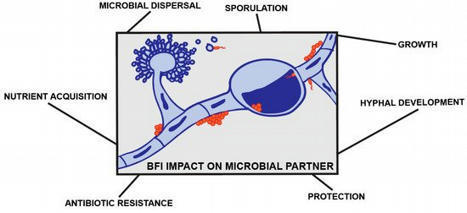
Fungi serve as a biological scaffold for bacterial attachment. In some specialized interactions, the bacteria will invade the fungal host, which in turn provides protection and nutrients for the bacteria. Mechanisms of the physical interactions between fungi and bacteria have been studied in both clinical and agricultural settings, as discussed in this review. Fungi and bacteria that are a part of these dynamic interactions can have altered growth and development as well as changes in microbial fitness as it pertains to antibiotic resistance, nutrient acquisition, and microbial dispersal. Consequences of these interactions are not just limited to the respective microorganisms, but also have major impacts in the health of humans and plants alike. Examining the mechanisms behind the physical interactions of fungi and bacteria will provide us with an understanding of multi-kingdom community processes and allow for the development of therapeutic approaches for disease in both ecological settings. View Full-Text
Leguminous plants possess the almost unique ability to enter symbiosis with soil-resident, nitrogen fixing bacteria called rhizobia. During this symbiosis, the bacteria physically colonize specialized organs on the roots of the host plant called nodules, where they reduce atmospheric nitrogen into forms that can be assimilated by the host plant and receive photosynthates in return. In order for nodule development to occur, there is extensive chemical cross-talk between both parties during the formative stages of the symbiosis. The vast majority of the legume family are capable of forming root nodules and typically rhizobia are only able to fix nitrogen within the context of this symbiotic association. However, many legume species only enter productive symbiosis with a few, or even single rhizobial species or strains, and vice-versa. Permitting symbiosis with only rhizobial strains that will be able to fix nitrogen with high efficiency is a crucial strategy for the host plant to prevent cheating by rhizobia. This selectivity is enforced at all stages of the symbiosis, with partner choice beginning during the initial communication between the plant and rhizobia. However, it can also be influenced even once nitrogen-fixing nodules have developed on the root. This review sets out current knowledge about the molecular mechanisms employed by both parties to influence host range during legume-rhizobia symbiosis.
Plants, including genetically modified (GM) ones, are able to shape the structure of soil microbiomes by modifying the soil properties and the rhizosphere chemistry by the exudation of different compounds, thus influencing the soil microbial dynamics. Among the rhizosphere microorganisms beneficial to the plant community, the arbuscular mycorrhizal (AM) fungi are considered as indicators of soil health, playing important roles in plant growth by improving mineral nutrition, stabilizing soil aggregates, and protecting their host plants against pathogens. In the context of a sustainable use of soils and conservation of the biodiversity of these beneficial fungi, a better understanding of the effects of GM plants on the mycorrhizal symbiosis is thus relevant. This chapter seeks to understand the effects of GM crops on AM fungi by reviewing the existing bibliography and to lay the foundation for further research works that enrich the current knowledge on this topic. Although to date most scientific investigations have found no significant effect of GM plants on AM fungal colonization, some found a negative effect of GM plants on the initial stages of the establishment of the mycorrhizal symbiosis. Thus, it is necessary to carry out further investigations on a long temporal scale and under different agroecological conditions, focusing on AM fungal biodiversity and on the impact of each GM crop on these beneficial microorganisms before authorizing release.
From bacterial quorum sensing to the signals of bees, communication is the basis of biotic interactions. Frequently, more than two organisms can take part in the speeches, resulting in a complex network of cross-talks. Recent advances in plant-microbe interactions research have shown that communication, both inter-kingdom and intra-kingdom, is shaped by a broad spectrum of factors. In this context, the rhizosphere (i.e., the soil close to the root surface) provides a specific microhabitat where complex interactions occur. The complex environment that makes up the rhizosphere can select for certain microbial populations, which are adapted to this unique niche. Among them, rhizobia have emerged as an important component of the rhizospheric microbiome. The aim of this review is to explore the components of such a rhizospheric Talk Show in the frame of the rhizobium-legume interactions. This symbiosis is a complex process that involves several signals that can be shaped by plant rhizospheric exudates and microbiome composition. The relationship established by rhizobia with other rhizospheric organisms, together with the influence of the environmental factors, results in their beneficial role on host plant health. Here, we resume research accounting strategies, molecules, and organisms that influence the place of rhizobia in the rhizosphere. The focus is on the most recent approaches for the study and subsequent exploitation of the diversity of the organisms. Indeed, the study of plant-microbes communication and evolution is fundamental to develop highly efficient inoculants able to reduce the use of fertilizers in agriculture.
Legumes of the Medicago genus form symbiosis with the bacterium Sinorhizobium meliloti and develop root nodules housing large numbers of the intracellular symbionts. Members of the Nodule-specific Cysteine Rich peptide (NCRs) family induce the endosymbionts into a terminal differentiated state. Individual NCRs are antimicrobial peptides that have the capacity to kill the symbiont but the nodule cell environment prevents killing. Moreover, the bacterial broad-specificity peptide uptake transporter BacA and exopolysaccharides contribute to protect the endosymbionts against the toxic activity of NCRs. Here, we show that other S. meliloti functions participate in the protection of the endosymbionts, including an additional broad-specificity peptide uptake transporter encoded by the yejABEF genes, lipopolysaccharide modifications mediated by lpsB and lpxXL as well as rpoH1, encoding a stress sigma factor. Mutants in these genes show in vitro a strain-specific increased sensitivity profile against a panel of NCRs and form nodules in which bacteroid differentiation is affected. The lpsB mutant nodule bacteria do not differentiate, the lpxXL and rpoH1 mutants form some seemingly fully differentiated bacteroids although most of the nodule bacteria are undifferentiated, while the yejABEF mutants form hypertrophied but nitrogen-fixing bacteroids. The nodule bacteria of all the mutants have a strongly enhanced membrane permeability, which is dependent on the transport of NCRs to the endosymbionts. Our results suggest that S. meliloti relies on a suite of functions including peptide transporters, the bacterial envelope structures and stress response regulators to resist the stressful assault of NCR peptides in the nodule cells.
Plant hormones play important roles in plant growth and development, physiology and in acclimation to environmental changes. The hormone signaling networks are highly complex and interconnected. It is thus important to not only know where the hormones are produced, how they are transported and how and where they are perceived, but also to quantitatively monitor their distribution quantitatively, ideally in a non‐invasive manner. Here we summarize the diverse set of tools available for quantifying and visualizing hormone distribution and dynamics. We provide an overview over the tools that are currently available ‐ including transcriptional reporters, and degradation sensors, luciferase and fluorescent sensors ‐ and compare the tools and their suitability for different purposes.
The concept of food quality, traditionally based on nutritional and sensory properties, has recently acquired an additional meaning, referring to the health-promoting properties of plant products, that are ascribed to plant secondary metabolites called phytochemicals, primarily represented by polyphenolic compounds and glucosinolates. The diversity and content of phytochemicals in plant products are affected by different variables, such as plant genotype, agronomic factors, and arbuscular mycorrhizal fungi (AMF), which establish mycorrhizal symbioses with most crops, including cereals, legumes, vegetables, fruit trees, sunflower, cotton, and sugarcane. AMF and associated bacteria enhance plant growth and health, and affect the production of polyphenols and carotenoids, and the activity of antioxidant enzymes. The production of health-promoting phytochemicals was shown to be differentially modulated by different AMF isolates and bacterial strains, in several food plants, i.e., tomato, lettuce, strawberry, artichoke, maize, grapevine, sunflower. Here, we provide an overview of recent studies concerning the multiple roles played by AMF and associated bacteria in the modulation of the biosynthesis of plant secondary metabolites with health-promoting activity, and discuss the development of designed multifunctional consortia to be used in sustainable agriculture. View Full-Text
The UK climate is projected to become warmer, with more frequent hotter, drier summers. Many governments and international organisations are concerned about how climate change will affect food production and security. Mycorrhizal fungi are an essential part of agricultural systems and yet little is known about how climate change will affect mycorrhizal fungi. We investigated the effect of reduced precipitation on levels of arbuscular mycorrhizal (AM) colonisation in the top 10 cm of soil in the grass Holcus lanatus L. (Yorkshire Fog) in a permanent pasture in South Gloucestershire, UK. Incident rainfall was reduced, by approximately 50 %, using clear gutters supported on steel frames. Over three growing seasons we observed little difference in levels of AM colonisation and numbers of intra-root fungal structures between the roots of H. lanatus grown with reduced or full incident rainfall. Time of year when water stress occurred had a stronger effect on levels of colonisation than the absolute amount of precipitation received. In H. lanatus, growing in a permanent pasture, levels of AM colonisation were around 40 - 50%, across a range of precipitation, from 18% above to 36% below the long-term average. The results highlighted the complex relationship between mycorrhizal fungi, host plant and abiotic stress.
Despite 50% of biology Ph.D. graduates being women, the number of women that advance in academia decreases at each level (e.g., from graduate to postdoctorate to tenure track). Recently, scientific societies and publishers have begun examining internal submissions data to evaluate representation and evaluation of women in their peer review processes; however, representation and attitudes differ by scientific field, and to date, no studies have investigated academic publishing in the field of microbiology. Using manuscripts submitted between January 2012 and August 2018 to the 15 journals published by the American Society for Microbiology (ASM), we describe the representation of women at ASM journals and the outcomes of their manuscripts. Senior women authors at ASM journals were underrepresented compared to global and society estimates of microbiology researchers. Additionally, manuscripts submitted by corresponding authors that were women received more negative outcomes than those submitted by men. These negative outcomes were somewhat mediated by whether or not the corresponding author was based in the United States and by the type of institution for United States-based authors. Nonetheless, the pattern for women corresponding authors to receive more negative outcomes on their submitted manuscripts held. We conclude with suggestions to improve the representation of women and decrease structural penalties against women.
The application of new agricultural technologies to attain sustainable production systems is necessary. The use of plant growth-promoting bacteria to improve plant growth and health has been studied for decades. This work aimed to isolate diazotrophic endophytic bacteria associated with sweet sorghum plants and study the interaction of their inoculation in combination with chemical N-fertilization on different sorghum cultivars. A bacterial collection of 181 isolates was constructed and characterized in vitro and in vivo. From that, the strains Enterobacter sp. UYSB89 and Kosakonia sp. UYSB139 were nifH+, produce IAA, defined as true endophytes and able to promote growth of two sweet sorghum under greenhouse conditions. The evaluated cultivars responded differentially to bacterial inoculation, the nitrogen fertilization doses and their interaction. Thus, plant growth is a multifactorial consequence of the interrelation between crop practices and the plant genotypes. This knowledge is a valuable factor in terms of understanding plant-bacteria endophyte interactions to preserve environmental sustainability during the implementation of agronomic practices.
Mutualistic associations between plants and arbuscular mycorrhizal (AM) fungi may have profound influences on their response to climate changes. Existing theories evaluate the effects of interdependency and environmental filtering on plant-AM fungal community dynamics separately; however, abrupt environmental changes such as climate extremes can provoke duo-impacts on the metacommunity simultaneously. Here, we experimentally tested the relevance of plant and AM fungal community responses to extreme drought (chronic or intense) in a cold temperate grassland. Irrespective of drought intensities, plant species richness and productivity responses were significantly and positively correlated with AM fungal richness and also served as best predictors of AM fungal community shifts. Notably, the robustness of this community synergism increased with drought intensity, likely reflecting increased community interdependence. Network analysis showed a key role of Glomerales in AM fungal interaction with plants, suggesting specific plant-AM fungal pairing. Thus, community interdependence may underpin climate change impact on plant-AM fungal diversity patterns in grasslands.
With global atmospheric carbon dioxide levels rising significantly, Valent BioSciences produced a new video showcasing a viable solution. This video stresses how sustainable farming techniques can help soils absorb additional carbon from the air to reduce these levels, rejuvenate degraded soil, and boost food production.
To get content containing either thought or leadership enter:
To get content containing both thought and leadership enter:
To get content containing the expression thought leadership enter:
You can enter several keywords and you can refine them whenever you want. Our suggestion engine uses more signals but entering a few keywords here will rapidly give you great content to curate.


 Your new post is loading...


 Scoop.it!