Legumes form two types of root organs in response to signals from microbes, namely, nodules and root galls. In the field, these interactions occur concurrently and often interact with each other. The outcomes of these interactions vary and can depend on natural variation in rhizobia and nematode populations in the soil as well as abiotic conditions. While rhizobia are symbionts that contribute fixed nitrogen to their hosts, parasitic root-knot nematodes (RKN) cause galls as feeding structures that consume plant resources without a contribution to the plant. Yet, the two interactions share similarities, including rhizosphere signaling, repression of host defense responses, activation of host cell division, and differentiation, nutrient exchange, and alteration of root architecture. Rhizobia activate changes in defense and development through Nod factor signaling, with additional functions of effector proteins and exopolysaccharides. RKN inject large numbers of protein effectors into plant cells that directly suppress immune signaling and manipulate developmental pathways. This review examines the molecular control of legume interactions with rhizobia and RKN to elucidate shared and distinct mechanisms of these root-microbe interactions. Many of the molecular pathways targeted by both organisms overlap, yet recent discoveries have singled out differences in the spatial control of expression of developmental regulators that may have enabled activation of cortical cell division during nodulation in legumes. The interaction of legumes with symbionts and parasites highlights the importance of a comprehensive view of root-microbe interactions for future crop management and breeding strategies.
Inoculation of symbiotic N2-fixing rhizobacteria (rhizobia) in legumes is an alternative to reduce synthetic N fertiliser input to crops. Even though common bean benefits from the biological N2 fixation carried out by native rhizobia isolates, the low efficiency of this process highlights the importance of screening new strains for plant inoculation. Two rhizobial strains (SEMIA 4108 and SEMIA 4107) previously showed great potential to improve the growth of common beans under greenhouse conditions. Thus, this study evaluated the growth and grain yield of common bean plants inoculated with those strains in field experiments. The rhizobial identification was performed by 16S rRNA sequencing and the phylogeny showed that SEMIA 4108 and SEMIA 4107 are closely related to Rhizobium phaseoli, within a clade containing other 18 Rhizobium spp. type strains. Common bean plants inoculated with SEMIA 4107 showed similar productivity to N-fertilised (N+) plants in the first experiment (2016/17) and higher productivity in the second experiment (2018/19). The development of inoculated plants was different from that observed for N+. Nonetheless, comparing inoculated treatments with N-fertilised control, no yield or productivity losses at the end of the growing process were detected. Our results showed that inoculation of the rhizobial isolates SEMIA 4108 and SEMIA 4107 improved the growth and grain yield of common bean plants. The observed agronomical performance confirms that both strains were effective and can sustain common bean growth without nitrogen fertilisation under the edaphoclimatic conditions of this study.
Flowering Sesbania sericea (Willd.) Link sampled from seasonally-flooded soils in the field displayed a 3-fold greater aerial biomass and root nodulation than individuals grown in nearby dry soils. Flooded plants (FP) showed high N2-fixation rates as apparent from their active leaf ureide catabolism and the high ureide content in nodules surrounded by an aerenchymatous phellem. Field-grown FP also exhibited high leaf Mn, P and chlorophyll but low carotenoid contents, suggesting non-stressful mineral nutrition and photosynthetic conditions. However, sufficient P in growing FP was not ascribed to an effective arbuscular mycorrhiza (AM) symbiosis. This was indicated by the age-related progressive decrease of root AM fungal colonization, and by the absence of AM arbuscules from the juvenile stages of growth. Aeration of flooded soils under greenhouse controlled conditions hindered growth, nodulation, leaf P content, and N2-fixation in rhizobia (Rh) and AM co-inoculated (Rh + AM) FP ruling out anoxia as the key factor underlying the inefficiency of the AM symbiosis in FP. Negative effects of aeration on FP were not counteracted by the addition of 2 mM KNO3 that inhibited nodulation, nor by the presence of the aerenchymatous phellem in the aerated roots. On the other hand, addition of 2 mM P enhanced the aerial mass of aerated and non-aerated FP, while inhibiting the colonization of root by AM. Analyses of rhizospheric fluorescein diacetate hydrolysis, urease, alkaline phosphatase and dehydrogenase enzymatic activities did not reveal marked differences in the soil microbial status between aerated and non-aerated FP, neither Rh + AM inoculated nor when fertilized by N and P. Overall results suggest a key role of AM only in seedling and juveniles providing sufficient P for the onset of N2-fixation.
Nitrogen‐fixing cyanobacteria are common in paddy fields, one of the most productive wetland ecosystems. Here, we present the complete genome of Nostoc sphaeroides, a paddy‐field diazotroph used for food and medicine for more than 1700 years and deciphered the transcriptional regulation during the developmental transition from hormogonia to vegetative filaments with heterocysts. The genome of N. sphaeroides consists of one circular chromosome (6.48 Mb), one of the largest ever reported megaplasmids (2.34 Mb), and seven plasmids. Multiple gene families involved in the adaption to high solar radiation and water fluctuation conditions were found expanded, while genes involved in anoxic adaptation and phosphonate utilization are located on the megaplasmid, suggesting its indispensable role in environmental adaptation. Distinct gene expression patterns were observed during the light‐intensity‐regulated transition from hormogonia to vegetative filaments, specifically, genes encoding proteins involved in photosynthetic light reaction, carbon fixation, nitrogen metabolism and heterocyst differentiation were significantly upregulated, whereas genes related to cell motility were down‐regulated. Our results provide genomic and transcriptomic insights into the adaptation of a filamentous nitrogen‐fixing cyanobacterium to the highly dynamic paddy‐field habitat, suggesting N. sphaeroides as an excellent system to understand the transition from aquatic to terrestrial habitats and to support sustainable rice production.
Invasive plants often pose serious threats to the natural biodiversity of invaded ecosystems and in this way are likely to alter ecosystem services. This applies to arbuscular mycorrhizal (AM) fungi, in which the invaders have been reported to modify community structure, which facilitates their further intrusion. Information as to the impact of such invasion on AM fungal communities is insufficient and therefore needed. In particular, little is known about how AM fungal communities shift in response to individual invasive species. To ascertain whether invasion changes the structure of indigenous AM fungal communities, we examined changes in AM fungal community composition and diversity in soil and in roots of native neighboring plants in response to incursion of five invasive plant species from the family Asteraceae: Conyza canadensis, Erigeron annuus, Echinops sphaerocephalus, Solidago canadensis, and Symphyotrichum novi-belgii. We found that invasions of tested invasive plant species altered composition of the AM fungal community and reduced the diversity of AM fungi in soil and in the roots of some native plants. Statistical significance of the invasions' effects depended on composition of AM fungal communities in roots of the native plant species and/or site and was not connected with changes in soil parameters. Our results confirm the notable influence of plant invasion on indigenous AM fungal biodiversity and the need for further study in various environmental conditions.
Non-vascular plants associating with arbuscular mycorrhizal (AMF) and Mucoromycotina ‘fine root endophyte’ (MFRE) fungi derive greater benefits from their fungal associates under higher atmospheric [CO2] (a[CO2]) than ambient; however, nothing is known about how changes in a[CO2] affect MFRE function in vascular plants. We measured movement of phosphorus (P), nitrogen (N) and carbon (C) between the lycophyte Lycopodiella inundata and Mucoromycotina fine root endophyte fungi using 33P-orthophosphate, 15 N-ammonium chloride and 14CO2 isotope tracers under ambient and elevated a[CO2] concentrations of 440 and 800 ppm, respectively. Transfers of 33P and 15 N from MFRE to plants were unaffected by changes in a[CO2]. There was a slight increase in C transfer from plants to MFRE under elevated a[CO2]. Our results demonstrate that the exchange of C-for-nutrients between a vascular plant and Mucoromycotina FRE is largely unaffected by changes in a[CO2]. Unravelling the role of MFRE in host plant nutrition and potential C-for-N trade changes between symbionts under different abiotic conditions is imperative to further our understanding of the past, present and future roles of plant-fungal symbioses in ecosystems.
Plants encounter various microbes in nature and must respond appropriately to symbiotic or pathogenic ones. In rice, the receptor-like kinase OsCERK1 is involved in recognizing both symbiotic and immune signals. However, how these opposing signals are discerned via OsCERK1 remains unknown. Here, we found that receptor competition enables the discrimination of symbiosis and immunity signals in rice. On the one hand, the symbiotic receptor OsMYR1 and its short-length chitooligosaccharide ligand inhibit complex formation between OsCERK1 and OsCEBiP and suppress OsCERK1 phosphorylating the downstream substrate OsGEF1, which reduces the sensitivity of rice to microbe-associated molecular patterns. Indeed, OsMYR1 overexpression lines are more susceptible to the fungal pathogen Magnaporthe oryzae, whereas Osmyr1 mutants show higher resistance. On the other hand, OsCEBiP can bind OsCERK1 and thus block OsMYR1–OsCERK1 heteromer formation. Consistently, the Oscebip mutant displayed a higher rate of mycorrhizal colonization at early stages of infection. Our results indicate that OsMYR1 and OsCEBiP receptors compete for OsCERK1 to determine the outcome of symbiosis and immunity signals.
A soil stability test, or slake test, is one of the easiest and most revealing ways to evaluate important indicators of soil health. The longer soil takes to break down in water, the more stable it is. This video demonstrates how stable soils resist erosion from wind and water. Stable soils also improve water infiltration and holding properties.
A recent "mBio" paper by the Fischer group (IMB) in collaboration with the Vorholt (IMB) and Zamboni groups (IMSB) demonstrates a critical role of chemical chaperones during infection of soybean host plants by the nitrogen-fixing soybean root nodule symbiont Bradyrhizobium diazoefficiens.
Guar [Cyamopsis tetragonoloba (L.) Taub] is a leguminous crop plant produced in semi‐arid regions worldwide, primarily for industrial uses of guar gum. Little research has been conducted on critical belowground traits of the plant, particularly on spatial and temporal development of the root system, including nodules. Providing this analysis was the objective of this research. We observed root and nodule character traits at regular time intervals in 130‐cm‐tall soil columns sectioned by depth in two years. In this tap‐rooted plant, root weight was greatest at the soil surface (0–15 cm) and decreased with depth. Root length density (RLD) from 0–15 cm and 15–30 cm soil depths was similar. The RLD and root weight were generally minimal in deeper soil layers, though deeper roots seem to play an important role in water uptake for guar, especially in drought conditions. Compared to most crops, guar has a fine rooting profile and a small root‐to‐shoot ratio. At all soil depths analyzed, ≥ 86% of root length was comprised of roots < 1 mm in diameter, though most were very fine roots < 0.5 mm. The root‐to‐shoot ratio ranged from 0.055–0.17 g g‐1 over the growing season. Significant accumulation of nodule weight occurred by 60 days, as did the first observations of nodule senescence, but nodule growth continued after this time. Most nodules and nodule weight were located near the soil surface, though smaller nodules were present at all depths. Because guar is typically grown in dryland conditions in semi‐arid regions, nodules near the soil surface may often be susceptible to shedding or loss of function due to dehydration and/or heat stress and the plant may rely on deeper nodules for N fixation. The basic biological information provided in this report is needed to hasten progress in guar genetic improvement and management.
To make big strides, science has to be ambitious. We have to aim for something that is really a game-changer,” says Krzysztof Szczyglowski, a research scientist with Agriculture and Agri-Food Canada in London, Ont.
Szczyglowski’s research targets the game-changing goal of nitrogen fixation in cereals. He and other researchers around the globe are working towards this complex challenge.
• Plant‐soil feedbacks regulate plant productivity and diversity, but potential mechanisms underpinning such feedbacks, such as the allocation of recent plant assimilate, remain largely untested especially for plants forming tripartite symbioses.
• We tested how soils from under alder (Alnus glutinosa) and beneath other species of the same and different families affected alder growth and nutrition, and colonisation of roots by nitrogen‐fixing Frankia bacteria and ectomycorrhizal fungi. We also measured how the soil environment affected carbon capture and allocation by pulse‐labelling seedlings with 13CO2. We then tested for linkages between foliar nutrient stoichiometry and carbon capture and allocation and soil origin using statistical modelling approaches.
• Performance of alder and nitrogen nutrition were best on home and birch (Betula pendula) soils (both Betulaceae), while performance on Douglas fir (Pseudotsuga menziesii) (Pinaceae) soil was poor. Plants growing in P. menziesii soil were virtually devoid of Frankia and ectomycorrhizas, and the natural abundance 15N signatures of leaves were more enriched indicating distinct nitrogen acquisition pathways. Seedlings in these soils also had smaller 13C fixation and root allocation rates, leading to smaller 13C respiration rates by microbes.
• Statistical models showed that the best predictors of foliar N concentration were 13C allocation rates to fine roots and net CO2 exchange from the mesocosms. The best predictors for foliar phosphorus concentration were net CO2 exchange from the mesocosms and soil origin; seedlings in home soils tended to have greater foliar phosphorus compared to birch soils while seedlings from Douglas fir soils were no different from the other treatments. Foliar phosphorus concentration was not correlated with plant available or total soil phosphorus for any of the soils. Home soils also resulted in distinct ectomycorrhizal communities on seedlings roots, which could be responsible for greater foliar phosphorus concentration.
• Our findings show how the association of alder with nitrogen‐fixing Frankia relieved nitrogen limitation in the seedling triggering a performance feedback loop. We propose that relief of nitrogen limitation likely increases plant phosphorus demand, which may promote the formation of ectomycorrhizas in nutrient‐deficient soils. The formation of tripartite symbioses therefore generate positive plant‐soil feedbacks, which enables plants to acquire mineral nutrients otherwise inaccessible in trade for carbon.
Presence and functional roles of arbuscular mycorrhizal (AM) fungi in wetland environment have gained a global importance in recent past. Wetlands build a low-oxygen atmosphere, forming a completely different ecological environment for AM fungi, known more to occur in terrestrial environment. Nevertheless, as many 101 of AM fungi species, belonging to 19 genera and 9 families have been observed in the rhizosphere of wetland plants. In order to obtain oxygen, AM fungi expand the aeration system of wetland plants, store oxygen through their own vesicles, or change the structure of AM to survive. Human activities negatively affect the wetland environment, thus, reducing the population of AM fungi, while certain AM fungi species still improved the survival and development of wetland plants. AM fungi regulate different physiological activities of wetland plants in response to waterlogging stress, including an enhancement of antioxidant defense system, increased proline accumulation, improved plant growth and root morphology, responses of nutrients and aquaporins, and suppression in ethanol accumulation. The current review briefly summarized different species of wetland plants forming AM structures, the population of AM fungi inhabiting the rhizosphere of wetland plant, AM fungi-colonization of wetland plants, and the effect of AM fungi on physiological functions of wetland plants to neutralize the negative impact of waterlogging in addition to outlook of researchable issues. This review also highlighted human impacts on AM fungi of wetland plants and the impact of AM fungi on wetland environments and wetland plants.
Rubber (Hevea brasiliensis, (Willd. Ex Adr. de Juss) Muell. Arg, Euphorbiaceae) is an important commercial latex-producing plant. Commercially, rubber is reproduced from a limited number of grifting genotypes. New promising genotypes have been selected to replace traditional genotypes. In addition, rubber has been promoted to recuperate Amazon soils degraded by extensive cattle ranching. Arbuscular mycorrhizal (AM) symbiosis is an important alternative for improving plant nutrition in rubber trees and recuperating degraded soils, but AM fungal communities on different plantations and in rubber genotypes are unknown. Spore abundance, root colonization and AM fungal community composition were evaluated in rubber roots of Colombian and introduced genotypes cultivated in degraded soils with different plantation types. Traditional (spore isolation and description; clearing and staining roots) and molecular techniques (Illumina sequencing) were used to assess AM fungi. Rubber roots hosted a diverse AM fungal community of 135 virtual taxa (VT) in 13 genera. The genus Glomus represented 66% of the total AM fungal community. Rubber genotype did not affect the arbuscular mycorrhization, hosting similar AM fungal communities. The composition of the AM fungal community on old and young rubber plantations was different. Diversity in AM fungi in rubber roots is an important characteristic for restoring degraded soils. View Full-Text
Soil arbuscular mycorrhizal (AM) fungi were monitored in a 4-year experiment of nitrogen (N) and phosphorus (P) fertilization in three growing seasons (April, August, and November) under two successional stages (young and mature) in a subtropical forest of China. AM fungal extra-radical hyphal density was significantly affected by fertilization, season, and interactions between fertilization and season and between forest stage and season, but not by forest stage. The spore density of AM fungi was significantly affected by forest stage and season, but not by fertilization. Totally, 160 operational taxonomic units (OTUs) of AM fungi have been identified at a 97% sequence similarity level using Illumina MiSeq sequencing of the V4 region of the 18S rDNA. AM fungal Shannon diversity index, but not OTU richness, showed a positive response to P fertilization. The community composition of AM fungi was significantly influenced by P fertilization, but not by N fertilization, season, and forest stage. Phosphorus fertilization exhibited a negative impact on the relative abundance of the dominant Glomeraceae. This finding highlights that P availability has a strong effect on the community of AM fungi in the subtropical forest ecosystem.
Population growth and food necessity envisaged the dire need for supplementation to a larger community balance in food production. With the advent of the green revolution, agriculture witnessed the insurrection of horticultural fruit crops and field crops in enormous modes. Nevertheless, chemical fertilizer usage foresees soil pollution and fertility loss. Utilization of biocontrol agents and plant growth promotion by microbial colonization enrooted significant restoration benefits. Constant reliability for healthy foods has been emancipated across the globe stressing high nutritive contents among indigenous field crops like tomato (Solanum lycopersicum). However, stress tolerance mechanisms and efficient abatement require deeper insights. The applicability of arbuscular mycorrhizal fungi (AMF) poses as an ultimate strategy to minimize the deleterious consequences of abiotic stress such as salt, drought, temperature and heavy metal stress sustainably. The rational modality employing the application of AMF is one of significant efforts to lessen cell damages under abiotic stress. The novelty of the compilation can be redressed to cohesive literature for combating stress. The literature review will provide agricultural scientists worldwide in providing a rational approach that can have possible implications in not only tomato but also other vegetable crops. View Full-Text
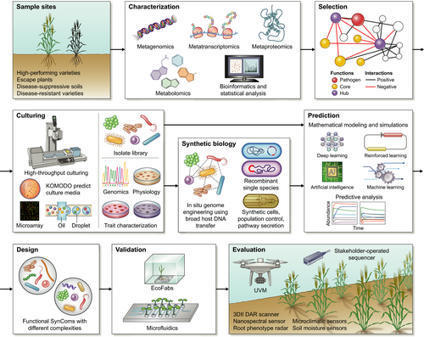
Harnessing plant‐associated microbiomes offers an invaluable strategy to help agricultural production become more sustainable while also meeting growing demands for food, feed and fiber. A plethora of interconnected interactions among the host, environment and microbes, occurring both above and below ground, drive recognition, recruitment and colonization of plant‐associated microbes, resulting in activation of downstream host responses and functionality. Dissecting these complex interactions by integrating multiomic approaches, high‐throughput culturing, and computational and synthetic biology advances is providing deeper understanding of the structure and function of native microbial communities. Such insights are paving the way towards development of microbial products as well as microbiomes engineered with synthetic microbial communities capable of delivering agronomic solutions. While there is a growing market for microbial‐based solutions to improve crop productivity, challenges with commercialization of these products remain. The continued translation of plant‐associated microbiome knowledge into real‐world scenarios will require concerted transdisciplinary research, cross‐training of a next generation of scientists, and targeted educational efforts to prime growers and the general public for successful adoption of these innovative technologies.
Thomas Brock, a microbiologist, was driving west to a laboratory in Washington State in 1964 when he stopped off at Yellowstone National Park.
“I’d never seen Yellowstone before,” he said in an interview in 2017. “I came in the south entrance, got out of my car, and there were all these thermal areas spreading out from the hot springs into the lake. I was stunned by the microbes that were living in the hot springs, and nobody seemed to know anything about them.”
What fascinated him, on what would be the first of many trips to Yellowstone, were the blue-green algae living in a hot spring — proof that some life could tolerate temperatures above the boiling point of water.
It was the beginning of research that led to a revolutionary find in 1966: a species of bacteria that he called Thermus aquaticus, which thrived at 70 degrees Celsius (158 degrees Fahrenheit) or more.
Arbuscular mycorrhizal fungi (AMF) are keystone symbionts of agricultural soils but agricultural intensification has negatively impacted AMF communities. Increasing crop diversity could ameliorate some of these impacts by positively affecting AMF. However, the underlying relationship between plant diversity and AMF community composition has not been fully resolved. We examined how greater crop diversity affected AMF across farms in an intensive agricultural landscape, defined by high nutrient input, low crop diversity and high tillage frequency. We assessed AMF communities across 31 field sites that were either monocultures or polycultures (growing > 20 different crop types) in three ways: richness, diversity and composition. We also determined root colonization across these sites. We found that polycultures drive the available AMF community into richer and more diverse communities while soil properties structure AMF community composition. AMF root colonization did not vary by farm management (monocultures vs polycultures), but did vary by crop host. We demonstrate that crop diversity enriches AMF communities, counteracting the negative effects of agricultural intensification on AMF, providing the potential to increase agroecosystem functioning and sustainability.
Legumes include several major crops that can fix atmospheric nitrogen in symbiotic root nodules, thus reducing the demand for nitrogen fertilizers and contributing to sustainable agriculture. Global change models predict increases in temperature and extreme weather conditions. This scenario might increase plant exposure to abiotic stresses and negatively affect crop production. Regulation of whole plant physiology and nitrogen fixation in legumes during abiotic stress is complex, and only a few mechanisms have been elucidated. Reactive oxygen species (ROS), reactive nitrogen species (RNS), and reactive sulfur species (RSS) are key players in the acclimation and stress tolerance mechanisms of plants. However, the specific redox-dependent signaling pathways are far from understood. One mechanism by which ROS, RNS, and RSS fulfil their signaling role is the post-translational modification (PTM) of proteins. Redox-based PTMs occur in the cysteine thiol group (oxidation, S-nitrosylation, S-glutathionylation, persulfidation), and also in methionine (oxidation), tyrosine (nitration), and lysine and arginine (carbonylation/glycation) residues. Unraveling PTM patterns under different types of stress and establishing the functional implications may give insight into the underlying mechanisms by which the plant and nodule respond to adverse conditions. Here, we review current knowledge on redox-based PTMs and their possible consequences in legume and nodule biology.
When engaging in symbiosis with legume hosts, rhizobia are confronted with environmental changes, including nutrient availability and stress exposure. Genetic circuits allow responding to these environmental stimuli to optimize physiological adaptations during the switch from the free-living to the symbiotic life style. A pivotal regulatory system of the nitrogen-fixing soybean endosymbiont Bradyrhizobium diazoefficiens for efficient symbiosis is the general stress response (GSR), which relies on the alternative sigma factor σEcfG. However, the GSR-controlled process required for symbiosis has not been identified. Here, we demonstrate that biosynthesis of trehalose is under GSR control, and mutants lacking the respective biosynthetic genes otsA and/or otsB phenocopy GSR-deficient mutants under symbiotic and selected free-living stress conditions. The role of trehalose as a cytoplasmic chemical chaperone and stress protectant can be functionally replaced in an otsA or otsB mutant by introducing heterologous genetic pathways for biosynthesis of the chemically unrelated compatible solutes glycine betaine and (hydroxy)ectoine. Alternatively, uptake of exogenously provided trehalose also restores efficient symbiosis and tolerance to hyperosmotic and hyperionic stress of otsA mutants. Hence, elevated cytoplasmic trehalose levels resulting from GSR-controlled biosynthesis are crucial for B. diazoefficiens cells to overcome adverse conditions during early stages of host infection and ensure synchronization with root nodule development.
A Gram-negative-staining, endospore-forming, rod-shaped bacterium, designated T1T, was isolated from root nodules of soybean (Glycine max (L.) Merr) in Heilongjiang Province of China. The isolate was identified as a member of the genus Paenibacillus based on phenotypic and phylogenetic characteristics. The 16S rRNA sequence was closely related to that of Paenibacillus sacheonensis SY01T with a similarity of 98.4%. Average nucleotide identity and in silico DNA–DNA hybridization values between strain T1T and P. sacheonensis DSM 23054 T were 81.4% and 25.4%, respectively. The DNA G + C content of strain T1T was 58.2 mol%. meso-Diaminopimelic acid was detected in the cell-wall peptidoglycan. The major cellular fatty acids were anteiso-C15:0, iso-C16:0 and iso-C15:0. The predominant respiratory quinone was MK-7. The polar lipids were diphosphatidylglycerol, phosphatidylglycerol, phosphatidylethanolamine, five unidentified phospholipids, four unidentified aminophospholipids, an unidentified glycolipid and an unidentified lipid. Based on these results, T1T is considered to represent a novel species of the genus Paenibacillus, for which the name Paenibacillus glycinis sp. nov. is proposed. The type strain is T1T (= CGMCC 1.18563 = KCTC43227).
Soybean nodulation is a highly controlled process that involves complex gene regulation at both transcriptional and post‐transcriptional levels. In the present study, we profiled gene expression changes, alternative splicing events, and DNA methylation patterns during nodule formation, development, and senescence. The transcriptome data uncovered key transcription patterns of nodule development that included 9669 core genes and 7302 stage‐specific genes. Alternative splicing analysis uncovered a total of 2323 genes that undergo alternative splicing events in at least one nodule developmental stage, with activation of exon skipping and repression of intron retention being the most common splicing events in nodules compared to roots. Approximately 40% of the differentially spliced genes were also differentially expressed at the same nodule developmental stage, implying a substantial association between gene expression and alternative splicing. Genome‐wide‐DNA methylation analysis revealed dynamic changes in nodule methylomes that were specific to each nodule stage, occurred in a sequence‐specific manner, and impacted the expression of 1864 genes. An attractive hypothesis raised by our data is that increased DNA methylation may contribute to the efficiency of alternative splicing. Together, our results provide intriguing insights into the associations between gene expression, alternative splicing, and DNA methylation that may shape transcriptome complexity and proteome specificity in developing soybean nodules.
Plant growth promoting rhizobacteria (PGPR) can display several plant-beneficial properties, including support to plant nutrition, regulation of plant growth, and biocontrol of pests. Mechanisms behind these effects are directly related to the presence and expression of specific genes, and different PGPR strains can be differentiated by the presence of different genes. In this study we reported a comprehensive evaluation of a novel PGPR Klebsiella variicola UC4115 from the field to the lab, and from the lab to the plant. The isolate from tomato field was screened in-vitro for different activities related to plant nutrition and growth regulation as well as for antifungal traits. We performed a functional annotation of genes contributing to plant-beneficial functions previously tested in-vitro. Furthermore, the in-vitro characterization, the whole genome sequencing and annotation of K. variicola UC4115, were compared with the well-known PGPR Azospirillum brasilense strain Sp7. This novel comparative analysis revealed different accumulation of plant-beneficial functions contributing genes, and the presence of different genes that accomplished the same functions. Greenhouse assays on tomato seedlings from BBCH 11–12 to BBCH > 14 were performed under either organic or conventional management. In each of them, three PGPR inoculations (control, K. variicola UC4115, A. brasilense Sp7) were applied at either seed-, root-, and seed plus root level. Results confirmed the PGP potential of K. variicola UC4115; in particular, its high value potential as indole-3-acetic acid producer was observed in increasing of root length density and diameter class length parameters. While, in general, A. brasilense Sp7 had a greater effect on biomass, probably due to its high ability as nitrogen-fixing bacteria. For K. variicola UC4115, the most consistent data were noticed under organic management, with application at seed level. While, A. brasilense Sp7 showed the greatest performance under conventional management. Our data highlight the necessity to tailor the selected PGPR, with the mode of inoculation and the crop-soil combination.
To get content containing either thought or leadership enter:
To get content containing both thought and leadership enter:
To get content containing the expression thought leadership enter:
You can enter several keywords and you can refine them whenever you want. Our suggestion engine uses more signals but entering a few keywords here will rapidly give you great content to curate.


 Your new post is loading...