Filamentous pathogens such as the oomycete Phytophthora infestans infect plants by developing specialized structures termed haustoria inside the host cells. Haustoria are thought to enable secretion of effector proteins into the plant cells. Haustorium biogenesis is therefore critical for pathogen accommodation in the host tissue. Haustoria are enveloped by a specialized host-derived membrane, the extrahaustorial membrane (EHM), which is distinct from the plant plasma membrane. The mechanisms underlying the biogenesis of the EHM are unknown. Remarkably, several plasma membrane localised proteins are excluded from the EHM but the remorin REM1.3 accumulates around P. infestans haustoria. Here, we used overexpression, co-localization with reporter proteins, and super-resolution microscopy in cells infected by P. infestans to reveal discrete EHM domains labelled by REM1.3 and P. infestans effector AVRblb2. Moreover, SYT1 synaptotagmin, another previously identified perihaustorial protein, localized to subdomains which are mainly not labelled by REM1.3 and AVRblb2. Functional characterization of REM1.3 revealed that it is a susceptibility factor that promotes infection by P. infestans. This activity, and REM1.3 recruitment to the EHM, require REM1.3 membrane binding domain. Our results implicate REM1.3 membrane micro-domains in plant susceptibility to an oomycete pathogen.
Plant growth is influenced by the composition of its associated microbiome. The inherent complexity and functional redundancy of natural plant microbiomes presents a formidable barrier to understanding the myriad biological interactions therein. Efforts have been made to develop synthetic microbial communities (SynComs) that can provide a rigorous and generalizable framework for the rational design of next-generation microbial products for sustainable agriculture. We test multiple strategies for stable, plant growth promoting SynCom design and evaluate the phenotypic and molecular impacts of a successful plant-SynCom interaction.
We designed 4 distinct, reduced-complexity variants of SynCom SRC1 and assessed their capacities for colonization, stability, and plant growth promotion. To understand the impact on plant performance of our highest performing SynCom variant, we characterized the host’s longitudinal transcriptional response to SynCom inoculation and corroborated the results with metabolomics analysis.
The top performing SynCom stably colonized sorghum roots and rhizospheres, elicited plant growth promotion, and induced dynamic spatiotemporal gene transcription in sorghum roots and shoots defined by modulation of growth-defense tradeoff machinery and enhanced flavonoid production.
The resultant reduced-complexity SynCom is a highly stable, soil-independent, plant growth promoting, and demonstrates the utility of colonization-based selection criteria, integrated with longitudinal transcriptomic and metabolomic characterization.
Signaling in root nodule symbiosis is initiated by the perception of rhizobial Nod factors (NFs) by two plant Lysin motif (LysM)-containing Nod factor receptors (NFR1 and NFR5). Here, we identified the NFR1 homolog from chickpea (Cicer arietinum) and functionally established its role by a gene silencing approach. To achieve insights into the molecular mechanisms of CaNFR1, we evaluated a highly conserved residue in its activation loop and a specific region of the juxtamembrane (ΔJM) domain. The replacement of threonine with alanine at position 476 had significant implications, causing the loss of a phosphorylation event and disrupting the interaction with NFR5. The elimination of the ΔJM domain of CaNFR1 also weakened the interaction strength with CaNFR5. Based on molecular docking and simulation studies, these structural alterations aligned with our yeast-based and in planta protein–protein interaction data, as well as a significant reduction in nodule number, size, and infection cell abundance after overexpression of CaNFR1 variants. Cross-species genetic complementation in the lyk3 mutant of Medicago truncatula highlighted the critical role of the evolutionarily conserved T476 in the activation loop and ΔJM domain of NFR1, in its interaction with NFR5, underscoring a crucial step in the receptor-mediated activation mechanism leading to root nodulation in legumes.
The maturation of the unique FeMo-cofactor of molybdenum nitrogenase is a multistep process requiring the sequential action of a series of maturase complexes. As a final step, the NifEN complex forms FeMo-cofactor from the precursor NifB-co, also called L-cluster, through replacement of an apical iron ion by molybdenum and the attachment of an organic homocitrate ligand. NifB-co is delivered by a small cofactor chaperone, NifX, and initially bound near the surface of the maturase NifEN. Here, we report high-resolution cryo-electron microscopy structures of NifEN in complex with NifX, showing NifB-co binding to NifEN in full detail, capturing both interacting partners in the act of cluster transfer. In a dynamic transfer complex, the large metal cluster is coordinated by single residues from both NifEN and NifX. In silico studies concur with these structures but suggest a third, internal conversion site where cluster maturation likely takes place.
A bioreporter system based on sfYFP, sfCFP, and mScarlet-I in Mesorhizobium japonicum and sfYFP and sfCFP in Rhizobium leguminosarum, driven by nifH consensus promoters was established to monitor occupancy and nitrogen fixation events within legume host nodules. These bioreporter plasmids expand established rhizobium sfGFP system to new hosts and fluorophores.
Arbuscular mycorrhizal (AM) fungi form mutualistic symbioses with a wide range of terrestrial plants, in which they exchange inorganic nutrients taken up from the soil for plant-derived photosynthates such as sugars and lipids. This nutrient exchange occurs exclusively at arbuscules─highly branched hyphal structures that develop in the plant root cortex. Although the molecular mechanisms underlying arbuscule development and function have been extensively studied using targeted approaches based on transgenic plants and fluorescence microscopy, directly visualizing the various molecular components crucial for arbuscule function using nontargeted approaches remains a major challenge. Here, we demonstrate that ultrabroadband multiplex coherent anti-Stokes Raman scattering (CARS) microspectroscopy enables two- and three-dimensional imaging of arbuscule-containing regions in plant roots. Using genetically transformed Lotus japonicus roots colonized by the AM fungus Rhizophagus irregularis, we identify Raman spectroscopic signatures of arbuscules indicative of protein-rich domains. These domains are associated with periarbuscular membrane-embedded transporters that are involved in AM nutrient exchange, including phosphate transporters, as well as other proteins present in fungal and plant cells adjacent to the arbuscules. Additionally, we detect adjacent lipid-rich regions corresponding to arbuscule trunks that mainly contain unsaturated triacylglycerols transferred from the host plant. Our findings highlight the potential of ultrabroadband multiplex CARS imaging as a label-free, in situ imaging tool for studying arbuscules, providing deeper chemical insights into AM symbiosis.
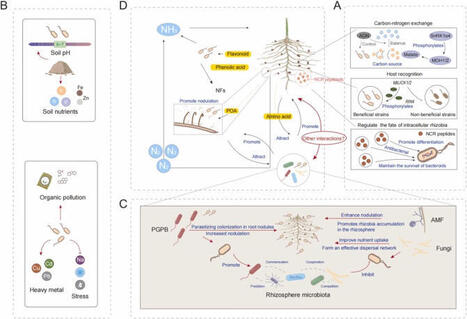
Extensive research on the nitrogen fixation mechanism of rhizobia has advanced our understanding of the complex interactions between plant hosts and microorganisms. Furthermore, rhizobial diversity and the genetic, physiological and environmental factors that influence their survival and nodulation ability have also been widely studied. Optimizing symbiotic nitrogen fixation can significantly enhance legume productivity while reducing fertilizer dependence and improving soil health. To achieve these benefits, various rhizobia inoculants have been successfully developed and applied to legume crops such as soybeans and peanuts. However, there are still limitations in terms of the effectiveness and stability of these inoculants under field conditions. The advancement of sequencing and new technologies has led to the discovery of increasingly more novel functions and mechanisms, providing a wealth of valuable information for the improved application of rhizobial inoculants. In this review, we explore the diversity of rhizobia and molecular signals involved in rhizobium-legume symbiosis, and discuss the role of hormones produced by rhizobia in symbiotic nitrogen fixation. Furthermore, we have synthesized recent progress in understanding the regulatory roles of the plant host, the rhizosphere microbiota, and root exudates on rhizobial nodulation. Finally, we propose ways to utilize the latest discoveries to enhance symbiotic nitrogen fixation and achieve more advanced applications.
Climate change and increased pollution are driving dynamic and rapidly accelerating changes in our environment, negatively impacting agricultural production. Meanwhile, modern agricultural research is mostly failing to provide rapid, adequate, and accessible solutions. A farmer-centered and multidisciplinary model is proposed here to accelerate research and promote breakthrough developments in agriculture.
Microbial communities are dynamic networks that regulate nutrient cycling, energy flow, and ecosystem stability, making microbial diversity essential to the health and resilience of all living organisms and ecosystems. However, Anthropocene-driven human activities have led to substantial losses of microbial diversity in environmental and host-associated microbiomes. Despite their critical role, microbiome is underrepresented in conservation and public health strategies, creating a knowledge and intervention gap. Emerging strategies based on microbiome approach offer promising avenues for restoring microbial diversity and enhancing Planetary Health. Achieving these goals requires coordinated global policies, interdisciplinary collaboration, and recognition of microbes as essential partners in sustaining life on Earth.
Mycorrhizal symbiosis is one of the most widespread and ecologically significant mutually beneficial interactions in terrestrial ecosystems, with decisive effects on plant nutrition, soil microbial dynamics, and ecosystem stability. Classically defined through carbon-nutrient exchange, this symbiotic relationship is now considered a more complex and multifaceted structure in current studies. In particular, secondary metabolites synthesized by plants and mycorrhizal fungi are increasingly being shown to be key chemical signals regulating the tripartite interactions between plants, fungi, and the rhizosphere microbiome. Secondary metabolites such as phenolic compounds, flavonoids, terpenoids, and alkaloids play a critical role in processes such as selectively promoting beneficial microorganisms, suppressing pathogenic or competitive species, and supporting functional microbial groups involved in nutrient cycling. Mycorrhizal colonization alters the secondary metabolite profiles of plants, is associated with shifts in the rhizosphere microbial community structure, and indirectly affects fundamental ecosystem functions such as nitrogen fixation, phosphorus mobilization, and organic matter decomposition. This review aims to provide a mechanistic and integrative evaluation of secondary metabolite-mediated interactions within the plant-mycorrhiza-rhizosphere microbiome tripartite system. This tripartite system represents a multilayered regulatory network operating across molecular, microbial, and ecosystem levels. The findings shed light on new approaches in terms of sustainable agricultural practices and ecosystem management.
Background and aims Common bean (Phaseolus vulgaris L.) is an important food legume which contributes to sustainable agriculture by fixing atmospheric nitrogen (N). However, modern breeding programs have mostly focused on improving crop yield and agronomic traits, ignoring the crop’s capacity for effective symbiotic nitrogen fixation and interactions with microbial communities. We sought to investigate how genotype, soil N availability, and environmental conditions, affect plant growth, N fixation, and the composition of root-associated bacterial communities of 16 bean cultivars released over 77 years of breeding history.
Methods Crop growth parameters of 14 pintos, 1 pink, and a non-nodulating navy bean R99 were evaluated in field trials conducted over two growing seasons under differing N soil fertility. The soil and root microbiomes associated with these cultivars were analyzed using 16S rRNA amplicon sequencing.
Results The results revealed significant year-to-year differences in crop yield and SNF. While nodulation rates were consistent, N fixation efficiency declined under high soil N conditions. Cultivar-specific differences in microbiome composition were observed under N-limited conditions, with several taxa strongly associated with individual genotypes. Notably, modern cultivars showed reduced SNF, which was also more prominent under low N availability, suggesting potential trade-offs associated with breeding for high-input systems. The line R99 exhibited a distinct microbial profile and reduced Rhizobium abundance, indicating a complex genotype–microbiome interaction.
Conclusion These findings highlight the importance of both genotype and soil environment on bean performance and microbiome structure and underscore the need for breeding strategies aimed at improving N-use efficiency in bean production.
With the aim to elucidate the interdependence between potassium transport by the host plant in nodule cells and potassium transport in bacteroids, a null mutant of rhizobial potassium ion transporter Smkup1 was created and investigated. The mutation, according to cytological analysis, has not caused specific aberrations in the root nodules’ anatomy and ultrastructure, but a significant induction of the expression of host plant and rhizobial genes involved in the stress response was observed. At the same time, an opposite trend was observed for genes of the autophagy pathway that have shown a significant downregulation of expression. To identify the mechanisms of interplay between autophagy and senescence in the root nodule, an in silico analysis of protein–protein interactions of positive (Beclin 1) and negative (NAC1, BAK1) regulators of autophagy was performed. The resulting networks allowed the predictions of interacting proteins putatively linking symbiotic interactions, autophagy, stress, programmed cell death (PCD), and senescence. Based on these data, we hypothesized that modulation of the expression of these genes in the root nodule could be the way to extend the root nodule’s lifespan and the duration of the nitrogen fixation process.
Plant diseases pose a great risk to global food security, and recent research indicates that pathogen pressures on plant productivity will substantially increase under ongoing climate change (that is, increasing CO2 levels and global warming). However, our mechanistic and predictive knowledge of the impacts of climate extremes, such as heatwaves and prolonged droughts, and their interaction with other climatic factors, on plant pathogens, hosts and microbiomes, remains largely unknown. This is an important knowledge gap that limits our ability to develop effective strategies to mitigate the socioeconomic impacts of climate change-induced plant disease outbreaks. This Review examines the impacts of key climate extremes on soil-borne pathogens, plant microbiomes and host physiology that ultimately determine disease outcomes. We explore evidence that suggests that the responses of pathogen–host–microbiome interactions to climate extremes may differ in many ways from those to long-term climate change. Climate extremes may increase the virulence and distribution of many pathogens, suppress certain plant immune responses, and weaken the core functions of host microbiomes within the disease triangle, thereby facilitating disease outbreaks. We propose an integrated pathway for harnessing microbiomes to address the critical challenges posed by climate extremes. These insights offer new approaches to mitigate disease risks by harnessing microbiomes and metabolites under climate extremes, with the potential to support climate-resilient and sustainable agricultural and natural ecosystems.
En mi opinión, este texto es muy importante porque muestra cómo el cambio climático puede afectar a las plantas y la producción de alimentos. Me parece preocupante que todavía no se conozca bien cómo ocurren estos problemas, ya que eso dificulta encontrar soluciones. Sin embargo, también me parece interesante que se propongan alternativas como el uso de microbiomas. Creo que es necesario seguir investigando para proteger la agricultura y garantizar los alimentos en el futuro.
Plants take up nitrogen from the soil as ions or free amino acids. Some plant species form symbioses with nitrogen-fixing soil bacteria to carry out biological nitrogen fixation using the enzyme complex nitrogenase to convert atmospheric nitrogen to ammonia, which the plants can use. This involves the formation of specialized plant structures called root nodules and is known as root nodule symbiosis. Such bacteria include rhizobia and Frankia. The hosts of rhizobia are legumes (order Fabales) and one non-legume (Parasponia, order Rosales), while Frankia associates with actinorhizal plants from the orders Fagales, Cucurbitales, and Rosales. Phylogenetically, Frankia can be divided into four clusters. The earliest diverging cluster is Frankia cluster-2, which can be divided into the island and continental lineages, and, with one exception, contains species that have never been cultivated. It diverged from the non-symbiotic cluster-4. Subsequently, another symbiotic lineage branched off from cluster-4: the precursor of the two symbiotic clusters, cluster-1 and cluster-3. Cluster-1 contains two distinct groups: cluster-1a, whose species can infect Alnus, and cluster-1c, whose species can infect (Allo-)Casuarina. To date, some cluster-1a strains have not been cultivated. The as-yet-uncultivable strains of both cluster-1a and cluster-2 lineages show strong genome erosion (4.2 to 5.6 MB compared to 10 MB in cluster-4). This thesis aims to provide a broader understanding of the evolution and saprotrophic capabilities of the nitrogen-fixing Actinomycetota Frankia, and how these bacteria interact with their host plants.
In Study I, we tried to determine why certain Frankia strains cannot be cultured. Frankia have an uptake hydrogenase enzyme (Hup), which recycles the hydrogen produced by nitrogen fixation to counter the loss of energy that occurs during the process. We analysed the different types of [NiFe] uptake hydrogenases found across Frankia clusters to understand whether they play a role in a strain’s ability to survive in culture. We found that the Frankia strains which could not be cultivated to date have lost the gene set required to produce type-1h [NiFe] uptake hydrogenase, which scavenges electrons from atmospheric hydrogen for respiration during carbon starvation. These strains contain either type-1f or type-2a hydrogenases, either of which can recycle the hydrogen produced during nitrogen fixation, allowing them to fix nitrogen during symbiosis in an energy-efficient manner.
In Study II and Study III, we checked for the presence of undiscovered Frankia species exhibiting genome reduction in Casuarina or Coriaria hosts that escaped isolation via traditional culturing techniques. Nodules were collected from several countries and directly sequenced the nodule to obtain nodule metagenome assembled genomes (MAGs), bypassing the need to culture the microsymbionts. We identified five new Frankia species: one Casuarina-infective species from cluster-1c, and four from earlier studies: one novel Coriaria-infective species from the cluster-2 continental lineage, and three novel Coriaria-infective species from the cluster-2 island lineage. All these strains show evidence of erosion of the genes needed to produce type-1h [NiFe] uptake hydrogenase. In conclusion, Frankia strains follow one of two evolutionary trajectories – either towards obligate symbiosis (accompanied by strong genome erosion), or towards rhizosphere colonization (with limited genome erosion).
In Study IV, we examined the lipochitooligosaccharide (LCO) compounds produced by some species from the continental lineage of cluster-2 Frankia. In rhizobia and arbuscular mycorrhizal (AM) fungi (i.e., in other plant microsymbionts), LCOs are used for microbe-host communication. In the evolutionarily older AM fungi, LCOs can also suppress host defences. Since Frankia LCOs are not produced by all Frankia species, a function in genus-wide microsymbiont-host communication seems unlikely. We therefore examined the effect of Frankia LCOs on plant defence. Our findings suggest that, like AM LCOs, Frankia LCOs suppress plant defence, enabling infection and nodulation under stressed conditions.
Recently reclassified from the genus Pseudomonas, Stutzerimonas comprises metabolically versatile bacteria widely distributed across diverse environments and with a capacity to perform complete denitrification. Here, we evaluated the applicability of CRISPR/Cas9-based genome editing in Stutzerimonas species. Using a two-plasmid pCasPA/pACRISPR system, we achieved efficient deletion of the denitrification-associated narG and dnrE genes in Stutzerimonas decontaminans 19SMN4. On the other hand, Cas9-associated toxicity significantly limited transformation in Stutzerimonas perfectomarina ZoBell. These results highlight both the potential and the limitations of CRISPR/Cas9 editing in Stutzerimonas, emphasizing that genome editing efficiency and tolerance may vary even among closely related strains.
Dans le contexte d’une diminution des intrants en agriculture, les microorganismes du sol peuvent jouer un rôle essentiel dans la nutrition et la protection des cultures. Cela implique de tester la capacité des cultivars existants à interagir avec les microorganismes du sol et à bénéficier de cette interaction, puis de sélectionner de nouveaux génotypes favorisant ces interactions. Parmi les microorganismes du sol, les champignons mycorhiziens à arbuscules (CMA) font partie des plus abondants et ubiquitaires. La symbiose mycorhizienne permet à la fois d’améliorer l’efficacité de la nutrition et la résistance des plantes cultivées à des pathogènes. Le niveau de colonisation des racines par les CMA est cependant largement dépendant du génotype de l’hôte et de la disponibilité en minéraux du sol. Une forte disponibilité en azote (N) et phosphore (P), inhibe la colonisation des racines par les CMA chez différentes espèces, dont le blé. Un objectif pour la sélection de cultivars performants en bas intrants est d’obtenir des génotypes capables d’être colonisés par les CMA à des niveaux intermédiaires de fertilisation et capables de répondre positivement en termes de stimulation de rendement et de défense. Le projet MYCOBLE a pour objectif de mesurer la variabilité génétique de blés français pour la colonisation, la stimulation de croissance/rendement et de défense par des CMA, en fonction de la disponibilité du sol en N et P. Pour cela, seront mesurés en conditions contrôlées, 1/ le niveau de colonisation par des CMA d’un panel de blé tendre, 2/ l’effet sur la colonisation de la disponibilité en N et P, 3/ la stimulation de croissance, de rendement (dans une serre de phénotypage automatisée) et de résistance à une maladie majeure du blé (septoriose) par des CMA, chez quelques cultivars contrastés identifiés en 1-2, et en champ, 4/ le niveau de colonisation par des CMA, de maladies/insectes ravageurs et de rendement sous différents niveaux de fertilisation. Ce projet permettra d’identifier des variétés de blé qui montrent une colonisation et des réponses positives aux CMA sous une fertilisation intermédiaire en N et P. Il permettra par ailleurs de définir des conditions expérimentales permettant de chercher par la suite des bases génétiques contrôlant ces réponses chez le blé.
Background The development and functioning of root nodules in legumes are regulated by a cascade of gene expression events involving early and late nodulins. Early nodulins participate in infection and cortical cell division, whereas late nodulins support mature nodule function. Previously, a unique late nodulin gene, LjPLP-IV (Lotus japonicus phosphatidylinositol transfer protein-like protein IV), was identified. This gene contains a bidirectional promoter (BiP) within its tenth intron that drives the expression of both an antisense RNA and another late nodulin transcript. However, the antisense transcript remained largely unexplored.
Methods and Results In this study, we characterized a novel long non-coding RNA, LjPLR (L. japonicus PLP-IV lncRNA), through strand-specific transcriptome analysis of L. japonicus nodules. Sequence alignment revealed that LjPLR is highly complementary to the sense strand of LjPLP-IV, with its first exon aligning precisely at the tenth exon–intron boundary of the LjPLP-IV gene. These results strongly suggest that LjPLR corresponds to the previously reported antisense RNA transcribed from the BiP. Real-time PCR analysis further demonstrated an inverse temporal expression pattern between LjPLR and LjPLP-IV during nodule development.
Conclusion Together with in silico target prediction analyses, our findings indicate that LjPLP-IV is the sole putative target of LjPLR. We therefore hypothesize that LjPLR likely regulates LjPLP-IV, a gene implicated in rhizobial infection of root cortical cells in L. japonicus. Collectively, these results provide novel insight into the regulatory landscape underlying symbiotic nitrogen fixation in L. japonicus.
Nitrogen (N) and phosphorus (P) imbalances constrain plant growth. This study examines how nitrate (NO3⁻) supply affects root phosphate (Pi) uptake in Populus alba × P. glandulosa (84 K poplar) under varying Pi conditions, with a focus on the role of arbuscular mycorrhizal fungi (AMF, Rhizophagus irregularis). Transcriptomic and physiological analyses reveal that Pi availability modulates NO3⁻ responses and AMF symbiosis. At the hormone–root architecture level, under low Pi conditions, NO3⁻ suppresses jasmonic acid (JA) signaling while activating auxin (IAA) and abscisic acid (ABA) pathways, thereby promoting lateral root proliferation. Under adequate Pi conditions, it primarily mediates SA/IAA/ABA-driven primary root elongation. AMF optimize this developmental response by regulating the expression of MIZ1 and WRKY70. At the carbon–P interface, under low Pi, NO3⁻ upregulates PEPC and MS to stimulate the secretion of organic acids, which, in concert with phosphatases, facilitate rhizosphere Pi mobilization. AMF further enhance the efficiency of carbon–P exchange, whereas under adequate Pi, carbon flux is redirected toward aboveground growth. Within P metabolism, under low Pi, NO3⁻ activates PHT1 and P recycling through the PHL5–HHO2–SPX transcriptional network, albeit at increased energetic cost; under adequate Pi, recycling pathways are downregulated to maintain homeostasis. AMF reduce energy expenditure under low Pi by substituting hyphal-mediated transport for root active transport, and under adequate Pi, convert surplus P into an inositol pyrophosphate (IP7) signaling pool, thereby improving phosphorus-use efficiency. These findings reveal conserved N–P regulatory mechanisms in a woody model under controlled conditions and may provide mechanistic insights relevant to improving nutrient management in plantation forestry and tree cultivation.
While root nodule symbiosis (RNS) is primarily recognized for nitrogen acquisition, it is heavily influenced by phosphorus levels. In natural agroecosystems, nitrogen limitation frequently co-occurs with phosphorus deficiency, yet the role of phosphorus in modulating RNS remains understudied. Recent research in the legume Phaseolus vulgaris shows that phosphorus starvation suppresses nodulation by downregulating the master regulator gene Nodule Inception, mediated by phosphate-responsive factors such as Phosphate Starvation Response-Like 7. We propose an integrated model where phosphate signaling functions as a metabolic checkpoint, balancing carbon availability, nitrogen demand, and phosphorus status. Elucidating how phosphate scarcity rewires these symbiotic gene networks is essential for sustainable agriculture, allowing for the optimization of symbiotic nitrogen fixation in nutrient-depleted environments.
What if the solution to feeding humanity has been hiding in the soil for millions of years? Bioengineer Karsten Temme discovered a remarkable answer to this question: for eons, crops relied on soil microbes to convert atmospheric nitrogen into food — until modern farming severed that ancient partnership. He shows how we can reawaken those dormant microbes using gene editing, creating “living fertilizer” that delivers nutrients to crops in real time and transforms farms around the world. (Recorded at TED Countdown Summit 2025 on June 18, 2025)
The TED Talks channel features talks, performances and original series from the world's leading thinkers and doers. Subscribe to our channel for videos on Technology, Entertainment and Design — plus science, business, global issues, the arts and more. Visit https://TED.com to get our entire library of TED Talks, transcripts, translations, personalized talk recommendations and more.
TED's videos may be used for non-commercial purposes under a Creative Commons License, Attribution–Non Commercial–No Derivatives (or the CC BY – NC – ND 4.0 International) and in accordance with our TED Talks Usage Policy: https://www.ted.com/about/our-organization/our-policies-terms/ted-talks-usage-policy. For more information on using TED for commercial purposes (e.g. employee learning, in a film or online course), please submit a Media Request at https://media-requests.ted.com
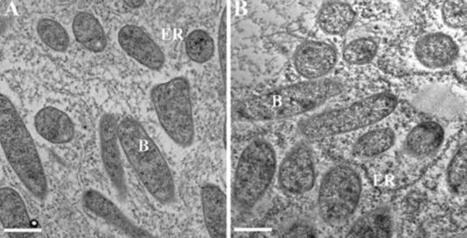
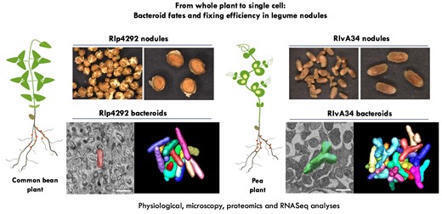
Within legume root nodules, rhizobia differentiate into bacteroids, which reduce N2 into NH3 for secretion to the plant. Bacteroids may be swollen and terminally differentiated or non-swollen and can regenerate outside nodules. It is unclear why these different endosymbiotic lifestyles exist and whether they differ in symbiotic efficiency. Here, we compared N2 fixing bacteroids of the near isogenic strains Rhizobium leguminosarum bv. phaseoli 4292 (Rlp4292) and R. leguminosarum bv. viciae A34 (RlvA34), nodulating Phaseolus vulgaris (common bean) and Pisum sativum (pea), respectively. The larger bean plants fixed more N2, but peas fixed 1.6–3-fold more per unit nodule mass. Values per unit volume were similar between bean and pea because bean nodules are 2.7-fold denser (i.e. mass per unit volume). Bean nodules have higher numbers of smaller (∼1/5 the volume) bacteroids than peas. Bean bacteroids are denser (i.e. 2.5-fold protein per unit volume) although less closely packed than pea bacteroids (i.e. more space between bean bacteroids). Critically, pea bacteroids fix N2 at higher rates versus bean per unit bacteroid protein, as protein expression is skewed toward N2 fixation and TCA-cycle enzymes. Pea bacteroids infect 1.6 times the percentage of nodule volume of beans (i.e. 14.2% versus 9.1%). Overall, the increased packing density of pea bacteroids, as well as the bias of their proteome to nitrogenase, associated N2 fixation processes, and dicarboxylate metabolism, contributes to their greater symbiotic efficiency, which is likely driven by plant antimicrobial peptides.
Symbiosis is a concept that has been profoundly shaped by the contributions of women scientists, among whom Lynn Margulis stands as a leading figure. Through her vision and determination, Margulis drew scholarly attention to symbiosis, offering a transformative interpretation of the evolution of living organisms. This mini-review highlights the essential contributions of women researchers to the study of symbioses, tracing the shift from naturalistic and descriptive studies to molecular, genetic, and omics-based approaches.
Arbuscular mycorrhizal fungi (AMF) are important components of terrestrial ecosystems and sustainable agricultural practices, forming mutually beneficial symbiotic associations with roots of most land plants including crops by providing them with nutrients in exchange for photosynthesis-derived carbon and protection from biotic and abiotic stresses. Microorganisms, including bacteria, are emerging as important new players in the AMF-plant symbiosis by influencing symbiotic outcome. Specifically, bacteria can tightly associate with AMF extraradical mycelium and spores. Spores are produced mainly in the soil and function in reproduction and dissemination. Spores are large and full of lipids and therefore represent an important soil carbon pool as well as an attractive niche for soil bacteria, termed the “sporosphere”. Intriguingly, diverse bacterial communities have been found in different parts of the sporosphere environment, and they may possess roles in complementing and enhancing AMF function. In this review, we describe the AMF sporosphere environment and summarize our current knowledge of spore-associated bacterial communities including their composition, assembly, function and localization. We also identify knowledge gaps and future research directions as well as highlight spores as model systems for studying AMF–microbe interactions.
Phosphorus (P) deficiency in soil remains one of the most important limitations to sustainable legume production worldwide, strongly influencing nodule development, symbiosis, and crop productivity. Recent discoveries provide compelling evidence that phosphate starvation triggers molecular and physiological responses in nodules, fundamentally reshaping symbiotic efficiency. In this commentary, we discuss new insights into how phosphate availability regulates nodulation through local and systemic regulatory pathways, with a particular focus on the role of GmAIR12-5 in soybean (Qin et al. J Plant Physiol 313:154585, https://doi.org/10.1016/j.jplph.2025.154585, 2025), alongside contributions from GmPAP12 (Wang et al. Front Plant Sci 11:450. https://doi.org/10.3389/fpls.2020.00450, 2020 ) and PvPHR1/PvPHR-L7 (Isidra-Arellano et al. Plant J Aug 103(3):1125–1139, 2020 ; Singh et al. Plant Cell Physiol. https://doi.org/10.1093/pcp/pcaf069, 2025). Together, these findings provided a unified perspective on the molecular and physiological mechanisms through which legumes sense, integrate, and respond to P deprivation, to determine nodulation outcomes. We highlight the significance of these discoveries for advancing our understanding of the phosphate–nodulation nexus and their potential in breeding legumes resilient to nutrient limitations.
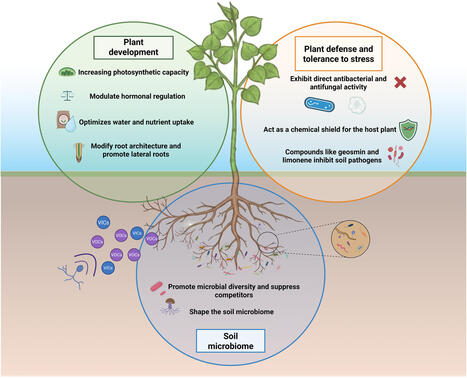
Mycorrhizal fungi represent one of the oldest and most successful symbioses in plant evolution. Communication among mycorrhizal fungi and plants occurs prior to direct contact among them through different and variable biochemical signals, including microRNAs, hormones, small peptides and volatile organic and inorganic compounds. Volatile organic compounds (VOCs) emerge as key chemical signals that enable the transmission of chemical messages modulating plant and microorganism responses in both below- and above-ground ecosystems. The diversity and concentration of mycorrhizal VOCs will vary depending on the environment and the emitting organism and are usually related to changes in the conformation of root architecture and lateral root formation mediated by auxin and strigolactones. Moreover, the study of the effects of mycorrhizal VOCs in the tolerance to abiotic and biotic stress are still scarce although there are some promising results pointing out to the effect of these VOCs in plant development under osmotic stress conditions, and their properties as antifungal and antibacterial molecules. However, the information regarding the molecular mechanisms involved in mycorrhizal VOCs signaling and their effect on plants remains still elusive. The understanding of VOC-mediated plant-mycorrhizal interactions, together with the technical improvements for their detection and mode of application in the field, will open new avenues for biotechnological crop improvement and management that not only will reduce the dependence on agrochemicals but also fosters soil health and plant resilience.
Cross-kingdom RNA interference is an emerging concept in plant–pathogen interactions. Here we provide evidence that cross-kingdom RNA interference also occurs in a beneficial plant symbiosis called arbuscular mycorrhiza. The arbuscular mycorrhizal fungus Rhizophagus irregularis transfers small RNAs into plant cells, promoting the colonization of host roots. This finding establishes inter-organismal RNA communication as a new regulatory mechanism of this ancient and widespread symbiosis.
To get content containing either thought or leadership enter:
To get content containing both thought and leadership enter:
To get content containing the expression thought leadership enter:
You can enter several keywords and you can refine them whenever you want. Our suggestion engine uses more signals but entering a few keywords here will rapidly give you great content to curate.


 Your new post is loading...











I know that it is not a symbiont but... some people will guess why I am scooping this :-)