Your new post is loading...

|
Scooped by
Jean-Michel Ané
November 4, 2013 11:29 PM
|
Each of the two members of the mycorrhizal couple, the plant and the fungus, has developed mechanisms for signaling the other prior to the actual formation of the mycorrhizal association. The symbiotic pair Terfezia boudieri (Pezizaceae, a desert truffle) and Helianthemum sessiliflorum(Cistaceae) was studied with a view to determining how fungal secretion of auxin—a plant hormone—promotes establishment of mycorrhizas, on the one hand, and how plant chemoattractants affect fungal growth, on the other. In view of the known effects of auxin—inhibition of tap root growth, enhancement of secondary root development, bending of the direction of root growth towards the horizontal (negative chemotropism)—it seems that auxin secretion by the fungus is designed to keep the root tips (which are the fungal penetration sites) within its reach. Indeed, fungi grow about ten times more slowly than developing roots. Inhibition of root hair formation, another effect of fungal auxin, makes the plant dependent on the fungus for its nutrients. It is known that fungal oriented growth towards plant roots is very pronounced under limiting sugar availability and much weaker under high sugar concentrations. Our research has recently focused on isolation of potential plant chemoattractants; so far, one as yet unidentified compound with a molecular weight of about 535 has been found to possess chemotropic activity.
|
|
Rescooped by
Jean-Michel Ané
from Rhizobium Research
November 4, 2013 2:46 PM
|
Analysis of 16S rRNA gene of eight strains (BR 3299T, BR 3296, BR 10192, BR 10193, BR 10194, BR 10195, BR 10196 and BR 10197) isolated from nodules of cowpea collected at a semi-arid region of Brazil showed 97% of similarity to sequences of recently described rhizobial species of Microvirga. Phylogenetic analyses of four housekeeping genes (gyrB, recA, dnaK and rpoB), DNA-DNA relatedness and AFLP further indicated that these strains belong to a new species within the genus Microvirga. Our data support the hypothesis that genes related to nitrogen fixation were obtained via horizontal gene transfer, as sequences of nifH genes were very similar to Rhizobium and Mesorhizobium, which are not next relative of Microvirga as shown by the 16S rRNA analysis. Phenotypic traits, such as host range and carbon utilization, emphasizes their differentiation from its most related species, M. lotononidis, M. zambiensis and M. lupini. Therefore, a novel species is proposed for these symbiotic nitrogen-fixing bacteria, for which the name Microvirga vignae sp. nov. is suggested. The type strain is BR3299T (= HAMBI 3457). Radl V, Simões-Araújo JL, Leite J, Passos SR, Martins LM, Xavier GR, Rumjanek NG, Baldani JI, Zilli JE.(2013). Int J Syst Evol Microbiol. Oct 31. [Epub ahead of print]
Via IvanOresnik
|
|
Scooped by
Jean-Michel Ané
November 2, 2013 7:01 PM
|
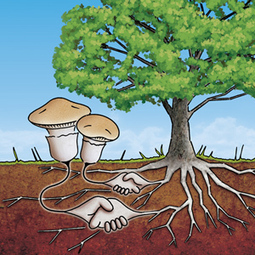
Scientists in the UK have shown that plants can communicate with the help of fungal networks.
Microbial symbioses, in which microbes have either positive (mutualistic) or negative (parasitic) impacts on host fitness, are integral to all aspects of biology, from ecology to human health. In many well-studied cases, microbial symbiosis is characterized by a specialized association between a host and a specific microbe that provides it with one or more beneficial functions, such as novel metabolic pathways or defense against pathogens. Even in relatively simple associations, symbiont-derived benefits can be context dependent and influenced by other host-associated or environmental microbes. Furthermore, naturally occurring symbioses are typically complex, in which multiple symbionts exhibit coordinated, competing, or independent influences on host physiology, or in which individual symbionts affect multiple interacting hosts. Here we describe research on the mechanisms and consequences of multipartite symbioses, including consortia in which multiple organisms interact with the host and one another, and on conditional mutualists whose impact on the host depends on additional interacting organisms
Via Francis Martin
|
|
Scooped by
Jean-Michel Ané
November 1, 2013 11:48 PM
|
Arbuscular mycorrhizal fungi (AMF) have mutualistic relationships with more than 80% of terrestrial plant species. This symbiotic relationship is ancient and would have had important roles in establishment of plants on land. Despite their abundance and wide range of relationship with plant species, AMF have shown low species diversity. However, molecular studies have suggested that diversity of these fungi may be much higher, and genetic variation of AMF is very high within a species and even within a single spore. Despite low diversity and lack of host specificity, various functions have been associated with plant growth responses to arbuscular mycorrhizal fungal colonization. In addition, different community composition of AMF affects plants differently, and plays a potential role in ecosystem variability and productivity. AMF have high functional diversity because different combinations of host plants and AMF have different effects on the various aspects of symbiosis. Consequently, recent studies have focused on the different functions of AMF according to their genetic resource and their roles in ecosystem functioning. This review summarizes taxonomic, genetic, and functional diversities of AMF and their roles in natural ecosystems.
|
|
Rescooped by
Jean-Michel Ané
from Rhizobium Research
October 31, 2013 9:53 AM
|
Nod factor modifications mediated by nodZ and nolL gene products (fucosylation and acetylation of fucose residues, respectively) were probably later acquisitions in the nodulation process. Novel phylogenetic analyses suggest that nodZ and nolL genes were transferred from Bradyrhizobium to other nodule bacteria. These bradyrhizobial genes are highly diverse while rhizobial, sinorhizobial and mesorhizobial nodZ and nolLgenes are represented by few branches among those from bradyrhizobia. These genes in novel rhizobial backgrounds may have favored efficient nodulation in legume hosts commonly associated withBradyrhizobium strains. Ernesto Ormeño-Orrillo, Luis E. Servín-Garcidueñas, Juan Imperial, Luis Rey, Tomás Ruiz-Argueso, and Esperanza Martinez-Romero (2013). Mol Phylogenet Evol. March 12 [Epub ahead of print].
Via IvanOresnik
|
|
Rescooped by
Jean-Michel Ané
from Rhizobium Research
October 31, 2013 9:49 AM
|
The thu operon (thuEFGKAB) in Sinorhizobium meliloti codes for transport and utilization functions of the disaccharide trehalose. Sequenced genomes of members of the Rhizobiaceae reveal that some rhizobia and Agrobacterium possess the entire thu operon in a similar organization and that Mesorhizobium loti MAFF303099 lacks the transport (thuEFGK) genes. In this study, we show that in addition to trehalose, this operon is also dedicated to the transport and assimilation of maltitol and isomers of sucrose (leucrose, palatinose and trehalulose), not only in S. meliloti but also in A. tumefaciens. By using genetic complementation we show that thuAB of S. meliloti, M. loti and A. tumefaciens are functionally equivalent. Further, we provide both genetic and biochemical evidence to show that these bacteria assimilate these disaccharides by converting them to their respective 3-ketoderivatives and that thuAB genes code for this ketodisaccharide-forming enzyme(s). Formation of 3-ketotrehalose in real time in live S. meliloti is shown through Raman spectroscopy. Presence of an additional ketodisaccharide-forming pathway(s) in A. tumefaciens is also indicated. To our knowledge, this is the first report to identify the genes that code for the conversion of disaccharides to their 3-ketodisaccharide derivatives in any organism. Ampomah OY, Avetisyan A, Hansen E, Svenson J, Huser T, Jensen JB, Bhuvaneswari TV. (2013). J Bacteriol. Jun 14. [Epub ahead of print]
Via IvanOresnik
|
|
Rescooped by
Jean-Michel Ané
from Rice Blast
October 31, 2013 9:39 AM
|
Dear Colleagues and Friends,
On behalf of the Local Organizing and Scientific Committee (LOSC) and the International Scientific Committee (ISC) we announce the latest update of the website of the IS-MPMI Congress and inform you that the organization is moving according to the schedule.
The last update of the website includes among others:
The plan of the programThe confirmed topicsThe confirmed speakers of plenary and concurrent sessionsRegistration deadlines and feesAbstract SubmissionAccommodation arrangementsDetails for exhibitors and sponsorships Both scientific committees in closed collaboration formalize the program and have arranged the plenary and concurrent sessions. At a later stage the LOSC will communicate with potential speakers selected according to the rules of the IS-MPMI.
The LOSC promises once again to do its outmost to create a very positive environment for the presentation of your recent scientific achievements on Plant Microbe Interactions, to broaden the areas of related sciences, to promote fertile dialogue and personal interactions.
Exhibitors and sponsors are welcome to raise their visibility among the conference participants and to support the conference.
We will welcome you in Rhodos and will try to make your stay really memorable both scientifically and recreationally.
See you in Rhodos Island, Greece in 6-10 July 2014
Eris Tjamos
Chairman of the XVI IS-MPMI Congress
Via Elsa Ballini
Truffles have evolved from epigeous (aboveground) ancestors in nearly every major lineage of fleshy fungi. Because accelerated rates of morphological evolution accompany the transition to the truffle form, closely related epigeous ancestors remain unknown for most truffle lineages. This is the case for the quintessential truffle genus Tuber, which includes species with socio-economic importance and esteemed culinary attributes. Ecologically, Tuber spp. form obligate mycorrhizal symbioses with diverse species of plant hosts including pines, oaks, poplars, orchids, and commercially important trees such as hazelnut and pecan. Unfortunately, limited geographic sampling and inconclusive phylogenetic relationships have obscured our understanding of their origin, biogeography, and diversification. To address this problem, we present a global sampling of Tuberaceae based on DNA sequence data from four loci for phylogenetic inference and molecular dating. Our well-resolved Tuberaceae phylogeny shows high levels of regional and continental endemism. We also identify a previously unknown epigeous member of the Tuberaceae – the South American cup-fungus Nothojafnea thaxteri (E.K. Cash) Gamundí. Phylogenetic resolution was further improved through the inclusion of a previously unrecognized Southern hemisphere sister group of the Tuberaceae. This morphologically diverse assemblage of species includes truffle (e.g. Gymnohydnotrya spp.) and non-truffle forms that are endemic to Australia and South America. Southern hemisphere taxa appear to have diverged more recently than the Northern hemisphere lineages. Our analysis of the Tuberaceae suggests that Tuber evolved from an epigeous ancestor. Molecular dating estimates Tuberaceae divergence in the late Jurassic (~156 million years ago), with subsequent radiations in the Cretaceous and Paleogene. Intra-continental diversification, limited long-distance dispersal, and ecological adaptations help to explain patterns of truffle evolution and biodiversity.
Via Francis Martin
|
|
Rescooped by
Jean-Michel Ané
from Rizobiome
October 30, 2013 3:19 PM
|
Genomic ANI (Average Nucleotide Identity) has been found to be able to replace DNA-DNA hybridization in prokaryote taxonomy. The ANI of each of the core genes that has a phylogeny congruent with the reference species tree of rhizobia was compared to the genomic ANI. This allowed us to identify three housekeeping genes (SMc00019-truA-thrA) whose ANI reflected the intraspecies and interspecies genomic ANI among rhizobial strains, revealing an ANI gap (≥2%) between the inter- and intra-species comparisons. The intraspecies (96%) and interspecies (94%) ANI boundaries calculated from three genes (SMc00019-truA-thrA) provided a criterion for bacterial species definition and confirmed 621/629 of known interspecies relationships within Bradyrhizobium, Mesorhizobium, Sinorhizobium and Rhizobium. Some widely studied strains should be renamed. The SMc00019-truA-thrA ANI also correlates well with the genomic ANI of strains in Agrobacterium, Methylobacterium, Ralstonia, Rhodopseudomonas, Cupriavidus and Burkholderia, suggesting their wide applicability in other bacteria.
Zhang YM, Tian CF, Sui XH, Chen WF, Chen WX.PLoS ONE 7(9): e44936. doi:10.1371/journal.pone.0044936
Via IvanOresnik, Paula Sá Pereira
|
|
Scooped by
Jean-Michel Ané
October 30, 2013 3:08 PM
|
Herbaspirillum seropedicae is a plant growth-promoting diazotrophic betaproteobacterium which associates with important crops, such as maize, wheat, rice and sugar-cane. We have previously reported that intact lipopolysaccharide (LPS) is required for H. seropedicaeattachment and endophytic colonization of maize roots. In this study, we present evidence that the LPS biosynthesis gene waaL (codes for the O-antigen ligase) is induced during rhizosphere colonization by H. seropedicae. Furthermore a waaL mutant strain lacking the O-antigen portion of the LPS is severely impaired in colonization. Since N-acetyl glucosamine inhibits H. seropedicae attachment to maize roots, lectin-like proteins from maize roots (MRLs) were isolated and mass spectrometry (MS) analysis showed that MRL-1 and MRL-2 correspond to maize proteins with a jacalin-like lectin domain, while MRL-3 contains a B-chain lectin domain. These proteins showed agglutination activity against wild type H. seropedicae, but failed to agglutinate the waaL mutant strain. The agglutination reaction was severely diminished in the presence of N-acetyl glucosamine. Moreover addition of the MRL proteins as competitors in H. seropedicae attachment assays decreased 80-fold the adhesion of the wild type to maize roots. The results suggest that N-acetyl glucosamine residues of the LPS O-antigen bind to maize root lectins, an essential step for efficient bacterial attachment and colonization..
|
|
Rescooped by
Jean-Michel Ané
from Rhizobium Research
October 28, 2013 9:57 AM
|
The need for sustainable agricultural practices is revitalizing the interest in biological nitrogen fixation and rhizobia-legumes symbioses, particularly those involving economically important legume crops in terms of food and forage. The genus Mesorhizobium includes species with high geographical dispersion and able to nodulate a wide variety of legumes, including important crop species, like chickpea or biserrula. Some cases of legume-mesorhizobia inoculant introduction represent exceptional opportunities to study the rhizobia genomes evolution and the evolutionary relationships among species. Complete genome sequences revealed that mesorhizobia typically harbour chromosomal symbiosisislands. The phylogenies of symbiosis genes, such as nodC, are not congruent with the phylogenies based on core genes, reflecting rhizobial host range, rather than species affiliation. This agrees with studies showing that Mesorhizobium species are able to exchange symbiosis genes through lateral transfer of chromosomal symbiosis islands, thus acquiring the ability to nodulate new hosts. Phylogenetic analyses of the Mesorhizobium genus based on core and accessory genes reveal complex evolutionary relationships and a high genomic plasticity, rendering the Mesorhizobium genus as a good model to investigate rhizobia genome evolution and adaptation to different host plants. Further investigation ofsymbiosis genes as well as stress response genes will certainly contribute to understand mesorhizobia-legume symbiosis and to develop more effective mesorhizobia inoculants. Laranjo M, Alexandre A, Oliveira S. (2013). Microbiol Res. Sep 27. [Epub ahead of print]
Via IvanOresnik
|
|
Scooped by
Jean-Michel Ané
October 25, 2013 6:42 PM
|
The bacterial endophytic microbiome promotes plant growth and health and beneficial effects are in many cases mediated and characterized by metabolic interactions. Recent advances have been made in regard to metabolite production by plant microsymbionts showing that they may produce a range of different types of metabolites. These substances play a role in defense and competition, but may also be needed for specific interaction and communication with the plant host. Furthermore, few examples of bilateral metabolite production are known and endophytes may modulate plant metabolite synthesis as well. We have just started to understand such metabolic interactions between plants and endophytes, however, further research is needed to more efficiently make use of beneficial plant-microbe interactions and to reduce pathogen infestation as well as to reveal novel bioactive substances of commercial interest.
|
Interactions between species are important catalysts of the evolutionary processes that generate the remarkable diversity of life. Symbioses, conspicuous and inherently interesting forms of species interaction, are pervasive throughout the tree of life. However, nearly all studies of the impact of species interactions on diversification have concentrated on competition and predation leaving unclear the importance of symbiotic interaction. Here, I show that, as predicted by evolutionary theories of symbiosis and diversification, multiple origins of a key innovation, symbiosis between gall-inducing insects and fungi, catalysed both expansion in resource use (niche expansion) and diversification. Symbiotic lineages have undergone a more than sevenfold expansion in the range of host-plant taxa they use relative to lineages without such fungal symbionts, as defined by the genetic distance between host plants. Furthermore, symbiotic gall-inducing insects are more than 17 times as diverse as their non-symbiotic relatives. These results demonstrate that the evolution of symbiotic interaction leads to niche expansion, which in turn catalyses diversification.
Via The aphid team@INRA Rennes
|
|
Scooped by
Jean-Michel Ané
November 2, 2013 7:07 PM
|
Biologist Mohamed Hijri brings to light a farming crisis no one is talking about: We are running out of phosphorus, an essential element that's a key component of DNA and the basis of cellular communication.
|
|
Scooped by
Jean-Michel Ané
November 2, 2013 6:46 PM
|
Note that the root hair is curled, one of the first visible steps of the compatible nodulation reaction. The arrows point to the end of the growing infection thread during the infection process. The tubular infection thread is the means by which the rhizobia gain entry into the root. Once the thread exits the root hair, it ramifies into the root cortex, finally ending at a cortical cell that will become infected. Time lapse film kindly provided by Drs. S. Higashi and M. Abe, Kagoshima University, Japan.
|
|
Scooped by
Jean-Michel Ané
November 2, 2013 12:08 AM
|
Background Recent years have seen an increase in methods for plant phenotyping using image analyses. These methods require new software solutions for data extraction and treatment. These solutions are instrumental in supporting various research pipelines, ranging from the localisation of cellular compounds to the quantification of tree canopies. However, due to the variety of existing tools and the lack of central repository, it is challenging for researchers to identify the software that is best suited for their research.Results We present an online, manually curated, database referencing more than 90 plant image analysis software solutions. The website, plant-image-analysis.org, presents each software in a uniform and concise manner enabling users to identify the available solutions for their experimental needs. The website also enables user feedback, evaluations and new software submissions.Conclusions The plant-image-analysis.org database provides an overview of existing plant image analysis software. The aim of such a toolbox is to help users to find solutions, and to provide developers a way to exchange and communicate about their work.
|
|
Scooped by
Jean-Michel Ané
November 1, 2013 2:59 PM
|
On behalf of the New Phytologist Trust and symposium organisers I am pleased to invite you to participate in a symposium entitled ‘Networks of Power and Influence: ecology and evolution of symbioses associations between plants and mycorrhizal fungi’ to be held at the Swiss Federal Research Institute, Agroscope Reckenholz Tänikon, Research Station ART, Zurich, Switzerland, 14–16 May 2014. Full details about the meeting are below and on the linked pages, however if you have any questions please do contact us by email: New Phytologist Symposia on twitter @NewPhyt (official symposium hashtag is#33NPS) or on Facebook.
|
|
Rescooped by
Jean-Michel Ané
from Rhizobium Research
October 31, 2013 9:52 AM
|
The H2 is an obligate by-product of N-fixation. Recycling of H2 through uptake hydrogenase (Hup) inside the root nodules of leguminous plants is often considered an advantage for plants. However, many of the rhizobium-legume symbioses found in nature, especially those used in agriculture are shown to be Hup−, with the plants releasing H2 produced by nitrogenase activity from root nodules into the surrounding rhizosphere. Recent studies have suggested that, H2 induces plant-growth-promoting rhizobacteria, which may explain the widespread of Hup− symbioses in spite of the low energy efficiency of such associations. Wild legumes grown in Nova Scotia, Canada, were surveyed to determine if any plant-growth characteristics could give an indication of Hup choice in leguminous plants. Out of the plants sampled, two legumes, Securigera varia and Vicia cracca, showed Hup+ associations. Securigera varia exhibited robust root structure as compared with the other plants surveyed. Data from the literature and the results from this study suggested that plants with established root systems are more likely to form the energy-efficient Hup+ symbiotic relationships with rhizobia. Conversely, Hup− associations could be beneficial to leguminous plants due to H2-oxidizing plant-growth-promoting rhizobacteria that allow plants to compete successfully, early in the growing season. However, some nodules from V. cracca tested Hup+, while others were Hup−. This was similar to that observed in Glycine max and Pisum sativum, giving reason to believe that Hup choice might be affected by various internal and environmental factors. Henry Annan, Amber-Leigh Golding, Yinping Zhao, and Zhongmin Dong (2012). Ecol Evol 2(9): 2285–2290.
Via IvanOresnik
|
|
Scooped by
Jean-Michel Ané
October 31, 2013 9:48 AM
|
In this study dairy sludge was evaluated as an alternative cultivation medium for Rhizobium. Growth of bacterial strains at different concentrations of Dairy sludge was monitored. Maximum growth of all strains was observed at 60% Dairy sludge concentration. At 60% optical density (OD) values are 0.804 for Rhizobium trifolii (MTCC905), 0.825 for Rhizobium trifolii (MTCC906), and 0.793 for Rhizobium meliloti (MTCC100). Growth pattern of strains was observed at 60% Dairy sludge along with different synthetic media (tryptone yeast, Rhizobium minimal medium and yeast extract mannitol). Growth in 60% Dairy sludge was found to be superior to standard media used for Rhizobium. Media were optimized using 60% dairy sludge along with different concentrations of yeast extract (1–7 g/L) and mannitol (7–13 g/L) in terms of optical density at different time intervals, that is, 24, 48 and 72 hours. Maximum growth was observed in 6 g/L of yeast extract and 12 g/L of mannitol at 48-hour incubation period in all strains. The important environmental parameters such as pH were optimized using 60% dairy sludge, 60% dairy sludge +6 g/L yeast extract, and 60% dairy sludge +12 g/L mannitol. The maximum growth of all strains was found at pH 7.0. The present study recommends the use of 60% dairy sludge as a suitable growth medum for inoculant production.
|
|
Scooped by
Jean-Michel Ané
October 30, 2013 9:34 PM
|
There are some kinds of beneficial symbiotic and nonsymbiotic association between different soil microbes such as arbuscular mycorrhizal (AM) fungi and plant growth-promoting rhizobacteria (PGPR) with their host plants, resulting in the establishment of a sophisticated natural network. The growth of AM fungal spores results in the production of an extensive hyphal network, which can significantly increase the uptake of nutrients and water by the host plant. In the bacterial symbiosis, like rhizobium (as PGPR), the bacteria are able to initiate some cellular structures (nodules), which are actually plant-differentiated tissues and fix the atmospheric nitrogen (N) to be used by the host plant. For the initiation of such kind of symbioses and hence the establishment of the network, signal molecules must be exchanged between the two symbionts. Signal molecules are some kind of biochemical molecules, produced by plant roots and microbes, triggering genetic activation in both symbionts. However, there are some differences differentiating microbial symbiotic association from each other. For instance, AM fungal species are able to colonize a wide range of host plants, with their signal molecules indicating their nonspecific symbiotic association, while rhizobium bacteria are able to establish symbiosis with their specific host plant, which is due to the nature of their signal molecules. It is, therefore, important to indicate the precise details regarding the signal molecules including the plant hormones, which can establish such kind of symbioses and network and the interactions between the microbes. These details can be useful for the production of more efficient inoculums and a more productive and healthy environment. The most recent advancements are presented.
|
|
Scooped by
Jean-Michel Ané
October 30, 2013 3:23 PM
|
Bacterial and fungal communities associated with plant roots are central to the host health, survival and growth. However, a robust understanding of the root-microbiome and the factors that drive host associated microbial community structure have remained elusive, especially in mature perennial plants from natural settings. Here, we investigated relationships of bacterial and fungal communities in the rhizosphere and root endosphere of the riparian tree species Populus deltoides, and the influence of soil parameters, environmental properties (host phenotype and aboveground environmental settings), host plant genotype (Simple Sequence Repeat (SSR) markers), season (Spring vs. Fall) and geographic setting (at scales from regional watersheds to local riparian zones) on microbial community structure. Each of the trees sampled displayed unique aspects to its associated community structure with high numbers of Operational Taxonomic Units (OTUs) specific to an individual trees (bacteria >90%, fungi >60%). Over the diverse conditions surveyed only a small number of OTUs were common to all samples within rhizosphere (35 bacterial and 4 fungal) and endosphere (1 bacterial and 1 fungal) microbiomes. As expected, Proteobacteria and Ascomycota were dominant in root communities (>50%) while other higher-level phylogenetic groups (Chytridiomycota, Acidobacteria) displayed greatly reduced abundance in endosphere compared to the rhizosphere. Variance partitioning partially explained differences in microbiome composition between all sampled roots on the basis of seasonal and soil properties (4% to 23%). While most variation remains unattributed, we observed significant differences in the microbiota between watersheds (Tennessee vs. North Carolina) and seasons (Spring vs. Fall). SSR markers clearly delineated two host populations associated with the samples taken in TN vs. NC, but overall host genotypic distances did not have a significant effect on corresponding communities that could be separated from other measured effects.
|
|
Scooped by
Jean-Michel Ané
October 30, 2013 3:11 PM
|
Catalyzed reporter deposition-fluorescence in situ hybridization (CARD-FISH) was applied to detect microbial cells on the rhizoplane of wetland rice (Oryza sativa L.). Fluorescent signals of high intensity and specificity allowed for a reliable quantification of selected microbial phyla. Absolute cell numbers of archaea and bacteria were observed to be highest at flowering stage of rice plant development (P < 0.05) showing values of 1.32 and 6.26 × 10⁴ cells mm−2 rhizoplane, respectively. Highest colonization densities shifted from the root tip toward more mature regions with increasing plant age. Significant differences between cell numbers observed within a short distance (0–15 mm) indicated irregular distribution patterns of microbiota. Root tips, elongation zones, and openings at the base of lateral roots represented preferential areas for microbial colonization, which were often covered with iron coatings and densely colonized with potential iron-oxidizing Betaproteobacteria (59% of bacteria). Methanogenic archaea were abundant on the rhizoplane (up to 0.96 × 10³ cells mm−2 rhizoplane), and the decline of their relative abundance with plant age was also found in the associated rhizosphere soil. Cell numbers of methanotrophic bacteria significantly increased at flowering (6.38 × 10³ cells mm−2rhizoplane; P < 0.05), indicating their stimulation by root-derived substrates which was less pronounced in the rhizosphere soil.
|
|
Scooped by
Jean-Michel Ané
October 28, 2013 12:17 PM
|
The symbiosis between legumes and nitrogen-fixing rhizobia co-opted pre-existing endomycorrhizal features. In particular, both symbionts release lipo-chitooligosaccharides (LCOs) that are recognized by LysM-type receptor kinases. We investigated the evolutionary history of rhizobial LCO receptor genes MtLYK3-LjNFR1 to gain insight into the evolutionary origin of the rhizobial symbiosis.We performed a phylogenetic analysis integrating gene copies from nonlegumes and legumes, including the non-nodulating, phylogenetically basal legume Cercis chinensis. Signatures of differentiation between copies were investigated through patterns of molecular evolution.We show that two rounds of duplication preceded the evolution of the rhizobial symbiosis in legumes. Molecular evolution patterns indicate that the resulting three paralogous gene copies experienced different selective constraints. In particular, one copy maintained the ancestral function, and another specialized into perception of rhizobial LCOs. It has been suggested that legume LCO receptors evolved from a putative ancestral defense-related chitin receptor through the acquisition of two kinase motifs. However, the phylogenetic analysis shows that these domains are actually ancestral, suggesting that this scenario is unlikely.Our study underlines the evolutionary significance of gene duplication and subsequent neofunctionalization in MtLYK3-LjNFR1genes. We hypothesize that their ancestor was more likely a mycorrhizal LCO receptor, than a defense-related receptor kinase.
|
|
Scooped by
Jean-Michel Ané
October 27, 2013 4:32 PM
|
The bacterial endophyte Herbaspirillum frisingense GSF30T is a colonizer of several grasses grown in temperate climates, including the highly nitrogen-efficient perennial energy grass Miscanthus. Inoculation ofMiscanthus sinensis seedlings with H. frisingense promoted root and shoot growth but had only a minor impact on nutrient concentrations. The bacterium affected the root architecture and increased fine-root structures. Although H. frisingense has the genetic requirements to fix nitrogen, only minor changes in nitrogen concentrations were observed.Herbaspirillum agglomerates were identified primarily in the root apoplast but also in the shoots. The short-term (3h) and long-term (3 weeks) transcriptomic responses of the plant to bacterial inoculation revealed that H. frisingense induced rapid changes in plant hormone signalling, most prominent in jasmonate signalling. Ethylene signalling pathways were also affected and persisted after 3 weeks in the root. Growth stimulation of the root by the ethylene precursor 1-aminocyclopropane 1-carboxylic acid was dose dependent and was affected by H. frisingenseinoculation. Minor changes in the proteome were identified after 3 weeks. This study suggests that H. frisingense improves plant growth by modulating plant hormone signalling pathways and provides a framework to understand the beneficial effects of diazotrophic plant-growth-promoting bacteria, such as H. frisingense, on the biomass grass Miscanthus.
|