


79% Of People 18-44 Have Their Smartphones With Them 22 Hours A Day [STUDY]
Via Giuseppe Fattori, Nikos Papaioannou, eMedToday

 Your new post is loading...
 Your new post is loading...
Your new post is loading...
 Scoop.it!
79% Of People 18-44 Have Their Smartphones With Them 22 Hours A Day [STUDY] Via Giuseppe Fattori, Nikos Papaioannou, eMedToday 
Scoop.it!
RETHINKINGREP TOOLSBest practices for digitally armingthe sales force (again)
eMedToday's insight:
The problem: Only 7% of sales reps get more than 2 minutes of doctors time.
How to re think the rep role is outlined here. Good ideas
Scoop.it!
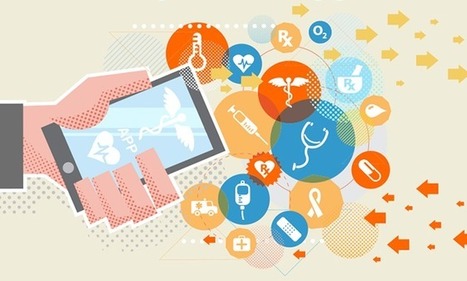
Infographic visualization highlights how connected health is transforming the medical device ecosystem to include access and mobility outside the hospital setting. Via Philippe Loizon, Lionel Reichardt / le Pharmageek
eMedToday's insight:
The key questions for Pharma is with 3.4 billion smartphones and tablets
What new business models and services are you exploring due to this mobile landscape.
Clearly, it should be e detailing platforms for doctors and patients
Scoop.it!
eMedToday's insight:
Adherence is a massive problem for Pharmas. This is intereting app which address the adherence problem. Could you incorporate this app within the frame work of a e detailing solution for doctors and patients. The answer: yes
Scoop.it!

Roche is drawn to science for YouTube campaign http://t.co/Jl2fqi7sV5 Via Olivier Delannoy, eMedToday

eMedToday's curator insight,
June 6, 2013 2:05 AM
Great way to connect to patients. This approach should be package in the form of a mobile app and delivered to patients on an e detailing platform
Roche has produced an innovative set of YouTube videos to explain scientific terminology in a fun, visual way.
Scoop.it!

Global annual sensor shipments for mobile sensing health and fitness devices will reach 515 million in 2017, up from 107 million in 2012, according to an announcement from San Diego-based research...
eMedToday's curator insight,
June 4, 2013 9:12 PM
tthere is no doubt mobile health apps are huge. keyParties in the healthcare space whether it be Pharma or hosptials need to consider developing mobile apps to address their target markets.
Scoop.it!

According to an Accenture Report "reducing costs, mastering multichannel marketing and improving digital effectiveness are the top strategic priorities for pharmaceutical sales and marketing execut...
eMedToday's curator insight,
June 4, 2013 7:35 PM
A look at the Pharma spend shows a reduction in normal marketing categories. Multchannel marketing and digital are the big plays to reduce costs and be more effective
Scoop.it!
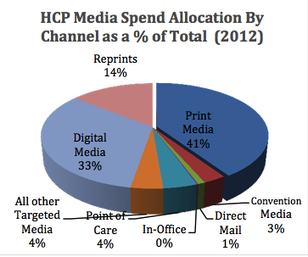
According to Compas, Inc. while pharma marketing budgets have remained steady, since 2010 the media mix has shifted toward more digital and targeted media. There are many reasons for this shift, in...
eMedToday's insight:
The answer:
"Kantar Sources & Interactions 2012-2013 shows that 75% of the physician population currently uses a smart phone or tablet device with a staggering 25% increase since 2012 in the usage of tablets. They also have data that reports the ability to reach physicians through online methods are also on a steady rise, with the highest being online journals and reference guides online having reach of 75%. Additionally, digital media offers are wider array of creative options for advertisers making it an easier and more dynamic method of targeting the right message to the right audience at the right time. And digital media is generally more easily measured, making the expense more justifiable relative to print and other alternative media." E detailing provides the best method of targeting the right message to the right audience
Scoop.it!

As physician practices and hospitals are increasingly required to bring their operations into the present with digitized records, Apple's iPad is the device of choice when it comes to doctors interacting with health records, a new study shows. Via Philippe Marchal, Pharmacomptoir / Corinne Thuderoz, Lionel Reichardt / le Pharmageek, eMedToday
eMedToday's curator insight,
June 2, 2013 7:15 PM
key insight
"Doctors and hospitals are hungry for apps that take full advantage of the capabilities of mobile devices like the iPad, according to data from Black Book Rankings, a healthcare IT analysis firm"
Scoop.it!

Mobile Apps: The App Score Medical Marketing and Media A more optimistic rationale for apps comes from Bob Allen, director of digital marketing at AstraZeneca: “We realized that the majority of our marketing materials will soon be consumed through...
eMedToday's curator insight,
June 1, 2013 8:59 PM
2 Take conclusion: This is the real point for Pharma involvement in mobile apps.
"A more optimistic rationale for apps comes from Bob Allen, director of digital marketing at AstraZeneca: “We realized that the majority of our marketing materials will soon be consumed through a mobile device. Therefore, we are responding to the market and the needs of our customers. Investment in other areas still occurs, but ‘mobile first' is the mentality we are quickly adopting.”
"Indeed, for this first generation of biopharma-sponsored apps, it may be difficult to draw a straight line between an app and new revenue, such as incremental prescriptions or refills. “Our thinking is that we should look beyond the pill and provide the best patient care possible,” says AZ's Allen. “Sometimes the information or utility we provide may not directly relate to taking a specific medication, but we feel that our mobile efforts will help to support the needs of patients in some way.”
Scoop.it!

Dont be fooled by flat spendbig changes are happening. James Chase offers key insights from a exciting new study
eMedToday's insight:
Key Point:
“The era of Big Pharma, and marketing the magic of a pill, is gone,” says Kate Cronin, global managing director at Ogilvy CommonHealth PR. “Now it's about everything that surrounds a pill, including services, disease awareness, education and prevention.”
And another point:
“Walker still sees this as a positive. “Digital channels are emerging channels,” he says. “Traditionally they have either been underfunded or not funded at all. There's a heightened realization that these are emerging ways in which we need to engage our customers, whether that's physicians or patients, and the investment is worth it.”
And:
Respondents were asked to rank seven healthcare audiences in order of perceived importance to them and their organizations, regardless of their actual budget allocation to those audiences .. Overwhelmingly, Physicians was the number one choice cited, ranked first place.
Clearly this supports moving aggressively to a different way to reach doctors, by use of ipads and e detailing organized around diseases and education and prevention
Scoop.it!
Merck came late to the iPad party, but the company has made up the distance by releasing a global template for details using the device. Via Nikos Papaioannou
eMedToday's insight:
This is an excellent summary of what Merck is doing
" Kovach's team, working together with agency Juice Pharma, set out to build a universal platform that would let reps move fluidly between brands across languages while factoring in differences in signal (WiFi vs. cellular) and resolution (some markets have retinal screen-equipped iPads, others don't), among other thing"
Scoop.it!

A primary care division of a major pharmaceutical company is recruiting for a Pharmaceutical Sales Representative.
eMedToday's insight:
This is standard approach to a Pharma product launch. Ok but not in the current world.
Questions:
How to train sale rep to use digital marketing How to engage end users digitally Do sales reps use i pads Can you develop some form of self guided e detailing
|
Scoop.it!
Case Study: Ready for Healthcare Anywhere? While many focus on the “what” and “how” of mobile health, it’s also important to understand the “why?”
eMedToday's insight:
Even though ipad is discussed in early days of Pharma digital, the world is going Smartphone, so Pharma/Doctor/Patient engagment must address the Smartphone as the future platform. Shortly there will be 3.4 bilion smartphone in the world.
Scoop.it!
Pharmaceuticals companies are deploying adopting mobility solutions, especially Apple's iPad, for their sales staff, with benefits including enhanced detailing,
eMedToday's insight:
Good detail overview of deploying ipad with a sale organization
Scoop.it!

eMedToday's curator insight,
June 7, 2013 8:36 PM
Why the growth?
"The global mHealth market is primarily driven by factors such as the increasing adoption of smartphones and rising incidences of chronic diseases. The development in smartphone applications has created new and interactive ways of communication between patients and healthcare providers. Use of smartphone applications is expected to revolutionize the mHealth market by improving healthcare delivery and dissemination of medical information"
eMedToday's comment,
June 7, 2013 8:43 PM
Clearly this massive trend requires to rethink how they deliver their message to doctors and patients on smartphones and e detailing platforms
Scoop.it!

GSK’s new global Oncology franchise website: What Nitro Thinks ,
eMedToday's insight:
This is great example of type and layout of information a Pharma need to develop and put on a e detailing platform for a doctor
eMedToday's curator insight,
June 6, 2013 2:17 AM
This is great example of a effective, well layed out, wonderful graphics and useful information web site for the Pharma industry
Scoop.it!
Eli Lilly backs mobile app for cancer docs FierceBiotech IT The pharma giant has sponsored a mobile app for iPhone and Android devices that provides reviews of journal articles, aiming to help keep busy physicians abreast of the latest research in...
eMedToday's curator insight,
June 5, 2013 7:55 AM
This is a brilliant approach to development of mobile app. Essentially Pharmas should develop mobile apps which are organized around their disease focus and which gather the best, trusted journel information for a doctor to review. This could be done as a stand alone app or on an e detailing platform
Eli Lilly ($LLY) has invested more in digital overtures to cancer specialists. The pharma giant has sponsored a mobile app for iPhone and Android devices that provides reviews of journal articles, aiming to help keep busy physicians abreast of the latest research in their areas of specialty or interest.
Scoop.it!

RT @PM360online: Todd Zander, VP of Mobile, WebMD, examines what one patient group wants from their health apps. #pharma
eMedToday's curator insight,
June 4, 2013 7:46 PM
The Pharma needs to understand how to use mobile devices to interact with doctors but also patients. In general Pharma do not have an organzied approach to reach patients on mobile devices. Some have health trackers.
The Opportunity
"Each of these touch points presents an opportunity for pharma marketers to engage the patient by providing tips on managing OA, in-context brand information and even drug coupons. Advertising with a multi-screen strategy gives an inherent advantage to brands by placing them right at the point of search, need or care: whenever and wherever patients are most likely to act on a decision" The best way to reach patients for Pharma is through social media and smartpones. But how on smartphone. Use a mobile app which is used as a point of care device.
Scoop.it!
eMedToday's insight:
Costs:
“The general consensus is that adherence in most therapies is around 50%. I’ve seen figures that estimate that pharma globally loses $350bn a year due to non-adherence which is more than 1/3 the total market size, so effectively 25% of their revenues are gone due to non-adherence. If you can increase adherence, that’ll increase your revenues... period.
One company is developing an interesting platform within a e detailingsolution which addresses adherence:
Patient Focused Healthcare organized by diseases
• Patient videos• Pharma app tracker/health trackers for pills• DTC messages• Push technology• Regular updates
Scoop.it!
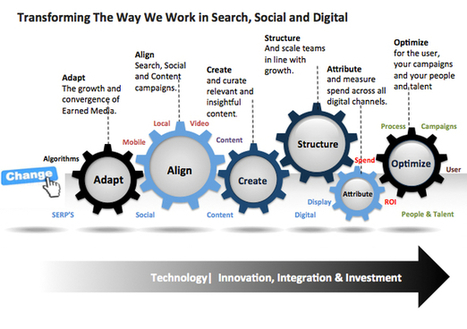
It is not so much a revolution but a rapid evolution and transformation.
eMedToday's curator insight,
June 2, 2013 7:36 PM
This is environment the Pharma's live in.
Key point:
"The real, and largest, change in digital marketing has ultimately been the growth and rise of tools, technology, and platforms that have allowed us to build and engage with brands and clients using 'pull' marketing compared to traditional content techniques that were focused on 'push'.
For example, the rise of social media is all about content and engagement driven through new technology.
Expect more technological change, innovation, and more investment. Be prepared to adapt, align, structure and optimise if you really want to transform the way you work."
Scoop.it!
The latest edition of the annual Internet Trends report finds continued robust online growth. There are now 2.4 billion Internet users around the world, and the Via Olivier Delannoy
eMedToday's curator insight,
June 1, 2013 9:29 PM
Every hospital marketing staff and senior management needs to understand where the digital world is going.
Scoop.it!

The New Year promises to be healthcare marketing's Year of the Video. Once an emerging trend, online video has already reached mainstream status. And as we look ahead, medical practices, dental off...
eMedToday's curator insight,
May 31, 2013 9:24 PM
Pharma need to carefully integrate video into their doctor and patient plans:
"The overall numbers, industry experts tell us, are that video accounts for 50 to 60 percent of Internet traffic currently. And predictions have it that video will account for 90 percent of net traffic within three years. The use of video for physician and hospital marketing is a fraction of this total, but more and more providers, facilities and health systems are upgrading their online presence with video as a centerpiece"
Scoop.it!
Beta version of mHealth evidence database to go live soon FierceMobileHealthcare (press release) The Center for Communication Programs at Johns Hopkins University's Bloomberg School of Public Health is developing an online mHealth Evidence Database...
eMedToday's insight:
This is database that Pharma should make available to doctors under an e detailing platforms. Give doctors value and they will use and listen to a e detailing solution.
Scoop.it!

Based on a comScore longitudinal study of a permission-based panel of 1,000 U.S. physicians HCP Content websites such as Medscape.com, which provide content or services catering specifically to phy... Via Olivier Delannoy
eMedToday's insight:
yes, if
"Ensure that the detail offers information that the physician finds valuable . This includes not only information about the medication but information about patient outcomes and insurance coverage.
Answer the questions without referring the question to a medical liaison – If physicians have a question they want it answered and don’t want to hear that “we’ll have to get back to you “.
Ensure that the information is not biased but is transparent – This means opening up clinical trial information on the product".
|







The Smartphone is the 24/7 health assistant. All parties to the health system need to recognize this reality and develop services to match this fact.
79% of smartphone users have their phone on or near them for all but two hours of their waking day; 63% keep it with them for all but one hour. A full quarter of respondents couldn’t recall a single time of the day when their phone wasn’t in the same room as them.