


As free courses become more easily available to anyone with a Internet connection, some American professors have developed a huge following abroad.

 Your new post is loading...
 Scoop.it! As free courses become more easily available to anyone with a Internet connection, some American professors have developed a huge following abroad. 
No comment yet.
Sign up to comment
Scoop.it!

How do you speed the pace and reduce the cost of discovery?
Scoop.it!

Not everything that happens in an in-person classroom is currently replicated with an online course, and perhaps the experience will never be the quite the same.
Coursera founders Daphne Koller & Andrew Ng wrote a recent column on Forbes.com about the promise of online education. It reveals some of their motivation and hopes behind the free, open courses available at their for-profit startup, Coursera, which is one of the key players among massive open online course (MOOC) providers.
They attempt to address a primary about MOOCS: What’s the point of free open courses if a student doesn’t receive credit? Why are prominent universities and professors spending time on this?
Their short answer is: Access. MOOCs provide greater access to knowledge that many people didn’t have before.
Scoop.it!

UnderAcademy College is an unaccredited undergraduate, graduate and postgraduate anti-degree institution. UnderAcademy College situates itself as a shadow-academic environment offering alternative courses and anti-degree programs in a variety of subjects. The primary mission of UnderAcademy College is to remain open, marginal, and unaccredited.
Scoop.it!
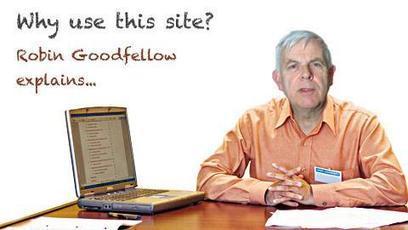
The material that you can access through this website is intended to help you prepare yourself for study on a research degree at a UK university.
Scoop.it!

Last Thursday I co-facilitated a workshop ‘Climbing the stairway to OER nirvana’ at the ALT 2012 Conference. The workshop was led by Chris Pegler and the remaining contributors were Suz...
BTW the image is licensed CC BY so feel free to take it, adapt it, reuse it as long as you attribute the original.
In the full research report I describe in detail how engagement with OER manifests itself at each level, what makes people disengage from using OER, and what are the enabling factors that reinforce engagement and support lecturers in moving up the ladder. You can also see a brief overview of the findings in my presentation here.
If you have a role as staff developer you might also be interested in the appendixes of the report which provide a summary of tactics used by OER promoters to convince lecturers that using OER can be beneficial, as well as examples of how to deal with discoverability issues.
Scoop.it!
The Budapest Open Access Initiative: an international effort to make research articles in all academic fields freely available on the internet.
Scoop.it!

A free MOOC style course that uses Creative Commons licensed content from the Masters of Business and Technology Program at the University of New South Wales
Scoop.it!

The objectives of OER IPR Support Project are: Via OER Hub
Scoop.it!

In our vigor to advocate for open educational resources and policies that support their development, it would be wise to keep in mind some fundamental things about policy and the policymaking process itself.
Scoop.it!

Open Source Enterprise Content Management System including document management, web content management, SharePoint alternative and content reposito...
Scoop.it!
POERUP Gráinne Conole, University of LeicesterEFQUEL Innovation Forum Granada, Spain 5th – 7th September2012...
Scoop.it!

The online teaching and learning platform WizIQ is offering a free one-year membership for K-12 and higher education teachers and their students at qualifying institutions.
|
Scoop.it!

AST1000 is a first-year level course in International Relations and the Social Sciences on the books of the Faculty of Arts at the University of Southern Queensland (USQ). The course will provide basic information about, and analysis of, contemporary regional relationships, current affairs and societies in Asia and the Pacific, including Australia and New Zealand. Attention will be given to the personal and social skills that will facilitate better international cooperation and cross cultural communication in Asia and the Pacific. Via Mark Smithers
Scoop.it!

Australia has two main agencies that hand out government research money: the National Health and Medical Research Council, or NHMRC, and the Australian Research Council, or ARC. Aidan Byrne, a nuclear physicist, became the ARC’s chief executive in July. Although he’s still “finding his feet” in the job, he says, Mr. Byrne has made it an early priority to broaden access to government-supported research in Australia. The Chronicle spoke with him by phone about how that effort is shaping up.
Scoop.it!
Thousands of copyright free and copyright friendly images and photos for teachers and students.
The Pics4Learning collection is intended to provide copyright friendly images for use by students and teachers in an educational setting. The original photographers of each image retain the copyright to these images and have graciously allowed their use in this collection. The images may not be sold as an image collection or partial image collection. Images in the Pics4Learning collection may be used by teachers and students in print, multimedia, and video productions. These could include, but are not limited to, school projects, contests, web pages, and fund raising activities for the express purpose of improving student educational opportunities.
Scoop.it!

"This is a collection of best practices for the adaptation of learning materials and explains what we understand as Open Educational Resources (OER). With this user guide you will understand better, how you can benefit from OER and learn the necessary things to be taken in to account while adapting materials for your own needs. This initial guide will underline some of the issues we feel as crucial for adaptation support."
Scoop.it!
More info at http://www.edutopia.org/blog/film-festival-open-educational-resources
Scoop.it!

MEDEV - Working with our host the school of Medical Sciences Education Development to promote engagement and enhance the student learning experience...
Scoop.it!

The cost of higher education in the U.S. today is ridiculous. Student debt shot north of $1 trillion earlier this year, for example. It's not surprising, then, that we're seeing growing adoption of online learning platforms and tools.
To unpack that a little: When Class2Go says it’s portable, it means that it wants to be platform agnostic. Its documents are already portable, its videos already live outside its system on YouTube, its assets can be repurposed as professors see fit and the platform’s exercises and problem sets are in the Khan Academy format (meaning they’re not in a proprietary database) and can be used anywhere.
In terms of interoperability, Class2Go’s website reads, “we don’t want to build or maintain more than we have to,” so it stands on the shoulders of, or relies significantly on, other services to run, like Khan, Piazza, YouTube, Python Django, Amazon AWS, Opscode and Github. Furthermore, designing the platform for both teaching and research means that the platform will leverage data to inform and evolve pedagogy, as well as to give them a glimpse into the efficacy of lessons, teaching style, tech tools, etc.
But the biggest differentiating factor for Class2Go — in case it hasn’t yet become apparent — is its early dedication to building and maintaining a totally open-source platform. This means that the platform aims to be both free of cost and of pricey IP, while professors are free to contribute to Class2Go’s code and get involved in the development of the platform, as well as to collaborate with other institutions and organizations.
Scoop.it!

YouTube teams up with Khan Academy to search for the Next EDU Gurus -- 10 super talented and engaging content creators that YouTube will support with training and promotion so they can take the next step in their YouTube - and education - careers.
YouTube doesn’t want Sal Khan to be the only educational guru laying down thousands of tutorials on math, physics and other topics online.
Neither does Sal Khan.
So the two are partnering up to help find and develop a new educational guru on the Internet. YouTube is calling its project the “YouTube Next EDU Guru.”
Scoop.it!

A number of myths perpetuate about Open Educational Resources. This section of the infoKit aims to explain and dispel some of them.
Scoop.it!

The resources are hosted by the University of Bath and can be accessed here on this blogsite and JORUM with the keyword = discthink (Direct link: http://dspace.jorum.ac.uk/xmlui/advanced-search?conjunction2=AND&field2=licence&order=DESC&rpp=10&sort_by=0&page=2&conjunction1=AND&etal=0&field1=ANY&query1=discthink&query2=creativecommons.org )
- Academic Identity and Disciplinarity - Evaluating E-learning - Feedback - Learning Spaces - Student E-learning Experiences - Textual Practices - Threshold Concepts - Values
Although the project is now in the process of winding up, we will be keeping this blogsite live and encourage you to feedback to us your thoughts on the resources.
Thank you for all your support during the project.
Scoop.it!

Great mindmap by Alexandra Haché presented by Yves Punie at EFQUEL Innovation Forum 2012. Via Gabi Witthaus
Scoop.it!

From
fad

An international forum that seeked to explore and debate the emerging landscape of openness and exchange that is taking shape around practices such as open code, creative commons licensing, co-creation, de-localisation and collaboration.
Digital technology and social networks have reached a point of maturity from which a new industrial culture is emerging, revolutionising the processes of creation, mediation, distribution and consumption. Taking design in all its expressions and forms as a starting point, the conference was an important international forum of ideas, working platforms and specialised practices that are transforming the articulation of design with society, economy and culture.
Designers, architects, artists, editors, web activists, programmers, curators, lawyers and cultural analysts explored over two days the reality and the potential of open design culture, from new business models to the most experimental creative practices.
|






