


A former digital media czar and small town mayor are working together to launch a new fully online university that will be free for students.

 Your new post is loading...
 Scoop.it! A former digital media czar and small town mayor are working together to launch a new fully online university that will be free for students. 
No comment yet.
Sign up to comment
Scoop.it!

Explore how the principles behind open source--collaboration, transparency, and rapid prototyping--are proven catalysts for innovation.
These materials--and the many others like them on the Internet and in libraries today--allow students to direct their own learning experience. There is no need to rely on a textbook or teacher for direction or arrangement of facts.
Scoop.it!

We here at Technapex are all about OER, or Open Educational Resources, so today we decided to post a list of great websites for students and teachers. The AASL, or American Association of School Librarians, recently awarded their top 25 websites for teaching and learning. According to the AASL, these websites “foster the qualities of innovation, creativity, active participation, and collaboration.” We’re stoked to see so many great educational resources available for students and teachers!
Scoop.it!

"I thought I’d kick off my new “State of OER” research by compiling a list of all the available OER repositories -- a sensible place to start. I thought about just compiling everything in a long list-like blog post at first, and then, as one is wont to do when projects seem big and call for collaboration, I started a Google Doc, where I started jotting down the names, the URLs and a brief description. But it quickly became apparent that that’s an insufficient way to track these sorts of things – and I’d go even farther to say that it’s probably part of the problem that OERs face right now in gaining more widespread adoption ... Tomorrow’s post (Aug 23, 2012): some stats gleaned from these sites on what topics are available, how are they licensed, and what format are they in. Coming soon: a look at how educators and organizations are using OER (if so, how, and if not, why not)." -- from Source - http://www.hackeducation.com/
NOTE: This is a good article with links to OER resources as well as outlining a work plan of the author to develop her research and share the results. A worthwhile read. Via ghbrett
Scoop.it!

Khan Academy turned a major corner in its evolution and development this month as it launches a computer science training program that could rival CodeAcademy and others. Here's a roundup of how the tech media covered the announcement.
Scoop.it!

Editor’s Note: At Boundless, we love reading inspiring articles about open education. We recently came across a post on OpenSource.com by blogger and librarian Carolyn Fox (reblogged below) that gives... Via Dr. Susan Bainbridge
Scoop.it!
(2012). The OER mix in higher education: purpose, process, product, and policy. Distance Education: Vol. 33, Special Issue: OERs and Social Inclusion, pp. 165-184. Via Dr. Susan Bainbridge
Scoop.it!

Here is a great opportunity to look at the Journal of the Open and Distance Learning Association of Australia. Via Dr. Susan Bainbridge
Scoop.it!

Traditionally, research papers undergo peer review before publication. Two trends, open access and social media, are changing the peer review process. Via Antoine VandenBeemt
Scoop.it!

Search thousands of tutorial videos on any subject from the worlds best teachers. Before you know it, you'll know it. Via Yazid
Scoop.it!

An online degree-granting institution called World Education University, set to open this fall, plans to try an advertiser-driven model to support its free content.
“Any Silicon Valley start-up will tell you that if you can drive enough eyeballs to your Web site, you can find ways to leverage that and monetize it,” said Scott Hines, the university’s chief executive. “We’re very transparent to students. They understand that their education is being underwritten generally through advertisers.”
Advertisers will pay for students to answer survey questions related to their products. For example, students may be asked a question like “Are you a runner?” when they log into the learning-management system. If a student checks “yes,” he or she will thereafter see ads for a certain brand of running shoes on the home page.
KF: Interesting model... bound to lead to many jokes along the lines of: "Do you want fries with that degree?" Obviously there will need to be caveats and conditions that keep the study and learning isolated from the advertising activity... The competency-based model mentioned in the closing paragraph might give some legs to the PQ (professional qualification) that many universities talk about.
Scoop.it!

Boundless just launched the public beta version of its brand new site. What is Boundless? It’s a way to easily turn all of the open source information that exists in the world into a simple easy-to-use digital textbook. And it’s free.
This is one of the most exciting announcements that came across my inbox over the past few weeks. Boundless is shaping up to truly disrupt the digital textbook industry and the newly launched tools are robust enough to do just that.
|
Scoop.it!
Slides for a brief presentation of a paper by Brian Kelly, UKOLN and Jenny Delasalle, University of Warwick on "Can LinkedIn and Academia.edu Enhance Access to... Via Ana Cristina Pratas
Scoop.it!

UMPI, a campus of the state of Maine’s state university (USA), is offering free, open, non-credit online courses to any interested learners through a program called UMPI OpenU.
Scoop.it!

It was interesting that in Jenny’s research she found that a number of commercial publishers encourage their authors to use services such as LinkedIn and Academia.edu to link to their papers hosted behind the publishers paywalls – and yet we are not seeing institutional views of the benefits of coordinated use of such services by their researchers. Institutional repository managers, research support staff and librarians could be prompting their institutions to make the most of these externally provided services, to enhance the visibility of their researchers’ work in institutional repositories.
Surely it is time for the research community to develop inbound linking strategies to their research work, especially as this can be done so simply.
Scoop.it!

Free courses from world's top unis a swipe away in online revolution...
IMAGINE a university degree that is like a passport: a subject from Swinburne stamped alongside another from Sydney University, with courses from overseas colleges such as Stanford or Harvard thrown in. You could earn your degree without travelling further than your laptop, and far more cheaply than on campus.
Scoop.it!
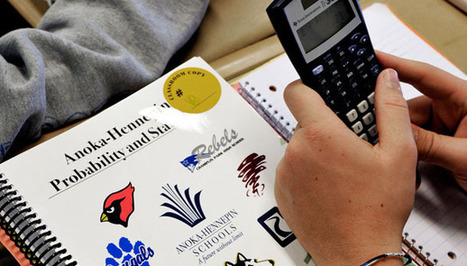
We are in the midst of a revolution in education. For the first time in human history we have the tools to enable everyone to attain all the education they desire. And best of all this education is available at almost no cost.
The key to this sea change in learning is open education resources, or OER. OER are educational materials produced by one party that are licensed to be used free of charge by others. OER come in many forms—from curriculum to homework assignment to textbooks. And OER exist for all levels of education, from kindergarten through college.
Scoop.it!
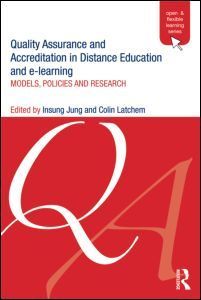
Book review by Shattuck - Quality assurance and accreditation in distance education and e-learning: Models, policies and research. Review published in: The International Review of Research in Open and Distance Learning
The book that Jung and Latchem pulled together provides much-needed discussion on just what quality assurance in distance education is. It also provides conceptual organizational models and practical strategies for continually working towards quality improvement and for transparently tracking and documenting outcomes. Most importantly, this book finally brings quality assurance from being a lofty ideal into the realm of practical discussion.
Book available at: http://www.routledge.com/books/details/9780415887359/
Scoop.it!

The OERtest project is a two year (Oct. 2010 - Sep. 2012) project funded by the Lifelong Learning Programme of European Commision. Its aim is to support the mainstreaming of OERs within Higher Education and to test the feasibility of assessing learning exclusively achieved through the use of Open Educational Resources.
Scoop.it!

Researchers, publishers, and librarians have spent a lot of this year firing up the longstanding debate over access to published research. You've probably heard the big questions: Who gets to see the results of work the public helps pay for, when should they get to see it, and who's going pay for it? This summer, the fervor has gone global, with policy makers in Britain, elsewhere in Europe, and in Australia signaling that they're ready to come up with some answers. Details vary from country to country and proposal to proposal, but the overall warming trend looks very clear.
Scoop.it!
I’m starting a new research and writing project today that examines the current state of open educational resources.
My interest isn’t simply identifying where the repositories of OER lie or what they contain. Nor am I just looking at adoption or usage (although yes, the research will address all these things.) See, I’m particularly keen to investigate the formats that these openly licensed materials are in, and by an extension whether they’re being remixed.
Scoop.it!

Boundless - The Free Textbook Replacement via @juandoming
Boundless just launched the public beta version of its brand new site. What is Boundless? It’s a way to easily turn all of the open source information that exists in the world into a simple easy-to-use digital textbook. And it’s free.
This is one of the most exciting announcements that came across my inbox over the past few weeks. Boundless is shaping up to truly disrupt the digital textbook industry and the newly launched tools are robust enough to do just that. But enough hyperbole and hot air, here’s what you should know: Via Cyndi Danner-Kuhn, juandoming, Professor Jill Jameson, Kim Flintoff
Scoop.it!

TRADITIONAL lectures look set to go by the wayside at Deakin University. As part of a new strategy students will increasingly access online, open source content from around the world, freeing up academics to focus on smaller tutorial groups delivered not just face-to-face but increasingly through social media like Facebook.
Scoop.it!
Textbook publishers have almost boundless disdain for Boundless Learning, and it's not hard to see why.
The company, which unveiled an upgraded, public iteration of its softwareWednesday after a year in beta, offers college students free, open versions of textbooks that would normally cost them scores if not hundreds of dollars. It describes what it does as "textbook replacement."
|






