


learning, technology, education, steve, wheeler, social media, internet, mobile, school, teachers
Via Marta Torán


 Your new post is loading...
 Scoop.it! learning, technology, education, steve, wheeler, social media, internet, mobile, school, teachers Via Marta Torán 
Scoop.it!

Their reasons included the high price of textbooks and the fact that they did not value textbooks as learning tools. Instead, students are enticed by online course content, which can be accessed anywhere on campuses equipped with modern network infrastructures. Via Elizabeth E Charles
Scoop.it!

Promis depuis l'été, l'outil de mesure du temps passé sur Facebook est enfin disponible dans l'application mobile. Via CECI Jean-François

CECI Jean-François's curator insight,
November 22, 2018 5:29 AM
Sensibiliser pour aider à la prise de conscience d'un usage raisonné...
Scoop.it!

learning, technology, education, steve, wheeler, social media, internet, mobile, school, teachers
Scoop.it!

Après des années de croissance, les usages des technologies digitales et plus particulièrement du triptyque Internet, mobile et social media n'augmentent plus. Du moins aux USA. D'après une étude Pew Research Center, le nombre d’américains connectés et utilisateurs de mobile et de réseaux sociaux n'évolue plus. Les
Scoop.it!

Une nouvelle étude publiée sur le Journal of Computer-Mediated Communication rapporte que l'attention des lecteurs serait plus diffuse sur mobile que sur d
Scoop.it!
New measures to boost key competences and digital skills, as well as the European dimension of education
1. A Council Recommendation on Key Competences for Lifelong Learning: Building on the Recommendation on Key Competences adopted in 2006, this proposal brings forward important updates reflecting the rapid evolution of teaching and learning since then. It aims to improve the development of key competences of people of all ages throughout their lives and to provide guidance to Member States on how to achieve this objective. A particular focus is placed on promoting entrepreneurial drive and innovation-oriented mindsets in order to unlock personal potential, creativity and self-initiative. Moreover, the Commission is recommending steps to foster competences in science, technology, engineering and mathematics (STEM) and motivate more young people to embark on a career in these fields. The proposals made today should also be seen as part of the answer to urgently improve European education systems to face the many challenges highlighted in the latest PISA survey. More generally, the measures will support Member States in better preparing learners for changing labour markets and for active citizenship in more diverse, mobile, digital and global societies.
2. A Digital Education Action Plan that outlines how the EU can help people, educational institutions and education systems better adapt to life and work in an age of rapid digital change by: making better use of digital technology for teaching and learning; developing the digital competences and skills needed for living and working in an age of digital transformation; and improving education through better data analysis and foresight.
Initiatives include supporting schools with high-speed broadband connections, scaling up a new self-assessment tool for schools on the use of technology for teaching and learning (SELFIE) and a public awareness campaign on online safety, media literacy and cyber hygiene.
3. A Council Recommendation on common values, inclusive education and the European dimension of teaching: This initiative proposes ways in which education can help young people understand the importance of and adhere to common values set out in Article 2 of the Treaty of the European Union. It aims at strengthening social cohesion and contributing to fight the rise of populism, xenophobia, divisive nationalism and the spreading of fake news. The proposal also strengthens inclusive education to promote quality education for all pupils as well as the European dimension of teaching, so children also learn about Europe's common heritage and diversity and get a good understanding of the functioning of the EU. To support these aims, the Commission will take steps to increase virtual exchanges among schools, notably through the successful e-Twinning network, and boost school mobility through the Erasmus+ programme.
Learn more / En savoir plus / Mehr erfahren:
https://www.scoop.it/t/21st-century-learning-and-teaching/?&tag=EU
Via Gust MEES

Gust MEES's curator insight,
January 31, 2018 10:07 AM
New measures to boost key competences and digital skills, as well as the European dimension of education
1. A Council Recommendation on Key Competences for Lifelong Learning: Building on the Recommendation on Key Competences adopted in 2006, this proposal brings forward important updates reflecting the rapid evolution of teaching and learning since then. It aims to improve the development of key competences of people of all ages throughout their lives and to provide guidance to Member States on how to achieve this objective. A particular focus is placed on promoting entrepreneurial drive and innovation-oriented mindsets in order to unlock personal potential, creativity and self-initiative. Moreover, the Commission is recommending steps to foster competences in science, technology, engineering and mathematics (STEM) and motivate more young people to embark on a career in these fields. The proposals made today should also be seen as part of the answer to urgently improve European education systems to face the many challenges highlighted in the latest PISA survey. More generally, the measures will support Member States in better preparing learners for changing labour markets and for active citizenship in more diverse, mobile, digital and global societies.
2. A Digital Education Action Plan that outlines how the EU can help people, educational institutions and education systems better adapt to life and work in an age of rapid digital change by:
Initiatives include supporting schools with high-speed broadband connections, scaling up a new self-assessment tool for schools on the use of technology for teaching and learning (SELFIE) and a public awareness campaign on online safety, media literacy and cyber hygiene.
3. A Council Recommendation on common values, inclusive education and the European dimension of teaching: This initiative proposes ways in which education can help young people understand the importance of and adhere to common values set out in Article 2 of the Treaty of the European Union. It aims at strengthening social cohesion and contributing to fight the rise of populism, xenophobia, divisive nationalism and the spreading of fake news. The proposal also strengthens inclusive education to promote quality education for all pupils as well as the European dimension of teaching, so children also learn about Europe's common heritage and diversity and get a good understanding of the functioning of the EU. To support these aims, the Commission will take steps to increase virtual exchanges among schools, notably through the successful e-Twinning network, and boost school mobility through the Erasmus+ programme.
Learn more / En savoir plus / Mehr erfahren:
https://www.scoop.it/t/21st-century-learning-and-teaching/?&tag=EU
Scoop.it!

How do next generation learning trends - where technologically-driven informal, social, mobile, campaign-based learning strategies replace top down training and traditional 'click next' e-learning courses - affect the role of the learning designer? What purpose does a learning designer have in a world where developments like the Experience API and Open badges initiative mean learners are increasingly becoming self-directed, and where there are so many learning resources available for free?
Scoop.it!

A study of 90 cryptocurrency mobile applications available on Google Play found that 90 percent of them contain security vulnerabilities or privacy risks.
Scoop.it!

learning, technology, education, steve, wheeler, social media, internet, mobile, school, teachers
Scoop.it!

A Great New Technology Integration Matrix for Teachers ~ Educational Technology and Mobile Learning Source by shine58
Scoop.it!

"7 Step to Do Academic Research Using Digital Technologies ~ Educational Technology and Mobile Learning Source by educatorstech ...." Via Leona Ungerer
Scoop.it!

Bertalan Mesko, MD, PhD, has cracked the code on convincing medical students that digital literacy skills are equally as important as clinical knowledge. Seats in his Social MEDia course fill up within 45 seconds of registration opening. Former students report a 100 percent satisfaction rate with the class, and 80 percent of those enrolling in the course heard about it from a classmate. How does Mesko do it? As it turns out: daily educational challenges promoted on Facebook, an arsenal of high-tech gadgets and lots of chocolate. On Thursday at Stanford Medicine X|ED, Mesko shared his secrets with medical educators on how to develop a digital literacy curriculum that will engage millennial learners and keep pace with the ever-changing landscape. A self-describe medical futurist, Mesko launched his class on social media in medicine in 2008 when Facebook and Twitter were still in their infancy. “I wanted to design the curriculum for students to prepare them for the future that is coming toward us,” he said. “My goal was to help them understand how to use these tools to be more productive and stay up to-date.” Early on, the curriculum centered on his experience with social media tools, such as blogging, Twitter and Facebook. But as the field of digital media and medical devices has evolved, so has the class. These days, he’s constantly updating the coursework to the point where he never gives the same lecture twice. “Platforms come and go, but it’s the concepts and practices that really matter,” said Mesko, who teaches at Semmelweis University in Hungary. “Whenever I talk about these topics, I do everything live.” Most students have been active on Facebook, Twitter, Instagram, Snapchat and other social media accounts, long before they enroll in Mesko’s class. However, he still believes it’s important to provide an introduction to social media; discuss search engines and the Google story; and provide instruction on medical blogging, crowdsourcing and mobile health. “Students need some fundamental digital knowledge before diving into the topics of e-patients and how to empower patients,” said Mesko, author of the recently released book My Health: Upgraded . “Additionally, many students don’t fully understand the privacy polices of these services. I tell them to remember that there is no difference between offline or online conduct.” There’s never a dull moment in Mesko’s class. He leverages his 51,000 Twitter followers to demonstrate how to crowdsource a medical problem. He publicly shares his genomic and microbiome test results. He lets students try on an EGG headset and then sets a drone free to roam the room. He gives students digital assignment during class and provides decision trees to let them guide the discussion. And, let’s not forget about the chocolates. Mesko gives two high-quality Swiss chocolates for each presentation, as well as other tasks. “It’s like a circus! They love it,” he exclaims. As the conference master class came to a close, Mesko offered a simple roadmap to use in designing a digital literacy class for medical students. The first step is to determine what the curriculum should include. Next, identify what digital methods will be used. Then, decide how to evaluate the results. Finally, create a plan for how and when to measure students’ knowledge. Those interested in expanding, or testing, their own digital literacy can take the Social MEDia Course online. Several thousands worldwide have completed the online version of the course. Sadly, the online curriculum lacks drones and chocolates. But you can earn virtual badges and, if you pass all the tests, you’ll be rewarded with the “ultimate expert” badge. More news about the conference is available in the Medicine X category. Those unable to attend the event in person can watch via webcast; registration for the Global Access Program webcast is free. We’ll also be live tweeting the keynotes and other proceedings from the conference; you can follow our tweets on the @StanfordMed feed. Photo by Stanford Medicine X - See more at: http://scopeblog.stanford.edu/2015/09/25/integrating-digital-literacy-into-medical-education/#sthash.7yQcGahu.dpuf Via Plus91
|
Scoop.it!

By multiple measures, Google is the internet’s most popular search engine. But Google’s not only a web search engine. Images, videos, mobile content — even Google TV! Major Google Services Google releases a dizzying array of new products and product updates on a regular basis, and Search Engine Land keeps you up-to-date with all the …
Scoop.it!

Li Yuan conducts much of her work on the WeChat mobile app, including spotting trends — and prodding sources to get back to her.
Scoop.it!

NLM needs your input. We are experimenting with a new PubMed search algorithm, as well as a modern, mobile-first user interface, and want to know what you think. You can try out these experimental elements at PubMed Labs, a website we created for the very purpose of giving potential new PubMed features a test drive…
Gilbert C FAURE's insight:
en 2017 déjà! et maintenant
Scoop.it!

L'idéal universitaire est menacé, depuis un quart de siècle environ, par deux facteurs déterminants : l'utilitarisme à courte vue, d'un côté ; la démagogie racoleuse, de l'autre.
Via Bernard Rentier

Bernard Rentier's curator insight,
October 4, 2018 1:42 AM
Très beau texte, et très vrai, de Nicolas Thirion. Mais. hélas, c’est un constat implacable maintes fois répété, déjà au début des années ‘80, qui dénonçait les effets pervers de la soi-disant démocratisation de l’Université confondant l’accès aux études et la réussite de celles-ci. Mais tout est dans la nuance: l’aide à la réussite n’a rien, en soi, d’un affaiblissement des exigences, elle tient de l’apprentissage de la méthode individuelle optimale. Le seul problème, comme Nicolas le dénonce très bien, est l’écart irréconciliable entre l’injonction d’augmenter le taux de réussite et l’absence de moyens adéquats, hormis quelques impulsions ponctuelles. Et ce n’est même pas la faute des responsables politiques successivement en charge et qui font avec les moyens du bord, c’est celle d’une société tout entière, qui ne se décidé pas à placer ses priorités dans le bon ordre. Et, comme toujours lorsque c’est la responsabilité collective qui est en cause, ce n’est la faute à personne... Ou au lampiste, quel qu’il soit.
Scoop.it!
From
zoom

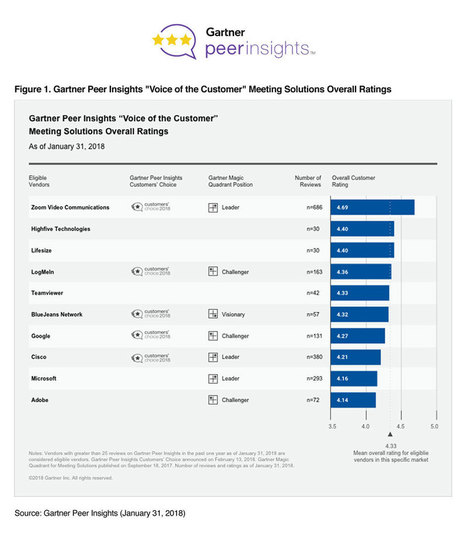
Zoom is the leader in modern enterprise video communications, with an easy, reliable cloud platform for video and audio conferencing, chat, and webinars across mobile, desktop, and room systems. Zoom Rooms is the original software-based conference room solution used around the world in board, conference, huddle, and training rooms, as well as executive offices and classrooms. Founded in 2011, Zoom helps businesses and organizations bring their teams together in a frictionless environment to get more done. Zoom is a private company headquartered in San Jose, CA.
Scoop.it!

Everyone is living their life online and constantly glued to their gadgets, either checking and interacting on their favorite social media sites or just surfing the net. This lifestyle creates an opportunity for brands to reach out and become closer and more engaged with their audience through valuable and attractive content to keep them interested.
Scoop.it!

La toujours très attendue étude menée par Hootsuite et We Are Social sur les tendances du digital et des réseaux sociaux vient de sortir. Comme d'habitude,
Scoop.it!

In the past year, a number of significant stories involved social media: Facebook lured Snapchat users to Instagram, the president of the United States communicated official policy positions in 140 characters and Apple announced plans to alter the way we interact with our mobile devices. Via Brian Yanish - MarketingHits.com

Lee Werrell's curator insight,
January 1, 2018 4:32 AM
Who knows what the future may hold. Keep a check on what's happening and where!
Scoop.it!
Stream Jean-Philippe Accart, Nathalie Marcerou-Ramel et Véronique Mesguich by Gulbenkian Paris from desktop or your mobile device
Scoop.it!
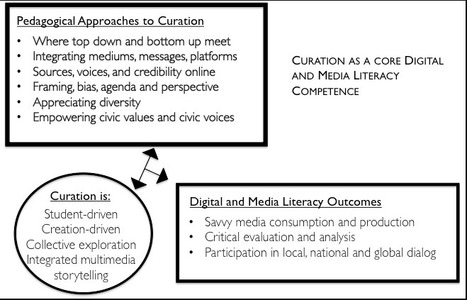
Article: Exploring Curation as a core competency in digital and media literacy education.
In today’s hypermedia landscape, youth and young adults are increasingly using social media platforms, online aggregators and mobile applications for daily information use. Communication educators, armed with a host of free, easy-to-use online tools, have the ability to create dynamic approaches to teaching and learning about information and communication flow online.
In this paper we explore the concept of curation as a student- and creation-driven pedagogical tool to enhance digital and media literacy education. We present a theoretical justification for curation and present six key ways that curation can be used to teach about critical thinking, analysis and expression online.
We utilize a case study of the digital curation platform Storify to explore how curation works in the classroom, and present a framework that integrates curation pedagogy into core media literacy education learning outcomes.
Learn more / En savoir plus / Mehr erfahren:
https://gustmees.wordpress.com/2013/04/25/learn-every-day-a-bit-with-curation/
http://blog.scoop.it/2011/11/30/lord-of-curation-series-gust-mees/
http://www.scoop.it/t/21st-century-learning-and-teaching/?&tag=Curation
https://gustmees.wordpress.com/2015/05/13/andragogy-adult-teaching-how-to-teach-ict/
Via Gust MEES
Gust MEES's curator insight,
July 12, 2017 9:16 AM
Article: Exploring Curation as a core competency in digital and media literacy education.
In today’s hypermedia landscape, youth and young adults are increasingly using social media platforms, online aggregators and mobile applications for daily information use. Communication educators, armed with a host of free, easy-to-use online tools, have the ability to create dynamic approaches to teaching and learning about information and communication flow online.
In this paper we explore the concept of curation as a student- and creation-driven pedagogical tool to enhance digital and media literacy education. We present a theoretical justification for curation and present six key ways that curation can be used to teach about critical thinking, analysis and expression online.
We utilize a case study of the digital curation platform Storify to explore how curation works in the classroom, and present a framework that integrates curation pedagogy into core media literacy education learning outcomes.
Learn more / En savoir plus / Mehr erfahren:
https://gustmees.wordpress.com/2013/04/25/learn-every-day-a-bit-with-curation/
http://blog.scoop.it/2011/11/30/lord-of-curation-series-gust-mees/
http://www.scoop.it/t/21st-century-learning-and-teaching/?&tag=Curation
https://gustmees.wordpress.com/2015/05/13/andragogy-adult-teaching-how-to-teach-ict/

Oskar Almazan's curator insight,
July 12, 2017 9:39 AM
In today’s hypermedia landscape, youth and young adults are increasingly using social media platforms, online aggregators and mobile applications for daily information use. Communication educators, armed with a host of free, easy-to-use online tools, have the ability to create dynamic approaches to teaching and learning about information and communication flow online. In this paper we explore the concept of curation as a student- and creation-driven pedagogical tool to enhance digital and media literacy education. We present a theoretical justification for curation and present six key ways that curation can be used to teach about critical thinking, analysis and expression online. We utilize a case study of the digital curation platform Storify to explore how curation works in the classroom, and present a framework that integrates curation pedagogy into core media literacy education learning outcomes. 2 
Rosemarri Klamn's curator insight,
July 31, 2017 8:01 AM
This concept is new to me, although I have practiced this in different forms. It seems logical to utilize this pedagogical approach to curation for students, parents, and teachers alike. We are all learners in today's rapid pace in technological changes.
Scoop.it!

New study reveals that collaboration is still not a prevalent online learning habit; mobile phones have yet to be used for serious learning.
|







Muy bueno. Desafíos en la era de las conexiones