Your new post is loading...

|
Scooped by
Gilbert C FAURE
October 13, 2013 8:40 AM
|
is a personal Notebook Thanks John Dudley for the following tweet "If you like interesting snippets on all sorts of subjects relevant to academia, information, the world, highly recommended is @grip54 's collection:" La curation de contenus, la mémoire partagée d'une veille scientifique et sociétale
|
|
Scooped by
Gilbert C FAURE
January 14, 1:24 PM
|
Generative AI will not replace serendipity in chemical research.
I just returned from the JACS Symposium Series meeting at ETH Zürich and some impressions still resonate with me. A fascinating talk by Nobel laureate Moungi Bawendi highlighted the role of serendipity in his prize winning discovery, where chemicals gone bad enabled these findings. In chemistry, serendipity often drives discovery, in contrast to the "garbage in - garbage out" dogma in many other branches of science.
Obviously, generative AI will not replace this element of surprise.
Thanks to the American Chemical Society (150 years!) and team, ACS Publications, Erick Carreira for the great conference! #ACS150 #JACSSymposium
|
|
Scooped by
Gilbert C FAURE
January 14, 11:06 AM
|
Uncommon opinion: The scientific paper is a 17th-century solution to a 21st-century problem.
The "Publish or Perish" culture created a graveyard of unread #PDFs. We don't need more papers; A paper that isn’t read is just expensive #noise.
The current bottleneck to innovation is a lack of bandwidth.
- Too many journals, they only serve publishers pockets, not science.
- Too much jargon, hides innovation and brilliant ideas behind wordswall.
- Too little time, writing drains too much time to scientists.
We need to move beyond "The Article" as the sole unit of #knowledge. I drop here some suggestions, hopefully you can add better ones in the comments:
- Dynamic Knowledge Bases: Living documents, not static PDFs. Authors and reviewers could add new data or new considerations to it... updating constantly the knowledge on a specific issue (some sort of knowledge #blockchain).
- Data hubs linked to the above, that help other researchers to work on the same issue.
- AI-Synthesized Insights: Moving from "searching" to "answering"... In some extent this is already happening, but I would like to see more.
- Micro-Publications: Shifting the focus to reproducible data and modular findings. They could be organised as special issues... (and erase the current type of special issues, that are one of the main shame of modern publishing).
Who’s building the "Spotify" or "Netflix" for scientific insights? I’d love to see it. 👇
Mathïs Fédérico
Ian Scott Kinney
Gael Kermarrec
https://lnkd.in/ehRngr2Y | 11 comments on LinkedIn
|
|
Scooped by
Gilbert C FAURE
January 14, 4:06 AM
|
I'm looking forward to providing the virtual keynote for the iSchools Inc. 2026 conference! My talk is titled "From Information Literacies to Metaliteracy: Learner Agency in an AI-Mediated World" and will explore #metaliteracy as a comprehensive approach to learning in today's AI environment. Join me on Monday, 23 March 2026 between 9:00am - 10:30am (UTC-4 - New York). Visit the iSchools web site for details on registration and access. I'm so glad that Empire State University will be represented at this global event!
|
|
Scooped by
Gilbert C FAURE
January 13, 3:51 AM
|
Webinaire // Le modèle Publish-Review-Curate, une alternative au système éditorial classique Type d'évènement : Webinaire Dates : 13 janvier 2026 Horaires : 11:00-12:00 Lieu : En ligne Le modèle traditionnel de publication scientifique, critiqué pour sa lenteur et son opacité, voit émerger deux...
|
|
Scooped by
Gilbert C FAURE
January 12, 12:59 PM
|
Les IA n'hallucinent pas par accident. Elles sont conçues pour répondre à tout. Même quand elles devraient se taire.
En un an, les chatbots IA sont devenus plus bavards et plus cons.
Je te donne le chiffre qui tue : le taux de non-réponse — la capacité de l'IA à dire « je sais pas » — est passé de 31% à 0%. Zéro. Ils ont supprimé l'humilité. Le commerce a gagné : faut répondre à tout, sinon l'utilisateur part. Résultat, le taux de fausses infos a doublé. De 18 à 35%.
Perplexity, c'est le cas d'école. Zéro erreurs en août 2024. 46,7% un an plus tard. C'est pas une dérive, c'est un effondrement. Parce que leur modèle dépend du web en temps réel. Et le web, il est pourri. Y'a un réseau russe, Pravda, qui a balancé 3,6 millions d'articles en 2024 pour « toiletter » les IA. Résultat : 33% des réponses des chatbots répètent leurs narratifs. Et même ça, on ne peut pas garantir que ce soit pas de l'intox. L'IA cherche le consensus statistique. Si le mensonge est partout, elle le valide.
Claude, lui, tient. 10%, stable. Anthropic a fait un choix différent. Ils ont gardé les garde-fous. Ils préfèrent ne pas répondre que répondre faux. C'est pas sexy commercialement, mais ça marche.
Ce qui me frappe... c'est que le problème n'est pas technique. Une étude mathématique le prouve : les hallucinations sont structurelles, éliminables jamais. Les modèles prédisent le mot suivant le plus probable, pas la vérité. Et plus ils sont gros, pire c'est. Les nouveaux modèles d'OpenAI hallucinent plus que les anciens. On scale l'intelligence, on scale aussi la connerie.
Le document parle de « taxe d'alignement » — le coût de rendre l'IA fiable. Mais personne veut payer cette taxe. Trop cher. Trop lent.
Alors on a des machines qui répondent à tout, très vite, très poliment. Et qui se trompent une fois sur trois.
Source : NewsGard | 71 comments on LinkedIn
|
|
Scooped by
Gilbert C FAURE
January 12, 6:38 AM
|
L'ancien Premier ministre succède à Jean-Louis Debré décédé au mois de mars 2025 à la tête de l'institution chargée de conseiller le gouvernement sur les orientations de la politique archivistique.
https://lnkd.in/ePxjcY-A
|
|
Scooped by
Gilbert C FAURE
January 7, 4:42 AM
|
Cartes et colonisation : un atlas des découvertes du monde (en vidéo)
Le magnifique atlas d’Edward Quin, datant des années 1830 et récemment animé en GIF, illustre l’étendue des connaissances du « Vieux Monde » à travers différentes périodes de l’histoire.
Pour les gamers, cela correspond au "Fog of War" :)
Video Source: https://buff.ly/33NyLDm
Text Source: https://lnkd.in/dT6Qbicc
|
|
Scooped by
Gilbert C FAURE
January 6, 4:57 AM
|
PhD Students - Here is an example of a good introduction
A good introduction should have the following 6 parts.
𝟏. 𝐈𝐧𝐭𝐫𝐨𝐝𝐮𝐜𝐞 𝐲𝐨𝐮𝐫 𝐭𝐨𝐩𝐢𝐜
Start your introduction section by introducing the broader topic of the paper. Then slowly go into the details that why this topic is important. You need to bring some interesting facts and stats here to convince the reader that this paper is worth reading.
𝟐. 𝐃𝐞𝐬𝐜𝐫𝐢𝐛𝐞 𝐭𝐡𝐞 𝐛𝐚𝐜𝐤𝐠𝐫𝐨𝐮𝐧𝐝
After introducing the topic, now you need to briefly report what work has already been done on this topic. You can mention the most related 4-6 papers that covered this topic. These papers should not be discussed in as much detail as you discuss them in the related work section. The point here is to move the reader towards the gap statement i.e., what is missing in the existing literature.
𝟑. 𝐄𝐬𝐭𝐚𝐛𝐥𝐢𝐬𝐡 𝐲𝐨𝐮𝐫 𝐫𝐞𝐬𝐞𝐚𝐫𝐜𝐡 𝐩𝐫𝐨𝐛𝐥𝐞𝐦
After discussing the existing work, you should clearly state what is the crisp problem being addressed in this paper. You have to make sure that the research problem is directly connected to the background section reported in the previous part.
𝟒. 𝐂𝐥𝐞𝐚𝐫𝐥𝐲 𝐬𝐭𝐚𝐭𝐞 𝐲𝐨𝐮𝐫 𝐨𝐛𝐣𝐞𝐜𝐭𝐢𝐯𝐞𝐬
Once the overall research problem is established, now you need to go into a bit more specifics. This you will do via presenting your objectives. Now objectives can be specified in two ways - a thesis statement or research questions. You can present this part in bold or italics so that it can be easily focused by the reader.
𝟓. 𝐁𝐫𝐢𝐞𝐟𝐥𝐲 𝐫𝐞𝐩𝐨𝐫𝐭 𝐲𝐨𝐮𝐫 𝐦𝐞𝐭𝐡𝐨𝐝𝐨𝐥𝐨𝐠𝐲
Now the reader knows what exactly has been done in this research. So, here you tell the reader how this research has been carried out. You don't need to go full scale but in a shorter form, report what methodology has been used to conduct this research.
𝟔. 𝐏𝐫𝐞𝐬𝐞𝐧𝐭 𝐭𝐡𝐞 𝐨𝐮𝐭𝐥𝐢𝐧𝐞 𝐨𝐟 𝐭𝐡𝐞 𝐩𝐚𝐩𝐞𝐫
In this final part, you should tell the reader what they should expect in the rest of the paper. This means how the rest of the paper has been structured i.e., what are the different sections and what is in each section. Some researchers also present contributions before the outline of the paper.
𝑆𝑜𝑚𝑒 𝑔𝑒𝑛𝑒𝑟𝑎𝑙 𝑡𝑖𝑝𝑠
1) Use solid references to support your motivation.
2) Do not make big claims that your results can't support.
3) Avoid complexity, explain in simple terms.
4) Keep its flow like a story. Avoid abrupt jumps.
5) Avoid typos at any cost in the introduction section.
PS: There are many styles for writing introduction section, which varies across domains. This is just one of them.
Anything you'd like to add?
#phd #research | 22 comments on LinkedIn
|
|
Scooped by
Gilbert C FAURE
January 5, 1:36 PM
|
L’édition scientifique est-elle en train de s’autodétruire ?
Quand on entend « On publie trop », on pense souvent aux librairies saturées et aux rentrées littéraires pléthoriques. Pourtant, c’est dans la recherche scientifique que cette inflation pose les plus grands dangers — avec des conséquences directes sur la qualité, la fiabilité et même la sécurité des connaissances.
Le constat est alarmant.
Les articles scientifiques se multiplient à un rythme exponentiel (plus de 2,8 millions d’articles indexés en 2022, soit +50 % en 6 ans). Cette croissance folle, couplée à la multiplication des fraudes, met en péril la qualité et la fiabilité de la recherche : dans des domaines comme la médecine, où chaque résultat compte, les enjeux sont vitaux.
Les causes, elles, sont systémiques :
• La pression à publier : les chercheurs doivent « produire » pour exister.
• Le modèle économique des géants de l’édition : des articles financés par les auteurs ou leurs institutions (gold open access), publiés en masse, avec un contrôle pas toujours scrupuleux.
• L’explosion des revues « grises » ou prédatrices : des usines à publications, où la qualité n’est qu’une option.
• L’explosion des « usines à articles » : des centaines de milliers d’articles sont produits chaque année par des intermédiaires qui vendent des textes clés en main ou des places de co-auteur
• L’accélération par l’IA : qui génère des articles, les évalue… et alimente elle-même la machine.
Résultat ?
Un système où la rapidité et la quantité priment sur la rigueur.
• Les délais d’évaluation s’effondrent (37 jours en moyenne chez MDPI, contre 150 à 200 jours ailleurs).
• Les évaluations, quand elles existent, sont parfois confiées à des IAG.
• Les rétractations post-publication explosent (10 000 en 2023, soit 100 fois plus qu’il y a 20 ans), mais restent largement insuffisantes face à l’ampleur des fraudes.
Alors, que faire ?
Cette inflation des publications et ces dérives systémiques nous obligent à revisiter nos priorités. Comment concilier l’urgence de publier et la lenteur de la recherche ?
Ces questions sont au coeur de mon article « Temps et contretemps de la publication scientifique » publié dans le dernier numéro de La revue Hermès, désormais disponible en ligne sur Cairn.info. Et l'accompagnement des revues scientifiques est l'ambition du projet de "clinique éditoriale" que nous portons à la MSH Mondes, lauréat du dernier appel du Fonds national pour la science ouverte !
https://lnkd.in/eZd5F7ev
|
|
Scooped by
Gilbert C FAURE
January 5, 4:29 AM
|
Instructif ! À lire par la communauté médicale et scientifique qui publie
|
|
Scooped by
Gilbert C FAURE
January 5, 4:23 AM
|
En 2026, les vœux des dirigeants ne sont pas des rituels télévisés anodins. Leur transcription sont des documents de travail. C’est tout l’objet de la série en 8 volets (1/7 à 7/7 + BONUS) que je vous propose de lire comme un exercice d’Intelligence Economique 3.0 appliquée.
🔎 1/7 – Xi Jinping https://lnkd.in/dXimPJ-E
Son message de Nouvel An est une feuille de route : montée en puissance économique, techno et militaire, “modernisation à la chinoise”, Taïwan comme évidence, “communauté de destin pour l’humanité” comme habillage normatif. Derrière le récit, un agenda structuré.
🟥 2/7 – Donald Trump https://lnkd.in/dxKGMrWP
Mélange de show, levée de fonds et récit de “restauration” nationale. Liaisons directes entre pouvoir politique, élites économiques et spectacle : comment la scène de gala devient instrument de mobilisation et de polarisation.
🟥 3/7 – Vladimir Poutine https://lnkd.in/duqfdh7D
Unité sacrificielle, “opération militaire spéciale”, continuité historique de la Russie‑forteresse. Le Nouvel An comme liturgie de guerre : explicitation du présent à partir d’un passé mythifié.
🔵 4/7 – Emmanuel Macron https://lnkd.in/dny3sAGp
Entre “année utile”, fractures internes et promesse d’Europe de la défense, le discours dessine une France sous pression, mais encore capable de jouer l’entre‑deux stratégique européen, à condition de maîtriser ses vulnérabilités internes.
🧭 5/7 – La méthode d’analyse https://lnkd.in/dny3sAGp
Comment traiter ces vœux comme des matrices stratégiques : extraction des constantes, confrontation aux faits, construction d’axes de veille (puissance, techno, cohésion interne, conflits, climat/ressources).
⚠️ 6/7 – Les cygnes noirs 2026 https://lnkd.in/dTw7Xf2i
Six familles de ruptures possibles : escalade de conflits “gelés”, choc politique majeur, cyber/IA systémique, incident nucléaire, choc climatique de ressources, crise monétaire. Non pas pour prédire, mais pour structurer la surveillance.
🇫🇷 7/7 – Marges de manœuvre françaises https://lnkd.in/dhWp3y_z
Puissance militaire, siège au Conseil de sécurité, industrie de défense, atouts agricoles, techno et climatiques : si la France accepte un leadership européen assumé, ces crises peuvent devenir autant de leviers d’influence.
🎯 BONUS – La bataille de l’information https://lnkd.in/ds72t9hv
Croiser ces narratifs avec les attaques cyber en France et les travaux de VIGINUM sur les ingérences numériques permet de passer d’une cartographie des menaces à une feuille de route de puissance informationnelle pour la France.
👁️🗨️ Pour celles et ceux qui travaillent en IE, défense, diplomatie, stratégie d’entreprise, cette série IE3.0 propose une étude de cas d'actualité pour construire une grille de lecture opérationnelle :
👉 Méthode de décryptage et de mise en oeuvre complète ici : https://lnkd.in/emWu8G_f
|
|
Scooped by
Gilbert C FAURE
January 5, 4:10 AM
|
|
|
|
Scooped by
Gilbert C FAURE
Today, 4:27 AM
|
Finding reliable research shouldn't mean hours of scrolling through abstracts.
In this video, we walk through Scite Search and how it helps you quickly discover and understand scientific literature by showing citation context, not just citation counts.
|
|
Scooped by
Gilbert C FAURE
January 14, 1:08 PM
|
Entre départs de collaborateurs, silos d’information et explosion des contenus, les organisations font face à un défi majeur : mieux capter, structurer et valoriser leurs connaissances. Bonne nouvelle : les technologies de Knowledge Management n’ont jamais été aussi matures, notamment grâce à l’IA.
📅 Le 3 février, Archimag organise une demi-journée de webinaires dédiée à ces enjeux, avec des experts du domaine dont Kentika, Serda Conseil et Alfeo. Au programme :
- Retours d’expérience ;
- Conseils pratiques ;
- Présentation de solutions concrètes.
Un rendez-vous incontournable pour toutes les organisations qui veulent transformer leur capital de connaissances en avantage stratégique ! Pour en savoir plus : https://lnkd.in/eS5GeQP4
Inscrivez-vous gratuitement à la demi-journée en cliquant ici : https://lnkd.in/eHdTPSnn
#KnowledgeManagement #GestionDesConnaissances #IA #TransfoNum #TransformationDigitale #Veille #Documentation
|
|
Scooped by
Gilbert C FAURE
January 14, 4:11 AM
|
|
|
Scooped by
Gilbert C FAURE
January 13, 7:48 AM
|
Sometimes, one might be looking for more information on specific topics. It is interesting to have a look at Vumedi as one solid source of insight and information.
https://www.vumedi.com/
|
|
Scooped by
Gilbert C FAURE
January 12, 1:01 PM
|
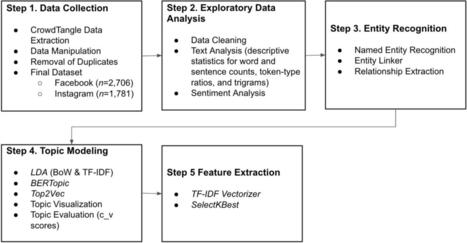
Despite lacking scientific support, the idea of Learning Styles is widespread in social media engagement. This phenomenon raises concerns about its potential harm in educational practices. This study investigates the prevalence of the Learning Styles myth on two major global social media platforms from 2014 to 2021: Facebook and Instagram. Through Natural Language Processing (NLP) of users’ posts, the findings of this study showed: (1) positive sentiments toward the idea of Learning Styles, perpetuating the myth; (2) prevalent specific topics in posts in relation to Learning Styles, including addressing student needs, curriculum changes, teacher recruitment, and emphasizing different learning modalities; (3) active promotion of professional development events endorsing the idea of Learning Styles by non-profit organizations and educational institutions; and (4) strong associations between users’ reactions and posts on Learning Styles related to teacher jobs, alternative pedagogies for diverse learners, and extracurricular activities. The study highlights the need to address the propagation of unsubstantiated educational myths, such as Learning Styles, through strategic information dissemination practices by educators, professional organizations, and academic institutions on social media.
|
|
Scooped by
Gilbert C FAURE
January 12, 9:06 AM
|
Some reflections on the current peer-review process:
1) The reviewer pool is much narrower than we often assume!!! Most reviews are conducted by a small group of (mostly male) mega-reviewers from a few countries.
2) Biases persist, especially against non-white scientists.
3) When reviewers and authors share the same country of origin, reviews tend to be more favorable (homophilia).
Challenges and Consequences:
A) Same-country reviewing benefits researchers from populous nations (e.g., the US, China, India), and even double-blind review doesn’t fully eliminate this bias.
B) Reviewer training helps reduce bias but has a well-known limited effect.
C) Open review increases transparency but isn’t equally welcomed, especially among female reviewers, who often face higher risks of backlash.
Where do we go from here?
We need systemic approaches that go beyond procedural tweaks, and we need to mgather demographically standardized data to find the gaps and prpose solutions.
|
|
Scooped by
Gilbert C FAURE
January 8, 4:17 AM
|
🎯 Le social listening : bien plus qu'une simple surveillance des réseaux sociaux !
👉 Découvrez notre guide complet https://lnkd.in/eVjTviGW
Vous collectez 100 000 mentions par mois. Comment distinguer une plainte client d'un compliment, une question technique d'une crise naissante... sans y passer des semaines ?
Bienvenue dans l'ère du social listening alimenté par l'IA.
Les plateformes modernes utilisent désormais :
🧠 Le machine learning pour qualifier automatiquement chaque mention avec une précision remarquable → Sentiment, intention, sujet abordé, urgence... tout est catégorisé instantanément
⚡ La détection automatique des pics anormaux → L'IA établit votre baseline normale et vous alerte immédiatement en cas d'écart
📝 Les résumés quotidiens automatiques → Chaque matin, un digest intelligent de ce qui s'est dit sur votre marque
🎯 L'identification des sujets émergents → Repérez les tendances avant qu'elles ne deviennent évidentes pour tout le marché
Cette démocratisation de l'intelligence sociale permet même aux PME d'accéder à des capacités analytiques autrefois réservées aux grandes entreprises.
3 niveaux de maturité : → Basique : écoute de votre audience existante → Approfondi : surveillance de tout votre écosystème → Combiné : intégration du monitoring quantitatif et du listening qualitatif
#ArtificialIntelligence #MachineLearning #SocialListening #DigitalTransformation
|
|
Scooped by
Gilbert C FAURE
January 6, 4:58 AM
|
☕ 𝗟'𝗘𝘅𝗽𝗿𝗲𝘀𝘀𝗼 𝟴.𝟭𝟱 — 3 extensions Chrome pour libérer NotebookLM
NotebookLM est devenu central dans mon processus d'exploitation de l'information. Mais gérer ses carnets, importer efficacement, travailler confortablement ? L'interface de base ne suit pas. J'ai testé une quinzaine d'extensions : voici les 3 que j'ai gardées.
🔸 NotebookLM Tools : le couteau suisse qui manquait. Tableau de bord pour voir et agir sur tous ses carnets, recherche et tri instantanés, changement de langue à la volée, ajout de sources par lots, détection des doublons. Ce que Google aurait dû intégrer dès le départ.
🔸 YouTube to NotebookLM : envoie vidéos, playlists ou chaînes entières vers un carnet. Idéal pour transformer une veille vidéo en base de connaissances exploitable.
🔸 WideScreen Mode : pour améliorer l'ergonomie. Panneaux ajustables, mode plein écran, interface élargie. Indispensable quand on passe des heures dans l'outil.
💡 𝗟'𝗲𝘀𝘀𝗲𝗻𝘁𝗶𝗲𝗹 : Un bon outil se repère à la manière dont sa communauté comble ses manques.
—
𝗝𝗲 𝘃𝗼𝘂𝘀 𝗽𝗼𝘀𝗲 𝗹𝗮 𝗾𝘂𝗲𝘀𝘁𝗶𝗼𝗻 : Vous utilisez NotebookLM brut, ou vous l'avez déjà « augmenté » ?
#NotebookLM #PKM #IAGenerative #Veille #Productivité
(Liens en commentaire)
|
|
Scooped by
Gilbert C FAURE
January 6, 4:56 AM
|
|
|
Scooped by
Gilbert C FAURE
January 5, 5:54 AM
|
One deep clean-up I did over the New Year: Clearing up my digital information environment.
I was getting tired of drowning in the endless flood of digital content—jumping between websites, swiping through algorithm-driven feeds, and saving articles I never returned to. It felt overwhelming, noisy, and… out of control.
So I did two things that made a difference.
📌 #𝟭. 𝗖𝘂𝗿𝗮𝘁𝗶𝗻𝗴 𝗺𝘆 𝗶𝗻𝗳𝗼𝗿𝗺𝗮𝘁𝗶𝗼𝗻 𝘀𝗽𝗮𝗰𝗲.
I moved away from passive consumption of information and toward active curation using an RSS aggregator. I chose Inoreader since it offers strong features, including unlimited folders/tags, better search, deep customization, and even automation. For example, you can set rules to surface articles from the feeds that truly match your interests.
By pulling my favorite YouTube channels, newsletters, blogs, and social feeds into one space, I’ve taken back the wheel. I no longer have to chase content across a dozen locations. More importantly, it requires me to be an info gatekeeper: if a source isn't worth following in my reader, it isn't worth my attention. It’s about consuming with discipline and taste, not an algorithm told me to.
📌 #𝟮. 𝗗𝗲𝗹𝗲𝘁𝗲𝗱 𝗺𝗼𝘀𝘁 𝗼𝗳 “𝗦𝗮𝘃𝗲 𝗜𝘁 𝗳𝗼𝗿 𝗟𝗮𝘁𝗲𝗿” 𝗚𝗿𝗮𝘃𝗲𝘆𝗮𝗿𝗱
I cleaned out all the saved content that I never read in the last year.
Like a digital hoarder, I’d been collecting links, screenshots, and PDFs, thinking I’d come back to them at some point. But I never reaccess most of them. So I did a strenuous deep clean, deleting the fluffy and migrating the truly high-value gems into Notion. Seeing my curated knowledge organized in one central location felt like a weight off my shoulders. It took effort, but the mental clarity was worth it.
👩💻 𝗪𝗲 𝗮𝗿𝗲 𝘄𝗵𝗮𝘁 𝘄𝗲 𝗿𝗲𝗮𝗱.
As with healthy eating, avoiding large/fast-food-style content driven by algorithmic feeds, and actively choosing and focusing on smaller amounts of high-quality content are crucial for ensuring a healthy mind.
Algorithm feeds access will continue to dominate the masses. At the same time, personal/intent-driven content agents (built on RSS infrastructure and leveraging AI agents) will grow, designed for people who value autonomy, focus, and quality in what they consume.
What’s your approach? And how might you choose to consume content differently to improve your mind in the new year?
---------------------------------------------------------
📚 Good books remain high-quality, dense sources of content. My Newsletter Shares Essential Reading for Designers in the AI Shift. ⬇️
https://lnkd.in/gkakx2iA
|
|
Scooped by
Gilbert C FAURE
January 5, 4:28 AM
|
Venezuela is part of an agreement done between trump and putin - Here is Fiona Hills testimony from October 14th 2019... This explains very well why US no longer stands behind Ukraine.... This explains why russian/chinese radars and air defenses where not active during US illegal attack on Venezuela and this explains why US has redrawn from and now wants Europe divided into separate nations, as these are easier to take.
What trump and his administration did was illegal, but it will have no consequences... not in the US and not at the UN, this will lead to more... Greenland might be next, or Canada, or Mexico...
But Americans - remember that War Always Come Home!
This is what the republicans in the US voted for - they were warned, but chose chaos and the Age of Greedy Old Men.
PS And that Manduro is gone is good - but that US now wants to take control of Venezuela and their oil is theft...
#UStoday #republicanparty #republicans #dictatorship #epstein #willofthestrong #Greenland #war #UN #EU #Europe #Ukraine | 77 comments on LinkedIn
|
|
Scooped by
Gilbert C FAURE
January 5, 4:19 AM
|
☕ 𝗟'𝗘𝘅𝗽𝗿𝗲𝘀𝘀𝗼 𝟴.𝟭𝟱 — Infobésité : l'accès à tout, la maîtrise de rien.
527 zettaoctets de données d'ici 2029. Un chiffre qui dépasse depuis longtemps notre capacité même à nous le représenter.
Bienvenue dans la Bibliothèque de Babel...
🔸 Manuel Castells l'avait anticipé il y a 25 ans : nous sommes passés d'une économie de services à une société de l'information. Le numérique ne se contente plus d'outiller nos gestes, il reconfigure notre manière d'apprendre, de décider, d'agir.
🔸 Borges imaginait une bibliothèque contenant tous les livres possibles — y compris ceux dénués de sens. C'est exactement notre situation : un océan où la valeur se noie dans le bruit.
🔸 Disposer de l'information ne suffit plus. Il faut savoir ce que l'on cherche, l'identifier, l'analyser, l'interpréter. Un « portulan cognitif » pour tracer sa route.
💡 𝗟'𝗲𝘀𝘀𝗲𝗻𝘁𝗶𝗲𝗹 : Ce n'est pas l'accès aux données qui fait la différence, c'est la capacité à en extraire du sens.
—
𝗝𝗲 𝘃𝗼𝘂𝘀 𝗽𝗼𝘀𝗲 𝗹𝗮 𝗾𝘂𝗲𝘀𝘁𝗶𝗼𝗻 : À quel moment avons-nous cessé de chercher du sens pour nous contenter de stocker ?
📖 Ces éléments sont tirés de l'introduction de ma thèse de doctorat. Chaque semaine, j'en partagerai ici un nouveau passage.
#VeilleStratégique #IntelligenceEconomique #Données #Infobésité
|
|
Scooped by
Gilbert C FAURE
January 4, 12:58 PM
|
Trust has been the foundation of scholarly publishing for hundreds of years, but for how much longer?
Researchers often mistrust publishers because of profit margins and poor customer service.
Publishers increasingly struggle to trust researchers because of paper mills and AI-generated slop.
One of my takeaways from yesterday’s discussions at the STM meeting on research integrity is that publishers are putting their trust in systems and processes, rather than in researchers.
This cultural change is significant and should not be underestimated.
Academic publishing has historically been a trust-based system.
However, the volume of content created by bad actors is simply too great for publishers to be able to assume that researchers are telling the truth.
To make matters worse, soon AI-generated images and figures will be too sophisticated to spot. It will be impossible to differentiate fact from fiction.
The foundation of the problem is that many (most?) researchers are incentivised to focus on the experimental results, rather than the experimental process.
Speed is prioritised over accuracy
Quantity is more important than quality
Authors matter more than readers
Why? Because grants and tenure depend on generating positive results at scale. AI tools make it easier to cut corners and make stuff up.
Publishers need to up their game by reacting more quickly to integrity problems when they are spotted. How? By devoting more resources to maintain the trustworthiness of the scholarly record.
However, the root cause of the problem is the academic reward and incentive system (hardly a revelation, I know).
Scientific communication will become more expensive and more exclusionary if trust is lost at scale. We are at a pivotal moment in the history of academic publishing.
---
I’ve been to many conferences over the years, but this week's meeting was one of the best. The organising committee and speakers deserve praise and congratulations. Great job everyone! | 39 comments on LinkedIn
|