
From
medium


|
Rescooped by
Gilbert C FAURE
from Information and digital literacy in education via the digital path
onto Notebook or My Personal Learning Network March 10, 2016 4:07 PM
|
 Scoop.it!
Robin Good has great insight into why focused curation matters. Reading this right after Dan Russell's post about syntopical reading made me think about how I curate. In an ideal experience of curating for learning Robin states: "...each student becomes not just a learner, but, as it should be, he becomes also a reviewer, an investigator, an explorer and a contributor to the ideas and understanding surrounding that subject."
Let's make sure we're teaching students curation as a literacy skill. It's not just bookmarking or Pinning or Scooping links, but engaging with them, directing their own learning, and maybe even adding something that helps others learn.


 Your new post is loading...
Scoop.it!
|
|
|
Scooped by
Gilbert C FAURE
November 5, 11:14 AM
|
Scoop.it!

🐗 Quel banger : un voyage géographique dans la peau d'un sanglier !
Une nouvelle carte extraite du livre de Perrin Remonté : "La France en 50 cartes insolites" Chez Lonely Planet.
🗺️ Pas d'orientation. Pas de nom de rivière et de fleuve. Les villes non plus ne sont pas nommées.
Les frontières sont effacées, car ici c'est le regard de l'animal qui compte.
La carte se limite finalement à ce qui est essentiel pour le sanglier : les lieux où se nourrir, où boire, où observer le danger, où dormir.
🏙️ Dans les blancs de la carte, une terra incognita : les zones inaccessibles pour le sanglier, où l'absence de forêt où l'urbanisation bloque la progression.
Et un clin d'œil sur l'orientation de la carte : davantage que les points cardinaux, apparaissent le côté du soleil levant et celui du soleil levant.
😜 Et puisque vous avez surement envie de savoir : nous sommes quelque part dans les Ardennes.
Cette carte procède à un geste essentiel : formuler des représentations géographiques non anthropocentrées, pour enfin donner un droit d'habité aux autres qu'humains.
Bravo Perrin !
Le livre "La France en 50 cartes insolites" est disponible dans toutes les librairies.
#Géographie #Cartographie #Biodiversité #MondeVivant #Écologie | 24 comments on LinkedIn
|
|
Scooped by
Gilbert C FAURE
November 5, 11:05 AM
|
Scoop.it!

💡 Are citizens really opposed to reducing public lighting?
Our new article, “Social acceptability of public lighting reductions for light pollution mitigation: A regional, repeated cross-sectional study amidst the energy crisis in Wallonia (Belgium)”, co-authored with Sabine Limbourg and Mario Cools, has just been published in Cities!
We explore this question using 3114 responses collected across three surveys in Wallonia. Our key findings:
- Public lighting reductions are not clearly opposed by a majority of respondents.
- Acceptability increased during the energy crisis and remained stable two years later.
- Safety concerns and patterns of public-space use matter for understanding public support.
These results offer useful evidence for policymakers seeking lighting strategies that are both socially acceptable and environmentally sustainable.
🔗 The full article can be read and downloaded for free until 18 December, no later!, via this link: https://lnkd.in/eB_X4wwQ
Looking forward to discussing these findings with you!
#LightPollution #PublicLighting #Sustainability #EnergyCrisis #UrbanPlanning #Research
|
|
Scooped by
Gilbert C FAURE
November 5, 10:40 AM
|
Scoop.it!
|
|
Scooped by
Gilbert C FAURE
November 5, 7:46 AM
|
Scoop.it!

🚅 Il est 5h, la France s'éveille !
Pourquoi cette vidéo est-elle aussi satisfaisante?
Peut-être parce qu'on y voit notre pays s'animer, respirer. On comprend que le réseau ferroviaire s'active tôt le matin, et se vide après minuit...
Pas assez de trains de nuit ?
On voit les heures de pointe autour de Paris. Comme un pouls ou une circulation sanguine. Comme si le pays était vivant.
Et cette grande étoile centrée sur Paris, dessinée à partir de 1842, saute aux yeux.
On voit le contraste entre des grands axes qui battent fort et des territoires où presque rien ne bouge. La France.
S'il y avait trois chiffres à retenir
1️⃣ Il y a 28 000 km de lignes dans le réseau ferré français, qui desservent plus de 8 000 communes. C’est environ 70 % du tour de la Terre. On y trouve 2 800 km de lignes à grande vitesse et 3 000 gares.
2️⃣ Chaque jour, 15 000 trains circulent sur le réseau, soit plus de 10 départs par minute, jour et nuit. Environ 40 % de ces trains roulent en Île-de-France.
3️⃣ Le réseau transporte 5 millions de personnes par jour, ainsi que 250 000 tonnes de fret. C’est l’équivalent de la population de la Norvège, tous les jours. SNCF Réseau présente aussi son réseau comme le deuxième plus dense au monde après l'Allemagne.
Source: @Milos Popovic (X/Twitter)
#france #train #transport #europe #Map #data #carto
Vous procurer mon dernier livre : https://lnkd.in/e8MYewC9
| 181 comments on LinkedIn
|
|
Scooped by
Gilbert C FAURE
November 5, 7:22 AM
|
Scoop.it!

L’intégrité de la recherche a longtemps été perçue comme une série de défaillances isolées, or cette perception est en train de changer, comme l'évoque cet article The Scholarly Kitchen, largement sourcé et chiffré : en 2002, environ 1 article publié sur 5 000 était rétracté, mais ce chiffre est passé à 1 sur 500 en 2023. Rien qu’en 2023, le nombre de rétractations a dépassé les 10 000, établissant ainsi un nouveau record, établi uniquement sur ce qui a pu être repéré.
Parallèlement, un nombre considérable d’articles douteux sont produits. Entre 2020 et 2026, les « usines à articles » (les désormais fameux #PaperMills) ont publié plus de 18 700 annonces proposant à la vente la paternité d’articles de recherche. Pris dans leur ensemble, ces éléments soulèvent des questions cruciales : devons-nous continuer à traiter les manquements à l’intégrité comme un problème de détection, consistant à identifier les contrevenants, à retirer les mauvais articles et à renforcer les règles ? Ou est-il temps de reconnaître que les défis liés à l’intégrité de la recherche résultent de la concurrence, de l’ampleur et de la complexité de la recherche moderne ? Et si le problème est systémique, à qui revient-il d’y remédier ?
A lire et réfléchir ici 👉 https://lnkd.in/e7zK3aJu
|
|
Scooped by
Gilbert C FAURE
November 5, 5:56 AM
|
Scoop.it!

Is it just me, or are we academics spending more and more time documenting, monitoring and reporting what we do, and less and less time actually doing it? 😞
With budgets shrinking and administrative support disappearing, we’re increasingly expected to do more with less.
Every new system promises to streamline processes, improve efficiency and reduce administrative burden. Yet somehow, each one seems to come with another form to complete, another portal to navigate and another deadline to remember. 🫣
I’m beginning to feel like the canary in the administrative coal mine. 🐤
#AcademicLife #HigherEducation #Research | 12 comments on LinkedIn
|
|
Scooped by
Gilbert C FAURE
October 30, 8:57 AM
|
Scoop.it!

In 2006, my promotion to full professor was rejected. My citation record was called “modest.” Except it wasn’t... My Google Scholar citation metrics were higher than those of all but one professor in my department. So, my husband David built me a little software tool to prove it. I resubmitted with hard evidence and was promoted.
That tool became the free Publish or Perish software. This October it turned 20, and it now has over 2 million users. From being a simple h-index calculator, it went on to acquire hundreds of new features along the way.
But the one thing I never expected is how its use would change over the years. Most new users no longer check their own h-index. They now use PoP to evaluate papers, mostly for literature reviews.
Moreover, six of our top-10 user countries are now outside the Anglo world and Western Europe/North America (the early PoP-adopters): Indonesia, Philippines, India, Brazil, Malaysia, and Colombia, with Ghana at #11, where students (and academics) often do not have access to commercial bibliographic databases. PoP offers them a lifeline for their assignments or Research Masters/PhD research.
Thanks to Mario Pagliaro's thoughtful questions, I’ve written up a white paper reflecting on all of this, including:
📌 Why evaluation committees often think they understand bibliometrics when they don’t
📌 Why universities should lower publication targets if they want academics to create real societal impact
📌 Why a literature review isn’t a “chore” to hand over to GenAI
📌 My 7 recommended steps to get your own papers found (and cited)
#PublishOrPerish #ResearchImpact #PositiveAcademia #AcademicCareers #Bibliometrics | 64 comments on LinkedIn
|
|
Scooped by
Gilbert C FAURE
October 29, 8:29 AM
|
Scoop.it!

Avec son concept de Veille antifragile, #Sindup nous incite à lutter contre les biais informationnels et la désinformation https://lnkd.in/ead_PvAs
|
|
Scooped by
Gilbert C FAURE
October 28, 8:33 AM
|
Scoop.it!

Every research paper tells one story in nine parts. Each section has one job.
When a section tries to do another section's job, the paper gets harder to follow.
A few things that make the biggest difference:
→ Write the title and abstract last
↳ They summarize a paper that does not exist until the rest is written.
→ End the introduction with your question
↳ The reader should know exactly what you set out to answer before the methods begin.
→ Keep results and discussion separate
↳ Results report what you found. The discussion explains what it means.
→ Treat limitations as part of the science
↳ Naming them clearly builds trust with reviewers and readers.
Save this for your next manuscript.
Which section do you find hardest to write? | 45 comments on LinkedIn
|
|
Scooped by
Gilbert C FAURE
October 24, 4:00 AM
|
Scoop.it!

Évaluer à l'ère de l'IAg : coffre à outils pour le personnel enseignant. https://lnkd.in/eX_473r7
|
|
Scooped by
Gilbert C FAURE
October 23, 7:32 AM
|
Scoop.it!
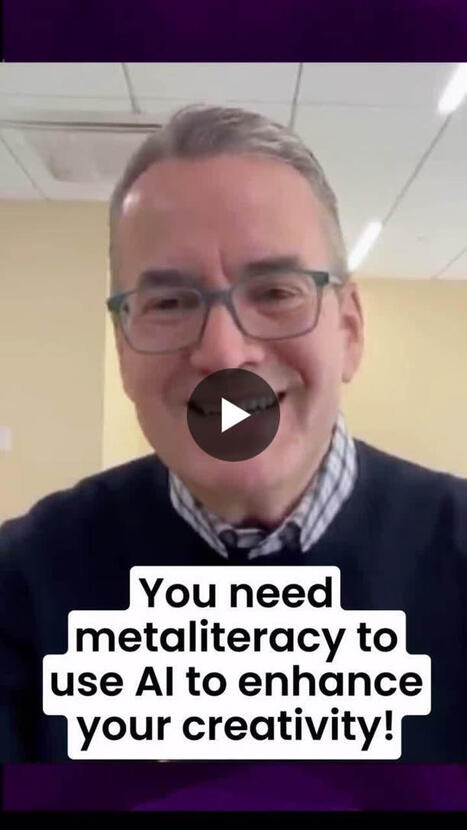
💥Did you know that AI used appropriately can enhance who you are, your originality, and your creativity? That’s where metaliteracy comes to help you in this process!
💥Please listen to Dr. Thomas P. Mackey, Ph.D. ’s explanation of metaliteracy and tune to the whole episode for amazing ideas on how to incorporate AI to enrich your own thinking!
💥 Dr. Mackey is Professor in the Department of Arts and Media, College of Arts and Sciences of Empire State University. He also serves as Program Coordinator for the BA and BS in Digital Media Arts. His work focuses on metaliteracy as a framework for learning and digital environment, with a growing emphasis on ethical and creative engagement with AI.
👉Links to the episode in comments!
|
|
Scooped by
Gilbert C FAURE
October 22, 4:49 AM
|
Scoop.it!
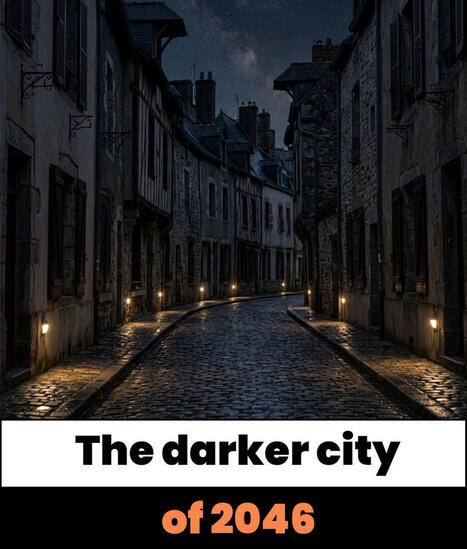
In twenty years, European streets will be darker than they are tonight.
And nobody will be complaining.
Here is what I think will have happened, and none of it needs technology we do not already have. Light will have become conditional. Streets at full output only when someone is actually there, not because sensors are a gadget but because continuously illuminating empty space will look like exactly what it is: waste, in a system where every watt has a name.
Levels will be lower and people will see better.
Two decades of serious glare control and better spectrum will have taught the public what every lighting designer already knows, which is that adaptation matters more than quantity. The sky will be part of the brief. Not a compliance box at the end of the report. A design objective, in the same way daylight became one. And the biggest change will not be technical at all.
Darkness will have stopped meaning danger, neglect or poverty.
It will mean that somebody made a decision.
The part I am least sure about is who drives this. Regulation is slow. Manufacturers sell products, and less light is a difficult product to sell.
Cities move when there is a budget argument, and there is a very good one, but nobody has made it well yet.
My guess is that it starts somewhere small. Someone removes half the lighting in a public space, measures what happens, and can prove that nothing bad did.
The rest is imitation.
I would rather design that city than the one we are lighting tonight. | 58 comments on LinkedIn
|
|
Scooped by
Gilbert C FAURE
November 5, 11:21 AM
|
Scoop.it!

L'entretien des arbres est un aspect essentiel de la gestion de votre propriété, mais il peut être difficile de comprendre les coûts associés à l
|
|
Scooped by
Gilbert C FAURE
November 5, 11:11 AM
|
Scoop.it!

What's so wrong with everyone and anyone publishing "research"?
We need to make the status of every contribution visible and portable, reward the replication, correction and synthesis that make other work dependable, and let AI help authors check before they ask the rest of us to.
We need accountability and reciprocity. If I want the research community to spend time on my claim, it is fair to ask what I have done to make that time worthwhile.
https://lnkd.in/e6YyuhEt
|
|
Scooped by
Gilbert C FAURE
November 5, 10:30 AM
|
Scoop.it!

Je garde toujours cette liste de 40 sites web dans mes favoris pour mes recherches documentaires.
Sauvegardez ce post, il vous fera gagner des heures précieuses ⤵️
📌 Les Incontournables
— PubMed Central : Recherche médicale
— JSTOR : Revues académiques
— arXiv : Prépublications scientifiques
— Google Scholar : Le point de départ incontesté
🔓 Les Options en Libre Accès (Open Access)
— DOAJ : Revues ouvertes de haute qualité
— CORE : Des millions d'articles accessibles gratuitement
— bioRxiv : Prépublications en biologie
— SSRN : Réseau de recherche en sciences sociales
🛠️ Les Outils Pratiques
— ResearchGate : Pour vous connecter directement avec les auteurs
— Semantic Scholar : Recherche documentaire propulsée par l'IA
— Sci-Hub / Unpaywall : Pour dénicher les versions gratuites (Open Access) de vos articles
— Research4Life : Accès privilégié pour les pays en développement
🌍 Les Sources Spécialisées
— EThOS : Base de données des thèses britanniques
— Internet Archive : Pour les documents historiques
— SciELO : Focus sur la recherche latino-américaine
— OpenAIRE : Focus sur la recherche européenne
💡 Aller plus loin dans votre revue de littérature :
Avoir les bonnes sources est indispensable, mais savoir les analyser sans se perdre est le véritable enjeu.
Rejoignez-moi le 12 décembre pour ma prochaine Masterclass en direct :
« IA et revue de littérature : comment gagner en efficacité sans compromettre l’intégrité scientifique ? ».
👉🏾 Sécurisez votre place ici : https://lnkd.in/ewFRi2GD
-----------
Maurice KAKOU, PhD
Enseignant-Chercheur | Coach académique – Recherche
#Doctorat #These #RechercheScientifique #RevueDeLitterature #PhDLife #Methodologie #OpenAccess #IntelligenceArtificielle #ProductiviteScientifique
|
|
Scooped by
Gilbert C FAURE
November 5, 7:39 AM
|
Scoop.it!

If you haven’t had the chance to read, our article has free access for October, so time’s running out! It features strong research based advocacy for the role of #TeacherLibrarians in primary education. Link below. #StudentsNeedSchoolLibraries
|
|
Scooped by
Gilbert C FAURE
November 5, 3:58 AM
|
Scoop.it!

𝗧𝗲𝗻 𝗧𝘆𝗽𝗲𝘀 𝗼𝗳 𝗥𝗲𝘀𝗲𝗮𝗿𝗰𝗵 𝗚𝗮𝗽𝘀
A 𝗿𝗲𝘀𝗲𝗮𝗿𝗰𝗵 𝗴𝗮𝗽 is an area where existing knowledge is missing, incomplete, contradictory, or insufficiently tested. Researchers commonly identify several types:
1️⃣ 𝗘𝘃𝗶𝗱𝗲𝗻𝗰𝗲 (𝗖𝗼𝗻𝘁𝗿𝗮𝗱𝗶𝗰𝘁𝗼𝗿𝘆) 𝗚𝗮𝗽
Existing studies reach conflicting conclusions, so the evidence doesn’t point in one direction.
✅ 𝙴̲𝚡̲𝚊̲𝚖̲𝚙̲𝚕̲𝚎̲:̲ ̲𝘚𝘰𝘮𝘦 𝘴𝘵𝘶𝘥𝘪𝘦𝘴 𝘧𝘪𝘯𝘥 𝘪𝘯𝘵𝘦𝘳𝘮𝘪𝘵𝘵𝘦𝘯𝘵 𝘧𝘢𝘴𝘵𝘪𝘯𝘨 𝘪𝘮𝘱𝘳𝘰𝘷𝘦𝘴 𝘮𝘦𝘵𝘢𝘣𝘰𝘭𝘪𝘤 𝘩𝘦𝘢𝘭𝘵𝘩 𝘸𝘩𝘪𝘭𝘦 𝘰𝘵𝘩𝘦𝘳𝘴 𝘧𝘪𝘯𝘥 𝘯𝘰 𝘣𝘦𝘯𝘦𝘧𝘪𝘵 𝘰𝘷𝘦𝘳 𝘴𝘵𝘢𝘯𝘥𝘢𝘳𝘥 𝘤𝘢𝘭𝘰𝘳𝘪𝘦 𝘳𝘦𝘴𝘵𝘳𝘪𝘤𝘵𝘪𝘰𝘯.
2️⃣ 𝗞𝗻𝗼𝘄𝗹𝗲𝗱𝗴𝗲 (𝗟𝗶𝘁𝗲𝗿𝗮𝘁𝘂𝗿𝗲) 𝗚𝗮𝗽
A topic has not been studied, or has been studied too little to draw conclusions.
𝙴̲𝚡̲𝚊̲𝚖̲𝚙̲𝚕̲𝚎̲:̲ 𝘓𝘪𝘮𝘪𝘵𝘦𝘥 𝘳𝘦𝘴𝘦𝘢𝘳𝘤𝘩 𝘰𝘯 𝘵𝘩𝘦 𝘭𝘰𝘯𝘨-𝘵𝘦𝘳𝘮 𝘮𝘦𝘯𝘵𝘢𝘭 𝘩𝘦𝘢𝘭𝘵𝘩 𝘦𝘧𝘧𝘦𝘤𝘵𝘴 𝘰𝘧 𝘳𝘦𝘮𝘰𝘵𝘦 𝘸𝘰𝘳𝘬 𝘰𝘯 𝘦𝘢𝘳𝘭𝘺-𝘤𝘢𝘳𝘦𝘦𝘳 𝘦𝘮𝘱𝘭𝘰𝘺𝘦𝘦𝘴.
3️⃣ 𝗧𝗵𝗲𝗼𝗿𝗲𝘁𝗶𝗰𝗮𝗹 𝗚𝗮𝗽
Existing theories or frameworks fail to explain a phenomenon, or have not been applied to a particular context.
✅ 𝙴̲𝚡̲𝚊̲𝚖̲𝚙̲𝚕̲𝚎̲:̲ ̲𝘛𝘳𝘢𝘥𝘪𝘵𝘪𝘰𝘯𝘢𝘭 𝘤𝘰𝘯𝘴𝘶𝘮𝘦𝘳 𝘣𝘦𝘩𝘢𝘷𝘪𝘰𝘳 𝘮𝘰𝘥𝘦𝘭𝘴 𝘮𝘢𝘺 𝘯𝘰𝘵 𝘦𝘹𝘱𝘭𝘢𝘪𝘯 𝘱𝘶𝘳𝘤𝘩𝘢𝘴𝘪𝘯𝘨 𝘥𝘦𝘤𝘪𝘴𝘪𝘰𝘯𝘴 𝘰𝘯 𝘴𝘰𝘤𝘪𝘢𝘭 𝘤𝘰𝘮𝘮𝘦𝘳𝘤𝘦 𝘱𝘭𝘢𝘵𝘧𝘰𝘳𝘮𝘴.
4️⃣ 𝗠𝗲𝘁𝗵𝗼𝗱𝗼𝗹𝗼𝗴𝗶𝗰𝗮𝗹 𝗚𝗮𝗽
Prior studies relied on limited or flawed methods, or a better approach hasn’t been tried.
✅ 𝙴̲𝚡̲𝚊̲𝚖̲𝚙̲𝚕̲𝚎̲:̲ 𝘔𝘰𝘴𝘵 𝘴𝘵𝘶𝘥𝘪𝘦𝘴 𝘶𝘴𝘦 𝘴𝘦𝘭𝘧-𝘳𝘦𝘱𝘰𝘳𝘵𝘦𝘥 𝘴𝘶𝘳𝘷𝘦𝘺𝘴, 𝘢𝘯𝘥 𝘧𝘦𝘸 𝘶𝘴𝘦 𝘭𝘰𝘯𝘨𝘪𝘵𝘶𝘥𝘪𝘯𝘢𝘭 𝘰𝘳 𝘦𝘹𝘱𝘦𝘳𝘪𝘮𝘦𝘯𝘵𝘢𝘭 𝘥𝘦𝘴𝘪𝘨𝘯𝘴.
5️⃣ 𝗣𝗼𝗽𝘂𝗹𝗮𝘁𝗶𝗼𝗻 𝗚𝗮𝗽
Certain groups are underrepresented or excluded from existing research.
✅ 𝙴̲𝚡̲𝚊̲𝚖̲𝚙̲𝚕̲𝚎̲:̲ ̲𝘊𝘭𝘪𝘯𝘪𝘤𝘢𝘭 𝘵𝘳𝘪𝘢𝘭𝘴 𝘵𝘩𝘢𝘵 𝘮𝘰𝘴𝘵𝘭𝘺 𝘦𝘯𝘳𝘰𝘭𝘭 𝘢𝘥𝘶𝘭𝘵 𝘮𝘦𝘯, 𝘭𝘦𝘢𝘷𝘪𝘯𝘨 𝘰𝘶𝘵 𝘸𝘰𝘮𝘦𝘯, 𝘤𝘩𝘪𝘭𝘥𝘳𝘦𝘯, 𝘰𝘳 𝘰𝘭𝘥𝘦𝘳 𝘢𝘥𝘶𝘭𝘵𝘴.
6️⃣ 𝗚𝗲𝗼𝗴𝗿𝗮𝗽𝗵𝗶𝗰𝗮𝗹 (𝗖𝗼𝗻𝘁𝗲𝘅𝘁𝘂𝗮𝗹) 𝗚𝗮𝗽
Findings from one region or setting haven’t been tested elsewhere.
✅ 𝙴̲𝚡̲𝚊̲𝚖̲𝚙̲𝚕̲𝚎̲:̲ ̲𝘔𝘰𝘣𝘪𝘭𝘦 𝘣𝘢𝘯𝘬𝘪𝘯𝘨 𝘢𝘥𝘰𝘱𝘵𝘪𝘰𝘯 𝘴𝘵𝘶𝘥𝘪𝘦𝘥 𝘮𝘢𝘪𝘯𝘭𝘺 𝘪𝘯 𝘌𝘶𝘳𝘰𝘱𝘦 𝘢𝘯𝘥 𝘕𝘰𝘳𝘵𝘩 𝘈𝘮𝘦𝘳𝘪𝘤𝘢, 𝘸𝘪𝘵𝘩 𝘭𝘪𝘵𝘵𝘭𝘦 𝘸𝘰𝘳𝘬 𝘪𝘯 𝘌𝘢𝘴𝘵 𝘈𝘧𝘳𝘪𝘤𝘢.
7️⃣ 𝗘𝗺𝗽𝗶𝗿𝗶𝗰𝗮𝗹 𝗚𝗮𝗽
A theory or hypothesis exists but has not been tested with real-world data.
✅ 𝙴̲𝚡̲𝚊̲𝚖̲𝚙̲𝚕̲𝚎̲:̲ 𝘈 𝘱𝘳𝘰𝘱𝘰𝘴𝘦𝘥 𝘮𝘰𝘥𝘦𝘭 𝘰𝘧 𝘦𝘮𝘱𝘭𝘰𝘺𝘦𝘦 𝘣𝘶𝘳𝘯𝘰𝘶𝘵 𝘵𝘩𝘢𝘵 𝘩𝘢𝘴 𝘯𝘦𝘷𝘦𝘳 𝘣𝘦𝘦𝘯 𝘷𝘢𝘭𝘪𝘥𝘢𝘵𝘦𝘥 𝘵𝘩𝘳𝘰𝘶𝘨𝘩 𝘧𝘪𝘦𝘭𝘥 𝘳𝘦𝘴𝘦𝘢𝘳𝘤𝘩.
8️⃣ 𝗣𝗿𝗮𝗰𝘁𝗶𝗰𝗮𝗹 (𝗔𝗽𝗽𝗹𝗶𝗰𝗮𝘁𝗶𝗼𝗻) 𝗚𝗮𝗽
Research findings aren’t translated into practice, or practice differs from what research recommends.
✅ 𝙴̲𝚡̲𝚊̲𝚖̲𝚙̲𝚕̲𝚎̲:̲ ̲𝘌𝘷𝘪𝘥𝘦𝘯𝘤𝘦-𝘣𝘢𝘴𝘦𝘥 𝘵𝘦𝘢𝘤𝘩𝘪𝘯𝘨 𝘴𝘵𝘳𝘢𝘵𝘦𝘨𝘪𝘦𝘴 𝘵𝘩𝘢𝘵 𝘦𝘹𝘪𝘴𝘵 𝘣𝘶𝘵 𝘢𝘳𝘦 𝘳𝘢𝘳𝘦𝘭𝘺 𝘢𝘥𝘰𝘱𝘵𝘦𝘥 𝘪𝘯 𝘤𝘭𝘢𝘴𝘴𝘳𝘰𝘰𝘮𝘴. | 17 comments on LinkedIn
|
|
Scooped by
Gilbert C FAURE
October 29, 8:30 AM
|
Scoop.it!
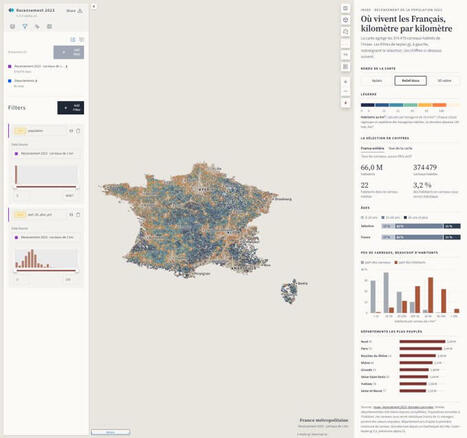
Je profite d'une sortie Insee sympa pour parler de kepler.gl, qui vient d'enchaîner deux préversions. Une petite dinguerie du WebSIG !
kepler.gl, cest une application web libre (licence MIT), ouverte par Uber en 2018 et construite sur deck.gl.
Tu déposes un fichier, la carte apparaît : agrégation à la volée en hexagones, 3D, filtres avec histogrammes, animation dans le temps. Et tes données ne quittent pas ton navigateur.
Le 9 octobre, l'alpha.16 :
→ une galerie de modèles 3D, et tes propres modèles
→ une opacité de couche qui varie selon le zoom
→ une chronologie qui regroupe les séries par champ
→ un éditeur JSON pour les graphiques
Le 17 octobre, l'alpha.17 :
→ export des données en GeoParquet, GeoPackage, Shapefile, KML ou KMZ
→ un même filtre sur plusieurs jeux de données, ou en mode exclusion
→ des statistiques par colonne dans la table, et le type d'une colonne qui se corrige
→ des flèches sur les arcs, des étiquettes de comptage sur les agrégations
Ce sont des préversions, pas encore la stable. Mais le cap est clair : kepler n'est plus seulement un outil pour regarder, il devient un outil pour préparer et sortir la donnée.
Pour l'essayer, l'Insee tombait bien. Le recensement 2023 au carreau d'un kilomètre est sorti le 15 octobre : 374 479 carreaux habités, 15 variables.
La moitié des habitants vit sur 2,1 % de ces carreaux ; le plus peuplé, dans le 18e arrondissement de Paris, compte 48 967 habitants.
Dans kepler : hexagones en relief, un filtre sur la part des 65 ans et plus, et un petit tableau de bord à côté qui se recalcule. Avec au moins 35 % de seniors, il reste 54 600 carreaux, et le Var, la Charente-Maritime et la Vendée passent en tête.
Avant ça, j'ai converti le CSV en GeoParquet avec ogr2ogr : l'identifiant de chaque carreau contient ses coordonnées, un MakePoint() suffit. 79 Mo deviennent 4 Mo, en gardant 5 variables sur 15.
Le GeoParquet, on ne le présente plus.
On attend quand même la V2 : la 1.1 reste la dernière stable, la 2.0 n'existe qu'en release candidate. Elle s'appuiera sur les types géométriques natifs de Parquet et abandonnera l'encodage GeoArrow… celui que j'ai utilisé. Il faudra refaire la conversion.
Kepler, GeoParquet : je m'en sers tous les jours dans les missions de mon quotidien.
Chaque lundi, je partage quelque chose d'utile en lien avec mes travaux.
#keplergl #WebSIG #GeoParquet #Insee #OpenData #Géomatique
|
|
Scooped by
Gilbert C FAURE
October 29, 8:17 AM
|
Scoop.it!
En 1985, la Chine produisait moins de 1 % des publications mondiales en recherche fondamentale. En 2024, elle en produit près d'un tiers, davantage que les États-Unis (19 %) ou l'Union européenne (22 %).
Un rapport publié la semaine dernière à Pékin par des chercheurs chinois, avec le soutien de la principale agence publique de financement de la recherche du pays (NSFC), fouille une mine de données chinoises ouvertes pour éclairer ce succès : quels leviers politiques ? quels investissements ? quel pilotage stratégique ? quel équilibre entre recherche curiosity-driven et recherche appliquée ? quelle éducation des talents ? Pour en discuter avec les meilleurs experts internationaux des politiques scientifiques, j'ai le plaisir de participer cet après-midi à une réunion internationale organisée par le Research On Research Institute (RoRI) et UCL.
Un moment important de partage pour la communauté métascience, ou « science de la science » : étudier avec les méthodes de la recherche la manière dont la recherche est financée, évaluée et utilisée, afin d'éclairer les choix publics. Ce rapport chinois en est un exemple remarquable, puisqu'il repose sur des données ouvertes, refuse de produire un classement et invite à enrichir nos outils de scientométrie par une meilleure compréhension normative de la qualité épistémique de l'activité scientifique.
Et l'Europe dans tout ça ? C'est la question que nous creusons à Evidences, dans une analyse à paraître prochainement !
Research On Research Institute (RoRI)Agnès Buzyn UCL 👉 https://cfrr.net
|
|
Scooped by
Gilbert C FAURE
October 24, 4:16 AM
|
Scoop.it!

Thought-provoking!
"The Oxford Handbook of Philosophy of Imagination and Creativity," edited by Amy Kind and Julia Langkau.
"Philosophy has long paid minimal attention to creativity, and even with the rise of research on imagination, the creative imagination has still largely been ignored. The aim of this Oxford Handbook is to correct this neglect. By bringing together research from various sub-disciplines, the contributors explore recent emerging topics and open up new avenues of research in the philosophy of imagination and creativity."
https://lnkd.in/eiMr5SU2
|
|
Scooped by
Gilbert C FAURE
October 24, 3:04 AM
|
Scoop.it!

Google no longer just sends us to sources. Increasingly, it answers for us.
Swipe through for what this means for thinking, for the quality of what we find online, and for schools, where the new divide may show first.
Google now answers. Our job is to keep people asking.
#InformationLiteracy #AILiteracy #StudentsNeedSchoolLibraries
Full article: https://lnkd.in/gsc2GXBS
|
|
Scooped by
Gilbert C FAURE
October 23, 7:21 AM
|
Scoop.it!
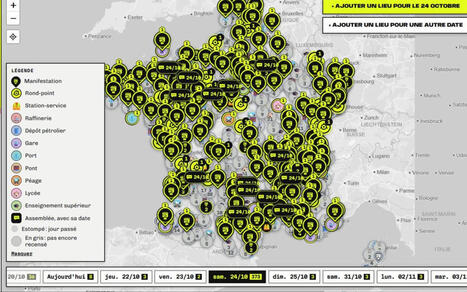
Après la mobilisation du 17 octobre, les Gilets jaunes appellent à un nouvel acte contre la vie chère ce samedi 24 octobre. Rassemblements sur les ronds-points, manifestations et actions locales : découvrez la carte des mobilisations annoncées partout en France, alors que lycéens et étudiants sont également appelés à poursuivre la contestation.
|
|
Scooped by
Gilbert C FAURE
October 22, 4:09 AM
|
Scoop.it!

🤖 IA en santé : quand les patients arrivent en consultation avec leur diagnostic...et leur ordonnance !
Le Dr Google a-t-il définitivement laissé sa place au Dr ChatGPT ?
L’intelligence artificielle générative s’invite dans la relation médecin-patient et bouleverse progressivement les habitudes de consultation. Diagnostic présumé, examens souhaités, traitements envisagés : les patients sont de plus en plus nombreux à interroger l’IA avant de consulter, voire parfois à la place d’un médecin.
En avant-première de la deuxième édition du Baromètre Data & IA en santé, qui sera dévoilée dans son intégralité le 5 novembre prochain, l'Acsel - L'association de l'économie numérique et Toluna révèlent des chiffres particulièrement éclairants sur ces nouveaux usages.
📊 Des chiffres particulièrement révélateurs :
🔹 90 % des professionnels de santé interrogés dont les patients utilisent l'IA ont déjà reçu un patient arrivant avec une idée précise de sa pathologie après avoir consulté une IA générative. Côté patients utilisateurs d'IA en santé, 46 % déclarent lavoir fait.
🔹 82 % des professionnels ont déjà été confrontés à un patient ayant une idée précise des examens complémentaires qu'il souhaitait réaliser grâce à l'IA (46 % côté patients).
🔹 79 % des professionnels ont également vu des patients arriver avec une idée précise du traitement souhaité (43 % côté patients).
⚠️ Plus préoccupant : 53 % des professionnels ont été confrontés à des patients ayant utilisé l'IA à la place dune consultation médicale, estimant quelle pouvait les aider autant qu'un médecin. Une situation reconnue par 43 % des patients utilisateurs d'IA en santé.
Le patient ne vient plus seulement consulter. Il vient aussi confronter les réponses de l'IA à l'expertise médicale.
👉 Un décryptage à découvrir sur Buzz E-santé : https://lnkd.in/eQFUq-AU







Robin Good has great insight into why focused curation matters. Reading this right after Dan Russell's post about syntopical reading made me think about how I curate. In an ideal experience of curating for learning Robin states: "...each student becomes not just a learner, but, as it should be, he becomes also a reviewer, an investigator, an explorer and a contributor to the ideas and understanding surrounding that subject."
Let's make sure we're teaching students curation as a literacy skill. It's not just bookmarking or Pinning or Scooping links, but engaging with them, directing their own learning, and maybe even adding something that helps others learn.