

There are a number of tools that make working with PDFs a lot easier. Starting with a simple way to convert files, we feature five PDF related tools.
Via Ana Cristina Pratas


|
Rescooped by
Gilbert C FAURE
from Digital Delights for Learners
onto Notebook or My Personal Learning Network October 11, 2015 2:54 PM
|
 Scoop.it!
There are a number of tools that make working with PDFs a lot easier. Starting with a simple way to convert files, we feature five PDF related tools.


 Your new post is loading...
Scoop.it!
|
|
|
Scooped by
Gilbert C FAURE
Today, 5:09 AM
|
Scoop.it!

This diagram categorizes eight common types of research limitations and provides specific examples for each.
Understanding and acknowledging these constraints helps researchers maintain academic integrity, contextualize their findings, and suggest directions for future studies.
Breakdown of Research Limitations
• Methodological: Issues related to the study's design, structure, or analytical approach.
• Examples: Low statistical power, limited causal inference, unmeasured confounding.
• Data-Related: Problems concerning the quality, completeness, or accuracy of the collected data.
• Examples: Missing data after dropout, errors in secondary data, self-report or recall bias.
• Generalizability: Constraints on how broadly the study's findings can be applied to other populations, settings, or time periods.
• Examples: Limited to one group, context varies by setting, time-bound findings.
• Resource: Practical constraints involving time, money, personnel, or access to subjects.
• Examples: Short study duration, limited budget or staffing, hard-to-reach populations.
• Researcher Bias: Unintentional influence from the investigator's beliefs, presence, or analytical choices.
• Examples: Prior expectations, interviewer effects, selective interpretation.
• Theoretical: Boundaries set by the conceptual models or frameworks used to guide the study.
• Examples: Reliance on one framework, limited concepts covered, other theories omitted.
• Ethical: Moral or legal boundaries that restrict how a study can be conducted or how data can be handled.
• Examples: Limits on withholding care, recruitment restrictions, consent limits data use.
• Technological: Constraints stemming from the tools, software, or instruments used to gather or process data.
• Examples: Software or tool limits, low instrument resolution, equipment failures.
#studyinusa #studyinuk #collegelife #internationalstudents #Thesis #Dissertations
|
|
Scooped by
Gilbert C FAURE
Today, 4:41 AM
|
Scoop.it!


how many guys are in HSK9 😄😄
let me know🤗🤗
#chineselearning #languagelearning #mandarin #chinese #china #travelchina
|
|
Scooped by
Gilbert C FAURE
Today, 4:39 AM
|
Scoop.it!

Avez-vous remarqué l'apparition de Linked Discovery dans Pubmed ?
et à quoi ça sert ?
La réponse dans notre article
▫️ ▫️ ▫️
Have you noticed Linked Discovery appearing in PubMed?
Wondering what it's for?
Find out in our latest article.
|
|
Scooped by
Gilbert C FAURE
November 21, 9:01 AM
|
Scoop.it!
Global Media and Information Literacy Week 2026 commemorations all around the world.
MILMedS (Media and information Literacies for Medical Students)
City/Country: Vandoeuvre lès Nancy, France
Date: 19 November 2026 – 31 Janurary 2027
Description: In the context of Master UE 7.309 (Méthodologies de la Recherche Médicale et Chirurgicale), medical students (french and chinese fromWuhan) in Medical Faculty/Université Lorraine will benefit from a conference on scientific and societal information tools in 2026, and will be involved in an active/self learning personal project to improve their Health and Media Information Literacy.
Organizer: Université Lorraine/CREM
|
|
Scooped by
Gilbert C FAURE
November 21, 5:39 AM
|
Scoop.it!

Après plusieurs enquêtes de Next, huit médias ou sous domaines verticaux de médias viennent de faire l'objet d'une pénalité manuelle rarissime pour de grands éditeurs : la désindexation. Quand on tape Marie France dans Google, le site du magazine n'apparait plus. Idem pour Pleine vie, modes et travaux, Trucmania, Sciencepost et quelques autres.
Retour sur le calendrier, en quatre temps :
- Mi octobre, notre journaliste Jean-Marc Manach contacte Google au sujet de sites ou sous domaines émanant de grands éditeurs (Reworld, Ouest France, 20 minutes) dont il constate la très forte présence dans Discover, alors que les contenus sont manifestement générés par IA sans supervision humaine,
- début novembre, Google pénalise les sites concernés dans Discover, principal apporteur de trafic des sites d'actu,
- intrigués par la progression des audiences de Reworld alors que tous les médias d'actu reculent, nous publions une nouvelle enquête. Elle relie ce phénomène à une explosion du volume de publication, découlant d'un recours accru à l'IA, sur les conseils d'un référenceur bien connu du monde SEO,
- le 18 novembre, Google retire ces sites de son index.
Difficile d’établir un lien de cause à effet, Google ne détaille pas ses raisons et ne répond pas à nos sollicitations. C'est un coup dur pour les éditeurs concernés, qui risquent de voir leur trafic s'effondrer, mais un signal encourageant pour le web à moyen terme : Google semble enfin prêt à agir contre ceux qui s’appuient sur la notoriété de leur marque pour saturer son index et Discover de contenus au rabais, au détriment d’informations plus utiles.
L’IA en soi n’est pas le sujet : elle peut être employée à bon escient. Ce que nous cherchons à documenter, c’est la façon dont le volume décide de la visibilité, plutôt que la qualité.
Reste un paradoxe : ce même Google absorbe déjà une partie de l’audience des médias qui jouent le jeu avec ses Aperçus IA. Ce ménage est donc un bon début, mais certainement pas la fin de l'histoire. | 17 comments on LinkedIn
|
|
Scooped by
Gilbert C FAURE
November 20, 9:55 AM
|
Scoop.it!

During the weekend, I had a fierce online discussion about hyper-productivity in academia and found how difficult it is to convince people that hyper-productivity is not something to be proud of or a measure of academic success. On the contrary, sometimes, too much is a sign of low quality. In Italian we say 'Il troppo storpia". I thus ended up reflecting on this issue and decided to write a bunch of things that I have a sense of urgency to communicate externally.
It resulted in this brief thought provoking article. I hope you will enjoy the reading.| 18 commentaires sur LinkedIn
|
|
Scooped by
Gilbert C FAURE
November 20, 5:19 AM
|
Scoop.it!

Quand on pense connexion internet, on pense automatiquement à une box. Pourtant, ce n'est pas la seule solution pour accéder au web. 😉
Que vous soyez en déplacement, sur un salon pro, sur un chantier ou dans une zone où la fibre n'est pas disponible, plusieurs alternatives permettent de rester connecté en toute simplicité.
Dans cette newsletter, découvrez comment avoir internet sans box et quelle solution choisir selon vos usages pros. 💡
|
|
Scooped by
Gilbert C FAURE
November 19, 3:58 AM
|
Scoop.it!

🤖 L’IA change vite d’avis face à la vérité scientifique
🔎 Une étude montre que des modèles d’IA peuvent modifier leur réponse sur des faits scientifiques établis selon la formulation du prompt. Autrement dit, ils ne défendent pas toujours la même position sur la vérité scientifique, même lorsqu’elle est bien documentée.
🧪 Ce constat relance les questions de fiabilité de ces outils dans les domaines où la rigueur est essentielle, notamment en santé. Derrière leur assurance apparente, certains modèles se montrent sensibles au contexte, au cadrage de la question et à la manière dont on les sollicite.
Découvrez l’article complet sur Le journal du Médecin : https://lnkd.in/dZHva7cc
|
|
Scooped by
Gilbert C FAURE
November 19, 3:57 AM
|
Scoop.it!

I think the 1,135 likely fabricated references my team found in 500,000 science and engineering papers are a small part of the real number, and I said so when The Scientist interviewed me about our October PNAS study.
We examined journal papers in physics, chemistry, materials science, engineering and computer science, and we flagged references to studies that could not be found in any database. I am more concerned about the trend than the total, because the share of affected papers almost quadrupled between 2023 and early 2026. Yian Yin, a Cornell computer scientist who was not involved in the study, told the magazine that the scientific literature works as an ecosystem, so a problem that starts in a very small fraction of papers can have a larger effect over time.
We did not test whether AI writing tools caused the rise, and we suspect them because the timing matches (in a separate study, we found that many of these tools still invent citations). Our method checked only the references that came with a permanent web link to the cited source. My team is now examining the references without that link, and I expect to find a much larger share of the fabricated ones there.
Thanks to amazing Shelby Bradford for the interview. | 10 comments on LinkedIn
|
|
Scooped by
Gilbert C FAURE
November 19, 3:50 AM
|
Scoop.it!

Elsevier, one of the world’s biggest academic publishers, asked 1,100 librarians in universities and colleges across 88 countries about their future. The most useful part of its new report, Librarian of the Future, comes from somebody else: the 19 researchers and academic leaders it interviewed. The report’s conclusion from those interviews is that researchers’ problem with libraries is more often not knowing what’s on offer, or uneven service, than a low opinion. Researchers at well-funded institutions valued help they barely noticed; others talked about missing databases and slow delivery of articles. One of the report’s main remedies is more storytelling about the library’s value, which won’t fix a missing database.
The headline numbers need a closer look. The claim that only 11% of librarians feel fully able to show their impact comes from a question asking what most holds them back, where being fully able was one choice on a list of obstacles and respondents could pick only one. The biggest skills gap, 27 points in negotiation, compares librarians’ own rating of their skill today with how important they expect it to be in five years, and 14 of those points come from expecting it to matter more. The note that should explain how skill levels were measured still contains unfilled placeholder text. Only 29 of the 1,100 librarians surveyed work in Australia. A third of all respondents named publisher pricing among the three biggest forces that will change research over the next five years, and the report gives it one sentence. It says nothing about the licence terms for using research articles with AI, or whose articles the new AI research tools draw on.
Librarians rated ethical judgement as one of their two most important skills, yet when ethical concerns stop some of them using AI, the report calls those concerns “a significant barrier to adoption”. If librarians are going to help oversee how AI is used in research, as 76% of them say they should, that role has to include the right to say no.
https://lnkd.in/gR4RZf3S
|
|
Scooped by
Gilbert C FAURE
November 18, 7:22 AM
|
Scoop.it!

Academic publishers then vs. academic publishers now.
The top figure is the 400-year-old Elsevier logo, intended to symbolize the symbiotic relationship between academic publishing companies and scholars.
The scholar nurtured the tree and picked fruits with his hand, but he did not realize that the tree would grow and the fruits would be out of his reach without a ladder (subscription).
Image from "From symbiont to parasite: the evolution of for-profit science publishing" by Peter Walter and Dyche Mullins. | 21 comments on LinkedIn
|
|
Scooped by
Gilbert C FAURE
November 18, 4:51 AM
|
Scoop.it!

Le World Economic Forum vient de publier un rapport sur l’avenir de l’intégrité de l’information, et l’un de ses constats concerne directement ceux qui font de la veille leur métier. À mesure que l’information passe par des assistants d’IA, la recherche cède la place à des réponses directes. Le confort est réel, mais une synthèse unique peut masquer les preuves, l’incertitude et les désaccords qui entourent une question. Le rapport cite une évaluation de l’EBU et de la BBC qui a relevé des problèmes importants d’exactitude ou de sources dans 45 % des réponses testées.
C’est une question qui nous a accompagnés tout au long de la conception de Curebot Assistant, pensé pour amplifier le travail des analystes plutôt que pour s’y substituer. Le rapport la pose à l’échelle de tout l’écosystème : même les systèmes qui s’appuient sur des bases documentaires vérifiées ne garantissent ni la qualité ni l’exhaustivité des sources, et ils exigent une gouvernance des sources, une vérification des citations et une relecture humaine dès que l’enjeu est important.
Plus l’information nous parvient sous forme de réponses synthétiques, plus il devient important d’en garder la trace : savoir d’où vient chaque élément, pouvoir remonter à la source, confronter plusieurs lectures avant de transmettre une analyse, et laisser à l’humain la responsabilité du jugement. Ces exigences ont toujours fait partie du métier de veilleur, mais elles deviennent la condition pour que l’IA fasse gagner du temps sans faire perdre en fiabilité.
À l’échelle d’une organisation, la fiabilité d’une analyse tient à la façon dont veilleurs, experts métiers et décideurs vérifient et discutent ensemble ce qui leur parvient.
Le rapport du World Economic Forum, The Future of Information Integrity 👉 https://lnkd.in/eVJzagXf »
Christophe Deschamps, Terry ZIMMER, Claude Revel, Charles PAHLAWAN, Anne-Solène SPIDO, Ludovic Huth, Clémence Jost, Laïdi Ali, Souveraine Tech
|
|
Scooped by
Gilbert C FAURE
Today, 5:40 AM
|
Scoop.it!

📣 PUBLICATION : qu'est ce que l'expérience et comment l'explorer ?
Félicitations (encore !) à Louis-Baptiste Jaunay, qui publie une autre partie de son travail de thèse dans le prestigieux JMIR Publications Medical Education.
Dans cet article conceptuel et méthodologique, Louis-Baptiste et son équipe fournissent des clés pour éclairer de nombreuses questions que se posent quotidiennement les formateurs et enseignants :
- Comment construire un déroulé pédagogique adapté à l'expérience des étudiants ?
- Comment réaliser un débriefing permettant de connaître le sens que des étudiants ont donné à une activité pédagogique ?
- Comment explorer le raisonnement et les valeurs des étudiants en situation ?
- Comment favoriser le transfert des apprentissages du milieu académique vers le milieu clinique ?
- Comment explorer l'expérience d'une rencontre avec un patient en supervision indirecte ?
- Quels intérêts et limites y a-t-il à rendre un enseignement ludique ou à utiliser des jeux de rôle ?
⬇️
Extraits du résumé
Le terme « expérience » est largement utilisé dans la littérature consacrée à la pédagogie des sciences de la santé. Toutefois, il n’a pas fait l’objet d’une définition explicite dans ce domaine, ce qui peut conduire à des interprétations multiples de la part des chercheurs, des enseignants et des étudiants en santé. Les travaux philosophiques proposent des définitions précises de l’« expérience », susceptibles d’apporter des éclairages théoriques utiles à son appropriation dans les domaines de la recherche, de la pratique et de l’enseignement.
[Des] philosophes définissent l’expérience comme la signification qui émerge de l’interaction entre un sujet et son environnement. Ils distinguent deux dimensions de l’expérience : une dimension épisodique (« faire une expérience ») et une dimension cumulative (« acquérir de l’expérience »).
L’article explore les implications de cette définition en pédagogie des sciences de la santé, notamment en ce qui concerne l’apprentissage expérientiel, l’enseignement par simulation et l’évaluation.
Cette conceptualisation a également ouvert la voie à une méthode d’exploration de l’expérience visant à favoriser sa prise de conscience : l'entretien d'explicitation. Les études ayant mobilisé cette méthode ont produit des résultats intéressants pour comprendre l’activité des étudiants, des professionnels de santé et des patients dans des situations réelles, notamment en ce qui concerne l’influence du contexte sur le raisonnement et la prise de décision.
⬇️
L'article est librement accessible ici : https://lnkd.in/dQSpTsWw
|
|
Scooped by
Gilbert C FAURE
Today, 4:40 AM
|
Scoop.it!

Most maps cut the ocean apart to keep the land whole. The Spilhaus projection does the opposite: it splits the continents so all of Earth's seawater reads as one connected body.
On it, a ful
|
|
Scooped by
Gilbert C FAURE
Today, 3:59 AM
|
Scoop.it!
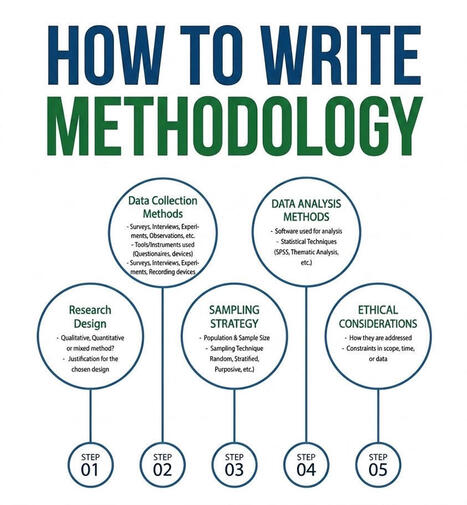
PhD scholar: Methodology Isn’t A Research Shopping List.
A Long List Of Tools Cannot Prove Rigour.
Many postgraduate researchers struggle with Chapter Three, not because they lack information, but because they do not understand what a methodology chapter must actually communicate.
Your methodology is not simply a list of questionnaires, interviews, sampling techniques and statistical software.
It is the intellectual justification of HOW your research will answer its questions.
Before writing Chapter Three, you must establish:
1. Research Design: Are you using a qualitative, quantitative or mixed-methods approach? Why?
2. Data Collection Methods: How will you collect your data? Through surveys, interviews, experiments or observations? Which instruments will you use?
3. Sampling Strategy: Who or what will you study? What is your sample size, and how will participants or cases be selected?
4. Data Analysis Methods: How will you analyse your data? Which statistical techniques, analytical procedures and software will you employ?
5. Ethical Considerations: How will you address consent, confidentiality, data protection and other ethical concerns?
Here is the uncomfortable truth:
You cannot compensate for a poorly justified research design with sophisticated statistical software.
Neither can you impress an examiner with a large sample size when your sampling strategy is fundamentally flawed.
Every methodological decision must connect logically to your research objectives and questions.
Your methodology should demonstrate that you know exactly what you are doing, why you are doing it, and how your decisions will produce credible findings.
Stop writing Chapter Three to fill pages. Start writing it to demonstrate research competence.
Save this. Share it with someone struggling with Chapter Three.
🔔Follow Edidiong Ukpong(PhD Architecture) for more practical research and PhD guidance. | 12 comments on LinkedIn
|
|
Scooped by
Gilbert C FAURE
November 21, 8:49 AM
|
Scoop.it!

Six layers of research methodology
Research Philosophy: Why and how knowledge is understood.
Research Approach: How theory and evidence are connected.
Research Strategy: What overall research design is adopted.
Methodological Choice: What type of research is conducted.
Time Horizon: When and over what period data is collected.
Techniques and Procedures: This is the innermost layer and explains the practical methods used for collecting and analysing data.
|
|
Scooped by
Gilbert C FAURE
November 20, 9:59 AM
|
Scoop.it!

When Academic Citations Become a Controversy: The Daniel Balsalobre Case
Daniel Balsalobre, a Spanish environmental economics researcher affiliated with the University of Castilla-La Mancha, has become the subject of a major academic publishing controversy.
According to an investigative report published by EL PAÍS on November 17, 2026, six of his papers have been retracted over concerns involving citation manipulation, peer-review irregularities, and undisclosed conflicts of interest.
The details are striking.
Balsalobre reportedly has more than 230 publications and 25,000 citations. His publication rate increased from around two papers per year in 2015 to approximately one paper every five working days in 2023.
One particularly controversial allegation concerns his peer-review activities. He reportedly accepted more than 650 review invitations. In one case, while reviewing a paper about ChatGPT in higher education, he allegedly asked two Indian researchers to include seven of his own publications on environmental economics in their references.
The investigation also identified connections with several international researchers whose papers had faced retractions.
Even more surprisingly, 170 papers citing his research have themselves reportedly been retracted.
Balsalobre denies deliberate misconduct, although he acknowledges suggesting citations to his own work in some reviews. His university has initiated an investigation.
One important question:
If citation counts can be influenced by academic networks, peer-review relationships, and requests for self-citation, how reliable are they as a measure of the world's most influential researchers?
#AcademicPublishing #ResearchIntegrity #PeerReview #CitationMetrics #HigherEducation #Scientometrics | 26 comments on LinkedIn
|
|
Scooped by
Gilbert C FAURE
November 20, 5:20 AM
|
Scoop.it!

The researchers estimated that if treatment for all eligible individuals were fully aligned with U.S. or E.U. guidelines, including the use of non-statin LDL-lowering drugs in many cases, median levels of LDL cholesterol would drop sharply, reducing the risk of major cardiovascular events in the U.S. by up to 27%.
“Several factors account for the gaps that we document,” says researcher Alexander. “They include differences in clinician training, patient preferences, barriers to accessing care, financial incentives that don’t always support best practices, and the difficulty of putting clinical guidelines into practice in busy, real-world settings.”
Bringing actual treatment closer to what guidelines recommend could be achieved through various measures including better patient education on the benefits of treatment for those who know they have high LDL-cholesterol levels, and better screening for everyone else, the researchers say.
|
|
Scooped by
Gilbert C FAURE
November 19, 4:00 AM
|
Scoop.it!

𝗠𝗼𝘀𝘁 𝗿𝗲𝘀𝗲𝗮𝗿𝗰𝗵 𝗽𝗮𝗽𝗲𝗿𝘀 𝗮𝗿𝗲𝗻’𝘁 𝗵𝗮𝗿𝗱 𝘁𝗼 𝗿𝗲𝗮𝗱 𝗯𝗲𝗰𝗮𝘂𝘀𝗲 𝗼𝗳 𝘁𝗵𝗲 𝘀𝗰𝗶𝗲𝗻𝗰𝗲 𝘁𝗵𝗲𝘆’𝗿𝗲 𝗵𝗮𝗿𝗱 𝘁𝗼 𝗿𝗲𝗮𝗱 𝗯𝗲𝗰𝗮𝘂𝘀𝗲 𝗼𝗳 𝘁𝗵𝗲 𝘀𝘁𝗿𝘂𝗰𝘁𝘂𝗿𝗲
A research paper has an anatomy. When each section knows its job, the paper flows from the first line to the last. When sections blur together, readers and reviewers lose the thread. The Fish Model gives you a simple picture to hold in your head: one body, seven parts, each doing exactly one thing.
Here’s the 𝗙𝗶𝘀𝗵 𝗠𝗼𝗱𝗲𝗹 𝗼𝗳 𝗮 𝗿𝗲𝘀𝗲𝗮𝗿𝗰𝗵 𝗽𝗮𝗽𝗲𝗿 👇
🐟 𝟭. 𝗔𝗯𝘀𝘁𝗿𝗮𝗰𝘁 — The head. State the problem, the methodology used, a summary of findings, and the conclusion.
🐟 𝟮. 𝗜𝗻𝘁𝗿𝗼𝗱𝘂𝗰𝘁𝗶𝗼𝗻 — Set the scene with the literature review. What is the problem or burden? What is known and what is unknown? What is your aim and hypothesis?
🐟 𝟯. 𝗠𝗲𝘁𝗵𝗼𝗱𝗼𝗹𝗼𝗴𝘆 — Explain the study design, study population, and data source. Define your risk factors (exposures) and outcomes, and describe your statistical analysis.
🐟 𝟰. 𝗥𝗲𝘀𝘂𝗹𝘁𝘀 — What did you find out? Present your primary and secondary findings, with data represented in tables and figures.
🐟 𝟱. 𝗗𝗶𝘀𝗰𝘂𝘀𝘀𝗶𝗼𝗻 — Interpret and contextualize your findings in relation to existing knowledge. Cover the significance, implications, and limitations.
🐟 𝟲. 𝗖𝗼𝗻𝗰𝗹𝘂𝘀𝗶𝗼𝗻 — The take-home message. Keep it short and memorable.
🐟 𝟳. 𝗥𝗲𝗳𝗲𝗿𝗲𝗻𝗰𝗲𝘀 — The existing knowledge you built this work upon.
Notice the shape: the paper starts broad at the head, narrows through the methods and results at the body, then widens again in the discussion before closing with a clear tail. That’s why the model works, it shows you where your paper should expand and where it should stay tight. 🎓
A strong paper isn’t written section by section in isolation, it’s built as one body where every part supports the next. ✍️
Save this as your paper-writing blueprint before your next draft. 📌
Want more handbooks and guides like this? Visit Research Crave Academy 👇
🌐 Researchcraveacademy.com
Need help with your research paper, structure, or journal submission? Reach out 👇
📧 asma@researchcrave.com
🌐 www.researchcrave.com
whatsapp: https://wa.link/bbvf22
#ResearchPaper #AnatomyOfAPaper #FishModel #AcademicWriting #ResearchWriting #AcademicWritingTips #PaperStructure #HowToWriteAResearchPaper #AcademicPublishing #JournalPublication #ResearchMethodology #AcademicResearch #PhDLife #PhDStudent #PhDJourney #PhDSupport #PhDCommunity #GradSchool #HigherEducation #DoctoralStudies #PostgraduateLife #ResearchSkills #ScholarlyWriting #ResearchCrave #ResearchCraveAcademy| 11 commentaires sur LinkedIn
|
|
Scooped by
Gilbert C FAURE
November 19, 3:58 AM
|
Scoop.it!

What if the collapse of the journal article as academic currency is actually a good thing?
I've seen a lot of concerns lately about academics using AI to write scientific papers and peer reviewers using AI to review those same papers. AI writing papers. AI reviewing papers. Humans collecting academic credit.
Anna Wexler's recent article in The Atlantic, "The Currency of the Journal Article Is Collapsing," raises legitimate concerns about what AI is doing to scientific publishing.
https://lnkd.in/eXJH7gG9
Here's another take:
Perhaps AI isn't destroying the value of academic publishing. Maybe it's exposing how distorted our incentives have become.
Scientific journals were developed to communicate discoveries, exchange ideas, and advance knowledge. Somewhere along the way, publications became the currency of academia. Publish or perish. Count the papers. Chase the impact factors. Secure the next promotion.
Now, AI is making it easier to produce manuscripts. If generating a manuscript becomes increasingly effortless, why are we still using the number of manuscripts someone produces as a measure of their academic contribution?
Meanwhile, a multibillion-dollar publishing industry profits from this system. Universities and taxpayers fund much of the research. Academics write and review the manuscripts, often on their own time. Then institutions pay publishers for access or to make that research openly available. Quite the business model.
To be clear, I'm not suggesting we abandon scientific rigor or the need to critically evaluate and disseminate research. AI-generated nonsense masquerading as scholarship is a genuine problem.
But the value of scientific work should lie in the knowledge it produces, not the number of manuscripts it generates or the prestige of the journal that publishes them.
I'd be perfectly content to see publications lose their status as the dominant currency of academic achievement.
That does bring up another question.
If we stopped counting publications as the primary measure of academic success, what would you want academia to reward instead?
Ken Milne Andrew Tagg Tessa Davis Damian Roland Ioannis Koutroulis| 11 commentaires sur LinkedIn
|
|
Scooped by
Gilbert C FAURE
November 19, 3:55 AM
|
Scoop.it!

𝐀𝐜𝐚𝐝𝐞𝐦𝐢𝐜 𝐑𝐞𝐬𝐞𝐚𝐫𝐜𝐡 𝐏𝐚𝐩𝐞𝐫 𝐒𝐭𝐫𝐮𝐜𝐭𝐮𝐫𝐞
A flowchart illustrating the five key sections of a research paper: Abstract, Introduction, Methods, Results, and Discussion, with their essential components.
𝐃𝐌 𝐮𝐬 𝐢𝐟 𝐲𝐨𝐮 𝐧𝐞𝐞𝐝 𝐚𝐧𝐲 𝐫𝐞𝐬𝐞𝐚𝐫𝐜𝐡 𝐚𝐬𝐬𝐢𝐬𝐭𝐚𝐧𝐜𝐞!
#ResearchPaper #AcademicWriting #PhDResearch #ResearchMethodology #ResearchScholars #ThesisWriting #AcademicResearch | 10 comments on LinkedIn
|
|
Scooped by
Gilbert C FAURE
November 19, 3:48 AM
|
Scoop.it!

Bias on Wikipedia isn’t the result of who the editors are. It’s about what they do.
That’s my biggest takeaway from wikihistories, our three-year ARC-funded project on how Wikipedia represents Australian people, places and historical events. Last week our team presented the findings, and what they mean for Wikimedians, at a seminar hosted by the great team at Wikimedia Australia.
It’s tempting to explain Wikipedia’s biases by who its editors are. About 80% of them are male, for example. But we found that everyday practices matter more, especially rules and policies and how they’re applied. Those practices shape what gets represented and what stays hidden or obscured.
Take place name changes in Australia. Discussions became so hostile that experienced editors avoided them, which often left the debates to the most extreme voices. Rules about which sources count as “reliable” shaped the outcomes too.
But Wikipedians don’t only apply rules. They can also make them. Australian editors could set local guidelines for place names. These could cover how long to wait after an official renaming before changing an article’s title, or how much weight to give a government announcement made after public consultation compared with how widely the media has adopted the new name. Rules like these might have shortened the long wait to rename K’gari, and made the process less chaotic and uncertain.
This local rule-making is where I now see Wikipedia’s greatest opportunity. Editors can work not only to add the people and things we care about, but also to change how we produce knowledge together.
There are strong pressures to centralise Wikipedia’s rules and practices. Meanwhile, communities outside the US, outside English Wikipedia and away from the most-visited articles are developing their own norms and cultures. Which force wins is far from settled.
I’m more convinced than ever that Wikipedia is not one thing. Its cultures, histories and effects need to be assessed locally, where “local” means more than geography.
Thanks to Wikimedia Australia for hosting us and Elliott Bledsoe for his support. You can see the slides (with summarised findings and implications for Wikimedia) and watch a recording of the seminar linked from Wikimedia Australia's page about the event here:
https://lnkd.in/gJvhahii
|
|
Scooped by
Gilbert C FAURE
November 18, 7:03 AM
|
Scoop.it!

📢 Un appel à contributions pour un évènement annuel structurant sur le thème de l'éducation ouverte dans l'enseignement supérieur francophone.
N'hésitez pas à le relayer à vos réseaux si intéressés !
France Université Numérique L'Université Numérique Fondation UNIT Université Ouverte des Humanités IUT en Ligne AUNEGE UVED UNESS - Université Numérique en santé et en sport
|
|
Scooped by
Gilbert C FAURE
November 17, 5:02 AM
|
Scoop.it!

"YOU CAN'T GENERALIZE FROM A SINGLE CASE"
I hear this all the time. It’s wrong.
Galileo didn’t drop a thousand objects from a thousand towers. He used one case, a thought experiment. It was enough to kill Aristotle’s law of falling bodies, which had stood for 2,000 years.
One good case can beat a big sample.
That’s one of five myths I take apart in my paper “Five Misunderstandings about Case-Study Research.”
The paper just passed 31,600 citations on Google Scholar. That makes it the most cited paper in the 30-year history of Qualitative Inquiry. I never dreamed of this when I wrote it. Not even close. Thank you to all who made it happen 🙏
Now I’m trying something new.
arXivisual (a new platform for presenting papers) puts the full text next to short videos that walk you through it. You don’t just read the ideas. You see them.
Watch it here: https://lnkd.in/ebPfq99T
Free PDF of the full paper here: https://lnkd.in/e6amjYHu
Comments very welcome, kindly help share 🙏| 38 commentaires sur LinkedIn




