Your new post is loading...

|
Scooped by
The Sainsbury Lab
March 16, 7:52 AM
|
Increasing evidence suggests that lichens are not just a partnership between one fungus and one alga or cyanobacterium but may contain multiple interacting microorganisms. A recent study reveals the presence of a ubiquitous black fungus in a group of lichens, including their reproductive structures, suggesting it may be a previously unknown symbiont.
|
|
Scooped by
The Sainsbury Lab
March 9, 6:33 AM
|
Plant cell wall (CW) integrity signaling enables early detection of microbial invasion, yet the receptors involved and their spatial and temporal dynamics during infection remain largely unknown. We identify ATHENA (ATHE)/MEE39, a previously uncharacterized malectin‑like leucin-rich repeat receptor kinase (Mal-LRR-RK) that contributes to defense against the root vascular pathogen Fusarium oxysporum (Fo), particularly in outer root layers where colonization begins. ATHE abundance, localization, and endocytic trafficking are rapidly remodeled during infection, and loss of ATHE compromises basal immunity and early pathogen‑induced transcriptional reprogramming. ATHE responds to altered cellulose synthesis, cellulose‑derived oligosaccharides, mechanically induced CW perturbations, and the fungal secreted peptide Fo‑RALF. In most of these contexts, ATHE acts together with the LRR-RK MIK2, forming a pathogen‑strengthened RK complex that fine‑tunes root responses to Fo. This represents the first example of a receptor complex visualized subcellularly in vivo during a plant-microbe interaction. Although Brassicaceae‑specific, heterologous expression of ATHE enhanced tomato resistance to Fo, highlighting its functional relevance across plant lineages and its potential use for crop engineering. Our work reveals a previously unrecognized strategy by which plants decode microbial threats through dynamic CW‑integrity surveillance.
|
|
Scooped by
The Sainsbury Lab
February 26, 8:11 AM
|
Effective management of Phytophthora root rot in soybean is compromised by the rapid loss of efficacy of the most widely deployed resistance genes to Phytophthora sojae (Rps). However, some genes such as Rps3a and Rps6 are still offering a strong protection but are nonetheless rare in elite material, probably owing to the fact that they have never been properly characterized. In this study, we have employed RenSeq, and whole genome sequencing to unravel the nature of Rps6 as a complex locus composed of 10 NLR genes. In a cell death assay using soybean protoplasts, we show that one of the candidates from the cluster interacts robustly with Avr6. Transfer of the candidate gene into a susceptible root system confirmed its function and status as the bona fide Rps6. Through sequence comparison with other Rps differentials, we further discovered that Rps3c and Rps4, originally thought to be distinct genes on different chromosomes, are, in fact, the exact same resistance gene as Rps6, mediating recognition to the same effector, Avr6. These results clarify a long-standing confusion regarding the identity of some elusive Rps genes and offer the precise sequence and position of Rps6. At the same time, along with the recently exposed homology between Rps3b and Rps11, these findings raise some concerns about the apparent multiplicity of Rps genes. Indeed, there may be fewer sources of resistance than assumed, which should instill caution in using current Rps genes to ensure durable management of Phytophthora root rot.
|
|
Scooped by
The Sainsbury Lab
February 18, 4:58 AM
|
Plant cell surface pattern recognition receptors (PRRs) perceive non- or altered-self elicitors to induce immune responses. PRRs relay information across the plasma membrane and trigger downstream signalling via receptor-like cytoplasmic kinases such as BOTRYTIS-INDUCED KINASE 1 (BIK1). BIK1 associates with several PRRs and acts as a key executor of immune responses through the phosphorylation of substrate proteins. However, a comprehensive understanding of how BIK1 targets specific substrates and a full repertoire of these substrates are lacking. Here we defined the substrate specificity of BIK1 and used these data to predict candidate substrates in Arabidopsis. Using high-throughput biochemical and genetic screening of these candidates, we confirmed many as direct BIK1 substrates in vitro and novel regulators of plant immunity. Among the BIK1 substrates identified are MULTIPLE C2 DOMAIN AND TRANSMEMBRANE REGION PROTEIN 3, which we reveal regulates flagellin 22 (flg22)-induced plasmodesmata closure and immunity, and members of the largely uncharacterized CYCLIN-DEPENDENT KINASE-LIKE family, which we uncover as novel negative regulators of immunity. In parallel, we interrogated intracellular NUCLEOTIDE-BINDING LEUCINE-RICH REPEAT (NLR) immune receptors for potential BIK1 phosphorylation motifs and identified multiple NLRs as direct BIK1 substrates. We reveal that BIK1 phosphorylation regulates NLR oligomerization, thus controlling a key activation step for these immune receptors. Together, our unbiased biochemical screens shed light on the central role of BIK1 as a key kinase shaping multiple layers of plant immune signalling. Cell surface receptors perceive immunogenic elicitors, triggering downstream signalling via receptor-like cytoplasmic kinases such as BIK1. Here the authors define and use the phosphorylation motif of BIK1 to find novel substrate candidates.
|
|
Scooped by
The Sainsbury Lab
February 12, 4:54 AM
|
Single-nucleus omics technologies are increasingly applied in plant biology to investigate transcriptional and chromatin regulation at cellular resolution. A key requirement for these approaches is the isolation of high-quality nuclei, which can be particularly challenging in plant tissues due to cell wall complexity and residual debris. Here, I present a streamlined protocol for isolating nuclei from fresh Arabidopsis thaliana leaves infected with the bacterial pathogen Pseudomonas syringae. This method eliminates the need for density gradient separation and fluorescence-activated nuclei sorting (FANS), reducing hands-on time while maintaining compatibility with single-nucleus RNA and ATAC sequencing using the 10x Genomics platform.
|
|
Scooped by
The Sainsbury Lab
February 11, 5:34 AM
|
Plant nucleotide-binding leucine-rich repeat (NLR) immune receptors typically confer resistance through recognition of specific pathogen effectors. The Arabidopsis NLR WRR4A defies this paradigm by recognizing multiple sequence-divergent effectors from Albugo candida, conferring resistance to multiple pathogen races. Despite minimal sequence similarity, these effectors share a conserved N-terminal ferredoxin-like fold. Through cryo-EM structure determination of two WRR4A resistosomes bound to sequence-distinct effectors, combined with AlphaFold modelling, we reveal a shape-based recognition mechanism: WRR4A engages structurally conserved backbone features of the effectors in a mostly side chain-independent manner, enabling recognition of diverse effectors with similar three-dimensional architectures. These insights guided successful engineering of WRR4A to acquire novel recognition specificity. In addition, analysis of the monomeric WRR4A resting state reveals a distinct domain architecture characteristic of C-JID–containing TIR-NLRs and informs their activation mechanism. This work provides insights into NLR-mediated broad-spectrum recognition and the potential for structure-informed engineering of improved crop resistance.
|
|
Scooped by
The Sainsbury Lab
January 28, 5:46 AM
|
Pathogen pressure threatens legume crop productivity worldwide. Nucleotide-binding leucine-rich repeat (NLR) immune receptors serve as crucial plant resistance genes, recognizing pathogens and triggering immunity. However, the extent and patterns of NLR expression in different tissues and organs, notably across evolutionary time, remain largely uncharacterized. To investigate tissue-specificity of NLR expression in the Fabaceae (legumes), we conducted comparative analyses integrating phylogenomics and transcriptomics in root and shoot tissues across different legume species. The NLR repertoires of 28 legumes were grouped into five monophyletic clades: coiled-coil NLR (CC-NLR), Toll/interleukin-1 receptor NLR (TIR-NLR), G10-subclade CC NLR (CCG10-NLR), RESISTANCE TO POWDERY MILDEW 8-like CC NLR (CCR-NLR), and TIR-NB-ARC-like β-propeller WD40/tetratricopeptide repeats (TNPs). Most legume NLRs belonged to CC-NLR and TIR-NLR clades, followed by CCG10-NLR, CCR-NLR, and TNP clades. In seven of these species, comparative analysis of NLR expression in leaves versus roots revealed that over half (~57%) of expressed NLR genes showed predominant expression in one tissue: 34% in roots (451/1336), and 23% in leaves (311/1336). We identified 324 root-specific NLRs, 171 leaf-specific NLRs, and 841 non-specific NLRs, with an average tissue specificity per species of 32%. The closely related species grass pea (Lathyrus sativus) and pea (Pisum sativum) were an exception, showing higher levels of leaf-specific rather than root-specific NLR expression. We also identified conserved tissue expression patterns across legume species, resulting in a comprehensive resource describing tissue expression bias, enrichment, and specificity for 113 phylogenetic NLR subclasses. These legume NLR repertoires will support comparative studies between species and inform precision-breeding programs considering tissue expression patterns.
|
|
Scooped by
The Sainsbury Lab
January 15, 4:53 AM
|
Plants employ cell-surface and intracellular immune receptors to perceive pathogens and activate defense responses. Recent advances in mechanistic understanding of how cell-surface and intracellular immune receptors convert recognition of molecular patterns or effectors into defense activation, combined with the knowledge of receptor repertoire variation both within and between species, allow transfer of immune receptors between species to increase the spectrum of recognition specificities. Here, we summarize recent progress in the functional transfer of immune receptors within and between plant families. We also discuss challenges that limit the transferability of intracellular immune receptors, including the requirement of additional host factors or downstream components and their incompatibility between donor and recipient species. Finally, we provide an overview of future perspectives for bioengineering disease-resistant crops through immune receptor transfer.
|
|
Scooped by
The Sainsbury Lab
January 13, 12:24 PM
|
Plant V-ATPase serves as a primary active proton pump of the endomembrane system and is crucial for the stress response. However, the role of the C subunit of V-ATPase (VHA-C) in effector-triggered immunity remains poorly understood. Here, we reveal that Phytophthora infestans evolved a pair of RxLR effectors, AL3 and Avr2, which are expressed sequentially and both target the host VHA-C (StATP6V1C1) and StBSL1. In the early stage of P. infestans infection, AL3 promotes the assembly of StATP6V1C1 with subunits G and E, leading to increased V-ATPase activity and cytoplasmic acidification. Subsequently, Avr2 inhibits the StWNK10-catalyzed Ser-261 phosphorylation of StATP6V1C1, thereby retarding V-ATPase activity and causing intracellular alkalinization. In cultivars absence of two immune receptors, this pH shift facilitates the interactions of the two effectors with downstream susceptibility factors of StBSL1 at various stages of infection, which may promote the onset and development of the disease. As coping strategy, plants independently evolve two NLRs, R2 and Rpi-mcq1, guard both StATP6V1C1 and StBSLs to perceive effectors thereby mitigating the risk of late blight. Our findings establish a new arms race battlefield between plants and oomycetes, highlighting the role of intracellular pH homeostasis in both effector-triggered susceptibility (ETS) and effector-triggered immunity (ETI).
|
|
Scooped by
The Sainsbury Lab
January 5, 7:06 AM
|
The advent of single-cell genomic technologies has revolutionized plant cell biology by revealing cellular heterogeneity in plant tissues and organs with unprecedented resolution. Methods like single-cell transcriptomics, epigenomics, and multi-omics integration have deepend insights into molecular mechanisms governing plant development, function, and evolutionary adaptations (Xu and Jackson, 2025). Notably, these approaches have facilitated comprehensive cell atlases mapping gene expression, chromatin accessibility, and regulatory networks across species (Wang et al., 2025; Guo et al., 2025), identifying marker genes, differentiation trajectories, and spatiotemporal regulatory in processes like root development, and seed germination (Zhang et al., 2021; Yao et al., 2024). However, proliferating single-cell studies face a major bottleneck from inconsistent cell type annotations, which impede data integration and crossspecies comparison. A unified, phylogenetically informed atlas of plant cellular diversity is essential for elucidating molecular developmental and evolutionary principles (Sebé-Pedrós et al., 2025).
|
|
Scooped by
The Sainsbury Lab
December 30, 2025 7:09 AM
|
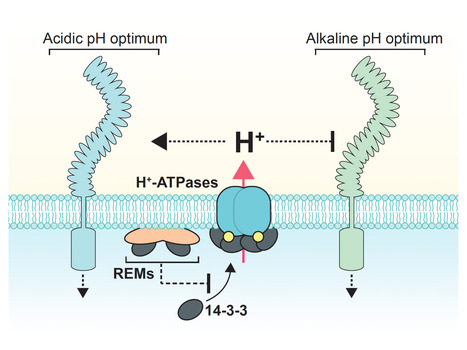
The power of hydrogen (pH) regulates virtually all cellular activities. In both plants and animals, cell-to-cell variations in pH correlate with key developmental transitions1–5, yet the underlying regulators and associated functions remain elusive. Here, we report that members of the REMORIN (REM) protein family function as inhibitors of the H+-ATPases thereby promoting extracellular pH (pHe) alkalinization. This, in turn, regulates various cell surface processes, including steroid hormone signaling, and coordinates developmental transitions in the Arabidopsis thaliana root. Inhibition of H+-ATPases by REMs represents an evolutionary innovation that predates the origin of the root system itself. This study thus uncovers an ancient alkalinization mechanism co-opted by the root developmental program and infers that pHe patterning may have shaped morphogenesis evolution.
|
|
Scooped by
The Sainsbury Lab
December 18, 2025 6:17 AM
|
- The morphology of starch granules is a major determinant of the functional and nutritional properties of starch and is highly variable among cereal species. Much of this morphological variation stems from differences in the spatial and temporal patterns of starch granule initiation in amyloplasts during grain development. Simple granules are thought to arise from a single initiation per amyloplast (e.g. in Brachypodium distachyon), whereas compound granules develop from multiple initiations per amyloplast (e.g. in rice).
- We used live-cell imaging to visualise amyloplasts in the developing endosperm of Brachypodium, using transgenic lines expressing a fluorescent amyloplast reporter.
- We discovered that the simple-type starch granules in Brachypodium can arise from multiple initiations per amyloplast. The amyloplasts showed dynamic changes in their structure and formed two types of stromules: stable stromules that formed a stromal continuum between amyloplasts, and short-lived stromules that were more dynamic. We also observed actin-dependent movement of amyloplasts within endosperm cells, and movement of starch granules within the amyloplasts.
- Our results suggest complex and pleiomorphic amyloplast organisation and mobility that could influence granule formation. This goes beyond the existing ‘one granule, one amyloplast’ model for simple-type granules and advances our understanding of both amyloplast biogenesis and granule formation.
|
|
Scooped by
The Sainsbury Lab
December 18, 2025 6:07 AM
|
Enterobacter cloacae is a Gram-negative nosocomial human pathogen that inhabits diverse ecological niches. Its genome encodes a conserved set of putative chitin-active enzymes, including a lytic polysaccharide monooxygenase (LPMO), termed EcLPMO, which we functionally characterized in this study. EcLPMO is a tetra-modular protein consisting of an auxiliary activity family 10 (AA10) catalytic domain, two central domains of unknown function (DUF-A and DUF-B), and a C-terminal carbohydrate-binding module (CBM73). Functional assays using full-length EcLPMO and its truncated variants demonstrated that the AA10 domain oxidatively cleaves chitin at the C1 position. The CBM73 module enhances chitin binding and promotes synergy with endogenous chitinases. EcLPMO exhibited synergy with the unimodular chitinase EcChiA, resulting in up to 14-fold and 60-fold increase in GlcNAc release from α- and β-chitin, respectively. Deletion of both DUFs reduced EcLPMO activity. While DUF-A alone and the association of DUF-A and DUF-B showed limited chitin binding, DUF-B alone exhibited no binding, suggesting a distinct role. Using AlphaFold3, we observed that the DUF-B domain contains two highly conserved histidines that coordinate the AA10-bound copper, forming a previously unreported 'inter-domain tetra-histidine copper coordination' center. These findings highlight the structural and functional complexity of EcLPMO and suggest that its accessory domains, particularly DUF-B, may contribute to enzyme stability and substrate interaction. We speculate that DUF-B may protect the LPMO active site from oxidative damage, a feature that could prove crucial in its ecological and pathogenic contexts.
|
|
|
Scooped by
The Sainsbury Lab
March 10, 6:59 AM
|
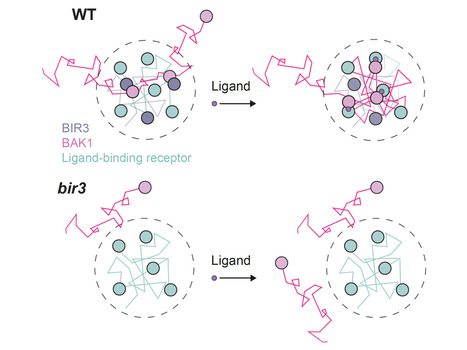
Plasma membrane-localized receptors operate as dynamic signaling complexes and integrative networks, yet the spatial and temporal regulation of these interactions remain largely unknown. Here, by analyzing the components of a minimal Arabidopsis leucine-rich repeat receptor kinase network, we describe the differential diffusion and organization of receptor complex components and unveil the nanoscale spatial and temporal logic underlying the formation of receptor kinase complexes. The ligand-binding receptors FLS2 and BRI1, and the accessory receptor BIR3, are organized in plasma membrane nanodomains, within which the co-receptor BAK1 diffuses and is spatially arrested upon ligand perception. BAK1 spatial arrest relies on extracellular domain (ECD)-ECD interactions but does not require receptor complex activation. Mathematical modelling, single molecule imaging and bio-assays infer that accessory receptors maintain a dynamic pool of co-receptors in the vicinity of ligand-binding receptors to promote ligand-induced complex formation and signaling. We propose that ligand-induced receptor kinase complex formation is a deterministic process defined by the relative nanoscale spatial positioning of individual signaling and regulatory components.
|
|
Scooped by
The Sainsbury Lab
March 4, 6:42 AM
|
Immune activation in plants triggers extracellular alkalinization, presumably by inhibiting plasma membrane H+-ATPases. The precise role and underlying mechanisms of this process remain poorly understood. Here, we show that Pseudomonas syringae bacteria induce apoplastic alkalinization not only at the site of infection but also in neighboring distal tissues to prime defenses and disease resistance in Arabidopsis. We show that several calcium-dependent protein kinases phosphorylate Ser899 of two major autoinhibited H+-ATPases to dampen their activity, leading to alkalinization. The distal alkalinization is accompanied by the transcriptional activation of phytocytokines, including plant elicitor peptides, serine-rich endogenous peptides, and their receptors. We show that these phytocytokines promote distal alkalinization and disease resistance, whereas the apoplastic alkalinization sensitizes the phytocytokine perception that further induces phytocytokine genes. Our study suggests that apoplastic alkalinization and phytocytokine gene expression mutually potentiate and act as a combined signal that propagates in local-distal communication and disease resistance priming.
|
|
Scooped by
The Sainsbury Lab
February 20, 6:33 AM
|
Trans-species RNA interference (tsRNAi), in which plants produce small RNAs (sRNAs) to silence target genes in pathogens, has emerged as a promising strategy for disease control. However, whether tsRNAi constitutes an endogenous, regulated immune response remains unclear. Here, we show that ARGONAUTE10 (AGO10) plays a critical role in pathogen-induced tsRNAi. Loss of AGO10 in Arabidopsis abolished pathogen gene silencing during infection, leading to hypersusceptibility to oomycete and fungal pathogens. Importantly, AGO10 rapidly responds to pathogen infection through increased protein accumulation and re-location into discrete cytoplasmic condensates, thus promoting the production of trans-species sRNAs at the pathogen infection sites. This immune responsiveness relies on the N terminal intrinsically disordered region (IDR) of AGO10, which is responsible for sensing and responding to immune activation. Specific features in the IDR partitions AGO10 into two deeply diverged subgroups, AGO10a and AGO10b, with the immune responsiveness and defense function evolutionarily conserved in AGO10a but not AGO10b. Together, these findings establish tsRNAi as a bona fide, evolutionarily conserved immune response and position AGO10 as a signal-responsive hub linking pathogen perception to tsRNAi-based defense.
|
|
Scooped by
The Sainsbury Lab
February 17, 6:46 AM
|
Transposon silencing via RNA-directed DNA methylation (RdDM) is mediated primarily through 24-nucleotide (nt) small interfering RNAs (siRNAs) and two plant-specific RNA polymerases, Pol IV and Pol V. We generated and characterized RNA-interference (RNAi) lines targeting the largest subunit of Pol IV and Pol V and the second-largest subunit shared by Pol IV and Pol V in soybean. Our analyses showed that the canonical roles of Pol IV and Pol V in RdDM as described in Arabidopsis, whereby Pol IV produces 24-nt siRNAs and Pol V recruits siRNAs to homologous loci to trigger DNA methylation, are conserved in soybean. Our analyses also uncovered functions of Pol IV and Pol V in that they repress defense response genes en masse. These genes normally undergo RdDM and are silenced, but they are de-repressed when Pol IV and Pol V are knocked down. Furthermore, the de-repression of a set of defense-related genes channeled their RNAs into the RNAi pathway to produce 21-22-nt siRNAs. Knocking down Pol IV and Pol V either singly or together led to increased resistance against the oomycete pathogen Phytophthora sojae, suggesting that Pol IV- and Pol V-mediated gene silencing regulates plant immunity.
|
|
Scooped by
The Sainsbury Lab
February 11, 11:33 AM
|
Resistance gene enrichment sequencing (RenSeq) was developed in 2013. It has accelerated the cloning of plant NLR genes and has contributed to resistance breeding for multiple crop plants, such as potato, wheat, and rice. By combining with other strategies, many applications were developed, such as cDNA-RenSeq, dRenSeq, SMRT-RenSeq, RLP/KSeq, AgRenSeq, and MutRenSeq. These methods have been widely applied in different crops. In this protocol, we present a step-by-step guide for applying RenSeq in gene cloning and Pan-NLRome analysis. The protocol covers bait design, library preparation, target enrichment, and downstream bioinformatic analysis. This methodology can make RenSeq more accessible to researchers working with different crops and enhance our understanding of plant resistance genes in the age of pan-genome.
|
|
Scooped by
The Sainsbury Lab
February 11, 5:32 AM
|
Herbivorous insects can shape the epidemiology of disease in plants by vectoring numerous phytopathogens. While the consequences of infection are often well-characterized in the host plant, the extent to which phytopathogens alter the physiology and development of their insect vectors remains poorly understood. In this review, we highlight how insect-borne phytopathogens can promote vector fitness, consistent with theoretical predictions that selection should favor a mutualistic or commensal phenotype. In doing so, we define the metabolic features predisposing plant pathogens to engage in beneficial partnerships with herbivorous insects and how these mutualisms promote the microbe's propagation to uninfected plants. For the vector, the benefits of co-opting microbial pathways and metabolites can be immense: from balancing a nutritionally deficient diet and unlocking a novel ecological niche to upgrading its defensive biochemistry against natural enemies. Given the independent origins of these tripartite interactions and a number of convergent features, we also discuss the evolutionary and genomic signatures underlying microbial adaptation to its dual lifestyle as both a plant pathogen and an insect mutualist. Finally, as host association can constrain the metabolic potential of microbes over evolutionary time, we outline the stability of these interactions and how they impact the virulence and transmission of plant pathogens.
|
|
Scooped by
The Sainsbury Lab
January 19, 6:22 AM
|
Genetically encoded pigments are powerful visual reporters and creative tools for biology, yet in plants the palette of pigment biosynthesis genes has remained largely limited to red betacyanins encoded by RUBY. Here we develop and characterize three new polycistronic constructs AMBER_v1, AMBER_v2, and GOLD that contain betalain biosynthesis enzymes to produce yellow, fluorescent betaxanthins in plant tissues. These tools expand the palette of publicly available pigmentation genes for use in plant research, education, and floral design.
|
|
Scooped by
The Sainsbury Lab
January 14, 4:42 AM
|
The receptor-like cytoplasmic kinase BIK1 and its close homologue PBL1 have been widely recognized as central components of plant immunity. However, most genetic studies of BIK1 and PBL1 functions were carried out with single transfer DNA (T-DNA) insertional mutant alleles. Some phenotypes observed in these mutants, for example autoimmunity, have been difficult to reconcile with the proposed role of BIK1 and PBL1 in pattern-triggered immunity. In this study, we generated several new alleles of bik1 and pbl1 by CRISPR–Cas9-based gene editing and systematically analysed these mutants alongside existing T-DNA insertional lines. These analyses reinforced the central role of BIK1 and PBL1 in pattern-triggered immunity mediated by both receptor kinases and receptor-like proteins. At the same time, however, we revealed several pleiotropic phenotypes associated with T-DNA insertions that are not necessarily linked to loss of BIK1 or PBL1 function. Further analyses of newly generated bik1 pbl1 double mutants uncovered an even greater contribution of these kinases to immune signalling and disease resistance than previously appreciated. These findings clarify longstanding ambiguities surrounding BIK1 and PBL1 functions. Thorough genetic analyses by four laboratories reinforce the central role of the protein kinase BIK1 in plant immunity. Other unrelated functions proposed for BIK1, however, are associated with genome rearrangement in a single transfer DNA mutant.
|
|
Scooped by
The Sainsbury Lab
January 8, 6:57 AM
|
Effectors are pathogen proteins that facilitate infection by manipulating plant immunity. Computational programs have been developed that identify effectors from sequence data. Many of these programs use internal models that have unavoidable biases due to their training processes and the diverse nature of effector sequence, function and phylogeny. Each programs ability to predict effectors across a broad range of plant pathogens is therefore limited. We hypothesised that a meta-predictor constructed using machine learning (ML) approaches could integrate predictions from multiple programs and improve our ability to predict effectors more accurately from bacteria, fungi, and oomycetes. We trained a range of classifiers using classical ML approaches and deep neural networks (DNNs), then selected eight: Random Forest (RF), Support Vector Machine (SVM), Extreme Gradient Boosting (XGBoost), and five DNNs for evaluation. The training, test and validation data were carefully curated from effector and non-effector annotated sequence derived from the training and sample data of six programs: EffectorP 3.0, deepredeff, WideEffHunter, EffectorO, EffectiveT3, T3SEpp. The models were tested against existing programs on a test dataset, and we observed better performance from our models. The best-performing model was a DNN (Model_2) that balanced improved sensitivity with specificity across the three taxa. We observed using SHAP that all the features contributed to the output of Model_2, which might be the reason for its superior performance. The DNN was developed into a package, fimep, to allow easy use of our model.
|
|
Scooped by
The Sainsbury Lab
December 30, 2025 11:46 AM
|
Nucleotide-binding leucine-rich repeat (NLR) immune receptors sense pathogen molecules and oligomerize, initiating defense signaling. Some NLRs function poorly at elevated temperatures for unknown reasons. We show that temperature-sensitive NLRs retain ligand binding at elevated temperatures but are impaired in oligomerization. We identify key residues involved in temperature resilience. Structural modeling reveals stabilizing intramolecular interactions of the NB-ARC domain with surface residues of the adjacent leucine-rich repeat (LRR) that preserve receptor integrity and functionality under heat stress. These insights enable in silico classification of NLRs as temperature-sensitive or -tolerant and underpin design of temperature tolerant variants of temperature sensitive NLRs. These findings provide a mechanistic basis for temperature sensitivity in plant immune receptors and enable engineering of temperature-tolerant disease resistance in crops.
|
|
Scooped by
The Sainsbury Lab
December 30, 2025 6:16 AM
|
Diploid potato breeding enables faster genetic improvement via selection against deleterious alleles in inbred lines, unlike breeding by intercrossing tetraploid varieties. Starch is the major source of calories in potato tubers, but the starch properties of diploid lines have rarely been reported. In this study, we provide a comprehensive characterisation of tuber and starch properties in two diploid lines that are early isolates from the Solynta breeding program, B26 and B100, and their F1 hybrids. B100 produced fewer, but larger tubers compared to B26, and both diploid lines produced tubers that are smaller than the tetraploid variety, Clearwater Russet. The low tuber yield of B100 correlates with its high self-compatibility and fruit production. Pruning of fruits in B100 significantly increased total tuber yield per plant by stimulating more tuber initiations, but had no effect on average tuber weight, starch content or starch structure. Among the diploid, hybrid and tetraploid lines examined, there were no differences in the total starch content of tubers. Although amylopectin structure and amylose content were similar between the two diploid lines and the tetraploid comparison, B26 had elevated levels of resistant starch and a striking elongated granule morphology. Our results showcase the variation in source-sink relations and starch structure in diploid potato breeding material, demonstrating their potential for research into the genetics underpinning metabolic and quality traits.
|
|
Scooped by
The Sainsbury Lab
December 18, 2025 6:08 AM
|
Subjects Bacterial techniques and applicationsFungal biologySymbiosis Eukaryotes often host prokaryotic cells inside their own cells. Hosts of such ‘endosymbionts’ can rely on these organisms for metabolism or the production of other necessary molecules.
|