

Multiple Sclerosis Research: ClinicSpeak: natalizumab PML update - July 2014 http://t.co/eEL0DwZtjQ #PML #Tysabri #MultipleSclerosis
Via Krishan Maggon


 Your new post is loading...
 Scoop.it! Multiple Sclerosis Research: ClinicSpeak: natalizumab PML update - July 2014 http://t.co/eEL0DwZtjQ #PML #Tysabri #MultipleSclerosis Via Krishan Maggon 
Scoop.it!

Reducing #inflammation in the choroid plexus, in the brain, might help reduce #alzheimers pathology. http://t.co/kJzzZGc0U6
Scoop.it!
Role and therapeutic value of dendritic cells in central nervous system ...
Scoop.it!
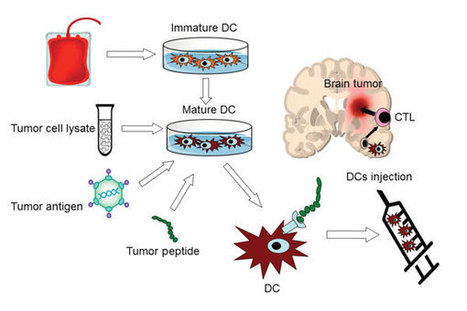
OncLive Dendritic Cell Vaccines Offer Promising Signals as Glioblastoma Therapy OncLive These include activation of the immune system with tumor antigens; neutralization of tumor antigens with antibodies; enhancement of immune-stimulatory signaling...
Scoop.it!

Background and purpose Susceptibility to multiple sclerosis (MS) is determined by environmental and genetic factors, but the cause remains unknown. Changes to the proteome prior to first symptom onset may reflect the underlying pathophysiology of the disease. Methods This preliminary study utilized pre-symptomatic and post-symptomatic serum from a sample of 100 incident population-based US military veterans with MS along with 100 matched healthy controls. All samples were obtained from the Department of Defense Serum Repository. Multidimensional protein identification technology tandem mass spectrometry analysis was performed on tryptic peptides of lectin-captured glycosylated serum proteins following albumin/immunoglobulin G depletion. Identified proteins were analyzed with the Ingenuity Pathway Analysis program. Results The mean intervals between first symptom onset and the collection of pre-symptomatic and post-symptomatic sera were −6.0 and +1.1 years, respectively. Pre-symptomatic proteins from the MS group were differentially regulated compared with both control groups indicating that proteomic changes are detected prior to symptom onset. Pathway analysis showed that proteins involved in the complement and coagulation pathways and lipid transport are significantly altered in the serum of subjects with MS compared with healthy donors. Conclusions Compared with healthy controls, differential proteomic changes were noted in the serum of patients with MS that preceded the onset of symptomatic disease. Further work is in progress to confirm or refute these findings. Via Krishan Maggon

Krishan Maggon 's curator insight,
August 24, 2014 3:07 PM
Short Communication Serum proteomic analysis of a pre-symptomatic multiple sclerosis cohortM. T. Wallin1,2,*, U. Oh3, J. Nyalwidhe4, J. Semmes4, T. Kislinger5, P. Coffman1, J. F. Kurtzke1,2 andS. Jacobson6Article first published online: 7 AUG 2014 DOI: 10.1111/ene.12534 Published 2014. This article is a U.S. Government work and is in the public domain in the USA Issue European Journal of NeurologyEarly View (Online Version of Record published before inclusion in an issue)
Scoop.it!
PubMed comprises more than 23 million citations for biomedical literature from MEDLINE, life science journals, and online books. Citations may include links to full-text content from PubMed Central and publisher web sites.
Gilbert C FAURE's insight:
Consensus was reached that lumbar puncture for AD CSF biomarker analysis be considered as a routine clinical test in patients with early-onset dementia, at the prodromal stage or with atypical AD. Moreover, consensus was reached on which biomarkers to use, how results should be interpreted, and potential confounding factors. CONCLUSIONS:Changes in Aβ1-42, T-tau, and P-tau181P allow diagnosis of AD in its prodromal stage. Conversely, having all three biomarkers in the normal range rules out AD. Intermediate conditions require further patient follow-up.
Scoop.it!
PubMed comprises more than 23 million citations for biomedical literature from MEDLINE, life science journals, and online books. Citations may include links to full-text content from PubMed Central and publisher web sites.
Scoop.it!

Researchers have detected circulating tumor cells (CTCs) in patients with glioblastoma multiforme (GBM), an aggressive type of brain malignancy.
Scoop.it!
From
alzres

The relevance of the cerebrospinal fluid (CSF) biomarkers for the diagnosis of Alzheimer’s disease (AD) and related disorders is clearly established.
Scoop.it!
PubMed comprises more than 23 million citations for biomedical literature from MEDLINE, life science journals, and online books. Citations may include links to full-text content from PubMed Central and publisher web sites.
Gilbert C FAURE's insight:
Il-1beta in delirium
Scoop.it!
Multiple sclerosis Unique serum protein signature precedes MS onset
Scoop.it!

RT @GavinGiovannoni: Is early, effective, induction therapy the new treatment paradigm for MS? #MSBlog #MSResearch http://t.co/QQ1NF7Js40
Scoop.it!
[Report] Aging-induced type I interferon response at the choroid plexus negatively affects brain function http://t.co/QG5f6brKjy
Gilbert C FAURE's insight:
Science Aging-associated cognitive decline is affected by factors produced inside and outside the brain. Using multi-organ genome-wide analysis of aged mice, we found that the choroid plexus, an interface between the brain and the circulation, shows a type I interferon (IFN-I)-dependent gene expression profile, which was also found in aged human brains. In aged mice, this response was induced by brain-derived signals, present in the cerebrospinal fluid. Blocking IFN-I signaling within the aged brain, partially restored cognitive function and hippocampal neurogenesis, and re-established IFN-II-dependent choroid plexus activity, lost in aging. Our data identify a chronic aging-induced IFN-I signature, often associated with anti-viral response, at the brain’s choroid plexus, and demonstrate its negative influence on brain function, thereby suggesting a target for ameliorating cognitive decline in aging.
Which cell involved?
|
Scoop.it!

ABSTRACT Objective: To evaluate the safety, tolerability, and pharmacokinetics (PK) of BIIB033 (anti-LINGO-1 monoclonal antibody) in healthy volunteers and participants with multiple sclerosis (MS). Methods: In 2 separate randomized, placebo-controlled studies, single ascending doses (SAD; 0.1–100 mg/kg) of BIIB033 or placebo were administered via IV infusion or subcutaneous injection to 72 healthy volunteers, and multiple ascending doses (MAD; 0.3–100 mg/kg; 2 doses separated by 14 days) of BIIB033 or placebo were administered via IV infusion to 47 participants with relapsing-remitting or secondary progressive MS. Safety assessments included adverse event (AE) monitoring, neurologic examinations, conventional and nonconventional MRI, EEG, optical coherence tomography, retinal examinations, and evoked potentials. Serum and CSF PK as well as the immunogenicity of BIIB033 were also evaluated. Results: All 72 healthy volunteers and 47 participants with MS were included in the safety analyses. BIIB033 infusions were well tolerated. The frequency of AEs was similar between BIIB033 and placebo. There were no serious AEs or deaths. No clinically significant changes in any of the safety measures were observed. BIIB033 PK was similar between healthy volunteers and participants with MS. Doses of ≥10 mg/kg resulted in BIIB033 concentrations similar to or higher than the concentration associated with 90% of the maximum remyelination effect in rat remyelination studies. The incidence of anti-drug antibody production was low. Conclusions: The emerging safety, tolerability, and PK of BIIB033 support advancing BIIB033 into phase II clinical development as a potential treatment for CNS demyelination disorders. Classification of evidence: This study provides Class I evidence that BIIB033 is well tolerated and safe (serious adverse event rate 0%, 95% confidence interval 0–7.6%). Via Krishan Maggon
Krishan Maggon 's curator insight,
August 28, 2014 7:36 AM
OPEN ACCESS ARTICLERandomized phase I trials of the safety/tolerability of anti-LINGO-1 monoclonal antibody BIIB033Jonathan Q. Tran, PharmD, Jitesh Rana, MD, Frederik Barkhof, MD, Isaac Melamed, MD, Hakop Gevorkyan, MD,Mike P. Wattjes, MD, Remko de Jong, MSc, Kristin Brosofsky, MPH, Soma Ray, PhD, Lei Xu, PhD, Jim Zhao, PhD,Edward Parr, PhD and Diego Cadavid, MD
+SHOW AFFILIATIONS | + SHOW FULL DISCLOSURES Correspondence to Dr. Cadavid: diego.cadavid@biogenidec.comPublished online August 27, 2014 doi: 10.1212/NXI.0000000000000018Neurol Neuroimmunol Neuroinflammation August 27, 2014 vol. 1 no. 2 e18
Scoop.it!

The concept of a viral role in Alzheimer’s disease (AD), specifically of herpes simplex virus type 1 (HSV1), was first proposed several decades ago (Ball, 1982; Gannicliffe et al., 1986). Legitimizing the concept clearly depended on a positive answer to a number of test questions, the first of which was whether or not HSV1 is ever present in human brain. The subsequent discovery that HSV1 DNA resides in a high proportion of brains of elderly people in latent form (Jamieson et al., 1991)—both normals and AD patients—immediately made the concept more credible, but raised associated questions such as whether or not the virus is ever active in brain or is merely a passive resident there; whether on its own it is a causative factor in AD or it acts thus only with another factor, perhaps genetic; if active, what causes its activity; whether there is any link with the characteristic abnormal features of AD brains or their components, and whether, if indeed implicated in AD, antiviral agents would be useful for treating the disease. These questions were posed in a previous review (Wozniak and Itzhaki, 2010)—and strong evidence was presented that permitted the answer to each question to be “yes” or, very likely to be “yes”. The present review briefly summarizes the earlier evidence, and provides an update, which is especially timely in view of the subsequent steady increase in number of relevant publications. Herpes simplex virus type 1 (HSV1), when present in brain of carriers of the type 4 allele of the apolipoprotein E gene (APOE), has been implicated as a major factor in Alzheimer’s disease (AD). It is proposed that virus is normally latent in many elderly brains but reactivates periodically (as in the peripheral nervous system) under certain conditions, for example stress, immunosuppression, and peripheral infection, causing cumulative damage and eventually development of AD. Diverse approaches have provided data that explicitly support, directly or indirectly, these concepts. Several have confirmed HSV1 DNA presence in human brains, and the HSV1-APOE-ε4 association in AD. Further, studies on HSV1-infected APOE-transgenic mice have shown that APOE-e4 animals display a greater potential for viral damage. Reactivated HSV1 can cause direct and inflammatory damage, probably involving increased formation of beta amyloid (Aβ) and of AD-like tau (P-tau)—changes found to occur in HSV1-infected cell cultures. Implicating HSV1 further in AD is the discovery that HSV1 DNA is specifically localized in amyloid plaques in AD. Other relevant, harmful effects of infection include the following: dynamic interactions between HSV1 and amyloid precursor protein (APP), which would affect both viral and APP transport; induction of toll-like receptors (TLRs) in HSV1-infected astrocyte cultures, which has been linked to the likely effects of reactivation of the virus in brain. Several epidemiological studies have now shown, using serological data, an association between systemic infections and cognitive decline, with HSV1 particularly implicated. Genetic studies too have linked various pathways in AD with those occurring on HSV1 infection. In relation to the potential usage of antivirals to treat AD patients, acyclovir (ACV) is effective in reducing HSV1-induced AD-like changes in cell cultures, and valacyclovir, the bioactive form of ACV, might be most effective if combined with an antiviral that acts by a different mechanism, such as intravenous immunoglobulin (IVIG). Via Dr. Stefan Gruenwald
Scoop.it!

Glioblastoma (GBM) is the most aggressive primary brain tumor. Combination therapy with surgery, radiation, and chemotherapy is not curative at present and carries a significant risk of toxicity.
Scoop.it!

Alemtuzumab for the treatment of relapsing-remitting multiple sclerosis: a review of its clinic pharmacology, ... http://t.co/GmAivJZDRp
Multiple sclerosis (MS) is an inflammatory condition of the CNS presumably induced by an environmental trigger(s) in a genetically susceptible individual. Inflammation is prominent and most susceptible to intervention early in MS, so early treatment with disease-modifying therapies is recommended to reduce relapses and new MRI activity (both markers of inflammation) with the goal of delaying disability progression. Unfortunately, the response to the disease-modifying therapies is variable and often falls short of stopping observable disease activity, so the search for more effective agents continues. Alemtuzumab is a monoclonal antibody against CD52 that has exhibited significant efficacy throughout its clinical trial program in MS; uniquely, some of the studies have demonstrated a sustained reduction in disability in MS patients. Countering this impressive efficacy is an associated high risk of autoimmune events (especially thyroid) and concerns for infection or malignancy given prolonged immunosuppression after treatment with alemtuzumab. Via Krishan Maggon
Krishan Maggon 's curator insight,
August 23, 2014 8:58 PM
Alemtuzumab for the treatment of relapsing-remitting multiple sclerosis: a review of its clinic pharmacology, efficacy and safety Expert Review of Clinical Immunology
Posted online on August 22, 2014. (doi:10.1586/1744666X.2014.951332)David E Jones and Myla D Goldman *Department of Neurology, James Q. Miller MS Clinic, University of Virginia Health System, 500 Ray C. Hunt Drive, Charlottesville, VA 22908, USA*Author for correspondence: mdg3n@virginia.edu
Scoop.it!

Researchers investigating new treatment for multiple sclerosis EurekAlert (press release) MINNEAPOLIS – A new treatment under investigation for multiple sclerosis (MS) is safe and tolerable in phase I clinical trials, according to a study published...
Gilbert C FAURE's insight:
anti-lingo1
Scoop.it!

We’ve put together 7 really useful free apps for individuals diagnosed with multiple sclerosis (MS).
Scoop.it!
The Launch of Five Immunomodulatory Therapies for Relapsing Forms of ...
Scoop.it!
The online version of Experimental Neurology at ScienceDirect.com, the world's leading platform for high quality peer-reviewed full-text journals. (RT @ELSneuroscience: Neuroimmunology of spinal cord injury.
Gilbert C FAURE's insight:
immunology and spinal cord injury
Scoop.it!
From
burl
[1]
Scoop.it!
Multiple sclerosis Reduced risk of MS in individuals with HIV Nature.com In a large cohort comprising 21,707 HIV-positive and over 5 million HIV-negative individuals, the incidence of multiple sclerosis (MS) was found to be reduced by about 60% in...
Scoop.it!

SAN FRANCISCO, Aug. 12, 2014 /PRNewswire-iReach/ -- OncoSynergy announced today that the FDA Office of Orphan... (Best wishes to Race for Hope Sponsor @OncoSynergy in their efforts to develop a new drug to treat GBM.
Scoop.it!
A consensus paper on the clinical use of cerebrospinal fluid biomarker testing for #Alzheimer disease diagnosis: http://t.co/PGGMRZAe7g (£)
Gilbert C FAURE's insight:
Results
Consensus was reached that lumbar puncture for AD CSF biomarker analysis be considered as a routine clinical test in patients with early-onset dementia, at the prodromal stage or with atypical AD. Moreover, consensus was reached on which biomarkers to use, how results should be interpreted, and potential confounding factors. ConclusionsChanges in Aβ1-42, T-tau, and P-tau181P allow diagnosis of AD in its prodromal stage. Conversely, having all three biomarkers in the normal range rules out AD. Intermediate conditions require further patient follow-up.
|





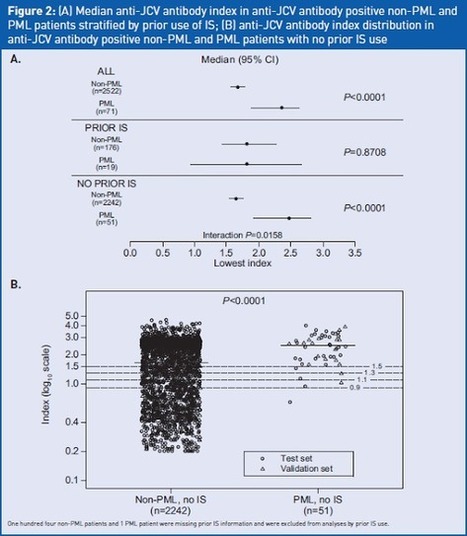
As of the 8th July 2014 there have been 475 cases of natalizumab-associated PML. This represents an increase of 3 cases from last month; the number of cases each month continues to go down despite the number of MSers being exposed to natalizumab increasing. Over 125,800 MSers have been exposed to natalizumab. The following graph that I have put together from the monthly updates demonstrates the number of new PML cases per month seems to be going down, despite a gradual and linear increase in number of exposed MSers.