Your new post is loading...

|
Scooped by
Gilbert C FAURE
June 6, 2017 4:42 AM
|
Once activated, T cells gain the ability to access both healthy and inflamed nonlymphoid tissues. They are then reactivated to remain in the tissue and exert their effector function only if they encounter their specific Ag. In this study, we set out to determine if the same is true for B cells using a mouse model of CNS autoimmunity that incorporates both T and B cell recognition of a myelin autoantigen. Both T and B cells were common infiltrates of spinal cords in diseased mice. However, unlike T cells, anti-myelin B cells were excluded from the inflamed tissue. Further, CNS B cells did not have a phenotype consistent with Ag-specific activation as it occurs in lymphatic tissue. Instead, they expressed elevated levels of CD80, indicating that B cells may contribute to local inflammation through nonantigen-specific mechanisms.
|
|
Scooped by
Gilbert C FAURE
June 6, 2017 2:20 AM
|
Opinion article by Serge Nataf outlining the concept of ‘Brain Superautoantigens’ with important implications for neuroscience and immunology
Neuroscience News has recent neuroscience research articles, brain research news, neurology studies and neuroscience resources for neuroscientists, students, and science fans and is always free to join. Our neuroscience social network has science groups, discussion forums, free books, resources, science videos and more.
Via Collection of First
The gut microbiome has been implicated in several autoimmune disorders. Here, the authors study the gut microbiome of patients with multiple sclerosis, and find correlations between altered abundance of certain gut microorganisms and changes in expression of immune defence genes.
Via Krishan Maggon
|
|
Scooped by
Gilbert C FAURE
May 7, 2017 8:06 PM
|
Biomacromolecules. 2017 May 5. doi: 10.1021/acs.biomac.7b00335. [Epub ahead of print]
|
|
Scooped by
Gilbert C FAURE
May 1, 2017 3:02 PM
|
The recent development of monoclonal antibodies for the treatment of migraine may have a significant impact on the field and mark a new chapter in patient care.
|
|
Scooped by
Gilbert C FAURE
April 28, 2017 1:25 PM
|
|
|
Scooped by
Gilbert C FAURE
April 28, 2017 5:00 AM
|
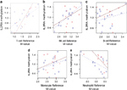
Background The acute assessment of patients with suspected ischemic stroke remains challenging. The use of brain biomarker assays may improve the early diagnosis of ischemic stroke. The main goal of the study was to evaluate whether the NR2 peptide, a product of the proteolytic degradation of N-methyl-D-aspartate (NMDA) receptors, can differentiate acute ischemic stroke (IS) from stroke mimics and persons with vascular risk factors/healthy controls. A possible correlation between biomarker values and lesion sizes was investigated as the secondary objective. Methods and Findings A total of 192 patients with suspected stroke who presented within 72 h of symptom onset were prospectively enrolled. The final diagnosis was determined based on clinical observations and radiological findings. Additionally gender- and age-matched healthy controls (n = 52) and persons with controlled vascular risk factors (n = 48) were recruited to compare NR2 peptide levels. Blinded plasma was assayed by rapid magnetic particles (MP) ELISA for NR2 peptide within 30 min and results for different groups compared using univariate and multivariate statistical analyses. There was a clinical diagnosis of IS in 101 of 192 (53%) and non-stroke in 91 (47%) subjects. The non-stroke group included presented with acute stroke symptoms who had no stroke (n = 71) and stroke mimics (n = 20). The highest NR2 peptide elevations where found in patients with IS that peaked at 12 h following symptom onset. When the biomarker cut off was set at 1.0 ug/L, this resulted in a sensitivity of 92% and a specificity of 96% to detect IS. A moderate correlation (rs = 0.73) between NR2 peptide values and acute ischemic cortical lesions (<200 mL) was found. Conclusions This study suggests that the NR2 peptide may be a brain specific biomarker to diagnose acute IS and may allow the differentiation of IS from stroke mimics and controls. Additional larger scale clinical validation studies are required.
|
|
Scooped by
Gilbert C FAURE
April 27, 2017 11:43 AM
|
A blog on multiple sclerosis research
|
|
Scooped by
Gilbert C FAURE
April 24, 2017 3:01 PM
|
Influenza virus infection exacerbates experimental autoimmune encephalomyelitis disease by promoting type I T cells infiltration int
|
|
Scooped by
Gilbert C FAURE
April 16, 2017 4:53 AM
|
Author summary Tissue-resident memory (TRM) cells are a subset of memory T cells that primarily reside in non-lymphoid tissues and serve as sentinels and effectors against secondary infections. TRM cells have been extensively characterized in mucosal barriers, but much less is known about this population in non-barrier sites such as the brain. In this study, we designed a novel strategy to evaluate the impact of T cell stimulation strength on the generation and functionality of memory CD8 T cells in both lymphoid and nonlymphoid tissues. Using a mouse polyomavirus (MuPyV) library expressing variants of a subdominant epitope recognized by TCR transgenic CD8 T cells, we found that systemic infection producing weaker responses during T cell priming was sufficient for recruitment of effector cells to the brain. Furthermore, lower stimulation conferred greater functionality to memory T cells in the spleen and to brain TRM cells. Our findings demonstrate that the strength of antigenic stimulation experienced by a naïve T cell early in infection is a determinant of memory functional integrity during viral persistence in a non-barrier organ.
|
|
Scooped by
Gilbert C FAURE
April 6, 2017 4:04 AM
|
The progression of motor neurone disease (MND) is currently irreversible, and the grave implications of diagnosis naturally fuels concern among neurologists over missing a potential mimic disorder. There is no diagnostic test for MND but in reality there are few plausible mimics in routine clinical practice. In the presence of a progressive pure motor disorder, signs such as florid fasciculations, bilateral tongue wasting, the ‘split hand’, head drop, emotionality, and cognitive or behavioural impairment carry high positive predictive value. MND is clinically heterogeneous, however, with some important chameleon-like presentations and considerable variation in clinical course. Lack of confidence about the scope of such variation, or an approach to diagnosis emphasising investigations over clinical common sense, has the potential to exacerbate diagnostic delay in MND and impede timely planning of the care which is essential to maximising quality of life.
|
|
|
Scooped by
Gilbert C FAURE
June 6, 2017 2:20 AM
|
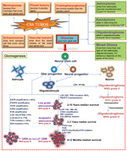
COLUMBUS, Ohio - Changes in immune activity appear to signal a growing brain tumor five years before symptoms arise, new research has found.
Interactions among proteins that relay information from o..
|
|
Scooped by
Gilbert C FAURE
June 6, 2017 2:19 AM
|
Update of T Cell complexity in the brain shows many different types of cells talking with T cells both in and outside of the brain
Background: Following approval of dimethyl fumarate (DMF), we established a registry of relapsing multiple sclerosis (RMS) patients taking DMF at our community
Via Krishan Maggon
Multiple sclerosis (MS) is a T cell driven autoimmune disease of the central nervous
system (CNS). Despite its association with Epstein-Barr Virus (EBV), how viral infections
promote MS remains unclear. However, there is increasing evidence that the CNS is
continuously surveyed by virus-specific T cells, which protect against reactivating
neurotropic viruses. Here, we discuss how viral infections could lead to the breakdown
of self-tolerance in genetically predisposed individuals, and how the reactivations
of viruses in the CNS could induce the recruitment of both autoaggressive and virus-specific
T cell subsets, causing relapses and progressive disability.
Via Krishan Maggon
|
|
Scooped by
Gilbert C FAURE
May 16, 2017 5:14 AM
|
Epilepsy is a complex neurological disorder and a significant health problem. The pathogenesis of epilepsy remains obscure in a significant number of patients and the current treatment options are not adequate in about a third of individuals which were known as refractory epilepsies (RE). Network medicine provides an effective approach for studying the molecular mechanisms underlying complex diseases. Here we integrated 1876 disease-gene associations of RE and located those genes to human protein-protein interaction (PPI) network to obtain 42 significant RE-associated disease modules. The functional analysis of these disease modules showed novel molecular pathological mechanisms of RE, such as the novel enriched pathways (e.g., “presynaptic nicotinic acetylcholine receptors”, “signaling by insulin receptor”). Further analysis on the relationships between current drug targets and the RE-related disease genes showed the rational mechanisms of most antiepileptic drugs. In addition, we detected ten potential novel drug targets (e.g., KCNA1, KCNA4-6, KCNC3, KCND2, KCNMA1, CAMK2G, CACNB4 and GRM1) located in three RE related disease modules, which might provide novel insights into the new drug discovery for RE therapy.
|
|
Scooped by
Gilbert C FAURE
May 7, 2017 12:57 AM
|
APS (Acta Pharmacologica Sinica), the top pharmacology research journal based in China, publishes original articles and reviews on all aspects of pharmacology and the related life sciences
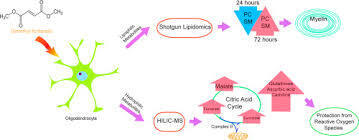
Irreversible functional deficits in multiple sclerosis (MS) are directly correlated to axonal damage and loss. Neurodegeneration results from immune-mediated destruction of myelin sheaths and subsequent axonal demyelination. Importantly, oligodendrocytes
Via Krishan Maggon
|
|
Scooped by
Gilbert C FAURE
April 28, 2017 1:23 PM
|
Vijendra K. Singh, Ph.D., was a research associate professor at Utah State University when he contributed this article. He has over 20 years of experience
|
|
Scooped by
Gilbert C FAURE
April 27, 2017 11:43 AM
|
Genes and Immunity is a journal dedicated to functional genetics of the immune response. Emphasizing studies that demonstrate genetic, genomic or functional variation in the immune system, Genes and Immunity assists our understanding of how the basic control over the immune system varies between individuals both in health and disease.
|
|
Scooped by
Gilbert C FAURE
April 27, 2017 9:29 AM
|
SOURCE Stem Cell therapies offer a promising approach for immunomodulation, neuroprotection and repair of damaged nervous systems, but they are not yet ready for prime... Read More →
|
|
Scooped by
Gilbert C FAURE
from AUTOIMMUNITY
April 24, 2017 9:48 AM
|
Immune‐mediated necrotizing myopathies (IMNM) may be associated with either anti–signal recognition protein (SRP) or anti–3‐hydroxy‐3‐methylglutaryl‐CoA reductase (HMGCR) antibodies (Abs), and th
|
|
Scooped by
Gilbert C FAURE
April 13, 2017 1:59 PM
|
The use of immune checkpoint inhibitors and other immunotherapies for the treatment of cancer is continuing to expand as these drugs demonstrate effectiveness in progressively more cancer types and therapeutic contexts. At the same time, the drugs are not perfect, and not all patients respond to them, so a key subject of research in this field is determining optimal ways to combine immune checkpoint therapies with other cancer treatments. Schmittnaegel et al . and Allen et al . focused their studies on the combination of antiangiogenic treatments with checkpoint inhibitors. The authors demonstrated how inhibition of tumor angiogenesis can facilitate the access of cytotoxic T cells to tumors, while the checkpoint inhibitors protect these T cells from exhaustion, enhancing their antitumor effects.
|


 Scoop.it!