Your new post is loading...

|
Scooped by
Gilbert C FAURE
August 14, 2017 8:54 AM
|
Type-2 immune responses are well-established drivers of chronic inflammatory diseases, such as asthma, and represent a large burden on public health systems. The transcription factor PPARγ is known to promote M2-macrophage and alveolar macrophage development. Here, we report that PPARγ plays a key role in both T cells and dendritic cells (DCs) for development of type-2 immune responses. It is predominantly expressed in mouse Th2 cells in vitro and in vivo as well as human Th2 cells from allergic patients. Using conditional knockouts, we show that PPARγ signaling in T cells, although largely dispensable for IL-4 induction, is critical for IL-33–driven Th2 effector function in type-2 allergic airway responses. Furthermore, we demonstrate that IL-4 and IL-33 promote up-regulation of PPARγ in lung-resident CD11b+ DCs, which enhances migration to draining lymph nodes and Th2 priming capacity. Thus, we uncover a surprising proinflammatory role for PPARγ and establish it as a novel, important mediator of DC–T cell interactions in type-2 immunity.

|
Suggested by
Société Francaise d'Immunologie
August 12, 2017 2:20 AM
|
Mutations in the Interleukin (IL)-23/IL-23 receptor loci are associated with increased inflammatory bowel disease (IBD) susceptibility, and IL-23 neutralization has shown efficacy in early clinical trials. To better understand how an excess of IL-23 affects the gastrointestinal tract, we investigated chronic systemic IL-23 exposure in healthy wildtype mice. As expected, IL-23 exposure resulted in early activation of intestinal type 3 innate lymphoid cells (ILC3), followed by infiltration of activated RORγt+ T helper cells. Surprisingly, however, sustained IL-23 stimulus also dramatically reduced classical ILC3 populations within the proximal small intestine, and a phenotypically distinct T-bet expressing ILC3 population emerged. TNFα neutralization, a widely used IBD therapy, reduced several aspects of the IL-23 driven ILC3 response, suggesting a synergy between IL-23 and TNFα in ILC3 activation. In vitro studies supported these findings, revealing previously unappreciated effects of IL-23 and TNFα within the intestine.
|
|
Scooped by
Gilbert C FAURE
August 9, 2017 10:39 AM
|
Mucosal Immunology is the official publication of the Society of Mucosal Immunology (SMI). It aims to provide a forum for both basic and clinical scientists to discuss all aspects of immunity and inflammation involving mucosal tissues. The journal reflects the interests of scientists studying gastrointestinal, pulmonary, nasopharyngeal, oral, ocular, and genitourinary immunology through the publication of original research articles, scholarly reviews, and timely commentaries, editorials and letters.
|
|
Scooped by
Gilbert C FAURE
August 8, 2017 5:05 AM
|
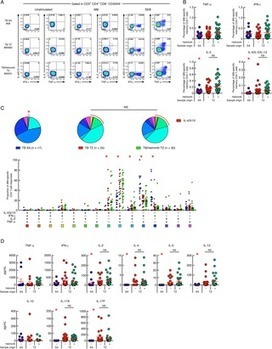
Author summary Mycobacterium tuberculosis (Mtb) and helminth infections are co-endemic in several regions of the world and their immune responses may be mutually antagonistic. We therefore hypothesized that helminth infection would impact and potentially shape Mtb-specific T-cell responses and systemic inflammation in patients suffering from active pulmonary tuberculosis (TB) enrolled from two helminth endemic regions i.e. Tanzania (TZ) and South Africa (SA). In this study, we demonstrate for the first time that TB patients from SA and TZ harbor distinct immune responses to Mtb antigens. Indeed, we showed that Mtb-specific CD4 T-cell responses of TB patients from TZ were composed by a mixed T helper type 1 (Th1) and Th2 responses. In contrast, the cytokine profile of Mtb-specific CD4 T cells of TB patients from SA was dominated by Th1 cells and associated with TB-induced systemic inflammation and elevated serum levels of type I IFN. Taken together, these data indicate that Mtb-specific T-cell responses are diverse in human populations and can be strongly influenced by host and pathogen genetic background, co-infections and yet unknown environmental factors. Identification of correlates of risk and protection from TB disease will help in the rational development of protective T-cell based vaccines against TB, early monitoring TB treatment outcomes and focused follow up of high risk populations.
|
|
Scooped by
Gilbert C FAURE
August 3, 2017 2:47 PM
|
Group 2 innate lymphoid cells (ILC2s) are important effector cells driving the initiation of type 2 immune responses leading to adaptive T helper 2 (Th2) immunity. Here we show that ILC2s dynamically express the checkpoint inhibitor molecule PD-L1 during type 2 pulmonary responses. Surprisingly, PD-L1:PD-1 interaction between ILC2s and CD4+ T cells did not inhibit the T cell response, but PD-L1–expressing ILC2s stimulated increased expression of GATA3 and production of IL-13 by Th2 cells both in vitro and in vivo. Conditional deletion of PD-L1 on ILC2s impaired early Th2 polarization and cytokine production, leading to delayed worm expulsion during infection with the gastrointestinal helminth Nippostrongylus brasiliensis . Our results identify a novel PD-L1–controlled mechanism for type 2 polarization, with ILC2s mediating an innate checkpoint to control adaptive T helper responses, which has important implications for the treatment of type 2 inflammation.
|
|
Scooped by
Gilbert C FAURE
August 2, 2017 10:05 AM
|
Research shows antimicrobial peptides from pigs and sheep can fight rhinovirus
|
|
Scooped by
Gilbert C FAURE
August 2, 2017 9:28 AM
|
IgA nephropathy is the most common primary glomerular disease worldwide. In the United States, IgA nephropathy is second only to focal segmental glomerulosclero
|
|
Scooped by
Gilbert C FAURE
August 1, 2017 12:03 PM
|
|
|
Scooped by
Gilbert C FAURE
July 30, 2017 3:07 AM
|
Human milk provides a very wide range of nutrients and bioactive components, including immune factors, human milk oligosaccharides, and a commensal microbiota. These factors are essential for interconnected processes including immunity programming and the development of a normal infant gastrointestinal microbiome. Newborn immune protection mostly relies on maternal immune factors provided through milk. However, studies dealing with an in-depth profiling of the different immune compounds present in human milk and with the assessment of their natural variation in healthy women from different populations are scarce. In this context, the objective of this work was the detection and quantification of a wide array of immune compounds, including innate immunity factors (IL1β, IL6, IL12, INFγ, TNFα), acquired immunity factors (IL2, IL4, IL10, IL13, IL17), chemokines (IL8, Groα, MCP1, MIP1β), growth factors (IL5, IL7,EGF, GCSF, GMCSF,TGFβ2) and immunoglobulins (IgA, IgG, IgM), in milk produced by healthy women of different ethnicities living in different geographic, dietary, socio-economic, and environmental settings. Among the analyzed factors, IgA, IgG, IgM, EGF, TGFβ2, IL7, IL8, Groα, MIP1β were detected in all or most of the samples collected in each population and, therefore, this specific set of compounds might be considered as the “core” soluble immune factors in milk produced by healthy women worldwide. This approach may help define which immune factors are (or are not) common in milk produced by women living in various conditions, and to identify host, lifestyle, and environmental factors that affect the immunological composition of this complex biological fluid.
|
|
Scooped by
Gilbert C FAURE
July 27, 2017 9:27 AM
|
Objective Worldwide, the respiratory syncytial virus (RSV) represents the predominant viral agent causing bronchiolitis and pneumonia in children. To conduct research and tackle existing healthcare disparities, RSV-related research activities around the globe need to be described. Hence, we assessed the associated scientific output (represented by research articles) by geographical, chronological and socioeconomic criteria and analysed the authors publishing in the field by gender. Also, the 15 most cited articles and the most prolific journals were identified for RSV research.
Design Retrospective, descriptive study.
Setting The NewQIS (New Quality and Quantity Indices in Science) platform was employed to identify RSV-related articles published in the Web of Science until 2013. We performed a numerical analysis of all articles, and examined citation-based aspects (eg, citation rates); results were visualised by density equalising mapping tools.
Results We identified 4600 RSV-related articles. The USA led the field; US-American authors published 2139 articles (46.5%% of all identified articles), which have been cited 83 000 times. When output was related to socioeconomic benchmarks such as gross domestic product or Research and Development expenditures, Guinea-Bissau, The Gambia and Chile were ranked in leading positions. A total of 614 articles on RSV (13.34% of all articles) were attributed to scientific collaborations. These were primarily established between high-income countries. The gender analysis indicated that male scientists dominated in all countries except Brazil.
Conclusions The majority of RSV-related research articles originated from high-income countries whereas developing nations showed only minimal publication productivity and were barely part of any collaborative networks. Hence, research capacity in these nations should be increased in order to assist in addressing inequities in resource allocation and the clinical burden of RSV in these countries.

|
Suggested by
LIGHTING
July 25, 2017 8:54 AM
|
papilloma virus in head and neck cancer
|
|
Scooped by
Gilbert C FAURE
July 24, 2017 6:35 AM
|
Jadhav et al. identify an active enhancer signature that distinguishes Lgr5+ intestinal
stem cells (ISCs) from Bmi1GFP+ and other secretory cells, including CD69+CD274+ goblet
cell precursors. These specialized cells dedifferentiate into Lgr5+ ISCs in response
to stem cell attrition, which is accompanied by dynamic rearrangements in open chromatin
signatures.
|
|
Scooped by
Gilbert C FAURE
July 24, 2017 4:28 AM
|
|
The intestinal epithelium contains Paneth cells that protect against bacterial invasion by secreting antimicrobial proteins such as lysozyme. However, infection with pathogenic microorganisms can trigger endoplasmic reticulum (ER) stress in Paneth cells and compromise their secretion of antimicrobials. Bel and colleagues now show that lysozyme is released by Paneth cells t
Via Krishan Maggon
|
|
Scooped by
Gilbert C FAURE
August 9, 2017 1:34 PM
|
|
|
Scooped by
Gilbert C FAURE
August 8, 2017 8:46 AM
|
|
|
Scooped by
Gilbert C FAURE
August 4, 2017 11:08 AM
|
Influenza viral infections often lead to increased mortality in older people. However, the mechanisms by which aging impacts immunity to influenza lung infection remain unclear. We employed a murine model of influenza infection to identify these mechanisms. With aging, we found reduced numbers of alveolar macrophages, cells essential for lung homeostasis. We also determined that these macrophages are critical for influenza-induced mortality with aging. Furthermore, aging vastly alters the transcriptional profile and specifically downregulates cell cycling pathways in alveolar macrophages. Aging impairs the ability of alveolar macrophages to limit lung damage during influenza infection. Moreover, aging decreases alveolar macrophage phagocytosis of apoptotic neutrophils, downregulates the scavenging receptor CD204, and induces retention of neutrophils during influenza infection. Thus, aging induces defective phagocytosis by alveolar macrophages and increases lung damage. These findings indicate that therapies that enhance the function of alveolar macrophages may improve outcomes in older people infected with respiratory viruses.
|
|
Scooped by
Gilbert C FAURE
August 3, 2017 2:39 PM
|
Mucosal Immunology is the official publication of the Society of Mucosal Immunology (SMI). It aims to provide a forum for both basic and clinical scientists to discuss all aspects of immunity and inflammation involving mucosal tissues. The journal reflects the interests of scientists studying gastrointestinal, pulmonary, nasopharyngeal, oral, ocular, and genitourinary immunology through the publication of original research articles, scholarly reviews, and timely commentaries, editorials and letters.
|
|
Scooped by
Gilbert C FAURE
August 2, 2017 10:04 AM
|
Cathelicidins display conserved direct antiviral activity towards rhinovirus
|
|
Scooped by
Gilbert C FAURE
August 2, 2017 9:23 AM
|
Mucosal Immunology is the official publication of the Society of Mucosal Immunology (SMI). It aims to provide a forum for both basic and clinical scientists to discuss all aspects of immunity and inflammation involving mucosal tissues. The journal reflects the interests of scientists studying gastrointestinal, pulmonary, nasopharyngeal, oral, ocular, and genitourinary immunology through the publication of original research articles, scholarly reviews, and timely commentaries, editorials and letters.
|
|
Scooped by
Gilbert C FAURE
July 31, 2017 1:38 PM
|
|
|
Scooped by
Gilbert C FAURE
July 29, 2017 3:28 AM
|
|
|
Scooped by
Gilbert C FAURE
July 25, 2017 12:52 PM
|
Genetic analysis of human spit has revealed that the ancestors of sub-Saharan people may have bred with an unknown ancient “ghost' species of hominin.
|
|
Scooped by
Gilbert C FAURE
July 25, 2017 2:12 AM
|
Given the current influx of 16S rRNA profiles of microbiota samples, it is conceivable that large amounts of them eventually are available for search, comparison and contextualization with respect to novel samples. This process facilitates the identification of similar compositional features in microbiota elsewhere and therefore can help to understand driving factors for microbial community assembly. We present Visibiome, a microbiome search engine that can perform exhaustive, phylogeny based similarity search and contextualization of user-provided samples against a comprehensive dataset of 16S rRNA profiles environments, while tackling several computational challenges. In order to scale to high demands, we developed a distributed system that combines web framework technology, task queueing and scheduling, cloud computing and a dedicated database server. To further ensure speed and efficiency, we have deployed Nearest Neighbor search algorithms, capable of sublinear searches in high-dimensional metric spaces in combination with an optimized Earth Mover Distance based implementation of weighted UniFrac. The search also incorporates pairwise (adaptive) rarefaction and optionally, 16S rRNA copy number correction. The result of a query microbiome sample is the contextualization against a comprehensive database of microbiome samples from a diverse range of environments, visualized through a rich set of interactive figures and diagrams, including barchart-based compositional comparisons and ranking of the closest matches in the database. Visibiome is a convenient, scalable and efficient framework to search microbiomes against a comprehensive database of environmental samples. The search engine leverages a popular but computationally expensive, phylogeny based distance metric, while providing numerous advantages over the current state of the art tool.
|
|
Scooped by
Gilbert C FAURE
July 24, 2017 5:10 AM
|
TLRs are key sensors for conserved bacterial molecules and play a critical role in host defense against invading pathogens. Although the roles of TLRs in defense against pathogen infection and in maintaining gut immune homeostasis have been studied, the precise functions of different TLRs in response to pathogen infection in the gut remain elusive. The present study investigated the role of TLR signaling in defense against the Gram-negative bacterial pathogen Salmonella typhimurium . The results indicated that TLR9-deficient mice were more susceptible to S. typhimurium infection compared with wild-type and TLR2- or TLR4-deficient mice, as indicated by more severe intestinal damage and the highest bacterial load. TLR9 deficiency in intestinal epithelial cells (IECs) augmented the activation of NF-κB and NLRP3 inflammasomes significantly, resulting in increased secretion of IL-1β. IL-1β increased the expression of NKG2D on intestinal intraepithelial lymphocytes and NKG2D ligands on IECs, resulting in higher susceptibility of IECs to cytotoxicity of intestinal intraepithelial lymphocytes and damage to the epithelial barrier. We proposed that TLR9 regulates the NF-κB–NLRP3–IL-1β pathway negatively in Salmonella -induced NKG2D-mediated intestinal inflammation and plays a critical role in defense against S. typhimurium infection and in the protection of intestinal integrity.
|