Your new post is loading...

|
Scooped by
Gilbert C FAURE
July 24, 2017 4:15 AM
|
Bacteroides spp. are members of the human gut microbiota that confer myriad benefits
on their hosts. Among them is the provision of energy from otherwise indigestible
polysaccharides comprising part of the host diet, lining the intestinal mucosal layer,
and decorating the surface of other microbes. Bacteroides spp. devote ∼20% of their
genomes to the transport and breakdown of a wide variety of polysaccharides, and to
the regulation of these processes. Bacteroides spp. rely on different families of
transcriptional regulators to ensure that carbohydrate utilization genes are expressed
under specific conditions.
|
|
Scooped by
Gilbert C FAURE
July 24, 2017 4:12 AM
|
Biofilms are slimy, microbial strongholds that grow in aqueous environments and typically adhere to surfaces. If you’ve ever taken a microbiology lab, you’

|
Suggested by
Société Francaise d'Immunologie
July 24, 2017 4:11 AM
|
Human leukocyte antigen (HLA)-G plays a crucial role in conferring fetal-maternal tolerance and ensuring a successful pregnancy. CD56bright nature killer (NK) cells accumulate at the maternal decidua in large numbers during pregnancy and are found in direct contact with fetal trophoblasts. There is increasing evidence that decidual NK (dNK) cells are crucial for pregnancy. However, the regulation of dNK cells is mostly unknown. Here, we provide evidence that the secretion function of dNK cells in recurrent spontaneous abortion (RSA) was impaired, which led to the impairment of the pro-invasion and pro-angiogenesis functions of dNK cells. Decreased HLA-G expression induced by the transfection of miR-133a mimics in HTR-8/SVneo affected the secretory functions of dNK cells. Thus, our data revealed that the functions of dNK cells could be suppressed by the decreased expression of HLA-G and suggest a possible mechanism of recurrent miscarriage.
|
|
Scooped by
Gilbert C FAURE
July 22, 2017 6:45 AM
|
|
|
Scooped by
Gilbert C FAURE
July 20, 2017 2:29 PM
|
Preeclampsia affects only a small percentage of women, but the consequences of this inflammatory disorder are often life-threatening, Rina Shaikh-Lesko writes in the July Clinical Laboratory News.
|
|
Scooped by
Gilbert C FAURE
July 20, 2017 8:52 AM
|
IgA nephropathy (IgAN) is characterized by infections followed by episodic gross hematuria. Deficiency of mannose-binding lectin (MBL) is associated with recurrent infection in many diseases, but controversy exists regarding the role of MBL in IgAN. Here, we measured MBL2 variants and MBL levels in 749 patients with IgAN and 489 healthy controls. Overall, 5.2% (39 of 749) of patients with IgAN had MBL deficiency (MBL levels <100 ng/ml), among whom LYPB/LYPB and LXPA/LYPB were the predominant MBL2 haplotypes (82%; 32 of 39). We found a nonlinear association between MBL levels and renal outcome in IgAN. Patients with IgAN and MBL deficiency had a higher incidence of prodromic infections and gross hematuria than those with sufficient MBL levels (100–3540 ng/ml). Moreover, MBL deficiency independently associated with poor renal outcome in IgAN after multiple adjustments (hazard ratio, 5.18; 95% confidence interval, 2.50 to 10.72; P<0.001). Patients with high MBL levels (>3540 ng/ml) had more severe proteinuria and a higher proportion of crescents, although the association with IgAN progression did not reach statistical significance after adjustments. In conclusion, MBL deficiency and MBL excess may both have deleterious effects on IgAN progression, which suggests that MBL contributes to IgAN pathogenesis through multiple mechanisms.
|
|
Scooped by
Gilbert C FAURE
July 20, 2017 8:50 AM
|
The upper half of the human small intestine, known as the jejunum, is the primary site for absorption of nutrient-derived carbohydrates, amino acids, small peptides, and vitamins. In contrast to the colon, which contains 1011–1012 colony forming units of bacteria per ml (CFU/ml), the normal jejunum generally ranges from 103 to 105 CFU per ml. Because invasive procedures are required to access the jejunum, much less is known about its bacterial microbiota. Bacteria inhabiting the jejunal lumen have been investigated by classical culture techniques, but not by culture-independent metagenomics. The lumen of the upper jejunum was sampled during enteroscopy of 20 research subjects. Culture on aerobic and anaerobic media gave live bacterial counts ranging from 5.8 × 10³ CFU/ml to 8.0 × 10⁶ CFU/ml. DNA from the same samples was analyzed by 16S rRNA gene-specific quantitative PCR, yielding values from 1.5 × 10⁵ to 3.1 × 10⁷ bacterial genomes per ml. When calculated for each sample, estimated bacterial viability ranged from effectively 100% to a low of 0.3%. 16S rRNA metagenomic analysis of uncultured bacteria by Illumina MiSeq sequencing gave detailed microbial composition by phylum, genus and species. The genera Streptococcus, Prevotella, Veillonella and Fusobacterium, were especially abundant, as well as non-oral genera including Escherichia, Klebsiella, and Citrobacter. The jejunum was devoid of the genera Alistipes, Ruminococcus, Faecalibacterium, and other extreme anaerobes abundant in the colon. In patients with higher bacterial loads, there was no significant change in microbial species composition. The jejunal lumen contains a distinctive bacterial population consisting primarily of facultative anaerobes and oxygen-tolerant obligate anaerobes similar to those found in the oral cavity. However, the frequent abundance of Enterobacteriaceae represents a major difference from oral microbiota. Although a few genera are shared with the colon, we found no evidence for retrograde movement of the most abundant colonic microbes to the jejunum. Some individuals had much higher bacterial loads, but this was not correlated with decreases in bacterial species diversity or other evidence of dysbiosis.
|
|
Scooped by
Gilbert C FAURE
July 19, 2017 7:27 AM
|
Moving from a field of academic research to commercialization, interest in the human microbiome has been accelerating over the past year with several big biotechnology companies involved. We take a look at the reasons why.
|
|
Scooped by
Gilbert C FAURE
July 17, 2017 2:59 PM
|
Diabetes increases periodontal disease, a major cause of tooth loss. Xiao et al. demonstrated,
by transfer to germ-free mice, that oral microbiota from diabetic mice induced more
periodontal inflammation and bone loss than microbiota from normal mice. Diabetes
increased the pathogenicity of the oral microbiota through an IL-17-mediated mechanism.
|
|
Scooped by
Gilbert C FAURE
July 17, 2017 8:09 AM
|
From a microbial perspective, the human colon is a teeming metropolis, home to the most densely populated collection of microbes on the planet. Remarkably, these organisms are not only tolerated bu…
|
|
Scooped by
Gilbert C FAURE
July 15, 2017 1:32 AM
|
When working stem cells within the intestine are depleted, some types of mature cells can transform themselves into stem cells, replenishing the population.
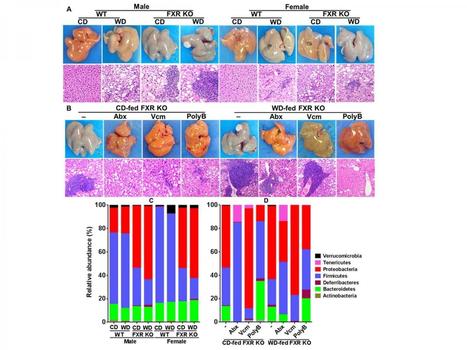
Food, antibiotics, and gender are just some of the factors that can throw off the balance between the gut and liver, according to the new study
Via Krishan Maggon
|
|
Scooped by
Gilbert C FAURE
July 12, 2017 6:32 AM
|
Bugs in your eyes may be a good thing. Resident microbes living on the eye are essential for immune responses that protect the eye from infection, new research shows. The study, which appears in the journal Immunity on July 11, demonstrates the existence of a resident ocular microbiome that trains the developing immune system to fend off pathogens. The research was conducted at the National Eye Institute (NEI), part of the National Institutes of Health.
|
|
|
Scooped by
Gilbert C FAURE
July 24, 2017 4:12 AM
|
Background We evaluated the effect of Saccharomyces boulardii CNCM I-745 on intestinal neuromuscular anomalies in an IBS-type mouse model of gastrointestinal motor dysfunctions elicited by Herpes Simplex Virus type 1 (HSV-1) exposure. Methods Mice were inoculated intranasally with HSV-1 (102 PFU) or vehicle at time 0 and 4 weeks later by the intragastric (IG) route (108 PFU). Six weeks after IG inoculum, mice were randomly allocated to receive oral gavage with either S. boulardii (107 CFU/day) or vehicle. After 4 weeks the following were determined: a) intestinal motility using fluorescein-isothiocyanate dextran distribution in the gut, fecal pellet expulsion, stool water content, and distal colonic transit of glass beads; b) integrity of the enteric nervous system (ENS) by immunohistochemistry on ileal whole-mount preparations and western blot of protein lysates from ileal longitudinal muscle and myenteric plexus; c) isometric muscle tension with electric field and pharmacological (carbachol) stimulation of ileal segments; and d) intestinal inflammation by levels of tumor necrosis factor α, interleukin(IL)-1β, IL-10 and IL-4. Results S. boulardii CNCM I-745 improved HSV-1 induced intestinal dysmotility and alteration of intestinal transit observed ten weeks after IG inoculum of the virus. Also, the probiotic yeast ameliorated the structural alterations of the ENS induced by HSV-1 (i.e., reduced peripherin immunoreactivity and expression, increased glial S100β protein immunoreactivity and neuronal nitric oxide synthase level, reduced substance P-positive fibers). Moreover, S. boulardii CNCM I-745 diminished the production of HSV-1 associated pro-inflammatory cytokines in the myenteric plexus and increased levels of anti-inflammatory interleukins. Conclusions S. boulardii CNCM I-745 ameliorated gastrointestinal neuromuscular anomalies in a mouse model of gut dysfunctions typically observed with irritable bowel syndrome.
|
|
Suggested by
Société Francaise d'Immunologie
July 24, 2017 4:11 AM
|
Magarian Blander and colleagues review the effects of the microbiome on innate and adaptive immunological players and how microbiota-derived bioactive molecules affect inflammation and the host response to infection, vaccination and cancer.
|
|
Scooped by
Gilbert C FAURE
July 23, 2017 3:33 PM
|
The intestine hosts trillions of commensal microbes; however, exactly how these microbes contribute to a balanced immune response in the intestine is still being explored. Now, Chai et al . report that mucosal-associated Helicobacter species can trigger either regulatory T (Treg) or effector T (Teff) cell activation in mouse intestine, depending on context. T cells specific to the bacteria activated Treg cells in homeostatic conditions. In contrast, in a mouse model of colitis, Helicobacter species induced Teff cells. These data suggest that a pathobiont such as Helicobacter species may induce immune tolerance in homeostatic conditions but switch to contribute to pathogenesis in the presence of inflammation.
|
|
Scooped by
Gilbert C FAURE
July 20, 2017 2:30 PM
|
Couples who live together share many things: Bedrooms, bathrooms, food, and even bacteria. After analyzing skin microbiomes from cohabitating couples, microbial ecologists at the University of Waterloo, in Canada, found that people who live together significantly influence the microbial communities on each other's skin.
|
|
Scooped by
Gilbert C FAURE
July 20, 2017 8:52 AM
|
Production of active TGF-β is regulated at a posttranslational level and implies release of the mature cytokine dimer from the inactive, latent TGF-β precursor. There are several cell-type specific mechanisms of TGF-β activation. We identified a new mechanism operating on the surface of human regulatory T cells and involving membrane protein GARP, which binds latent TGF-β1. The paracrine activity of regulatory T cell–derived TGF-β1 contributes to immunosuppression and can be inhibited with anti-GARP Abs. Whether other immune cell types use surface GARP to activate latent TGF-β1 was not known. We show in this study that stimulated, human B lymphocytes produce active TGF-β1 from surface GARP/latent TGF-β1 complexes with isotype switching to IgA production.
|
|
Scooped by
Gilbert C FAURE
July 20, 2017 8:51 AM
|
Human glomerular diseases can be caused by several different diseases, many of which include mesangial expansion and/or proliferation followed by glomerulosclerosis. However, molecular mechanisms underlying the pathologic mesangial changes remain poorly understood. Here, we investigated the role of the mammalian target of rapamycin complex 1 (mTORC1)–S6 kinase pathway in mesangial expansion and/or proliferation by ablating an upstream negative regulator, tuberous sclerosis complex 1 (TSC1), using tamoxifen-induced Foxd1-Cre mice [Foxd1ER(+) TSC1 mice]. Foxd1ER(+) TSC1 mice showed mesangial expansion with increased production of collagen IV, collagen I, and α–smooth muscle actin in glomeruli, but did not exhibit significant mesangial proliferation or albuminuria. Furthermore, rapamycin treatment of Foxd1ER(+) TSC1 mice suppressed mesangial expansion. Among biopsy specimens from patients with glomerular diseases, analysis of phosphorylated ribosomal protein S6 revealed mesangial cell mTORC1 activation in IgA nephropathy and in lupus mesangial proliferative nephritis but not in the early phase of diabetic nephropathy. In summary, mesangial cell mTORC1 activation can cause mesangial expansion and has clinical relevance for human glomerular diseases. This report also confirms that the tamoxifen-induced mesangium-specific Cre-loxP system is useful for studies designed to clarify the role of the mesangium in glomerular diseases in adults.
|
|
Scooped by
Gilbert C FAURE
July 19, 2017 11:09 AM
|
|
|
Scooped by
Gilbert C FAURE
July 18, 2017 12:57 PM
|
#12,621 One of the great inequities of life is that some people are at a higher risk of experiencing severe flu infection
|
|
Scooped by
Gilbert C FAURE
July 17, 2017 8:12 AM
|
Magri et al. found that the human gut includes a large memory IgM+ B cell repertoire
clonally related to plasma cells mounting SIgM responses against mucus-embedded commensals
co-targeted by SIgA. Dually coated bacteria are detected in humans but not mice and
show increased diversity and richness compared to SIgA-only-coated or uncoated bacteria.
|
|
Scooped by
Gilbert C FAURE
July 15, 2017 2:19 AM
|
Emerging technologies in Microbiome discovery
|
|
Scooped by
Gilbert C FAURE
July 13, 2017 8:53 AM
|
T helper type 17 (Th17) cells play an important role in immunity to fungal and bacterial pathogens, although their role in the female genital tract, where exposure to these pathogens is common, i
|
|
Scooped by
Gilbert C FAURE
July 13, 2017 7:02 AM
|
Respiratory syncytial virus (RSV) is the most common agent of severe airway disease in infants and young children. Large epidemiologic studies have demonstrated a clear relationship between RS
|