Your new post is loading...

|
Scooped by
Gilbert C FAURE
September 2, 2017 2:59 PM
|
Author summary Mycobacterium tuberculosis (Mtb) is the causative agent of tuberculosis, which remains a major public health burden today. In the majority of cases, infection is acquired by inhalation of aerosolised bacteria. Mtb is thought to target alveolar macrophages in the lower airways to establish infection. However, the cells predominantly lining the respiratory tract are epithelial cells and thus are likely crucial during the early host-pathogen interactions. We recovered primary human bronchial epithelial cells from healthy volunteers to assess their global transcriptomic response to direct Mtb-exposure and exposure to Mtb-infected myeloid cells. Our analysis revealed that, while being inert to direct Mtb-infection, epithelial cells were highly responsive to soluble mediators released by infected macrophages. The epithelial response induced by this cellular cross-talk, promoted neutrophil influx in vitro as well as the increase of antimycobaterial host responses. Our data provide novel and unexpected insights into the role of the primary human airway epithelium and define a non-redundant role for epithelial cells in shaping the local immunological environment at the site of initial Mtb infection.
|
|
Scooped by
Gilbert C FAURE
August 29, 2017 1:02 PM
|
|
|
Scooped by
Gilbert C FAURE
August 29, 2017 8:50 AM
|
A subpopulation of innate lymphoid cells, called ILCregs, are found to have a regulatory
role in intestinal homeostasis and innate immune defenses akin to Treg cells.
|
|
Scooped by
Gilbert C FAURE
August 28, 2017 1:20 PM
|
|
|
Scooped by
Gilbert C FAURE
August 24, 2017 1:31 PM
|
The small intestine contains CD4+CD8αα+ double-positive intraepithelial T lymphocytes (DP IELs), which originate from intestinal CD4+ T cells through downregulation of the transcription factor ThPOK and have regulatory functions. DP IELs are absent in germ-free mice, suggesting that their differentiation depends on microbial factors. We found that DP IEL numbers in mice varied in different vivaria, correlating with the presence of Lactobacillus reuteri . This species induced DP IELs in germ-free mice and conventionally raised mice lacking these cells. L. reuteri did not shape DP–IEL–TCR repertoire, but generated indole derivatives of tryptophan that activated the aryl-hydrocarbon receptor in CD4+ T cells, allowing ThPOK downregulation and differentiation into DP IELs. Thus, L. reuteri together with a tryptophan-rich diet can reprogram intraepithelial CD4+ T cells into immunoregulatory T cells.
|
|
Scooped by
Gilbert C FAURE
August 24, 2017 3:36 AM
|
Biofilms are usually formed when bacteria are stressed, such as when they are attacked by antibiotics or the immune system. They join together to form biofilm

|
Suggested by
LIGHTING
August 21, 2017 12:24 PM
|
Theriogenology. 2017 Aug 10;104:62-71. doi: 10.1016/j.theriogenology.2017.08.010. [Epub ahead of print] Review
|
|
Scooped by
Gilbert C FAURE
August 21, 2017 3:20 AM
|
Human Milk Oligosaccharides Exhibit Antimicrobial and Antibiofilm Properties against Group B Streptococcus

|
Suggested by
Société Francaise d'Immunologie
August 20, 2017 3:32 AM
|
IL-15 is an essential cytokine known to promote T cell survival and activate the effector function of memory phenotype CD8 T cells. Blocking IL-15 signals also significantly impacts tissue-specific effector and memory CD8 T cell formation. In this study, we demonstrate that IL-15 influences the generation of memory CD8 T cells by first promoting their accumulation into mucosal tissues and second by sustaining expression of Bcl-6 and T-bet. We show that the mechanism for this recruitment is largely dependent on mammalian target of rapamycin and its subsequent inactivation of FoxO1. Last, we show that IL-15 complexes delivered locally to mucosal tissues without reinfection is an effective strategy to enhance establishment of tissue resident memory CD8 T cells within mucosal tissues. This study provides mechanistic insight into how IL-15 controls the generation of memory CD8 T cells and influences their trafficking and ability to take up residence within peripheral tissues.
|
|
Suggested by
Société Francaise d'Immunologie
August 20, 2017 3:32 AM
|
Immunological memory is defined as the capacity to mount faster and more effective immune responses against antigenic challenges that have been previously encountered by the host. CD4+ T helper (Th) cells play central roles in the establishment of immunological memory as they assist the functions of other leukocytes. Th cells express polarized cytokine profiles and distinct migratory and seeding capacities, but also retain a certain functional plasticity that allows them to modulate their proliferation, activity, and homing behaviour upon need. Thus, in healthy individuals, T cell immunomodulation fulfils the task of eliciting protective immune responses where they are needed. At times, however, Th plasticity can lead to collateral tissue damage and progression to autoimmune diseases or, conversely, incapacity to reject malignant tissues and clear chronic infections. Furthermore, common immune players and molecular pathways of diseases can lead to different outcomes in different individuals. A mechanistic understanding of those pathways is therefore crucial for developing precise and curative medical interventions. Here, I focus on the skin microenvironment and comprehensively describe some of the cellular and molecular determinants of CD4+ T cell memory responses in homeostatic and pathological conditions. In discussing the cellular network orchestrating cutaneous immunity, I comprehensively describe the bidirectional interaction of skin antigen-presenting cells and mononuclear phagocytes with Th17 lymphocytes, and examine how the outcome of this interaction is influenced by endogenous skin molecules, including sodium salts and neuropeptides.
Int Arch Allergy Immunol 2017;173:121-137
|
|
Scooped by
Gilbert C FAURE
August 19, 2017 6:16 AM
|
Mucosal Immunology is the official publication of the Society of Mucosal Immunology (SMI). It aims to provide a forum for both basic and clinical scientists to discuss all aspects of immunity and inflammation involving mucosal tissues. The journal reflects the interests of scientists studying gastrointestinal, pulmonary, nasopharyngeal, oral, ocular, and genitourinary immunology through the publication of original research articles, scholarly reviews, and timely commentaries, editorials and letters.
|
|
Scooped by
Gilbert C FAURE
August 18, 2017 12:33 PM
|
IFITM3 encodes an antiviral protein that blocks entry of influenza A virus into cells. Paul Thomas and colleagues report that SNP rs34481144 in the 5[prime] UTR of IFITM3 is an expression quantitative trait locus for this gene and that the risk allele is associated with lower IFITM3 expression and severe influenza disease.
|
|
Scooped by
Gilbert C FAURE
August 16, 2017 2:42 AM
|
|
|
|
Scooped by
Gilbert C FAURE
August 31, 2017 3:25 PM
|
Scientists in China have identified a subpopulation of innate lymphoid cells that suppress inflammation in the gut.
|
|
Scooped by
Gilbert C FAURE
August 29, 2017 12:52 PM
|
There has been a dramatic increase in requests for coeliac disease (CD) serological screening using immunoglobulin (Ig)A tissue transglutaminase antibodies (IgA‐tTG). Recently, the UK Nationa
|
|
Scooped by
Gilbert C FAURE
August 28, 2017 1:21 PM
|
|
|
Scooped by
Gilbert C FAURE
August 27, 2017 3:00 PM
|
Background: Hofbauer cells (HBCs) are macrophages of the feto-placental unit. Despite the general view that these cells have an anti-inflammatory M2 phenotype, recent studies have claimed that pregnancy pathologies – e.g. gestational diabetes (GDM) – cause a switch from an M2 to an M1 pro-inflammatory phenotype in HBCs. The pilot-study presented here challenges this claim, showing that HBCs maintain anti-inflammatory properties in spite of the hyperglycemic, low-grade inflammatory environment of GDM. Methods: HBCs were isolated from placentae of healthy women (N=5) and women with GDM (N=6) diagnosed in the second trimester. FACS was used to measure surface markers associated with either M1 or M2 phenotype on the cells. Additionally, placental tissue sections were subjected to immune histochemical imaging to assess the phenotype within the tissue context. Supernatant from control and GDM HBCs was collected at defined time points and used in a Multiplex ELISA-on-beads approach to assess secretion of cytokines, chemokines and growth factors. The effect of HBC cell culture supernatant on placental endothelial activation was investigated. Results: FACS and immune staining showed that indeed, M2 markers such as CD206 and CD209 are increased in HBCs isolated from GDM placentae. Also, the M1 marker CD86 was increased, but only by trend. Secretion of numerous cytokines, chemokines and growth factors was not changed; pro-inflammatory IL-1β and IL-6 release form GDM HBC was increased but not significant. Exposure to GDM HBC supernatant did not induce cell adhesion molecules (VCAM-1, Selectins, VE-Cadherin) in placental endothelial cells compared to supernatant from control HBCs, an induction of ICAM-1 was observed however. Conclusion: Our study – although performed in a small set of patients - shows that placental macrophages maintain their anti-inflammatory, tissue-remodeling M2 phenotype even in pregnancies affected by gestational diabetes. This consistent phenotype might be important for propagation of maternal tolerance towards the fetus and for protection of the fetus from a low-grade inflammatory environment. Results: FACS and immune staining showed that indeed, M2 markers such as CD206 and CD209 are increased in HBCs isolated from GDM placentae. Also, the M1 marker CD86 was increased, but only by trend. Secretion of numerous cytokines, chemokines
|
|
Scooped by
Gilbert C FAURE
August 23, 2017 3:44 PM
|
Bovine NK-lysins, which are functionally and structurally similar to human granulysin and porcine NK-lysin, are predominantly found in the granules of cytotoxic T-lymphocytes and NK-cells. Although antimicrobial activity of bovine NK-lysin has been assessed for several bacterial pathogens, not all the important bacterial pathogens that are involved in the bovine respiratory disease complex have been studied. Therefore the objective of the present study was to evaluate the antimicrobial activity of bovine NK-lysin-derived peptides on bovine respiratory pathogen Histophilus somni. Four, 30-mer peptides corresponding to the functional region of NK-lysin helices 2 and 3 were synthesized and assessed for antibacterial activity on four bovine pneumonic H. somni isolates. Although there were some differences in the efficiency of bactericidal activity among the NK-lysin peptides at lower concentrations (2–5 μM), all four peptides effectively killed most H. somni isolates at higher concentrations (10–30 μM) as determined by a bacterial killing assay. Confocal microscopic and flow cytometric analysis of Live/Dead Baclight stained H. somni (which were preincubated with NK-lysin peptides) were consistent with the killing assay findings and suggest NK-lysin peptides are bactericidal for H. somni. Among the four peptides, NK2A-derived peptide consistently showed the highest antimicrobial activity against all four H. somni isolates. Electron microscopic examination of H. somni following incubation with NK-lysin revealed extensive cell membrane damage, protrusions of outer membranes, and cytoplasmic content leakage. Taken together, the findings from this study clearly demonstrate the antimicrobial activity of all four bovine NK-lysin-derived peptides against bovine H. somni isolates.
|
|
Suggested by
LIGHTING
August 21, 2017 12:24 PM
|
|
|
Scooped by
Gilbert C FAURE
August 21, 2017 2:20 AM
|
Acute lung injury (ALI) leading to acute respiratory distress (ARDS) is a global health concern. ARDS patients have significant pulmonary inflammation leading to flooding of the pulmonary alveoli. This prevents normal gas exchange with consequent hypoxemia, and causes mortality. A thin fluid layer in the alveoli is normal. The maintenance of this thin layer results from fluid movement out of the pulmonary capillaries into the alveolar interstitium driven by vascular hydrostatic pressure and then through alveolar tight junctions. This is then balanced by fluid reabsorption from the alveolar space mediated by transepithelial salt and water transport through alveolar cells. Reabsorption is a two-step process: first, sodium enters via sodium-permeable channels in the apical membranes of alveolar type 1 and 2 cells followed by active extrusion of sodium into the interstitium by the basolateral Na+, K+-ATPase. Anions follow the cationic charge gradient and water follows the salt-induced osmotic gradient. The proximate cause of alveolar flooding is the result of a failure to reabsorb sufficient salt and water or a failure of the tight junctions to prevent excessive movement of fluid from the interstitium to alveolar lumen. Cytokine- and chemokine-induced inflammation can have a particularly profound effect on lung sodium transport since they can alter both ion channel and barrier function. Cytokines and chemokines affect alveolar amiloride-sensitive epithelial sodium channels (ENaC) which play a crucial role in sodium transport and fluid reabsorption in the lung. This review will discuss the regulation of ENaC via local and systemic cytokines during inflammatory disease and the effect on lung fluid balance.
|
|
Suggested by
Société Francaise d'Immunologie
August 20, 2017 3:32 AM
|
Although the eye is a mucosal site, there has been a long-standing controversy regarding
whether a resident microbiome exists on the ocular surface. St. Leger et al. show
that a microorganism that lives on the conjunctiva tunes local mucosal immunity and
protects the eye from pathogenic infection.
|
|
Scooped by
Gilbert C FAURE
August 19, 2017 6:41 AM
|
An oral mix of a pre- and probiotic can decrease deaths from the condition, according to the results of a large clinical trial conducted in rural India.
|
|
Scooped by
Gilbert C FAURE
August 19, 2017 5:35 AM
|
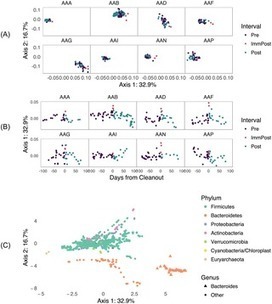
Author summary Complex dynamics of microbial communities underlie their essential roles in health and disease. To maintain or restore healthy states, we must better understand the nature and basis of stability in the gut microbiota, under normal and perturbed conditions. Stability, resilience, and response to perturbation are central topics in community ecology. Extreme perturbations such as near-complete loss of biomass from a system can reveal factors that influence community structure. Recognizing the return to baseline diversity and abundances of biomarkers in community-wide recovery after a disturbance enables us to understand the basic pillars of resilience that contribute to human health. We have designed a densely sampled longitudinal experiment in human volunteers using transient non-inflammatory diarrhea as the perturbation. In order to uncover the essential players in the recovery process, we have tailored new advances in ribosomal sequence variant detection and sparse multidomain analytics that incorporate phylogenetic structure. We show sparse meaningful multidimensional projections that exhibit the essential features in resilient recovery. This work shows how a carefully designed longitudinal study combining denoised ribosomal RNA sequence variants and metagenomic data can inform the taxa and processes involved in the recovery from loss of large proportions of intestinal biomass.
|
|
Scooped by
Gilbert C FAURE
August 17, 2017 2:39 PM
|
Mucosal Immunology is the official publication of the Society of Mucosal Immunology (SMI). It aims to provide a forum for both basic and clinical scientists to discuss all aspects of immunity and inflammation involving mucosal tissues. The journal reflects the interests of scientists studying gastrointestinal, pulmonary, nasopharyngeal, oral, ocular, and genitourinary immunology through the publication of original research articles, scholarly reviews, and timely commentaries, editorials and letters.
|