Your new post is loading...

|
Scooped by
Gilbert C FAURE
September 29, 2017 11:29 AM
|
IL-19, a member of the IL-10 cytokine family that signals through the IL-20 receptor type I (IL-20Rα:IL-20Rβ), is a cytokine whose function is not completely known. In this article, we show that the expression of IL19 in biopsies of patients with active ulcerative colitis was increased compared with patients with quiescent ulcerative colitis and that colitis was attenuated in IL-19–deficient mice. The disruption of the epithelial barrier with dextran sodium sulfate leads to increased IL-19 expression. Attenuated colitis in IL-19–deficient animals was associated with reduced numbers of IL-6–producing macrophages in the inflamed colonic lamina propria. Microbial-driven expression of IL-19 by intestinal macrophages may contribute to the pathogenesis of inflammatory bowel disease.

|
Suggested by
LIGHTING
September 29, 2017 5:10 AM
|
Communication between epithelial cells and intraepithelial lymphocytes guides lymphocyte
energy utilization and dynamic behavior, helping to support maintenance of the intestinal
epithelial barrier during infections.
|
|
Scooped by
Gilbert C FAURE
September 27, 2017 1:48 PM
|
Orally ingested bacteria interact with intestinal mucosa and may impact immunity. However, insights in mechanisms involved are limited. In this randomized placebo-controlled cross-over trial, healthy human subjects were given Lactobacillus plantarum supplementation (strain TIFN101, CIP104448 or WCFS1) or placebo for 7 days. To determine whether L. plantarum can enhance immune response, we compared the effects of three stains on systemic and gut mucosal immunity, by among others assessing memory responses against tetanus toxoid-antigen, and mucosal gene transcription, in human volunteers during induction of mild immune stressor in the intestine, by giving a commonly used enteropathic drug, indomethacin (NSAID). Systemic effects of the interventions were studies in peripheral blood samples. NSAID was found to induce a reduction in serum CD4+/Foxp3 regulatory cells, which was prevented by L. plantarum TIFN101. T-cell polarization experiments showed L. plantarum TIFN101 to enhance responses against tetanus toxoid-antigen, which indicates stimulation of memory responses by this strain. Cell extracts of the specific L. plantarum strains provoked responses after WCFS1 and TIFN101 consumption, indicating stimulation of immune responses against the specific bacteria. Mucosal immunomodulatory effects were studied in duodenal biopsies. In small intestinal mucosa, TIFN101 upregulated genes associated with maintenance of T and B-cell function and antigen-presentation. Furthermore, L. plantarum TIFN101 and WCFS1 downregulated immunological pathways involved in antigen-presentation and shared downregulation of snoRNAs, which may suggest cellular destabilization, but may also be an indicator of tissue repair. Full sequencing of the L. plantarum strains revealed possible gene clusters that might be responsible for the differential biological effects of the bacteria on host immunity. In conclusion, the impact of oral consumption L. plantarum on host immunity is strain dependent and involves responses against bacterial cell components. Some strains may enhance specific responses against pathogens by enhancing antigen presentation and leucocyte maintenance in mucosa. In future studies and clinical settings, caution should be taken in selecting beneficial bacteria as closely related strains can have different effects. Specific bacterial strains can prevent immune stress induced by commonly consumed painkillers such as NSAID and can have enhancing beneficial effects on immunity of consumers by stimulating antigen presentation and memory responses.
|
|
Scooped by
Gilbert C FAURE
September 27, 2017 1:35 PM
|
RABORAL V-RG® is an oral rabies vaccine bait that contains an attenuated (“modified-live”) recombinant vaccinia virus vector vaccine expressing the rabies virus glycoprotein gene (V-RG). Approximately 250 million doses have been distributed globally since 1987 without any reports of adverse reactions in wildlife or domestic animals since the first licensed recombinant oral rabies vaccine (ORV) was released into the environment to immunize wildlife populations against rabies. V-RG is genetically stable, is not detected in the oral cavity beyond 48 h after ingestion, is not shed by vaccinates into the environment, and has been tested for thermostability under a range of laboratory and field conditions. Safety of V-RG has been evaluated in over 50 vertebrate species, including non-human primates, with no adverse effects observed regardless of route or dose. Immunogenicity and efficacy have been demonstrated under laboratory and field conditions in multiple target species (including fox, raccoon, coyote, skunk, raccoon dog, and jackal). The liquid vaccine is packaged inside edible baits (i.e., RABORAL V-RG, the vaccine-bait product) which are distributed into wildlife habitats for consumption by target species. Field application of RABORAL V-RG has contributed to the elimination of wildlife rabies from three European countries (Belgium, France and Luxembourg) and of the dog/coyote rabies virus variant from the United States of America (USA). An oral rabies vaccination program in west-central Texas has essentially eliminated the gray fox rabies virus variant from Texas with the last case reported in a cow during 2009. A long-term ORV barrier program in the USA using RABORAL V-RG is preventing substantial geographic expansion of the raccoon rabies virus variant. RABORAL V-RG has also been used to control wildlife rabies in Israel for more than a decade. This paper: (1) reviews the development and historical use of RABORAL V-RG; (2) highlights wildlife rabies control programs using the vaccine in multiple species and countries; and (3) discusses current and future challenges faced by programs seeking to control or eliminate wildlife rabies.
|
|
Scooped by
Gilbert C FAURE
September 27, 2017 3:10 AM
|
The oral mucosal barrier is constantly exposed to a plethora of triggers requiring
immune control, including a diverse commensal microbiome, ongoing damage from mastication,
and dietary and airborne antigens. However, how these tissue-specific cues participate
in the training of immune responsiveness at this site is minimally understood. Moreover,
the mechanisms mediating homeostatic immunity at this interface are not yet fully
defined. Here we present basic aspects of the oral mucosal barrier and discuss local
cues that may modulate and train local immune responsiveness.
|
|
Scooped by
Gilbert C FAURE
September 25, 2017 2:31 AM
|
Foxp3+ CD4+ regulatory T (Treg) cells are a subset of immune cells that function to regulate tissue inflammation. Skin is one of the largest organs and is home to a large proportion of the body'
|
|
Scooped by
Gilbert C FAURE
September 23, 2017 10:23 AM
|
Lysozyme is a cornerstone of innate immunity. The canonical mechanism for bacterial killing by lysozyme occurs through the hydrolysis of cell wall peptidoglycan (PG). Conventional type (c-type) lysozymes are also highly cationic and can kill certain bacteria independently of PG hydrolytic activity. Reflecting the ongoing arms race between host and invading microorganisms, both gram-positive and gram-negative bacteria have evolved mechanisms to thwart killing by lysozyme. In addition to its direct antimicrobial role, more recent evidence has shown that lysozyme modulates the host immune response to infection. The degradation and lysis of bacteria by lysozyme enhance the release of bacterial products, including PG, that activate pattern recognition receptors in host cells. Yet paradoxically, lysozyme is important for the resolution of inflammation at mucosal sites. This review will highlight recent advances in our understanding of the diverse mechanisms that bacteria use to protect themselves against lysozyme, the intriguing immunomodulatory function of lysozyme, and the relationship between these features in the context of infection.
|
|
Scooped by
Gilbert C FAURE
September 21, 2017 11:39 AM
|
A new study of the human microbiome—the trillions of microbial organisms that live on and within our bodies—has analyzed thousands of new measurements of microbial communities from the gut, skin, mouth, and vaginal microbiome
|
|
Scooped by
Gilbert C FAURE
September 19, 2017 2:25 PM
|
Chemoattractants control lymphocyte recruitment from the blood, contributing to the systemic organization of the immune system. The G protein-linked receptor GPR15 mediates lymphocyte homing to the large intestines and skin. Here we show that the 9 kDa CC-motif containing cationic polypeptide AP57/colon-derived SUSD2 binding factor (CSBF), encoded by C10orf99 in the human and 2610528A11Rik in the mouse, functions as a chemokine ligand for GPR15 (GPR15L). GPR15L binds GPR15 and attracts GPR15-expressing T cells including lymphocytes in colon draining lymph nodes and Vγ3+ thymic precursors of dermal epithelial T cells. Patterns of GPR15L expression by epithelial cells in adult mice and humans suggest a homeostatic role for the chemokine in lymphocyte localization to the large intestines, as well as a role in homing to the epidermis during wound healing or inflammation. GPR15L is also significantly expressed in squamous mucosa of the oral cavity and esophagus with still poorly defined regulation. Identification of the chemotactic activity of GPR15 adds to its reported anti-bacterial and tumor cell growth regulatory functions, and suggests the potential of targeting GPR15L-GPR15 interactions for modulation of mucosal and cutaneous inflammation.
|
|
Scooped by
Gilbert C FAURE
September 14, 2017 12:16 PM
|
|
|
Scooped by
Gilbert C FAURE
September 10, 2017 4:42 AM
|
A real gluten sensitivity isn't a matter of telling people that you have a gluten sensitivity–real gluten sensitivity is a matter of life or death
|
|
Scooped by
Gilbert C FAURE
September 7, 2017 3:11 PM
|
Gerodontology. 2017 Aug 23. doi: 10.1111/ger.12296. [Epub ahead of print]
|
|
Scooped by
Gilbert C FAURE
September 3, 2017 3:42 PM
|
All mucosal surfaces are colonized with a vast number of microbes, which are essential for stimulating and regulating the immune system. While intrinsic and innate mechanisms exist to promote
|
|
|
Scooped by
Gilbert C FAURE
September 29, 2017 9:31 AM
|
A new "anatomic atlas" of how B cells - the immune system's producer of antibodies - link up to form networks has been charted by researchers from the Perelman School of Medicine at the University of Pennsylvania. This ma
|
|
Scooped by
Gilbert C FAURE
September 27, 2017 2:05 PM
|
F1000Prime Recommended Article: Gut microbiota is critical for the induction of chemotherapy-induced pain.
|
|
Scooped by
Gilbert C FAURE
September 27, 2017 1:36 PM
|
Inflammatory bowel disease (IBD), which includes Crohn's disease and ulcerative colitis, is a chronic inflammatory condition of the gastrointestinal (GI) tract. Currently, it is treated with immunosuppressant or biologics that often induce severe adverse effects. Thus, there is an urgent clinical need for more spec
|
|
Scooped by
Gilbert C FAURE
September 27, 2017 1:33 PM
|
Interleukin-17 (IL-17) is a proinflammatory cytokine produced by adaptive CD4+ T helper cells and innate lymphocytes, such as γδ-T cells and TCRβ+ “natural” Th17 cells. IL-17 activates signaling through the IL-17 receptor, which induces other proinflammatory cytokines, antimicrobial peptides and neutrophil chemokines that are important for antifungal activity. The importance of IL-17 in protective antifungal immunity is evident in mice and humans, where various genetic defects related to the IL-17-signaling pathway render them highly susceptible to forms of candidiasis such oropharyngeal candidiasis (OPC) or more broadly chronic mucocutaneous candidiasis (CMC), both caused mainly by the opportunistic fungal pathogen Candida albicans. OPC is common in infants and the elderly, HIV/AIDS and patients receiving chemotherapy and/or radiotherapy for head and neck cancers. This review focuses on the role of IL-17 in protection against candidiasis, and includes a brief discussion of non-Candida albicans fungal infections, as well as how therapeutic interventions blocking IL-17-related components can affect antifungal immunity.
|
|
Scooped by
Gilbert C FAURE
September 25, 2017 4:31 AM
|
Immunology and Cell Biology focuses on the general functioning of the immune system in its broadest sense, with a particular emphasis on its cell biology. Areas that are covered include but are not limited to: Cellular immunology, Innate and adaptive immunity, Immune responses to pathogens,Tumour immunology,Immunopathology, Immunotherapy, Immunogenetics, Immunological studies in humans and model organisms (including mouse, rat, Drosophila etc)
|
|
Scooped by
Gilbert C FAURE
September 23, 2017 10:24 AM
|

|
Suggested by
Société Francaise d'Immunologie
September 23, 2017 10:22 AM
|
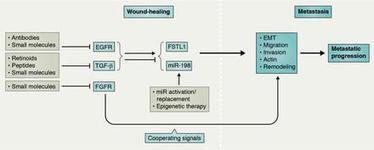
In this issue of JEM, Sundaram et al. (<https://doi.org/10.1084/jem.20170354>;) report a mechanism by which the normal epithelial wound healing response is “hijacked” to promote invasion and metastasis in head and neck squamous carcinomas (HNSCCs), a finding that unveils new markers of poor outcomes and potential targets for therapeutic intervention.
|
|
Scooped by
Gilbert C FAURE
September 21, 2017 10:35 AM
|
Mucosal Immunology is the official publication of the Society of Mucosal Immunology (SMI). It aims to provide a forum for both basic and clinical scientists to discuss all aspects of immunity and inflammation involving mucosal tissues. The journal reflects the interests of scientists studying gastrointestinal, pulmonary, nasopharyngeal, oral, ocular, and genitourinary immunology through the publication of original research articles, scholarly reviews, and timely commentaries, editorials and letters.
|
|
Scooped by
Gilbert C FAURE
September 14, 2017 1:25 PM
|
NIH study shows microbe living on the surface of the eye protects cornea from infection.
|
|
Scooped by
Gilbert C FAURE
September 14, 2017 9:11 AM
|
Advancements in Next Generation Sequencing (NGS) technologies regarding throughput, read length and accuracy had a major impact on microbiome research by significantly improving 16S rRNA amplicon sequencing. As rapid improvements in sequencing platforms and new data analysis pipelines are introduced, it is essential to evaluate their capabilities in specific applications. The aim of this study was to assess whether the same project-specific biological conclusions regarding microbiome composition could be reached using different sequencing platforms and bioinformatics pipelines. Chicken cecum microbiome was analyzed by 16S rRNA amplicon sequencing using Illumina MiSeq, Ion Torrent PGM, and Roche 454 GS FLX Titanium platforms, with standard and modified protocols for library preparation. We labeled the bioinformatics pipelines included in our analysis QIIME1 and QIIME2 (de novo OTU picking [not to be confused with QIIME version 2 commonly referred to as QIIME2]), QIIME3 and QIIME4 (open reference OTU picking), UPARSE1 and UPARSE2 (each pair differs only in the use of chimera depletion methods), and DADA2 (for Illumina data only). GS FLX+ yielded the longest reads and highest quality scores, while MiSeq generated the largest number of reads after quality filtering. Declines in quality scores were observed starting at bases 150–199 for GS FLX+ and bases 90–99 for MiSeq. Scores were stable for PGM-generated data. Overall microbiome compositional profiles were comparable between platforms; however, average relative abundance of specific taxa varied depending on sequencing platform, library preparation method, and bioinformatics analysis. Specifically, QIIME with de novo OTU picking yielded the highest number of unique species and alpha diversity was reduced with UPARSE and DADA2 compared to QIIME. The three platforms compared in this study were capable of discriminating samples by treatment, despite differences in diversity and abundance, leading to similar biological conclusions. Our results demonstrate that while there were differences in depth of coverage and phylogenetic diversity, all workflows revealed comparable treatment effects on microbial diversity. To increase reproducibility and reliability and to retain consistency between similar studies, it is important to consider the impact on data quality and relative abundance of taxa when selecting NGS platforms and analysis tools for microbiome studies.
|
|
Scooped by
Gilbert C FAURE
September 7, 2017 3:13 PM
|
Mediators of Inflammation is a peer-reviewed, Open Access journal that publishes original research and review articles on all types of inflammatory mediators, including cytokines, histamine, bradykinin, prostaglandins, leukotrienes, PAF, biological response modifiers and the family of cell adhesion-promoting molecules.
|
|
Scooped by
Gilbert C FAURE
September 7, 2017 3:10 PM
|
Mucosal-associated invariant T (MAIT) cells are innate T cells that recognize intermediates of the vitamin B2 biosynthetic pathway presented by the monomorphic MR1 molecule. It remains unclear whether, in addition to their cytolytic activity that is important in antimicrobial defense, MAIT cells have immune-modulatory functions that could enhance dendritic cell (DC) maturation. In this study, we investigated the molecular mechanisms dictating the interactions between human MAIT cells and DCs and demonstrate that human MAIT cells mature monocyte-derived and primary DCs in an MR1- and CD40L-dependent manner. Furthermore, we show that MAIT cell–derived signals synergize with microbial stimuli to induce secretion of bioactive IL-12 by DCs. Activation of human MAIT cells in whole blood leads to MR1- and cytokine-dependent NK cell transactivation. Our results underscore an important property of MAIT cells, which can be of translational relevance to rapidly orchestrate adaptive immunity through DC maturation.
|