Your new post is loading...

|
Scooped by
Gilbert C FAURE
December 16, 2017 2:44 AM
|
Gut microbiota have several important functions, including aiding host metabolism and limiting pathogen invasion by competing for essential nutrients. To establish and sustain this symbiotic relationship, it is vital that the host develops tolerance to gut microbial antigens early in life. Here, Knoop et al. demonstrate in mice that tolerance to symbionts in the gut develops between 10 and 20 days after birth, and is perfectly synchronized with the formation of goblet cell–associated antigen passages (GAPs) in the colon, which facilitate transport of bacterial antigens from the lumen to the lamina propria. Their findings suggest that the development of this particular type of microbial tolerance is restricted to microbes that colonize the colon early in life.

|
Suggested by
LIGHTING
December 8, 2017 2:06 PM
|
The immunology of pregnancy is an evolving consequence of multiple reciprocal interactions between the maternal and the fetal-placental systems. The immune response must warrant the pregnancy outcome (including tolerance to paternal antigens), but at the same time, efficiently respond to pathogenic challenges. Enterotoxigenic Escherichia coli (ETEC) strains are a major cause of illness and death in neonatal and recently weaned pigs. This review aims to give an overview of the current rationale on the maternal vaccination strategies for the protection of the newborn pig against ETEC. Newborn piglets are immunodeficient and naturally dependent on the maternal immunity transferred by colostrum for protection—a maternal immunity that can be obtained by vaccinating the sow during pregnancy. Our current knowledge of the interactions between the pathogen strategies, virulence factors, and the host immune system is aiding the better design of vaccination strategies in this particular and challenging host status. Challenges include the need for better induction of immunity at the mucosal level with the appropriate use of adjuvants, able to induce the most appropriate and long-lasting protective immune response. These include nanoparticle-based adjuvants for oral immunization. Experiences can be extrapolated to other species, including humans.
|
|
Scooped by
Gilbert C FAURE
December 7, 2017 8:51 AM
|
IgA is predominantly recognized to play an important role in host defense at mucosal sites, where it prevents invasion of pathogens by neutralization. Although it has recently become clear that IgA also mediates other immunological processes, little remains known about the potential of IgA to actively contribute to induction of inflammation, particularly in nonmucosal organs and tissues. In this article, we provide evidence that immune complex formation of serum IgA plays an important role in orchestration of inflammation in response to pathogens at various nonmucosal sites by eliciting proinflammatory cytokines by human macrophages, monocytes, and Kupffer cells. We show that opsonization of bacteria with serum IgA induced cross-talk between FcαRI and different TLRs, leading to cell type–specific amplification of proinflammatory cytokines, such as TNF-α, IL-1β, IL-6, and IL-23. Furthermore, we demonstrate that the increased protein production of cytokines was regulated at the level of gene transcription, which was dependent on activation of kinases Syk and PI3K. Taken together, these data demonstrate that the immunological function of IgA is substantially more extensive than previously considered and suggest that serum IgA–induced inflammation plays an important role in orchestrating host defense by different cell types in nonmucosal tissues, including the liver, skin, and peripheral blood.

|
Suggested by
Société Francaise d'Immunologie
December 7, 2017 8:48 AM
|
|
|
Scooped by
Gilbert C FAURE
December 5, 2017 11:53 AM
|
|
|
Scooped by
Gilbert C FAURE
December 5, 2017 2:21 AM
|
The gut microbiota is essential for development and regulation of the immune system and the metabolism of the host. Germ-free animals have impaired immunity with increased susceptibility to immunologic diseases and show metabolic alterations. Here we focus on two of the major immune-mediated microbiota-influenced components that signal far beyond their local environment. First, the activation or suppression of the Toll-like receptors (TLRs) by microbial signals can dictate the tone of the immune response, and they are implicated in regulation of the energy homeostasis. Second, we discuss the intestinal mucosal surface is an immunologic component that protects the host from pathogenic invasion, is tightly regulated with regard to its permeability and can influence the systemic energy balance. The short chain fatty acids (SCFAs) are a group of molecules that can both modulate the intestinal barrier and escape the gut to influence systemic health. As modulators of the immune response, the microbiota-derived signals influence functions of distant organs and can change susceptibility to metabolic diseases.
|
|
Scooped by
Gilbert C FAURE
December 2, 2017 12:56 AM
|
|
|
Scooped by
Gilbert C FAURE
November 30, 2017 2:34 PM
|
Scientists found that mucin proteins, which make mucus thick and sticky, fail to unfold properly in the airways of people with cystic fibrosis. And they found the lack of water in the lung can trigger the misfolding mucins.
|
|
Suggested by
Société Francaise d'Immunologie
November 30, 2017 8:40 AM
|
|
|
Scooped by
Gilbert C FAURE
November 30, 2017 4:43 AM
|
The role of maternal immune responses in tolerance induction is poorly understood. To study whether maternal allergen sensitization affects offspring susceptibility to food allergy, we epicutaneously sensitized female mice with ovalbumin (OVA) followed by epicutaneous sensitization and oral challenge of their offspring with OVA. Maternal OVA sensitization prevented food anaphylaxis, OVA-specific IgE production, and intestinal mast cell expansion in offspring. This protection was mediated by neonatal crystallizable fragment receptor (FcRn)–dependent transfer of maternal IgG and OVA immune complexes (IgG-IC) via breast milk and induction of allergen-specific regulatory T (T reg) cells in offspring. Breastfeeding by OVA-sensitized mothers or maternal supplementation with IgG-IC was sufficient to induce neonatal tolerance. FcRn-dependent antigen presentation by CD11c+ dendritic cells (DCs) in offspring was required for oral tolerance. Human breast milk containing OVA-IgG-IC induced tolerance in humanized FcRn mice. Collectively, we demonstrate that interactions of maternal IgG-IC and offspring FcRn are critical for induction of T reg cell responses and control of food-specific tolerance in neonates.
|
|
Suggested by
Société Francaise d'Immunologie
November 27, 2017 9:13 AM
|
The skin‐associated chemokine CTACK plays a key role in many inflammatory conditions and could be instrumental in the pathophysiology of tissue‐specific immunological diseases such as oral liche
|
|
Suggested by
Société Francaise d'Immunologie
November 26, 2017 2:03 PM
|
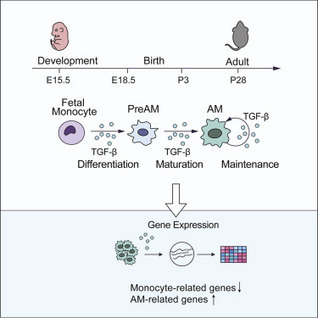
Highlights • TGF-β is essential for the differentiation and homeostasis of AMs • The genesis of other macrophages does not require TGF-β receptor signaling • TGF-β controls AMs in an autocrine manner • TGF-β regulates expression of genes associated with AM differentiation and fate Summary Alveolar...
|
|
Scooped by
Gilbert C FAURE
November 25, 2017 12:53 AM
|
Stanford researchers found that manipulating the gut microbe Clostridium sporogenes changed levels of molecules in the bloodstreams of mice and, in turn, affected their health.
|
|
|
Scooped by
Gilbert C FAURE
December 16, 2017 2:42 AM
|
Host-microbe associations vary and evolve during the lifespans of human beings. This
review provides insights into symbiotic relationships between the microbiome and its
human host in the context of physiology and aging.
|
|
Scooped by
Gilbert C FAURE
December 7, 2017 11:05 AM
|
Understanding functions of Foxp3+ regulatory T cells (Tregs) during allergic airway inflammation remains incomplete. In this study, we report that, during cockroach Ag–induced allergic airway inflammation, Foxp3+ Tregs are rapidly mobilized into the inflamed lung tissues. However, the level of Treg accumulation in the lung was different depending on the type of inflammation. During eosinophilic airway inflammation, ∼30% of lung-infiltrating CD4 T cells express Foxp3, indicative of Tregs. On the contrary, only ∼10% of infiltrating CD4 T cells express Foxp3 during neutrophilic airway inflammation. Despite the different accumulation, the lung inflammation and inflammatory T cell responses were aggravated following Treg depletion, regardless of the type of inflammation, suggesting regulatory roles for Tregs. Interestingly, however, the extent to which inflammatory responses are aggravated by Treg depletion was significantly greater during eosinophilic airway inflammation. Indeed, lung-infiltrating Tregs exhibit phenotypic and functional features associated with potent suppression. Our results demonstrate that Tregs are essential regulators of inflammation, regardless of the type of inflammation, although the mechanisms used by Tregs to control inflammation may be shaped by environmental cues available to them.
|
|
Scooped by
Gilbert C FAURE
December 7, 2017 8:50 AM
|
|
|
Scooped by
Gilbert C FAURE
December 6, 2017 2:36 PM
|
|
|
Scooped by
Gilbert C FAURE
December 5, 2017 11:51 AM
|
Periodontitis is a chronic inflammatory response to a microbial biofilm that destroys bone and soft tissues supporting the teeth. Murine models of periodontitis based on Porphyromonas gingivalis colonization have shown that extravasation of leukocytes into oral tissue is critical to driving alveolar bone destruction. Identifying interstitial leukocytes is key to understanding the immunopathogenesis of periodontitis. Here we describe a robust flow cytometry assay based on intravenous FITC-conjugated anti-mouse CD45 mAb that distinguishes interstitial leukocytes in the oral mucosa of mice from those circulating within the vasculature or in post-dissection contaminating blood. Unaccounted circulating leukocytes skewed the relative frequency of B cells and granulocytes and inflated the numbers of all leukocyte cell types. We also describe a dissection technique that avoids contamination of oral mucosal tissues with nasal-associated lymphoid tissues (NALT), a B cell rich organ that can inflate leukocyte numbers at least 10-fold and skew the assessment of interstitial CD4 T cell phenotypes. Unlike circulating CD4 T cells, interstitial CD4 T cells were almost exclusively antigen experienced cells (CD44hi). We report for the first time the presence of antigen experienced Pg-specific CD4 T cells in NALT following oral feeding of mice with Pg. This new combined flow cytometry and dissection approach allows identification of leukocytes infiltrating the connective tissues of the murine oral mucosa and avoids confounding analyses of leukocytes not recruited to inflamed oral mucosal tissues in disease conditions like periodontitis, candidiasis or sialadenitis.
|
|
Scooped by
Gilbert C FAURE
December 5, 2017 2:18 AM
|
Type 2 innate lymphoid cells (ILC2s) are a major source of cytokines which are also produced by Th2 cells and several cell types of the innate immune system. Work over the past few years indicates that ILC2s play a central role in regulating type 2 immune responses against allergens and helminths. ILC2s can interact with a variety of cells types of the innate and adaptive immune system by cell-cell contacts or by communication via soluble factors. In this review we provide an overview about recent advances in our understanding how ILC2s orchestrate type 2 immune responses with focus on direct interactions between ILC2s and other cells of the immune system.
|
|
Scooped by
Gilbert C FAURE
December 1, 2017 10:37 AM
|
|
|
Scooped by
Gilbert C FAURE
November 30, 2017 2:28 PM
|
|
|
Suggested by
LIGHTING
November 30, 2017 5:16 AM
|
|
|
Scooped by
Gilbert C FAURE
November 28, 2017 1:03 PM
|
|
|
Suggested by
Société Francaise d'Immunologie
November 27, 2017 9:12 AM
|
Anti-inflammatory Mechanism of Host-Microbiota Cooperation Mediated by Helicobacter pylori The Nutritional Immunology and Molecular Medicine Laboratory (NIMML) at the Biocomplexity Institute of Virginia Tech has discovered a new type of gastric immunoregulatory mononuclear phagocyte (MNP).
|
|
Scooped by
Gilbert C FAURE
November 26, 2017 1:18 PM
|
Chemokines and chemokine receptors have rapidly diversified in teleost fish but their immune functions remain unclear. We report in this study that CCL19, a chemokine known to control lymphocyte migration and compartmentalization of lymphoid tissues in mammals, diversified in salmonids leading to the presence of six CCL19-like genes named CK10a, CK10b, CK12a, CK12b, CK13a, and CK13b. Salmonid CCL19-like genes all contain the DCCL-conserved motif but share low amino acid sequence identity. CK12 (but not CK10 or CK13) is constitutively expressed at high levels in all four trout MALT. Nasal vaccination with a live attenuated virus results in sustained upregulation of CK12 (but not CK10 or CK13) expression in trout nasopharynx-associated lymphoid tissue. Recombinant His-tagged trout CK12a (rCK12a) is not chemotactic in vitro but it increases the width of the nasal lamina propria when delivered intranasally. rCK12a delivered intranasally or i.p. stimulates the expression of CD8α, granulysin, and IFN-γ in mucosal and systemic compartments and increases nasal CD8α+ cell numbers. rCK12a is able to stimulate proliferation of head kidney leukocytes from Ag-experienced trout but not naive controls, yet it does not confer protection against viral challenge. These results show that local nasal production of CK12a contributes to antiviral immune protection both locally and systemically via stimulation of CD8 cellular immune responses and highlight a conserved role for CK12 in the orchestration of mucosal and systemic immune responses against viral pathogens in vertebrates.
|