Your new post is loading...

|
Scooped by
Gilbert C FAURE
November 24, 2017 11:11 AM
|
A century after they were discovered killing diarrhea-causing bacteria in the feces of World War I soldiers, the viruses known as bacteriophages, or simply phages, are drawing new attention for the role they might play within the human body. Phages have been found most everywhere, from oceans to soils. Now, a study suggests that people absorb up to 30 billion phages every day through their intestines. Though where those viruses end up is unclear, those data and other recent studies have some scientists wondering whether a sea of phages within the human body—a "phageome"—might play a key role in our physiology, perhaps by regulating our immune system.
|
|
Scooped by
Gilbert C FAURE
November 23, 2017 1:18 AM
|
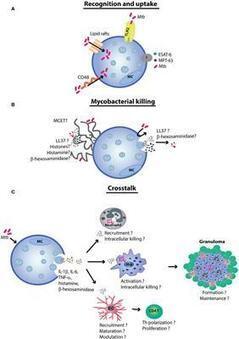
Tuberculosis (TB) causes more annual deaths globally than any other infectious disease. However, progress in developing novel vaccines, diagnostics and therapies has been hampered by an incomplete understanding of the immune response to Mycobacterium tuberculosis (Mtb). While the role of many immune cells has been extensively explored, mast cells (MCs) have been relatively ignored. MCs are tissue resident cells involved in defense against bacterial infections playing an important role mediating immune cell crosstalk. This review discusses specific interactions between MCs and Mtb, their contribution to both immunity and disease pathogenesis and explores their role in orchestrating other immune cells against infections.

|
Suggested by
Société Francaise d'Immunologie
November 21, 2017 2:51 PM
|
Blood eosinophil count alone not predictive in SPIROMICS cohort
|
|
Scooped by
Gilbert C FAURE
November 19, 2017 1:40 PM
|
|
|
Scooped by
Gilbert C FAURE
November 19, 2017 11:26 AM
|
|
|
Suggested by
Société Francaise d'Immunologie
November 16, 2017 2:27 PM
|
|
|
Scooped by
Gilbert C FAURE
November 14, 2017 1:36 PM
|
Journal of Immunology Research is a peer-reviewed, Open Access journal that provides a platform for scientists and clinicians working in different areas of immunology and therapy. The journal publishes research articles, review articles, as well as clinical studies related to classical immunology, molecular immunology, clinical immunology, cancer immunology, transplantation immunology, immune pathology, immunodeficiency, autoimmune diseases, immune disorders, and immunotherapy.
|
|
Scooped by
Gilbert C FAURE
November 14, 2017 1:00 PM
|
In recent years, various technological developments markedly improved imaging of mucosal inflammation in patients with inflammatory bowel diseases. Whereas technological developments such as high-definition-, chromo- and autofluorescence-endoscopy led to a more precise and detailed assessment of mucosal inflammation during wide-field endoscopy, probe-based and stationary confocal laser microscopy enabled in vivo real-time microscopic imaging of mucosal surfaces within the gastrointestinal tract. Through the use of fluorochromes with specificity against a defined molecular target combined with endoscopic techniques that allow ultrastructural resolution, molecular imaging enables in vivo visualization of single molecules or receptors during endoscopy. Molecular imaging has therefore greatly expanded the clinical utility and applications of modern innovative endoscopy, now including not only diagnosis, surveillance, and treatment but also the prediction of individual therapeutic response. Furthermore, non-invasive imaging techniques such as computed tomography, magnetic resonance imaging, scintigraphy and ultrasound provide helpful information as supplement to invasive endoscopic procedures. In this review, we provide an overview on the current status of advanced imaging technologies for the clinical non-invasive and endoscopic evaluation of mucosal inflammation. Furthermore, the value of novel methods such as multiphoton microscopy, optoacoustics and optical coherence tomography and their possible future implementation into clinical diagnosis and evaluation of mucosal inflammation will be discussed.
|
|
Scooped by
Gilbert C FAURE
November 13, 2017 11:48 AM
|
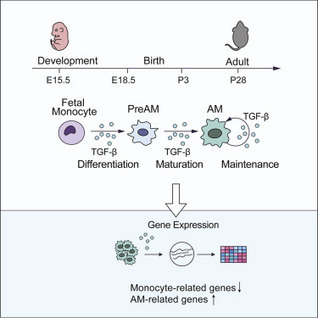
Alveolar macrophage (AM) development depends on GM-CSF, but whether additional factors
regulate AMs is unknown. Yu et al. identified TGF-β as another cytokine critical for
the development and maturation of AMs. TGF-β regulated AMs in an autocrine manner
and was also essential for their self-maintenance in adult mice.
|
|
Suggested by
Société Francaise d'Immunologie
November 13, 2017 11:33 AM
|
|
|
Scooped by
Gilbert C FAURE
November 9, 2017 1:44 AM
|
Intestinal epithelial cells absorb nutrients, respond to microbes, function as a barrier and help to coordinate immune responses. Here we report profiling of 53,193 individual epithelial cells from the small intestine and organoids of mice, which enabled the identification and characterization of previously unknown subtypes of intestinal epithelial cell and their gene signatures. We found unexpected diversity in hormone-secreting enteroendocrine cells and constructed the taxonomy of newly identified subtypes, and distinguished between two subtypes of tuft cell, one of which expresses the epithelial cytokine Tslp and the pan-immune marker CD45, which was not previously associated with non-haematopoietic cells. We also characterized the ways in which cell-intrinsic states and the proportions of different cell types respond to bacterial and helminth infections: Salmonella infection caused an increase in the abundance of Paneth cells and enterocytes, and broad activation of an antimicrobial program; Heligmosomoides polygyrus caused an increase in the abundance of goblet and tuft cells. Our survey highlights previously unidentified markers and programs, associates sensory molecules with cell types, and uncovers principles of gut homeostasis and response to pathogens.

|
Suggested by
LIGHTING
November 8, 2017 9:40 AM
|
|
|
Scooped by
Gilbert C FAURE
November 7, 2017 11:37 AM
|
Characterization of a wild mice reference microbiome opens a window of opportunity
to understand how the gut microbiota affects aspects of host physiology that are important
in the natural world outside the laboratory.
|
|
|
Scooped by
Gilbert C FAURE
November 24, 2017 3:58 AM
|
|
|
Suggested by
Société Francaise d'Immunologie
November 21, 2017 2:51 PM
|
|
|
Scooped by
Gilbert C FAURE
November 21, 2017 8:51 AM
|
Study suggests people may absorb 30 billion bacteria-killing viruses every day
|
|
Scooped by
Gilbert C FAURE
November 19, 2017 11:28 AM
|
IgA is predominantly recognized to play an important role in host defense at mucosal sites, where it prevents invasion of pathogens by neutralization. Although it has recently become clear that IgA also mediates other immunological processes, little remains known about the potential of IgA to actively contribute to induction of inflammation, particularly in nonmucosal organs and tissues. In this article, we provide evidence that immune complex formation of serum IgA plays an important role in orchestration of inflammation in response to pathogens at various nonmucosal sites by eliciting proinflammatory cytokines by human macrophages, monocytes, and Kupffer cells. We show that opsonization of bacteria with serum IgA induced cross-talk between FcαRI and different TLRs, leading to cell type–specific amplification of proinflammatory cytokines, such as TNF-α, IL-1β, IL-6, and IL-23. Furthermore, we demonstrate that the increased protein production of cytokines was regulated at the level of gene transcription, which was dependent on activation of kinases Syk and PI3K. Taken together, these data demonstrate that the immunological function of IgA is substantially more extensive than previously considered and suggest that serum IgA–induced inflammation plays an important role in orchestrating host defense by different cell types in nonmucosal tissues, including the liver, skin, and peripheral blood.
|
|
Scooped by
Gilbert C FAURE
November 16, 2017 2:38 PM
|
|
|
Scooped by
Gilbert C FAURE
November 16, 2017 9:34 AM
|
|
|
Scooped by
Gilbert C FAURE
November 14, 2017 1:31 PM
|
<b><i>Background:</i></b> Chronic rhinosinusitis with nasal polyposis (CRSwNP) is an inflammatory disease associated with lymphoid aggregates and local IgE production related t
|
|
Scooped by
Gilbert C FAURE
November 14, 2017 5:26 AM
|
|
|
Scooped by
Gilbert C FAURE
November 13, 2017 11:45 AM
|
|
|
Scooped by
Gilbert C FAURE
November 10, 2017 10:53 AM
|
Elizabeth Stern’s research led the way to our modern understanding of the prevention, treatment and diagnosis of cervical cancer
|
|
Scooped by
Gilbert C FAURE
November 8, 2017 1:45 PM
|
Immune responses to fungal infections are complicated by the fact that fungi can exist in multiple forms depending on environmental cues. Here, Verma et al . have evaluated innate immune responses to Candida albicans , a fungus that transitions from yeast to filamentous hyphae as infection progresses. They find that candidalysin, a hypha-associated protein and virulence factor, serves as a danger signal that potentiates the immune response to C. albicans . Candidalysin-deficient strains of C. albicans caused minimal epithelial damage and elicited a blunted type 17 immune response. The authors propose that the innate antifungal responses to C. albicans are driven by a synergy between cellular damage triggered by candidalysin that is further amplified by interleukin-17 driven inflammation.
|
|
Scooped by
Gilbert C FAURE
November 8, 2017 4:14 AM
|
|