Your new post is loading...

|
Scooped by
Gilbert C FAURE
February 27, 2021 6:45 AM
|
Hundreds of thousands of viruses can lurk in our guts — but how they impact our bodies is a mystery.
|
|
Scooped by
Gilbert C FAURE
February 21, 2021 4:17 AM
|
Preclinical tests at UAB last year showed potent systemic and mucosal immune responses in mice after a single intranasal dose. The vaccine candidate was developed by Maryland-based Altimmune Inc. Credit: UAB BIRMINGHAM, Ala.
|
|
Scooped by
Gilbert C FAURE
February 20, 2021 3:58 AM
|
medRxiv - The Preprint Server for Health Sciences
|
|
Scooped by
Gilbert C FAURE
February 11, 2021 10:18 AM
|
|
|
Scooped by
Gilbert C FAURE
February 6, 2021 11:05 AM
|
Innate immune responses are important to protect the neonatal lung, which becomes exposed to commensal and pathogenic microorganisms immediately after birth, at a time when both the lung and the adaptive immune system are still developing. How immune cells in the neonatal lung respond to innate immune stimuli, including toll-like receptor (TLR) agonists, or viruses, is currently unclear. To address this, adult and neonatal mice were intranasally administered with various innate immune stimuli, respiratory syncytial virus (RSV) or influenza virus and cytokine and chemokine levels were quantified. The neonatal lungs responded weakly to RSV and most stimuli but more strongly than adult mice to R848 and influenza virus, both of which activate TLR7 and the inflammasome. Notably, neonatal lungs also contained higher levels of cAMP, a secondary messenger produced following adenosine receptor signaling, than adult lungs and increased responsiveness to R848 was observed in adult mice when adenosine was coadministered. Our data suggest that the neonatal lung may respond preferentially to stimuli that coactivate TLR7 and the inflammasome and that these responses may be amplified by extracellular adenosine. Improved understanding of regulation of immune responses in the neonatal lung can inform the development of vaccine adjuvants for the young.
|
|
Scooped by
Gilbert C FAURE
February 2, 2021 12:53 PM
|
During respiration, humans breathe in more than 10,000 liters of non-sterile air daily, allowing some pathogens access to alveoli. Interestingly, alve…
|
|
Scooped by
Gilbert C FAURE
January 31, 2021 11:37 AM
|
Chronic viral infections increase severity of Mycobacterium tuberculosis (Mtb) coinfection.Here, we examined how chronic viral infections alter the p…...
|
|
Scooped by
Gilbert C FAURE
January 30, 2021 11:32 AM
|
Foxp3<sup>+</sup> regulatory T (T<sub>reg</sub>) cells expressing the interleukin (IL)-33 receptor ST2 mediate tissue repair in response to IL-33. Whether T<sub>reg</sub> cells also respond to the alarmin IL-33 to regulate specific aspects of the immune response is not known.
|
|
Scooped by
Gilbert C FAURE
January 28, 2021 2:43 PM
|
Scientists have stumbled across the reason for wombats’ unique cube-shaped poo, finding proof you can fit a square peg through a round hole.
|
|
Scooped by
Gilbert C FAURE
January 27, 2021 1:38 PM
|
La Chine recourt de façon croissante aux dépistages rectaux pour tester les sujets à risque et les voyageurs arrivant de l'étranger. La méthode rebute.
|
|
Scooped by
Gilbert C FAURE
January 25, 2021 11:03 AM
|
|
|
Scooped by
Gilbert C FAURE
January 20, 2021 4:37 AM
|
Making “Edible Vaccines” in Plants Some scientists believe that vaccines could be produced in edible plants, such as bananas or potatoes, which would then provide the delivery vehicle. This approach would yield vaccines that are needle-free and require no adjuvants, chemicals that stimulate the immune response. When the plant is ingested, the plant cell walls would protect the vaccine antigens from degradation by stomach acid and digestive enzymes. Then in the intestine, the antigens would be released and transported into the circulatory system. Edible vaccines would stimulate both mucosal and systemic immunity, providing a higher level of protection than traditional vaccines. Advocates claim that vaccines produced in edible plants would be low-cost and would not require refrigeration, making them more accessible to poor people in developing countries. But although several edible vaccines have entered clinical trials, none has yet been approved for marketing.5 Indeed, many technical questions remain to be answered before edible vaccines will become a viable option. Although a potato may express vaccine antigens, how many people will eat a raw potato? If the potato is cooked, will the vaccine remain effective? How does one ensure a uniform product or determine the appropriate dose? Some scientists are now thinking of producing edible vaccines in bananas or potatoes and processing them into a powder, which would be more usable and consistent. It is not yet clear, however, if this approach is commercially viable. In any event, regulatory safeguards will be required to protect consumer health and the environment.
|
|
Scooped by
Gilbert C FAURE
January 18, 2021 3:07 PM
|
ILC1s provide antiviral protection at initial sites of viral encounter, but how these
cells accomplish this spatially in the tissue remains unexplored. Shannon et al. show
that ILC1s patrol the uninfected epithelium of the oral mucosa and provide protection
even before infection through the production of IFN-γ.
|
|
|
Scooped by
Gilbert C FAURE
February 21, 2021 4:17 AM
|
Respiratory diseases are frequently characterised by epithelial injury, airway inflammation, defective tissue repair, and airway remodelling. This may occur in a subacute or chronic context, such as asthma and chronic obstructive pulmonary disease, or occur acutely as in pathogen challenge and...
|
|
Scooped by
Gilbert C FAURE
February 21, 2021 4:16 AM
|
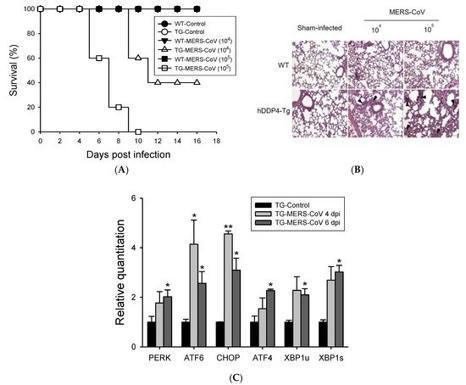
Middle East respiratory syndrome coronavirus (MERS-CoV) causes severe acute respiratory symptoms. Due to the lack of medical countermeasures, effective and safe vaccines against MERS-CoV infection are urgently required.

|
Suggested by
LIGHTING
February 16, 2021 3:51 AM
|
|
|
Scooped by
Gilbert C FAURE
February 8, 2021 2:24 PM
|
T lymphocytes play important roles in the skin and mucosal surfaces such as the gut
and lung. Until recently the contributions of T cells to mammalian bladder immunity
were largely unknown. With newer techniques, including single-cell RNA sequencing
and reporter mice, an understanding is emerging of T cell roles in bladder diseases
(bacterial infections, bladder cancer, chronic inflammation). In these pathologies,
many bladder T cell responses can be harmful to the host through suboptimal clearance
of bacteria or cancer cells, or by modulating autoinflammation.
|
|
Scooped by
Gilbert C FAURE
February 6, 2021 9:58 AM
|
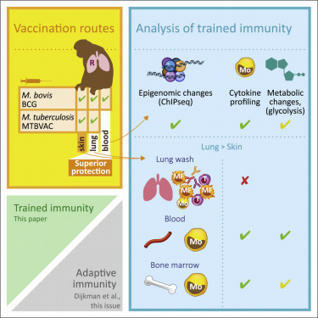
Vierboom et al. demonstrate the induction of trained immunity in blood and bone marrow
monocytes after vaccination with live attenuated TB vaccines in nonhuman primates. Mucosal respiratory delivery of BCG or MTBVAC induces trained immunity more efficiently compared to standard intradermal...
|
|
Scooped by
Gilbert C FAURE
January 31, 2021 11:38 AM
|
Sufficient exposure to natural environments, in particular soil and its microbes, has been suggested to be protective against allergies.We aim at gain…...
|
|
Scooped by
Gilbert C FAURE
January 31, 2021 3:46 AM
|
Click on the article title to read more.
|
|
Scooped by
Gilbert C FAURE
January 30, 2021 6:56 AM
|
The host response to SARS-CoV-2 results in significant inflammation. To understand
this biology, Hoagland and Møller et al. utilize infected hamsters to elucidate transcriptional
footprints across tissues longitudinally, showing an inflammatory response beyond
the site of acute replication. Local administration of IFN-I reduces virus load and
improves immune infiltrate.
|
|
Scooped by
Gilbert C FAURE
January 28, 2021 2:42 PM
|
Human microbiome has emerged as a central research topic in human biology and biomedicine. Current microbiome studies generate high-throughput omics data across different body sites, populations, and lifetime.
|
|
Scooped by
Gilbert C FAURE
January 26, 2021 2:27 PM
|
|
|
Scooped by
Gilbert C FAURE
January 20, 2021 4:40 AM
|
Non-alcoholic fatty liver diseases (NAFLD) are associated with changes in the composition and metabolic activities of the gut microbiota. However, the causal role played by the gut microbiota in individual susceptibility to NAFLD and particularly at its early stage is still unclear.
|
|
Suggested by
LIGHTING
January 19, 2021 11:04 AM
|
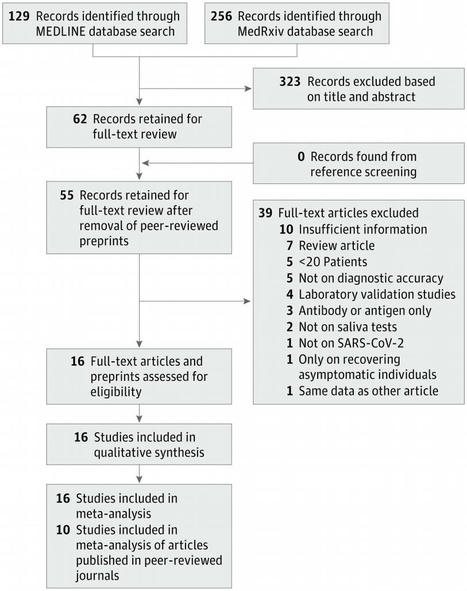
This systematic review and meta-analysis assess the diagnostic accuracy of saliva nucleic acid amplification tests for diagnosis of coronavirus disease 2019.
|


 Scoop.it!