Your new post is loading...

|
Scooped by
Gilbert C FAURE
January 13, 2022 1:27 PM
|
The last decade has been somewhat of a renaissance period for the field of macrophage biology. This renewed interest, combined with the advent of new technologies and development of novel model systems to assess different facets of macrophage biology, has led to major advances in our understanding...
|
|
Scooped by
Gilbert C FAURE
January 13, 2022 1:16 PM
|
Chromatin architecture and epigenetic regulation provide additional layers of transcriptional control (79). The transcriptional repressor B lymphocyte–induced maturation protein-1 [BLIMP-1 (PRDM1)] was among the first known inhibitors of IFNB1 expression (80). BLIMP-1 binds to the positive regulatory domain I (PRDI) sequence of the IFNB1 enhanceosome and prevents the recruitment of IRFs. Sequence analysis of the human IFNλ1 promoter region identified PRDI sequences targeted by BLIMP-1 to inhibit IFNλ1 expression in human airway and colon epithelial cells (76, 81). Similarly, loss of BLIMP-1 expression leads to an increase in IFNλ2/3 expression in murine mammary epithelial cells (76, 82). The IFNλ1 promoter was also shown to encode an E-box response element. The transcriptional repressor zinc finger E-box–binding homeobox 1 (ZEB1) bound to the IFNλ1 promoter and inhibited IFNλ1 expression (76). ZEB1 did not appear to regulate the expression of IFNB1 mRNA following treatment with the synthetic dsRNA ligand, poly(I:C). This finding was among the first to suggest a targeted mechanism for subverting the induction of an IFN-λ response. However, ZEB1 can also indirectly silence type I and III IFN signaling in diseased epithelia. During severe asthmatic disease, injury of the airway epithelium elicits TGF-β–dependent responses to promote repair of the mucosal barrier. TGF-β induces the epigenetic reprogramming of epithelial cells, leading to increases in ZEB1 expression (83). Heightened ZEB1 expression muted the accumulation of IRF1, a positive regulator of type I and III IFN gene expression (84, 85), after poly(I:C) treatment. The loss of IRF1 expression impaired antiviral responses in cells that have undergone epithelial–mesenchymal transition, making them more susceptible to respiratory syncytial virus and rhinovirus infections. Therefore, heightened ZEB1 expression could account for the imbalance in IFN responses that worsen asthmatic and allergic disease and render individuals more susceptible to viral respiratory infections (reviewed in Ref. 86). Interestingly, it is suggested that the biased induction of IFNλ1 downstream of peroxisomal-MAVS signaling is due to greater IRF1 induction (35). Whether this corresponds to a differential displacement of ZEB1 from IRF1 and/or IFNλ1 promoters remains to be addressed.
|
|
Scooped by
Gilbert C FAURE
January 13, 2022 1:14 PM
|
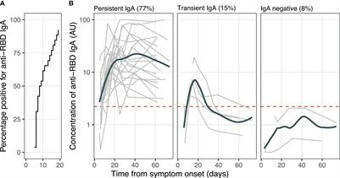
A recent paper in the journal Frontiers in Immunology describes the demonstration of mucosal antibodies in breast milk that specifically target the virus.
|
|
Scooped by
Gilbert C FAURE
January 10, 2022 12:39 PM
|
The human gut microbiome plays an important role in health, but its archaeal diversity remains largely unexplored. In the present study, we report the analysis of 1,167 nonredundant archaeal genomes (608 high-quality genomes) recovered from human gastrointestinal tract, sampled across 24 countries and rural and urban populations. We identified previously undescribed taxa including 3 genera, 15 species and 52 strains. Based on distinct genomic features, we justify the split of the Methanobrevibacter smithii clade into two separate species, with one represented by the previously undescribed ‘Candidatus Methanobrevibacter intestini’. Patterns derived from 28,581 protein clusters showed significant associations with sociodemographic characteristics such as age groups and lifestyle. We additionally show that archaea are characterized by specific genomic and functional adaptations to the host and carry a complex virome. Our work expands our current understanding of the human archaeome and provides a large genome catalogue for future analyses to decipher its impact on human physiology. Recovery of 1,167 nonredundant archaeal genomes from the human gut microbiomes reveals previously undescribed genera, associations with sociodemographic factors and the presence of an archaeal virome.
|
|
Scooped by
Gilbert C FAURE
December 30, 2021 4:17 AM
|
BackgroundLimited data are available regarding the balance of risks and benefits from human milk and/or breastfeeding during and following maternal infection with severe acute respiratory syndrome coronavirus 2 (SARS-CoV-2).ObjectiveTo investigate whether SARS-CoV-2 can be detected in milk and on...
|
|
Scooped by
Gilbert C FAURE
December 30, 2021 4:12 AM
|
This study was conducted to evaluate the mucosal immune responses of rainbow trout when supplementing an experimental formulated feed with multi-strain yeast fraction product (Saccharomyces cerevisiae and Cyberlindnera jardinii).
|
|
Scooped by
Gilbert C FAURE
December 30, 2021 4:11 AM
|
Vaccines in emergency use are efficacious against COVID-19, yet vaccine-induced prevention against nasal SARS-CoV-2 infection remains suboptimal.Since…...
|
|
Scooped by
Gilbert C FAURE
December 27, 2021 4:38 AM
|
Antibodies secreted at the mucosal surface play an integral role in immune defense by serving to neutralize the pathogen and promote its elimination at the site of entry. Secretory immunoglobuli
|
|
Scooped by
Gilbert C FAURE
December 22, 2021 2:26 PM
|
|
|
Scooped by
Gilbert C FAURE
December 13, 2021 6:59 AM
|
Of visitations and civilizations.
|
|
Scooped by
Gilbert C FAURE
December 11, 2021 1:26 PM
|
The emergence of COVID-19 variants such as delta and omicron have sent scientists scrambling to determine whether existing vaccinations and boosters are still effective against new strains of SARS-Cov-2.
|
|
Scooped by
Gilbert C FAURE
December 3, 2021 5:38 AM
|
The composition of the intestinal microbiota is associated with both the development of tumors and the efficacy of anti-tumor immunity.Here, we exami…...
|
|
Scooped by
Gilbert C FAURE
November 19, 2021 1:24 PM
|
Secretory immunoglobulin A (SIgA) can travel to and from the lumen and transport antigen to subepithelial cells. However, IgM can also multimerize int…
|
|
|
Scooped by
Gilbert C FAURE
January 13, 2022 1:16 PM
|
While the gut and lungs are both mucosa-lined luminal organs with a shared embryological origin, their gross and micro-anatomical features are quite distinct, yielding marked differences in the composition and population dynamics of their microbiota. In the absence of vomiting or esophageal reflux, migration of microbes in the digestive tract is unidirectional (from the mouth to the anus), and is serially interrupted by widely varying physical and chemical barriers. In order for an orally introduced microbe to immigrate into the cecum, it must endure the acidic pH of the stomach (~2.0) and the alkaline pH of the duodenum (~8.0) and compete for resources with a densely populated resident microbiome. By contrast, movement of air, mucus, and microbes in the lung is bidirectional, with no physical barrier between the larynx and the most distal alveolus. Thus the microbiome of the lungs is more dynamic and transient than that of the lower gastrointestinal tract. While the gastrointestinal tract is of uniform temperature (37°C) throughout its entire 9 meters of length, the mucosa of the respiratory tract (a short half-meter in length) represents a gradient from ambient temperature at the point of inhalation to core body temperature in the alveoli [8]. Unlike the gut, the lung environment is oxygen-rich. Though the trachea and bronchi are, like the gut, lined with the heavily glycosylated proteins of secreted mucus, the vast majority of the lung’s surface area is lined with lipid-rich surfactant, which has bacteriostatic effects against select bacterial species [9]. Bacterial density in the airways is quite modest, comparable to that of the duodenum [7], orders of magnitude less than that of the large intestine; thus inter-bacterial metabolic interactions are markedly different. Finally, the gut and lungs differ in the character of host–bacterial interactions. Luminal IgA levels are far higher in the gut, while the lungs exhibit far more extraluminal interactions between bacteria and host leukocytes (alveolar macrophages). Together, these markedly divergent environmental conditions result in correspondingly divergent microbial communities.
|
|
Scooped by
Gilbert C FAURE
January 13, 2022 1:15 PM
|
Meconium is present in the intestines of infants before and after birth and constitutes their first bowel movements postnatally. The consistency, composition and microbial load of meconium is large...
|
|
Scooped by
Gilbert C FAURE
January 12, 2022 4:31 AM
|
Research conducted since the start of the pandemic is starting to suggest that the mouth could be a key player in COVID-19 infection.
|
|
Scooped by
Gilbert C FAURE
December 30, 2021 4:18 AM
|
Abstract The nose is the initial site of viral infection, replication, and transmission in the human body. Nasally inhaled vaccines may act as a promising alternative for COVID-19 management in add...
|
|
Scooped by
Gilbert C FAURE
December 30, 2021 4:16 AM
|
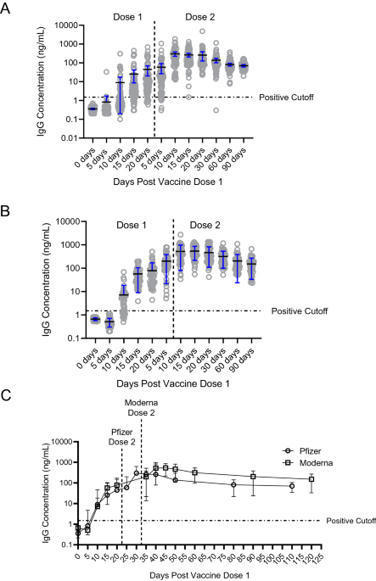
COVID-19 mRNA vaccines are highly effective at preventing COVID-19. Prior studies have found detectable SARS-CoV-2 IgG antibodies in oral mucosal specimens of participants with history of COVID-19. To assess the development of oral SARS-CoV-2 IgG antibodies among people who received either the...
|
|
Scooped by
Gilbert C FAURE
December 30, 2021 4:11 AM
|
Objectives: The physiological number and distribution of mast cells (MCs) in the pediatric gastro...
|
|
Scooped by
Gilbert C FAURE
December 27, 2021 8:43 AM
|
medRxiv - The Preprint Server for Health Sciences
|
|
Scooped by
Gilbert C FAURE
December 23, 2021 2:55 AM
|
Behçet’s disease (BD) is a chronic, multi-systemic disorder of unknown aetiology typified by recurrent oral and genital mucocutaneous lesions, uveitis and vasculitis. Innate and adaptive immune system dysregulation has been implicated in pathogenesis with alterations in serum cytokine profiles. Few studies have investigated salivary cytokines in BD, despite more than 90% of BD patients first presenting with oral ulceration. The aim of this pilot study was twofold; firstly to investigate whether cytokine levels in matched serum and saliva samples show a differential profile in BD (with and without oral ulcers), recurrent aphthous stomatitis (RAS) and healthy controls (HCs), and secondly, to explore if any differential profiles in serum and/or saliva could provide a panel of cytokines with diagnostic and therapeutic potential for BD. Concentrations of 12 cytokines (IL-1β, IL-2, IL-4, IL-5, IL-6, IL-8, IL-10, IL-12p70, IL-17A, IFN-γ, TNF-α, TNF-β) were measured using the Human Th1/Th2 11-Plex FlowCytomix™ kit with IL-17A, in BD (N=20), RAS (N=6) and HCs (N=10). A differential range of cytokines was detected in serum and saliva with the majority of cytokine levels higher in saliva. The most prevalent salivary cytokines were IL-1β, IL-2, IL-8, IL-10 and TNF-α present in all samples in contrast to serum where the most prevalent cytokine detected was IL-8 (91.9%). The least abundant cytokine was IFN-γ in both saliva (43.2%) and serum (2.7%). After normalizing saliva for protei
|
|
Scooped by
Gilbert C FAURE
December 19, 2021 9:48 AM
|
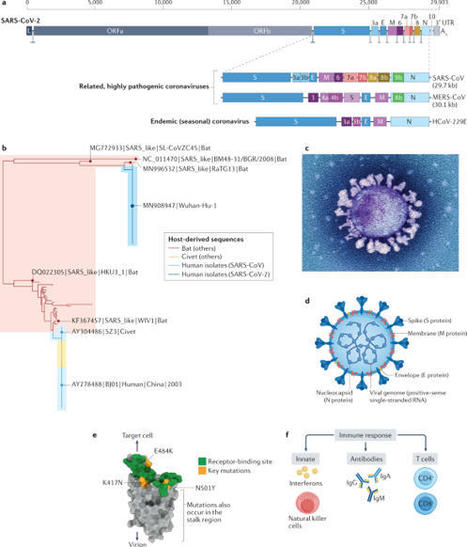
The lungs are the primary target of severe acute respiratory syndrome coronavirus 2 (SARS-CoV-2) infection, with severe hypoxia being the cause of death in the most critical cases. Coronavirus disease 2019 (COVID-19) is extremely heterogeneous in terms of severity, clinical phenotype and, importantly, global distribution. Although the majority of affected patients recover from the acute infection, many continue to suffer from late sequelae affecting various organs, including the lungs. The role of the pulmonary vascular system during the acute and chronic stages of COVID-19 has not been adequately studied. A thorough understanding of the origins and dynamic behaviour of the SARS-CoV-2 virus and the potential causes of heterogeneity in COVID-19 is essential for anticipating and treating the disease, in both the acute and the chronic stages, including the development of chronic pulmonary hypertension. Both COVID-19 and chronic pulmonary hypertension have assumed global dimensions, with potential complex interactions. In this Review, we present an update on the origins and behaviour of the SARS-CoV-2 virus and discuss the potential causes of the heterogeneity of COVID-19. In addition, we summarize the pathobiology of COVID-19, with an emphasis on the role of the pulmonary vasculature, both in the acute stage and in terms of the potential for developing chronic pulmonary hypertension. We hope that the information presented in this Review will help in the development of strategies for the prevention and treatment of the continuing COVID-19 pandemic. In this Review, the authors discuss the potential causes of the heterogeneity of COVID-19 and summarize the pathobiology of the disease, with an emphasis on the role of the pulmonary vasculature in the acute stage and the potential for developing chronic pulmonary hypertension.
|
|
Scooped by
Gilbert C FAURE
December 12, 2021 4:11 AM
|
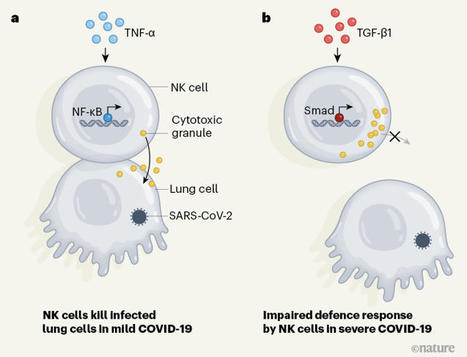
A defence response malfunctions in people with severe COVID-19.
|
|
Scooped by
Gilbert C FAURE
December 8, 2021 6:40 AM
|
We observed an age-associated decline of lung-resident memory CD8+ T cells in the elderly. The loss of the resident memory T-cell pool that occurs with advanced age coincided with an impairment i
|
|
Scooped by
Gilbert C FAURE
December 2, 2021 1:30 PM
|
The intestinal immune system represents the largest collection of immune cells in the body and is continually exposed to antigens from food and the microbiota. Here we discuss the contribution of single-cell transcriptomics in shaping our understanding of this complex system. We consider the impact on resolving early intestine development, engagement with the neighbouring microbiota, diversity of intestinal immune cells, compartmentalisation within the intestines and interactions with non-immune cells. Finally, we offer a perspective on open questions about gut immunity that evolving single-cell technologies are well placed to address.
|