Your new post is loading...

|
Scooped by
Gilbert C FAURE
February 19, 2022 10:48 AM
|
Here, we developed an in situ RNA detection assay for RNA generated by the SARS-CoV-2 virus. We found viral RNA in lung, lymph node, and placenta samples from pathology specimens from COVID patient...
|
|
Scooped by
Gilbert C FAURE
February 19, 2022 2:15 AM
|
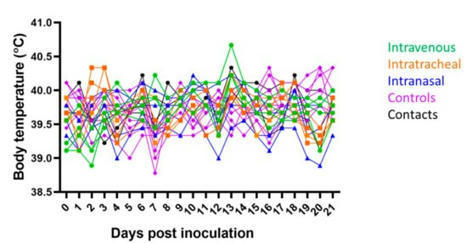
Since the emergence of severe acute respiratory syndrome coronavirus 2 (SARS-CoV-2), the susceptibility of animals and their potential to act as reservoirs or intermediate hosts for the virus has been of significant interest. Pigs are susceptible to multiple coronaviruses and have been used as an animal model for other human infectious diseases. Research groups have experimentally challenged swine with human SARS-CoV-2 isolates with results suggesting limited to no viral replication. For this study, a SARS-CoV-2 isolate obtained from a tiger which is identical to human SARS-CoV-2 isolates detected in New York City and contains the D614G S mutation was utilized for inoculation. Pigs were challenged via intravenous, intratracheal, or intranasal routes of inoculation (n = 4/route). No pigs developed clinical signs, but at least one pig in each group had one or more PCR positive nasal/oral swabs or rectal swabs after inoculation. All pigs in the intravenous group developed a transient neutralizing antibody titer, but only three other challenged pigs developed titers greater than 1:8. No gross or histologic changes were observed in tissue samples collected at necropsy. In addition, no PCR positive samples were positive by virus isolation. Inoculated animals were unable to transmit virus to naïve contact animals. The data from this experiment as well as from other laboratories supports that swine are not likely to play a role in the epidemiology and spread of SARS-CoV-2.
|
|
Scooped by
Gilbert C FAURE
February 16, 2022 9:27 AM
|
The human body is home to a dense and diverse population of bacteria, viruses, and eukaryotes, collectively termed the microbiome. Research on host-microbiome interactions continuously demonstrates...
|
|
Scooped by
Gilbert C FAURE
February 15, 2022 1:23 PM
|
Our understanding of T cell memory responses changed drastically with the discovery that specialized T cell memory populations reside within peripheral tissues at key pathogen entry sites. These tissue-resident memory T (TRM) cells can respond promptly to an infection without the need for migration, proliferation or differentiation. This rapid and local deployment of effector functions maximizes the ability of TRM cells to eliminate pathogens. TRM cells do not circulate through peripheral tissues but instead form isolated populations in the skin, gut, liver, kidneys, the reproductive tract and other organs. This long-term retention in the periphery might allow TRM cells to fully adapt to the local conditions of their environment and mount customized responses to counter infection and tumour growth in a tissue-specific manner. In the urogenital tract, TRM cells must adapt to a unique microenvironment to confer protection against potential threats, including cancer and infection, while preventing the onset of auto-inflammatory disease. In this Review, we discuss insights into the diversification of TRM cells from other memory T cell lineages, the adaptations of TRM cells to their local environment, and their enhanced capacity to counter infection and tumour growth compared with other memory T cell populations, especially in the urogenital tract. Tissue-resident memory T cells are crucial to immune responses in epithelial and mucosal tissues. This Review examines the unique characteristics and differentiation pathways of these cells, as well as their unique adaptations in the urogenital tract, and their role in infection, cancer, inflammatory diseases and transplantation.
|
|
Scooped by
Gilbert C FAURE
February 12, 2022 1:38 PM
|
Evidence suggests that microbiota may contribute to the pathogenesis of several diseases, including cancer. In the case of bladder cancer, preliminary studies have found alterations in the urinary microbiota of patients with urothelial carcinoma compared with healthy individuals.
|
|
Scooped by
Gilbert C FAURE
February 9, 2022 2:07 PM
|
Abstract Hypersensitivity pneumonitis is an immune-mediated interstitial lung disease caused by an aberrant response to an inhaled exposure, which results in mostly T cell–mediated inflammation, gr...
|
|
Scooped by
Gilbert C FAURE
February 4, 2022 4:30 AM
|
Gut cDC2s have been described to migrate into the epithelium, but whether this event
modifies their phenotype is unknown. Rivera et al. show that upon epithelium colonization,
cDC2s adopt an immature-like phenotype, revealing the existence of subtissular niches
able to shape cDCs' fate and function.
|
|
Scooped by
Gilbert C FAURE
January 31, 2022 1:06 PM
|
Abstract Background Persistent human bocavirus 1 (HBoV1) infection is a common finding in patients suffering from chronic tonsillar disease. However, the associations between HBoV1 infection and sp...
|
|
Scooped by
Gilbert C FAURE
January 28, 2022 6:20 AM
|
SARS-CoV-2 infection is benign in most individuals but, in ˜10% of cases, it triggers hypoxemic COVID-19 pneumonia, which becomes critical in ˜3% of cases. The ensuing risk of death (˜1%) doubles every five years from childhood onward and is ˜1.5 times greater in men than in women. What are the molecular and cellular determinants of critical COVID-19 pneumonia? Inborn errors of type I IFNs, including autosomal TLR3 and X-linked TLR7 deficiencies, are found in ˜1-5% of patients with critical pneumonia under 60 years old, and a lower proportion in older patients. Pre-existing autoantibodies neutralizing IFN-α, –β, and/or –ω, which are more common in men than in women, are found in ˜15-20% of patients with critical pneumonia over 70 years old, and a lower proportion in younger patients. Thus, at least 15% of cases of critical COVID-19 pneumonia can apparently be explained. The TLR3- and TLR7-dependent production of type I IFNs by respiratory epithelial cells and plasmacytoid dendritic cells, respectively, is essential for host defense against SARS-CoV-2. In ways that can depend on age and sex, insufficient type I IFN immunity in the respiratory tract during the first few days of infection may account for the spread of the virus, leading to pulmonary and systemic inflammation.
|
|
Scooped by
Gilbert C FAURE
January 21, 2022 6:59 AM
|
The nasal mucosa is the body's first barrier against pathogens entering through the respiratory tract. The respiratory immune system of pigs has more similarities with humans than the mouse respiratory system does, and so was selected as the animal model ...
|
|
Scooped by
Gilbert C FAURE
January 19, 2022 5:03 AM
|
Innate lymphoid cells (ILCs) and in particular ILC3s have been described to be vital for mucosal barrier functions and homeostasis within the gastrointestinal (GI) tract.Importantly, IL-22-secreting ILC3 have been implicated in the control of inflammatory bowel disease (IBD) and were shown to reduc...
|
|
Scooped by
Gilbert C FAURE
January 19, 2022 4:59 AM
|
Mucosal-associated invariant T (MAIT) cells are innate-like T lymphocytes that aid in protection against bacterial pathogens at mucosal surfaces through the release of inflammatory cytokines and cy...
|
|
Scooped by
Gilbert C FAURE
January 16, 2022 1:34 PM
|
During the alveolar phase of COVID-19, the goals of treatment are to inhibit viral replication, to preserve type II cell survival and function, and to dampen the inflammatory response to maintain the architecture of the gas exchange units. Although endothelial cells are not likely to be direct targets of SARS-CoV-2, they are clearly damaged, thus treatments to prevent endothelial injury and microvascular thrombi are also very important. The two treatments that have been studied in detail are dexamethasone and anticytokine therapies. Corticosteroids are administered primarily to diminish tissue inflammation, but they also stimulate surfactant production in vivo and type II cells in vitro and induce structural maturation of the lung in the newborn.71–73 Dexamethasone is beneficial in hospitalised patients requiring mechanical ventilation or supplemental oxygen but not in those not requiring respiratory support.74 If a goal is to preserve injured type II cells, factors that stimulate cultured adult type II cells or organoids of type II cells in vitro should be considered. These factors include, but are not limited to, dexamethasone, cyclic Cyclic adenosine monophosphate (cyclic AMP) (isobutylmethylxanthine, cholera toxin) and mitogenic growth factors (KGF, Hepatocyte growth factor (HGF), Transforming growth factor alpha (TGFa)).48 71 75 However, stimulating type II cell proliferation may be detrimental by increasing the number of ACE2 expressing cells and thereby increasing viral replication, similar to what has been reported in mice treated with KGF prior to infection with influenza.76 Type II cells are also the primary target cell of influenza infection in the alveolar region.77 There have been many attempts to inhibit individual components of the resultant hyperinflammation (previously termed “cytokine storm”), but these therapies have only been partially successful. Baricitinib, an inhibitor of Janus kinase 1 and 2, blocks several cytokines elevated in COVID-19 and is promising in patients receiving high-flow oxygen or non-invasive ventilation.78 Tocilizumab and sarilumab are monoclonal antibodies that block the IL-6 receptor. In the recent open-label Randomised, Embedded, Multi-factorial Adaptive Platform Trial for Community-Acquired Pneumonia with rapid enrollment of COVID-19 patients with ICU and greater than 80% receiving corticosteroids, tocilizumab and sarilumab increased respiratory and blood pressure support-free days to day 21 as well as survival and met the predefined criteria for efficacy.79 In an earlier standard controlled clinical trial prior to the widespread use of glucocorticoids, tocilizumab was not effective for preventing intubation or death in a cohort of moderately ill hospitalised patients with COVID-19.80 Rubin et al commented in an accompanying editorial on the differences in study design between the two trials and stressed the importance of context of the trials at different times in the COVID-19 pandemic both in terms of the concomitant use of glucocorticoids and in the evolving practice patterns in intensive care medicine for patients with COVID-19 .81
|
|
|
Scooped by
Gilbert C FAURE
February 19, 2022 7:20 AM
|
Despite IL-9 functioning as a pleiotropic cytokine in mucosal environments, the IL-9–responsive cell repertoire is still not well defined. Here, we found that IL-9 mediates proallergic activities i...
|
|
Scooped by
Gilbert C FAURE
February 17, 2022 2:23 PM
|
It has been suggested that in doubtful cases of coeliac disease, a high CD3+ T-cell receptor gamma delta+ (TCRγδ+) intraepithelial lymphocyte count increases the likelihood of coeliac disease.
|
|
Scooped by
Gilbert C FAURE
February 16, 2022 9:24 AM
|
Nasal mucosa is an immune responsive organ evidenced by eliciting both specific local secretory IgA and systemic IgG antibody responses with intra-nasal administration of antigens. Nevertheless, the role of nasal epithelial cells in modulating such responses is unclear.
|
|
Scooped by
Gilbert C FAURE
February 15, 2022 10:37 AM
|
The increasing implication of lymphocytes in general physiology and immune surveillance outside of infection poses the question of how their antigen receptors might be involved. Here, we show that macromolecular aggregates of intraepidermal γδ T cell antigen receptors (TCRs) in the mouse skin aligned with and depended on Skint1, a butyrophilin-like (BTNL) protein expressed by differentiated keratinocytes (KCs) at steady state. Interruption of TCR-mediated ‘normality sensing’ had no impact on γδ T cell numbers but altered their signature phenotype, while the epidermal barrier function was compromised. In addition to the regulation of steady-state physiology, normality sensing licensed intraepidermal T cells to respond rapidly to subsequent tissue perturbation by using innate tumor necrosis factor (TNF) superfamily receptors. Thus, interfering with Skint1-dependent interactions between local γδ T cells and KCs at steady state increased the susceptibility to ultraviolet B radiation (UVR)-induced DNA damage and inflammation, two cancer-disposing factors. Hayday and colleagues show that sustained Skint1-dependent interactions between murine intraepidermal γδ T cells and keratinocytes are required to maintain the homeostatic barrier function and phenotype of the intraepidermal γδ T cells, including their preparedness to respond appropriately to epidermal challenges.
|
|
Scooped by
Gilbert C FAURE
February 12, 2022 1:37 PM
|
Abstract Exacerbated pro-inflammatory immune response contributes to COVID-19 pathology. However, despite the mounting evidence about SARS-CoV-2 infecting the human gut, little is known about the a...
|
|
Scooped by
Gilbert C FAURE
February 6, 2022 5:17 AM
|
Researchers have zeroed in on the cause of ulcerative colitis. Their findings could lead to more accurate diagnostic tools.
|
|
Scooped by
Gilbert C FAURE
February 1, 2022 6:42 AM
|
This work is a collaborative effort between the Hawkins, Kotton, Mühlberger and Wang laboratories.The Wang laboratory, based at Boston Children’s Hospital, uses induced pluripotent stem cell (iPSC)-based platforms and gene-editing techniques to study pediatric lung diseases, focusing mainly on cystic...
|
|
Scooped by
Gilbert C FAURE
January 29, 2022 7:05 AM
|
The intranasal (i.n.) route is an ideal vaccination approach for infectious respiratory diseases like influenza. Polycationic polyethylenimine (PEI) could form nanoscale complexes with negatively charged viral glycoproteins. Here we fabricated PEI-hemagglutinin (HA) and PEI-HA/CpG nanoparticles and investigated their immune responses and protective efficacies with an i.n. vaccination regimen in mice. Our results revealed that the nanoparticles significantly enhanced HA immunogenicity, providing heterologous cross-protection. The conserved HA stalk region induced substantial antibodies in the nanoparticle immunization groups. In contrast to the Th2-biased, IgG1-dominant antibody response generated by PEI-HA nanoparticles, PEI-HA/CpG nanoparticles generated more robust and balanced IgG1/IgG2a antibody responses with augmented neutralization activity and Fc-mediated antibody-dependent cellular cytotoxicity (ADCC). PEI-HA/CpG nanoparticles also induced enhanced local and systemic cellular immune responses. These immune responses did not decay over six months of observation postimmunization. PEI and CpG synergized these comprehensive immune responses. Thus, the PEI-HA/CpG nanoparticle is a potential cross-protective influenza vaccine candidate. Polycationic PEI nanoplatforms merit future development into mucosal vaccine systems.
|
|
Scooped by
Gilbert C FAURE
January 27, 2022 11:56 AM
|
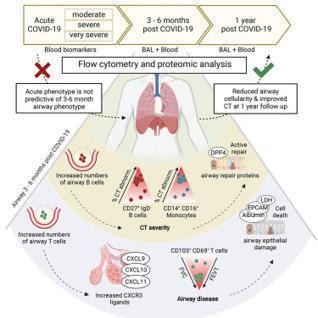
Many individuals recovering from acute SARS-CoV-2 infection suffer prolonged respiratory
dysfunction for months to years after viral clearance. Vijayakumar, Boustani, Ogger,
Papadaki et al. show that individuals with persistent symptoms 3-6 months after infection
have an altered airway immune cell landscape and evidence of ongoing lung damage.
Importantly, different immune cell types correlate with the severity of distinct aspects
of ongoing respiratory disease.
|
|
Scooped by
Gilbert C FAURE
January 19, 2022 5:04 AM
|
The mucosal immune system is the largest component of the entire immune system, having evolved to provide protection at the main sites of infectious threat: the mucosae. As SARS-CoV-2 initially infects the upper respiratory tract, its first interactions with the immune system must occur...
|
|
Scooped by
Gilbert C FAURE
January 19, 2022 5:01 AM
|
A sustained type I IFN-neutrophil-IL-18 axis drives pathology during mucosal viral infection...
|
|
Scooped by
Gilbert C FAURE
January 19, 2022 4:59 AM
|
BackgroundData regarding symptoms in the lactating mother-infant dyad and their immune response to COVID-19 mRNA vaccination during lactation are needed to inform vaccination guidelines.MethodsFrom a prospective cohort of 50 lactating individuals who received mRNA-based vaccines for COVID-19...
|




 Scoop.it!