Your new post is loading...

|
Scooped by
Gilbert C FAURE
July 26, 2022 4:27 AM
|
Determining the forces that shape diversity in host-associated bacterial communities is critical to understanding the evolution and maintenance of metaorganisms.To gain deeper understanding of the role of host genetics in shaping gut microbial traits, we employed a powerful genetic mapping approach...
|
|
Scooped by
Gilbert C FAURE
July 22, 2022 3:59 AM
|
|
|
Scooped by
Gilbert C FAURE
July 20, 2022 1:12 PM
|
|
|
Scooped by
Gilbert C FAURE
July 11, 2022 5:07 AM
|
|
|
Scooped by
Gilbert C FAURE
July 8, 2022 5:44 AM
|
Gastrointestinal health depends on the adaptive immune system tolerating the foreign proteins in food1,2. This tolerance is paradoxical because the immune system normally attacks foreign substances by generating inflammation. Here we addressed this conundrum by using a sensitive cell enrichment method to show that polyclonal CD4+ T cells responded to food peptides, including a natural one from gliadin, by proliferating weakly in secondary lymphoid organs of the gut–liver axis owing to the action of regulatory T cells. A few food-specific T cells then differentiated into T follicular helper cells that promoted a weak antibody response. Most cells in the expanded population, however, lacked canonical T helper lineage markers and fell into five subsets dominated by naive-like or T follicular helper-like anergic cells with limited capacity to form inflammatory T helper 1 cells. Eventually, many of the T helper lineage-negative cells became regulatory T cells themselves through an interleukin-2-dependent mechanism. Our results indicate that exposure to food antigens causes cognate CD4+ naive T cells to form a complex set of noncanonical hyporesponsive T helper cell subsets that lack the inflammatory functions needed to cause gut pathology and yet have the potential to produce regulatory T cells that may suppress it. Immune tolerance to food is mediated by CD4+ T cells forming subsets of T helper cells lacking the capacity to trigger gut pathology but able to produce regulatory T cells that may suppress it.
|
|
Scooped by
Gilbert C FAURE
July 5, 2022 4:27 AM
|
The development of the pigeon bursa of Fabricius was investigated by means of scanning electron microscopy (SEM) and transmission electron microsco...
|
|
Scooped by
Gilbert C FAURE
July 2, 2022 2:38 AM
|
|
|
Scooped by
Gilbert C FAURE
June 29, 2022 1:46 AM
|
|
|
Scooped by
Gilbert C FAURE
June 26, 2022 11:19 AM
|
Understanding which organisms are normally found in and on the human body helps the microbiologist and clinician determine when the presence of an organism may indicate that it is a cause of disease....
|
|
Scooped by
Gilbert C FAURE
May 25, 2022 2:19 AM
|
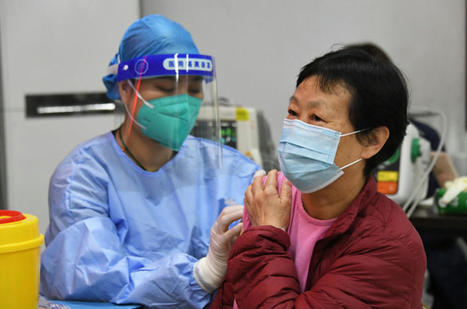
Un essai clinique réalisé en Chine a montré qu'un vaccin de rappel contre la COVID-19 à inhaler est sûr et efficace chez les adultes. Les scientifiques...
|
|
Scooped by
Gilbert C FAURE
May 23, 2022 11:03 AM
|
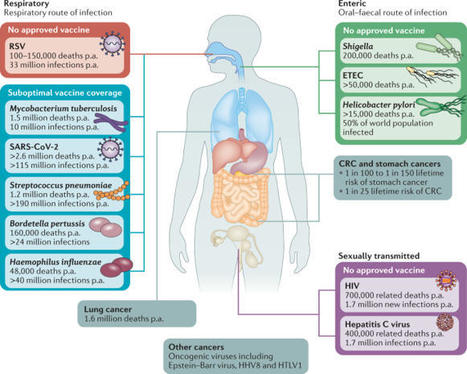
Mucosal vaccines offer the potential to trigger robust protective immune responses at the predominant sites of pathogen infection. In principle, the induction of adaptive immunity at mucosal sites, involving secretory antibody responses and tissue-resident T cells, has the capacity to prevent an infection from becoming established in the first place, rather than only curtailing infection and protecting against the development of disease symptoms. Although numerous effective mucosal vaccines are in use, the major advances seen with injectable vaccines (including adjuvanted subunit antigens, RNA and DNA vaccines) have not yet been translated into licensed mucosal vaccines, which currently comprise solely live attenuated and inactivated whole-cell preparations. The identification of safe and effective mucosal adjuvants allied to innovative antigen discovery and delivery strategies is key to advancing mucosal vaccines. Significant progress has been made in resolving the mechanisms that regulate innate and adaptive mucosal immunity and in understanding the crosstalk between mucosal sites, and this provides valuable pointers to inform mucosal adjuvant design. In particular, increased knowledge on mucosal antigen-presenting cells, innate lymphoid cell populations and resident memory cells at mucosal sites highlights attractive targets for vaccine design. Exploiting these insights will allow new vaccine technologies to be leveraged to facilitate rational mucosal vaccine design for pathogens including severe acute respiratory syndrome coronavirus 2 (SARS-CoV-2) and for cancer. Here, Ed Lavelle and Ross Ward discuss the unique aspects of mucosal immunity that must be considered when developing effective mucosal vaccines. The authors highlight the key immune cell populations that are targeted by mucosal vaccination strategies and explain how innovative adjuvant and delivery approaches should lead to new vaccines for infectious diseases and cancers.
Les chercheurs du Laboratoire commun Institut Pasteur-TheraVectys ont montré l’efficacité de leur candidat vaccin lentiviral «Lenti-COVID», administré en dose de rappel par voie nasale, six mois après la primo-vaccination par un vaccin à ARN messager, dans un modèle pré-clinique. Ce rappel intranasal induit une immunité protectrice au niveau des muqueuses respiratoires. Ces résultats ouvrent la voie à une stratégie vaccinale innovante propice à la réduction de la chaîne de transmission virale.
Via HAS-veille
|
|
Scooped by
Gilbert C FAURE
May 11, 2022 12:24 PM
|
The microbiota influence systemic immunity in ways that are not fully understood.
Erttmann et al. show that the release of the membrane vesicles from the gut microbiota
leads to the systemic delivery of bacterial DNA to host cells. This triggers the tonic
activation of the cytosolic cGAS-STING-IFN-I axis, protecting distal organs against
viral infection.
|
|
|
Scooped by
Gilbert C FAURE
July 26, 2022 4:26 AM
|
A new study reported the outcomes of a clinical trial evaluating the oral vaccine candidate against SARS-CoV-2 developed by Vaxart.
|
|
Scooped by
Gilbert C FAURE
July 21, 2022 3:43 AM
|
Our inhaled COVID-19 vaccine would go directly to where the body needs it: the surface of the airways. This means less waste and more benefit, lower costs and reduced side-effects.
|
|
Scooped by
Gilbert C FAURE
July 13, 2022 5:17 AM
|
|
|
Scooped by
Gilbert C FAURE
July 9, 2022 1:12 AM
|
|
|
Scooped by
Gilbert C FAURE
July 7, 2022 8:19 AM
|
|
|
Scooped by
Gilbert C FAURE
July 5, 2022 2:41 AM
|
|
|
Scooped by
Gilbert C FAURE
June 29, 2022 2:24 AM
|
Breastfeeding protects against mucosal infections in infants. The underlying mechanisms through which immunity develops in human milk following maternal infection with mucosal pathogens are not well understood. We simulated nasal mucosal influenza infection through live attenuated influenza vaccination (LAIV) and compared immune responses in milk to inactivated influenza vaccination (IIV). Transcriptomic analysis was performed on RNA extracted from human milk cells to evaluate differentially expressed genes and pathways on days 1 and 7 post-vaccination. Both LAIV and IIV vaccines induced influenza-specific IgA that persisted for at least 6 months. Regulation of type I interferon production, toll-like receptor, and pattern recognition receptor signaling pathways were highly upregulated in milk on day 1 following LAIV but not IIV at any time point. Upregulation of innate immunity in human milk may provide timely protection against mucosal infections until antigen-specific immunity develops in the human milk-fed infant.
|
|
Scooped by
Gilbert C FAURE
June 28, 2022 5:57 AM
|
Tissue-resident memory T cells (TRM cells) provide protective immunity, but the contributions of specific tissue environments to TRM cell differentiation and homeostasis are not well understood. In the present study, the diversity of gene expression and genome accessibility by mouse CD8+ TRM cells from distinct organs that responded to viral infection revealed both shared and tissue-specific transcriptional and epigenetic signatures. TRM cells in the intestine and salivary glands expressed transforming growth factor (TGF)-β-induced genes and were maintained by ongoing TGF-β signaling, whereas those in the fat, kidney and liver were not. Constructing transcriptional–regulatory networks identified the transcriptional repressor Hic1 as a critical regulator of TRM cell differentiation in the small intestine and showed that Hic1 overexpression enhanced TRM cell differentiation and protection from infection. Provision of a framework for understanding how CD8+ TRM cells adapt to distinct tissue environments, and identification of tissue-specific transcriptional regulators mediating these adaptations, inform strategies to boost protective memory responses at sites most vulnerable to infection. Goldrath and colleagues define the diversity of gene expression and genome accessibility in mouse CD8+ TRM cells in distinct tissues and identify molecules critical forgeneration of CD8+ TRM cells in response to acute viral infection.
|
|
Scooped by
Gilbert C FAURE
June 23, 2022 4:25 AM
|
|
|
Scooped by
Gilbert C FAURE
May 25, 2022 2:10 AM
|
The cornea - the transparent protective outer layer of the eye critical to helping us see – produces a delicate and limited immune response to fight infections without damaging our vision, according to a ground-breaking new study from the Peter Doherty Institute for Infection and Immunity (Doherty Institute).
|
|
Scooped by
Gilbert C FAURE
May 20, 2022 2:25 AM
|
Intraepithelial lymphocytes expressing the γδ T cell receptor (γδ IELs) serve as a first line of defense against luminal microbes. Although the presence of an intact microbiota is dispensable for γδ IEL development, several microbial factors contribute to the maintenance of this sentinel population. However, whether specific commensals influence population of the γδ IEL compartment under homeostatic conditions has yet to be determined. We identified a novel γδ IEL hyperproliferative phenotype that arises early in life and is characterized by expansion of multiple Vγ subsets. Horizontal transfer of this hyperproliferative phenotype to mice harboring a phenotypically normal γδ IEL compartment was prevented following antibiotic treatment, thus demonstrating that the microbiota is both necessary and sufficient for the observed increase in γδ IELs. Further, we identified two guilds of small intestinal or fecal bacteria represented by 12 amplicon sequence variants (ASV) that are strongly associated with γδ IEL expansion. Using intravital microscopy, we find that hyperproliferative γδ IELs also exhibit increased migratory behavior leading to enhanced protection against bacterial infection. These findings reveal that transfer of a specific group of commensals can regulate γδ IEL homeostasis and immune surveillance, which may provide a novel means to reinforce the epithelial barrier.
|
|
Scooped by
Gilbert C FAURE
May 12, 2022 11:23 AM
|
Scientists are studying whether long COVID could be linked to viral fragments found in the body months after initial infection
|