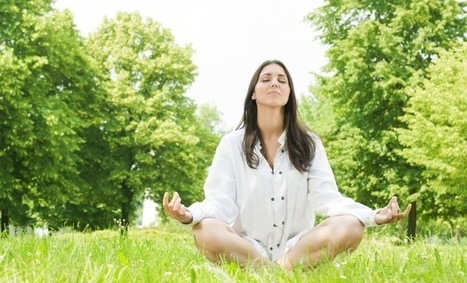
The main purpose of meditation isn't just to relax. If you want to do that, best have a beer and put your feet up or have a hot bath. Meditation is about cultivating present-moment awareness and
Get Started for FREE
Sign up with Facebook Sign up with X
I don't have a Facebook or a X account


|
Scooped by
American Institute Health Care Professionals
onto Meditation Practices June 27, 2013 3:12 PM
|
 Scoop.it!
The main purpose of meditation isn't just to relax. If you want to do that, best have a beer and put your feet up or have a hot bath. Meditation is about cultivating present-moment awareness and

 Your new post is loading...
 Your new post is loading...
Your new post is loading...
Scoop.it!

From
www

It’s nice to just sit down in silence, close your eyes, take some deep breaths, and drift away into a deeply relaxing meditative state…while also apparently rewiring your brain, possibly permanently. In research published in Neuroscience of Consciousness, led by neurophysiologist Annalisa Pascarella of the Italian National Research Council, scientists examined the brains of 12 highly […]
American Institute Health Care Professionals's insight:
Meditation Could Permanently Rewire Your Brain
Rewiring Please also review AIHCP's Meditation Instructor Program
Scoop.it!

Do you ever find yourself stressed and feel like you have nowhere to turn to? Have the social and academic pressures of life on campus ever made you feel anxious or overwhelmed? Have you ever wished that you would be able to “take a step back” from everything for a little while? Then loo
American Institute Health Care Professionals's insight:
Meditate Your Way Into a Stress-Free Semester –
Meditation and a stressfree semester Please also review AIHCP's Meditation Instructor Program
Scoop.it!

Resistance to cognitive decline, therefore, seemed another benefit of long-term transcendental meditation practice.
American Institute Health Care Professionals's insight:
Transcendental Meditation Found to Calm Genes Associated with Both Aging and Stress
Calming stress via meditation Please also review AIHCP's Meditation Instructor Program
Scoop.it!

By Samantha Gordon BlackDoctor https://blackdoctor.org/ What is mental health? Mental health is a state of emotional, psychological, and social
American Institute Health Care Professionals's insight:
How Exercise Improves Your Mental Health (No Therapy Required)
Exercise and meditation Please also review AIHCP's Meditation Instructor Program
Scoop.it!

As interest in mental well-being continues to grow, this Learn to Meditate workshop offers a grounded, practical introduction to meditation for everyday life. Designed for beginners, the session explores simple […]
American Institute Health Care Professionals's insight:
A Beginner’s Guide to Meditation for a Calmer, Clearer Mind
For a calmer and clearer mind Please also review AIHCP's Meditation Instructor Program
Scoop.it!
December 21 has been designated World Meditation Day by the United Nations. The practice can change not only our bodies, but also the world.
American Institute Health Care Professionals's insight:
The full impact of meditation on mind, body and community | Opinion
Understanding meditation Please also review AIHCP's Meditation Instructor Program
Scoop.it!

Simple practices that soothe your mind when meditation just isn’t cutting it. One writer shares six ways she practices calmness besides meditation—because it doesn't always work for everyone.
American Institute Health Care Professionals's insight:
6 Calming Habits That Work Better Than Meditation
Calming habits Please also review AIHCP's Meditation Instructor Program
Scoop.it!

As the $6 trillion wellness industry moves from the mind to the body, breathwork is emerging as the fastest path to calm — and a way to find clarity amid digital noise.
American Institute Health Care Professionals's insight:
Why the Wellness World Moved from Meditation to Breathwork - Bloomberg
The importance of breathwork Please also review AIHCP's Meditation Instructor Program
Scoop.it!

Modern education faces challenges of digital overload and rising anxiety, necessitating mindfulness practices.
American Institute Health Care Professionals's insight:
Mindfulness and Meditation: Integrating ancient practices into modern education
Utilizing meditation Please also review AIHCP's Meditation Instructor Program
Scoop.it!

It’s time to consider the zenith of at-home zen…
American Institute Health Care Professionals's insight:
What is a meditation room and do you really need one?
Meditation rooms Please also review AIHCP's Meditation Instructor Program
Scoop.it!

The Lighten Up & Root Down Meditation Group will present a free talk on Zen meditation by author, voice artist, actor, activist, and Zen priest Peter
American Institute Health Care Professionals's insight:
“Expressing Appreciation for Zen Meditation” with Peter Coyote –
Zen meditation Please also review AIHCP's Meditation Instructor Program
Scoop.it!

Recent research uncovers how a brief loving-kindness meditation session alters brain wave activity in critical limbic areas, opening new doors for non-invasive approaches to stress and anxiety.
American Institute Health Care Professionals's insight:
Scoop.it!

A study reveals that even a brief meditation session can spark changes deep in your brain, influencing the regions tied to mood, focus, and emotions.
American Institute Health Care Professionals's insight:
Does Just 10 Minutes Of Meditation Even Make a Difference? What Research Says
Just ten minutes of meditation Please also review AIHCP's Meditation Instructor Program
|
Scoop.it!

From
psyche
Traditional and tech-based methods can reveal what your practice is doing – and give you the confidence to stick with it
American Institute Health Care Professionals's insight:
How to know if your meditation is working | Psyche Guides
Is meditation working? Please also review AIHCP's Meditation Instructor Program
Scoop.it!

Can’t sit still? These strategies from therapists will help you manage stress and find calm without having to meditate.
American Institute Health Care Professionals's insight:
3 Simple Mindfulness Techniques If You Hate Meditation
Finding mindfulness Please also review AIHCP's Meditation Instructor Program
Scoop.it!

Meditation doesn’t "empty the mind", as some imagine. In fact, brain scans reveal that the meditating mind is not in a resting state at all, but is highly active.
American Institute Health Care Professionals's insight:
Brain Dynamics Shift Sharply During Meditation | Technology Networks
The brain and meditation Please also review AIHCP's Meditation Instructor Program
Scoop.it!

This week has been incredibly trying for so many of us and our community. How do we move toward a sense of balance, ease and fulfillment in a world that is so loud? I don’t expect 2026 to feel easier or calmer than 2025, but I know I will move into it with some more […]
American Institute Health Care Professionals's insight:
How to Meditate When the World is on Fire
Finding peace from it all Please also review AIHCP's Meditation Instructor program
Scoop.it!

Meditation doesn’t 'empty the mind', as some imagine. In fact, brain scans reveal that the meditating mind is not in a resting state at all, but is highly active – and that's good for you.
American Institute Health Care Professionals's insight:
Meditation doesn’t rest the brain, it reshapes it - UdeMnouvelles
Understanding meditation Please also review AIHCP's Meditation Instructor Program
Scoop.it!

Neuroscience now provides substantial evidence that meditation leads to measurable changes in brain structure and function, a concept known as neuropl
American Institute Health Care Professionals's insight:
Meditation is not just for the soul! It helps heal the brain
The power of meditation Please also review AIHCP's Meditation Instructor Program
Scoop.it!

Small bursts of mindfulness practices lasting a minute or less can have unexpected benefits for those with busy lives - here’s how
American Institute Health Care Professionals's insight:
Too busy to meditate? Microdosing mindfulness has big health benefits
Short meditations Please also review AIHCP's Meditation Instructor Program
Scoop.it!

Feeling overwhelmed? Psychic counsellor suggests five simple daily meditation habits. These brief practices help calm your mind and return you to your
American Institute Health Care Professionals's insight:
5 meditation habits that build emotional strength in just 2 weeks
Good meditation habits Please also review AIHCP's Meditation Instructor program
Scoop.it!

What happens: When you meditate, your body lowers cortisol—the hormone that spikes when you're stressed. Less cortisol means your fight-or-flight alarm quiets down, giving your nervous system a break.Why it matters: Lower cortisol reduces inflammation, helps balance blood pressure, and stops the cycle where stress feeds more stress. Studies with thousands of people show this effect is real and measurable.Simple takeaway: Regular meditation trains your body to stay calmer, even when life gets chaotic. Your stress hormones actually drop
American Institute Health Care Professionals's insight:
Your stress hormones actually drop - 5 surprising ”good side effects” of meditation
Positive effects of meditation Please also review AIHCP's Meditation Instructor Program
Scoop.it!

- by Gavin Heaney According to Kadampa Buddhist practitioner and meditation teacher Kadam Gerry Donovan, happiness is a state of mind and the method to
American Institute Health Care Professionals's insight:
Meditation is path to happiness, Hermosa Buddhist Donovan says
Understanding meditation Please also review AIHCP's Meditation instructor Program
Scoop.it!

Mindfulness meditation has been suggested to protect mental health and enhance cognitive functions. However, the effectiveness of mindfulness breathing meditation for the general population in Malaysia has not been well documented. This study investigated the effects of mindfulness breathing meditation on perceived stress levels and cognitive functions (i.e., visual attention, inhibitory control, and cognitive flexibility) using heart rate variability (HRV) and eye-tracking methods. Fifty Malaysian adults aged between 18 and 34 years participated in this study. Participants were randomly allocated to either mindfulness breathing meditation or active control (music therapy) groups. Participants underwent a four-week intervention consisting of 30 min of online classes once a week and 10 min of daily meditation self-practice or music listening. The results showed significant improvement in cognitive flexibility and reduction in perceived stress levels after the intervention in the mindfulness breathing meditation group compared to the active control group. Participants in the mindfulness breathing meditation group self-reported this intervention as highly acceptable and effective in promoting stress reduction, emotional regulation, and attentional control. However, no significant improvement was found in attention, inhibitory control, and HRV after the intervention, suggesting that the mindfulness breathing meditation had no effect on these variables. While short-term engagement with mindfulness breathing meditation practice is achievable, the three-month follow-up using the Mindfulness Adherence Questionnaire showed that sustaining long-term adherence remains a challenge. The approved Stage 1 protocol can be found under “Files”, named “SR_HLY_Manuscript_OSF”, via this link: https://doi.org/10.17605/OSF.IO/P67EG .
American Institute Health Care Professionals's insight:
Effects of mindfulness breathing meditation on stress and cognitive functions: a heart rate variability and eye-tracking study | Scientific Reports
Mindfulness and breathing Please also review AIHCP's Meditation Instructor Program
Scoop.it!

Cyclic breathing and meditation are some commonly practiced methods that promote mental relaxation and emotional well-being. Both practices aim to reduce stress, but work on different mechanisms. Here we help understand which practice can be more effective based on individual needs and goals.
American Institute Health Care Professionals's insight:
Cyclic breathing vs meditation: Which practice can calm the mind more effectively
Better breathing Please also review AIHCP's Meditation Instructor Program
|






#guidetomeditation #aboutmeditation #mentaltraining Not every article about meditation has be to a guide to meditation. This article states that relaxation and peace is not the main purpose of why we meditate. It goes on to state that meditation is mental training. It helps us not react to daily life. It helps with our body's natural healing powers and helps us make more conscious choices throughout the day.