Arrêté du 28 octobre 2025 relatif à l'affectation des étudiants en médecine ayant satisfait aux épreuves nationales donnant accès au troisième cycle des études de médecine organisées au titre de l'année universitaire 2025-2026
• AP‑HP écrase tout : plus du tiers du top 200. • Marseille et Lyon confirment leur attractivité, surtout en chirurgie et anesthésie. • Bordeaux, Toulouse, Grenoble, Montpellier forment un bloc solide de CHU très attractifs. • Les CHU plus petits (Caen, Poitiers, Tours…) captent quelques excellents profils, souvent dans des spécialités ciblées. Et une 2ème:
2. Classement des spécialités (attractivité dans le top 200)
• Médecine de l’aigu (anesthésie + réanimation + urgences) est de loin la spécialité la plus attractive du top 200. • La chirurgie reste extrêmement attractive, surtout plastique, orthopédie, ORL, ophtalmo. • Dermatologie confirme son statut de spécialité premium. • Médecine générale attire quelques très bons rangs, mais reste minoritaire dans le top 200. • Santé publique n’attire aucun top 200 dans votre échantillon. (Avec l’aide de Copilot)
Laboratory Medicine is the name of a medical specialty where specialists are involved in medical diagnosis using laboratory assays to characterize molecular and cellular parameters in blood, biological fluids and tissues;
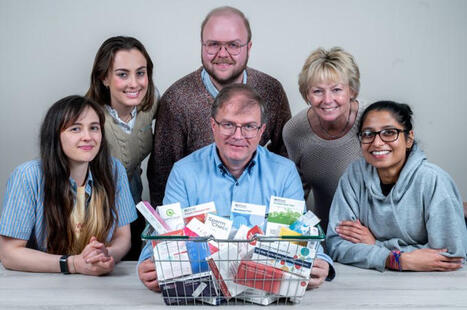
Research published in The BMJ raised serious concerns about supermarket self-tests: unclear instructions, weak evidence, and risks for people trying to make important decisions about their health.
Supported by our BMJ Investigations reporting, led by Rebecca Coombes, the findings helped inform changes to UK medical devices law on misleading or unsubstantiated claims.
Niels Peter Thomas Bev Acreman Peter Vicary-Smith Peter Coebergh Kamran Abbasi Tom Moberly Gareth Iacobucci
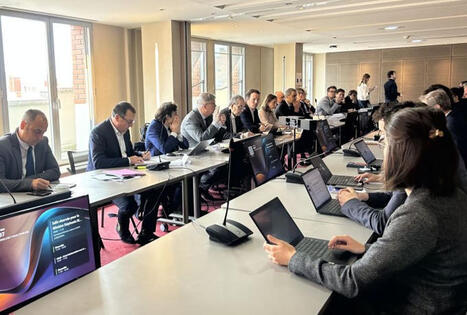
🏛️ Réunion de travail au ministère de la Santé avec Stephanie RIST et les acteurs de la biologie médicale pour lancer un cycle de concertation sur l’avenir de la profession.
Le secteur a connu de profondes transformations ces quinze dernières années : évolution des organisations, mais aussi tensions sur son financement. Face aux nouveaux enjeux de santé publique, nous partageons une ambition commune : poursuivre la modernisation de la biologie médicale au service des patients.
Simplification, innovation, numérique, pertinence et évolution des compétences seront au cœur des travaux coordonnés par laurent habert.
Cette première réunion a surtout montré une volonté commune des représentants publics, privés et des Ordres de construire des propositions consensuelles pour l’avenir de la biologie médicale.
📅 Deux mois de concertation soutenue s’ouvrent désormais.
Ministère de la Santé
avec Syndicat des Biologistes - SDBIO snmb Les Biologistes Médicaux et FBP : Fédération des Biologistes Praticiens
Our exciting new paper, led by Africa CDC, that charts
The future of diagnostics in Africa
Yenew Kebede African Society for Laboratory Medicine (ASLM) Africa CDC Clinton Health Access Initiative, Inc. Gates Foundation PATH Partners In Health McGill University Trevor Peter Nqobile Ndlovu MPH FIND Mikashmi Kohli Marguerite Massinga Loembe (MSc, PhD) Chase Mertz Gagandeep Kang Boghuma Titanji Grace Umutesi, PhD, MPH, ICDP Rigveda Kadam Dr. Nitika (Nikki) Pant Pai, MD., MPH., PhD Pascale Ondoa Anisa Ghadrshenas Unitaid Smiljka de Lussigny Kekeletso Kao ALAINE Umubyeyi Nyaruhirira & team
C’est avec beaucoup d’honneur et de responsabilité que je vous annonce mon élection à la présidence de la Fédération Nationale Syndicale des Biologistes Praticiens Hospitaliers et Hospitalo-Universitaires FNSBPHU Alliance.
Je tiens à remercier chaleureusement l’ensemble des collègues et du Conseil d'administration de la FNSBPHU réunis en AG ce jour pour leur confiance.
Dans un contexte de transformation profonde de notre système de santé, je suis convaincu que la biologie hospitalière doit affirmer pleinement son rôle central : 🔬 dans la prise en charge des patients 💡 dans l’innovation médicale 📊 dans la décision clinique
Notre action collective s’articulera autour de plusieurs priorités : • Renforcer la représentation de notre discipline • Améliorer l’organisation et l’attractivité de nos métiers • Soutenir l’innovation et anticiper les évolutions à venir • Développer la visibilité et le travail en réseau
Je porterai une gouvernance ouverte, fondée sur le travail collectif et une capacité à agir rapidement au niveau national.
Plus que jamais, nous devons faire de la biologie hospitalière un acteur incontournable du soin et des politiques de santé.
Au plaisir d’échanger avec vous et de construire ensemble cette dynamique.
Allied Med Academy is a professional educational YouTube channel dedicated to paramedical and allied health science students. On this channel, you will find easy, clear, and exam-oriented lectures on MLT, DMLT, BMLT, Nursing, Radiology, DMRT, Lab Technology, and other allied medical subjects. 📚 What you will learn: Pathology, Biochemistry, and Microbiology Hematology and Blood Banking Clinical Laboratory Procedures MCQs and Exam Preparation Practical and Concept-based Teaching https://whatsapp.com/c https://t.me/alliedmed123 #alliedhealth
Clinical labs are exploring new business opportunities as consumers take more control of their healthcare and bypass their doctors to initiate testing.
⭐PUBLIC HEALTH & ITS SUBTLE GROWTH⭐ 💯Public health often advances quietly — not through headlines, but through small tools that change outcomes at scale. 💚A Multiplex is one of those tools: a rapid diagnostic test panel designed to screen for multiple infectious diseases in a single setting. ⚡While simple in appearance, devices like this sit at the intersection of Epidemiology, Maternal health, and child survival. 🤓From an epidemiological standpoint, integrated rapid testing panels are powerful because they support early detection, surveillance, and transmission interruption. 🏃When multiple infections can be screened simultaneously, health systems gain faster situational awareness. 🧎This is especially critical in low-resource or high-burden settings, where laboratory infrastructure may be limited but disease prevalence may be high. 🏂In maternal and child health, the stakes are even higher, as vertical transmission — from mother to child during pregnancy, delivery, or breastfeeding — remains a major driver of preventable illness and mortality worldwide. 🤼Conditions such as blood-borne and sexually transmitted infections can: ✅Increase risk of miscarriage or stillbirth ✅Cause congenital infections and birth defects ✅Lead to preterm birth and low birth weight ✅Contribute to neonatal and infant mortality ✅Affect long-term child development outcomes 🚸Early screening during antenatal care changes this trajectory. When infections are detected early, interventions can include: ✅Timely treatment for the mother ✅Preventive therapies during pregnancy ✅Safe delivery planning ✅Postnatal prophylaxis for newborns ✅Targeted breastfeeding guidance where applicable 💲From a systems perspective, multi-disease rapid tests also support equity in care delivery. They reduce the number of clinic visits required, lower logistical barriers, and improve coverage in rural and underserved populations. This aligns directly with global goals to strengthen primary healthcare and achieve universal health coverage. 🔄Aggregated screening data informs: ✅Regional disease prevalence trends ✅Program effectiveness evaluation ✅Resource allocation decisions ✅Outbreak early-warning systems 🧑🧒Ultimately, maternal and child health outcomes are one of the clearest indicators of population health. ✳️As public health professionals, clinicians, policymakers, and community leaders, our challenge is to ensure these tools are accessible, trusted, and integrated into routine care pathways. 🔐Because sometime, improving global health doesn’t start with a breakthrough drug or a new hospital — it starts with making sure a mother has access to a simple test at the right moment. #PublicHealth #Epidemiology #MaternalHealth #ChildHealth #GlobalHealth #PreventiveCare #HealthEquity #PrimaryHealthcare #InfectiousDiseases #AntenatalCare
🥵 Après 2 articles 51 dont l'un spécifiquement sur la biologie délocalisée🧪, voici l'arrêté du 4 février 2026 qui fixe les possibilités de biologie délocalisée (en dehors d'un établissement de santé) 🏥
Une satisfaction 🤗 pour le collectif CMSI France qui milite et oeuvre depuis plus de 5 ans sur ce sujet. L'attente fut longue mais çà valait le coup de se battre.
Celà peut vous paraitre peut-être anodin mais ce sont une vision et une avancée majeure pour l'organisation de l'offre de soins de premier recours.
Bienvenue dans le monde de la médecine moderne 🚀 et en route pour le désengorgement des urgences 🎯!
Le travail paie ! On ne lâche rien ! 🐊
Bravo à tous ceux qui ont contribué à cette évolution. C'est génial pour les patients !
Merci Direction générale de l'offre de soins (DGOS), Marie Daudé, Mickael BENZAQUI, Inspection générale des affaires sociales - Igas, Ministère de la Santé
Hier, pour la deuxième journée de SantExpo 2026, j’ai eu le plaisir de participer à une table ronde consacrée aux enjeux communs et complémentaires de la biologie médicale hospitalière et privée. 🧪🏥
Les échanges ont rappelé à quel point la biologie médicale occupe aujourd’hui une place stratégique dans notre système de santé : innovation diagnostique, médecine personnalisée, recherche clinique, santé publique, prévention ou encore réponse aux crises sanitaires.
À cette occasion, j’ai souhaité défendre plus particulièrement les enjeux hospitaliers et universitaires, qui conditionnent notre capacité collective à innover, former et accompagner les grandes transformations de la médecine.
Cela passe notamment par : • un soutien renforcé au financement de l’innovation diagnostique, en particulier via les dispositifs RIHN, indispensables pour continuer à faire de notre discipline une profession au cœur de l innovation • une réflexion ambitieuse sur l’évolution et l’extension des compétences de notre profession, alors que les biologistes médicaux sont appelés à jouer un rôle croissant dans l’expertise clinico-biologique, la prévention, l’éducation en santé et l’accompagnement des parcours de soins ; • une reconnaissance plus forte du rôle de la biologie médicale dans les politiques de santé publique et de prévention, qu’il s’agisse du dépistage, de la stratification des risques, de l’anticipation des complications, de la prise en charge maladies chroniques ou encore de la gestion des crises sanitaires ; • la préservation du lien essentiel entre soin, recherche et enseignement, qui constitue l’une des grandes forces du modèle hospitalo-universitaire français.
Dans un contexte marqué par l’intelligence artificielle, la génomique, les biothérapies et la médecine de précision, la biologie médicale ne peut plus être pensée comme une discipline uniquement analytique. Elle devient un acteur central de la décision médicale, de la prévention et de l’innovation en santé.
Merci aux organisateurs et aux intervenants pour la richesse des échanges autour de l’avenir de notre profession.
SantExpo Fédération hospitalière de France (FHF) Arnaud Robinet FNSBPHU Alliance
Hier matin au Ministère de la Santé, j’ai eu l’honneur de participer, en tant que président de la FNSBPHU Alliance , à une réunion de travail consacrée au futur « Pacte pour l’avenir de la biologie médicale ».
Je remercie Madame la Ministre Stephanie RIST d’avoir réuni les représentants de la biologie médicale afin d’ouvrir ce cycle d’échanges essentiel pour l’avenir de notre discipline et, avant tout, pour les patients.
La biologie médicale occupe une place centrale dans notre système de santé : diagnostic, prévention, suivi thérapeutique, accompagnement du parcours de soins. Après quinze années de profondes transformations, notre secteur doit désormais répondre à de nouveaux défis économiques, technologiques et de santé publique.
L’évolution des compétences des biologistes médicaux sera l’un des enjeux majeurs de ce pacte. Dépistage, vaccination, consultations, accompagnement personnalisé : la prévention doit devenir un axe fort de la biologie médicale de demain.
Ce travail collectif est une opportunité importante pour renforcer un modèle français reconnu pour sa qualité, son innovation, sa médicalisation et son engagement au service des patients. 🇫🇷
La biologie médicale, prescrite en toute sécurité.
🤝Claude Bernard s'associe à Biorecos, référence française de la sécurisation des prescriptions biologiques, pour garantir un parcours de soins plus fluide et une meilleure qualité de prise en charge.
🎙️« Avec Senior+ by Claude Bernard IA, nous contribuons à simplifier significativement les consultations les plus complexes en automatisant l’affichage d’informations médicales à forte valeur ajoutée, sans détourner les médecins de leurs logiciels et de leur pratique. Notre collaboration avec BIOrecos illustre notre ambition d’offrir à nos partenaires et aux professionnels de santé l’alliance des sources les plus reconnues dans leurs secteurs d’expertise. BIOrecos est une référence de la biologie médicale, dont le rôle est essentiel notamment en matière d’aide à la détection, de suivi et d’observance des pathologies chroniques », explique Jean-Baptiste Ducasse, Directeur Général chez Claude Bernard.
Révélée par Ouest-France, une cyberattaque a touché le réseau de laboratoires Cerballiance. Des données sensibles, dont des comptes rendus d’analyses et des numéros de sécurité sociale, ont fait l’objet d’un accès non autorisé. Un nouvel incident pour un acteur déjà ciblé en 2025.
In the intricate network of the human biliary system, the accurate diagnosis of bile duct strictures remains a formidable challenge for clinicians. These narrowings or blockages, connecting vital organs such as the liver, gallbladder, and intestines, can herald either malignant or benign processes.
Labs Tests Online has launched a newly redesigned website.
Lab Tests Online helps patients and the public find trusted information about laboratory tests more easily and better understand what their results may mean. All content on the site is written, reviewed and updated by subject experts in laboratory medicine and is professionally peer reviewed.
The site’s design, structure and user experience has been transformed introducing a cleaner layout, simplified navigation and improved accessibility.
The College was pleased to support the redevelopment of the site which was made possible through a partnership between the College, LabMed, the Institute of Biomedical Science. https://lnkd.in/etGUR66q
Thanks to The Guardian for covering our research and University of Sydney-backed social media campaign which aims to debunk misleading marketing of common, but typically unnecessary, medical tests being promoted to healthy people online.
We use full-body MRIs, the AMH and testosterone test as case studies to highlight this widespread issue and urge the public not to be conned by influencers with vested interests into taking a test you don’t really need - to look for evidence, not influence.
While we fully acknowledge that the social media landscape is extremely complex, that trust needs to rebuilt in health systems, and a single campaign won’t be the solution; we still believe getting evidence-based health messages to consumers to try and counter some of the misleading information is important. And we’ve had a lot of fun and learned a lot in the process.
Stayed tuned for more posts in the coming weeks, produced by the amazing USyd social media team Trish Tzannes Luke B. Winnie Liang!
Un grand merci à Biologiste365 d’avoir permis un débat ouvert et utile autour de “Microbiote intestinal : de la recherche à la clinique”. Les échanges (et le replay) sont ici : https://lnkd.in/ev3hj_HC Pour la Société Française de Microbiologie et son GT MicMaC, le message reste constant, déjà porté dans notre tribune (Le Monde, 2023 – https://lnkd.in/ekh2EgXC) : oui à la recherche encadrée sur le microbiote, mais non aux raccourcis, potentiellement dangereux pour les patients. L’étude portée par MicMaC (Pichon et al., Gut 2025 – https://lnkd.in/eYCweCfW) l’a objectivé : à partir d’un même échantillon de selles standardisé, des offres d’analyse du microbiote “en libre accès” auprès des particuliers produisent à l’heure actuelle des résultats et des interprétations très variables, donc non fiables, et d’aucune utilité. Quand le rendu dépend du laboratoire, ce n’est pas un biomarqueur clinique, et cela ne doit pas guider des décisions de santé. Ce que nous défendons est simple et pragmatique : · standardiser (pré-analytique, analytique, bioinformatique) · valider (recherche clinique, cohortes, réplication, impact clinique) · encadrer l’interprétation (s’appuyer sur des connaissances médicales et le dialogue clinico-biologique, pas de sur-promesses) La SFM continuera à pousser une approche exigeante, transparente et centrée sur le patient, pour faire du microbiote un vrai progrès clinique.
📺 Lundi, le journal télévisé de Groupe TF1 a diffusé un reportage consacré aux bilans sans ordonnance proposés dans les laboratoires français de biologie médicale, mettant en lumière l’activité de Cerballiance.
Cette évolution des parcours de santé illustre un changement profond : 👥 des patients de plus en plus acteurs de leur santé, qui peuvent aujourd’hui réaliser certains bilans biologiques sans ordonnance à leur demande, dans un cadre médical rigoureux, avec l’accompagnement d’un biologiste médical.
🥼 Dans ce reportage, de David de Araujo et Mignard Frédéric, Estelle Lamar, biologiste médicale Cerballiance, explique concrètement ce rôle central de la biologie médicale dans ces nouveaux parcours de prévention : • apporter une réponse rapide et fiable à une question de santé ciblée, • engager un suivi adapté si nécessaire, en lien avec les professionnels de santé. • identifier les facteurs de risque notamment liés aux maladies cardiovasculaires et rénales, au travers du Score2.
🧬 Cet outil prédictif du risque d’accident cardiovasculaire à 10 ans, aujourd’hui proposé exclusivement par CERBA HEALTHCARE, apporte aux patients une lecture claire de leurs facteurs de risque et une base objective pour agir plus tôt.
Un exemple concret de la place croissante de la biologie médicale dans l’anticipation des risques toujours en lien étroit avec les professionnels de santé.
Bravo à l'ensemble des équipes mobilisées pour cette belle mise en lumière. 👏
#Prevention #BiologieMedicale #SantePublique #SansOrdonnance #TF1 | 13 comments on LinkedIn
To get content containing either thought or leadership enter:
To get content containing both thought and leadership enter:
To get content containing the expression thought leadership enter:
You can enter several keywords and you can refine them whenever you want. Our suggestion engine uses more signals but entering a few keywords here will rapidly give you great content to curate.




 Your new post is loading...




![[COMMUNIQUÉ DE PRESSE] 📜 La biologie médicale, prescrite en toute sécurité. 🤝Claude Bernard s'associe à Biorecos, référence française de la sécurisation des prescriptions biologiques, pour… | B... | Laboratory Medicine | Scoop.it](https://img.scoop.it/3fX9r2W0HcHG3sICNeGPMjl72eJkfbmt4t8yenImKBVvK0kTmF0xjctABnaLJIm9)