Your new post is loading...

|
Scooped by
MED-Amin
August 17, 2015 6:21 AM
|
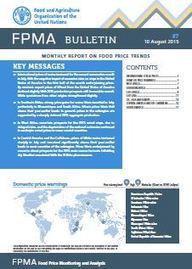
International prices of maize increased for the second consecutive month in July, with the negative impact of excessive rains on crops in the United States of America in the first half of the month underpinning prices. By contrast, export prices of wheat from the United States of America declined slightly with 2015 production prospects still favourable overall, while quotations from other origins strengthened slightly.
In Southern Africa, strong price gains for maize were recorded in July, particularly in Mozambique and South Africa, where prices were well above their year-earlier levels. In general, prices in the subregion are supported by a sharply reduced 2015 aggregate production.
In West Africa, uncertain prospects for the 2015 cereal crops, due to delayed rains, and the depreciation of the national currencies continued to underpin cereal prices in some coastal countries.
In Central America and the Caribbean, prices of white maize increased sharply in July and remained significantly above their year-earlier levels in most countries of the subregion. Prices were underpinned by concerns about prospects for the 2015 main season harvests following dry weather associated with the El Niño phenomenon.
|
|
Scooped by
MED-Amin
August 17, 2015 6:18 AM
|
Egypt, the world's largest wheat importer, could import less than 4 million tonnes of the grain in 2015-16, around 600,000 tonnes less than in 2014-15, the supplies minister said due to a new subsidised bread distribution system that has cut smuggling of wheat. Egypt had already lowered its wheat imports in 2014-15 to 4.6 million tonnes, from 6.4 million tonnes in 2013-14 due to a new smart card system, which was introduced in one city in May 2013 and has expanded to other regions since then.
"It is very possible that we will reach (4 million tonnes) and even break it," Khaled Hanafi told Reuters in an interview. Under the new bread subsidy system, families are issued plastic cards allowing them to buy five loaves per family member per day, leading to lower consumption.
Bakeries are paid for the subsidised loaves they sell, rather than being given a fixed allotment of cheap flour, making it harder to siphon off subsidies. Also, from the next harvest season in April 2016, Egypt would change the system it uses for domestic wheat procurement, giving subsidies directly to farmers instead of subsidising the grain, he said. "We are studying this system now so we can add details and numbers," Hanafi said.
In previous years Egypt annually fixed a local procurement price for Egyptian wheat that is above global prices in an attempt to encourage farmers to grow the crop. But the high price has led to a smuggling business, where foreign wheat is sold to the government, mostly Russian, falsely labelled as Egyptian. This year the fixed price was 420 Egyptian pounds ($53.64) per ardeb, which is equivalent to about 150 kg. The price is about $168 a tonne to $200 a tonne higher than the international market.
The new system might give preferential treatment for some farmlands or types of wheat over others and could also include paying farmers in advance, he said. The government would buy wheat at global prices instead of fixed price higher market rates. "Subsides could be given in accordance with land ownership. Over 60 percent of agricultural holdings in Egypt are less than one feddan," Hanafi added. One feddan is equal to around one acre.
|
|
Scooped by
MED-Amin
August 17, 2015 6:07 AM
|
La récolte céréalière de la saison 2015 a été, jeudi, au centre de la première réunion préparatoire de la commission de l’agriculture et de la pêche en prévision de la mise en oeuvre de la première phase du plan de développement (2016-2020).
Avec une récolte de 1,050 million de quintaux, le gouvernorat de Bizerte occupe la deuxième place au niveau national en matière de production céréalière.
La réunion, présidée par le commissaire régional au développement agricole de Bizerte a permis de définir, en présence des toutes les parties concernées, le calendrier de la première phase de préparation du plan de développement régional.
|
|
Scooped by
MED-Amin
August 17, 2015 6:05 AM
|
La Russie est bien partie pour dépasser sa prévision de récolte de céréales, déjà élevée à 100 millions de tonnes, malgré la sécheresse qui frappe certaines régions et les difficultés causées par la crise économique, a indiqué, lundi 3 août, le ministre de l'Agriculture.
« Nous conservons notre prévisions de récolte de céréales autour de 100 millions de tonnes, mais en cas de conditions météorologiques favorables, on peut parler de 1,5 à 2 millions de tonnes en plus », a déclaré Alexandre Tkatchev lors d'une réunion avec le Premier ministre, Dmitri Medvedev. Il a précisé que les exportations devraient représenter environ 30 millions de tonnes.
En 2014, la Russie, l'un des principaux exportateurs de céréales, avait enregistré une récolte de 104 millions de tonnes, soit la deuxième plus abondante depuis la chute de l'URSS.
Au 31 juillet, 39,1 millions de tonnes de céréales, dont 30,8 millions de tonnes de blé, avaient été moissonnés, contre 48,2 millions de tonnes à la même date un an plus tôt, selon le ministère de l'Agriculture. Cette baisse s'explique surtout par le retard pris dans les travaux agricoles puisque les surfaces récoltées sont inférieures à l'an dernier alors que les rendements moyens sont très proches.
M. Tkatchev, ancien gouverneur de la région agricole de Krasnodar (sud), nommé en avril à la place de Nikolaï Fedorov, a souligné que la moisson avait commencé en retard à cause de précipitations importantes au mois de juillet.
|
|
Scooped by
MED-Amin
August 17, 2015 6:01 AM
|
L'Année internationale des sols et la conférence de Paris sur le climat (COP 21) ont inspiré deux ouvrages engagés dans lesquels l'agriculture tient une large place.
« Cessons de ruiner notre sol ! » (1), du journaliste Frédéric Denhez, s'applique à décrire les raisons pour lesquelles, en France, « 26 m2 de terres fertiles disparaissent chaque seconde ». Quand les autres, exploitées de manière parfois peu durable, voient leur potentiel agronomique menacé.
« L'écologie peut encore sauver l'économie » (2), du journaliste Gérard Le Puill, fait l'analyse critique d'une mondialisation esclave de la théorie des avantages comparatifs qui concourt, elle aussi, à la dégradation des sols agricoles. Mais des solutions existent : agro-écologie plutôt qu'agro-carburants, agroforesterie plutôt qu'arrachage des haies, retour du maraîchage autour des villes...
(1) Flammarion, 210 pages, 14 €
(2) Pascal Galodé Editeurs, 310 pages, 22 €
|
|
Scooped by
MED-Amin
August 17, 2015 6:00 AM
|
L'excédent agroalimentaire français a progressé en juin 2015, pour le 4e mois consécutif, rapporte le ministère de l'agriculture dans une publication Agreste mise en ligne le 12 août.
L'excédent des échanges en produits agricoles bruts s'élève à 151 millions d'euros (M€) en juin 2015, et augmente de 39 M€ par rapport à juin 2014. L'excédent augmente avec les pays tiers et l'UE.
Les exportations (1.283 M€) augmentent de 186 M€ (+ 17 %) par rapport à juin 2014. Les exportations de céréales augmentent de 127 M€ (+ 24 %). Les ventes de maïs augmentent de 76 M€ (+ 75 %), sous l'effet de la hausse des quantités (+ 106 %) vers l'UE. Les ventes de blé tendre progressent de 29 M€ (+ 9 %), grâce à la hausse des quantités vendues (+ 23 %), notamment vers l'Egypte, les Philippines, la Thaïlande et la Corée du sud. Les exportations d'orge progressent de 19 M€ : les quantités vendues croissent vers la Chine. Les exportations de légumes augmentent de 23 M€ (+ 19 %) : la plupart des légumes sont concernés par cette hausse. Les prix et les quantités vendues croissent notamment vers l'UE. Les exportations de bovins vivants augmentent de 23 M€ (+ 26 %), grâce aux envois vers la Turquie, l'Italie et la Belgique.
Les importations (1.132 M€) augmentent de 147 M€ (+ 15 %) par rapport à juin 2014. Les importations de fruits progressent de 79 M€. Les achats de noisettes, amandes, pêches et nectarines sont ceux qui progressent le plus : prix et quantités achetées augmentent. Les importations de légumes croissent de 26 M€ (+ 14 %). La plupart des importations de légumes progressent, notamment du fait de la hausse des quantités achetées. Sous l'effet de la hausse du prix du café et du cacao, les achats de ces produits progressent respectivement de 10 et 7 M€.
|
|
Scooped by
MED-Amin
August 17, 2015 6:00 AM
|
« Les conditions de culture bonnes à très bonnes du maïs diminuent pour passer de 58 % à 55 % au 10 août alors que, l'an dernier, elles étaient de bonnes à très bonnes dans 86 % des cas », a indiqué vendredi FranceAgriMer dans son dernier bulletin Céré'obs.
Le stade floraison femelle des maïs était atteint à 100 % en moyenne sur la France au 10 août. « La date médiane de ce stade présente une avance de 6 jours par rapport à la date moyenne des quatre dernières années », précise FranceAgriMer.
Quant au stade humidité du grain à 50 %, il est plus avancé que l'année dernière (0% au 10 août 2014). Il est en moyenne atteint à 2 % sur le territoire. Sont concernées les régions Aquitaine (2 %), Bourgogne (1%), Centre (1%), Midi-Pyrénées 3%), Poitou-Charentes (4 %) et Rhône-Alpes (12 %).
Les conditions de culture bonnes à très bonnes diminuent pour passer de 58 % (semaine 31 se terminant le 3 août) à 55 % au 10 août. Pour mémoire, l'an dernier, elles étaient de bonnes à très bonnes dans 86 % des cas.
En moyenne sur la France, ces conditions de culture sont assez bonnes à 24 %, mauvaises à 14 % et très mauvaises à 6%. Mais ces deux derniers chiffres cachent de fortes disparités. Ainsi, si l'Aquitaine, la Bretagne et les Pays de la Loire ont peu de maïs en mauvais et très mauvais état, les autres régions sont plus touchées. Ce sont notamment la Bourgogne, la Franche-Comté et Rhône-Alpes qui sont le plus affectées avec respectivement 63 %, 44 % et 49 % des maïs en mauvais et très mauvais état.
C.Fr
|
|
Scooped by
MED-Amin
July 31, 2015 5:05 AM
|
Cooperativas Agro-alimentarias ha revisado las previsiones de la actual cosecha de cereales en España, corrigiéndola en 515.000 toneladas hasya situarla en 18.818.491 toneladas.
Informe completo: 04669.pdf
Así la cosecha de cereales 2015 será de 18.818.491 toneladas, lo que supone un descenso del -2,25% respecto al volumen de la campaña anterior (19.251.809 t.) y un -3,0% respecto a la media de los últimos años. La cifra supone una revisión al alza en 515.000 toneladas frente a las estimaciones realizadas por Cooperativas Agro-alimentarias en junio, debido a los mejores rendimientos observados en los trigos de Castilla y León. No obstante, en general, la cosecha de cereales de invierno (excluye maíz) será muy similar a la recogida en 2014; la diferencia viene marcada, principalmente, por un descenso en las producciones de Trigo blando y Maíz, con más de 400.000 toneladas menos en relación al año pasado.
La Cebada sigue siendo mayoritaria
Por especies, la Cebada continúa siendo el principal cereal producido en nuestro país con 6,83 millones de toneladas previstas (+3% frente a 2014), seguida del Trigo blando con 5,31 millones de t. (-7,5%), el Maíz con 4,28 millones (-8,6%), el Trigo duro con 838.225 toneladas (+17,4%), la Avena con 770.987 t. (+1,3%), el Triticale con 513.471 t. (+4,2%) y el Centeno con 264.111 toneladas (+20,8%).
La superficie de siembra de cereales ha sido de 6,01 millones de hectáreas, un -2,5% inferior a la registrada el año pasado, y aunque los rendimientos han sido muy heterogéneos dependiendo de las zonas y de las especies de cereal, tomando los datos en su conjunto los rendimientos no han sido muy diferentes a los obtenidos en 2014, apenas un +0,2%.
Por zonas
Por Comunidades Autonómas, destacar Castilla y León como el principal granero de nuestro país con una cosecha estimada para este año de 6.413.485 (+1,64% respecto a 2014), lo que supone el 34% de la producción nacional. Por especies, Castilla y León recolecta mayoritariamente Trigo blanco, Cebada y Maíz, en este orden.
Tras Castilla y León, la segunda comunidad productora de cereal es Castilla-La Mancha, con 3.168.101 toneladas previstas (+6,9% respecto al año precedente) y más de la mitad de esta cifra corresponde a Cebada; seguida de Aragón con 2.858.890 t. (+1,7%) y cerca de la mitad son Cebadas; Andalucía con 2.122.500 t. (-1,7%) y Extremadura con 1.084.106 t. (-22,4%).
|
|
Scooped by
MED-Amin
July 30, 2015 3:42 AM
|
Global Grain Geneva is planned Nov. 10-12 at the InterContinental in Geneva, Switzerland. Industry leaders will examine the 2016 outlook for grains, which presents a less significantly bearish view than was present at the beginning of 2015.
Extreme weather in the U.S. and Europe has brought production concerns, and a severe El Nino event in the year ahead could adversely affect growing conditions in Asia and Australia. In addition to presentations, networking opportunities are a large component of Global Grain events.
Agenda highlights include keynote sessions focused on production, yield and pricing updates for strategic origination regions; El Niño: Where do we stand?; update on Black Sea production and distribution; risk management strategies for producers, traders and buyers; and global freight outlook: bulk vs container.
Global Grain is planning a dedicated Middle East and North Africa (MENA) Briefing Day to highlight some of the key trends, concerns and opportunities in the region. Global Grain is launching a new conference in the region in 2016.
With Egypt still the world’s leading importer of wheat and Iran’s much expected return to the global agri-trading world it is critical that the world’s grain trading industry gives its focus to the Middle East and North Africa, Global Grain said.
The Briefing Day will offer the opportunity to: hear from top traders and buyers in the region; learn about major MENA demand markets including Egypt, United Arab Emirates, Turkey, Iran and Saudi Arabia; understand government policies affecting trade and consumption of grain; and analyze food and feed markets and how they are expected to change.
|
|
Scooped by
MED-Amin
July 30, 2015 3:29 AM
|
Au Maroc, la campagne céréalière 2014/2015 aura réservé une bonne surprise finale aux analystes qui s’attendaient déjà à un niveau record évalué à 110 millions de quintaux. Or le royaume aura réussi à produire 115 millions de quintaux (qx), soit près de 5% au dessous des prévisions initiales.
L’essentiel de cette production s’est concentré dans les bassins de Doukkala, Chaouia et El Haouz qui ont généré à eux seuls 45% de la récolte totale. Cette dernière est essentiellement composée de blé tendre (56 millions de qx), d’orge (35 millions de qx) et de blé dur (24 millions de qx). Il faut aussi noter que cette bonne récolte a été rendue possible par l’augmentation du rendement des superficies ensemencées qui est désormais de 21,4 qx l’hectare.
Au nombre des facteurs ayant favorisé cette performance, Medias 24 cite les conditions météorologiques extrêmement favorables, caractérisées par une excellente répartition temporelle et spatiale de la pluviométrie, et les efforts du gouvernement en matière de mécanisation agricole et de commercialisation de la production.
Aaron Akinocho
|
|
Scooped by
MED-Amin
July 27, 2015 5:19 AM
|
NEW DELHI: Developing countries including India are making all efforts in the WTO for a positive outcome on the food security issue, parliament was informed on Friday.
"The G-33 coalition of developing countries, of which India is also a member, is making all efforts to negotiate and achieve a positive outcome on the issue of public stockholding for food security purposes," Commerce and Industry Minister Nirmala Sitharaman said in a written reply to the Lok Sabha.
RELATED
Negotiations on to Upgrade Economic Co-operation with India: Singapore
Union Minister Nirmala Sitharaman Dares Rahul Gandhi to Visit Farmers in Congress-Ruled States
Fall in Global Demand, Dip in Oil Prices Impacting Exports: Nirmala Sitharaman
Ending months-long deadlock, the WTO in November last year acceded to India's demand to remove constraints on the food stockpiling issue.
The WTO's General Council, the highest decision making body of the organisation, accepted India's demand for extending the peace clause till a permanent solution is found for the food stockpiling issue.
This has enabled India to continue procurement and stocking of foodgrain for distribution to poor under its food security programme without attracting any kind of action from WTO members even if it breaches the 10 per cent subsidy cap as prescribed by the multilateral trade body.
For a permanent solution, India had proposed either amending the formula to calculate the food subsidy cap of 10 per cent which is based on the reference price of 1986-88 or allowing such schemes outside the purview of subsidy caps.
If no solution is found by the agreed deadline of December 31, the peace clause will continue till the time a solution is found.
She said that the decision of the General Council was adopted through consensus.
The WTO members "will not challenge the public stockholding programme of developing country members for food security purposes, in relation to certain obligations under the relevant WTO rules, that will remain in place in perpetuity until a permanent solution has been agreed and adopted," she said.
|
|
Scooped by
MED-Amin
July 27, 2015 5:13 AM
|
Egypt's state grain buyer the General Authority for Supply Commodities (GASC) is studying an extension of the decision to accept French wheat with higher moisture levels beyond the end of August, the state news agency MENA reported on Sunday.
Egypt, one of the world's largest wheat importers, has been accepting French wheat with a moisture level of up to 13.5 percent in its tenders with a penalty paid by traders.
GASC began accepting wheat with elevated moisture levels a year ago having previously set a 13 percent limit.
The higher moisture levels in the wheat affect the amount of flour extracted from it.
Mamdouh Abdel Fattah, the vice chairman of GASC, told the agency an extension of the exemption was being considered to diversify the origins of wheat that Egypt imports.
Egypt exerts a strong influence over the global wheat market with imports of 10 million tonnes per year, split more or less equally between the GASC and private importers.
France is one of Egypt's most important wheat suppliers but had struggled to meet the more stringent moisture limits imposed by GASC.
Egypt's GASC has so far not purchased any French wheat in the financial year 2015/2016 which started July 1.
In the previous year, it imported 1.040 million tonnes of French wheat. (Reporting By Maha El Dahan, editing by David Evans)
|
|
Scooped by
MED-Amin
July 27, 2015 5:09 AM
|
Le comité rizicole s'est déroulé le 15 juin 2015 sous la présidence de Bertrand MAZEL Retrouver les dossiers du comité rizicole du 15 juin 10215 Consulter les documents associésLe marché du riz en France - 15 juin 2015 161,52 kBLe marché international du riz - 15 juin 2015 2,19 MBLe marché du riz dans l'union européenne - 15 juin 2015 285,88 kBProgramme d'aide en faveur de la filière riz - 15 juin 2015 162,71 kB Présentation du programme 2015 - 15 juin 2015 2,05 MBAction de promotion et communication - 15 juin 2015 1,10 MBMAEC Riz - 15 juin 2015 59,30 kBAAP innovation et compétitivité des filières agricoles et agroalimentaires - 15 juin 2015 254,66 kB
|
|
|
Scooped by
MED-Amin
August 17, 2015 6:19 AM
|
Egypt's Gasc bought wheat below $200 a tonne, including shipping, for the first time in years in a tender which highlighted the competition among exporters for business – attracting more than 1.4m tonnes in offers.
Gasc, the grain authority for the world's biggest wheat-importing country, received offers of 24 cargos of wheat to its latest tender, two more than to its previous event, two weeks ago, and some 50% more than it was attracting a year ago.
Prices were lower too, with Ukrainian wheat entered by Olam at $188.49 a tonne excluding shipping, down 4.6% on the merchant's offer two weeks ago, and tendered by Venus at $185.165 a tonne.
Soufflet cut the value of its offers of French wheat by 10.5% to $188.94 a tonne – a drop far exceeding the 3% slide by Paris milling wheat futures over the past fortnight.
Indeed, there had been talk earlier in the week of French prices undercutting those from Russia, which is renowned for the competitiveness of its wheat supplies, and has indeed scooped most Gasc business so far in 2015-16.
|
|
Scooped by
MED-Amin
August 17, 2015 6:09 AM
|
Avec des importations qui dépassent désormais la barre des 70 millions de quintaux par année, selon les statistiques de l’ONS pour 2014, l’Algérie est le deuxième importateur de blé en Afrique et parmi les dix plus gros importateurs dans le monde. Avec autant de besoins, le marché algérien est naturellement suivi avec une attention particulière par les pays producteurs.
C’est le cas en France, qui en est le premier fournisseur, où les principaux acteurs de la filière céréalière nourrissent un intérêt singulier à l’égard du marché algérien. Rencontrés récemment lors d’un colloque intitulé « le blé, enjeux géopolitiques et diplomatie économique », organisé à Paris par IRIS (institut de relations internationales et stratégiques), des responsables d’organismes spécialisés dans les activités liées à la production céréalière ont été unanimes quant à la nécessité de renforcer le rapprochement entre les deux pays dans ce domaine.
D’emblée, le directeur général du groupe Soufflet Négoce, M. Jean-François Lépy, a apporté des éclairages non moins importants sur l’attachement de l’Algérie aux céréales françaises, à tel point que la France fournit jusqu’à 80% des importations annuelles effectuées par l’OAIC. Décidément, cette tendance n’est pas le fruit d’une stratégie d’entente bilatérale ou un consensus quelconque mais, plutôt, ceci est dû à l’avantage particulier des offres françaises lors des appels d’offres lancés régulièrement par l’OAIC. « La formation des prix du blé se fait à partir des appels d’offres où les cahiers des charges sont élaborés par les partenaires étrangers sur la base des critères qualité/prix. A cet égard, les offres françaises sont très compétitives grâce à des coûts de la logistique qui sont souvent très bas par rapport aux propositions des autres pays producteurs de la mer noire ou d’Amérique. Cet atout dont jouissent les exportateurs français, est motivé, d’un côté, par la proximité géographique et, de l’autre côté, par le développement important que connaît le réseau logistique et la flottille de transport en France », ce qui permet de réduire largement les coûts et, en conséquence, les prix de vente vers le marché algérien, explique le responsable du groupe Soufflet ayant plusieurs expériences sur le marché algérien.
Quant au président de l’association générale des producteurs de blé de France, (AGPB), M. Philippe Pinta, lui, estime que « la production céréalière française a une portée internationale parce qu’en face de nous, de l’autre côté de la Méditerranée, les besoins sont en croissance permanente, et où cette production est un facteur de stabilité sociale ». Le président d’Axereal, un groupe coopératif agricole et agroalimentaire français, M. Jean-François Loiseau, souligne de son côté que « la demande alimentaire croissante dans les pays voisins tire vers la hausse les importations en blé, c’est pour ça que la France, qui est à la porte de la Méditerranée, a un devoir de produire plus, non seulement pour le marché local, mais aussi pour ses clients à l’exportation. »
Le directeur général d’Arvalis, institut de végétal, M. Jacques Mathieu, a évoqué la problématique du blé dur qui, faut-il le préciser, est moins demandé sur le marché local, mais sa production est destiné dans sa majorité à l’exportation. L’Algérie, à elle seule, importe une moyenne de 30% de la production totale française en blé dur. A cet égard, le DG d’Arvalis estime que « le blé dur n’est, certes, pas un produit qui peut accéder au marché à terme mais, à travers lui, il y a un accès à la création de richesses parce que nous avons à nos portes les meilleurs clients, (allusion aux pays de la rive sud de la Méditerranée, dont l’Algérie, ndlr). Ces derniers vont acheter leur blé dur au Mexique ou au Canada s’ils ne le trouvent pas en France. »
|
|
Scooped by
MED-Amin
August 17, 2015 6:06 AM
|
Le blé est la base de l'alimentation pour 3 milliards de personnes mais ceux qui le consomment le plus sont souvent incapables de le produire. Cette situation confère à la poignée de pays exportateurs, dont la France, une responsabilité majeure.
Pour Sébastien Abis, chercheur à l'Institut des relations internationales et stratégiques (Iris) et auteur de la "Géopolitique du blé" (Ed. Armand Colin), cette réalité économique et stratégique est beaucoup trop ignorée, ou minimisée, par les décideurs alors que la France, cinquième producteur est aussi le 3e exportateur mondial.
|
|
Scooped by
MED-Amin
August 17, 2015 6:04 AM
|
L'Algérie, un des plus gros importateurs de céréales au monde, pourrait atteindre l'autosuffisance en blé dur d'ici 2019 mais à condition d'une large extension de la superficie irriguée consacrée à la céréaliculture.
"Si nous arriverons à réaliser, à l'horizon 2019, l'objectif retenu de 600.000 ha de céréales en irrigué avec un rendement moyen de 30 quintaux/ha, nous pourrons facilement atteindre l'autosuffisance en blé dur", avance le directeur général de l'Office algérien interprofessionnel des céréales (Oaic), Mohamed Belabdi, dans un entretien à l'APS.
La céréaliculture est largement dépendante de la pluviométrie en Algérie puisque sur une superficie totale de 3,4 millions d'ha, seulement 240.000 ha bénéficient actuellement de l'irrigation, soit 7% de cette superficie.
C'est que les prévisions du quinquennat 2015-2019 tablent sur une production céréalière de 69,9 millions de quintaux (qx), soit environ le double de la récolte actuelle, et ce, en tablant sur l'extension des surfaces irriguées d'un (1) million d'ha supplémentaire dont 600.000 ha seront réservés à la culture céréalière.
"Nous sommes en train de booster la filière blé dur et orge, des produits qui sont à notre portée étant donné que l'Algérie, historiquement, est un producteur de blé dur de bonne qualité", souligne M. Belabdi.
Les rendements de blé dur se sont relativement améliorés ces dernières années grâce à la nouvelle politique de soutien et d'accompagnement adoptée par les pouvoirs publics depuis 2009, en passant de 10 qx/ha à 20 qx/ha.
Mais la facture des importations continue à peser puisqu'elle avait atteint plus de 784 millions de dollars en 2014 pour une quantité de 1,98 million de tonnes, contre plus de 434 millions de dollars en 2013 (1,09 million de tonnes).
"Le blé dur coûte deux fois plus cher que le blé tendre sur un marché mondial constamment instable", observe M. Belabdi expliquant l'intérêt porté par l'Oaic à la réduction des importations en s'impliquant dans le développement de la production nationale.
Surtout que les importations des céréales en général (blés dur et tendre, orge et maïs) se sont établies à 3,54 milliards de dollars en 2014, contre 3,16 mds usd en 2013 (+12%).
|
|
Scooped by
MED-Amin
August 17, 2015 6:01 AM
|
Le ministère de l'agriculture a rendu publiques, lundi, ses prévisions de production de céréales, oléagineux, protéagineux, betterave et pomme de terre en 2015.
La production de blé tendre, à 39,3 millions de tonnes (Mt), augmenterait de 4,7 % par rapport à la campagne précédente. Le rendement atteindrait 76,1 q/ha, en hausse de 1,3 q/ha sur un an, écrit le ministère dans une publication Agreste mise en ligne le 10 août.
La récolte de blé dur augmenterait de 18 %, les surfaces progressant de 13 %.
La récolte d'orge, à 12,2 Mt, serait en augmentation grâce à une hausse des rendements, principalement en orge d'hiver.
- 28 % pour le maïs-grain
La récolte de maïs-grain (y compris semences) s'établirait à 13,5 Mt en 2015, en baisse de 28 % sur un an, avec une première prévision de rendement à 81 q/ha.
La production de maïs-fourrage baisserait de 16 %, revenant à 16,9 Mt.
|
|
Scooped by
MED-Amin
August 17, 2015 6:00 AM
|
Le ministère américain de l'Agriculture (USDA) prévoit une récolte de blé mondiale « record » en 2015, après avoir revu ses prévisions en raison de hausses de production dans la région de la mer Noire.
La récolte planétaire de blé devrait atteindre 726 millions de tonnes (Mt) cette année, soit plus de 4 Mt de plus que les estimations du mois précédent, explique mercredi l'USDA dans son rapport mensuel sur l'état de l'offre et de la demande mondiales de céréales et d'oléagineux. Si les prévisions se confirment, cette moisson affichera un niveau « record », prévoient les auteurs du rapport.
La « production accrue » en Russie, Ukraine, Kazakhstan, attendue à 115 millions de tonnes, explique principalement cette estimation relevée. « Les conditions de cultures de blé de printemps en Russie et au Kazakhstan sont toujours excellentes. La production de blé d'hiver en Russie et en Ukraine est meilleure qu'attendue, surtout si l'on considère la sécheresse de l'automne dernier », détaille l'USDA.
Les perspectives sont également bonnes en Turquie. Les prévisions pour l'Union européenne sont maintenues à un niveau élevé, près de 148 Mt. En revanche, les Etats-Unis pourraient produire 300.000 tonnes de blé de moins que prévu le mois dernier, les amenant juste au-dessus de 58 Mt. La récolte devrait aussi être moins bonne que prévue au Canada, à cause de la sécheresse qui frappe certaines régions productrices.
|
|
Scooped by
MED-Amin
July 31, 2015 5:07 AM
|
L’Union européenne et la FAO lancent deux nouveaux programmes à l’appui de la sécurité alimentaire, de l’agriculture durable et de la résilience
Communiqué de presse de la FAO
Lors de la 3e Conférence internationale sur le financement du développement, organisée à Addis-Abeba, en Ethiopie, les pays riches se sont engagés à accroître leur aide publique aux pays en développement (APD). Une bonne nouvelle si l’on considère que l’Union européenne est encore loin de son engagement à y consacrer 0,7 % du revenu national brut (RNB). L’APD collective de l’UE représentait 0,42 % du revenu national brut (RNB) de l’UE en 2014.
En parallèle, l'Union européenne et la FAO ont lancé un nouveau partenariat visant à renforcer la sécurité alimentaire et nutritionnelle, l'agriculture durable et la résilience dans au moins 35 pays, à travers deux initiatives (le mécanisme FIRST et le programme INFORMED)1. Le but de ces deux initiatives est non seulement de fournir des informations fiables en temps utile aux décideurs locaux mais également d’accompagner les gouvernements à la mise en place d’une politique agricole durable pour faire face aux risques tant exogènes qu’endogènes.
Finalement, le renforcement du partenariat UE/FAO est la preuve que l’agriculture est la variable stratégique qui doit être replacée au centre des préoccupations de développement. Pour cela, il faut maintenir et développer des politiques agricoles nationales, régionales et mondiales en réorientant leurs objectifs premiers vers la garantie du droit à l’alimentation. Et parallèlement, concevoir des régulations des échanges agricoles mondiaux de façon à protéger les agricultures vivrières aujourd’hui en concurrence avec les agricultures exportatrices les plus compétitives.
|
|
Scooped by
MED-Amin
July 30, 2015 3:46 AM
|
Yield forecasts for all crops at EU-28 level have been
lowered compared to last month’s forecast due
suboptimal weather conditions. The forecast for winter
cereals remains above the 5-year average but the
forecast for total cereals dropped just below the 5-year
average, due to the significant downward revision for
grain maize. The bulletin is available here.
|
|
Scooped by
MED-Amin
July 30, 2015 3:39 AM
|
Egypt’s supplies minister Khaled Hanafi said his country would change the system it uses for domestic wheat procurement, starting from April 2016.
In a Reuters interview on Monday, Hanafi also said it was "very possible" that Egypt could import less than 4 million tonnes of wheat in 2015-16.
He added that Egypt would import vegetable oil from global markets without using middlemen or direct-order agreements.
|
|
Scooped by
MED-Amin
July 27, 2015 5:23 AM
|
La campagne céréalière 2014/2015 a été très difficile pour le blé français au Maghreb. Au des 11 premiers mois de cette campagne, la France n’a exporté que 4 millions de tonnes de blé tendre vers cette région, contre 7,1 millions de tonnes à la même période l'an passé. « Cette baisse est particulièrement flagrante vers l'Algérie qui a dû diversifier ses sources d'approvisionnement pour satisfaire aux exigences de son cahier des charges, en raison de la baisse du disponible français », explique le site spécialisé France Agricole qui précise que l’Algérie s’est tournée vers l’Allemagne, la Suède, la Pologne et le Royaume Uni pour ses approvisionnement en blé tendre.
Dès le début de la campagne, les exportations françaises de blé vers l’Algérie ont fortement reculé. La France n’en a exporté que 1,3 million de tonnes de blé au premier décembre 2014, contre 2,2 millions à la même période en 2013. Au plus fort de la campagne, le blé français n’a pas pu arrêter sa décote auprès de son premier client. Selon les statistiques de l’Etablissement public FranceAgriMer, les exportations de blé vers l’Algérie ont baissé de 44 % durant les premiers mois de la campagne 2014/2015, en s’établissant à un peu moins de 2 millions de tonnes contre près de 3,6 millions de tonnes à la même période un an auparavant.
L’argument de la mauvaise qualité
Les raisons de cette baisse vertigineuse ont trait à la mauvaise qualité de récolte qui a été affectée par des conditions météorologiques difficiles. C’est d’ailleurs argument de la mauvaise qualité du blé qui a été mis en avant par l’Office algérien interprofessionnel des céréales (OAIC), en charge des importations, pour refuser la récolte française. L’Algérie demeure, à coté de l’Egypte, l’un des plus grands importateurs de céréales au monde. Les importations de blé ont cru en volume et en valeur durant les cinq premiers mois de l’année 2015 dans un contexte marqué par des baisses significatives des différents produits notamment, les médicaments, les matériaux de construction et l’automobile.
La facture globale de l’importation des céréales a atteint un montant de 1,65 milliard de dollars durant les cinq premiers mois de 2015. En volume le blé a connu une hausse sensible en volume et valeur. Pour le blé dur, la facture a atteint 435,98 millions de dollars pour 886.764 tonnes importées, contre 281,98 millions de dollars pour 723.935 tonnes à la même période en 2014, selon les statistiques du Centre national de l'information et des statistiques des douanes (CNIS). Quant au blé tendre, la facture des importations s'est établie à près de 720,15 millions de dollars pour 2,77 millions de tonnes, contre 693,12 millions de dollars pour 2,29 millions de tonnes à la même période en 2014.
|
|
Scooped by
MED-Amin
July 27, 2015 5:17 AM
|
Le Brésil devrait devenir le premier exportateur de produits agricoles et alimentaires dans le monde, selon le rapport annuel sur les perspectives agricoles 2015-2024 de l'Organisation des Nations unies pour l'alimentation et l'agriculture (FAO) et de l'Organisation de Coopération et de Développement Économiques (OCDE), publié le 16 juillet. Selon les statistiques des deux organisations, les exportations agricoles et alimentaires brésiliennes s'élevaient à 89,5 milliards de dollars en 2013, soit 6 fois plus qu'en 2000, date à laquelle elles atteignaient 14,3 milliard de dollars. Une fois de plus, ces statistiques confirment l’importance stratégique majeure de l’agriculture, désormais première source de devises du pays. La Ferme monde n’aura ainsi jamais aussi bien portée son nom, détronant, à terme, les Etats-Unis.
Les clés d’une telle réussite ? Entre autres, une sécurisation de sa production nationale par la stimulation de la demande alimentaire et non alimentaire, mais également par le biais de mécanismes contracycliques couplés et d’outils assuranciels des risques de marchés.
Pour Daryll E. Ray et Harwood D. Schaffer de l’APAC, la hausse de la production de soja tirée par la demande chinoise est également l’un des facteurs expliquant les raisons pour lesquelles le Brésil pourrait devenir le garde-manger du monde d’ici 2024. Mais il y a un bémol, précisent les experts dans un article que nous reproduisons ci-après1, la dépendance du Brésil au marché chinois et à la poursuite de sa croissance économique. Si la demande chinoise venait à baisser il faudra au Brésil rapidement s’adapter pour trouver d’autres marchés porteurs.
|
|
Scooped by
MED-Amin
July 27, 2015 5:10 AM
|
Les quantités de céréales collectés jusqu'au 21 juillet 2015 ont atteint 6,62 millions de quintaux, contre 10,1 millions de quintaux au cours de la même période 2014, annonce le ministère de l'Agriculture, des Ressources hydrauliques et de la Pêche dans un communiqué publié, mercredi.
|