Your new post is loading...

|
Scooped by
CIHEAM News
February 20, 2019 10:02 AM
|
Algérie Presse Service, 29/01/2018 - Une réunion de travail consacrée à l'examen du projet de modernisation du système d'information intégré de gestion dans la filière céréale s'est tenue le 29 janvier à Alger, a indiqué le ministère de l'Agriculture, du développement rural et de la pêche. Ce projet a été présenté par l'Office algérien interprofessionnel des céréales (OAIC) en présence du ministre du secteur, Abdelkader Bouazghi. Ce nouveau système d'information de gestion, dont la mise en place est prévue pour 2019, prévoit l'informatisation de l'ensemble des mouvements des céréales et légumes secs exécutés par le réseau de l'OAIC à travers le territoire national, dans le cadre des missions de régulation et d'appui à la production, a précisé la même source.
|
|
Scooped by
CIHEAM News
February 20, 2019 4:45 AM
|
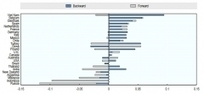
Publiée début 2019 par l'Organisation de coopération et de développement économique (OCDE), une étude analyse l'évolution, sur la période 2004-2014, de la participation de soixante-dix pays et régions aux chaînes de valeur mondiales (CVM) agricoles et agroalimentaires, et son impact sur leurs économies. Dans un premier temps, les auteurs analysent l'évolution de cette participation, pour chaque pays, vers l'amont (part des exportations nationales produites à partir d'intrants étrangers) et vers l'aval (part des exportations nationales utilisées, en tant qu'intrants, dans les exportations d'autres pays). Au niveau sectoriel, l'intégration dans les CVM du blé et autres céréales, des oléagineux et de la viande bovine a particulièrement augmenté, de plus de 50 %. Dans un deuxième temps, l'étude s'intéresse à l'impact de la participation des pays aux CVM sur leur secteur agricole. À partir d'une analyse économétrique, les auteurs montrent que l'importation d'intrants pour la production d'exportations (participation amont) augmente la création de valeur ajoutée au sein des filières agricoles...
|
|
Scooped by
CIHEAM News
February 18, 2019 9:45 AM
|
UkrAgroConsult, 12/02/2019 - Tunisia's state grains agency has issued an international tender to purchase 92,000 tonnes of durum wheat, 100,000 tonnes of soft wheat and 75,000 tonnes of feed barley, European traders said on Tuesday. The tender closes on Feb. 13, they said.The grains can be sourced from optional origins. The durum was sought in three 25,000 tonne consignments and one of 17,000 tonnes, the soft wheat in four 25,000 tonne consignments and the barley in three 25,000 tonne consignments. All were sought for shipment between March 15 and April 25 depending on origin supplied.
|
|
Scooped by
CIHEAM News
February 18, 2019 7:57 AM
|
À l’occasion du Paris Grain Day fin janvier 2019, des experts en macroéconomie ont analysé le potentiel impact des marchés financiers et de ceux des matières premières non agricoles sur le marché des grains. Selon eux, le ralentissement de la croissance mondiale et l’instabilité géopolitique qui perdure dans de nombreuses régions aspirent à la prudence quant à l’évolution du prix du blé et autres grains en 2019.
|
|
Scooped by
CIHEAM News
February 18, 2019 3:20 AM
|
Le réseau méditerranéen d'information sur les marchés céréaliers en Méditerranée (MED-Amin-Mediterranean Agricultural Information Netw...
|
|
Scooped by
CIHEAM News
February 14, 2019 3:17 AM
|
Le raffinage du sucre au Royaume-Uni a tout à gagner d'un Brexit dur. L'ancien secrétaire d'Etat à la sortie de l'Union européenne était d'ailleurs un ancien cadre dirigeant de la plus grande raffinerie de sucre britannique.
400 acteurs européens de l’agroalimentaire se sont rapprochés pour proposer une nouvelle architecture de gouvernance, dans l’espoir de créer une « politique alimentaire commune ».
Via Pôle Veille AgroParisTech
|
|
Scooped by
CIHEAM News
February 7, 2019 10:16 AM
|
Ce rapport plaide en faveur d'une politique alimentaire commune pour l'Union européenne: une politique fixant la direction du voyage pour l'ensemble du système alimentaire, regroupant les différentes politiques sectorielles ayant une incidence sur la production, la transformation, la distribution et la consommation des aliments, et recentrant toutes les actions sur la transition vers la durabilité. Il met en évidence les objectifs contradictoires des politiques existantes et le potentiel de création de nouvelles synergies. Le rapport définit une nouvelle architecture de gouvernance des systèmes alimentaires et propose une vision concrète de la réforme et du réalignement des politiques nécessaires pour mettre en place des systèmes alimentaires durables. La vision de la politique alimentaire commune s’appuie sur l’intelligence collective de plus de 400 agriculteurs, entrepreneurs en alimentation, activistes de la société civile, scientifiques et décideurs consultés dans le cadre d’un processus de recherche et de délibération d’une durée de trois ans.
|
|
Scooped by
CIHEAM News
February 5, 2019 5:43 AM
|
|
|
Scooped by
CIHEAM News
February 5, 2019 4:47 AM
|
The HuffPostMaghreb, 04/02/2019 - Les représentants des quatre organisations professionnelles en Tunisie, appellent lundi l’Etat à renoncer à la fixation des prix et à les soumettre à la règle de l’offre et de la demande. Le Ministre du Commerce Omar Behi indique que 87% des produits exposés à la vente sont déjà ”libéralisés” et que les produits agricoles importés ne dépassent pas 0,1% de l’ensemble des produits importés. De son côté, le président de l’Union Tunisienne de l’Agriculture, et de la Pêche (UTAP), Abdelmajid Ezzar, a souligné la nécessité d’adapter les prix des produits agricoles à l’effort de l’agriculteur et au coût de la production, appelant ”à renforcer le sytème de production agricole et à faciliter la commercialisation des produits agricoles”. Tous réitèrent la proposition de l’Organisation en 2012, et appellent à créer un observatoire national des prix.
|
|
Scooped by
CIHEAM News
February 1, 2019 9:09 AM
|
by Feedstuffs, 17/01/2019 - Brazil is expected to increase its feed production volume to 100 million metric tons (mmt) during the next several years based on the level of pork and poultry production in the country and the global commodity market, according to feed industry experts and analysts in the department of feed production of the Russian Ministry of Agriculture. At present, Brazil remains the largest feed producer in Latin America and the third largest on a global scale. Last year, it produced almost 70 mmt of feed, twice as much as India, the world’s fourth largest producer. Local analysts believe the country has not yet fully realized its potential in the global feed market. In fact, the volume of feed production in Brazil has been growing for the last seven years. Analysts predict the growth is expected to continue until at least the beginning of 2020, largely due to the large raw materials base of the industry and low production costs.
|
|
Scooped by
CIHEAM News
February 1, 2019 9:05 AM
|
|
|
Scooped by
CIHEAM News
February 1, 2019 6:03 AM
|
Reuters, 21/01/2019 - EU set to break last season's maize import record. Imports fuelled by 2018 drought, big Ukraine crop. Maize flows have turned EU into net cereal importer. Imports seen easing next year if EU harvest rebounds. EU maize imports are running at a record pace, turning the bloc into a net cereal importer for the first time in a decade, as the livestock industry uses a bumper Ukrainian harvest to make up for a lack of forage caused by a torrid summer.
|
|
|
Scooped by
CIHEAM News
February 20, 2019 9:31 AM
|
Abstract of the publication on Physica A (01/11/2018) - Food trade plays an important role in improving each country’s food security, and will be even more critical under climate change. Previous literature mainly analyzed the evolution of global food trade from the view of importers with less attention to the possible competitive relationships among importers. In this paper, we explored global food trade from the perspective of competition and investigated regions and countries’ adaptive behaviors to enhancing food security in relation to weather patterns, which is relevant to climate change. We collected global wheat trade data from the UN Comtrade database and constructed wheat-trading competition networks. We studied overall features, core–periphery structure (differentiating the whole network into two groups: the core and the periphery) and the evolution of the network over time. The results revealed that wheat trade had formed a global competition pattern, while the number and tightness of competitive relationships gradually decreased with time. A second finding was that core countries and periphery countries were clearly identified in the wheat competition network. Large wheat importers such as Italy, Egypt, Japan and Algeria, were the main driving force for evolution of the competition pattern and...
|
|
Scooped by
CIHEAM News
February 18, 2019 9:48 AM
|
Infomédiaire, 12/02/2019 - Les opérateurs australiens sont très intéressés par le marché céréalier marocain à fort potentiel d’importation, a déclaré, à Sydney, le ministre de l’Agriculture, de la pêche maritime, du développement rural et des eaux et forêts, Aziz Akhannouch. « Les opérateurs australiens ont manifesté un grand intérêt pour le marché marocain », réputé pour être un grand importateur des céréales, a indiqué M. Akhannouch dans une déclaration en marge de la visite d’une délégation marocaine au siège de GrainCorp, leader Australien d’exportation de céréales. Le marché céréalier marocain à fort potentiel d’importation intéresse particulièrement les exportateurs australiens qui cherchent...
|
|
Scooped by
CIHEAM News
February 18, 2019 9:43 AM
|
Zawya MENA Edition (Reuters), 18/02/2019 - Algerian state grains agency OAIC has issued an international tender to purchase a nominal 50,000 tonnes of feed barley, European traders said on Monday. Origin was optional and tender deadline is Wednesday, Feb. 20, with offers having to remain valid to Feb. 21. they said. Shipment was sought between March 16-31.
|
|
Scooped by
CIHEAM News
February 18, 2019 7:55 AM
|
Pourquoi les prix du blé commencent à baisser ? Les prévisions de nouvelle campagne pourrait-elles impacter la campagne actuelle ? Eléments de réponse avec Arthur Portier, Expert chez Agritel. Depuis plusieurs jours, "les prix du blé sont en train de baisser petit à petit" déclare Arthur Portier, Expert chez Agritel. Pour l'expert c'est un moindre mal puisque "cette baisse rend l'origine française compétitive sur la scène internationale, puisque le blé français est parmi les moins chers au monde." L'origine française s'achète aujourd'hui 10 $ la tonne sous le blé russe. L'autre bonne nouvelle pour Arthur Portier, c'est le retour des acheteur internationaux comme l'Egypte, l'Algérie ou encore la Tunisie, ces derniers jours. Ce regain de compétitivité permet donc à la France de "remporter une part non négligeable du gâteau." Mais pour lui ce sont des "signes encourageants", "à surveiller."
|
|
Rescooped by
CIHEAM News
from ROBOTS ET HUMANOÏDES
February 18, 2019 3:05 AM
|
The ministries of agriculture of Iran, Russia and Kazakhstan have concluded a trilateral memorandum of understanding on the issue of wheat trade.
Via Système de veille
La note obtenue est sur 100. Elle fait la synthèse des six notes obtenues dans les domaines suivants : environnement, traçabilité, nutrition-santé, bien-être animal et les conditions de travail, équité et contribution à l'économie française, et intérêt général.
Via Pôle Veille AgroParisTech
|
|
Scooped by
CIHEAM News
February 11, 2019 6:28 AM
|
By Elizabeth Westendorf, USW Assistant Director of Policy This week, Wageningan University —one of the top agricultural universities in the world, located in the Netherlands —issued a press release about their research on using gene editing to produce “gluten safe” wheat so that individuals with Celiac disease can enjoy wheat products. It is possible to …
|
|
Scooped by
CIHEAM News
February 5, 2019 5:56 AM
|
Based in one of the major global grains and oilseeds trading hubs, this event in Dubai (29 April - 1 May 2019) brings together the major traders, consumers and producers involved in the Middle East and North Africa supply chain to understand future demand. With the MENA region long established as one of the most prominent global import regions, you’ll be able to meet with those facilitating trade into the region and build commercially valuable and profitable business relationships. Topics will include: - Feed and flour miller’s procurement strategies
- How traders are generating returns in the current economic climate
- The role and opportunities for Black Sea grain traders
- Understanding the commercial situation for ocean freight fleets
|
|
Scooped by
CIHEAM News
February 5, 2019 5:18 AM
|
The British withdrawal from the EU is expected to lead to significant changes in the UK’s trade relationships with the EU and with other countries who currently have trade agreements with the EU. This could have large impacts on the British food system and diet-related risk factors because the majority of the domestic demand, e.g. for fruits, vegetables, and some meats, is currently met by imports. Here we analyse the potential implications of Brexit for changes in agricultural trade, food consumption, and chronic disease mortality related to changes in dietary risk factors. Whilst the precise conditions of Brexit and Britain’s future trade regime are uncertain, we show that negative health impacts related to changes in agricultural trade and national food consumption can be expected under a range of possible future trade scenarios. The mechanisms behind these estimates reflect fundamental challenges to the British food system after Brexit. With its large import dependence, in particular of fruits and vegetables, any increase in trade costs can be expected to negatively impact the availability and consumption of foods that are critical components of healthy diets and chronic-disease prevention.
|
|
Scooped by
CIHEAM News
February 3, 2019 9:25 AM
|
The project CERERE2020 funded by the Horizon 2020 Program is dedicated to promote the diversity in organic and low input food systems in particular for cereals/grains. Here is an example of Practice Abstract of an initiative carried out in Italy that foster the use of local and diverse cereal varieties in the school canteen diet.
|
|
Scooped by
CIHEAM News
February 1, 2019 9:06 AM
|
|
|
Scooped by
CIHEAM News
February 1, 2019 6:08 AM
|
UkrAgroConsulting, 17/01/2019 - Canada government, with the aim to drive innovation and discovery in wheat, barley, varied field crops and soybeans over the next 5 years, has announced funding of C$39.3 million.
The financial support for the 4 science clusters is part of the Canadian Agricultural Partnership and comprises industry contributions worth C$28.4 million for a total of C$67.7 million.
Minister of Agriculture and Agri-Food, Lawrence MacAulay said, “Demand for our field crops continues to grow and these investments in innovation and research will help in positioning the cultivators to grow top quality products sustainably, while meeting customer demands at home as well as abroad for years to come”. The Barley Cluster (C$6.3 million) intends to improve output in the science and technology of using barley for food and boost disease resistance. The Barley Council of Canada will lead the cluster. Brian Otto of Barley Council of Canada said, “Ongoing investment in barley research and innovation to improve varieties, production practices and utilization is very important to the continued sustainability and productivity of the barley value chain”.
On the other hand, the Diverse Field Crop Cluster (C$13.7 million) emphasizes upon - variety development, production agronomy, crop protection and value-added practices to maintain diverse crop growth. The Ag-West Bio Inc will lead the cluster. Ag-West Bio director of corporate initiatives, Mike Cey said, “Crop diversity is important for keeping Canada’s agricultural ecosystem fit and productive”. He said “The Diverse Field Crops Cluster research will develop these high-potential crops and the markets to go with them. Growers will have more high-value crops to pick from. The Cluster will also deliver economic and environmental benefits for Canada.”
The Wheat Cluster (C$13.9 million) plans to provide higher-yielding wheat varieties to the producers and to build up the next generation of Fusarium Head Blight resistant varieties. Canadian Wheat Research Coalition will lead it.
|