Your new post is loading...

|
Scooped by
CIHEAM News
March 7, 2019 5:35 AM
|
European Commission - Press Release 07/03/2019 - The Task Force for Rural Africa delivered today its final report, an agri-food and rural agenda for the new ‘Africa-Europe Alliance for Sustainable Investment and Jobs' unveiled by President Jean-Claude in the 2018 State of the Union. According to the recommendations of this group of African and European experts, Africa and the EU should develop a partnership operating at three levels: people to people, business to business, and government to government. It would institute a multi-stakeholder dialogue at all levels, starting locally, and enable a closer connection between African and European societies, business communities and governments. Launched in May 2018 by the European Commission, the Task Force was set up to provide advice on strengthening the Africa-Europe partnership in food and farming. Building on some of the short term recommendations made by the Task Force, the European Commission will start implementing the following projects: - Twinning and exchange programmes between African and European agricultural bodies;
- AU-EU Agribusiness platform;
|
|
Scooped by
CIHEAM News
March 7, 2019 5:13 AM
|
Sunraysiadaily.com, 05/03/2019 - The Australian wheat industry is looking to Myanmar as an increasingly important and valued market in the South-East Asian region. Australia holds almost 90 per cent of the Myanmar wheat market, having doubled exports from 200,000 tonnes in 2012 to 400,000 tonnes, worth $117 million, in 2017. To maintain Australia’s dominance of this market as it continues to grow, the Australian Export Grain Innovation Centre (AEGIC) has ...
|
|
Scooped by
CIHEAM News
March 5, 2019 9:29 AM
|
FAO, 2019 - Le rapport sur L’État de la biodiversité pour l’alimentation et l’agriculture dans le monde rend compte de l’état et de la gestion de la biodiversité pour l’alimentation et l’agriculture dans le monde en s’appuyant,
aux fins de cette évaluation, sur les informations contenues dans 91 rapports nationaux (auxquels ont
contribué plus de 1 300 personnes) et 27 rapports émanant d’organismes internationaux, ainsi que sur les apports fournis par plus de 175 auteurs ou relecteurs. Le rapport met en avant:
• les multiples contributions que la biodiversité pour l’alimentation et l’agriculture apporte à la sécurité alimentaire et à la nutrition;
• les principaux facteurs de changement qui influent sur la biodiversité pour l’alimentation et l’agriculture;
• l’état et l’évolution des divers éléments de la biodiversité pour l’alimentation et l’agriculture;
• la situation en ce qui concerne la gestion de la biodiversité pour l’alimentation et l’agriculture;
• la situation en ce qui concerne les politiques, les institutions et les capacités qui contribuent à une
utilisation durable et à la conservation de la biodiversité pour l’alimentation et l’agriculture;
• les besoins en matière de gestion de la biodiversité pour l’alimentation et l’agriculture et les défis
à relever.
|
|
Scooped by
CIHEAM News
March 5, 2019 4:33 AM
|
OECD Food, Agriculture and Fisheries Papers - Preferential trading agreements are becoming a more common feature of the global agro food trading environment, a trend that has increased since the early 2000s. While they increasingly cover the majority of trade worldwide, there remains a question as to the extent to which their treatment of...
|
|
Scooped by
CIHEAM News
March 5, 2019 4:16 AM
|
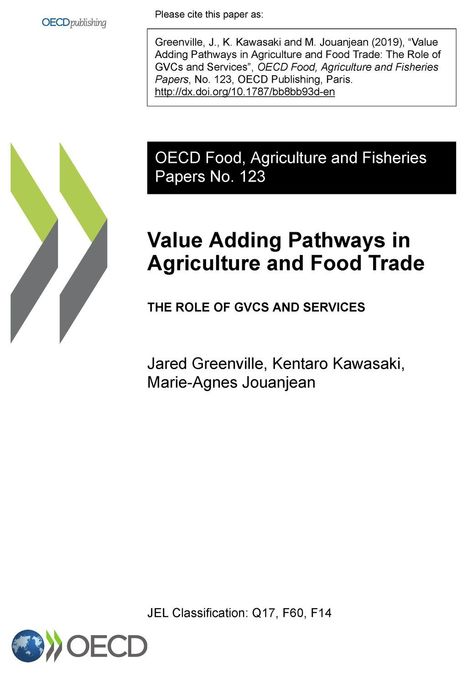
OECD Food, Agriculture and Fisjeries Papers - Global value chains (GVCs) in agriculture and food sectors contribute to sector growth and development. However, agricultural trade is subject to significant distortions that limit trade which in turn impacts on its competitiveness world-wide. Using the OECD Metro model, this study analyses the...
|
|
Scooped by
CIHEAM News
March 5, 2019 4:08 AM
|
This report synthesises OECD work analysing agricultural policies, markets and trade. It highlights recent developments in agricultural markets and policies.
|
|
Scooped by
CIHEAM News
March 1, 2019 9:10 AM
|
World Grain, 28/02/2019 — Large global and domestic supplies of wheat, corn and soybeans will limit short-term price gains, while record cocoa bean production will keep stocks high and the dairy market must contend with growing competition from Europe, analysts said at the International Sweetener Colloquium on Feb 26. The removal of Chinese tariffs will “not be a big impact on soybeans,” said Stephen Nicholson, senior analyst, Rabo Agrifinance. “The market expects a trade agreement,” he said, predicting a “quick blip” as pipelines are refilled but not a lot of longer-term upside for the “extremely bearish” soybean market with record domestic stocks and global stocks the second highest on record.
|
|
Scooped by
CIHEAM News
March 1, 2019 8:55 AM
|
By AgriCensus, 20/02/2019 - Brazil’s position as one of the few exporters prepared to run the gamut of US sanctions and supply corn to Iran is helping to upend the country’s export dynamics, as geopolitics, trade fears and economics sees southern states exchange Brazilian corn for Argentine imports. “The crazy thing is that ports in the states of Rio Grande do Sul and Santa Catarina are exporting corn this month – this is not normal at all,” one market source told Agricensus. The news comes as the same states – which are home to a significant chunk of Brazil’s livestock sector – have imported corn from Argentina in recent days, in a move that often reflects Brazil’s high domestic prices and poor internal supply logistics. “The state of Santa Catarina normally buys some corn from Argentina and Paraguay because those countries are close, because Santa Catarina needs more corn than it is able to grow and because it’s cheaper to buy corn from those countries,” Agrural’s Daniele Siqueira told Agricensus. Which is where geopolitics kicks in – Iran has been increasingly reliant upon Brazilian corn supply since US president Donald Trump re-imposed sanctions on the country in December 2018...
|
|
Scooped by
CIHEAM News
March 1, 2019 8:37 AM
|
Par FMES, 04/02/2019 - Un article de Mustapha BENCHENANE, docteur d’Etat en science politique, conférencier au Collège de l’OTAN et éditorialiste à l’institut FMES. Le « Maghreb central » est composé de l’Algérie, du Maroc et de la Tunisie. Sur les plans économique et social, l’adaptation à l’économie de marché mondialisée constitue son plus grand défi. Pour le réussir, il aurait fallu de profondes réformes structurelles. Au cœur de ces réformes, il était impératif de placer un système éducatif performant. Cela signifie des maîtres compétents et intègres, capables de s’approprier et de transmettre la rationalité sous ses trois formes : théorique, critique et autocritique. Cette rationalité doit transparaître partout : dans les programmes, dans les méthodes pédagogiques et dans les comportements. Cela a permis à d’autres pays de faire face aux impératifs de la concurrence qui se déroule à l’échelle planétaire. Les régimes politiques des trois pays du Maghreb central ne sont plus des dictatures mais ne sont pas non plus des démocraties. Il leur manque, en effet, des composantes essentielles de la démocratie : une compétition ouverte et pacifique pour le pouvoir selon des règles très largement acceptées et strictement respectées.
|
|
Scooped by
CIHEAM News
February 27, 2019 10:39 AM
|
Terre-net.fr, 21/02/2019 - Le climat reste bon dans l'ensemble des bassins de production mondiaux. Des risques potentiels se développent en mer Noire et en Europe du sud, mais pas d'inquiétudes pour le moment.
|
|
Scooped by
CIHEAM News
February 27, 2019 10:18 AM
|
Terre-net.fr, 27/02/2019 - Le blé repart de l'avant Les prix du blé rebondissaient mercredi à la mi-journée, après avoir connu plusieurs séances de baisse dans un contexte difficile pour les céréales européennes.
|
|
Scooped by
CIHEAM News
February 27, 2019 8:01 AM
|
World Grain, 20/02/2019 - Wheat production in Australia fell to an 11-year low during the 2018-19 season, according to a recent report from the Australian Bureau of Agricultural and Resource Economics (ABARES). The final wheat harvest total for the year was 17.3 million tonnes, down from 21.2 million tonnes the previous year, according to ABARES. It marks Australia’s smallest wheat crop since 2007-08, when output was 13.6 million tonnes. The decline in production in 2018-19 was due to a drought that affected New South Wales and . . .
|
|
Scooped by
CIHEAM News
February 20, 2019 10:14 AM
|
Afrique La Tribune, 24/01/2019 - En partenariat avec l’Essec Business School et avec la participation de l’Office national interprofessionnel des céréales et légumineuses (ONICL), le think tank Green Vision Morocco et la Fédération nationale des négociants en céréales et légumineuses (FNCL) poussent la réflexion pour permettre un meilleur essor d'une filière capitale dans l'économie du royaume. Dans un pays où la consommation de pain représenterait six fois celle de la France - selon Jamal M'Hamdi, président de la FNCL - et dans un contexte socio-économique où le prix du pain ne peut franchir la barre de 1,20 dirham afin de préserver la paix sociale, les négociants de céréales pensent à une restructuration de leur filière qui permettrait de corriger les couacs sources de freins, tels que les problèmes de logistique au niveau des ports, les surcoûts... D'autres projets plus structurants tels que la création d'une bourse céréalière sont autant de dossiers sur lesquels ils entendent pousser leurs pions. Tous se sont réjouis que professionnels et une instance publique comme l'ONCIL s'asseyent à la même table pour évoquer les réalités de la filière céréalière marocaine et les perspectives d'avenir.
|
|
|
Scooped by
CIHEAM News
March 7, 2019 5:24 AM
|
UkrAgroConsult, 06/03/2019 - Elevated air temperatures (on average 2..4°С above long-term normal) persisted in Romania this past week. The average daytime air temperature varied within -1..+9°С. On March 1, the thermometer in the south of the country showed +19°С. Precipitation in the form of rain occurred mainly in the north (10-15 mm over the week). The warmer-than-normal weather has provoked the resumption of vegetative growth in
|
|
Scooped by
CIHEAM News
March 7, 2019 5:10 AM
|
FAO Food Price Indices, 07/03/2019 - While the FAO Food Price Index moves up higher driven by dairy products, the FAO Cereal Price Index averaged almost 169 points in February, up marginally from January and nearly 8 points (4.7 %) above its February 2018 level. Among the major cereals, maize prices rose the most, driven up by higher export quotations from the United States mostly because of worries over shipping disruptions. However, wheat prices, which started the month on a firmer note due mostly to supply concerns, fell under significant downward pressure on weaker pace in purchases. FAO's rice price index held steady, as slow demand depressed Indica quotations, offsetting continued gains registered in the Japonica market driven by brisker trade.
|
|
Scooped by
CIHEAM News
March 5, 2019 4:46 AM
|
AMIS, 27/02/2019 - A new data dashboard provides a quick overview of the global food market situation. Explore key indicators such as world production, utilization and stocks or find out the biggest importers and exporters of the four AMIS crops: wheat, maize, rice and soybeans. Interactive charts allow you to familiarize yourself with the AMIS data before deepening your research through custom queries in the AMIS Market Database.
|
|
Scooped by
CIHEAM News
March 5, 2019 4:31 AM
|
OECD Food, Agriculture and Fisheries Papers - How are new opportunities to create and share information shaping the digital transformation of the agriculture and food system, and thus potentially fostering its reorganisation? This report focuses on cross-border trade aspects along the global agriculture and food value chain, and looks at...
|
|
Scooped by
CIHEAM News
March 5, 2019 4:12 AM
|
OECD Food, Agriculture and Fisheries Papers - Global value chains (GVCs) in agriculture and food sectors have the potential to influence trading relationships and the gains from trade for different sectors along the value chain. This report explores the way in which value from trade and GVC participation is created for the agriculture...
|
|
Scooped by
CIHEAM News
March 1, 2019 9:03 AM
|
Infosurhoy, 28/02/2019 - Having celiac disease meant fewer food options for people with the condition. However, scientists have created a variety of wheat that will not only be safe to eat, but also pave the way for the development of new treatments. In the United States, more than 2 million people have celiac disease... And there is currently no treatment for celiac disease... People who have the condition can only avoid food that triggers their symptoms, including nausea, vomiting, constipation, weight loss, fatigue, and depression/anxiety. Some take an enzyme supplement before every meal to avoid feeling sick. However, researchers might have made a major leap forward for people who have celiac disease. A study published in the January issue of Functional and Integrative Genomics detailed a new genotype of wheat that has built-in enzymes that could break down the proteins that cause adverse effects on the body. The researchers were able to create a new variety of wheat by introducing a new DNA into the grain. The new variety, they stated, contains enzymes from barley and a bacteria called Flavobacterium meningosepticum. These enzymes have the capacity to break down gluten in the digestive system without triggering an immune response in the small intestine.
|
|
Scooped by
CIHEAM News
March 1, 2019 8:45 AM
|
By Bekezela Phakathi (Business Live), 27/02/2019 - Agricultural Research Council is conducting breeding programmes for the grain, MPs told. High production costs, fluctuating commodity prices, climate change and outbreaks of pests and diseases have caused a significant drop in wheat production in SA. Wheat is the second-most important grain crop produced in SA after maize. However, local production averages 2.3-million tons, far below the levels of consumption. To meet demand, SA imports about 1.7-million tons of wheat annually. The department of agriculture, forestry & fisheries is concerned about the low levels of local wheat production. The department “supports wheat producers with technical advice, which includes [that about] cultivar choice, production site selection, soil preparation, cultivation practices, pest and disease control measures, harvesting, as well as post-harvest practices”, agriculture minister Senzeni Zokwana said in a written reply to a question from African Christian Democratic Party (ACDP) MP Cheryllyn Dudley.
|
|
Scooped by
CIHEAM News
February 28, 2019 10:12 AM
|
WikiAgri, 25/02/2019 - Isolées, les caractéristiques des variétés sahariennes pourraient être transposées dans les variétés cultivées dans les grands bassins céréaliers de l’hémisphère nord pour les rendre plus résistantes au changement climatique. Les populations de blé oasiennes (terme préféré à celui de variété car leurs critères ne sont pas spécifiquement définis) possèdent déjà les caractéristiques, dont les prochaines variétés de céréales cultivées dans les grands bassins céréaliers devront être dotées, pour que les agriculteurs des grands bassins de l’hémisphère nord poursuivent leurs cultures avec l’assurance d’obtenir de bons rendements. De nos jours, les conditions climatiques de plus en plus rudes, caractérisées entre autres par des pics de chaleur et des déficits hydriques importants, génèrent des baisses de production en quantité et en qualité. Les céréales oasiennes cultivées depuis 5 000 ans résultent de sélections inter et intra-spécifiques, opérées entre populations d’origines différentes (inde, Moyen-Orient, etc.). Or comme « l’échange de semences avec d’autres régions du monde est resté limité jusqu’au siècle dernier, les populations de blé sahariennes ayant subi de fortes pressions de sélection naturelle liée aux contraintes particulières des oasis (chocs thermiques, sécheresse et salinité) ont alors développé une tolérance notable à ces stress abiotiques », écrivent Alain P. Bonjean, Philippe Monneveux et Maria Zaharieva, contributeurs de la 25e édition du Déméter (1). Autrement dit, la nature a sélectionné en quelques sortes ses propres modifications génétiques pour disposer de plantes résistantes à des conditions extrêmes !
|
|
Scooped by
CIHEAM News
February 27, 2019 10:32 AM
|
Selon un sondage en ligne sur Terre-net du 29 janvier au 5 février derniers, un peu plus de la moitié des agriculteurs s'occupent de la commercialisation de leurs céréales et ne vendent donc pas au prix moyen proposé par leur collecteur.
|
|
Scooped by
CIHEAM News
February 27, 2019 8:03 AM
|
World Grain, 15/02/2019 - Africa has been a fast-growing grain import market for more than a decade, and not just because its population is mushrooming. Take wheat, for example. While the population of Africa increased by 32% between the 2007-08 and the 2018-19 growing seasons, the continent’s wheat imports increased 68% over the same period, surging to 47 million tonnes from 27.3 million tonnes, according to figures supplied by Bunge. Explaining how consumption growth rates are outstripping population expansion, Görkem Alapala, vice-chairman of the board at Corum, Turkey-based Alapala, . . .
|
|
Scooped by
CIHEAM News
February 20, 2019 10:21 AM
|
Egypt, the world’s biggest wheat importer, is the largest market for Black Sea wheat exports. Half of Egypt’s wheat imports are purchased by its government’s General Authority for Supply of Commodities (GASC), employing a tender system. Based on a unique data base of GASC tender prices, the price relationships between the GASC tender and Black Sea wheat exporters (Russia, Ukraine, Romania and Kazakhstan) and also France and the USA are investigated. Results of linear and threshold vector error correction models suggest that export prices in the Black Sea region continuously and rapidly adjust to GASC tender prices, while the GASC tender price only adjusts to the French export price. Obviously, the GASC tender price has the function of a wheat world market price in the Black Sea region. Also, the GASC tender system creates strong price competition between the Black Sea exporters and France. We trace this back to the fact that the GASC tender system enhances transparency about competitive prices of the Black Sea wheat market, where an effective price discovery mechanism is still missing.
|