


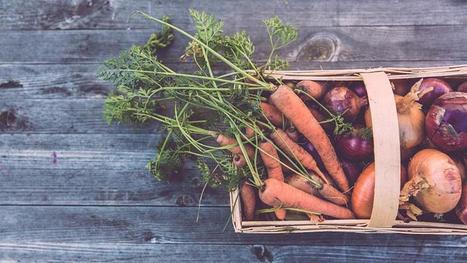

Des études montrent que la crise du Covid-19 a incité les consommateurs européens à se tourner vers des produits alimentaires de meilleure qualité, notamment biologiques. Les agriculteurs espagnols sont bien placés pour répondre à cette demande.

 Your new post is loading...
 Scoop.it! Des études montrent que la crise du Covid-19 a incité les consommateurs européens à se tourner vers des produits alimentaires de meilleure qualité, notamment biologiques. Les agriculteurs espagnols sont bien placés pour répondre à cette demande. 
Scoop.it!

Prévisions d’emblavement de 215 000 hectares - Découvrez gratuitement tous les articles, les vidéos et les infographies sur liberte-algerie.com...
Scoop.it!
Date : 14 octobre 2020 Heure : 9h30 - 12h, Paris. 44% : c’est le pourcentage de salariés en France dits en horaires « atypiques » au moins une fois par mois, soit 10,4 millions de personnes concernées (Enquête emploi INSEE, 2017). On entend par horaires « atypiques » le travail effectué le soir, la nuit ou le week-end, par opposition aux horaires dits « standards », du lundi au vendredi en journée. Travailler en horaires « atypiques » peut présenter de nombreux risques sanitaires du fait des perturbations du rythme biologique.
Scoop.it!

Commercialiser moins de grains, mais des grains de bonne qualité, dans un contexte pandémique qui bouscule les besoins de certains pays : tel est le défi de la France pour cette nouvelle campagne de commercialisation de ses blés. Une campagne qui s'annonce atypique et incertaine, avec un potentiel de débouchés inédit vers la Chine, et une concurrence russe vers l'Algérie, le premier client de la France.
Scoop.it!

La récolte céréalière est arrêtée à 32 millions de quintaux. Avec un tel niveau de récolte, la filière céréalière est entrée dans une crise sans précédent. La sécheresse, couplée à la crise du Covid-19, ont mis à rude épreuve les agriculteurs marocains qui affrontent désormais un avenir incertain. Via CIHEAM News
Scoop.it!

La C.E. a publié l'appel à projets Horizon 2020 Green Deal, doté d'un budget de 983 millions €. Cet appel comprend 20 thématiques. La date limite de soumission des projets est fixée au 26 janvier 2021. Le Green Deal européen ouvre la voie à une transformation profonde de nos économies et de nos sociétés.
Scoop.it!

In this study, the climatic determinants of cereal yield differentials in the eastern high plateaus of Algeria were explored and analyzed. Using panel data for five regions from the period 2000–2016, we analyzed the relationships between crop yield and two climatic variables (temperature and precipitation) for three major Algerian rainfed cereals: durum wheat, common wheat, and barley. The Mann–Kendall test was applied to assess the significance and magnitude of yield trends, and pooled OLS regression was employed to analyze the determinants of the variability in cereal yields. Results showed that the rainfed cereal yields in this zone are highly variable; that the minimum temperature and average annual precipitation strongly influence cereal yield differentials, with an observed cumulative (lagged) effect; and that the maximum temperature has no direct (or lagged) effect (i.e., its effect on the yield is not statistically significant). The findings of this study also suggest that, despite significant regional differences in semiarid environments, advances in the production technology used in cereal farming have had consistent effects on the yield stability—increasing yields of common wheat but barely influencing yields of durum wheat and barley. These are important findings for the rainfed cereal sector of Algerian dryland agriculture, as they permit a better understanding of the impacts of climate change on Algerian agriculture.
CIHEAM News's insight:
Scoop.it!

U.S. Wheat Associates (USW) has introduced the first digital map of the U.S. wheat production and supply system as a visual planning tool for its overseas representatives and their customers. The “USW Wheat Export Supply System” map is posted here on the USW website and was built in cooperation with Heartland GIS using funds from […]
Scoop.it!

Capteurs installés dans les conduits d’irrigation et dans le sol, colliers émetteurs au cou des vaches… Le monde agricole tunisien est en pleine mutation.
Scoop.it!

La FAO exprime son inquiétude quant aux indicateurs de l'alimentation et de l'agriculture dans le monde dans son dernier rapport.
Scoop.it!

Ce Bulletin présente l’état d’avancement des récoltes et des semis dans les pays MED-Amin à partir des données collectées auprès des points focaux du réseau et auprès de diverses sources selon les cas (communiqués de presse des Ministères de l’Agriculture ou de leurs offices céréaliers, organisations internationales citées ci-après, sociétés privées de conseil ou articles de presse).
CIHEAM News's insight:
Scoop.it!
|
Scoop.it!

Selon les estimation, la perte d’activité des secteurs agricole et agroalimentaire a été faible au quatrième trimestre 2020. Les statistiques de l'INSEE se montrent donc encourageantes après les chutes du second trimestre.
Scoop.it!

In the increasingly polarized international political arena, it has become difficult to find common ground to solve Brazil's ongoing environmental crisis, which has global as well as local implications. International buyers of Brazil's agricultural commodities have raised concerns about products that are contaminated by deforestation (i.e., deforestation occurred during the process of producing the product) (text S12). European Union (EU) criticism of the Brazilian government bolsters demands to boycott Brazilian products and to withhold ratification of the trade agreement reached in 2019 between the EU and Mercosur, the South American trade bloc. Among the concerns is that increasing greenhouse gas (GHG) emissions from deforestation and forest fires in Brazil could cancel out EU climate change mitigation efforts. The Brazilian government and agribusiness contend that national laws ensure high conservation standards, and hence trading bans should not include legally authorized deforestation (1). Here, we address the interlinkage between illegal deforestation in the Amazon and Cerrado—the largest Brazilian biomes with the highest rates of deforestation—and EU imports of Brazil's soy and beef, the country's major agricultural commodities (table S9). Although most of Brazil's agricultural output is deforestation-free, we find that 2% of properties in the Amazon and Cerrado are responsible for 62% of all potentially illegal deforestation and that roughly 20% of soy exports and at least 17% of beef exports from both biomes to the EU may be contaminated with illegal deforestation ...
CIHEAM News's insight:
Scoop.it!

Le Forum Open Agrifood 2020, le forum des solutions pour la filière 4 et 5 novembre 2020 NOTRE CONSTAT […]
Scoop.it!
Les betteraves bio résistent-elles vraiment mieux aux pucerons que les betteraves conventionnelles, comme l'affirme l'écologiste Yannick Jadot ? À quelle date commence officiellement l'automne ? Où en est-on de l'objectif de zéro artificialisation des terres agricoles ? Pour le savoir, mais aussi pour comprendre en quoi les agriculteurs ne sont que des « soldats » embarqués dans une bataille agricole planétaire, écoutez sans plus tarder le quatrième épisode du quart d’heure agricole, le podcast d’infos pro spécialement fait pour vous, agriculteurs !
Scoop.it!

Réalisée quelques jours après le déconfinement, une enquête a permis de tirer quelques enseignements de la crise. À travers le prisme d’une logistique responsable, trois axes distinctifs ont été dégagés juste après le confinement, par l’enquête annuelle de CPV Associés, cabinet d’études dédié à la supply chain, et du club Déméter* : la résilience des organisations pendant le confinement, les nouvelles pratiques émergentes et la transition des modèles. Via CIHEAM News
Scoop.it!

The 4th EAAE Webinar of a series of webinars on topical issues in our profession. The maximum number of participants for the Webinar is 150. Registration is mandatory.
Small-scale farms make up the majority of productive entities in EU agriculture. Likewise, the EU food and drink industry is dominated by small- and medium-sized enterprises (SMEs). In recent years, concerns have risen about their socio-economic sustainability and market power in the food chain. Several EU policy initiatives have emerged (e.g., food quality schemes and innovation partnerships), to strengthen the position of small-scale producers in the food supply chain, tackle unfair trading practices and better support the marketability of their products. To date, limited systematic evidence is available about the impact of these EU policies on involved actors and the supply chain conditions that support the desired outcomes ...
CIHEAM News's insight:
Scoop.it!

Food waste (FW) represents a global and ever-growing issue that is attracting more attention due to its environmental, ethical, social and economic implications. Although a valuable quantity of bioactive components is still present in the residuals, nowadays most FW is destined for animal feeding, landfill disposal, composting and incineration. Aiming to valorize and recycle food byproducts, the development of novel and sustainable strategies to reduce the annual food loss appears an urgent need. In particular, plant byproducts are a plentiful source of high-value compounds that may be exploited as natural antioxidants, preservatives and supplements in the food industry, pharmaceuticals and cosmetics. In this review, a comprehensive overview of the main bioactive compounds in fruit, vegetable and cereal byproducts is provided. Additionally, the natural and suitable application of tailored enzymatic treatments and fermentation to recover high-value compounds from plant byproducts is discussed. Based on these promising strategies, a future expansion of green biotechnologies to revalorize the high quantity of byproducts is highly encouraging to reduce the food waste/losses and promote benefits on human health.
Scoop.it!
The COVID lockdown has affected food purchases and eating habits. In this regard, this short communication assesses the nutritional and environmental impacts of these changes during the COVID lockdown in Spain, by applying Life Cycle Assessment and an energy- and nutrient-corrected functional unit. Three environmental impacts were studied (Global Warming Potential, Blue Water Footprint and Land Use) and a total of seven weekly diet scenarios were designed: two pre-COVID diets for March and April in 2019 (MAR19, APR19), one COVID diet (COVID) and two alternative diets, one based on the National Dietary Guidelines (NDG) and another one on the Planetary Health Diet (PHD). Results show that the COVID diet had larger energy intake and lower nutritional quality, as well as higher environmental impacts (between 30 and 36%) than the pre-COVID eating patterns. Further research is needed to account for food affordability within this assessment, as well as to analyze how eating patterns will evolve after the COVID lockdown. Finally, the definition of short guidelines for sustainable food behaviors for future possible lockdowns is suggested, as well as the introduction of sustainable indicators within NDGs.
Scoop.it!

Production d’un million de quintaux de céréales. Les services agricoles de la wilaya de Aïn Témouchent ont enregistré lors de la saison agricole 2019-2020 une production de 65 620 q de pois chiche, dont 3384 q seulement ont été collectés au niveau des deux coopératives des céréales et des légumes secs de Aïn Témouchent et de Hammam Bou-Hadjar, et ce, sur une superficie récoltée de 6758 ha. Quant à la production céréalière enregistrée lors de la campagne moissons-battages 2019-2020, celle-ci a atteint 1 126 150 q, alors que la production collectée s’est limitée à 502 770 q, nous apprendra le même responsable, sur une superficie emblavée estimée à 116 500 ha contre une superficie récoltée ayant atteint 97 222 ha. Il y a eu une évolution en termes de production céréalière par rapport à la campagne précédente, où la production récoltée a été estimée à 495 299 q. La production céréalière est donc répartie à travers quatre espèces de céréales, dont 465 486 q de blé dur récoltés sur une production estimée à 648 600 q, une quantité de 32 815 q de blé tendre sur une production estimée à 540 050 q, 4469 q d’orge sur une production de 411 300 et enfin une production de 212 200 q, soit une production globale ayant dépassé le million de quintaux de céréales.
Scoop.it!
Les producteurs de blé, maïs, betteraves et colza, affiliés à la FNSEA, demandent jeudi un « sursaut » du gouvernement pour les soutenir devant la baisse des récoltes et leur « situation économique catastrophique ».
Scoop.it!

This Bulletin presents the progress of harvests and planting in the MED-Amin countries based on data collected from the network’s focal points and from various sources as appropriate (press releases from the Ministries of Agriculture or their Grain Offices, international organizations mentioned hereafter, private consulting companies or press articles).
Scoop.it!

This year we celebrate the first ever observance of the International Day of Awareness of Food Loss and Waste. It also comes during the global COVID-19 pandemic, that has brought about a global wake-up on the need to transform and rebalance the way our food is produced and consumed. Reducing food losses and waste is essential in a world where the number of people affected by hunger has been slowly on the rise since 2014, and tons and tons of edible food are lost and/or wasted every day. Food loss and waste also puts unnecessary pressure on the natural resource base and on the environment, depleting the natural resource base and generating greenhouse gases. Read more and discover what you can do. Take action, start something. Stop food loss and waste. For the people. For the planet.
CIHEAM News's insight:
|







Lire aussi concernant la France : "[Effet post-Covid] Les Français reviennent vers une alimentation bio et locale" le 8/07/2020
https://www.novethic.fr/actualite/social/consommation/isr-rse/effet-post-covid-le-retour-a-une-alimentation-bio-et-locale-148756.html