(Mediterranean Agricultural Information Network) Fostering cooperation and experience sharing among the national information systems on agricultural (cereals) markets in the Mediterranean. The network of 13 countries is coordinated by CIHEAM, and more specifically by its Mediterranean Agronomic Institute (MAI) of Montpellier.
Georges Haushalter, consultant, ancien président du CIVB (Vin de bordeaux), membre conseil bière et vin de France Agrimer Jean-François Lépy, Directeur général Soufflet Négoce Sébastien Abis, Directeur général Club Demeter Didier Delzescaux, Président Inaporc (Interprofession nationale porcine) Journaliste : Pascal Perri
Plus de 10 000 coopératives agricoles créées pour la période 2015-2020, dépassant l’objectif fixé, avec un cumul de 25 700 coopératives à aujourd’hui Un objectif de création de 18 000 coopératives agricoles nouvelle génération pour accompagner la stratégie Génération Green 2020-2030.
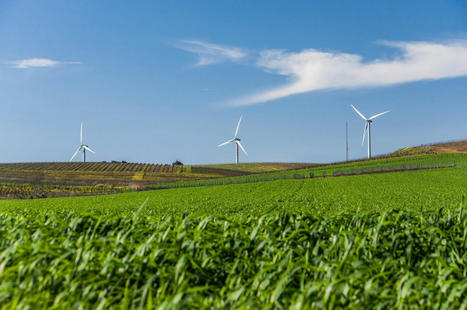
Growing conditions for French soft wheat remain favourable, with 88% of crops rated good or excellent in the week to March 8, unchanged from the previous week, data from farm office FranceAgriMer showed on Friday.
The rating was well above the corresponding score of 63% a year ago, when crop development was hampered by torrential rain.
Durum, the wheat variety used in pasta, showed the same good/excellent rating of 88%, also stable on the week and above a year-earlier score of 67%.
Conditions for winter barley were similarly favourable, with 85% of crops rated good or excellent against 84% the previous week, FranceAgriMer said in its weekly cereal crop report.
That compared with a year-earlier score of 63%.
Sowing of spring barley was nearing an end, with 90% of the expected area drilled by March 8, the office said.
« Le renforcement des systèmes alimentaires doit être au centre des efforts de l’Afrique pour se relever de la pandémie de Covid-19 ». C’est ce qu’a déclaré Leila Mokaddem, directrice générale de la région de l’Afrique australe à Banque africaine de développement. Et ce, au cours d’une session relative aux systèmes alimentaires durables, organisée le 09 mars 2021 lors du « Southern Africa Impact Forum »
An estimated 931 million tonnes of food, or 17% of total food available to consumers in 2019, went into the waste bins of households, retailers, restaurants and other food services, according to new UN research conducted to support global efforts to halve food waste by 2030.
As COVID-19 continues to touch nearly every aspect of our daily lives, the impacts that the virus is having on agriculture and food production are a primary concern given the global, interconnected nature of the food system. Thanks to the many advancements made in satellite technology particularly in recent years, today we have access to an expansive amount of remotely-sensed Earth observation data.
9 mars 2021, Rome - Les systèmes alimentaires du monde sont à l'origine de plus d'un tiers des émissions globales de gaz à effet de serre imputables aux activités humaines, d'après une étude pionnière récemment publiée dans Nature Food. Les émissions de gaz à effet de serre ayant leur origine dans une large gamme d'activités, qui va du changement d'affectation des terres et de la production agricole au conditionnement des produits et à la gestion des déchets, ont été estimées à 18 milliards de tonnes d'équivalent dioxyde de carbone en 2015. Cela représente 34 pour cent du total des émissions. Cette proportion est en régression (elle était de 44 pour cent en 1990), même si les émissions des systèmes alimentaires continuent de croître en valeur absolue. Cette étude est cosignée par M. Francesco Tubiello, statisticien principal et spécialiste du changement climatique à l'Organisation des Nations Unies pour l'alimentation et l'agriculture (FAO), et une équipe de chercheurs du Centre commun de recherche de la Commission européenne situé à Ispra (Italie)...
Dans un rapport publié début mars, le Programme des Nations unies pour l’environnement alerte sur les chiffres alarmants du gaspillage alimentaire à travers le monde. L’occasion de faire le point sur le cas marocain, qui n’est pas en reste.
Many Middle Eastern countries were experiencing heightened levels of food insecurity even before the Covid-19 pandemic. Economic shocks related to regional and global lockdown measures, and conflict in some parts of the region have further reduced food security. It is expected that the regional food security situation will remain precarious for the foreseeable future.
The Zero Waste project initiated by first lady Emine Erdoğan in 2017 is continuing in full speed as Turkey now aims to free its agriculture from waste. The country now aims to recycle every byproduct that agricultural activities cause, from the moment the seed is planted to harvest. The authorities encourage the recycling of stems, hay, cobs and plastic waste produced in the agricultural processes, as first steps are being taken.
The CIHEAM Institute in Montpellier received this Friday March 5, 2021, Mr. Karim Amellal, appointed Ambassador, Interministerial Delegate for the Mediterranean, on July 29, 2020 by the President of the French Republic, Emmanuel Macron.
FAO’s latest forecast for world cereal production in 2020 has been lifted by 17 million tonnes from the previous report in February to 2 761 million tonnes, now pointing to a 1.9-percent increase year-on-year. The adjustment principally reflects a 7.5-million-tonne increase in the world wheat production estimate, driven by recently released official data from Australia, the European Union (EU), Kazakhstan, and the Russia Federation. The world coarse grains output estimate has also been raised, by 6.9 million tonnes, with most of the monthly increase concentrated in West Africa, where recent official data showed larger-than-previously-expected maize outputs, and in the EU, where the estimate for maize output in Romania was revised upwards on higher yields. An upward revision to global barley production, reflecting improved yields in Australia and the Russian Federation, further bolstered the estimate for global coarse grains production. The forecast for global rice production has also been raised by 2.6 million tonnes from last month, and is now 2.1 percent above the revised estimate for 2019. This month’s upward revision primarily mirrors more buoyant expectations for production in India, where plantings of the secondary Rabi crop were reported to have significantly exceeded year-earlier levels. Production has also been raised for the United Republic of Tanzania and the Islamic Republic of Iran, more than offsetting modest downward revisions for various other countries.
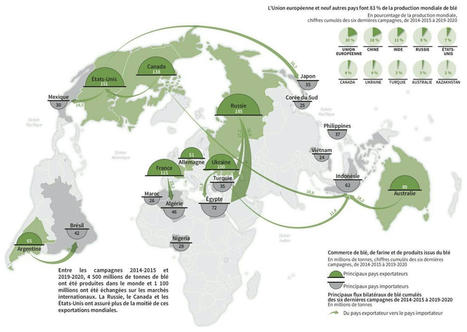
Russia's wheat exports doubled on the week in the seven days to 11 February, spurred by the country's introduction of export restrictions from 15 February.
Russia exported 1.6 Mt of wheat over the week, taking total exports since the start of the marketing year in July to 32.1 Mt, around 31% higher than a year earlier, according to data from its veterinary and phytosanitary surveillance service.
Wheat shipments to Egypt and Turkey — the largest buyers of Russian wheat — stand at about 7.1 Mt and 5.8 Mt, respectively, up by 600,000 t and 300,000 t on the week.
Market participants expect wheat exports to slow after the Russian government launched from 15 February a €25/t duty on wheat shipments, which will be raised to €50/t from 1 March. But the full impact of export duties is likely to be seen in the next marketing year, when shipments out of the country could fall sharply following the introduction of a floating export tax from 2 June.
MEDITERRANEAN. The Food and Agriculture Organisation of the United Nations (FAO) lists forty-five countries that will need external food aid in 2021. Three of them are in the Mediterranean.
La debolezza della domanda si ripercuote sulle quotazioni dei principali cereali. Solo la soia continua ad apprezzarsi.
Grano duro, prezzi in calo per la domanda debole
Italia
Si percepisce una minore domanda dal settore della trasformazione e questo si riflette sull’andamento dei prezzi che mostrano debolezza, oltreché incertezza tra gli operatori. Non è da escludere il ritorno all’export di nazionale dalla Sicilia, stante lo scarso interesse degli utilizzatori italiani e il rischio di vedere rimanenze a fine campagna oltre le attese “tecniche”. Il nuovo raccolto procede senza particolari problemi con lieve siccità al Sud e l’offerta “any origin” resta ben presente con rivendite locali. Il “Fino” nazionale quota arrivo sui 300 €/t (-1) al Sud e attorno ai 295-300 €/t (-2) al Centro-Nord; origini Comunitarie e rimpiazzi estero senza variazioni.
Les systèmes alimentaires du monde sont à l'origine de plus d'un tiers des émissions globales de gaz à effet de serre imputables aux activités humaines, d'après une étude pionnière récemment publiée dans Nature Food.
Les émissions de gaz à effet de serre ayant leur origine dans une large gamme d'activités, qui va du changement d'affectation des terres et de la production agricole au conditionnement des produits et à la gestion des déchets, ont été estimées à 18 milliards de tonnes d'équivalent dioxyde de carbone en 2015.
Les pays de la région Afrique du Nord – Moyen-Orient (ANMO) sont des importateurs nets de produits alimentaires. Ils importent, par exemple, plus de 30 % de leur consommation de céréales. Malgré ce taux de dépendance élevé, les variations des prix internationaux ne sont pas directement transmises aux marchés locaux, et ce, grâce aux mécanismes de subventions alimentaires. Ces dernières, couplées au contrôle des prix, sont des politiques de longue date appliquées par plusieurs pays de la région pour encourager la production locale des céréales et protéger les ménages, surtout les plus pauvres, de la variation des prix des produits alimentaires.
On December 17th, 2020, the United Nations Food and Agriculture Organization (FAO) and the International Food Policy Research Institute (IFPRI) virtually launched a joint report that examines the implication of food policies, mainly trade and government food subsidies, on evolving nutritional transitions and associated body weight outcomes across selected countries in the NENA region. These countries are projected to hit alarmingly new obesity and overweight records within the next few decades.
Cette note décrypte les principales évolutions de la place de la Chine au sein du commerce international de produits agroalimentaires. Cette note décrypte les principales évolutions de la place de la Chine au sein du commerce international de produits agroalimentaires.
La Chine consommerait finalement 5 millions de tonnes de blé supplémentaires pour nourrir ses animaux d'élevage lors de la campagne de commercialisation 2020/2021, estime le ministère américain de l'agriculture dans un rapport mensuel (Wasde).
On December 17th, 2020, the United Nations Food and Agriculture Organization (FAO) and the International Food Policy Research Institute (IFPRI) virtually launched a joint report that examines the implication of food policies, mainly trade and government food subsidies, on evolving nutritional transitions and associated body weight outcomes across selected countries in the NENA region. These countries are projected to hit alarmingly new obesity and overweight records within the next few decades.
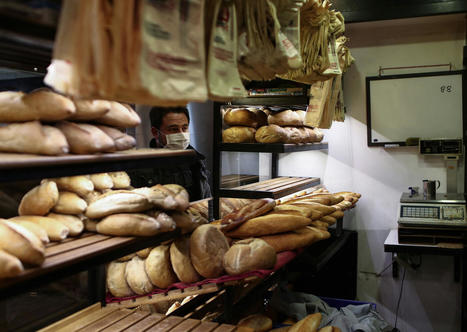
Reportage Avec l’aggravation de la pauvreté dans le pays, la municipalité d’Istanbul multiplie les points de vente de pain à bas prix. Les partisans de la coalition gouvernementale l’accusent d’instrumentaliser politiquement l’aide à la population.
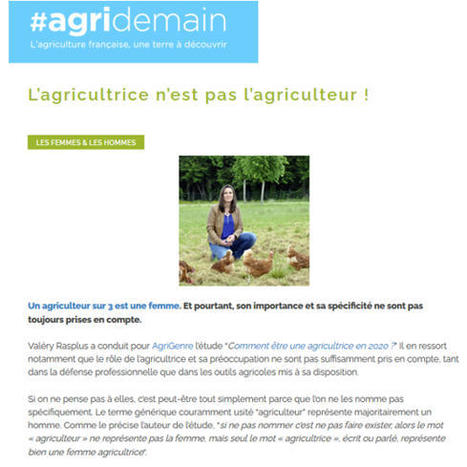
Entre mai et août 2020 j’ai lancé sur le compte Twitter d’AgriGenre une série de sondages afin de comparer (i) les résultats que pouvaient m’offrir ces type de sondages – tout en ayant conscience des limites de cet outil – (ii) aux tendances de certaines problématiques de genre que je rencontrais sur le terrain dans … Continuer la lecture de Comment être une agricultrice en 2020 ? →
A spike in ocean freight rates is creating some heartburn for dry bulk commodity buyers who may be uncovered over the next few months as strong global demand for grain and coal stresses vessel supply. Fortunately, lower freight futures prices in the second half of 2021 could hold if commodity demand eases, as expected.
“We believe most of our wheat buying customers have booked freight already for April or May deliveries,” said USW Vice President of Overseas Operations Mike Spier. “We hope this spike in freight prices is short term because it obviously increases the landed cost of wheat from the United States and all other suppliers.”
“The freight story is all about demand and supply for dry bulk vessels,” said a former U.S. grain trader. “There’s just too much dry bulk movement right now and not enough vessels to cover it.”
The FAO Food Price Index (FFPI) averaged 116.0 points in February 2021, 2.8 points (2.4 percent) higher than in January, marking the ninth month of consecutive rise and reaching its highest level since July 2014. The February increase was led by strong gains in the sugar and vegetable oils sub-indices, while those of cereals, dairy and meat also rose but by a lesser extent.
The FAO Cereal Price Index averaged 125.7 points in February, up 1.5 points (1.2 percent) from January and 26.3 points (26.5 percent) above its February 2020 level. Among major coarse grains, international sorghum prices increased the most, rising 17.4 percent in February, up 82.1 percent above their values in the corresponding month last year, driven by ongoing strong demand from China. International maize prices also rose, albeit by only 0.9 percent from the previous month. Maize export prices in February were up 45.5 percent from the previous year, underpinned by continued strong import demand amidst shrinking export supplies. Wheat export prices remained nearly stable in February, but up 19.8 percent from last year’s level. International rice prices also edged up some more, driven by demand for lower quality Indica and Japonica rice.
To get content containing either thought or leadership enter:
To get content containing both thought and leadership enter:
To get content containing the expression thought leadership enter:
You can enter several keywords and you can refine them whenever you want. Our suggestion engine uses more signals but entering a few keywords here will rapidly give you great content to curate.


 Your new post is loading...


 Scoop.it!