Your new post is loading...

|
Scooped by
CIHEAM News
July 29, 2021 7:37 AM
|
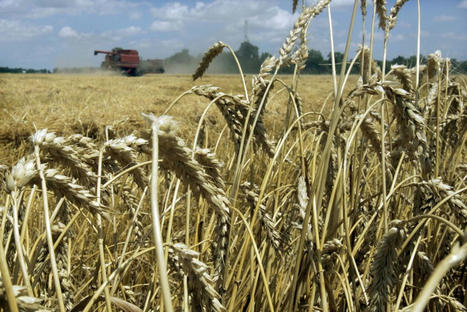
The drought baking farmland in hot, dry conditions has many Saskatchewan producers looking for help with their withering crops. “Crops remain extremely stressed from the lack of moisture and continue to advance quickly due to the heat and dry conditions throughout the growing season,” Thursday’s provincial crop report said. As the Saskatchewan government and Opposition ask Ottawa for relief, crop development has stumbled. About 51 per cent of fall cereals, 52 % of spring cereals, 50 % of oilseeds and 49 % of pulse crops are at their normal stages of development for this time of year, according to the report. Some cloud cover gave parts of the province a brief reprieve from the heat, but any rain will only help maintain crop yields, not increase them, the report noted. Glenn Wright, a farmer near Delisle, said the weather has “devastated” his crops with less than 50 millimetres of rain since the start of April. “And with everything so dry, I worry about grass fires or even crop fires roaring across the countryside,” Wright said in National Farmers Union statement.
|
|
Rescooped by
CIHEAM News
from CIHEAM Press Review
July 29, 2021 5:24 AM
|
A trio of researchers has found that approximately 40% of agricultural products imported into the European Union will be "highly vulnerable" to drought by 2050. In their paper published in the journal Nature Communications, Ertug Ercin, Ted Veldkamp and Johannes Hunink, from R2Water Research and Consultancy, the Amsterdam University of Applied Science and FutureWater, respectively, suggest the droughts impacting agricultural products will be due to global warming.
|
|
Scooped by
CIHEAM News
July 29, 2021 4:31 AM
|
By Olzhas AuyezovALMATY, July 26 (Reuters) - Kazakhstan's high stocks of wheat and imports of the grain from Russia will support supplies this season, analysts said, after drought in parts of the Central Asian nation reduced their estimates for the 2021 wheat crop.Kazakhstan, the top grain producer in Central Asia which usually starts harvesting in September, has been hit by dry and hot weather in recent weeks. It plans to ban exports of rye and limit exports of barley and wheat used for animal feed for six months from Aug.
|
|
Scooped by
CIHEAM News
July 29, 2021 4:09 AM
|
Le ministère de l’Agriculture vient de revoir à la hausse les prévisions de la récolte céréalière qui culminent désormais à 103,2 millions de quintaux. Avec à la clé, 50,6 millions de quintaux de blé tendre, la céréale la plus consommée et la seule soutenue par les pouvoirs publics en termes de garantie des prix, de collecte, de stockage et de farine destinée à la boulangerie. Question importante, surtout en cette période marquée par de grandes incertitudes sur le marché international des céréales. Pour de nombreux professionnels, l’actuelle campagne, tout comme les précédentes d’ailleurs, n’aura pas d’impact sur le système mis en place depuis plusieurs années, faute d’achèvement de la libéralisation de la filière céréalière.
|
|
Scooped by
CIHEAM News
July 29, 2021 3:58 AM
|
Les cours du blé ont enregistré une hausse sensible mercredi sur la foi d'informations relatives à la situation préoccupante des cultures de blé de printemps, malmenées par la chaleur qui accable le nord-ouest des États-Unis depuis plusieurs semaines.
|
|
Rescooped by
CIHEAM News
from CIHEAM Press Review
June 28, 2021 4:37 AM
|
For the first time, this afternoon, a dozen Mediterranean countries, several cooperation and research actors participated in the 2nd independent Mediterranean Dialogue of the United Nations Summit on Food Systems. A new step to advance on common ambitions for the region. Organised by the CIHEAM, the FAO, the UfM, the One Planet network and the Prima Foundation for more sustainable and inclusive food systems in the Mediterranean region, this 2nd Dialogue follows the first one held on 27 April 2021.
|
|
Rescooped by
CIHEAM News
from CIHEAM Press Review
June 28, 2021 4:36 AM
|
La pandémie de Covid-19 a bouleversé les chaînes alimentaires partout sur la planète. Elle a fait craindre d’importantes perturbations dans l’approvisionnement des territoires, en particulier de ceux qui ont connu le confinement. Les images de rayons vides, les files d’attentes dans les supermarchés et l’angoisse de manquer n’ont pourtant été que de courte durée, du moins dans les économies les plus favorisées et soutenues. Les opérateurs agricoles et agroalimentaires ont été au rendez-vous et ont su s’adapter extrêmement rapidement aux nouvelles formes de consommation, en particulier à la fermeture des lieux de restauration.
|
|
Scooped by
CIHEAM News
June 22, 2021 6:44 AM
|
|
|
Scooped by
CIHEAM News
June 22, 2021 6:43 AM
|
La Russie devrait exporter prochainement 28 000 tonnes de blé à destination de l'Algérie, représentant la première livraison du genre entre les deux pays depuis plus de quatre ans.
|
|
Scooped by
CIHEAM News
June 22, 2021 6:38 AM
|
Une production céréalière de 1,3 million de quintaux attendue - Découvrez gratuitement tous les articles, les vidéos et les infographies sur liberte-algerie.com...
|
|
Scooped by
CIHEAM News
June 16, 2021 10:59 AM
|
Mercredi 14 mars, une centaine de céréaliers de la Coordination rurale ont manifesté devant le siège d’Intercéréales avant de forcer l’accès au hall du bâtiment. Les producteurs réclament l’entrée de leur syndicat au sein de l’interprofession et dénoncent l’orientation exportatrice du plan de filière céréalière, « vouée à faire disparaître les céréaliers français ». Les représentants d’Intercéréales ont promis de proposer, lors de leur prochaine assemblée générale en juin, l’ouverture de deux sièges au syndicat minoritaire.
|
|
Scooped by
CIHEAM News
June 16, 2021 10:10 AM
|
Global food trade is poised for a resilient year ahead even as international food commodity prices are set to remain high amid supply and demand uncertainties, according to a new report released today by the Food and Agriculture Organization of the United Nations (FAO). The report notes that trade flows continued to reach new highs during the ongoing COVID-19 pandemic. In fact, on a global level, trade in agricultural products - particularly less-perishable foods - performed more robustly than the broader merchandise sectors. That has contributed to drive FAO's provisional forecast for the world food import bill in 2021 to $1.72 trillion, a 12 percent increase from its previous high of$1.53 trillion in 2020. However, rising prices raise concerns that higher outlays may still mask deteriorating quantitative and qualitative dietary trends in vulnerable countries. Food Outlook, issued twice a year, offers a detailed assessment of market supply and demand trends for the world's major foodstuffs, including cereals, vegetable oils, sugar, meat and dairy and fish. It also looks at trends in futures markets and shipping costs for food commodities. Among its findings, measured by the FAO Global Food Consumption Price Indices, is that the average worldwide consumer price of protein in May 2021 was 23 percent above its May 2020 level. Calories, in prices, meanwhile, were up 34 percent year-on-year and hit their highest level since February 2013. The difference reflects stronger price rises for wheat, coarse grains and vegetable oils compared to meats, dairy products and fish.
|
|
Scooped by
CIHEAM News
June 16, 2021 9:53 AM
|
Increasingly frequent and severe droughts are threatening Italy’s agricultural sector. With climate change forecast to accelerate these trends, the sector must build long-term resilience. This will require better planning and preparing for, absorbing the impact of, and recovering from droughts, as well as more successfully adapting and transforming in response to these events. Recent positive developments include improved data collection on water supplies and agricultural damage and loss from natural hazards to better inform water management and investment decisions; strengthened commitment to ex ante risk management frameworks; and more participatory approaches for water management. Nevertheless, the agricultural policy portfolio currently underemphasises investments in on-farm preparedness and adaptation, in favour of coping tools such as insurance. Further efforts to build agricultural resilience could benefit from a holistic, long-term sectoral risk management strategy; an evaluation of the trade-offs between spending on risk coping tools versus investments in natural hazard preparedness and measures to mitigate their impacts; and more explicit consideration of farmer demographics and capacities in policy design.
|
|
|
Rescooped by
CIHEAM News
from CIHEAM Press Review
July 29, 2021 5:24 AM
|
La plateforme de partenariat de transformation des systèmes alimentaires par l’agroécologie a été lancée le 3 juin 2021 lors d'un événement parallèle à la 48e plénière du Comité de la sécurité alimentaire mondiale. Retour sur ce lancement international de haut niveau qui a rassemblé des représentants de plusieurs pays, dont la France, déjà engagés dans les transitions agroécologiques
|
|
Rescooped by
CIHEAM News
from CIHEAM Press Review
July 29, 2021 5:20 AM
|
Le ministère de l’Agriculture se prépare déjà pour la prochaine campagne céréaliculture, Labours-semailles. Six groupes de travail ont été désignés pour l’élaboration de la nouvelle carte de production, notamment, en blé dur ainsi que le nouveau dispositif de soutien et d’accompagnement des producteurs.
|
|
Scooped by
CIHEAM News
July 29, 2021 4:10 AM
|
Cette année, la météo n’est vraiment pas clémente avec nos agriculteurs. Après les intempéries du printemps, c’est la moisson qui est en danger. Alors qu’il pleut quasiment sans discontinuer sur l’Hexagone, les agriculteurs travaillent comme ils peuvent.
|
|
Scooped by
CIHEAM News
July 29, 2021 3:59 AM
|
|
|
Rescooped by
CIHEAM News
from CIHEAM Press Review
June 28, 2021 4:39 AM
|
A dry and hot May in Portugal has helped to push some areas of Portugal into situations of drought. The southern region of mainland Portugal registered an increase in the area of meteorological drought at the end of May, with Baixo Alentejo and Algarve experiencing moderate drought and some places with severe drought, according to IPMA.
|
|
Rescooped by
CIHEAM News
from CIHEAM Press Review
June 28, 2021 4:37 AM
|
Les mesures prises en Afrique subsaharienne pour endiguer la propagation du Covid-19 ont eu des effets négatifs sur la sécurité alimentaire des populations les plus fragiles.
|
|
Rescooped by
CIHEAM News
from CIHEAM Press Review
June 28, 2021 4:36 AM
|
It is a commonplace to say that a water shortage threatens Tunisia. What is more at stake is the evolution of its uses and the distribution of the resource. However, intensive agriculture for export is leading water consumption, while the basic rate for Tunisians is rising sharply.
|
|
Scooped by
CIHEAM News
June 22, 2021 6:44 AM
|
Loin des préoccupations sanitaires, qui semblent plutôt réservées aux grandes villes, les populations du monde rural s’inquiètent davantage du manque d’eau auquel elles font face, et qui pénalise lourdement leurs productions agricoles.
|
|
Scooped by
CIHEAM News
June 22, 2021 6:42 AM
|
La récolte des céréales pour la saison actuelle devrait atteindre 8 à 8,5 millions de quintaux. Soit une augmentation de 10 à 13% par rapport à la récolte de la saison écoulée.
|
|
Scooped by
CIHEAM News
June 16, 2021 11:35 AM
|
FranceAgriMer a présenté le 9 juin ses prévisions pour la campagne céréalière française, révisant à la hausse les stocks finaux. L’année exceptionnelle a en effet rendu difficiles les prévisions de commercialisation, entrainant ces évolutions habituellement peu fréquentes en fin de campagne. Du côté mondial, les cours semblent se stabiliser.
|
|
Scooped by
CIHEAM News
June 16, 2021 10:12 AM
|
The Special Feature puts recent trends in global food trade under the spotlight, with particular focus on how commodity flows have measured-up during the COVID-19 pandemic. Contrary to widespread predictions of a collapse in global markets, recent data show that trade continues to reach new heights. With rapidly rising international food prices, alternative indicators to better capture this momentum are also presented.
|
|
Scooped by
CIHEAM News
June 16, 2021 10:00 AM
|
Natural hazard-induced disasters (NHID), such as floods, droughts, severe storms, and animal pests and diseases have significant, widespread and long-lasting impacts on agricultural sectors around the world. With climate change set to amplify many of these impacts, a “business-as-usual” approach to disaster risk management in agriculture cannot continue if we are to meet the challenges of agricultural productivity and sustainability growth, and sustainable development. Drawing from seven case studies – Chile, Italy, Japan, Namibia, New Zealand, Turkey and the United States – this joint OECD-FAO report argues for a new approach to building resilience to NHID in agriculture. It explores the policy measures, governance arrangements, on-farm strategies and other initiatives that countries are using to increase agricultural resilience to NHID, highlighting emerging good practices. It offers concrete recommendations on what more needs to be done to shift from coping with the impacts of disasters, to an ex ante approach that focuses on preventing and mitigating the impacts of disasters, helping the sector be better prepared to respond to disasters, and to adapt and transform in order to be better positioned for future disasters.
|