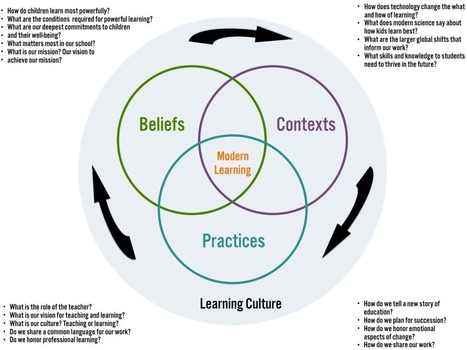
The Learning Futures team focuses on strategic innovations that advance the mission of the university. The team helps shape the future of learning and teaching at the university through human and technological capacity building and promotes continuous improvement using learning analytics.
This year, many innovative new products and services will launch, but only a handful will earn long-term success. Most will fail before they even get the chance. Why is that? What do the teams that…
We can apply the same design approach to designing learning experiences. Educators for the future need to embrace the mindset of an experience designer.
When our students leave our schools, what can they point to and say, “I did that”?
The typical artifacts of education they might choose include sports trophies, a diploma, and the cap and gown. But what does any of this tell us about their educational experience? Very little, especially about the main reason for school: learning.
It doesn’t have to be this way. With today’s technologies, any student can now be a curator of their own learning experience. The mini-computers they have in their back pockets can be used to document evidence of their work. Audio, video, images and text can all describe a student’s success and growth over time in a way that grades and scores cannot.
When our students leave our schools, what can they point to and say, “I did that”? The typical artifacts of education they might choose include sports trophies, a diploma, and the cap and gown. But what does any of this tell us about their educational experience? Very little, especially about the main reason for school: learning. It doesn’t have to be this way. With today’s technologies, any student can now be a curator of their own learning experience. The mini-computers they have in their back pockets can be used to document evidence of their work. Audio, video, images and text can all describe a student’s success and growth over time in a way that grades and scores cannot.
Most of the top MOOCs (13 of the 20 courses) involve teaching computer science or some kind of coding. (We’re counting the crypto-currency tech course.) Both edX and Coursera have top courses on teaching Python, one of the most widely-used programming languages. These courses also take advantage of the online medium more fully than courses on other subjects, since many allow students to upload coding projects that are then automatically graded. In other words, students aren’t just passively watching videos—they’re doing projects, and they get instant feedback from the software.
Most of the top MOOCs (13 of the 20 courses) involve teaching computer science or some kind of coding. (We’re counting the crypto-currency tech course.) Both edX and Coursera have top courses on teaching Python, one of the most widely-used programming languages. These courses also take advantage of the online medium more fully than courses on other subjects, since many allow students to upload coding projects that are then automatically graded. In other words, students aren’t just passively watching videos—they’re doing projects, and they get instant feedback from the software.
The study of 7,000 employees across 15 countries revealed a clear chasm in employee performance and sentiment between more advanced digital workplaces and those that employ digital technology to a lesser degree.
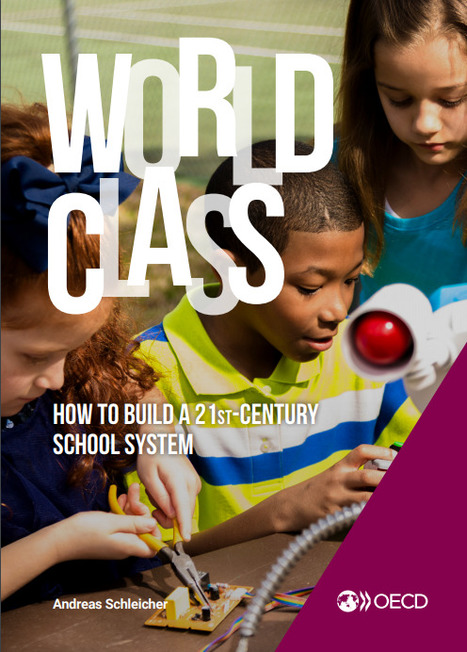
World Class How to Build a 21st-Century School System
In a world where the kind of things that are easy to teach and test have also become easy to digitise and automate, it will be our imagination, our awareness and our sense of responsibility that will enable us to harness the opportunities of the 21st century to shape the world for the better. Tomorrow’s schools will need to help students think for themselves and join others, with empathy, in work and citizenship. They will need to help students develop a strong sense of right and wrong, and sensitivity to the claims that others make. What will it take for schools to be able to do this? Andreas Schleicher, initiator of the OECD Programme for International Student Assessment (PISA) and an international authority on education policy, has accompanied education leaders in over 70 countries in their efforts to design and implement forward-looking policies and practices.
While improvement in education is far easier to proclaim than achieve, in this book Schleicher examines the many successes from which we can learn. This does not mean copying and pasting solutions from other schools or countries, but rather looking seriously and dispassionately at good practice in our own countries and elsewhere to understand what works in which contexts. Trained in physics, Schleicher offers a unique perspective on education reform: he convincingly argues that it should not necessarily be less of an art, but more of a science. “No one knows more about education around the world than Andreas Schleicher.
Full stop. For the first time, he's collected 20 years worth of wisdom in one place. World Class should be required reading for policy makers, education leaders and anyone who wants to know how our schools can adapt for the modern world – and help all kids learn to think for themselves.” – Amanda Ripley, author of The Smartest Kids in the World, a New York Times bestseller “[Schleicher]…grasps all the key issues, and does so through keeping his ear to the ground and by working out solutions jointly with a variety of leaders at all levels of the system, and in diverse societies” – Michael Fullan, Global Leadership Director, New Pedagogies for Deep Learning “Every visionary leader who is serious about improving student learning should add the data-driven World Class:
How to Build a 21st-Century School System In a world where the kind of things that are easy to teach and test have also become easy to digitise and automate, it will be our imagination, our awareness and our sense of responsibility that will enable us to harness the opportunities of the 21st century to shape the world for the better. Tomorrow’s schools will need to help students think for themselves and join others, with empathy, in work and citizenship. They will need to help students develop a strong sense of right and wrong, and sensitivity to the claims that others make. What will it take for schools to be able to do this? Andreas Schleicher, initiator of the OECD Programme for International Student Assessment (PISA) and an international authority on education policy, has accompanied education leaders in over 70 countries in their efforts to design and implement forward-looking policies and practices.
World Class How to Build a 21st-Century School System
In a world where the kind of things that are easy to teach and test have also become easy to digitise and automate, it will be our imagination, our awareness and our sense of responsibility that will enable us to harness the opportunities of the 21st century to shape the world for the better. Tomorrow’s schools will need to help students think for themselves and join others, with empathy, in work and citizenship. They will need to help students develop a strong sense of right and wrong, and sensitivity to the claims that others make. What will it take for schools to be able to do this? Andreas Schleicher, initiator of the OECD Programme for International Student Assessment (PISA) and an international authority on education policy, has accompanied education leaders in over 70 countries in their efforts to design and implement forward-looking policies and practices.
While improvement in education is far easier to proclaim than achieve, in this book Schleicher examines the many successes from which we can learn. This does not mean copying and pasting solutions from other schools or countries, but rather looking seriously and dispassionately at good practice in our own countries and elsewhere to understand what works in which contexts. Trained in physics, Schleicher offers a unique perspective on education reform: he convincingly argues that it should not necessarily be less of an art, but more of a science. “No one knows more about education around the world than Andreas Schleicher.
Full stop. For the first time, he's collected 20 years worth of wisdom in one place. World Class should be required reading for policy makers, education leaders and anyone who wants to know how our schools can adapt for the modern world – and help all kids learn to think for themselves.” – Amanda Ripley, author of The Smartest Kids in the World, a New York Times bestseller “[Schleicher]…grasps all the key issues, and does so through keeping his ear to the ground and by working out solutions jointly with a variety of leaders at all levels of the system, and in diverse societies” – Michael Fullan, Global Leadership Director, New Pedagogies for Deep Learning “Every visionary leader who is serious about improving student learning should add the data-driven World Class:
With the combination of blended learning and new staffing models, schools are starting to unleash their most valuable asset for improving student outcomes: excellent teachers. The organizational inertia of traditional staffing arrangements may take some time to change. But as schools like these produce strong results and then refine and codify their practices, more schools across the country will have the will and the means to follow in their footsteps.
With the combination of blended learning and new staffing models, schools are starting to unleash their most valuable asset for improving student outcomes: excellent teachers. The organizational inertia of traditional staffing arrangements may take some time to change. But as schools like these produce strong results and then refine and codify their practices, more schools across the country will have the will and the means to follow in their footsteps.
Better education for generations to come means a brighter future for us all. These TED speakers have some great ideas for how we can solve our current education crisis.
Better education for generations to come means a brighter future for us all. These TED speakers have some great ideas for how we can solve our current education crisis.
Our Work Student-centered pedagogy: Non-hierarchical learning structures that emphasize peer learning, peer mentorship, and student agency. Technology: Using network and communications tools to build community and foster greater access. Leadership: Equipping graduate students to expand career horizons and connect their learning to the wider world. Research: Conducting meaningful, high-level research and connecting it to the wider world in creative ways. Advocacy: Promoting institutional change, social justice, and the reinvestment in higher education as a public good.
Our Work Student-centered pedagogy: Non-hierarchical learning structures that emphasize peer learning, peer mentorship, and student agency. Technology: Using network and communications tools to build community and foster greater access. Leadership: Equipping graduate students to expand career horizons and connect their learning to the wider world. Research: Conducting meaningful, high-level research and connecting it to the wider world in creative ways. Advocacy: Promoting institutional change, social justice, and the reinvestment in higher education as a public good.
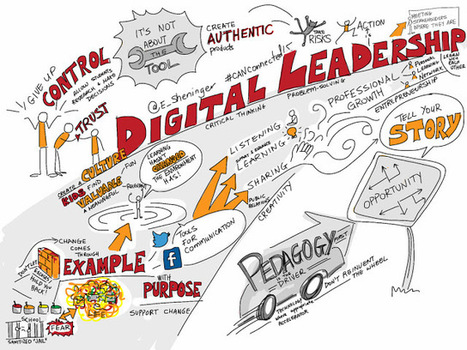
The digital before leadership implies how mindsets and behaviours must change to harness current and emerging resources to set the stage for improving outcomes and professional practice. The Pillars of Digital Leadership provide a focus that can move us from talk to implementation and eventually evidence of improved outcomes. These guiding elements are embedded throughout all school cultures, which compel us in many cases to do what we already do better. I hope to flesh out each of these pillars more than I did the first time while also including many more strategies to aid in practical implementation. As for other significant inclusions, efficacy will be a substantial component of this edition as it was reasonably absent the first go around.
Center for the Transformation of Schools Published on Jan 28, 2018 Internationally recognized educator and creativity expert Robinson inspires us to imagine school systems that can move beyond a narrow focus on academic achievement to actively promote creativity and divergent thinking. Presented at the Reimagine Education conference held by the Center for the Transformation of Schools, Nov. 9, 2017.
Center for the Transformation of Schools Published on Jan 28, 2018 Internationally recognized educator and creativity expert Robinson inspires us to imagine school systems that can move beyond a narrow focus on academic achievement to actively promote creativity and divergent thinking. Presented at the Reimagine Education conference held by the Center for the Transformation of Schools, Nov. 9, 2017.
The Future of Education and Skills 2030 project aims to help countries find answers to what knowledge, skills, attitudes and values are needed for today's students to thrive and shape their world, as well as how instructional systems can effectively develop them.
The Future of Education and Skills 2030 project aims to help countries find answers to what knowledge, skills, attitudes and values are needed for today's students to thrive and shape their world, as well as how instructional systems can effectively develop them.
Ever since the landmark "marshmallow test" highlighted the importance of early self-control in later achievement, educators have worked to find ways to build self-regulation among young children. But a new study in the journal Pediatric Research suggests boosting children's natural curiosity may be equally crucial to their long-term learning.
Researchers from the University of Michigan C.S. Mott Children's Hospital and the Center for Human Growth and Development tracked 6,200 children participating in the federal Early Childhood Longitudinal Study, a nationally representative longitudinal study. In addition to collecting data on children's family income, education, and backgrounds, the federal survey also included home visits with parent interviews, and assessments of the children at ages 9 months, 2 years, at the start of preschool, and in kindergarten.
Ever since the landmark "marshmallow test" highlighted the importance of early self-control in later achievement, educators have worked to find ways to build self-regulation among young children. But a new study in the journal Pediatric Research suggests boosting children's natural curiosity may be equally crucial to their long-term learning.
Digital citizenship is not so different from traditional citizenship. We still need to guide students to be kind, respectful and responsible. What’s new is teaching them how to apply these values to the realities of the digital age.
Digital citizenship is not so different from traditional citizenship. We still need to guide students to be kind, respectful and responsible. What’s new is teaching them how to apply these values to the realities of the digital age.
Comment intégrer les nouveaux citoyens "numériques"?
Quelques pistes pour les collectivités (et pour les entreprises) pour intégrer ces nouveaux citoyens "milenials" (natifs du 3ème millénaire) en comprenant mieux leurs codes.
A découvrir dans l''infographie créée pour le monde de l'éducation.
Education has far out-stretched its humble beginning that only involved reading, writing and understanding the subjects taught. With changing dynamics, students have evolved from information gatherers to learners looking for practical learning that extends beyond examinations and classrooms. Learning today, breaks the barriers of curriculum, seeping into the nuances of the mind and its effect on the overall development of a student. It takes into consideration, the different kinds of learners, their capabilities and interests, skills and will, to make learning more effective, leading to the emergence of deep learning.
Education has far out-stretched its humble beginning that only involved reading, writing and understanding the subjects taught. With changing dynamics, students have evolved from information gatherers to learners looking for practical learning that extends beyond examinations and classrooms. Learning today, breaks the barriers of curriculum, seeping into the nuances of the mind and its effect on the overall development of a student. It takes into consideration, the different kinds of learners, their capabilities and interests, skills and will, to make learning more effective, leading to the emergence of deep learning.
Increased student success will not be the result of one initiative or the work of one unit; it will be the result of collective campus efforts to collaborate to break down silos and focus holistically on students. That collaboration underscores student success because students do not see institutions as the units through which we organize ourselves. They see only one campus. In turn, leaders must connect the dots and approach student success through a singular, unified lens. The return on the investment of a leader who articulates the reason why, engages the key stakeholders early and often, and celebrates short-term victories will outperform that of any singular initiative or the most comprehensive technology solution. Leaders must be change managers first and student success implementers second.
Increased student success will not be the result of one initiative or the work of one unit; it will be the result of collective campus efforts to collaborate to break down silos and focus holistically on students. That collaboration underscores student success because students do not see institutions as the units through which we organize ourselves. They see only one campus. In turn, leaders must connect the dots and approach student success through a singular, unified lens. The return on the investment of a leader who articulates the reason why, engages the key stakeholders early and often, and celebrates short-term victories will outperform that of any singular initiative or the most comprehensive technology solution. Leaders must be change managers first and student success implementers second.
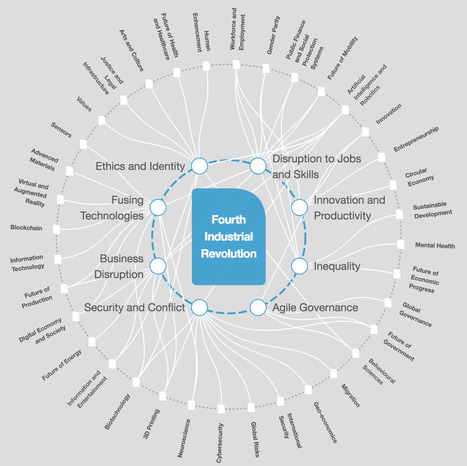
The Fourth Industrial Revolution represents a fundamental change in the way we live, work and relate to one another. It is a new chapter in human development, enabled by extraordinary technology advances commensurate with those of the first, second and third industrial revolutions. These advances are merging the physical, digital and biological worlds in ways that create both huge promise and potential peril. The speed, breadth and depth of this revolution is forcing us to rethink how countries develop, how organisations create value and even what it means to be human. The Fourth Industrial Revolution is about more than just technology-driven change; it is an opportunity to help everyone, including leaders, policy-makers and people from all income groups and nations, to harness converging technologies in order to create an inclusive, human-centred future. The real opportunity is to look beyond technology, and find ways to give the greatest number of people the ability to positively impact their families, organisations and communities.
The Fourth Industrial Revolution is about more than just technology-driven change; it is an opportunity to help everyone, including leaders, policy-makers and people from all income groups and nations, to harness converging technologies in order to create an inclusive, human-centred future. The real opportunity is to look beyond technology, and find ways to give the greatest number of people the ability to positively impact their families, organisations and communities.
Data Literacy: How It Benefits Learning And Development Artificial Intelligence, robotics, and automation are no longer theoretical conference topics for geeks only. According to the Deloitte's 2018 Global Human Capital Trends survey [1]: Advances in Artificial Intelligence (AI) and new communications technologies are fundamentally changing how work gets done, who does it, and how it influences society.
Data Literacy: How It Benefits Learning And Development
Artificial Intelligence, robotics, and automation are no longer theoretical conference topics for geeks only. According to the Deloitte's 2018 Global Human Capital Trends survey [1]: Advances in Artificial Intelligence (AI) and new communications technologies are fundamentally changing how work gets done, who does it, and how it influences society.
Tampaknya saat ini literasi data sangat minim, sehingga jika kita sadari bahwa data yang tersebar bagaikan sampah plastik di dunia yang sudah bertebar banyak dan sulit diolah, demikianpun data. Informasi yang ingin kita ambil dari data yang tersebar semakin sulit ditambahnya minim pemahaman cara mengolah data tersebut. Diharapkan dengan adanya pendidikan atau keterampilan mengolah data, mereka dapat mengambil keputusan yang lebih tepat, menyesuaikan materi sesuai kebutuhan siswa, dan menilai efektivitas program secara lebih akurat.
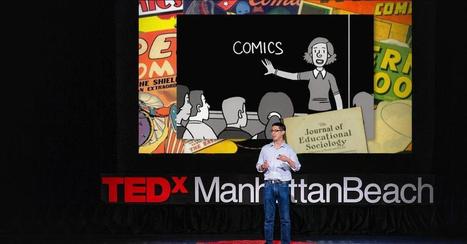
Comic books and graphic novels belong in every teacher's toolkit, says cartoonist and educator Gene Luen Yang. Set against the backdrop of his own witty, colorful drawings, Yang explores the history of comics in American education -- and reveals some unexpected insights about their potential for helping kids learn.
Labor has promised to review the tertiary education sector if elected next year. There are some major issues, and some examples from abroad they should consider.
Labor has promised to review the tertiary education sector if elected next year. There are some major issues, and some examples from abroad they should consider.
Overview Since 2014, EDUCAUSE has examined higher education's top strategic technology priorities and the trends that influence institutional and IT strategy. The 2018 Higher Education's Top 10 Strategic Technologies and Trends research provides a snapshot of the relatively new technological investments that colleges and universities will be spending the most time implementing, planning, and tracking, as well as the trends that influence IT directions in higher education. Together with the EDUCAUSE Top 10 IT Issues list (now in its 18th year), these resources help IT leaders know what's important and where to focus in their IT planning and management activities.
This report focuses on the widespread trends and technologies influencing higher education institutions across nine technology domains:
Analytics Cloud Technologies Infrastructure and Operations Mobile Research and Scholarship Security, Identity, Privacy, GRC Student Success (iPASS) Technologies Teaching and Learning User Support
Each section of this report provides an analysis of that domain area, looking at the trends, strategic technologies, and expected pace of change for the strategic technologies included in each domain.
This report focuses on the widespread trends and technologies influencing higher education institutions across nine technology domains: Analytics Cloud Technologies Infrastructure and Operations Mobile Research and Scholarship Security, Identity, Privacy, GRC Student Success (iPASS) Technologies Teaching and Learning User Support
Here’s an excerpt from a recent presentation on the future of learning technology.
I went to school to be a video producer. Right after I graduated, the video industry changed from analog to digital. At the time digital video technology was cutting-edge and super expensive. And I was stuck in a job with an organization that had no money, so I felt that everything was was passing me by and I’d never catch up.
I see a lot of the same things in our industry today. So much is changing and it’s hard to keep up. It can be quite stressful.
We’ll look at some emerging technologies and how they impact our jobs and then how it really impacts you.
technology can be a great tool to transform education if used effectively. people will gain an insight on how technology maid aid the teaching and learning process thereby changing the world
"Much of what we do in schools belies common sense. There. I said it. Given the opportunity to start from the ground up, few would build the schools we have today. But how do we make common sense prevail given the schools that we have? In short, we need to focus our education efforts through a different lens. Would love to know what you think. Best, Will"
Much of what we do in schools belies common sense. There. I said it. Given the opportunity to start from the ground up, few would build the schools we have today. But how do we make common sense prevail given the schools that we have? In short, we need to focus our education efforts through a different lens. Would love to know what you think. Best, Will
Primary Education Specialist with Infants/Early Childhood background. Driven by innovation and finding 'better' ways, always. Integrated philosophy that reflects Growth Mindset, Pos Ed, Collaboration for Learning, Integrated Technology and Inquiry/Problem based theories.
Primary Education Specialist with Infants/Early Childhood background. Driven by innovation and finding 'better' ways, always. Integrated philosophy that reflects Growth Mindset, Pos Ed, Collaboration for Learning, Integrated Technology and Inquiry/Problem based theories.
Does higher education need a new paradigm to serve Australia’s needs in the Transformative Age? We have entered the Transformative Age and, much like the Industrial Revolution before it, we can expect fundamental shifts in how we live, work and learn.
External disruptive forces over which university stakeholders have limited control will shape the future of higher education in Australia. Our report explores four divergent views of the higher education landscape in 2030 and provides insights to how universities need to transform themselves to serve a changing society and a profoundly changed world.
Does higher education need a new paradigm to serve Australia’s needs in the Transformative Age? We have entered the Transformative Age and, much like the Industrial Revolution before it, we can expect fundamental shifts in how we live, work and learn. External disruptive forces over which university stakeholders have limited control will shape the future of higher education in Australia. Our report explores four divergent views of the higher education landscape in 2030 and provides insights to how universities need to transform themselves to serve a changing society and a profoundly changed world.
To get content containing either thought or leadership enter:
To get content containing both thought and leadership enter:
To get content containing the expression thought leadership enter:
You can enter several keywords and you can refine them whenever you want. Our suggestion engine uses more signals but entering a few keywords here will rapidly give you great content to curate.


 Your new post is loading...