


The ability to clearly communicate information and ideas is essential to any career, whether someone is explaining scientific findings at a conference, creating internal workflow guidelines, or trying to close a sale. And in the modern world, the ability to communicate through digital mediums is more important than ever.

Learning Futures
11.7K views |
+2 today
The Learning Futures team focuses on strategic innovations that advance the mission of the university. The team helps shape the future of learning and teaching at the university through human and technological capacity building and promotes continuous improvement using learning analytics.
Curated by
Kim Flintoff
 Your new post is loading...
 Scoop.it! 
Check out "The Future of Learning" Podcast here! Available on all major podcast distribution platforms such as iTunes, Spotify, Google Play and many more. 
Scoop.it!
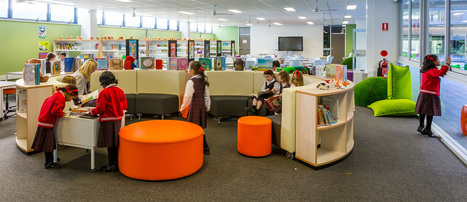
Future-focused learning prepares students across all curriculum areas and learning stages with skills and capabilities to thrive in a rapidly changing and interconnected world. It connects students and engages their sense of curiosity.
Kim Flintoff's insight:
Future-focused learning prepares students across all curriculum areas and learning stages with skills and capabilities to thrive in a rapidly changing and interconnected world. It connects students and engages their sense of curiosity.
Scoop.it!

Understanding The Challenge, Visualizing the Future
Kim Flintoff's insight:
Understanding The Challenge, Visualizing the Future Students need to be able to think successfully at high levels of complexity in order to be effective workers, leaders and problem-solvers. Memorization of facts will definitely not help them be ready. In the old way of thinking, the more people are “taught,” the more they “know.” This thinking does not work because it ignores the important variables of motivation, relevance, learner engagement and the need to improve thinking capability. It ignores the importance of basing choices on ethical values, and focuses only on historical context. Learning has become highly self-directed and traditional approaches to teaching (“telling,” “sharing knowledge” and “testing knowledge”) do not support learner success in a complex global context.
Scoop.it!

Report author Louise Pollard (The University of Western Australia) recommends universities and government develop a nuanced understanding of this cohort to enable more remote students to realise their potential.
Kim Flintoff's insight:
Report author Louise Pollard (The University of Western Australia) recommends universities and government develop a nuanced understanding of this cohort to enable more remote students to realise their potential. “This study showed the profile of remote students varied considerably from regional and metropolitan students, both in terms of enrolment characteristics and equity group membership, with many remote students experiencing the compounding disadvantage of belonging to more than one equity group,” Ms Pollard said. “Remote students should be recognised as a distinct equity group, with government funding directed toward attracting and retaining this cohort.”
Scoop.it!

Project-based learning (or any learning) should not be about squeezing in a project at the end of a unit or adding just one more thing. Instead, the best educators understand the learners and learning goals, and design the projects (ideally with the learners) to include learning experiences, strategies, and tools to achieve the desired outcomes. The power is when educators provide choice for learners and opportunities for them to manage, construct, and drive their own learning to achieve the learning goals and make new meaning. I would argue, even more importantly, they learn to engage in authentic problem solving that will allow them to be active and contributing members of society now and in the future, not simply get through the curriculum or the latest initiative or program.
Kim Flintoff's insight:
Project-based learning (or any learning) should not be about squeezing in a project at the end of a unit or adding just one more thing. Instead, the best educators understand the learners and learning goals, and design the projects (ideally with the learners) to include learning experiences, strategies, and tools to achieve the desired outcomes. The power is when educators provide choice for learners and opportunities for them to manage, construct, and drive their own learning to achieve the learning goals and make new meaning. I would argue, even more importantly, they learn to engage in authentic problem solving that will allow them to be active and contributing members of society now and in the future, not simply get through the curriculum or the latest initiative or program.
Scoop.it!

PRINCIPLES OF GOOD PRACTICE FOR ASSESSING STUDENT LEARNING
Kim Flintoff's insight:
The future of Assessment was outlined a while back! PRINCIPLES OF GOOD PRACTICE FOR ASSESSING STUDENT LEARNING 1. The assessment of student learning begins with educational values. 2. Assessment is most effective when it reflects an understanding of learning as multidimensional, integrated, and revealed in performance over time. 3. Assessment works best when the programs it seeks to improve have clear, explicitly stated purposes. 4. Assessment requires attention to outcomes but also and equally to the experiences that lead to those outcomes. 5. Assessment works best when it is ongoing, not episodic. 6. Assessment fosters wider improvement when representatives from across the educational community are involved. 7. Assessment makes a difference when it begins with issues of use and illuminates questions that people really care about. 8. Assessment is most likely to lead to improvement when it is part of a larger set of conditions that promote change. 9. Through assessment, educators meet responsibilities to students and to the public.
Scoop.it!
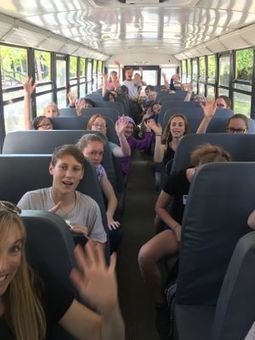
Beyond these benefits to your audience, your students, and yourself, letting students lead professional learning shifts the mentality of how we grow as educators. As John Craig, one of the organizers of Dynamic Landscapes, puts it, “Student presenters don’t just change the sessions, they change the conversations that are happening across the entire conference.”
Kim Flintoff's insight:
Beyond these benefits to your audience, your students, and yourself, letting students lead professional learning shifts the mentality of how we grow as educators. As John Craig, one of the organizers of Dynamic Landscapes, puts it, “Student presenters don’t just change the sessions, they change the conversations that are happening across the entire conference.”
Scoop.it!

Blockchain – chances are you’ve probably heard the phrase in passing from one of the more passionate tech whizzes in your office.
Kim Flintoff's insight:
Blockchain – chances are you’ve probably heard the phrase in passing from one of the more passionate tech whizzes in your office. But how well do you understand the theory behind the hype? And how can this new modem actually help facilitate your HR function?
Scoop.it!
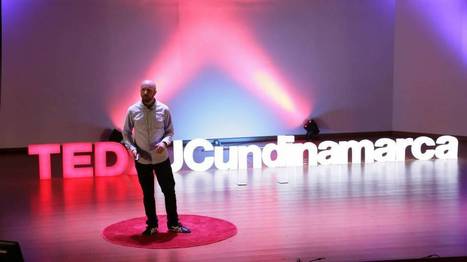
Who gets to decide what kids learn? For whose benefit is all this, really? We make learning visible for the people who get to decide. But, what if we could invisibilize learning?
Kim Flintoff's insight:
Who gets to decide what kids learn? For whose benefit is all this, really? We make learning visible for the people who get to decide. But, what if we could invisibilize learning? Dr. John Moravec share that the Theory for Invisible Learning is that we learn more, and do so invisibly, when we separate structures of control that restrict freedom and self-determination from learning experiences. Learning becomes invisible when we empower each of us to learn our own way. Removing structures of control opens possibilities. The end outcomes or goals of an experience are neither dictated nor determined from the start, but instead emerge as learning develops. Such experiences include free play, self-organized learning communities, authentic problem-based learning, and experimentation to acquire new knowledge. This talk was given at TEDxUCundinamarca in Colombia using the TED conference format but independently organized by a local community. Dr. Moravec is an internationally-recognized scholar and speaker on the future of education and work, lead author of Knowmad Society, and the founder of Minneapolis-based Education Futures LLC. For a full bio, visit John’s personal page at john.moravec.us/about.
Scoop.it!
Our second report, Educational Ecosystems for Societal Transformation, summarizes two years of GEF journey that involved hundreds of educational leaders on five continents. We identify focal points of systemic transformation that may bring education of the future into reality, and lay out the framework for education as a vehicle for intentional evolution of the humankind.
Kim Flintoff's insight:
Our second report, Educational Ecosystems for Societal Transformation, summarizes two years of GEF journey that involved hundreds of educational leaders on five continents. We identify focal points of systemic transformation that may bring education of the future into reality, and lay out the framework for education as a vehicle for intentional evolution of the humankind.
Scoop.it!

Reflection is so important for continued learning and growth. I developed the list below as a tool for educators to reflect on practices that help prepare students for a rapidly changing, complex world. Some of these practices are new. Some are not. Some of them involve technology. Some do not.
Kim Flintoff's insight:
Reflection is so important for continued learning and growth. I developed the list below as a tool for educators to reflect on practices that help prepare students for a rapidly changing, complex world. Some of these practices are new. Some are not. Some of them involve technology. Some do not.
Scoop.it!
The hub, called "ISTE U," will train teachers on technology topics like artificial intelligence, mobile learning and open educational resources.
Kim Flintoff's insight:
The hub, called "ISTE U," will train teachers on technology topics like artificial intelligence, mobile learning and open educational resources.
All courses offered on ISTE U will be eligible for graduate-level credit through Dominican University of California.
|
Scoop.it!

Maurie Abraham is the principal of Hobsonville Point Secondary School in Auckland. In this blog, the second of a two part series, Maurie shares five learning design principles that support future focused learning based on his US school visits. He then offers suggestions for bringing these principles to life in New Zealand schools and classrooms.
What I discovered from my US school visits What principles guide the design of learning? Learning should be personalised. Learning should be authentic. Learning should be connected. Learning and design of learning should involve collaboration (between teachers and with students). Learning should address dispositional development.
Kim Flintoff's insight:
Maurie Abraham is the principal of Hobsonville Point Secondary School in Auckland. In this blog, the second of a two part series, Maurie shares five learning design principles that support future focused learning based on his US school visits. He then offers suggestions for bringing these principles to life in New Zealand schools and classrooms. What I discovered from my US school visits What principles guide the design of learning? Learning should be personalised. Learning should be authentic. Learning should be connected. Learning and design of learning should involve collaboration (between teachers and with students). Learning should address dispositional development.
Scoop.it!
As discussed in our report Enabling the future of work another important development in the area of measurement and recognition is the emergence of micro-credentials.
Micro-credentials present an opportunity to apply a robust and benchmarked assessment to what a person is actually capable of, particularly when it comes to the soft skills.
Kim Flintoff's insight:
As discussed in our report Enabling the future of work another important development in the area of measurement and recognition is the emergence of micro-credentials. Micro-credentials present an opportunity to apply a robust and benchmarked assessment to what a person is actually capable of, particularly when it comes to the soft skills.
Scoop.it!

There’s a focus today in the education world to provide students with a serious return on investment by properly preparing them for the workforce, but consider for a moment the staggering statistic that 85% of jobs that will exist in 2030 haven’t been invented yet. Of course, it’s going to be critical to continue to make sure that students are gaining practical, employable skills over the course of their degrees. However, there needs to be an equal focus on preparing these individuals with adaptable and transferable skills. In essence, we need to teach folks how to learn.
Kim Flintoff's insight:
There’s a focus today in the education world to provide students with a serious return on investment by properly preparing them for the workforce, but consider for a moment the staggering statistic that 85% of jobs that will exist in 2030 haven’t been invented yet. Of course, it’s going to be critical to continue to make sure that students are gaining practical, employable skills over the course of their degrees. However, there needs to be an equal focus on preparing these individuals with adaptable and transferable skills. In essence, we need to teach folks how to learn.
Scoop.it!
According to Allen Tough, adult learners spend an average of 15 hours per week, nearly 800 hours annually, participating in self-directed learning*. Motivations to begin such a learning journey vary but include knowledge and skill acquisition or self-improvement. This unassessed learning holds tremendous value for adults seeking credentials and acknowledgement of learning, and could serve as an untapped pool of students as institutions grapple with decreased enrollments.
Kim Flintoff's insight:
According to Allen Tough, adult learners spend an average of 15 hours per week, nearly 800 hours annually, participating in self-directed learning*. Motivations to begin such a learning journey vary but include knowledge and skill acquisition or self-improvement. This unassessed learning holds tremendous value for adults seeking credentials and acknowledgement of learning, and could serve as an untapped pool of students as institutions grapple with decreased enrollments.
Scoop.it!

Predictions about higher education’s future often result in two very different visions about what is next for colleges and universities. In one camp: those who paint a rosy picture of an economy that will continue to demand higher levels of education for an increasing share of the workforce. In the other: those who believe fewer people will enroll in college as tuition costs spiral out of control and alternatives to the traditional degree emerge.
Kim Flintoff's insight:
Predictions about higher education’s future often result in two very different visions about what is next for colleges and universities. In one camp: those who paint a rosy picture of an economy that will continue to demand higher levels of education for an increasing share of the workforce. In the other: those who believe fewer people will enroll in college as tuition costs spiral out of control and alternatives to the traditional degree emerge.
Scoop.it!

As postsecondary institutions scramble to better meet the needs of today’s students, what does the burgeoning ‘gig economy’ mean for higher education?
Kim Flintoff's insight:
As postsecondary institutions scramble to better meet the needs of today’s students, what does the burgeoning ‘gig economy’ mean for higher education?
Scoop.it!
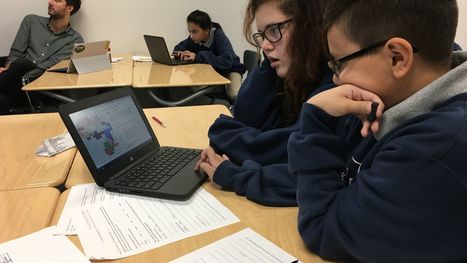
Computational thinking (CT) is a set of skills students can leverage to tackle hard problems of all kinds using ideas from computer science. These skills include:
Kim Flintoff's insight:
Computational thinking (CT) is a set of skills students can leverage to tackle hard problems of all kinds using ideas from computer science. These skills include: Algorithmic thinking: using a well-defined series of steps to achieve a desired outcome Decomposition: approaching a complicated problem by focusing on one piece at a time Abstraction: representing a complicated system with a simple model Pattern recognition: analyzing data and using trends to inform solutions
Scoop.it!

In a move that inspires one to cry out “blockchainify everything,” the UK’s Food Standards Agency has announced that it’s recent blockchain-focused pilot programme proved a success.
Kim Flintoff's insight:
In a move that inspires one to cry out “blockchainify everything,” the UK’s Food Standards Agency has announced that it’s recent blockchain-focused pilot programme proved a success.
Scoop.it!

Three students take their single-powered speedboat on its maiden voyage out to sea. Their task: document the plastic problem through video and photo evidence. Accompanying them on the boat is all the necessary instrumentation; from microscopic lenses that fit on the back of their IPADS, to ph testing kits for measuring the acidity of the water. They compile this evidence in order to accomplish a far more challenging task: ‘Prototyping a solution.’
Kim Flintoff's insight:
Three students take their single-powered speedboat on its maiden voyage out to sea. Their task: document the plastic problem through video and photo evidence. Accompanying them on the boat is all the necessary instrumentation; from microscopic lenses that fit on the back of their IPADS, to ph testing kits for measuring the acidity of the water. They compile this evidence in order to accomplish a far more challenging task: ‘Prototyping a solution.’
Scoop.it!
Digital Promise wants to educate people about "learner variability." To that end, the organization recently published a paper to explain the concept and direct people to the use of the resources it has available through its Learner Positioning System (LPS) initiative.
Kim Flintoff's insight:
In six concise pages "Learner variability Is the Rule, Not the Exception" describes how all students — those struggling as well as those thriving — differ in ways that "matter for learning," as learning scientists are discovering.
Scoop.it!
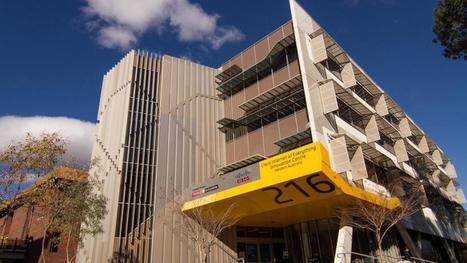
Perth's Curtin University takes education to the world and becomes a 24/7 tertiary institution in the process.
Kim Flintoff's insight:
Perth's Curtin University takes education to the world and becomes a 24/7 tertiary institution in the process.
Scoop.it!
Google also says it is expanding curriculum for K-12 professional development (through its new Teacher Center), its computer science programs and Be Internet Awesome, a game that aims to impart digital literacy skills.
Kim Flintoff's insight:
Google also says it is expanding curriculum for K-12 professional development (through its new Teacher Center), its computer science programs and Be Internet Awesome, a game that aims to impart digital literacy skills.
|






The ability to clearly communicate information and ideas is essential to any career, whether someone is explaining scientific findings at a conference, creating internal workflow guidelines, or trying to close a sale. And in the modern world, the ability to communicate through digital mediums is more important than ever.