The Learning Futures team focuses on strategic innovations that advance the mission of the university. The team helps shape the future of learning and teaching at the university through human and technological capacity building and promotes continuous improvement using learning analytics.
CU Boulder’s core mission is to educate students and engage in cutting-edge scholarship and creative work, research and discovery. The success with which we carry out this mission determines our ability to accomplish our strategic imperatives, which are to shape tomorrow’s leaders, positively impact humanity and be the top university for innovation.
To ensure continuing success, the campus is now ready to embark on a conversation called Academic Futures: Rethinking the university – the futures of learning and discovery.
CU Boulder’s core mission is to educate students and engage in cutting-edge scholarship and creative work, research and discovery. The success with which we carry out this mission determines our ability to accomplish our strategic imperatives, which are to shape tomorrow’s leaders, positively impact humanity and be the top university for innovation. To ensure continuing success, the campus is now ready to embark on a conversation called Academic Futures: Rethinking the university – the futures of learning and discovery.
In the previous post in this series, Structure Matters, we considered how structure has implications for the extent to which a network or networked activity is able to leverage different kinds of net effects and create robust value for diverse participants. We also considered how structure has implications for both equity and how power is distributed. Another important consideration in how to create equitable benefit is what leadership looks like and how it plays out in and around networked activity.
The concept of leadership seems to be undergoing a rapid evolution lately. Especially in this "network age" there appears to be both a growing appreciation that leadership has always been about more than the singular and highly visible heroic individual, and that going forward, leadership must be upheld as much more of a shared and multi-dimensional endeavor.
In the previous post in this series, Structure Matters, we considered how structure has implications for the extent to which a network or networked activity is able to leverage different kinds of net effects and create robust value for diverse participants. We also considered how structure has implications for both equity and how power is distributed. Another important consideration in how to create equitable benefit is what leadership looks like and how it plays out in and around networked activity. The concept of leadership seems to be undergoing a rapid evolution lately. Especially in this "network age" there appears to be both a growing appreciation that leadership has always been about more than the singular and highly visible heroic individual, and that going forward, leadership must be upheld as much more of a shared and multi-dimensional endeavor.
The oldest profession – teaching – is no longer attractive. The Queensland Deans of Education revealed there have been alarming drops in first preference applications for this year’s teacher preparation courses. Queensland has experienced an overall 26% drop. Most alarmingly, UQ reported a 44% plunge. QUT saw a 19% drop.
These figures reflect a national trend. ACU’s is down 20% for campuses in Queensland, New South Wales and Victoria. This follows disappointing interest in 2017. VTAC reported a 40% drop in 2017 compared to 2016. So why don’t people want to be teachers anymore? There are at least seven reasons people aren’t so keen.
These figures reflect a national trend. ACU’s is down 20% for campuses in Queensland, New South Wales and Victoria. This follows disappointing interest in 2017. VTAC reported a 40% drop in 2017 compared to 2016. So why don’t people want to be teachers anymore? There are at least seven reasons people aren’t so keen.
I’m working currently on a book about why people choose college. In the course of the research, I’ve listened to hundreds of students tell their story about how they made the college—or any postsecondary education—decision.
Many of the students I’ve listened to were, at one time or another, college dropouts. They left for a multitude of reasons, from family needs and responsibilities to medical and financial hardship, as well as a lack of purpose for being at college in the first place.
What’s striking is that, in almost every single story I listened to where the student dropped out, almost never did the college they were attending reach out to see how they might help them re-enroll.
Many of the students I’ve listened to were, at one time or another, college dropouts. They left for a multitude of reasons, from family needs and responsibilities to medical and financial hardship, as well as a lack of purpose for being at college in the first place. What’s striking is that, in almost every single story I listened to where the student dropped out, almost never did the college they were attending reach out to see how they might help them re-enroll.
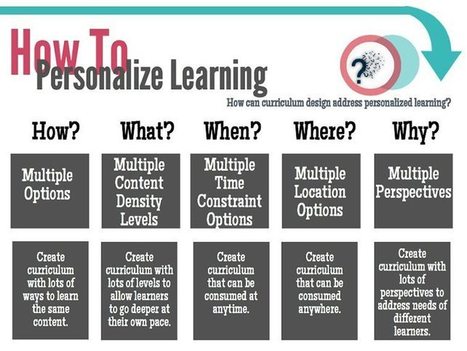
There is a difference between personalized learning and differentiation.
Differentiation is a kind of personalized instruction, where teachers adjust process, & product, according to a student’s readiness, interest, & learning style. Planning of the learning starts with the content, and the content remains the same for all students. This is a school and curriculum-centered approach that attempts to amend the delivery of the content to match the student’s needs, strengths, and general readiness.
Personalized learning starts with the learner and asks the question, “What does this student need to understand, and how best can that happen?” This is a student-centered approach, and is built around the idea of recognizing the vast differences in students–not just in terms of literacy or schema, but an authentic need to know.
There is a difference between personalized learning and differentiation. Differentiation is a kind of personalized instruction, where teachers adjust process, & product, according to a student’s readiness, interest, & learning style. Planning of the learning starts with the content, and the content remains the same for all students. This is a school and curriculum-centered approach that attempts to amend the delivery of the content to match the student’s needs, strengths, and general readiness. Personalized learning starts with the learner and asks the question, “What does this student need to understand, and how best can that happen?” This is a student-centered approach, and is built around the idea of recognizing the vast differences in students–not just in terms of literacy or schema, but an authentic need to know.
Australian authorities have hit back at claims the NAPLAN writing test is flawed and turns students into poor writers.
A report by retired US academic Les Perelman, commissioned by the NSW Teachers Federation, said the NAPLAN writing test was “defective in its design and execution” and called for a review.
He criticised the test for rewarding students for using more difficult words instead of plain English.
“Teaching to this test will make students poor writers by having them focus on non-essential tasks such as memorising spelling lists,” the report said.
“In summary, the NAPLAN essay fails to be a valid measure of any serious formulation of writing ability, especially within the context of its current uses.
“Indeed, NAPLAN’s focus on low-level mechanical skills, trivialisation of thought and its overall disjunction from authentic constructs of writing may be partially responsible for declining scores in inter-national tests.”
An Australian Curriculum, Assessment and Reporting Authority spokesman said the report compared NAPLAN with other tests with different purposes, including university entrance exams.
“The NAPLAN marking guide focuses on the fundamentals of effective writing — spelling and grammar,” he said. “Students who get higher NAPLAN marks are able to demonstrate successful mastery of each.”
ACARA had reviewed the writing test and identified improvements that would be made when the test went online.
Edith Cowan University will today release a study that found half of 345 parents surveyed at private schools doubted that NAPLAN tests identified areas where students needed help.
Students in Years 3, 5, 7 and 9 will sit the annual round of tests next month.
Australian authorities have hit back at claims the NAPLAN writing test is flawed and turns students into poor writers. A report by retired US academic Les Perelman, commissioned by the NSW Teachers Federation, said the NAPLAN writing test was “defective in its design and execution” and called for a review.
A Melbourne school has scrapped age-based classes and given students free rein to assign themselves to whatever year level they feel best meets their ability.
Students at Templestowe College – a public secondary school in Melbourne’s eastern suburbs – are grouped according to their skill or ability level, rather than their age.
“Entry students” (Year 7’s) must study four core units – English, maths, science and health/physical education – with other similar-aged students, and can begin to familiarise themselves with other mixed-aged students by choosing two units from their 130 different electives.
From Year 8 onwards, students have complete control over the course load and can work at a level they feel is best suited to their ability. A class can include anyone from 13 to 18 years of age.
Principal Pete Ellis said 20 per cent of Year 8-aged students took a VCE unit in 2017 and passed.
A Melbourne school has scrapped age-based classes and given students free rein to assign themselves to whatever year level they feel best meets their ability. Students at Templestowe College – a public secondary school in Melbourne’s eastern suburbs – are grouped according to their skill or ability level, rather than their age.
Sir Ken Robinson’s views on creativity are abundantly well documented. In his 2006 TED Talk—still the most-watched of all time—he claimed that “we are educating people out of their creative capacities” and charged the current education system with being too rigid in adhering to traditional academic subjects. Kids, he argued, need time to dance, draw, create and find what they’re good at.
But he hasn’t given up on schools or education—far from it, in fact. For his follow-up act, Robinson is releasing a new book for parents on how to raise capable children who thrive in school. Make no mistake, though, he’s still shaking up the system (and redefining what that actually means).
But he hasn’t given up on schools or education—far from it, in fact. For his follow-up act, Robinson is releasing a new book for parents on how to raise capable children who thrive in school. Make no mistake, though, he’s still shaking up the system (and redefining what that actually means).
The Teaching Teams trial promises teacher education students and their supervisors a new approach to self-reflection and assessment.
With the current push for new teachers who are ‘classroom ready’, it’s no wonder our teacher education students, teachers and schools are feeling the strain.
At the moment, in addition to Australia, there are sweeping movements in many other parts of the world, including the US, Denmark and Latin America, to evaluate current teaching practices and improve pedagogical approaches in a bid to improve learning outcomes for students.
The Teaching Teams trial promises teacher education students and their supervisors a new approach to self-reflection and assessment. With the current push for new teachers who are ‘classroom ready’, it’s no wonder our teacher education students, teachers and schools are feeling the strain. At the moment, in addition to Australia, there are sweeping movements in many other parts of the world, including the US, Denmark and Latin America, to evaluate current teaching practices and improve pedagogical approaches in a bid to improve learning outcomes for students.
Jill Buban: If we're looking at the underserved post-secondary population, we've seen great strides in this. The team at ASU and Plus research lab is just releasing a study that shows across six different institutions the impact that digital learning has had so I do think that we're making strides. I also think we're transforming the way we look at higher ed. We know that the now majority of people are adult learners not the traditional learner, so I think in looking at how we serve those learners, and looking for connections to the workforce and the workplace and offering those different types of credentials and how we stack them and provide those opportunities for adults, I think we're really kind of reinventing and transforming how we look. It's what the student, I think more so what the student needs, when you're serving that adult population than what the institution thinks the student needs.
Jill Buban: If we're looking at the underserved post-secondary population, we've seen great strides in this. The team at ASU and Plus research lab is just releasing a study that shows across six different institutions the impact that digital learning has had so I do think that we're making strides. I also think we're transforming the way we look at higher ed. We know that the now majority of people are adult learners not the traditional learner, so I think in looking at how we serve those learners, and looking for connections to the workforce and the workplace and offering those different types of credentials and how we stack them and provide those opportunities for adults, I think we're really kind of reinventing and transforming how we look. It's what the student, I think more so what the student needs, when you're serving that adult population than what the institution thinks the student needs.
How do we in higher education help students prepare for the future by becoming not only problem solvers but also problem creators?
The 2017 report The Next Era of Human/Machine Partnerships states that 85 percent of the jobs that will be available in 2030 haven't even been invented yet.1 These types of predictive hypotheses often cause me to do a reality check. As I took time to reflect on the fact that 2030 is (incredibly) only 12 years away, I tried to think about the jobs that had not been invented 12 to 15 years ago. Did any child in 2003 say they wanted to be an offshore wind engineer, a drone operator, a data scientist, or a Lyft driver? These jobs are all new in the last 15 years. These careers exist because a person, or often a team of people, created big, bold problems for us to solve. So how do we in higher education help students prepare for this future, help them become not only problem solvers but also problem creators?
As alarming gaps continue to persist in IT ranks nationally, higher education IT leaders are increasingly paying attention to diversity, equity, and inclusion (DEI) as critical to strategic workforce development. In this, they reflect the concerns of institutional leaders. College and university presidents rank diversity as their fourth most-critical issue after financial management, fundraising, and enrollment management.1
Higher education information technology is not as diverse in terms of gender, race, and ethnicity as is the population it serves or the workforce in general. The higher education IT workforce is 15 percent nonwhite and 33 percent women, compared with 34 percent nonwhite and 47 percent women in the US workforce.2 Yet evidence suggests that a more diverse and inclusive workforce is a more effective workforce. Diverse teams are more fact-based, weigh evidence more carefully, and are more innovative. In the corporate sector, companies in the top quartile of ethnic and racial diversity are 35 percent more likely to show profits above industry means.3
As alarming gaps continue to persist in IT ranks nationally, higher education IT leaders are increasingly paying attention to diversity, equity, and inclusion (DEI) as critical to strategic workforce development. In this, they reflect the concerns of institutional leaders. College and university presidents rank diversity as their fourth most-critical issue after financial management, fundraising, and enrollment management.1 Higher education information technology is not as diverse in terms of gender, race, and ethnicity as is the population it serves or the workforce in general. The higher education IT workforce is 15 percent nonwhite and 33 percent women, compared with 34 percent nonwhite and 47 percent women in the US workforce.2 Yet evidence suggests that a more diverse and inclusive workforce is a more effective workforce. Diverse teams are more fact-based, weigh evidence more carefully, and are more innovative. In the corporate sector, companies in the top quartile of ethnic and racial diversity are 35 percent more likely to show profits above industry means.3
Shaping the future of universities today Come on a journey to explore possible futures for the university
University Futures was established in 2006 with a website that focused on using foresight methods and approaches in universities. At that time, it was really a place for me to put what I'd learned in my graduate strategic foresight program at Swinburne University of Technology. As my expertise and knowledge of foresight grew, I turned my attention to using foresight in practice and I closed down the University Futures website, opened a page on Google+ where I could post my scanning, and focused on my business, Thinking Futures. I have worked with people in a range of organisations since 2007 to help them use foresight and think in new ways about the future. I now post my scanning on university futures on my Facebook page. But ... as I got to the stage of my PhD where I could see new ideas and analysis emerging, I realised that it was time to reinvigorate University Futures.
The “rural school challenge” has existed since the advent of compulsory education. But this is the first major national report since the Human Rights and Equal Opportunity Inquiry into rural and remote education 18 years ago. Sadly, progress towards a more equitable educational experience, outcomes from schooling and access to higher education has been slow in the intervening years.
The “rural school challenge” has existed since the advent of compulsory education. But this is the first major national report since the Human Rights and Equal Opportunity Inquiry into rural and remote education 18 years ago. Sadly, progress towards a more equitable educational experience, outcomes from schooling and access to higher education has been slow in the intervening years.
University is a big investment. Students want value for money because a future of debt is scary. But there is also a danger when we talk about higher education only in financial terms. It shifts the conversation away from how universities develop students as learners, thinkers, and future leaders. It turns students into customers.
University is a big investment. Students want value for money because a future of debt is scary. But there is also a danger when we talk about higher education only in financial terms. It shifts the conversation away from how universities develop students as learners, thinkers, and future leaders. It turns students into customers.
It’s a tough time for colleges. Enrollment has declined in each of the past five years, largely concentrated in for-profits, but public schools are seeing drops as well. Demographers predict further drops in demand, one of many factors putting pressure on the traditional business model of college.
At the same time, it’s an incredible moment for the business of learning. Waves of technology are driving growing demand for life-long learning. Observers predict a significant increase in demand for credentials in order to meet the economy’s need for a more skilled workforce. Edtech is seeing massive inflows of funding, and successful startups are proliferating in higher ed.
At the same time, it’s an incredible moment for the business of learning. Waves of technology are driving growing demand for life-long learning. Observers predict a significant increase in demand for credentials in order to meet the economy’s need for a more skilled workforce. Edtech is seeing massive inflows of funding, and successful startups are proliferating in higher ed.
When it is all said and done, if a lesson or project is relevant students will be able to tell you:
What they learned Why they learned it How they will use it
Without relevance, learning many concepts don’t make sense to students. The many benefits speak for themselves, which compels all of us to ensure that this becomes a mainstay in daily pedagogy.
When it is all said and done, if a lesson or project is relevant students will be able to tell you: What they learned Why they learned it How they will use it Without relevance, learning many concepts don’t make sense to students. The many benefits speak for themselves, which compels all of us to ensure that this becomes a mainstay in daily pedagogy.
$20 billion could relieve almost all world hunger for a year. It’s also the amount Australia lost due to educational inequality in schools between 2009 and 2015 – so avers the Public Education Foundation in its latest issues paper, What Price the Gap? Education and Inequality in Australia.
The not-for-profit scholarships organisation calculated that school students scoring in the lowest 10 per cent on international standardised tests cost the nation $20 billion in GDP – equivalent to 1.2 per cent of our GDP, and nearly a fifth of the total GDP amount lost due to falling international standardised test scores in the country generally.
These lowest percentile-scoring students typically attend public schools and are from disadvantaged (such as refugee, migrant and Aboriginal and Torres Strait Islander) backgrounds.
$20 billion could relieve almost all world hunger for a year. It’s also the amount Australia lost due to educational inequality in schools between 2009 and 2015 – so avers the Public Education Foundation in its latest issues paper, What Price the Gap? Education and Inequality in Australia. The not-for-profit scholarships organisation calculated that school students scoring in the lowest 10 per cent on international standardised tests cost the nation $20 billion in GDP – equivalent to 1.2 per cent of our GDP, and nearly a fifth of the total GDP amount lost due to falling international standardised test scores in the country generally. These lowest percentile-scoring students typically attend public schools and are from disadvantaged (such as refugee, migrant and Aboriginal and Torres Strait Islander) backgrounds.
Station1 is a Boston-based non-profit learning institution that focuses on a higher education model of self-directed learning and technological project-based pedagogy. The organization’s founders have impressive backgrounds in edtech: Dr. Christine Ortiz, a former dean at MIT, Dr. Ellan Spero, Ph.D., MIT, and Elliot Mandel, M.Ed., Harvard University.
Drawing upon their experiences and networks, the founders have built Station1 on a foundation of scientific inquiry, social impact, and diverse inclusion. Right now, the organization links with university and business partners for educational programming. However, the nonprofit is transitioning to become a fully accredited degree-granting institution and soon plans to launch in other cities around the world.
The Future of Higher Education Station1 is a Boston-based non-profit learning institution that focuses on a higher education model of self-directed learning and technological project-based pedagogy. The organization’s founders have impressive backgrounds in edtech: Dr. Christine Ortiz, a former dean at MIT, Dr. Ellan Spero, Ph.D., MIT, and Elliot Mandel, M.Ed., Harvard University. Drawing upon their experiences and networks, the founders have built Station1 on a foundation of scientific inquiry, social impact, and diverse inclusion. Right now, the organization links with university and business partners for educational programming. However, the nonprofit is transitioning to become a fully accredited degree-granting institution and soon plans to launch in other cities around the world.
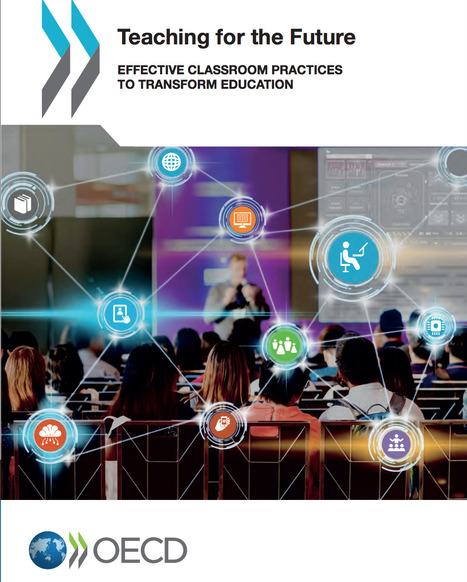
Teachers are the most important school-related factor influencing student learning. Teachers can help level the playing field and provide opportunities for success to all their students. They can inspire students to innovate; to think and reflect and to work in collaboration with others. Good teachers can also stimulate and guide students' development so that their achievements go beyond their own expectations. Therefore, how teachers achieve this in the classroom is important to understand. Teaching for the Future: Effective Classroom Practices To Transform Education links research and data on key issues facing teachers today with teachers’ own experiences to overcome challenges and create an effective classroom. This report builds on the discussions and stories shared at the Qudwa Global Teachers’ Forum, organised by the Crown Prince of Abu Dhabi on 7-8 October 2017. It captures the efforts made by teachers, from across the world, to facilitate student learning and transform education to build a fairer, humane and inclusive world. The report provides an in-depth analysis of issues that teachers encounter in their day-to-day professional life, particularly those around equity and reducing personal and social disadvantage, building academic, social and emotional well-being of students through parental engagement and integrating information and communication technology in classrooms.
"Teaching now is more dynamic, challenging and demanding than ever before. Teachers are expected to continuously innovate, adapt, and develop their teaching practices to equip all students with the skills and knowledge they will need to succeed in life and work. Classrooms are increasingly diverse and effective teaching demands that teachers individualise the learning experience to accommodate the needs of all. At the same time, teachers are expected to collaborate with parents and communities to support the academic, social and emotional development of students. Moreover, technological changes and the increased availability of digital resources are opening new avenues for both teaching and learning."
As educational neuroscientist Jared Cooney Horvarth from the University of Melbourne suggests:
“Unfortunately we don’t truly learn things by just pouring data in any fashion into our heads. Education research suggests learning only occurs if there is interaction, integration, and reinforcement via different sensory channels. …So long as you know where that information is at and how to access it, then you don’t really need to recall it. ..We intuitively know we need to see it, hear it, feel it, do it, think it and share it, to learn it.”
Or as Tony Wagner has said, it’s not what you know,but rather what you can do with what you know, that matters in our modern world. So what’s the point of us hanging on to our nostalgic use of memory rather than freeing up our brains to think more deeply about more complex ideas and issues that are relevant today?
Maybe it’s time we started forgetting more of what we have taken for granted for so long and learning more about what really matters.
As educational neuroscientist Jared Cooney Horvarth from the University of Melbourne suggests: “Unfortunately we don’t truly learn things by just pouring data in any fashion into our heads. Education research suggests learning only occurs if there is interaction, integration, and reinforcement via different sensory channels. …So long as you know where that information is at and how to access it, then you don’t really need to recall it. ..We intuitively know we need to see it, hear it, feel it, do it, think it and share it, to learn it.” Or as Tony Wagner has said, it’s not what you know,but rather what you can do with what you know, that matters in our modern world. So what’s the point of us hanging on to our nostalgic use of memory rather than freeing up our brains to think more deeply about more complex ideas and issues that are relevant today? Maybe it’s time we started forgetting more of what we have taken for granted for so long and learning more about what really matters.
On a 360-degree stage at the 2018 Consortium for School Networking (CoSN) annual conference, Tom Vander Ark — the first and former executive director of education for the Bill & Melinda Gates Foundation and now the CEO of Getting Smart — issued a hard truth.
“We’ve all been augmented,” Vander Ark said, using verbiage still primarily reserved for sci-fi literature to qualify the current state of artificial intelligence and machine learning for a crowd of educational technology directors and district IT leaders.
During the CoSN annual conference, education thought leaders from Google, KnowledgeWorks and Getting Smart explore the role of artificial intelligence.
Applying a Consultancy Approach A one-size-fits-all approach to faculty development will not work. We need to meet faculty where they are, and they are not all sitting in a classroom waiting for a workshop. Some faculty are ready to take a large leap and move from lecture to active, engaged online learning, while others need to take smaller steps. Balancing how support is provided to faculty on both ends of this spectrum is the real challenge, one that has rarely been met by offering a well-designed workshop.
A one-size-fits-all approach to faculty development will not work. We need to meet faculty where they are, and they are not all sitting in a classroom waiting for a workshop. Some faculty are ready to take a large leap and move from lecture to active, engaged online learning, while others need to take smaller steps. Balancing how support is provided to faculty on both ends of this spectrum is the real challenge, one that has rarely been met by offering a well-designed workshop.
To get content containing either thought or leadership enter:
To get content containing both thought and leadership enter:
To get content containing the expression thought leadership enter:
You can enter several keywords and you can refine them whenever you want. Our suggestion engine uses more signals but entering a few keywords here will rapidly give you great content to curate.


 Your new post is loading...