JavaScript for Line of Business Applications
606.5K views | +29 today
JavaScript for Line of Business Applications
Keeping track of current JavaScript Frameworks that help design your clientside Business Logic Layers.
Curated by Jan Hesse
Beam to my Inbox:
Your new post is loading...

Popular Tags - Filter using the Funnel

Scoop.it!

Working with Multiple Values in a Promise Chain using Stateful Context

Working with Multiple Values in a Promise Chain using Stateful Context | JavaScript for Line of Business Applications | Scoop.it

In one of our project’s test code, we have to create many objects asynchronously and use them later in our tests. Our codebase is promise-based, so we have to chain these promises in a way that makes it possible to access all the variables we want in later time.

There are many ways to do this, which we’ll explore.

No comment yet.
Scoop.it!

AngularJS: The Bad Parts

AngularJS: The Bad Parts | JavaScript for Line of Business Applications | Scoop.it

Whatever the reason is for Angulars popularity, it isn’t that it’s a great framework.

Contents:

Bad Idea #1: Dynamic scoping
Bad Idea #2: Parameter name based dependency injection
Bad Idea #3: The digest loop
Bad Idea #4: Redefining well-established terminology
Bad idea #5: Unnecessary complexity
6: In conclusion

No comment yet.
Scoop.it!

catberry - a framework for fast and modular isomorphic web-applications using node.js

catberry - a framework for fast and modular isomorphic web-applications using node.js | JavaScript for Line of Business Applications | Scoop.it

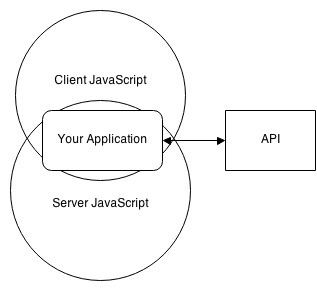
Catberry was developed to help in creating "isomorphic" Web applications. Isomorphic applications are apps that use the same codebase to run from both server and client-side environments.

This means you write the code only once, and deploy it the way you want. Catberry handles all the differences between these two environments, and will make sure the normal JavaScript modules that would need a server-side environment to run will execute without errors inside a browser.

The application fits best when developing single-page applications (SPAs) and is also very well documented, helping developers new to the platform easily get acquainted to all of its features.

Catberry uses modern technologies like HTML 5, Browserify, Connect, and Express, works on most modern browsers, and can also be extended via dedicated packages.


Main features:
* Fast rendering engine
* Integrated the LinkedIn's Dust template engine
* Browser history via the HTML5 History API
* Dependency injection support
* Event-based routing
* SEO friendly code

No comment yet.
Scoop.it!

Reusable UI widgets using RequireJS and Knockout

Reusable UI widgets using RequireJS and Knockout | JavaScript for Line of Business Applications | Scoop.it

Requirements
What I needed to do was to find a way to reuse custom UI components (widgets) in the most transparent way. That meant for me that I should be able to:

* Not have to declare all of my widgets dependencies in each webpage it was needed.
* Have all widget code in their own files. This applies to JavaScript source as well as HTML templates.
* Have each widget specify its dependencies to other widgets so I can easily compose them.


Gather the tools
Using an MVW framework is always a good idea when trying to structure your Web UI code. It separates your JavaScript from your HTML views in a clear way, so I tried a few. What I finally ended up using was Knockout.js, because of its HTML templates with data-bind tags. That was making it easier for a designer to work with them without messing with Handlebars magic.

No comment yet.
Scoop.it!

Web Components the Right Way

Web Components the Right Way | JavaScript for Line of Business Applications | Scoop.it

This is a guide intended to introduce to Web Components. Everyone can contribute here!


Contents:

* Specifications
* Blogs
* Reading
* Getting Started
* Interoperability
* Generators
* Tests
* Discover
* Best Practices
* Style Guides
* Performance
* Libraries
* Screencasts
* Support
* Concatenate
* Boilerplates
* Who To Follow

No comment yet.
Scoop.it!

Native JavaScript Data-Binding

Two-way data-binding is such an important feature - align your JS models with your HTML view at all times, to reduce boilerplate coding and enhance UX. We will observe two ways of doing this using native JavaScript, with no frameworks - one with revolutionary technology (Object.observe), and one with an original concept (overriding get/set). Spoiler alert - the second one is better. 

No comment yet.
Scoop.it!

Delving into Node.js and Express web framework

Delving into Node.js and Express web framework | JavaScript for Line of Business Applications | Scoop.it

I will teach you how to take advantage of the MEAN stack in becoming a full-stack JavaScript developer.

Node.js was created by Ryan Dahl and it’s basically a platform built on Chrome’s JavaScript runtime called V8, whose greatest advantage over other JavaScript engines is the compiling of JavaScript code to native machine code before executing it. It uses an event-driven, non-blocking I/O model that makes it lightweight and efficient, perfect for data-intensive real-time applications that run across distributed devices.

No comment yet.
Scoop.it!

Ember Data mastering async relationships

Ember Data mastering async relationships | JavaScript for Line of Business Applications | Scoop.it

A walkthrough Ember Data async relationships, creating and displaying a new project with the help of Ember-CLI.

This post will cover the behaviour of async relationships while communicating with a CRUD back-end.

No comment yet.
Scoop.it!

Ember testing internals with ember cli

Ember Testing Internals with Ember-CLI
No comment yet.
Scoop.it!

How to configure CSP in your Ember CLI app

How to configure CSP in your Ember CLI app | JavaScript for Line of Business Applications | Scoop.it
Learn about Content Security Policy with a demo app containing a variety of of CSP errors with instructions on how to fix them....
No comment yet.
Scoop.it!

Ember.js and HTML5 Drag and Drop

Ember.js and HTML5 Drag and Drop | JavaScript for Line of Business Applications | Scoop.it

It’s fairly trivial to add a ‘drag and drop’ interface to Ember.js with html5, without the need for external libraries, although the caveat is that mobile browsers don’t (yet) support html5 drag and drop.

The basic premise is to create 2 components:

  • a draggable-dropzone component, that handles when an item is dropped into it (e.g. a shopping cart)
  • a draggable-item component, that sets up the data transfer into the dropzone

Using transclusion, we can then easily add our ‘drag and drop’ functionality into our Ember application with different UI.

No comment yet.
Scoop.it!

Slack-style loading messages in an Ember app

Slack-style loading messages in an Ember app | JavaScript for Line of Business Applications | Scoop.it

Because Ember is well designed for asynchronous routing, it’s really easy to add application loading messages by making use of the little known global loading route that you get for free. Let’s get started!

We’re going to create a few things:

  • A loading message component
  • A custom computed property macro (CPM) for randomly choosing an item from an array (e.g. Ruby’s Array#sample)
  • CSS for animating the ellipsis
No comment yet.
Scoop.it!

Testing AngularJS app in node-webkit with protractor

Testing AngularJS app in node-webkit with protractor | JavaScript for Line of Business Applications | Scoop.it

When integrating node-webkit and angular, I found that I cannot run e2e test in the default chrome browser. It was because node-webkit allows us to use local node packages, which chrome does not support. After playing around these toys for a while, I think I have just figured out how to run e2e test in the context of node-webkit.

No comment yet.
Scoop.it!

espresso.js - A minimal javascript library for crafting user interfaces

espresso.js - A minimal javascript library for crafting user interfaces | JavaScript for Line of Business Applications | Scoop.it

Espresso.js is a tiny MVC framework inspired by Backbone and React with a focus on simplicity and speed.

We've aimed to bring the ideas of unidirectional data flow of Flux to a simple, Backbone-style library.

Features
  • tiny, less than 500 lines and 3kb gzipped
  • zero dependencies
  • performance and memory focused
No comment yet.
Scoop.it!

Isomorphic JavaScript - The future of web app development

Isomorphic JavaScript - The future of web app development | JavaScript for Line of Business Applications | Scoop.it
Isomorphic JavaScript Resources: Libraries, Frameworks, Tutorials, Techniques, and more.
No comment yet.
Scoop.it!

Javascript & jQuery: A pragmatic introduction

A pragmatic introduction to JavaScript and jQuery.

Discovering DataTypes and jQuery functions.

No comment yet.
Scoop.it!

Flow | A static type checker for JavaScript

Flow | A static type checker for JavaScript | JavaScript for Line of Business Applications | Scoop.it

Flow is a static type checker for JavaScript. It can be used to catch common bugs in JavaScript programs - such as silent type conversions, null dereferences and so on - often without requiring any changes to your code. It also adds type syntax to JavaScript, so that developers can express invariants about their code and have them maintained automatically.

Flow is used at Facebook but remains very much a work in progress.

No comment yet.
Scoop.it!

thrust: Chromium-based cross-platform / cross-language application framework

thrust: Chromium-based cross-platform / cross-language application framework | JavaScript for Line of Business Applications | Scoop.it

Chromium-based cross-platform / cross-language application framework

No comment yet.
Scoop.it!

Node Webkit, Firebase and Ionic Framework - A one to one chat client

Node Webkit, Firebase and Ionic Framework - A one to one chat client | JavaScript for Line of Business Applications | Scoop.it

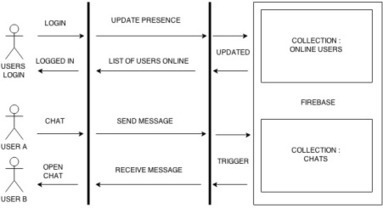
In this post, we are going to build a desktop application that is like your typical one to one chat client. Where, a user logs in, sees a list of other users. And can chat with any of them. This app is called Chatter.

As you can see from the above demo, we have used Firebase as our data store to manage the user’s presence and their chat messages. And also, if you did notice, when User B sent a new message to User A, a new chat window opened automatically, like a typical chat app.

We will take a look at how all the above can be achieved. So, let us get started on building Chatter.

No comment yet.
Scoop.it!

angular-jwt: JSON Web Tokens in AngularJS

angular-jwt: JSON Web Tokens in AngularJS | JavaScript for Line of Business Applications | Scoop.it
angular-jwt - Library to help you work with JWTs on AngularJS
No comment yet.
Scoop.it!

Ember-CLI, Sass, and Bootstrap

Simple startup for your next project using Ember-CLI with Bootstrap, Sass, and Summernote

This walkthrough will actually get Sass and Bootstrap-Sass working together. I'll also explain how to get the default Bootstrap Glyphicons pack working as well as how to add the FontAwesome icon pack.

No comment yet.
Scoop.it!

ember-cli-mocha: Mocha and Chai tests for ember-cli applications

ember-cli-mocha: Mocha and Chai tests for ember-cli applications | JavaScript for Line of Business Applications | Scoop.it

ember-cli-mocha overrides all of ember-cli's testing blueprints. Simply generate models, controllers, components, etc. in order to generate the corresponding Mocha / Chai tests.

Tests rely on ember-mocha modules and helpers. Please refer to that project to understand detailed usage.

No comment yet.
Scoop.it!

Time based triggers in Ember.JS

Time based triggers in Ember.JS | JavaScript for Line of Business Applications | Scoop.it

Sometimes you want to poll an API for new data periodically. Sometimes you depend on properties that change over time, but are out of Ember's control. Fear not, Ember's run.later has you covered.

If you want to re-evaluate a computed property on a schedule, you need to depend that property on a property that changes over time. Turns out that creating such a property is fairly simple. 

No comment yet.
Scoop.it!

Using Highcharts.js in an Ember app

Using Highcharts.js in an Ember app | JavaScript for Line of Business Applications | Scoop.it

Highcharts is one of the better supported and developed front end charting libraries out there, and it makes creating standard charts a breeze. If you have a custom chart the likes of which the world has never seen however, you might be better off building it in something like D3.js. If all you need is a vanilla chart in your Ember app, read on.

Implementing Highcharts in your Ember application so that it live binds to your data is simple, and really highlights the power of Ember.

No comment yet.
Scoop.it!

Single Page CRUD Application (SPA) using ASP.NET Web API, MVC and Angular.js

Single Page CRUD Application (SPA) using ASP.NET Web API, MVC and Angular.js | JavaScript for Line of Business Applications | Scoop.it

In this article, we will create a SPA using ASP.NET MVC, WEB API and Angular.js. Angular.js is a Model-View-* JavaScript based framework for developing SPA applications. Similarly ASP.NET Web API is a good fit for providing data for these type of applications.

SPA is the requirement of this new generation of web applications. It provides an easy interaction with WEB interfaces for users looking for a Desktop like experience on the Web. A mashup of client-server technologies like Angular.js and ASP.NET Web API helps you create enterprise ready SPA applications.

No comment yet.