JavaScript for Line of Business Applications
606.5K views | +9 today
JavaScript for Line of Business Applications
Keeping track of current JavaScript Frameworks that help design your clientside Business Logic Layers.
Curated by Jan Hesse
Beam to my Inbox:
Your new post is loading...
Popular Tags - Filter using the Funnel

Scoop.it!

A Comprehensive Story of 'this' in JavaScript

A Comprehensive Story of 'this' in JavaScript | JavaScript for Line of Business Applications | Scoop.it

Variable scoping has always been a part of every programming language. Whether we are using a class based object oriented language (e.g. Java/C#) or a class-less object oriented language, scope has a very important role to play.

What scope defines?
In easiest terms, scope defines the visibility of any variable/data. In JavaScript, you can define a piece of code (function/method) globally or you can keep it within an object and expose it for public use. The keyword 'this' has a special significance when it comes to JavaScript. Other languages also use the 'this' keyword but it needs some serious attention if you are trying to use or understand it in JavaScript world.

No comment yet.
Scoop.it!

Smalltalk MVC Translated to JavaScript

Smalltalk MVC Translated to JavaScript | JavaScript for Line of Business Applications | Scoop.it

The original Smalltalk MVC is an elegant way to structure an application. Unfortunately, the JavaScript community takes more inspiration from Dr. Frankenstein than from Smalltalk. The community appears to have done its best to saw off many good parts from MVC and bolt on unnecessary ugly bits to create framework monsters unsuitable for building real-world JavaScript applications.

I hope this article will remove the necessary historical digging to read and understand the implementation of Smalltalk MVC. Also, I hope it inspires better JavaScript frameworks and applications.

No comment yet.
Scoop.it!

thaw.js - synthetic asynchronous processing in javascript

thaw.js - synthetic asynchronous processing in javascript | JavaScript for Line of Business Applications | Scoop.it

Browsers are synchronous. They have limits & can be slow. thaw.js defers processes until the browser is ready for them.
thaw.js makes frozen browsers thaw(.js).

Thaw.js is like the idea of javascript promises only tied to time.

No comment yet.
Scoop.it!

Five Traits of Well-Managed JavaScript

Five Traits of Well-Managed JavaScript | JavaScript for Line of Business Applications | Scoop.it
As JavaScript projects grow, they tend to become difficult to manage if you're not careful. We found ourselves running into common problems including code that was difficult to reuse or test, and code that broke when introduced in new pages.
No comment yet.
Scoop.it!

Planning A Front-end JavaScript Application

Planning A Front-end JavaScript Application | JavaScript for Line of Business Applications | Scoop.it

Planning a front-end web application is about more than just picking a few JavaScript solutions to aid in the architecture and testing of a web application. While this might be where much of the front-end community focuses, seasoned developers know that building enterprise-grade software is much more than this.

In this article, I am going to describe 16 steps that front-end developers should go through when planning a front-end web application. These steps aim to cover the entire life-cycle of a front-end application. However, before diving in, I need to clarify a few front-end terms that remain unsettled in the industry.

No comment yet.
Scoop.it!

An Introduction To Latency Compensation

An Introduction To Latency Compensation | JavaScript for Line of Business Applications | Scoop.it

“Latency Compensation” is one of the Seven Holy Principles of Meteor, which – as the legend goes – were handed down to the Meteor Development Group engraved on a burning Meteorite in the year Two Thousand And Eleven.

If you’re trying to insert a post in a database, you need, well, a database. This is where the database everywhere principle comes in: because Meteor can store a subset of the database on the client, it can perform operations against it and get a fairly good idea of what the result will look like on the server.

No comment yet.
Scoop.it!

meteor: common mistakes

meteor: common mistakes | JavaScript for Line of Business Applications | Scoop.it

Over the past year I've spent countless hours reviewing code and answering questions both on stackoverflow and at the monthly SF devshop. There are certain patterns of mistakes and misunderstandings that most meteor developers (myself included) make on their journey toward learning the framework. In this post I'll catalog some of the most frequent occurrences in the hopes that you can avoid being bitten by at least one of them.

Contents:

* Profile editing
* Published secrets
* Variables as keys
* Subscriptions don't block
* Sorted publish
* Data attributes

No comment yet.
Scoop.it!

NoSQL Databases: An Overview

NoSQL Databases: An Overview | JavaScript for Line of Business Applications | Scoop.it

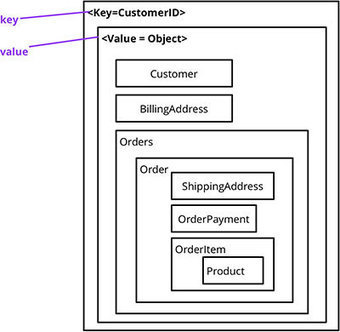
What does NoSQL mean and how do you categorize these databases? NoSQL means Not Only SQL, implying that when designing a software solution or product, there are more than one storage mechanism that could be used based on the needs. NoSQL was a hashtag (#nosql) choosen for a meetup to discuss these new databases. The most important result of the rise of NoSQL is Polyglot Persistence. NoSQL does not have a prescriptive definition but we can make a set of common observations, such as:

  • Not using the relational model
  • Running well on clusters
  • Mostly open-source
  • Built for the 21st century web estates
  • Schema-less
No comment yet.
Scoop.it!

Choosing the Right NoSQL Database Type for App Development

Choosing the Right NoSQL Database Type for App Development | JavaScript for Line of Business Applications | Scoop.it

Instead of beating around the bush, I shall cut to the chase right away. Firstly, this blog is only for readers who have some idea about NOSQL. Secondly, the purpose of this blog is to give you a good idea of different types of NoSQL databases so that when you go for a particular NoSQL database type, someone says to you ‘Excellent Choice Sir’. Lastly, this blog is part of the MEAN stack series I have been working on and I will be taking up MongoDB after I am done with NoSQL database types. 

Jan Hesse's insight:

http://de.slideshare.net/algoworks/choosing-the-right-nosql-database-type

No comment yet.
Scoop.it!

Validation in Ionic Framework Apps with ngMessages

Validation in Ionic Framework Apps with ngMessages | JavaScript for Line of Business Applications | Scoop.it

With the release of AngularJS 1.3.0, the AngularJS team gave us some great tools to deal with validation in a more sane manner. 

When this form loads, by default the "Username" field is marked as invalid and has a message about the form being required. If you submit the form, the password field will also get marked invalid and the form won't submit. Let's go through the code and figure out how this works.

No comment yet.
Scoop.it!

The Opa Framework for Javascript

The Opa Framework for Javascript | JavaScript for Line of Business Applications | Scoop.it
The open source Opa Framework for JavaScript makes web development rapid and secure.

Write simultaneously the frontend and backend code, in the same language, within the same module. Even better: the Opa Slicer automates the calls between client and server. No more manually written AJAX calls or value serialization!

And when auto is not enough, add hints to the code to enforce client or server-side, privacy, synchronous or asynchronous.

Opa generates JavaScript on the server too, using Node.js and MongoDB.

Applications built with Opa can be deployed in most cloud straightforwardly and scaled up or down easily.

No comment yet.
Scoop.it!

Ember.js Nested Routing with Multiple Outlets

Ember.js Nested Routing with Multiple Outlets | JavaScript for Line of Business Applications | Scoop.it

Starting out with Ember.js is a lot like starting out with Rails -- there is a plethora of ways to achieve one thing. This is a good thing and a bad thing. It's good that the framework is flexible enough to support multiple and solid ways of implementing a feature, however, with a large team, a convention needs to be established for maintanability and overall sane-ness. So why not stick with the framework's conventions?

No comment yet.
Scoop.it!

Symbols in ECMAScript 6

Symbols in ECMAScript 6 | JavaScript for Line of Business Applications | Scoop.it

Symbols are a new primitive type in ECMAScript 6. This blog post explains how they work.

Contents:

1. A new primitive type
2. Using symbols to represent concepts
3. Symbols as keys of properties
4. Crossing realms with symbols
5. Safety checks
6. Frequently asked questions
7. The symbol API
8. Further reading


No comment yet.
Scoop.it!

Polymer Web Components with Marionette.js

Polymer Web Components with Marionette.js | JavaScript for Line of Business Applications | Scoop.it

I first developed the idea of making Polymer components play along with Marionette.js for a talk on architecture and components I gave at the inauguralNodevember conference in Nashville, TN.* If you would like to watch my talk, you can view it onYouTube.

Toward the end of my talk, I demoed creating a custom name tag element. Furthermore, I showcased the ability to wrap that custom element with a custom Marionette view type and keep model data synced with a regular Marionette ItemView. I would like to go into more detail the steps I took to create this custom Marionette view type and how I was able to keep model data synced.

No comment yet.
Scoop.it!

Titon - A collection of extensible front-end user interface components for the responsive and mobile web.

Titon - A collection of extensible front-end user interface components for the responsive and mobile web. | JavaScript for Line of Business Applications | Scoop.it
  • Mobile First
  • Responsive Design
  • Semantic Markup
  • Flexible Styles
  • Accelerated Animations
  • Extensible Configuration
  • Scalable Spacing
  • Reusable Code
  • Progressive Enhancement
  • Graceful Degradation
  • Stable Codebase
No comment yet.
Scoop.it!

ES6 Modules: The End of Civilization As We Know It?

ES6 Modules: The End of Civilization As We Know It? | JavaScript for Line of Business Applications | Scoop.it

This article shares some techniques and tools for building web apps using future friendly ES6 module syntax. We begin with an exploration of current module formats and ways to work both forwards and backwards in time.

For many years JS had a single widely accepted module format, which is to say,there was none. Everything was a global variable petulantly hanging off the window object. This invited risky propositions, too sweet to ignore, and some of us began monkey patching built in objects. Chaos prevailed. We had run amuck.The JS of that era was nightmarish, intertwined, lacking order and utterly without remorse.

No comment yet.
Scoop.it!

What is the Flux Application Architecture?

What is the Flux Application Architecture? - Brigade Engineering - Medium

Flux is an idea for organizing your application that was developed at Facebook, based on one simple principle:

Data moves in one direction through your application.

This is called “unidirectional data flow”, but it might be easier to remember if you think of your data as a shark: Sharks can only swim forward.

Facebook has published examples of Flux, and at least six other libraries have sprung up with interpretations. For the purpose of this article, when we say “Flux”, we are referring to the Facebook implementation.

No comment yet.
Scoop.it!

Screencast: Create a Touch Menu Component in Ember.js

Screencast: Create a Touch Menu Component in Ember.js | JavaScript for Line of Business Applications | Scoop.it

This post will be short because the content is a screencast (with 2 parts), in which I cover how to create a a slider menu for mobile web apps, using several components that are animated synchronously.

We can build very nice touch UXs in HTML5, and Ember.js is as good as any other technology to help us manage the complexity of those interfaces, so I’ve made a tutorial of how to create the (probably) most widespead mobile UX pattern: The touch lateral slider menu:

No comment yet.
Scoop.it!

3 Solutions for Using Meteor and AngularJS Together

3 Solutions for Using Meteor and AngularJS Together | JavaScript for Line of Business Applications | Scoop.it

As I dug in just a tad more, however, I found the frontend framework that Meteor ships with to be less desirable. The holistic approach of Meteor has led some to accuse Meteor of “trying to boil the ocean.” Regardless of which side of this debate you come down on, being able to use one of the existing best of breed client side frameworks is compelling, and AngularJS is my current favorite. I did some research and found that a few people had already started investigating how to use AngularJS with Meteor. I’m going to discuss three different solutions out there for solving this problem.

No comment yet.
Scoop.it!

alt - A flux implementation that is small, tested, terse, and meant to be used with ES6

alt - A flux implementation that is small, tested, terse, and meant to be used with ES6 | JavaScript for Line of Business Applications | Scoop.it
  • Pure Flux
  • No constants
  • No static string checking
  • No giant switch statement
  • Save state snapshots
  • Rollbacks
  • Bootstrap components on app load
  • Isomorphic
  • Light-weight and terse
  • ES6 Syntax, code your actions and stores with classes
  • Immutable stores
  • Single dispatcher
  • Global listening for debugging
  • Small library ~3.9kb gzipped and less than 300 LOC

bit by bit's curator insight, January 5, 2015 6:23 PM

Simplified and Better implementation of Flux Architecture !!


Scoop.it!

asynchronous frontend dependency management without AMD

asynchronous frontend dependency management without AMD | JavaScript for Line of Business Applications | Scoop.it

Frontend dependency management is always the discussion point, people have a lot of to say. The key reason for this is that javaScript language itself does not provide module like support, it really sucks developers.

For years ago, developers used to use <script> tag to write code, however when the page codes grows, the maintainability will be harder and harder. Then, with the arise of nodejs, CommonJS brings up using require, exports to resolve modules. It seems really nice when using in nodejs, however, when it meets browser, it works not quite well. The reason is simply that browser does not support synchronous require, it can not load a script from file I/O. Then AMD comes up a specification used well for browser.

No comment yet.
Scoop.it!

Functional Reactive Programming with the Power of Node.js Streams

Functional Reactive Programming with the Power of Node.js Streams | JavaScript for Line of Business Applications | Scoop.it
Functional Reactive Programming uses functional utilities like map and filter to create and process data flows which propagate changes through the system....
No comment yet.
Scoop.it!

Protractor - Testing Angular and Non Angular Sites

Protractor - Testing Angular and Non Angular Sites | JavaScript for Line of Business Applications | Scoop.it

So what if at work you need to write an automated functional regression for non angular site? If you’re a lucky guy/gal you spend your days dealing with AngularJS and you have convinced your manager to use protractor to write the much needed automated functional suite. Now your manager comes back with a smile on his face asking you to create a new set of tests for this other non angularized web application.

Some would be scared, somebody would run, not you! That’s because you know how this thing actually works. You know you can always get the webDriver instance and do some vanilla selenium things. That’s why they call you ‘The Selenium dude’ and sometimes other names which are outside the article’s scope.

No comment yet.
Scoop.it!

Building scalable applications with Angular.js

AngularJS today is one of the most powerful, user-friendly and popular JS frameworks to work on web applications. Surprisingly, one of the main weaknesses of this framework is poorly structured documentation and the lack of ready-made solutions. In this report, we will try to work out the best approach to the organization of large and very large applications. We will also speak about the tools that will be useful at every stage of the application development and tools and practicesthat will help you to work in the continuous delivery mode.

No comment yet.
Scoop.it!

How we make RWD sites load fast as heck

How we make RWD sites load fast as heck | JavaScript for Line of Business Applications | Scoop.it

In this post, I’ll outline some recent observations and approaches to delivering sites for speed and broader access, and link out to various tools we are using to facilitate our approach. All of the tips mentioned in this post are implemented on this very site, and we’ve tested them heavily to ensure that they’re working as well as they can.

I’ll start with some high-level observations, then later I’ll dive into the more technical how-to. First, some general notes about page loading performance and what we aim to accomplish.

No comment yet.