JavaScript for Line of Business Applications
606.5K views | +16 today
JavaScript for Line of Business Applications
Keeping track of current JavaScript Frameworks that help design your clientside Business Logic Layers.
Curated by Jan Hesse
Beam to my Inbox:
Your new post is loading...

Popular Tags - Filter using the Funnel

Scoop.it!

Advanced Grunt tooling

Advanced Grunt tooling | JavaScript for Line of Business Applications | Scoop.it

Grunt has made web development more enjoyable. By automating repetitive tasks, it has allowed web developers to focus on building features rather than copying, compiling, and configuring.


In this post, I will share some advanced tooling with Grunt which will help you use it to its full potential.

* Bash functions
* Loading all grunt tasks automatically
* Aliasing tasks
* Verbose mode & debugging
* Invest in a good watch
* Using variables in your configuration
* Running individual test specs
* Plugins to check out

No comment yet.
Scoop.it!

HTML5 components: Ad-hoc components, Part 2

HTML5 components: Ad-hoc components, Part 2 | JavaScript for Line of Business Applications | Scoop.it

Supporting event listeners, animating elements with CSS3, and injecting content into the DOM.

This article continues the discussion of the slider component began in this series' first installment. You'll see how to incorporate event listeners, animate the slider's knob, and inject the slider itself into an existing DOM tree. More specifically, you will learn how to:

* Use alternate controls with the slider* Implement support for registering and firing change listeners* Animate HTML elements with CSS3 transitions* Inject content into the DOM tree* Customize ad-hoc components with element attributes
No comment yet.
Scoop.it!

Backbone.js for Absolute Beginners - Getting started (Part 1: Intro)

Backbone.js for Absolute Beginners - Getting started (Part 1: Intro) | JavaScript for Line of Business Applications | Scoop.it

Backbone.js is a JavaScript framework, among many others, that is gaining special attention in the web development community because it’s ease of use and the structure that it provides to JavaScript applications.

Backbone.js has hard dependency on underscore.js and a soft dependency on jQuery. It’s composed by the following modules:
* Views
* Events
* Models
* Collections
* Routers

Jan Hesse's insight:

Models, Collections and Views:

http://adrianmejia.com/blog/2012/09/13/backbone-js-for-absolute-beginners-getting-started-part-2/


CRUD:

http://adrianmejia.com/blog/2012/09/13/backbonejs-for-absolute-beginners-getting-started-part-3/


Routers:

http://adrianmejia.com/blog/2012/09/13/backbone-js-for-absolute-beginners-getting-started-part-4/


No comment yet.
Scoop.it!

How do I "think in AngularJS/EmberJS" if I have a jQuery background?

Suppose I'm familiar with developing client-side applications in jQuery, but now I'd like to start using AngularJS. Can you describe the paradigm shift that is necessary? 

->

Don't even use jQuery. Don't even include it. It will hold you back. And when you come to a problem that you think you know how to solve in jQuery already, before you reach for the $, try to think about how to do it within the confines the AngularJS. If you don't know, ask! 19 times out of 20, the best way to do it doesn't need jQuery and to try to solve it with jQuery results in more work for you.

No comment yet.
Scoop.it!

Backbone.js Deconstructed - Part 1

Backbone.js Deconstructed - Part 1 | JavaScript for Line of Business Applications | Scoop.it

In Part 1 and Part 2 of Backbone.js Deconstructed, we are going to examine the function of the Backbone Library at the code level.

Specifically, in Part 1 we will identify some helpful (dare I say 'required'?) prerequisites that make learning Backbone a rewarding endeavor. Then we will cover some critical details about Single Page Applications (SPAs) that are needed before one can truly understand the purpose and parts of Backbone. After we have a mental foundation for SPAs, we will dive into the code by systematically breaking down the details around Backbone.Events, creating Backbone Objects, the Backbone.Router() and Backbone.History(), and lastly, Backbone utilities. In Part 2 of Backbone.js Deconstructed, we will systematically uncover the purpose and functionality provided by Backbone.Model, Backbone.View, and Backbone.Collection.

No comment yet.
Scoop.it!

Sibilant: Javascript with a lisp

Sibilant: Javascript with a lisp | JavaScript for Line of Business Applications | Scoop.it

Sibilant is a lisp-family language that compiles to readable and idiomatic JavaScript. Sibilant is built on a simple macro system that gives you compile-time control over the output JavaScript as well as providing tools to smooth over some of JavaScript's historical idiosynchracies.

No comment yet.
Scoop.it!

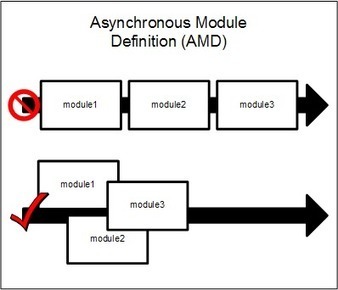
Getting Started with RequireJS Library

Getting Started with RequireJS Library | JavaScript for Line of Business Applications | Scoop.it

One of the most commonly used JavaScript libraries today is RequireJS. In every project that I’m involved with lately, we use RequireJS or I suggest to add RequireJS. In this post I’m going to describe what RequireJS is and some of its basic scenarios.

No comment yet.
Scoop.it!

AngularJS in depth Part 2 Filters

AngularJS in depth Part 2 Filters | JavaScript for Line of Business Applications | Scoop.it
In depth analysis of built in AngularJS currency, date, number, filter, orderby, lowercase, uppercase, and json filters along with details on how to create your own filters.
No comment yet.
Scoop.it!

Speed up your Web applications with HTML5 WebSockets

Speed up your Web applications with HTML5 WebSockets | JavaScript for Line of Business Applications | Scoop.it

HTML5 specification includes the communication protocol WebSockets, which is getting more and more popular. WebSocket offers solution to the problems of latency, scalability and performance associated with HTTP based solutions like polling, long-polling and HTTP-streaming.

This session starts with a brief overview of traditional HTTP protocols followed by covering of how WebSockets works. You’ll see how using WebSockets removes the overhead of heavy HTTP request and response headers. Finally, we’ll review the code of the Web application, where WebSockets is used for the data exchange between HTML-based front end and the latest build of the Java server GlassFish 4.

No comment yet.
Scoop.it!

ES6: The Awesome Parts

The next version of JavaScript, ES6, is starting to arrive. Many of its features are simple enhancements to the language we already have: things like arrow functions, class syntax, and destructuring. But other features will change the way we program JavaScript, fundamentally expanding the capabilities of the language and reshaping our future codebases. In this talk we'll focus on two of these, discovering the the myriad possibilities of generators and the many tricks you can pull of with template strings.

No comment yet.
Scoop.it!

Hakitzu: Code Of The Warrior Offers A Fun New Way To Learn Coding

Hakitzu: Code Of The Warrior Offers A Fun New Way To Learn Coding | JavaScript for Line of Business Applications | Scoop.it

Hakitzu: Code of the Warrior is a fun way to learn to program JavaScript. In a unique twist, as you’re learning to build your ultimate robot warriors, you’re also learning JavaScript coding. Become the best coder in the land, and you’ll find yourself on the pathway to victory.

No comment yet.
Scoop.it!

Introduction to Backbone.js

Introduction to Backbone.js | JavaScript for Line of Business Applications | Scoop.it

Demonstration of how to build Backbone.js application from scratch and use views, collections, subviews, models, event binding, AMD, Require.js on the example of the apple database application.

We’re going to build a typical starter “Hello World” application using Backbone.js and Mode-View-Controller (MVC) architecture. I know it might sound like overkill in the beginning, but as we go along we’ll add more and more complexity, including Models, Subviews and Collections.

No comment yet.
Scoop.it!

Ractive.js - next-generation DOM manipulation

Ractive.js - next-generation DOM manipulation | JavaScript for Line of Business Applications | Scoop.it

HTML is an amazing language for creating static documents, but it was never designed for interactive web apps. Many libraries try to get round HTML's limitations, but very few tackle them head on.

Ractive.js is different. It solves some of the biggest headaches in web development – data binding, efficient DOM updates, event handling – and does so with almost no learning curve. (Here's the 60 second setup).

How? By changing the relationship between HTML and JavaScript. Before, HTML was an inert substance that you would breathe life into. Now, it's a blueprint for an app that'sinteractive by default.

No comment yet.
Scoop.it!

HTML5 components: Implement standard components, part 3

HTML5 components: Implement standard components, part 3 | JavaScript for Line of Business Applications | Scoop.it

Using standard HTML5 APIs and open source polyfills

In the first two articles in this three-part series, you learned how to implement an ad-hoc HTML5 slider component. That component provides a lot of sophisticated functionality; for example, it uses CSS3 transitions to animate the slider's knob smoothly when the user clicks in the slider's rail. But (as you can see from the series'first article) from a developer standpoint, it's not as straightforward to use in an application as built-in HTML elements.

Besides being difficult to use, the ad-hoc slider is also vulnerable to abuse, whether intentional or not. Anyone can access the slider's elements, because — like nearly all other JavaScript ad-hoc components in existence today — the slider adds them directly into the DOM tree.

It would be ideal to reduce the preceding steps to simply Add a slider tag to your HTML. That's exactly what you'll do in this article by turning the ad-hoc slider into a standard HTML5 component, using the following API...

No comment yet.
Scoop.it!

HTML5 components: Ad-hoc components, Part 1

HTML5 components: Ad-hoc components, Part 1 | JavaScript for Line of Business Applications | Scoop.it

Gain an understanding of the HTML5 component model and begin implementing ad-hoc components.

This article launches a short series by David Geary on implementing HTML5 components. In this installment, get an overview of HTML5 component technology and start learning how to implement a sophisticated slider component from scratch.

Component models are an important part of any programming platform because they provide a standard set of UI elements and infrastructure for building more.

HTML5 is a relatively young technology with a set of even younger specifications that aim to standardize the implementation of HTML5 components and their integration with other components. The HTML5 component model is currently defined by three specifications:

* "Introduction to Web Components"* "Shadow DOM"* "HTML Templates"


No comment yet.
Scoop.it!

Grunt, the perfect tool for Require.js

Grunt, the perfect tool for Require.js | JavaScript for Line of Business Applications | Scoop.it

RequireJS is a really powerful tool to deal with modules and dependencies. It also provides a great optimizer, which allows you to have your entire application (or part of it, as needed) in a single file. It even can uglify the code, which means your code will no longer be human readable.

However, when your project gets complex, it can be very, very difficult to deal with the configuration. Although it is always possible to come up with a solution for your project, sometimes, you just need to add extra configuration only for the optimizer.

Grunt can help you do that, because it must be reminded that this tool is "only" a Nodejs application. This characteristic will allow you to interact with your project...

No comment yet.
Scoop.it!

HTML5 Hub

HTML5 Hub | JavaScript for Line of Business Applications | Scoop.it
We're a growing community of developers united to push the boundaries of HTML5 and revolutionize digital experiences.

Our community is built on developer stories, showcasing great work, and cultivating forward-thinking ideas. We're spreading the word throughout the global community.

Uniting developers across the world, we can better shape the future of HTML5. We share a common goal of consistently pushing the limits of web and cross-platform app technology.

Jan Hesse's insight:

Intel backed community, because support to an individual can change the web

No comment yet.
Scoop.it!

Giraffe - Barc's Backbone Framework

Giraffe - Barc's Backbone Framework | JavaScript for Line of Business Applications | Scoop.it

Giraffe's goal is to follow the Backbone philosophy of unopinionated simplicity to provide commonly needed features with few assumptions. It differs from other Backbone libraries like Marionette and Chaplin in its reduced scope and size, and it takes a different approach to the problems of route handling, object lifecycles, event aggregation, and view management.

No comment yet.
Scoop.it!

Skeleton SASS and RequireJS app

Skeleton SASS and RequireJS app | JavaScript for Line of Business Applications | Scoop.it

CSS and JavaScript are 2 of the fundamental languages for web driven software. This article will take a look at creating a skeleton app using SASS and RequireJS. These tools can help manage large and complicated code bases while making developer life easier.
Working in web these days is very different from how it was 5 years ago. There are more demands on what the software can do and therefore more of the 3 elements, HTML, CSS, JavaScript. But in order to maintain a well developed, readable and easily maintainable piece of code you need to use the best tools. Server side code encourages modularity of components so we should take the same approach to client side. Enter RequireJS and SASS.

No comment yet.
Scoop.it!

Speed Up Your Web Development Workflow with Grunt

Speed Up Your Web Development Workflow with Grunt | JavaScript for Line of Business Applications | Scoop.it

In a series of tutorials, I’m going to help you get started with Grunt, an open source JavaScript task runner that will automate some of your web development tasks.

This nifty JavaScript library will notably speed up and improve your web development processes, and also help you sidestep common human errors.

My intention with this Grunt tutorial series is to get you to experience the same productivity and efficiency improvements I’ve gained through this useful, but little-known open source JavaScript tool.

No comment yet.
Scoop.it!

Introduction to the MEAN Stack, Part One: Setting Up Your Tools

Introduction to the MEAN Stack, Part One: Setting Up Your Tools | JavaScript for Line of Business Applications | Scoop.it

I'll give you guys a two-part post that will walk you through creating your first MEAN stack app- from installing the tools to actually writing the code. In Part One we’ll go through the setup and installation process.

We’ll start by installing all of our tools. NodeJS and MongoDB are designed to be as close to operating system independent as possible and we will be covering three of the most common operating systems here – OSX, Windows 7/8, and Ubuntu.

No comment yet.
Scoop.it!

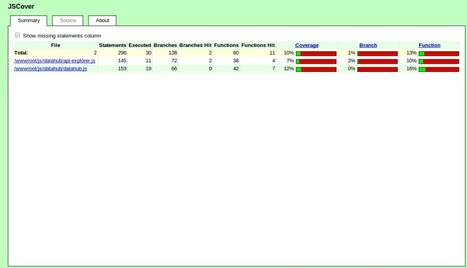
Testing Javascript with QUnit, PhantomJS and JSCover

Testing Javascript with QUnit, PhantomJS and JSCover | JavaScript for Line of Business Applications | Scoop.it

Javascript is often the part of an application that's most difficult to test. There are several pieces that fit together to give a framework for running the tests in an automated build system.

No comment yet.
Scoop.it!

Javascript is a Jem

Javascript is a Jem | JavaScript for Line of Business Applications | Scoop.it

JavaScript is a strange language if you are more familiar with Java, C++ or C#, say. Therefore with this collection of articles we eant to provide a KickStart to JavaScript's Datastructures and how to implement those missing ones known from other languages, for example a LinkedList, a BinaryTree, a Stack, Object Inheritance, Chaining, etc.

No comment yet.
Scoop.it!

In defense of JavaScript’s constructors

In defense of JavaScript’s constructors | JavaScript for Line of Business Applications | Scoop.it

JavaScript’s constructors have never been particularly popular: Douglas Crockforddoesn’t like them and recently, more anti-constructor material has been published (two examples: blog posts by Kyle Simpson and Eric Elliott).

In this blog post, I explain that not all of the constructors’ flaws are real. But even with those that are real, I still recommend to use them. I’ll tell you why and what the future holds for constructors.

No comment yet.
Scoop.it!

A Guide to Writing Backbone Apps at Coursera

A Guide to Writing Backbone Apps at Coursera | JavaScript for Line of Business Applications | Scoop.it

At Coursera, we made the choice to use the Backbone MVC framework for our frontends, and over the past year, we've evolved a set of best practices for how we use Backbone.

I wrote a guide for internal use that documents those best practices (much of it based on shorter blog posts here), and I've snapshotted it here on my blog to benefit other engineering teams using Backbone and to give potential Coursera engineers an idea of the current stack. 

No comment yet.