A single-page application architecture promised to unlock the backend’s blazing performance, so we began searching for an appropriate framework, and identified AngularJS as a promising candidate. Following the “fail fast” principle, we began with our toughest challenge, the log view.
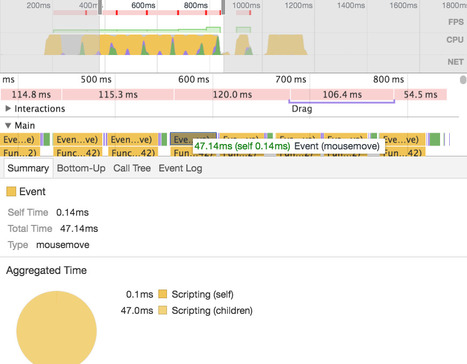
This is a real acid test for an application framework. The user can click on any word to search for related log messages, so there may be thousands of clickable elements on the page; yet we want instantaneous response for paging through the log. We were already prefetching the next page of log data, so the user interface update was the bottleneck. A straightforward AngularJS implementation of the log view took 1.2 seconds to advance to the next page, but with some careful optimizations we were able to reduce that to 35 milliseconds. These optimizations proved to be useful in other parts of the application, and fit in well with the AngularJS philosophy, though we had to break few rules to implement them. In this article, we’ll discuss the techniques we used.


 Your new post is loading...