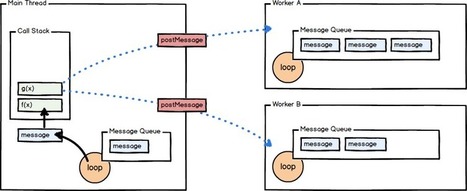

With JavaScript approaching near-ubiquity as the scripting language of the web browser, it benefits you to have a basic understanding of its event-driven interaction model and how it differs from the request-response model typically found in languages like Ruby, Python, and Java. In this post, I’ll explain some core concepts of the JavaScript concurrency model, including its event loop and message queue in hopes of improving your understanding of a language you’re probably already writing but perhaps don’t fully understand.
This post is aimed at web developers who are working with (or planning to work with) JavaScript in either the client or the server. If you’re already well-versed in event loops then much of this article will be familiar to you. For those of you who aren’t, I hope to provide you with a basic understanding such that you can better reason about the code you’re reading and writing day-to-day.


 Your new post is loading...