Idea generation is often seen as the magic side of creativity, and although I love the magic of it, I also feel like I have learned there is a practical side to it as well.
The great idea spirit seems as unpredictable as the weather. Don’t get me wrong, I agree that idea generation has a mystical side, I just think we have more power to be the catalyst of this spirit than many creatives believe.
Here are 9 ways to flip your own idea generation switch:
"As I was browsing through the Tech and Learning magazine in November last year, I came across a review of Footsteps2Brilliance written by Lisa Nielsen, titled “iPad Literacy Program Increases Reading and Writing Ability.” She wrote: “With a tool like this assessing student progress, there should no longer be a need for outdated, standardized bubble tests.” With those words of endorsement, I knew I had to try it.
"Footsteps2Brilliance consists of 18 storybooks at the K-3 reading level. The texts can be highlighted to help independent readers focus on the key points, and also be read aloud to a student. The stories are also filled with interactive and animated illustrations."
The World We Explore-- Sir Ken Robinson, Educator. Curiosity encourages us to push boundaries into uncharted territories. Where can our hunger for discovery ...
Just listen to him. He has wit and can bring it to the point. Even if you do not have an interest in education. It is just fun to listen to Sir Ken Robinson.
Just listen to him. He has wit and can bring it to the point. Even if you do not have an interest in education. It is just fun to listen to Sir Ken Robinson.
"FollowUpThen.com is a free email reminder service that makes it extremely simple to follow-up with anyone (including yourself). Simply write a normal email and include the time-interval@followupthen.com in the CC or BCC fields. Emailing a colleague you need that big report on Friday? Just CC your email to Friday@followupthen.com and on Friday the system will prompt you by sending you a copy of your original email. Need to remind yourself to re-consider an issue in three months? Send an email to 3months@followupthen.com. A great tool."
"I think the revised Bloom’s Taxonomy is wrong. I agree that the taxonomy accurately classifies various types of cognitive thinking skills. It certainly identifies the different levels of complexity. But its organizing framework is dead wrong.
"Many teachers in many classrooms spend the majority of their time in the basement of the taxonomy, never really addressing or developing the higher order thinking skills that kids need to develop. We end up with rote and boring classrooms. Rote and boring curriculum. Much of today’s standardized testing rigorously tests the basement, further anchoring the focus of learning at the bottom steps, which is not beneficial for our students.
"I dislike the pyramid because it creates the impression that there is a scarcity of creativity — only those who can traverse the bottom levels and reach the summit can be creative. And while this may be how it plays out in many schools, it’s not due to any shortage of creative potential on the part of our students.
"I think the narrowing pyramid also posits that our students need a lot more focus on factual knowledge than creativity, or analyzing, or evaluating and applying what they’ve learned. And in a Google-world, it’s just not true.
Here’s what I propose. In the 21st century, we flip Bloom’s taxonomy. Rather than starting with knowledge, we start with creating, and eventually discern the knowledge that we need from it.
I think Wright has a good point here, albeit a bit overemphasized in her intro. Indeed, we do not always need to start with Remembering in an instructional sequence. From the beginning, advocates of Bloom's conceptual framework (at least those I encountered), urged a balance of objectives, from diverse levels, in any learning sequence. The sequencing of the levels in the learning ought to be designed with the overall intended outcomes in mind.
Ultimately, I think variety is the spice of learning. In order to keep instruction engaging, units should have varying structures. In order to sustain interest, we don't want our approaches to get stale. Starting with Creating once in a while, or even often, can be a great idea. But, if it's overused, it too can become boring.
Also to be remembered is that the Cognitive domain is only one of three domains described by Bloom. The other are the Affective and the Psychomotor. We are suffering from an overemphasis on the Cognitive and underemphasize the Affective and Psychomotor to our, and our students', disadvantage.
:"Start with the smell of burnt toast. Or look for a pair of missing earrings. Try falling out of love. Or waiting for an interview for a job you desperately want ( or one you never thought you'd have to get). Start with a line from a song or a classic movie. Look at a snapshot from a family album. Or a photo from the newspaper.
"These are all prompts I have used in creative writing workshops to help writers tap into the creative well that is available to every artist. We typically use the first twenty to thirty minutes of each session to just write, write, write. The prompt is merely a suggestion- a jumping off point- which can be used or eschewed in favor of an image or idea rumbling around in a writer's head. The premise: uncensored, uninhabited writing can open the creative passageway often blocked by the raging self-doubt of that pesky inner critic who always seems to tag along for the ride."
"Many people think that sending group text messages is a cumbersome process: inputting each individual’s information into your address book, and creating a ‘message’ for each class by manually adding each contact in? It sounds annoying even typing it. Lots of other people thought so, too, and thus there are a number of group text messaging services out there, some even specially designed for use by teachers who need to keep in touch with groups of students or parents. Here are a few that we find easy to use and classroom friendly:"
Technology doesn't have to be expensive. Just ask John Kuglin, a long-time tech guru who shows educators how to tap into myriad free Web resources that can be used in and out of the classroom.
""Free applications, software, and other tools help break down some of the barriers that educators face when implementing new tech tools," says Kuglin, a senior consultant at Kuglin Consulting in Denver. "When you focus on the free options, there are no roadblocks."
"As the number of technology tools available to educators has proliferated, Kuglin says he came to the conclusion that no-cost Web applications and learning resourceshave opened doors for teachers who would often overlook the free options. As school budgets have tightened up and as more institutions have striven to integrate technology into their classrooms, the need for free resources has grew exponentially."
"SMILE's learning activities, tools, and services are available to all but are designed especially for those who teach school-aged children in non-classroom settings (like museums, zoos, aquaria, and afterschool or outdoor education programs). SMILE is dedicated to bringing the science, technology, engineering, and math (STEM) activities developed by informal science organizations around the country to the wider informal educator community, while encouraging that community to both use and contribute to SMILE's growing collection."
THERE IS NO LINK TO THIS SITE FROM THE TITLE BAR OR FROM THE PHOTO. FIND THE LINK IN THE MESSAGE BELOW.
I received this message through my LinkedIn account today. It seems legitimate to me, although I have no way of knowing for sure. The cause is certainly a good one. I'll be making a contribution and I hope you will consider making one too. -Jim
"Tracy Hanson Founder of Next Generation Global Education and Mistacres Homeschool Co-op
To: Jim Lerman
Date: January 1, 2013
This being the first day of 2013, I take a moment to reflect on how lucky I am to be given the opportunity to work with and learn from people, young and old, from all over the world. This is especially true when I look back on the wonderful year I have had teaching the children of Cheery Children Education Center in Nairobi, Kenya. In less then ideal situations, a group of 16 young learners have been meeting with me three days a week to share academic learning as well as to exchange culture. We have done this all with just one laptop computer.Now, 20 more students will be joining us and we are in great need of a projector that will hook up to their computer along with 15-20 tablets that will allow them to access NGGE curriculum. I am asking all my friends and connections to take a minute to visit these children. ( http://k12nextgeneration.org/about-cheery-childrens-education-center/ ) Then please make a donation of what ever you can afford; $1, $3, $5? Pass this link around to your friends and ask them to do the same. Such a small amount from each of us will change the world of many deserving children."
"Meta – After getting a camera with enough megapixels and a good lens, all that remains is finding the right visual filters to enhance the look of your images. It would be really helpful if you could simply view what the picture would look like with the filter while you were taking it. In other words, you need an image filter application with real time effects. Meta offers precisely that. Read more: Meta: Apply Filters to Your Photos While You Are Taking Them [iOS]"
"Good technology choices start with a firm understanding of the skills that you want your students to master.
"Once you understand just what those skills are—and why they’re important to the kids in your classroom—you can start to find digital tools that make the work around those skills more efficient.
"The good news is that choosing skills is a heck of a lot easier than choosing tools."
The Institute for Humane Education is a non-profit organizaation located in Maine. This statement is taken from their promotional brochure:
"Humane education is a comprehensive field of study that explores the connections between human rights,environmental preservation, animal and cultural influences. Humane education helps people to live with com- passion and respect for all people, not just friends and neighbors; for all animals, not just pets; and for the earth itself, not just one’s own home. It helps everyone to live an examined,intentional life so that what we do today, helps tomorrow."
Titles of the blog posts:
12. Learning From The Lorax: Helping Students Develop Critical Literacy
11. Humane Educator's Toolbox: Parodying Society's Unrealistic Standards of Beauty
10. Liberating Our Language
9. How Branded is Your Child?
8. 10 Tips for Teaching Critical Thinking
7. Michael Michalko: 12 Things You Were Not Taught in School About Creative Thinking
6. What a Humane World Looks Like: Moving Beyond "It's a Personal Choice"
5. Richard Louv: EVERY Child Needs Nature
4. On Our Must Read List: Compassion, Inc.
3. 13 Resources for Teaching About White Privilege
2. We Need Pro-Hero Schools Instead of Anti-Bully Schools
and the most viewed blog post of 2012.....
1. 12 Children's Books That Challenge Traditional Gender Roles
It starts with an image. Present ideas. Pack it full of content. Create links to amazing sites. Explore, share and create with ThingLink in the classroom!
" As the person most directly responsible for our school’s professional learning, I have been wondering what professional development looks like when you turn Bloom’s on its head and ask teachers to encourage students’ creative thinking early in the learning process. Teachers need to model their own creative thinking and embrace “messy” assessments."
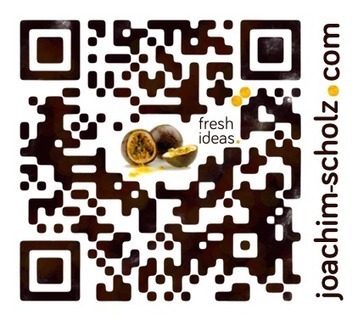
"This post is about the basics of why, where and how to use QR codes in your research and teaching. In addition, it will also suggest a few design tweaks that allow you to blend QR codes with the surrounding context (e.g., the keynote slide or a poster). And if you invest some time you can even closely integrate a QR code with your overall self-branding efforts."
"HacKidemia is a a mobile invention lab that enables future change-makers to crowdcraft physical and virtual artifacts by attending and creating hands-on workshops. City by city, this will kickstart the development of community invention spaces for people of all ages."
One of the growing number of DIY/Maker-type initiatives to engage young people in creating interesting designed objects such as 3D printing, robots, and microelectronics.
Visual Literacy proponent Lynell Burmark explains why the use of images is so important in the classroom and how it can help teachers meet the challenges of getting through the curriculum and engaging students in skills and content they'll actually...
"The "Top 25" Websites foster the qualities of innovation, creativity, active participation, and collaboration. They are free, Web-based sites that are user friendly and encourage a community of learners to explore and discover.
While not everyone can make infographics from scratch, there are tools available on the Web that will help you create your very own infographics. In this article, they-re listing more than 20 such options to help you get your messages across to your readers, visually.
Some of them really simple. Most of them... visual. Try, gooo
To get content containing either thought or leadership enter:
To get content containing both thought and leadership enter:
To get content containing the expression thought leadership enter:
You can enter several keywords and you can refine them whenever you want. Our suggestion engine uses more signals but entering a few keywords here will rapidly give you great content to curate.


 Your new post is loading...