


by Piotr Kowalczyk
"If you want to know how to explore Project Gutenberg more effectively and get books faster - here is a bunch of tips & tricks for your convenience."

 Your new post is loading...
 Scoop.it! by Piotr Kowalczyk
"If you want to know how to explore Project Gutenberg more effectively and get books faster - here is a bunch of tips & tricks for your convenience." 

Bonnie Bracey Sutton's comment,
July 6, 2013 11:24 PM
THANKS.. Jim
Sign up to comment
Scoop.it!

by Grant Wiggins
"In all the hullabaloo about standards* and tests, a more basic aim has long been sacrificed in K-12 education: ensuring that students graduate able to handle the freedoms of college and the pro-active obligations of the workplace. As many have long heard me say, my children had more intellectual and executive freedom in Montessori School as 4 year olds than they did as high school students....
"What is wanted in education is a curriculum and assessment system that builds in, by design, a gradual release of teacher responsibility across the long-term scope and sequence. Traditional curriculum design runs completely counter to this idea, of course: the work gets harder and harder but the student has practically no executive control over the intellectual agenda up until graduation."
Scoop.it!
Can creativity and innovation be taught? A new free online course says 'yes' | Penn State University
From
news

by Curtis Chan
"For the faculty members of a new free online course, creativity and innovation aren’t just the purview of artists, musicians or designers. Instead, they say, it’s about the process.
“It’s a unique and trend-bucking view of creativity, and it’s unusual for an engineering topic,” explained Kathryn Jablokow, associate professor of mechanical engineering and engineering design at Penn State Great Valley and one of the course’s three instructors. “But at its core, it’s about delivery of process, not just content.”
'The course, Creativity, Innovation, and Change, is part of a new movement in higher education called massive open online courses (MOOCs), which allows universities to provide courses on an immense scale. In addition to Jablokow, the class will be taught by Darrell Velegol, distinguished professor of chemical engineering, and Jack Matson, professor emeritus of environmental engineering.
"The free eight-week course, which begins on Sept. 1, focuses on teaching participants techniques to unlock their innate creativity, to solve problems and to become more innovative."
Scoop.it!

"There are tons of blogs, tutorial sites, and other resources out there that can teach you about web design and development. But what if you want something a little bit more formal, without actually having to go back to school?
"That’s where resources like the ones below can come in handy. These sites offer courses modeled after those you’d find (or actually from) leading colleges and universities. They’re a great option if you’re not sure where to start, or if you want to bridge the gaps in your current training.
"They can also be excellent options if you’ve taken courses in the past, but want to make sure your knowledge and skill-set is completely up to date."
Scoop.it!

by Alan Levine
"It was not long ago that producing multimedia digital content required expensive equipment and deep levels of technical expertise. We are at the point now where anyone can create and publish very compelling content with nothing more complex than a web browser.
Jim Lerman's insight:
If you could only visit one resource about storytelling via the web, this is the one I'd suggest. It's an enormously rich and expansive collection of resources and how-tos...virtually indispensible to the digital story using/telling/teaching educator.
Site producer Levine has been around for a long, long time in web time. Viewers might know him from his long-running blog - CogDogBlog.
Scoop.it!

Improve audience engagement and sharing by optimizing your public speaking and presentations with these 20 plus tips.

malek's curator insight,
June 14, 2013 6:23 PM
The rules of engagement: the 5 questions you have to answer before you start your presentation. 
LucaVanin's curator insight,
June 15, 2013 4:23 AM
Questo è l'obiettivo anche del Corso che terrò in luglio: Presenta Davvero! 
Terri Pawer's curator insight,
June 17, 2013 10:27 AM
Great tips for getting the most mileage out of a tremednous amount of work. Very relevant ideas.
Scoop.it!

With over 350 Powerpoint presentations given each second across the globe, how does one go about making theirs stand out from all the others?

Jim Doyle's curator insight,
July 14, 2013 12:40 AM
Presentations Infographic: Making Your Message Stick
Scoop.it!

by Sarah Brown Wessling
"Teachers don't always need someone else to videotape them to use it to improve in their profession. Learn how you can videotape yourself and use that footage to find ways to get better at teaching."
Scoop.it!
Tony Vincent, teacher and learning consultant presents practical and entertaining ways for young learners to use low cost mobile devices to create movies. Pr... Via Felix Jacomino
Scoop.it!
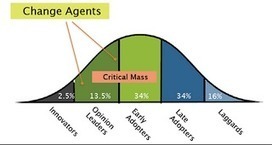
Today I am going to talk a little bit about Diffusion of Innovation Theory and relate it to our technology integration practices in education. Don't worry the post is not gonna be long , nor will it... Via Jon Samuelson, Felix Jacomino

Donella Marie Muzik's curator insight,
April 19, 2016 8:57 AM
Innovation and the arts are not opposing concepts! Today's technology savvy artists deserve arts organisations who are keeping their fingers on the pulse.
Scoop.it!

We teach in amazing times. Just think about the technology that you carry around in your pocket or the things you are able to do on the Internet. Technology makes meaningful collaborative and engaging interactive classroom experiences possible with minimal effort. Via Felix Jacomino

Darlene Clapham K12's curator insight,
June 23, 2013 10:57 AM
Great article. Some very good points that we can all apply in our professional careers. Thanks for sharing this @JCasaTodd!
Scoop.it!

It's time to start asking the tough question about iPads in education. Why are we using it, not just how should we use it? Via Felix Jacomino
Scoop.it!

Khan Academy for iOS has just received its third major update. Via Jon Samuelson
|
Scoop.it!

by Larry Ferlazzo
"One of the best lessons I teach each year I about the physical changes that learning new things makes in the change — it has a tremendous effect on students, and we refer back to it regularly during the year.
"The complete lesson plan is in my book, Helping Students Motivate Themselves and I’ve previously posted a shorter version here. One important part of the lesson is having students read a very accessible article by L.S. Blackweel on learning and the brain. It’s an excellent piece and I will continue using it.
"Recently, though, I discovered another great piece by Judy Willis that’s equally accessible and available. It’s titled What You Should Know About Your Brain. Here it is in PDF form.
Jim Lerman's insight:
Ferlazzo, one of the great hunters and gatherers on the web, has of late become a best-selling author and much sought-after speaker.
Scoop.it!

From
mashable
by Chelsea Stark
"If you've felt the crush of information overload and wanted to get organized, it's time to check out Evernote. The cloud-stored notebook has a strong presence as both a computer and mobile app, along with a web platform, so you can access one organized Evernote account from all kinds of places.
"Evernote just celebrated its five-year anniversary, too. It's a testament that neither the service nor your data are going anywhere."
Scoop.it!

by Tamara Fisher
"Tamara's students share their reflective feedback on the independent learning project process they underwent in her class."
Scoop.it!

Blog produced by Mia Wenjen Guest post by Susan Stepehson
"Are you looking for ways to arrest the summer slide? Are you interested in encouraging your children to write stories? I’d like to suggest you check out Storybird. What is Storybird? "Storybird is a fantastic website that encourages us to use artwork created by Storybird’s real-life illustrators in the stories (or storybirds) we write. It’s free to register and use, with options to buy print books or upgrade for special features. All stories and comments are pre-moderated, and completed storybirds can be shared. Why is Storybird helpful to children? "The stunning artwork and variety of digital books, many created by kids just like them, motivates kids to read and write. When we parents share the storybird creation process initially with our kids, they hear us “thinking aloud” about our own story-making process. This teaches them a lot about writing, in a natural, relaxed way. After that, many kids want to go on and create their own digital books at Storybird."
Scoop.it!

"Show rather than tell to motivate supporters to care, then act.
If you take away just one thing from this post, make it this—You want your listener to take action because they want to—not because they’ve been told to. When you craft your stories to ensure listeners to connect your info with what they already know (test it), you’re far more likely to build trust and rapport with them. In turn, this group relationship is most likely to be transformative, motivating their desire to take action, now and in the future, and to spread your stories/messages to friends and family." Read the full article to see a before and after example. Via Kim Zinke (aka Gimli Goose)

Kim Zinke (aka Gimli Goose)'s curator insight,
June 5, 2013 2:19 AM
Be sure to scroll down the page to find the links to 8 other articles in this series (which work for anyone, not just non-profits), including a series on how to tell these 6 types of stories: - founding - focus - success - people - future - strength
Scoop.it!

Steven Levitt, an economist hailed as one of the finest minds of his generation, says he’s never been good at math and finds much of his life’s work “embarrassing.” The University of Chicago professor is not just being...

Kaylin Burleson's curator insight,
June 19, 2013 9:54 AM
Putting data into a story makes it much more people oriented. Brings out the need to know.
Scoop.it!

Videotaping yourself teaching is a great way to find ways to improve. But first you need to know how to do it correctly. Here are some simple videotaping tips teachers can use to help them with professional development.
Scoop.it!
Our kids will spend the rest of their lives in the future Are we getting them ready? Kevin Honeycutt (@kevinhoneycutt) - Hutchinson, Kansas Via Felix Jacomino

Camela Giraud's curator insight,
April 26, 2013 5:20 AM
Fantastic video about our opportunity and responsibility in the technology age. Love it. 
CERT's comment,
May 8, 2013 4:12 AM
"What are our kids doing now that they couldn't do before?" We think that this is really the main focus that we should attach to technology and what we need to implement in our schools.
Scoop.it!
EPIC. Kid's got his head on straight. He's definitely my hero ! Jeff's the man ! Jeff Bliss decided to give their teacher a lesson at the Duncanville High Sc... Via Felix Jacomino

T. Brendan Donahoe's comment,
May 10, 2013 4:09 PM
Parts of what he says are true. Just giving kids packets of handouts and expecting they'll learn is not teaching. It's not challenging the students.

Richard Seal's curator insight,
May 11, 2013 10:35 AM
Not technology related, but it absolutely illustrates how fed up our older students are with a system that does not work in their favor. I applaud this young man for having the courage to speak up.
Scoop.it!
|

|
Rescooped by
Jim Lerman
from Technology in Education
July 5, 2013 11:55 PM
|
Scoop.it!

Stage 1 Sign up to twitter following persuasion/pestering by colleagues. Follow Stephen Fry, a famous sportsman/popstar and a news channel. Read a few tweets, don't understand what the fuss is abou...

twitter stages?? PLN stages....? which paradigm?

Great read...right on the money...insightful...
|
|
Rescooped by
Jim Lerman
from iPads in Education Daily
July 5, 2013 9:24 PM
|
Scoop.it!

17 brilliant paintings my mother made on her iPad
thejournal.ie
My partner bought me an iPad for my daily trips and I immediately started using it for drawing, first with Paper 53, with my finger, and then with Art Studio and a stylus.






